Message Queues 
A basic overview
Geshan Manandhar 
Quality and Maintenance Lead, Namshi.com 
@geshan 
geshan.com.np
Index 
What is Message Queue(MQ) 
MQ basics - AMQP 
Benefits 
Rabbit MQ 
Our setup/stack 
When to use it /Practical Usecase 
Logging and monitoring 
Conclusion
What is Message Queue 
"message queues and mailboxes are software-engineering 
components used for inter-process communication (IPC), or for 
inter-thread communication within the same process. They use a 
queue for messaging – the passing of control or of content." - 
Wikipedia 
Message queue is a software components that allow producers to 
produce message to a queue managed by a message broker, these 
message are asynchronously consumed by consumers.
Message Queue Basics 
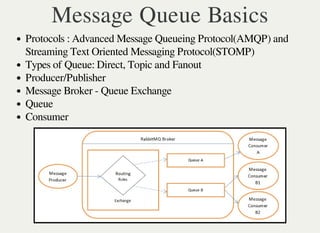
Protocols : Advanced Message Queueing Protocol(AMQP) and 
Streaming Text Oriented Messaging Protocol(STOMP) 
Types of Queue: Direct, Topic and Fanout 
Producer/Publisher 
Message Broker - Queue Exchange 
Queue 
Consumer
Benefits of MQ 
Decoupling 
Scalability 
Reliability 
Fanout - Same message to multiple queues (Pub/Sub)
Rabbit MQ
Rabbit MQ - features 
Robust messaging for applications 
Easy to use 
Runs on all major operating systems 
Supports a huge number of developer platforms 
Open source and commercially supported
Our Software stack/services 
relating to with Rabbit MQ 
Symfony 2 with old sound rabbit mq bundle and Monolog 
Rabbit Mq on http://www.cloudamqp.com/ 
Service Oriented Architecture (SOA) with 3rd party API 
integrations
When to use message queues 
Some practical use cases 
Backend -> Frontend sync (db to NOSQL/Memcache) 
Communication between multiple internal systems (without API) 
Asynchronous 3rd party API calls 
Notifications like email and sms 
Handling large request asynchronously 
Processing intensive tasks- like image resize
Logging and monitoring is 
vital 
Only access and error logs from web server and database are surely 
not enough 
Logs are first class citizen, adopt active logging from application 
level.(Monolog) 
Use dedicated log management system like GrayLog 2 
Monitor application activity in real-time with services like 
NewRelic 
Log optimally and verbose enough to give enough information 
about the context.
Conclusion/Recap 
Communication between two systems can be done even without 
APIs 
Language agnostic implementation is enable by using message 
queues 
Message queues could be that answer you were looking for, to 
communicate between different systems 
For scalability, decoupling and reliability utilize message queues 
You could potentially scale to 1 million message per second : 
Pivotal 
Logging and monitoring are inevitable when doing asynchronous 
processing
Questions???
Credits 
http://keyholesoftware.com/2013/05/13/messaging-with-rabbitmq/ 
https://www.flickr.com/photos/i8ipod/9028050858 
https://www.flickr.com/photos/oberazzi/318947873/
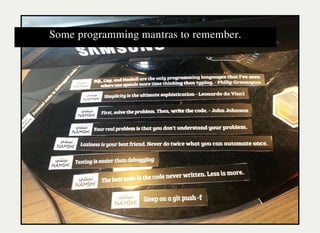
Some programming mantras to remember.

Message Queues a basic overview

  • 1.
    Message Queues Abasic overview
  • 2.
    Geshan Manandhar Qualityand Maintenance Lead, Namshi.com @geshan geshan.com.np
  • 3.
    Index What isMessage Queue(MQ) MQ basics - AMQP Benefits Rabbit MQ Our setup/stack When to use it /Practical Usecase Logging and monitoring Conclusion
  • 4.
    What is MessageQueue "message queues and mailboxes are software-engineering components used for inter-process communication (IPC), or for inter-thread communication within the same process. They use a queue for messaging – the passing of control or of content." - Wikipedia Message queue is a software components that allow producers to produce message to a queue managed by a message broker, these message are asynchronously consumed by consumers.
  • 5.
    Message Queue Basics Protocols : Advanced Message Queueing Protocol(AMQP) and Streaming Text Oriented Messaging Protocol(STOMP) Types of Queue: Direct, Topic and Fanout Producer/Publisher Message Broker - Queue Exchange Queue Consumer
  • 6.
    Benefits of MQ Decoupling Scalability Reliability Fanout - Same message to multiple queues (Pub/Sub)
  • 7.
  • 8.
    Rabbit MQ -features Robust messaging for applications Easy to use Runs on all major operating systems Supports a huge number of developer platforms Open source and commercially supported
  • 9.
    Our Software stack/services relating to with Rabbit MQ Symfony 2 with old sound rabbit mq bundle and Monolog Rabbit Mq on http://www.cloudamqp.com/ Service Oriented Architecture (SOA) with 3rd party API integrations
  • 10.
    When to usemessage queues Some practical use cases Backend -> Frontend sync (db to NOSQL/Memcache) Communication between multiple internal systems (without API) Asynchronous 3rd party API calls Notifications like email and sms Handling large request asynchronously Processing intensive tasks- like image resize
  • 11.
    Logging and monitoringis vital Only access and error logs from web server and database are surely not enough Logs are first class citizen, adopt active logging from application level.(Monolog) Use dedicated log management system like GrayLog 2 Monitor application activity in real-time with services like NewRelic Log optimally and verbose enough to give enough information about the context.
  • 12.
    Conclusion/Recap Communication betweentwo systems can be done even without APIs Language agnostic implementation is enable by using message queues Message queues could be that answer you were looking for, to communicate between different systems For scalability, decoupling and reliability utilize message queues You could potentially scale to 1 million message per second : Pivotal Logging and monitoring are inevitable when doing asynchronous processing
  • 14.
  • 15.
  • 16.