



 Strategy management
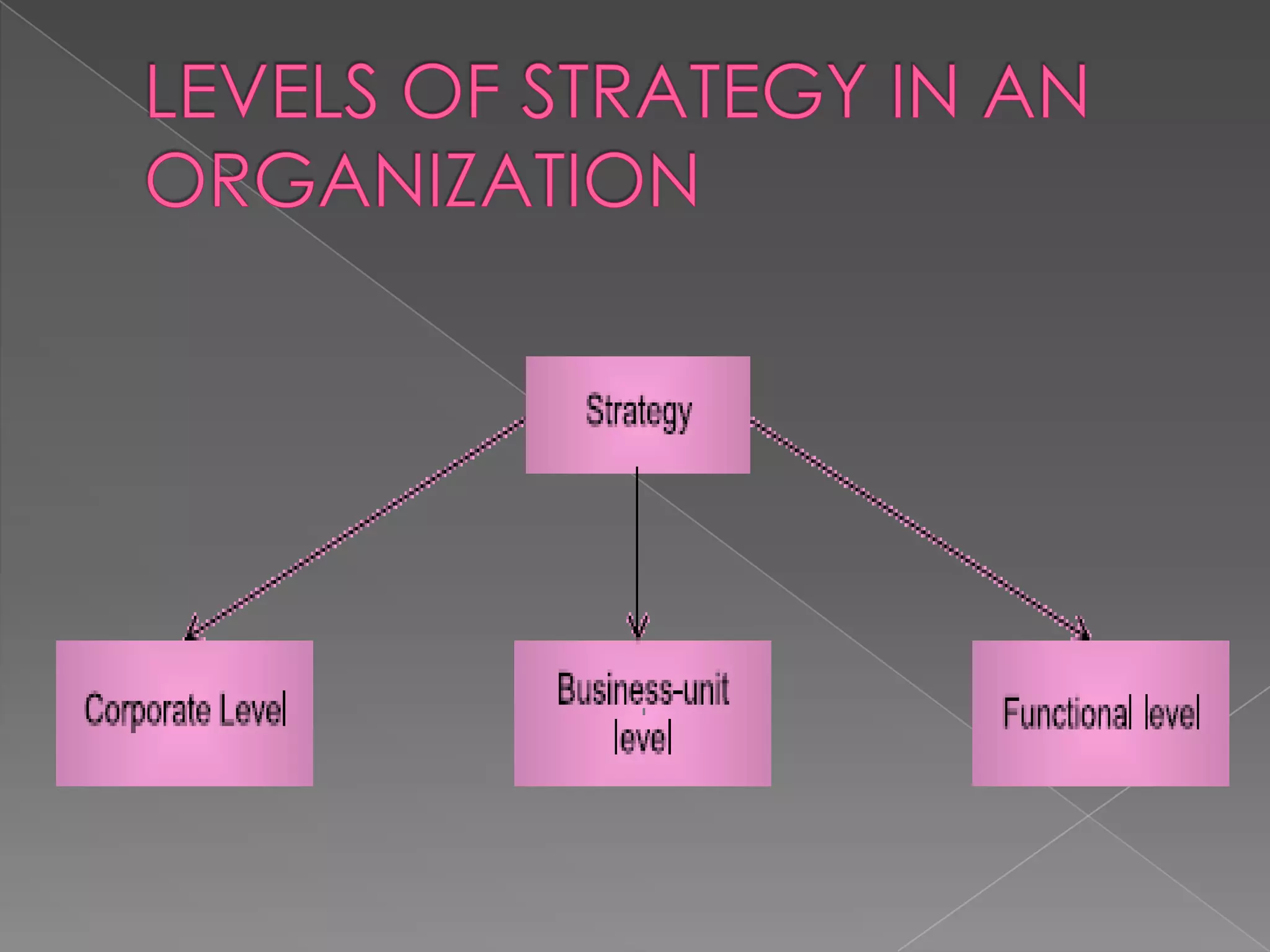
 Level of strategy in an organization
 Why do firms merge or acquire other firms?
 Basic Definition
 Type of Merger
 Motive behind merger and Acquisition
 Benefit of Merger & Acquisition
 Some example
 A company’s strategy consists of the combination
of competitive moves and business approaches
that managers employ to please customers,
compete successfully, and achieve organizational
objectives.
 Strategic management is a continuous process.
 Strategy for change
 Strategy for stability
 Strategy for expansion
Merger &Acquisition is the part of strategy
for expansion
 Why do firms merge or acquire other firms?
Several possibilities.
› Increase market power
› Acquire financial strength,
› Tax loss carry forwards
› Acquire specific product lines
› Achieve synergies
› Gain economies of scale
 Strategies subject to debate: Prevalent belief is that
M&A result in increased profits, competitiveness, &
increased stockholder wealth.
A. Merger; combination of two firms into one.
B. Acquisition; one business buys another.
1. Cash.
2. Securities.
3. Combination of cash and securities.
 Horizontal Mergers
 Vertical Mergers
 Conglomerate Mergers
 Concentric Mergers
 Horizontal –Combination of two or more firm
operating in same stage of production.
 Ex: Merger of Tata Industrial finance Ltd with
Tata Finance Ltd
 Vertical-When two or more firm operating in
the different stage of production.
 Ex: Merger of Reliance Petro Chemicals Ltd
with Reliance Industries Ltd is a Back ward
Integration
 Conglomerate- These mergers involve firms
engaged in unrelated type of business
activities i.e. the business of two companies
are not related to each other horizontally ( in
the sense of producing the same or competing
products),nor vertically
 Example: General Electric buying NBC
television
 Concentric Mergers- Merger of two firms
that are so related that there is a carry over
of specific management functions
(research, manufacturing, finance,
marketing, etc.)
 Example: Citigroup (principally of a
bank)buying Salomon Smith Barney (an
investment banker/stock brokerage
operation)
 An acquisition, also known as a, takeover or a
buyout, is the buying of one company by another.
 An acquisition may be friendly or hostile.
 In the former case, the companies cooperate in
negotiations; in the latter case, the target is unwilling
to be bought or the target's board has
no prior knowledge of the offer.
 Acquisition usually knowledge of the offer.
Acquisition usually refers to a purchase of a smaller
firm by a larger one.
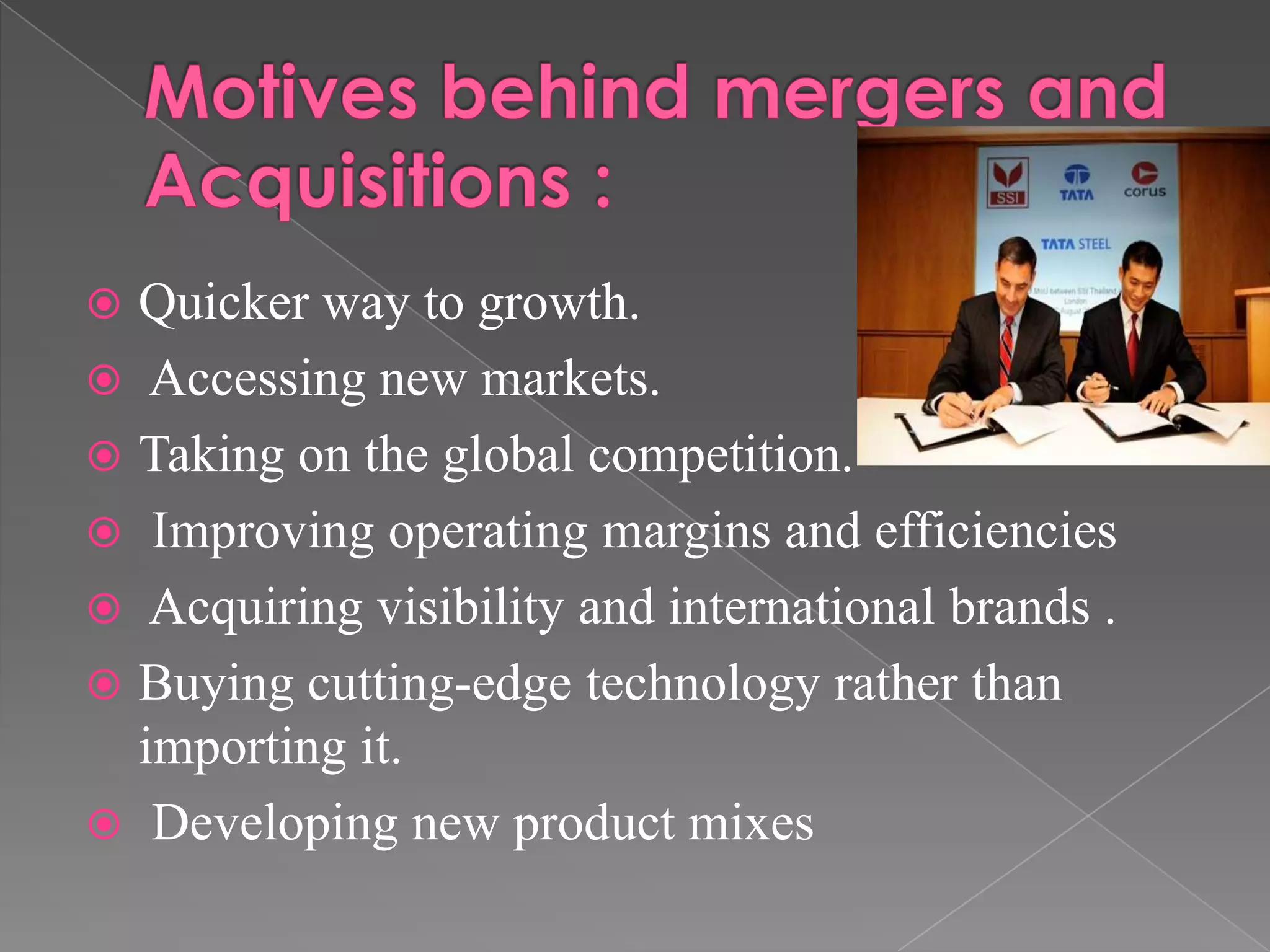
 Quicker way to growth.
 Accessing new markets.
 Taking on the global competition.
 Improving operating margins and efficiencies
 Acquiring visibility and international brands .
 Buying cutting-edge technology rather than
importing it.
 Developing new product mixes
 Limited Competition
 Gaining Market power
 Diversification
 Improving profitability
 Cost reduction
 Faster growth
 Tata steel buys Corus Plc : 12.1$ billion
 Hindalco acquired novelis: 6$ billion
 Tata buy jaguar and land rover : 2.3$ billion
 Essar steel buys Algoma Steel: 1.58$ billion
 Vodafone buys hutch : 11$ billion
 POSCO to invest in building steel manufacturing plants and
facilities in India by 2016
 Goldman Sachs Plans investment in private equity, real estate, and
private wealth management
Merger &acquasition

Merger &acquasition

  • 2.
     Strategy management Level of strategy in an organization  Why do firms merge or acquire other firms?  Basic Definition  Type of Merger  Motive behind merger and Acquisition  Benefit of Merger & Acquisition  Some example
  • 3.
     A company’sstrategy consists of the combination of competitive moves and business approaches that managers employ to please customers, compete successfully, and achieve organizational objectives.  Strategic management is a continuous process.
  • 5.
     Strategy forchange  Strategy for stability  Strategy for expansion Merger &Acquisition is the part of strategy for expansion
  • 6.
     Why dofirms merge or acquire other firms? Several possibilities. › Increase market power › Acquire financial strength, › Tax loss carry forwards › Acquire specific product lines › Achieve synergies › Gain economies of scale  Strategies subject to debate: Prevalent belief is that M&A result in increased profits, competitiveness, & increased stockholder wealth.
  • 7.
    A. Merger; combinationof two firms into one. B. Acquisition; one business buys another. 1. Cash. 2. Securities. 3. Combination of cash and securities.
  • 8.
     Horizontal Mergers Vertical Mergers  Conglomerate Mergers  Concentric Mergers
  • 9.
     Horizontal –Combinationof two or more firm operating in same stage of production.  Ex: Merger of Tata Industrial finance Ltd with Tata Finance Ltd  Vertical-When two or more firm operating in the different stage of production.  Ex: Merger of Reliance Petro Chemicals Ltd with Reliance Industries Ltd is a Back ward Integration
  • 10.
     Conglomerate- Thesemergers involve firms engaged in unrelated type of business activities i.e. the business of two companies are not related to each other horizontally ( in the sense of producing the same or competing products),nor vertically  Example: General Electric buying NBC television
  • 11.
     Concentric Mergers-Merger of two firms that are so related that there is a carry over of specific management functions (research, manufacturing, finance, marketing, etc.)  Example: Citigroup (principally of a bank)buying Salomon Smith Barney (an investment banker/stock brokerage operation)
  • 12.
     An acquisition,also known as a, takeover or a buyout, is the buying of one company by another.  An acquisition may be friendly or hostile.  In the former case, the companies cooperate in negotiations; in the latter case, the target is unwilling to be bought or the target's board has no prior knowledge of the offer.  Acquisition usually knowledge of the offer. Acquisition usually refers to a purchase of a smaller firm by a larger one.
  • 13.
     Quicker wayto growth.  Accessing new markets.  Taking on the global competition.  Improving operating margins and efficiencies  Acquiring visibility and international brands .  Buying cutting-edge technology rather than importing it.  Developing new product mixes
  • 14.
     Limited Competition Gaining Market power  Diversification  Improving profitability  Cost reduction  Faster growth
  • 15.
     Tata steelbuys Corus Plc : 12.1$ billion  Hindalco acquired novelis: 6$ billion  Tata buy jaguar and land rover : 2.3$ billion  Essar steel buys Algoma Steel: 1.58$ billion  Vodafone buys hutch : 11$ billion  POSCO to invest in building steel manufacturing plants and facilities in India by 2016  Goldman Sachs Plans investment in private equity, real estate, and private wealth management