PRESENTED BY :
Ms. Yasmeen MK
2nd
year B.sc nursing
BBC College Of Nursing Gangavathi
SUPERVISED BY:
Mr.Geroge.D.Honnali M.Sc.[N]
HOD . Dept of Medical Surgical Nursing
BBC College Of Nursing Gangavathi
INTRODUCTION:
The word Meningitis is derived from the Greek
word Meninx which means membrane.
Itis means inflammation.
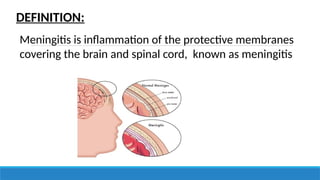
Meningitis is inflammation of the protective membranes
covering the brain and spinal cord, known as meningitis
DEFINITION:
INCIDENCE:
• As of 2023 the global incidence of meningitis is approximately 6 million
new cases annually with around 5,00,000
• In INDIA the incidence rate is around 4.3 cases per 1,00,000 people.
• In KARANATAKA experiences a lower incidence rate of meningitis about
3.1 cases per 1,00,000 people
ETIOLOGY :
Meningitis is mostly caused by microorganisms like
• Bacteria[Neisseria meningitidis & Hemophilus influenza]
• Viruses[mumps, herpes simplex virus]
• parasites[Naegleria fowleri(brain eating amoeba)]
• fungi [Cryptococcus]
These microorganisms infect blood and the cerebrospinal fluid (CSF).
non-infectious causes:
including certain diseases like AIDS
• cancer
• diabetes
• physical injury
• certain drugs that weaken the body's immune system.
CLINICAL MANIFESTATIONS:
Meningitis signs and symptoms may develop over several hours or over 1 or 2 days and in
anyone over the age of 2, typically include
• Headache
• Sudden high fever
• Altered mental status
• Confusion or altered consciousness
• Vomiting
• Inability to tolerate light[ photophobia] or loud noises[ phonophobia]
• Irritability, and drowsiness
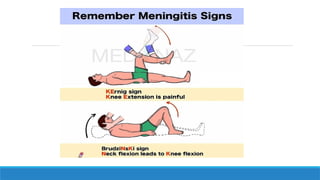
• Signs of meningeal irritations
• Nuchal rigidity[neck stiffness] associated with fever
• Positive Brudzinski signs
• Positive kerning signs
• Signs of increased ICP
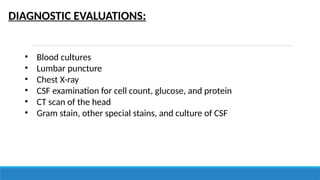
DIAGNOSTIC EVALUATIONS:
• Blood cultures
• Lumbar puncture
• Chest X-ray
• CSF examination for cell count, glucose, and protein
• CT scan of the head
• Gram stain, other special stains, and culture of CSF
BLOOD CULTURE CHEST X-RAY
[Neisseria meningitidis] [Tubercular meningitis]
CSF examination for cell count,
glucose, and protein
CT scan of the head
[BACTERIAL MENINGITIS]
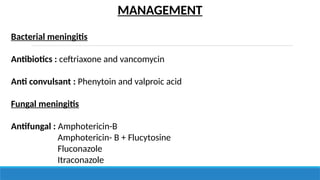
MANAGEMENT
Bacterial meningitis
Antibiotics : ceftriaxone and vancomycin
Anti convulsant : Phenytoin and valproic acid
Fungal meningitis
Antifungal : Amphotericin-B
Amphotericin- B + Flucytosine
Fluconazole
Itraconazole
Viral Meningitis: There is no specific treatment for viral meningitis.
Antibiotics do not help viral infections, so they are not useful in the treatment
of viral meningitis. Most patients completely recover on their own within 7-10
days. Treatment of mild cases of viral meningitis usually includes bed rest,
plenty of fluids, good nutrition, and over-the-counter pain medications to help
reduce fever and relieve body aches aid in recovery from viral meningitis
PREVENTION
For patient of meningitis recommends that the meningococcal conjugated
vaccine can be given to youth at 11-12 years of age with booster dose at 16
years of age
Nursing Management
-Protecting the patient from Injury secondary to seizure activity or alter level of consciousness
-Monitoring daily body weight, serum electrolyte, urine volume, specific gravity and osmolality
especially if syndrome of inappropriate anti diuretic hormone is suspected
-Preventing complications associated with immobility such as pressure ulcer and pneumonia
THANK YOU

Meningitis .

  • 1.
    PRESENTED BY : Ms.Yasmeen MK 2nd year B.sc nursing BBC College Of Nursing Gangavathi SUPERVISED BY: Mr.Geroge.D.Honnali M.Sc.[N] HOD . Dept of Medical Surgical Nursing BBC College Of Nursing Gangavathi
  • 2.
    INTRODUCTION: The word Meningitisis derived from the Greek word Meninx which means membrane. Itis means inflammation.
  • 3.
    Meningitis is inflammationof the protective membranes covering the brain and spinal cord, known as meningitis DEFINITION:
  • 4.
    INCIDENCE: • As of2023 the global incidence of meningitis is approximately 6 million new cases annually with around 5,00,000 • In INDIA the incidence rate is around 4.3 cases per 1,00,000 people. • In KARANATAKA experiences a lower incidence rate of meningitis about 3.1 cases per 1,00,000 people
  • 5.
    ETIOLOGY : Meningitis ismostly caused by microorganisms like • Bacteria[Neisseria meningitidis & Hemophilus influenza] • Viruses[mumps, herpes simplex virus] • parasites[Naegleria fowleri(brain eating amoeba)] • fungi [Cryptococcus] These microorganisms infect blood and the cerebrospinal fluid (CSF). non-infectious causes: including certain diseases like AIDS • cancer • diabetes • physical injury • certain drugs that weaken the body's immune system.
  • 7.
    CLINICAL MANIFESTATIONS: Meningitis signsand symptoms may develop over several hours or over 1 or 2 days and in anyone over the age of 2, typically include • Headache • Sudden high fever • Altered mental status • Confusion or altered consciousness • Vomiting • Inability to tolerate light[ photophobia] or loud noises[ phonophobia] • Irritability, and drowsiness • Signs of meningeal irritations • Nuchal rigidity[neck stiffness] associated with fever • Positive Brudzinski signs • Positive kerning signs • Signs of increased ICP
  • 9.
    DIAGNOSTIC EVALUATIONS: • Bloodcultures • Lumbar puncture • Chest X-ray • CSF examination for cell count, glucose, and protein • CT scan of the head • Gram stain, other special stains, and culture of CSF
  • 10.
    BLOOD CULTURE CHESTX-RAY [Neisseria meningitidis] [Tubercular meningitis]
  • 11.
    CSF examination forcell count, glucose, and protein CT scan of the head [BACTERIAL MENINGITIS]
  • 12.
    MANAGEMENT Bacterial meningitis Antibiotics :ceftriaxone and vancomycin Anti convulsant : Phenytoin and valproic acid Fungal meningitis Antifungal : Amphotericin-B Amphotericin- B + Flucytosine Fluconazole Itraconazole
  • 13.
    Viral Meningitis: Thereis no specific treatment for viral meningitis. Antibiotics do not help viral infections, so they are not useful in the treatment of viral meningitis. Most patients completely recover on their own within 7-10 days. Treatment of mild cases of viral meningitis usually includes bed rest, plenty of fluids, good nutrition, and over-the-counter pain medications to help reduce fever and relieve body aches aid in recovery from viral meningitis
  • 14.
    PREVENTION For patient ofmeningitis recommends that the meningococcal conjugated vaccine can be given to youth at 11-12 years of age with booster dose at 16 years of age
  • 15.
    Nursing Management -Protecting thepatient from Injury secondary to seizure activity or alter level of consciousness -Monitoring daily body weight, serum electrolyte, urine volume, specific gravity and osmolality especially if syndrome of inappropriate anti diuretic hormone is suspected -Preventing complications associated with immobility such as pressure ulcer and pneumonia
  • 16.