Medication error
© 2008 Board of Trustees of U of IL
“The science and technologies involved in healthcare
-- the knowledge, skills, care interventions, devices and
drugs -- have advanced more rapidly than our ability to
deliver them safely, effectively, and efficiently”
IOM. 2001. Crossing the Quality Chasm: A New Health System for the 21st
Century.
Medication use has become increasingly complex
in recent times
Objectives
• To provide an overview of medication safety
• Understand the scale of medicational errors
• Identify factors that contribute to medicational errors
• Learn how to make medication use safer
Medical error
• Medical error: an act of omission or commission in
planning and execution that contributes or could
contribute to an unintended result.
• This definition of medical error includes explicitly the
key domains of error causation (omission and
commission, planning and execution), whether
adverse outcomes occur or not.
• Patient harm from medical error can occur at
individual or system level.
Ethan D Grober, John MA Bohmen. Defining medical error. Can J Surg 48(1) 2005 Feb
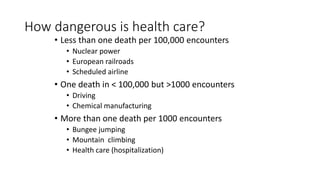
How dangerous is health care?
• Less than one death per 100,000 encounters
• Nuclear power
• European railroads
• Scheduled airline
• One death in < 100,000 but >1000 encounters
• Driving
• Chemical manufacturing
• More than one death per 1000 encounters
• Bungee jumping
• Mountain climbing
• Health care (hospitalization)
Medication errors
• Medication errors: any mistake occurring in the
medication use process, regard less of whether an
injury occurred or whether the potential for injury
was present
• Studies- ME occurred in at some point in medicational
process in 5-14% of doses dispensed*
• Approximately 1 in 100 medication errors result in an
ADE, while 5 in 100 have a potential to do so
*Luigi Brunetti, Don-Churi Suh. Jour of Hospital Administration Dec 2012:Vol 1, No 2
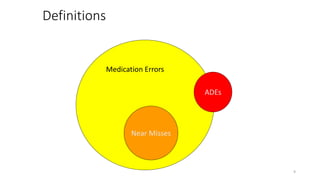
Adverse drug events (ADEs)
• ADEs are defined as any injuries resulting from medication use,
including physical harm, mental harm, or loss of function.
• ADEs, compared to medication errors are a more direct measure of
patient harm
• Adverse drug events accounts for 19% of all injuries caused by
medical care
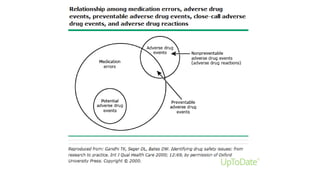
Adverse drug events (ADEs)
• Preventable ADEs are ADEs that can be avoided. At least 1/4th of
ADEs are preventable
• Adverse drug reactions are ADEs non preventable ADEs and occur
due to pharmacological properties of the drug
• Near miss errors (potential ADEs) pose a significant risk, but do not
cause harm to a patient. Potential ADEs include errors that are
intercepted before patient is effected
9
Definitions
Near Misses
ADEs
Medication Errors
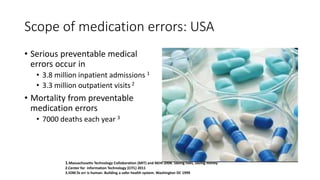
Scope of medication errors: USA
• Serious preventable medical
errors occur in
• 3.8 million inpatient admissions 1
• 3.3 million outpatient visits 2
• Mortality from preventable
medication errors
• 7000 deaths each year 3
1.Massachusetts Technology Colloboration (MIT) and NEHI 2008. Saving lives, saving money
2.Center for information Technology (CITL) 2011
3.IOM.To err is human. Building a safer health system. Washington DC 1999
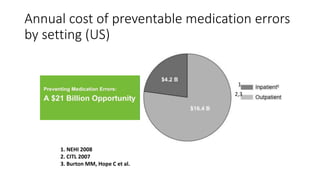
Annual cost of preventable medication errors
by setting (US)
1. NEHI 2008
2. CITL 2007
3. Burton MM, Hope C et al.
1
2,3
13
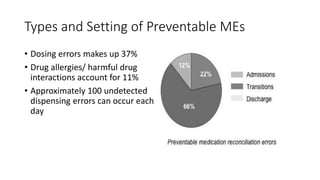
Types and Setting of Preventable MEs
• Dosing errors makes up 37%
• Drug allergies/ harmful drug
interactions account for 11%
• Approximately 100 undetected
dispensing errors can occur each
day
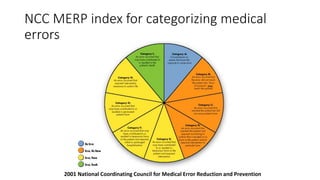
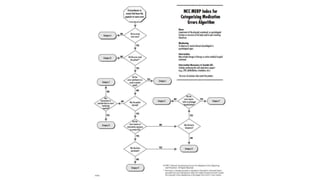
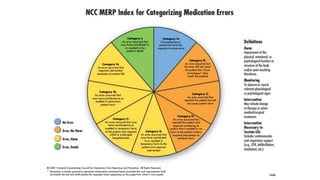
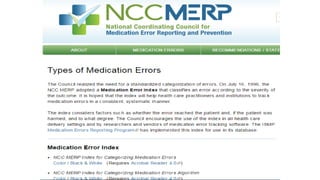
NCC MERP index for categorizing medical
errors
2001 National Coordinating Council for Medical Error Reduction and Prevention
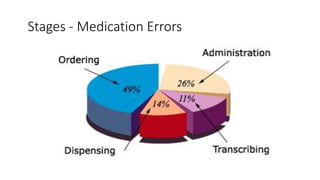
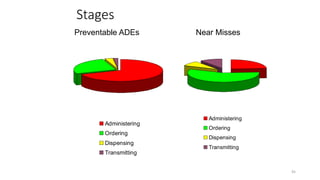
Stages - Medication Errors
18
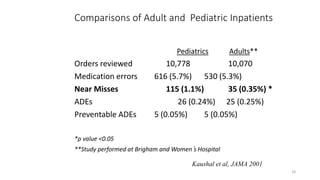
Comparisons of Adult and Pediatric Inpatients
Pediatrics Adults**
Orders reviewed 10,778 10,070
Medication errors 616 (5.7%) 530 (5.3%)
Near Misses 115 (1.1%) 35 (0.35%) *
ADEs 26 (0.24%) 25 (0.25%)
Preventable ADEs 5 (0.05%) 5 (0.05%)
*p value <0.05
**Study performed at Brigham and Women’s Hospital
Kaushal et al, JAMA 2001
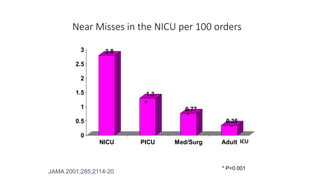
Near Misses in the NICU per 100 orders
2.8
1.3
0.77
0.35
0
0.5
1
1.5
2
2.5
3
NICU PICU Med/Surg Adult
*
*
* P<0.001
JAMA 2001;285;2114-20
*
ICU
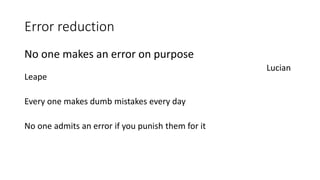
Error reduction
No one makes an error on purpose
Lucian
Leape
Every one makes dumb mistakes every day
No one admits an error if you punish them for it
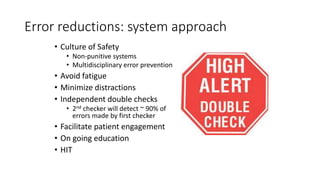
Error reductions: system approach
• Culture of Safety
• Non-punitive systems
• Multidisciplinary error prevention
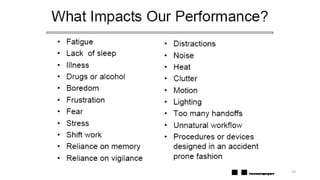
• Avoid fatigue
• Minimize distractions
• Independent double checks
• 2nd checker will detect ~ 90% of
errors made by first checker
• Facilitate patient engagement
• On going education
• HIT
Multidisciplinary error prevention: Avoid
fragmentation of care
• Improved communication among physicians, nurses and pharmacists
prevented 85% of preventable serious medicational errors 1
• Including a pharmacist on routine medical rounds led to a 78%
reduction in medical errors 2
• Adding a pharmacist to a physician rounds team in an ICU led to
annual savings of $270,000 2,3
• Dedicated care – doctors and nurses
• My experience ---
1. Fortescue et al. Prioritizing statgies for preventing Mes and ADEs in pediatric inpatients. Pediatrics 2003. 111: 722-729
2. Kukukarsalan SN et al. Pharmacists on rounding teams prevent preventable ADEs.
Arch Int Med 2003. 163(17): 2014-2018
3. Leapp LL et al. Pharmacist participation on physician rounds and ADEs in ICU. JAMA 1999. 282(3):267-270
What can we do to make medication use
safer?
• Use generic names. Look alike, sound alike medicines
• Tailor prescribing for each patient
• Learn and practice thorough medication history taking
• Know the high-risk medications and take precautions
• Know the medications you prescribe well
• Use memory aids
• Communicate clearly
• Develop checking habits
• Encourage patients to be actively involved
• Report and learn from errors
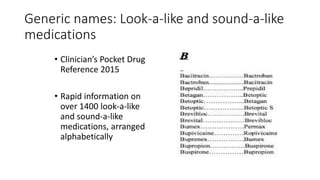
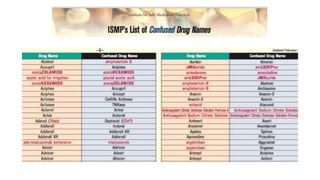
Generic names: Look-a-like and sound-a-like
medications
• Clinician’s Pocket Drug
Reference 2015
• Rapid information on
over 1400 look-a-like
and sound-a-like
medications, arranged
alphabetically
Tailor prescribing for individual patient
Consider:
• allergies
• co-morbidities (especially liver and renal impairment)
• other medication
• pregnancy and breastfeeding
• size of patient
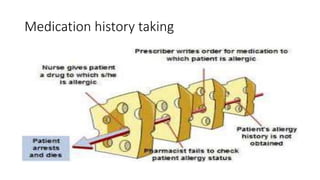
Medication history taking
• Include name, dose, route, frequency, duration of every
drug
• Enquire about recently ceased medications
• Ask about over-the-counter medications, dietary
supplements and alternative medicines
• Make sure what patient actually takes, matches your list:
• be particularly careful across transitions of care
• Look up any medications you are unfamiliar with
• Consider drug interactions, medications that can be ceased
and medications that may be causing side-effects
• Always include allergy history
Medication history taking
• A 74-year-old man sees a doctor for treatment of new onset stable
angina
• The doctor has not met this patient before and takes a full past
history and medication history
• He discovers the patient has been healthy and only takes medication
for headaches, name of which the patient cannot recall
• The doctor assumes it is an analgesic that the patient takes whenever
he develops a headache
Medication history taking
• Medication is actually a beta-blocker that he takes every day for
migraine; this medication was prescribed by a different doctor
• Patient is prescribed aspirin and another beta-blocker for the angina
• After commencing the new medication, the patient develops
bradycardia and postural hypotension
• Unfortunately the patient has a fall three days later due to dizziness
on standing; he fractures his hip in the fall
Which medications are high risk?
• Narrow therapeutic window
• Multiple interactions with other medications
• Potent medications
• Complex dosage and monitoring schedules
• Some examples:
• oral anticoagulants
• Insulin
• chemotherapeutic agents
• neuromuscular blocking agents
• aminoglycoside
• intravenous potassium
• Cardiovascular medications
Avoiding ambiguous nomenclature
• Avoid trailing zeros
• e.g. write 1 not 1.0
• Use leading zeros
• e.g. write 0.1 not .1
• Know accepted local terminology
• Write neatly, print if necessary
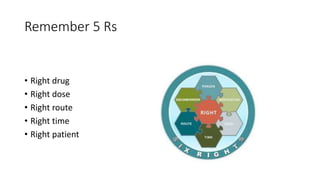
Remember 5 Rs
• Right drug
• Right dose
• Right route
• Right time
• Right patient
Ten rights (‘Rs’) for medication
• 5 Rs +
• Right documentation
• Right medication history and assessment
• Right drug-drug interaction and evaluation
• Right education and information to patient
• Right to refuse
Some examples from my experience
• Administration of 10 mg of morphine to new born baby, though it was
prescribed to the mother
• 5-ml of KCl given IV directly - 2 incidents
• Baby on high dose ionotrope in ICU goes in shock because
extravasation of fluid was detected late
• Wrong calculation of insulin dose in NICU.(X ten times)
• 10 times required dose of epinephrine given IV instead of IM for
anaphylaxis
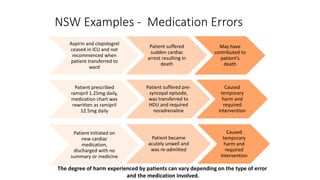
NSW Examples - Medication Errors
Aspirin and clopidogrel
ceased in ICU and not
recommenced when
patient transferred to
ward
Patient suffered
sudden cardiac
arrest resulting in
death
May have
contributed to
patient’s
death
Patient prescribed
ramipril 1.25mg daily,
medication chart was
rewritten as ramipril
12.5mg daily
Patient suffered pre-
syncopal episode,
was transferred to
HDU and required
noradrenaline
Caused
temporary
harm and
required
intervention
Patient initiated on
new cardiac
medication,
discharged with no
summary or medicine
Patient became
acutely unwell and
was re-admitted
Caused
temporary
harm and
required
intervention
The degree of harm experienced by patients can vary depending on the type of error
and the medication involved.
Know the medication you
prescribe well
• Do some homework on every medication you prescribe
• Suggested framework
• pharmacology
• Indications
• Contraindications
• side-effects
• special precautions
• dose and administration
• regimen
Use memory aids
• Formulary, protocols, textbooks
• Personal digital assistant
• Computer programs, computerized prescribing
• Free up your brain for problem solving rather than remembering facts
and figures that can be stored elsewhere
• Looking things up if unsure is a marker of safe practice, not
incompetence!
Develop checking habits
• When prescribing a medication
• When administering medication:
• check for allergies
• check the 6 Rs
• Be careful about look alike-sound alike medicines
• Remember computerized systems still require checking
• Always check and it will become a habit!
Develop checking habits
• Some useful maxims …
• Un labelled medications belong in the bin
• Never administer a medication unless you are 100% sure you know
what it is
• Practice makes perfect
• so start your checking habits now
Patient safety
• Computerized Physician Order Entry (CPOE)
• Reduces serious medication errors by 81%
• Electronic Medication Administration Record (eMAR)
• Bar coding
• 51% reductions in medical errors
• Smart pumps
• Pharmacist interventions
• Daily medication review
• Participation on rounds
• Medication reconciliation – identifies medication discrepancies during transition and
discharge
42
Conclusion
“Our systems are too complex to expect
merely extraordinary people to perform
perfectly 100% of the time. We as leaders
have a responsibility to put in place
systems to support safe practice.”
James Conway, former VP and COO Dana-Farber Cancer Institute
Questions?
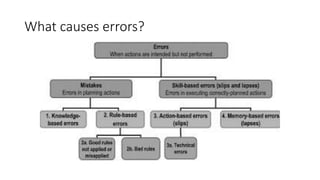
What causes errors?
45
Stages
Administering
Ordering
Dispensing
Transmitting
Administering
Ordering
Dispensing
Transmitting
Preventable ADEs Near Misses
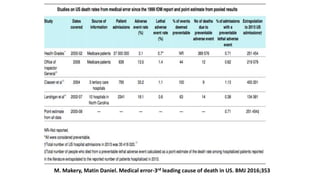
M. Makery, Matin Daniel. Medical error-3rd leading cause of death in US. BMJ 2016;353
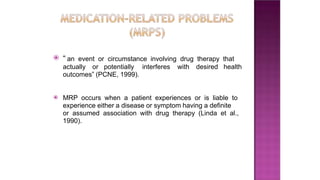
⦿ “ an event or circumstance involving drug therapy that
actually or potentially interferes with desired health
outcomes” (PCNE, 1999).
⦿ MRP occurs when a patient experiences or is liable to
experience either a disease or symptom having a definite
or assumed association with drug therapy (Linda et al.,
1990).
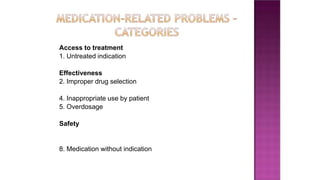
Access to treatment
1. Untreated indication
Effectiveness
2. Improper drug selection
4. Inappropriate use by patient
5. Overdosage
Safety
8. Medication without indication
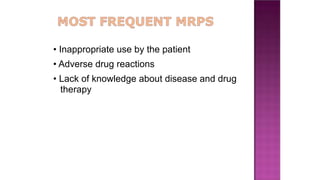
• Inappropriate use by the patient
• Adverse drug reactions
• Lack of knowledge about disease and drug
therapy
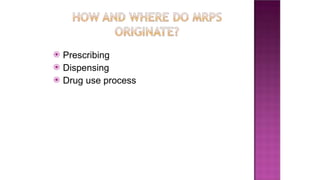
⦿ Prescribing
⦿ Dispensing
⦿ Drug use process
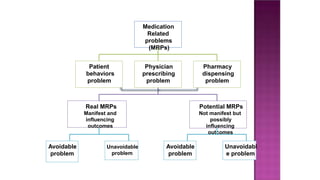
Medication
Related
problems
(MRPs)
Patient
behaviors
problem
Physician
prescribing
problem
Real MRPs
Manifest and
influencing
outcomes
Avoidable
problem
Potential MRPs
Not manifest but
possibly
influencing
outcomes
Avoidable
problem
Unavoidabl
e problem
Pharmacy
dispensing
problem
Unavoidable
problem
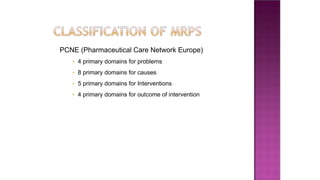
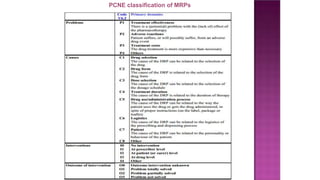
PCNE (Pharmaceutical Care Network Europe)
• 4 primary domains for problems
• 8 primary domains for causes
• 5 primary domains for Interventions
• 4 primary domains for outcome of intervention
PCNE classification of MRPs
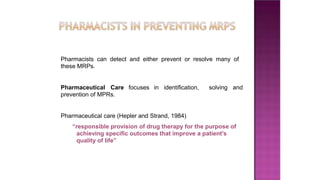
Pharmacists can detect and either prevent or resolve many of
these MRPs.
Pharmaceutical Care focuses in identification, solving and
prevention of MPRs.
Pharmaceutical care (Hepler and Strand, 1984)
“responsible provision of drug therapy for the purpose of
achieving specific outcomes that improve a patient's
quality of life”
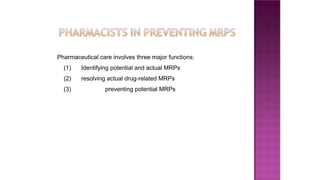
Pharmaceutical care involves three major functions:
(1) Identifying potential and actual MRPs
(2) resolving actual drug-related MRPs
(3) preventing potential MRPs
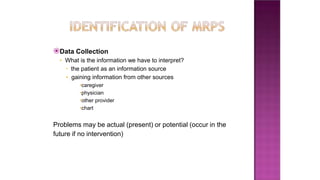
⦿Data Collection
• What is the information we have to interpret?
• the patient as an information source
• gaining information from other sources
•caregiver
•physician
•other provider
•chart
Problems may be actual (present) or potential (occur in the
future if no intervention)
⦿Evaluation of the patient data
• Must evaluate data to determine if problem exists
evaluation questions relate to the drug therapy problems
Do any of the problems exists?
⦿
Problem can be:
• untreated indication
• wrong drug being taken
• too little of the correct drug
• too much of the correct drug
• adverse drug reaction present
• drug-drug/food/lab interaction
• not receiving the prescribed drug
• use without valid indication
⦿Evaluation of the patient data - Problem identification
▪ Does the patient have a condition or symptoms that need
to be treated?
• What are the patient’s symptoms, or diagnosed conditions?
• Can you treat the patient or does he or she need to be referred
to another health professional?
▪ If the patient has a legitimate need to be treated for
conditions or symptoms, is the treatment he or she is getting
the most effective and safe?
▪ What are the appropriate treatments for this condition?
•What patient factors (dx, allergy, prev. patient responses,
pharmacokinetic variables, social conditions, etc.) are present
that may affect agent choice?
What other medication is the patient taking and how might this
affect agent choice?
What has the patient response been to the current therapy?
What has the patient response been to previous therapies?
If the patient is on the correct drug is he or she receiving too
little of this drug?
What dose of the drug is the patient really getting?
What are the acceptable doses of this drug?
How do we titrate this drug for this condition?
What are the appropriate monitoring parameters for this
condition and have they been used to justify a higher dose?
Is the patient likely to tolerate a higher dose?
What patient factors (diagnoses, allergies, previous patient
responses, pharmacokinetic variables, social conditions, etc.) are
present that may justify an increased dose?
What other medication is the patient taking and how might this
cause a need for an increased dose?
Resolution of actual or prevention of potential MRPs is the
second component in providing pharmaceutical care to a patient.
Determining desired therapeutic outcomes (what is the goal)
o need to know where we are going therapeutically
o commonly not well defined by physician
–use of your professional skills
–use knowledge gained (pharmacotherapy)
o should have as part of the goal, one of the four positive
outcomes of drug therapy
o set definitive, measurable end-point if possible
⦿Evaluation of therapeutic alternatives (what are the options)
• list all possible alternatives
–do not dismiss any on first thought
–include more than you can initially remember
• be sure to include non-pharmacologic therapy as alternatives
• include “do nothing” as an alternative
Correction of drug related problems - Best alternative
drug regimen recommendation and individualization (what is the
best option, and how to implement)
• what is best for this patient at this time
• drug, dose, route and dosage form, regimen, duration of
therapy
• develop action plan to implement recommendations
• agree with patient/other provider on plan
• implement that plan
–what will be done, how will it be done
Correction of drug related problems – Monitoring
Design and implement monitoring plan (what is done to see if the
option worked)
What needs to be followed up?
–did the recommendation work?
–were there adverse consequences to the recommendation
When does it need to be followed up?
• schedule a time for follow-up
–when is likely therapeutic effect?
–when would adverse effects be likely?
• determine a method of follow-up
• agree with patient on time and method
Implement the monitoring plan
Every patient should be followed up until he or she is no longer
a responsibility of your practice
Documentation
• patient name
• medical problem list
• medication list
• allergies
• drug-related problem list
• problem-oriented notes
⦿ Prescriptions should always be reviewed by a pharmacist
⦿ Patient profiles should be current and complete
⦿ Design of the dispensing area is imp
⦿ Product inventory should be arranged to help
differentiate medications
⦿ Limiting assess to high alert medication, beware of look
alike sound alike drugs
⦿ Be careful with zeros and abbreviation
⦿ A series of checks should be established
⦿ Independent double check orders both on calculation &
preparation
⦿ Labels must be read at least three times
⦿ Pharmacists must counsel patients
Assess patient’s level of comprehension
See if patient seems able to properly read directions - Do not
assume
Ask the patient leading questions
Provide education sheets
⦿ Dispense medication using unit-dose, ready to
administration form whenever possible
⦿ Patient name, generic drug name, patient specific dose
on all labels
Clarify confusing orders
IF YOU DON’T KNOW, ASK!!!!
⦿ There are no stupid questions
⦿ If something seems wrong, it just might be
⦿ Ask many questions to clarify your concern
⦿ Be sure you are asking the question clearly and the
responder understands the question
⦿ Always think five RIGHT’s rule
The RIGHT
▪ person
▪ dose
▪ medication
▪ frequency
▪ route
⦿ Read back
⦿ Spell the name of medication
⦿ Spell out numbers like 17 vs. 70
⦿ Make sure you have all needed information
⦿ Ask for indication
⦿ Do not use unapproved abbreviations
⦿ Do not hesitate to call back for clarification
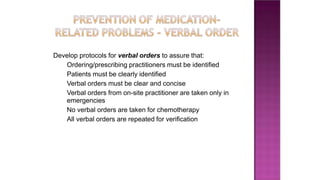
Develop protocols for verbal orders to assure that:
Ordering/prescribing practitioners must be identified
Patients must be clearly identified
Verbal orders must be clear and concise
Verbal orders from on-site practitioner are taken only in
emergencies
No verbal orders are taken for chemotherapy
All verbal orders are repeated for verification
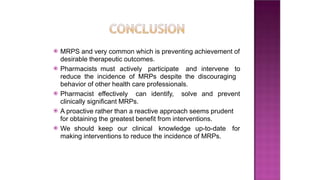
⦿ MRPS and very common which is preventing achievement of
desirable therapeutic outcomes.
⦿ Pharmacists must actively participate and intervene to
reduce the incidence of MRPs despite the discouraging
behavior of other health care professionals.
⦿ Pharmacist effectively can identify, solve and prevent
clinically significant MRPs.
⦿ A proactive rather than a reactive approach seems prudent
for obtaining the greatest benefit from interventions.
⦿ We should keep our clinical knowledge up-to-date for
making interventions to reduce the incidence of MRPs.
⦿ Bindoff, I. K., Peterson, G. M., Tenni, P. C. and Williams, M. (2012) A clinical
knowledge measurement tool to assess the ability of communi- ty pharmacists to
detect drug-related problems. Int. J. Pharm Pract, Volume 20, Pages 238-48.
⦿ Foppe Van Mil. Drug-related problems: a cornerstone for pharmaceutical care.
Journal of the Malta College of Pharmacy. 2005; 10: 5-8.
⦿ Hepler CD, Strand LM. Opportunities and responsibilities in pharmaceutical care. Am
J Hosp Pharm. 1990; 47:533–43.
⦿ Linda M. S., Peter C.M., Robert J. C. et al. Drug related problems: Their structure
and function. DCIP Annals of Pharmacotherapy. 1990;24:1093-97.
⦿ National Coordinating Council for medication error reporting and prevention (NCC
MERP). About Medication Errors. [Cited 17-04-05]. Available from http://
www.nccmerp.org/about mederrors.htm.
⦿ Ulrika, G. (2012) Effects of Clinical Pharmacists Interventions on Drug- related
Hospitalization and appropriateness of Prescribing in Elderly patients. Digitala
Vetenskapliga Arkivet, Volume 154, Page 58.
⦿ Van Mil JWF, Schulz M, Tromp TF. Pharmaceutical care, European developments in
concepts, implementation, teaching, and research; a review. Pharm. World Sci.
2004;26:303-11.
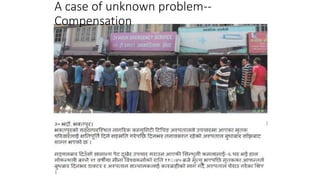
A case of unknown problem--
Compensation
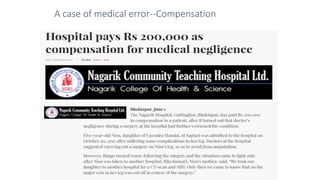
A case of medical error--Compensation
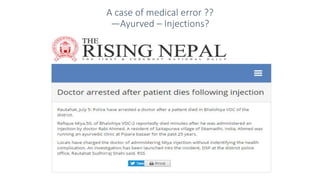
A case of medical error ??
—Ayurved – Injections?
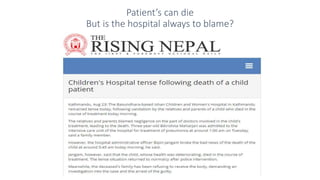
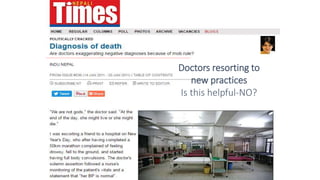
Patient’s can die
But is the hospital always to blame?
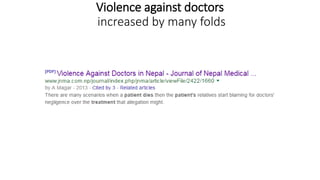
Violence against doctors
increased by many folds
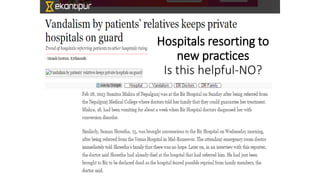
Hospitals resorting to
new practices
Is this helpful-NO?
Medication errors – and their roots
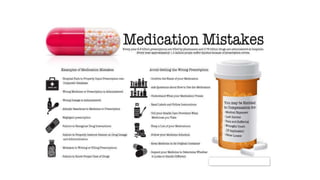
• Medication errors may arise from:
• poor communication; (short timed patient-doctor interaction)
• misinterpreted handwriting;
• drug name confusion;
• confusing drug labels,
• labeling, and packaging;
• lack of employee knowledge; and
• lack of patient understanding about a drug's directions.
• But it's important to recognize that such errors are due to multiple
factors in a complex medical system
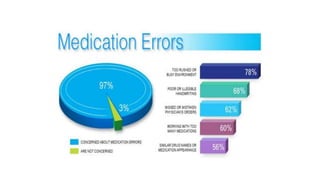
Environment as cause of medication errors
Some environment are more prone to making medication
errors:
• ineffective communication with patients
• ineffective communication with other healthcare providers
• emphasis on volume over service quality
• fatigued staff
• inadequate staffing
• frequent interruptions and distractions
• poor physician handwriting
• stress
• improper technician training
• disorganized work flow
Doctors resorting to
new practices
Is this helpful-NO?
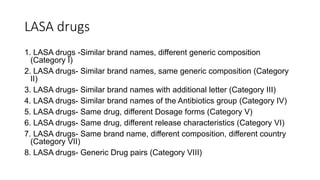
LASA drugs
1. LASA drugs -Similar brand names, different generic composition
(Category I)
2. LASA drugs- Similar brand names, same generic composition (Category
II)
3. LASA drugs- Similar brand names with additional letter (Category III)
4. LASA drugs- Similar brand names of the Antibiotics group (Category IV)
5. LASA drugs- Same drug, different Dosage forms (Category V)
6. LASA drugs- Same drug, different release characteristics (Category VI)
7. LASA drugs- Same brand name, different composition, different country
(Category VII)
8. LASA drugs- Generic Drug pairs (Category VIII)
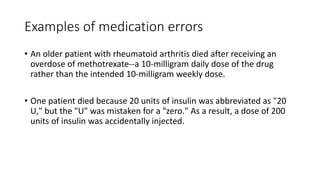
Examples of medication errors
• An older patient with rheumatoid arthritis died after receiving an
overdose of methotrexate--a 10-milligram daily dose of the drug
rather than the intended 10-milligram weekly dose.
• One patient died because 20 units of insulin was abbreviated as "20
U," but the "U" was mistaken for a "zero." As a result, a dose of 200
units of insulin was accidentally injected.
Hospital pharmacist-medication safety
• The hospital pharmacist is best placed to note the quality of the
entire drug distribution chain, from:
• prescribing,
• drug choice,
• dispensing and
• preparation
• administration of drugs,
• and thereby can fulfill a vital role in improving medication safety.

medication error.pptx

  • 1.
  • 2.
    © 2008 Boardof Trustees of U of IL “The science and technologies involved in healthcare -- the knowledge, skills, care interventions, devices and drugs -- have advanced more rapidly than our ability to deliver them safely, effectively, and efficiently” IOM. 2001. Crossing the Quality Chasm: A New Health System for the 21st Century. Medication use has become increasingly complex in recent times
  • 3.
    Objectives • To providean overview of medication safety • Understand the scale of medicational errors • Identify factors that contribute to medicational errors • Learn how to make medication use safer
  • 4.
    Medical error • Medicalerror: an act of omission or commission in planning and execution that contributes or could contribute to an unintended result. • This definition of medical error includes explicitly the key domains of error causation (omission and commission, planning and execution), whether adverse outcomes occur or not. • Patient harm from medical error can occur at individual or system level. Ethan D Grober, John MA Bohmen. Defining medical error. Can J Surg 48(1) 2005 Feb
  • 5.
    How dangerous ishealth care? • Less than one death per 100,000 encounters • Nuclear power • European railroads • Scheduled airline • One death in < 100,000 but >1000 encounters • Driving • Chemical manufacturing • More than one death per 1000 encounters • Bungee jumping • Mountain climbing • Health care (hospitalization)
  • 6.
    Medication errors • Medicationerrors: any mistake occurring in the medication use process, regard less of whether an injury occurred or whether the potential for injury was present • Studies- ME occurred in at some point in medicational process in 5-14% of doses dispensed* • Approximately 1 in 100 medication errors result in an ADE, while 5 in 100 have a potential to do so *Luigi Brunetti, Don-Churi Suh. Jour of Hospital Administration Dec 2012:Vol 1, No 2
  • 7.
    Adverse drug events(ADEs) • ADEs are defined as any injuries resulting from medication use, including physical harm, mental harm, or loss of function. • ADEs, compared to medication errors are a more direct measure of patient harm • Adverse drug events accounts for 19% of all injuries caused by medical care
  • 8.
    Adverse drug events(ADEs) • Preventable ADEs are ADEs that can be avoided. At least 1/4th of ADEs are preventable • Adverse drug reactions are ADEs non preventable ADEs and occur due to pharmacological properties of the drug • Near miss errors (potential ADEs) pose a significant risk, but do not cause harm to a patient. Potential ADEs include errors that are intercepted before patient is effected
  • 9.
  • 11.
    Scope of medicationerrors: USA • Serious preventable medical errors occur in • 3.8 million inpatient admissions 1 • 3.3 million outpatient visits 2 • Mortality from preventable medication errors • 7000 deaths each year 3 1.Massachusetts Technology Colloboration (MIT) and NEHI 2008. Saving lives, saving money 2.Center for information Technology (CITL) 2011 3.IOM.To err is human. Building a safer health system. Washington DC 1999
  • 12.
    Annual cost ofpreventable medication errors by setting (US) 1. NEHI 2008 2. CITL 2007 3. Burton MM, Hope C et al. 1 2,3
  • 13.
  • 14.
    Types and Settingof Preventable MEs • Dosing errors makes up 37% • Drug allergies/ harmful drug interactions account for 11% • Approximately 100 undetected dispensing errors can occur each day
  • 15.
    NCC MERP indexfor categorizing medical errors 2001 National Coordinating Council for Medical Error Reduction and Prevention
  • 17.
  • 18.
    18 Comparisons of Adultand Pediatric Inpatients Pediatrics Adults** Orders reviewed 10,778 10,070 Medication errors 616 (5.7%) 530 (5.3%) Near Misses 115 (1.1%) 35 (0.35%) * ADEs 26 (0.24%) 25 (0.25%) Preventable ADEs 5 (0.05%) 5 (0.05%) *p value <0.05 **Study performed at Brigham and Women’s Hospital Kaushal et al, JAMA 2001
  • 19.
    Near Misses inthe NICU per 100 orders 2.8 1.3 0.77 0.35 0 0.5 1 1.5 2 2.5 3 NICU PICU Med/Surg Adult * * * P<0.001 JAMA 2001;285;2114-20 * ICU
  • 20.
    Error reduction No onemakes an error on purpose Lucian Leape Every one makes dumb mistakes every day No one admits an error if you punish them for it
  • 21.
    Error reductions: systemapproach • Culture of Safety • Non-punitive systems • Multidisciplinary error prevention • Avoid fatigue • Minimize distractions • Independent double checks • 2nd checker will detect ~ 90% of errors made by first checker • Facilitate patient engagement • On going education • HIT
  • 22.
    Multidisciplinary error prevention:Avoid fragmentation of care • Improved communication among physicians, nurses and pharmacists prevented 85% of preventable serious medicational errors 1 • Including a pharmacist on routine medical rounds led to a 78% reduction in medical errors 2 • Adding a pharmacist to a physician rounds team in an ICU led to annual savings of $270,000 2,3 • Dedicated care – doctors and nurses • My experience --- 1. Fortescue et al. Prioritizing statgies for preventing Mes and ADEs in pediatric inpatients. Pediatrics 2003. 111: 722-729 2. Kukukarsalan SN et al. Pharmacists on rounding teams prevent preventable ADEs. Arch Int Med 2003. 163(17): 2014-2018 3. Leapp LL et al. Pharmacist participation on physician rounds and ADEs in ICU. JAMA 1999. 282(3):267-270
  • 23.
    What can wedo to make medication use safer? • Use generic names. Look alike, sound alike medicines • Tailor prescribing for each patient • Learn and practice thorough medication history taking • Know the high-risk medications and take precautions • Know the medications you prescribe well • Use memory aids • Communicate clearly • Develop checking habits • Encourage patients to be actively involved • Report and learn from errors
  • 24.
    Generic names: Look-a-likeand sound-a-like medications • Clinician’s Pocket Drug Reference 2015 • Rapid information on over 1400 look-a-like and sound-a-like medications, arranged alphabetically
  • 26.
    Tailor prescribing forindividual patient Consider: • allergies • co-morbidities (especially liver and renal impairment) • other medication • pregnancy and breastfeeding • size of patient
  • 27.
  • 28.
    Medication history taking •Include name, dose, route, frequency, duration of every drug • Enquire about recently ceased medications • Ask about over-the-counter medications, dietary supplements and alternative medicines • Make sure what patient actually takes, matches your list: • be particularly careful across transitions of care • Look up any medications you are unfamiliar with • Consider drug interactions, medications that can be ceased and medications that may be causing side-effects • Always include allergy history
  • 29.
    Medication history taking •A 74-year-old man sees a doctor for treatment of new onset stable angina • The doctor has not met this patient before and takes a full past history and medication history • He discovers the patient has been healthy and only takes medication for headaches, name of which the patient cannot recall • The doctor assumes it is an analgesic that the patient takes whenever he develops a headache
  • 30.
    Medication history taking •Medication is actually a beta-blocker that he takes every day for migraine; this medication was prescribed by a different doctor • Patient is prescribed aspirin and another beta-blocker for the angina • After commencing the new medication, the patient develops bradycardia and postural hypotension • Unfortunately the patient has a fall three days later due to dizziness on standing; he fractures his hip in the fall
  • 31.
    Which medications arehigh risk? • Narrow therapeutic window • Multiple interactions with other medications • Potent medications • Complex dosage and monitoring schedules • Some examples: • oral anticoagulants • Insulin • chemotherapeutic agents • neuromuscular blocking agents • aminoglycoside • intravenous potassium • Cardiovascular medications
  • 32.
    Avoiding ambiguous nomenclature •Avoid trailing zeros • e.g. write 1 not 1.0 • Use leading zeros • e.g. write 0.1 not .1 • Know accepted local terminology • Write neatly, print if necessary
  • 33.
    Remember 5 Rs •Right drug • Right dose • Right route • Right time • Right patient
  • 34.
    Ten rights (‘Rs’)for medication • 5 Rs + • Right documentation • Right medication history and assessment • Right drug-drug interaction and evaluation • Right education and information to patient • Right to refuse
  • 35.
    Some examples frommy experience • Administration of 10 mg of morphine to new born baby, though it was prescribed to the mother • 5-ml of KCl given IV directly - 2 incidents • Baby on high dose ionotrope in ICU goes in shock because extravasation of fluid was detected late • Wrong calculation of insulin dose in NICU.(X ten times) • 10 times required dose of epinephrine given IV instead of IM for anaphylaxis
  • 36.
    NSW Examples -Medication Errors Aspirin and clopidogrel ceased in ICU and not recommenced when patient transferred to ward Patient suffered sudden cardiac arrest resulting in death May have contributed to patient’s death Patient prescribed ramipril 1.25mg daily, medication chart was rewritten as ramipril 12.5mg daily Patient suffered pre- syncopal episode, was transferred to HDU and required noradrenaline Caused temporary harm and required intervention Patient initiated on new cardiac medication, discharged with no summary or medicine Patient became acutely unwell and was re-admitted Caused temporary harm and required intervention The degree of harm experienced by patients can vary depending on the type of error and the medication involved.
  • 37.
    Know the medicationyou prescribe well • Do some homework on every medication you prescribe • Suggested framework • pharmacology • Indications • Contraindications • side-effects • special precautions • dose and administration • regimen
  • 38.
    Use memory aids •Formulary, protocols, textbooks • Personal digital assistant • Computer programs, computerized prescribing • Free up your brain for problem solving rather than remembering facts and figures that can be stored elsewhere • Looking things up if unsure is a marker of safe practice, not incompetence!
  • 39.
    Develop checking habits •When prescribing a medication • When administering medication: • check for allergies • check the 6 Rs • Be careful about look alike-sound alike medicines • Remember computerized systems still require checking • Always check and it will become a habit!
  • 40.
    Develop checking habits •Some useful maxims … • Un labelled medications belong in the bin • Never administer a medication unless you are 100% sure you know what it is • Practice makes perfect • so start your checking habits now
  • 41.
    Patient safety • ComputerizedPhysician Order Entry (CPOE) • Reduces serious medication errors by 81% • Electronic Medication Administration Record (eMAR) • Bar coding • 51% reductions in medical errors • Smart pumps • Pharmacist interventions • Daily medication review • Participation on rounds • Medication reconciliation – identifies medication discrepancies during transition and discharge
  • 42.
    42 Conclusion “Our systems aretoo complex to expect merely extraordinary people to perform perfectly 100% of the time. We as leaders have a responsibility to put in place systems to support safe practice.” James Conway, former VP and COO Dana-Farber Cancer Institute
  • 43.
  • 44.
  • 45.
  • 46.
    M. Makery, MatinDaniel. Medical error-3rd leading cause of death in US. BMJ 2016;353
  • 47.
    ⦿ “ anevent or circumstance involving drug therapy that actually or potentially interferes with desired health outcomes” (PCNE, 1999). ⦿ MRP occurs when a patient experiences or is liable to experience either a disease or symptom having a definite or assumed association with drug therapy (Linda et al., 1990).
  • 48.
    Access to treatment 1.Untreated indication Effectiveness 2. Improper drug selection 4. Inappropriate use by patient 5. Overdosage Safety 8. Medication without indication
  • 49.
    • Inappropriate useby the patient • Adverse drug reactions • Lack of knowledge about disease and drug therapy
  • 50.
  • 51.
    Medication Related problems (MRPs) Patient behaviors problem Physician prescribing problem Real MRPs Manifest and influencing outcomes Avoidable problem PotentialMRPs Not manifest but possibly influencing outcomes Avoidable problem Unavoidabl e problem Pharmacy dispensing problem Unavoidable problem
  • 52.
    PCNE (Pharmaceutical CareNetwork Europe) • 4 primary domains for problems • 8 primary domains for causes • 5 primary domains for Interventions • 4 primary domains for outcome of intervention
  • 53.
  • 54.
    Pharmacists can detectand either prevent or resolve many of these MRPs. Pharmaceutical Care focuses in identification, solving and prevention of MPRs. Pharmaceutical care (Hepler and Strand, 1984) “responsible provision of drug therapy for the purpose of achieving specific outcomes that improve a patient's quality of life”
  • 55.
    Pharmaceutical care involvesthree major functions: (1) Identifying potential and actual MRPs (2) resolving actual drug-related MRPs (3) preventing potential MRPs
  • 56.
    ⦿Data Collection • Whatis the information we have to interpret? • the patient as an information source • gaining information from other sources •caregiver •physician •other provider •chart Problems may be actual (present) or potential (occur in the future if no intervention)
  • 57.
    ⦿Evaluation of thepatient data • Must evaluate data to determine if problem exists evaluation questions relate to the drug therapy problems Do any of the problems exists? ⦿ Problem can be: • untreated indication • wrong drug being taken • too little of the correct drug • too much of the correct drug • adverse drug reaction present • drug-drug/food/lab interaction • not receiving the prescribed drug • use without valid indication
  • 58.
    ⦿Evaluation of thepatient data - Problem identification ▪ Does the patient have a condition or symptoms that need to be treated? • What are the patient’s symptoms, or diagnosed conditions? • Can you treat the patient or does he or she need to be referred to another health professional? ▪ If the patient has a legitimate need to be treated for conditions or symptoms, is the treatment he or she is getting the most effective and safe? ▪ What are the appropriate treatments for this condition? •What patient factors (dx, allergy, prev. patient responses, pharmacokinetic variables, social conditions, etc.) are present that may affect agent choice?
  • 59.
    What other medicationis the patient taking and how might this affect agent choice? What has the patient response been to the current therapy? What has the patient response been to previous therapies? If the patient is on the correct drug is he or she receiving too little of this drug? What dose of the drug is the patient really getting? What are the acceptable doses of this drug? How do we titrate this drug for this condition? What are the appropriate monitoring parameters for this condition and have they been used to justify a higher dose? Is the patient likely to tolerate a higher dose? What patient factors (diagnoses, allergies, previous patient responses, pharmacokinetic variables, social conditions, etc.) are present that may justify an increased dose? What other medication is the patient taking and how might this cause a need for an increased dose?
  • 60.
    Resolution of actualor prevention of potential MRPs is the second component in providing pharmaceutical care to a patient. Determining desired therapeutic outcomes (what is the goal) o need to know where we are going therapeutically o commonly not well defined by physician –use of your professional skills –use knowledge gained (pharmacotherapy) o should have as part of the goal, one of the four positive outcomes of drug therapy o set definitive, measurable end-point if possible
  • 61.
    ⦿Evaluation of therapeuticalternatives (what are the options) • list all possible alternatives –do not dismiss any on first thought –include more than you can initially remember • be sure to include non-pharmacologic therapy as alternatives • include “do nothing” as an alternative
  • 62.
    Correction of drugrelated problems - Best alternative drug regimen recommendation and individualization (what is the best option, and how to implement) • what is best for this patient at this time • drug, dose, route and dosage form, regimen, duration of therapy • develop action plan to implement recommendations • agree with patient/other provider on plan • implement that plan –what will be done, how will it be done
  • 63.
    Correction of drugrelated problems – Monitoring Design and implement monitoring plan (what is done to see if the option worked) What needs to be followed up? –did the recommendation work? –were there adverse consequences to the recommendation When does it need to be followed up? • schedule a time for follow-up –when is likely therapeutic effect? –when would adverse effects be likely? • determine a method of follow-up • agree with patient on time and method Implement the monitoring plan Every patient should be followed up until he or she is no longer a responsibility of your practice
  • 64.
    Documentation • patient name •medical problem list • medication list • allergies • drug-related problem list • problem-oriented notes
  • 65.
    ⦿ Prescriptions shouldalways be reviewed by a pharmacist ⦿ Patient profiles should be current and complete ⦿ Design of the dispensing area is imp ⦿ Product inventory should be arranged to help differentiate medications ⦿ Limiting assess to high alert medication, beware of look alike sound alike drugs ⦿ Be careful with zeros and abbreviation ⦿ A series of checks should be established ⦿ Independent double check orders both on calculation & preparation ⦿ Labels must be read at least three times
  • 66.
    ⦿ Pharmacists mustcounsel patients Assess patient’s level of comprehension See if patient seems able to properly read directions - Do not assume Ask the patient leading questions Provide education sheets ⦿ Dispense medication using unit-dose, ready to administration form whenever possible ⦿ Patient name, generic drug name, patient specific dose on all labels
  • 67.
    Clarify confusing orders IFYOU DON’T KNOW, ASK!!!! ⦿ There are no stupid questions ⦿ If something seems wrong, it just might be ⦿ Ask many questions to clarify your concern ⦿ Be sure you are asking the question clearly and the responder understands the question ⦿ Always think five RIGHT’s rule The RIGHT ▪ person ▪ dose ▪ medication ▪ frequency ▪ route
  • 68.
    ⦿ Read back ⦿Spell the name of medication ⦿ Spell out numbers like 17 vs. 70 ⦿ Make sure you have all needed information ⦿ Ask for indication ⦿ Do not use unapproved abbreviations ⦿ Do not hesitate to call back for clarification
  • 69.
    Develop protocols forverbal orders to assure that: Ordering/prescribing practitioners must be identified Patients must be clearly identified Verbal orders must be clear and concise Verbal orders from on-site practitioner are taken only in emergencies No verbal orders are taken for chemotherapy All verbal orders are repeated for verification
  • 70.
    ⦿ MRPS andvery common which is preventing achievement of desirable therapeutic outcomes. ⦿ Pharmacists must actively participate and intervene to reduce the incidence of MRPs despite the discouraging behavior of other health care professionals. ⦿ Pharmacist effectively can identify, solve and prevent clinically significant MRPs. ⦿ A proactive rather than a reactive approach seems prudent for obtaining the greatest benefit from interventions. ⦿ We should keep our clinical knowledge up-to-date for making interventions to reduce the incidence of MRPs.
  • 71.
    ⦿ Bindoff, I.K., Peterson, G. M., Tenni, P. C. and Williams, M. (2012) A clinical knowledge measurement tool to assess the ability of communi- ty pharmacists to detect drug-related problems. Int. J. Pharm Pract, Volume 20, Pages 238-48. ⦿ Foppe Van Mil. Drug-related problems: a cornerstone for pharmaceutical care. Journal of the Malta College of Pharmacy. 2005; 10: 5-8. ⦿ Hepler CD, Strand LM. Opportunities and responsibilities in pharmaceutical care. Am J Hosp Pharm. 1990; 47:533–43. ⦿ Linda M. S., Peter C.M., Robert J. C. et al. Drug related problems: Their structure and function. DCIP Annals of Pharmacotherapy. 1990;24:1093-97. ⦿ National Coordinating Council for medication error reporting and prevention (NCC MERP). About Medication Errors. [Cited 17-04-05]. Available from http:// www.nccmerp.org/about mederrors.htm. ⦿ Ulrika, G. (2012) Effects of Clinical Pharmacists Interventions on Drug- related Hospitalization and appropriateness of Prescribing in Elderly patients. Digitala Vetenskapliga Arkivet, Volume 154, Page 58. ⦿ Van Mil JWF, Schulz M, Tromp TF. Pharmaceutical care, European developments in concepts, implementation, teaching, and research; a review. Pharm. World Sci. 2004;26:303-11.
  • 72.
    A case ofunknown problem-- Compensation
  • 73.
    A case ofmedical error--Compensation
  • 74.
    A case ofmedical error ?? —Ayurved – Injections?
  • 75.
    Patient’s can die Butis the hospital always to blame?
  • 76.
  • 77.
    Hospitals resorting to newpractices Is this helpful-NO?
  • 78.
    Medication errors –and their roots • Medication errors may arise from: • poor communication; (short timed patient-doctor interaction) • misinterpreted handwriting; • drug name confusion; • confusing drug labels, • labeling, and packaging; • lack of employee knowledge; and • lack of patient understanding about a drug's directions. • But it's important to recognize that such errors are due to multiple factors in a complex medical system
  • 79.
    Environment as causeof medication errors Some environment are more prone to making medication errors: • ineffective communication with patients • ineffective communication with other healthcare providers • emphasis on volume over service quality • fatigued staff • inadequate staffing • frequent interruptions and distractions • poor physician handwriting • stress • improper technician training • disorganized work flow
  • 80.
    Doctors resorting to newpractices Is this helpful-NO?
  • 84.
    LASA drugs 1. LASAdrugs -Similar brand names, different generic composition (Category I) 2. LASA drugs- Similar brand names, same generic composition (Category II) 3. LASA drugs- Similar brand names with additional letter (Category III) 4. LASA drugs- Similar brand names of the Antibiotics group (Category IV) 5. LASA drugs- Same drug, different Dosage forms (Category V) 6. LASA drugs- Same drug, different release characteristics (Category VI) 7. LASA drugs- Same brand name, different composition, different country (Category VII) 8. LASA drugs- Generic Drug pairs (Category VIII)
  • 85.
    Examples of medicationerrors • An older patient with rheumatoid arthritis died after receiving an overdose of methotrexate--a 10-milligram daily dose of the drug rather than the intended 10-milligram weekly dose. • One patient died because 20 units of insulin was abbreviated as "20 U," but the "U" was mistaken for a "zero." As a result, a dose of 200 units of insulin was accidentally injected.
  • 89.
    Hospital pharmacist-medication safety •The hospital pharmacist is best placed to note the quality of the entire drug distribution chain, from: • prescribing, • drug choice, • dispensing and • preparation • administration of drugs, • and thereby can fulfill a vital role in improving medication safety.