Signal Averaging Method (BOLD- fMRI Signal Data)
Outline
Introduction- fMRI
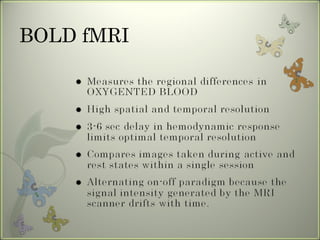
BOLD fMRI
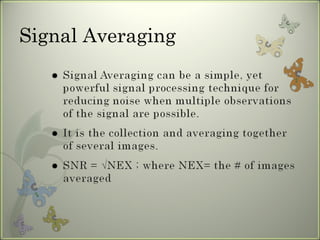
Signal Averaging
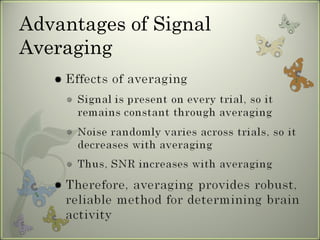
Advantages of Signal Averaging
Objective
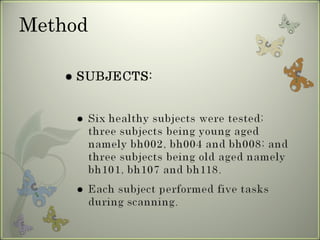
Method
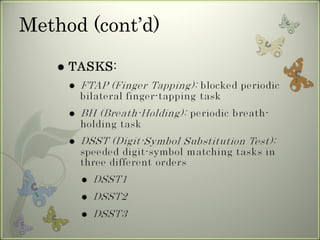
Method (cont’d)
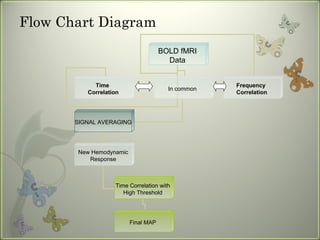
Flow Chart Diagram BOLD fMRI Data Time  Correlation In common Frequency  Correlation SIGNAL AVERAGING New Hemodynamic Response Time Correlation with High Threshold Final MAP
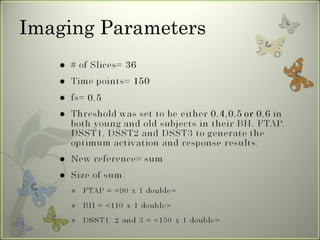
Imaging Parameters
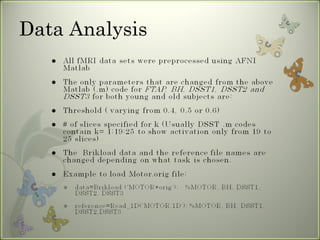
Data Analysis
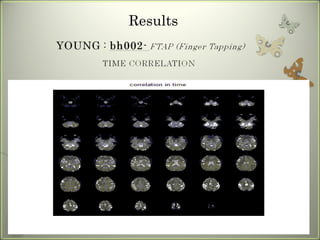
Results
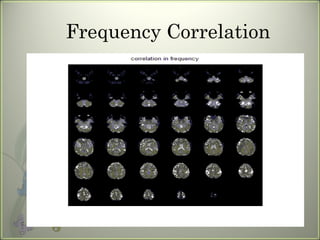
Frequency Correlation
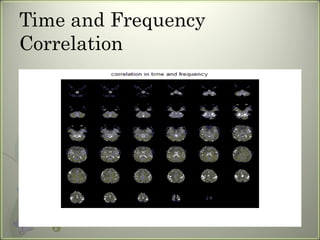
Time and Frequency Correlation
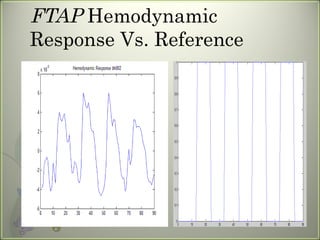
FTAP  Hemodynamic Response Vs. Reference
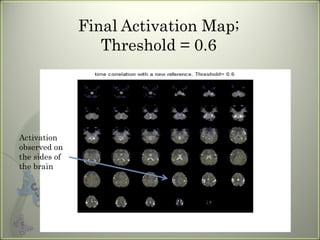
Final Activation Map; Threshold = 0.6 Activation observed on the sides of the brain
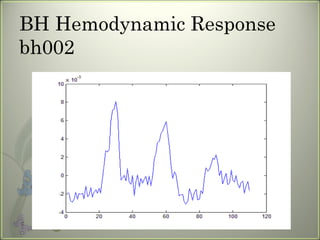
BH Hemodynamic Response bh002
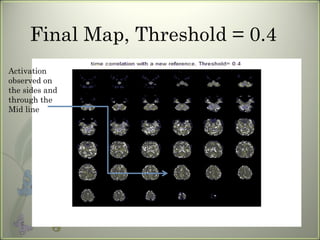
Final Map, Threshold = 0.4 Activation observed on the sides and through the Mid line
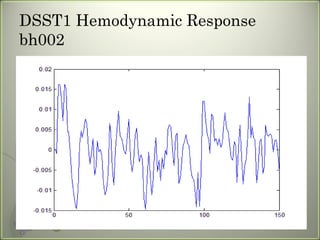
DSST1 Hemodynamic Response bh002
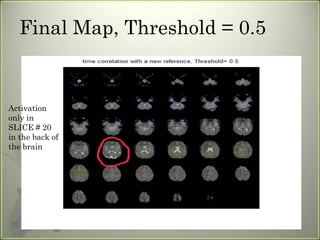
Final Map, Threshold = 0.5 Activation only in SLICE # 20 in the back of the brain
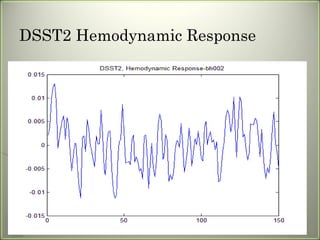
DSST2 Hemodynamic Response
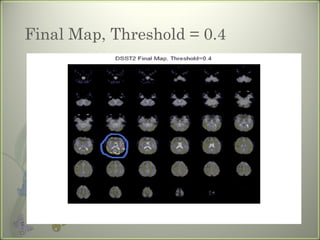
Final Map, Threshold = 0.4
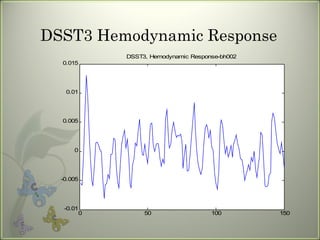
DSST3 Hemodynamic Response
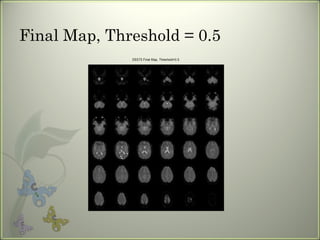
Final Map, Threshold = 0.5
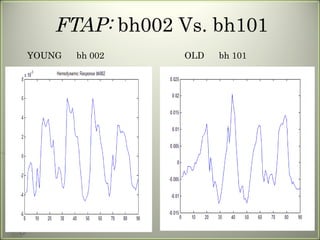
FTAP:  bh002 Vs. bh101 OLD  bh 101 YOUNG  bh 002
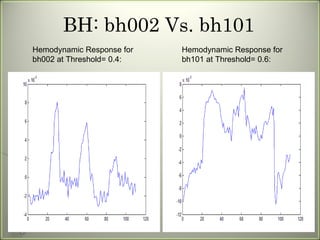
BH: bh002 Vs. bh101 Hemodynamic Response for bh101 at Threshold= 0.6: Hemodynamic Response for bh002 at Threshold= 0.4:
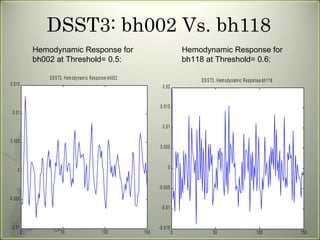
DSST3: bh002 Vs. bh118 Hemodynamic Response for bh118 at Threshold= 0.6: Hemodynamic Response for bh002 at Threshold= 0.5:
Conclusion
References

Medical Imaging