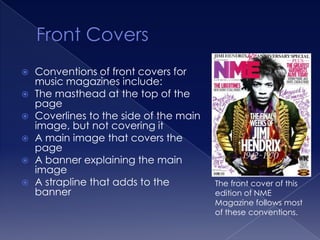
   Conventions of front covers for
    music magazines include:
   The masthead at the top of the
    page
   Coverlines to the side of the main
    image, but not covering it
   A main image that covers the
    page
   A banner explaining the main
    image
   A strapline that adds to the         The front cover of this
    banner                               edition of NME
                                         Magazine follows most
                                         of these conventions.
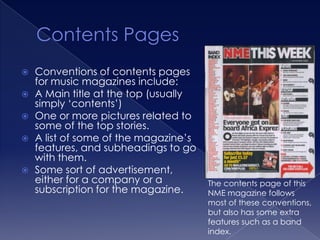
   Conventions of contents pages
    for music magazines include:
   A Main title at the top (usually
    simply ‘contents’)
   One or more pictures related to
    some of the top stories.
   A list of some of the magazine’s
    features, and subheadings to go
    with them.
   Some sort of advertisement,
    either for a company or a          The contents page of this
    subscription for the magazine.     NME magazine follows
                                       most of these conventions,
                                       but also has some extra
                                       features such as a band
                                       index.
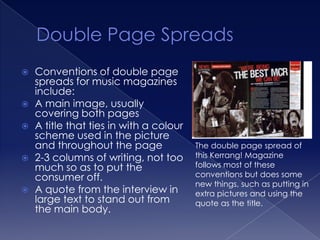
   Conventions of double page
    spreads for music magazines
    include:
   A main image, usually
    covering both pages
   A title that ties in with a colour
    scheme used in the picture
    and throughout the page              The double page spread of
   2-3 columns of writing, not too      this Kerrang! Magazine
    much so as to put the                follows most of these
    consumer off.                        conventions but does some
                                         new things, such as putting in
   A quote from the interview in        extra pictures and using the
    large text to stand out from         quote as the title.
    the main body.
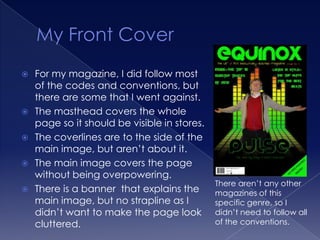
   For my magazine, I did follow most
    of the codes and conventions, but
    there are some that I went against.
   The masthead covers the whole
    page so it should be visible in stores.
   The coverlines are to the side of the
    main image, but aren’t about it.
   The main image covers the page
    without being overpowering.
                                              There aren’t any other
   There is a banner that explains the       magazines of this
    main image, but no strapline as I         specific genre, so I
    didn’t want to make the page look         didn’t need to follow all
    cluttered.                                of the conventions.
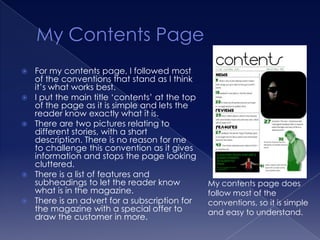
   For my contents page, I followed most
    of the conventions that stand as I think
    it’s what works best.
   I put the main title ‘contents’ at the top
    of the page as it is simple and lets the
    reader know exactly what it is.
   There are two pictures relating to
    different stories, with a short
    description. There is no reason for me
    to challenge this convention as it gives
    information and stops the page looking
    cluttered.
   There is a list of features and
    subheadings to let the reader know           My contents page does
    what is in the magazine.                     follow most of the
   There is an advert for a subscription for    conventions, so it is simple
    the magazine with a special offer to         and easy to understand.
    draw the customer in more.
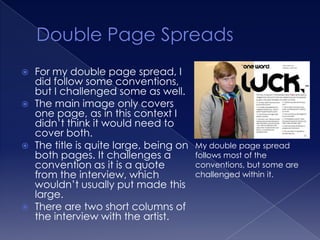
   For my double page spread, I
    did follow some conventions,
    but I challenged some as well.
   The main image only covers
    one page, as in this context I
    didn’t think it would need to
    cover both.
   The title is quite large, being on   My double page spread
    both pages. It challenges a          follows most of the
    convention as it is a quote          conventions, but some are
    from the interview, which            challenged within it.
    wouldn’t usually put made this
    large.
   There are two short columns of
    the interview with the artist.

Media Evaluation Q1

  • 2.
    Conventions of front covers for music magazines include:  The masthead at the top of the page  Coverlines to the side of the main image, but not covering it  A main image that covers the page  A banner explaining the main image  A strapline that adds to the The front cover of this banner edition of NME Magazine follows most of these conventions.
  • 3.
    Conventions of contents pages for music magazines include:  A Main title at the top (usually simply ‘contents’)  One or more pictures related to some of the top stories.  A list of some of the magazine’s features, and subheadings to go with them.  Some sort of advertisement, either for a company or a The contents page of this subscription for the magazine. NME magazine follows most of these conventions, but also has some extra features such as a band index.
  • 4.
    Conventions of double page spreads for music magazines include:  A main image, usually covering both pages  A title that ties in with a colour scheme used in the picture and throughout the page The double page spread of  2-3 columns of writing, not too this Kerrang! Magazine much so as to put the follows most of these consumer off. conventions but does some new things, such as putting in  A quote from the interview in extra pictures and using the large text to stand out from quote as the title. the main body.
  • 5.
    For my magazine, I did follow most of the codes and conventions, but there are some that I went against.  The masthead covers the whole page so it should be visible in stores.  The coverlines are to the side of the main image, but aren’t about it.  The main image covers the page without being overpowering. There aren’t any other  There is a banner that explains the magazines of this main image, but no strapline as I specific genre, so I didn’t want to make the page look didn’t need to follow all cluttered. of the conventions.
  • 6.
    For my contents page, I followed most of the conventions that stand as I think it’s what works best.  I put the main title ‘contents’ at the top of the page as it is simple and lets the reader know exactly what it is.  There are two pictures relating to different stories, with a short description. There is no reason for me to challenge this convention as it gives information and stops the page looking cluttered.  There is a list of features and subheadings to let the reader know My contents page does what is in the magazine. follow most of the  There is an advert for a subscription for conventions, so it is simple the magazine with a special offer to and easy to understand. draw the customer in more.
  • 7.
    For my double page spread, I did follow some conventions, but I challenged some as well.  The main image only covers one page, as in this context I didn’t think it would need to cover both.  The title is quite large, being on My double page spread both pages. It challenges a follows most of the convention as it is a quote conventions, but some are from the interview, which challenged within it. wouldn’t usually put made this large.  There are two short columns of the interview with the artist.