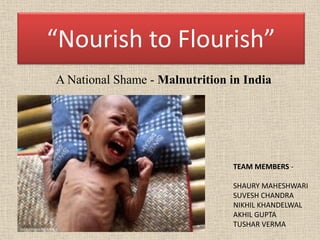
“Nourish to Flourish”
A National Shame - Malnutrition in India
TEAM MEMBERS -
SHAURY MAHESHWARI
SUVESH CHANDRA
NIKHIL KHANDELWAL
AKHIL GUPTA
TUSHAR VERMA
The World Bank estimates that India is one of the
highest ranking countries in the world for the number
of children suffering from malnutrition.
The prevalence of underweight children in India is
among the highest in the world, and is nearly double
that of Sub-Saharan.
ABSTRACT
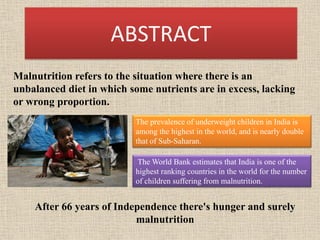
Malnutrition refers to the situation where there is an
unbalanced diet in which some nutrients are in excess, lacking
or wrong proportion.
After 66 years of Independence there's hunger and surely
malnutrition
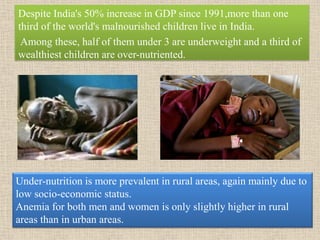
Despite India's 50% increase in GDP since 1991,more than one
third of the world's malnourished children live in India.
Among these, half of them under 3 are underweight and a third of
wealthiest children are over-nutriented.
Under-nutrition is more prevalent in rural areas, again mainly due to
low socio-economic status.
Anemia for both men and women is only slightly higher in rural
areas than in urban areas.
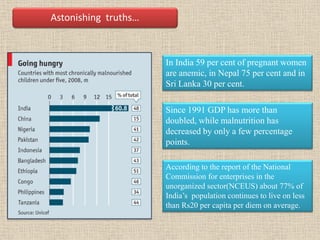
In India 59 per cent of pregnant women
are anemic, in Nepal 75 per cent and in
Sri Lanka 30 per cent.
Astonishing truths…
Since 1991 GDP has more than
doubled, while malnutrition has
decreased by only a few percentage
points.
According to the report of the National
Commission for enterprises in the
unorganized sector(NCEUS) about 77% of
India’s population continues to live on less
than Rs20 per capita per diem on average.
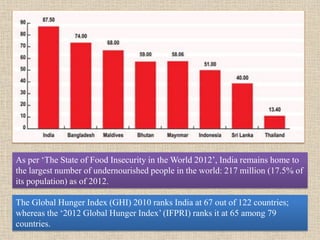
As per ‘The State of Food Insecurity in the World 2012’, India remains home to
the largest number of undernourished people in the world: 217 million (17.5% of
its population) as of 2012.
The Global Hunger Index (GHI) 2010 ranks India at 67 out of 122 countries;
whereas the ‘2012 Global Hunger Index’ (IFPRI) ranks it at 65 among 79
countries.
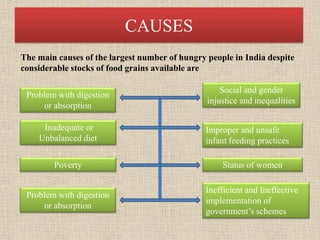
CAUSES
Inadequate or
Unbalanced diet
Problem with digestion
or absorption
Social and gender
injustice and inequalities
Inefficient and Ineffective
implementation of
government’s schemes
Poverty
Problem with digestion
or absorption
Status of women
Improper and unsafe
infant feeding practices
The main causes of the largest number of hungry people in India despite
considerable stocks of food grains available are
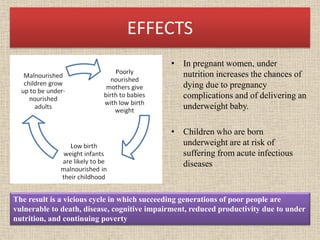
EFFECTS
• In pregnant women, under
nutrition increases the chances of
dying due to pregnancy
complications and of delivering an
underweight baby.
• Children who are born
underweight are at risk of
suffering from acute infectious
diseases
The result is a vicious cycle in which succeeding generations of poor people are
vulnerable to death, disease, cognitive impairment, reduced productivity due to under
nutrition, and continuing poverty
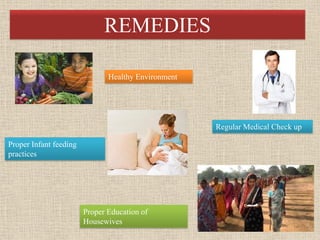
REMEDIES
Proper Education of
Housewives
Regular Medical Check up
Healthy Environment
Proper Infant feeding
practices
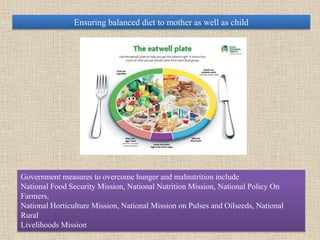
Government measures to overcome hunger and malnutrition include
National Food Security Mission, National Nutrition Mission, National Policy On
Farmers,
National Horticulture Mission, National Mission on Pulses and Oilseeds, National
Rural
Livelihoods Mission
Ensuring balanced diet to mother as well as child
Resources
• HUNGAMA, New Delhi, ‘Fighting Hunger and Malnutrition – Survey
Report 2011’
• Report of the National Commission for Enterprises in the Unorganised
sector (NCEUS), headed by Arjun Sengupta, Government of India, New
Delhi (2009).
• Ministry of Agriculture, Government of India, New Delhi, ‘Agricultural
Census.
• Several other sources/references used/tapped, but not listed herein

MechRiders

  • 1.
    “Nourish to Flourish” ANational Shame - Malnutrition in India TEAM MEMBERS - SHAURY MAHESHWARI SUVESH CHANDRA NIKHIL KHANDELWAL AKHIL GUPTA TUSHAR VERMA
  • 2.
    The World Bankestimates that India is one of the highest ranking countries in the world for the number of children suffering from malnutrition. The prevalence of underweight children in India is among the highest in the world, and is nearly double that of Sub-Saharan. ABSTRACT Malnutrition refers to the situation where there is an unbalanced diet in which some nutrients are in excess, lacking or wrong proportion. After 66 years of Independence there's hunger and surely malnutrition
  • 3.
    Despite India's 50%increase in GDP since 1991,more than one third of the world's malnourished children live in India. Among these, half of them under 3 are underweight and a third of wealthiest children are over-nutriented. Under-nutrition is more prevalent in rural areas, again mainly due to low socio-economic status. Anemia for both men and women is only slightly higher in rural areas than in urban areas.
  • 4.
    In India 59per cent of pregnant women are anemic, in Nepal 75 per cent and in Sri Lanka 30 per cent. Astonishing truths… Since 1991 GDP has more than doubled, while malnutrition has decreased by only a few percentage points. According to the report of the National Commission for enterprises in the unorganized sector(NCEUS) about 77% of India’s population continues to live on less than Rs20 per capita per diem on average.
  • 5.
    As per ‘TheState of Food Insecurity in the World 2012’, India remains home to the largest number of undernourished people in the world: 217 million (17.5% of its population) as of 2012. The Global Hunger Index (GHI) 2010 ranks India at 67 out of 122 countries; whereas the ‘2012 Global Hunger Index’ (IFPRI) ranks it at 65 among 79 countries.
  • 6.
    CAUSES Inadequate or Unbalanced diet Problemwith digestion or absorption Social and gender injustice and inequalities Inefficient and Ineffective implementation of government’s schemes Poverty Problem with digestion or absorption Status of women Improper and unsafe infant feeding practices The main causes of the largest number of hungry people in India despite considerable stocks of food grains available are
  • 7.
    EFFECTS • In pregnantwomen, under nutrition increases the chances of dying due to pregnancy complications and of delivering an underweight baby. • Children who are born underweight are at risk of suffering from acute infectious diseases The result is a vicious cycle in which succeeding generations of poor people are vulnerable to death, disease, cognitive impairment, reduced productivity due to under nutrition, and continuing poverty
  • 8.
    REMEDIES Proper Education of Housewives RegularMedical Check up Healthy Environment Proper Infant feeding practices
  • 9.
    Government measures toovercome hunger and malnutrition include National Food Security Mission, National Nutrition Mission, National Policy On Farmers, National Horticulture Mission, National Mission on Pulses and Oilseeds, National Rural Livelihoods Mission Ensuring balanced diet to mother as well as child
  • 10.
    Resources • HUNGAMA, NewDelhi, ‘Fighting Hunger and Malnutrition – Survey Report 2011’ • Report of the National Commission for Enterprises in the Unorganised sector (NCEUS), headed by Arjun Sengupta, Government of India, New Delhi (2009). • Ministry of Agriculture, Government of India, New Delhi, ‘Agricultural Census. • Several other sources/references used/tapped, but not listed herein