ROI in the CSR Context.
Does it Matter?
Dr. Sherif Tehemar
BDS/DDS, MSC, PhD, FACOMS, CSSGB
Sustainability Reporting Certified (GRI)
CSR Certified (World Bank)

CSR Consultant
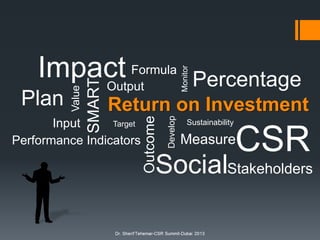
Monitor

Percentage

Target
Input
Performance Indicators

Develop

Return on Investment
Outcome

SMART

Plan

Value

Impact Formula
Output

Sustainability

CSR

Measure

SocialStakeholders
Points to Consider
 Businesses have the RIGHT to earn profits.
 CSR is NOT a philanthropic activity.
 Businesses have COMMITMENTS toward society.
 Implementing CSR programs by Businesses SHOULD
improve their TBL.
 ETICAL profits of the Company should have an impact on the
PROSPERITY of the society.
 The

CSR in improving the COMPETETIVE
ADVANTAGE of the company should be well realized and
appreciated by all stakeholders.
role

of
Important Statistics
 Employees at green companies are 16% more productive
 NG Survey: 80% of US workers want to work for an
organization which makes the environment a priority
 DSFH: 6% Decrease in employee turnover after 2 years
 2012 Neilsen survey: 66% customers prefer to buy from
companies that give back to society
-62% want to work for these companies
-59% want to invest in these companies
Financial Data
 IBM: “We earn a 3:1 return on our investment in Corporate
Citizenship’
 Westpac CEO, Morgan, 2006: “Benefits from reducing our
employee turnover are $50 million of avoided costs per
annum”
 DSFH: 150% reduction in SR in stationery after GO Green
campaign & digital environment (over 3 years)
 Jumeirah Group: $ 870,000 Saved
efficiencies in the last quarter of 2008

through

energy

 Wal-Mart: $2.4 million per year saved from eliminating
excessive packaging in ONE toy line
Branding
 Increase by 200% in brand recognition after year 1
(reference: Scandic)
 Brand recognition, reputation and loyalty, reflect on profits
starting year 2
 DSFH: Brand Audit DSFH ranked 1st brand in healthcare for
two years in a row.
Studies: UAE(2012)
 The driving forces are
 Preserving the environment.
 Better image and reputation,
 Developing and sustaining better relationships with
the government,
 Increases productivity and contributes to employee
loyalty.

Dubai Chamber of Commerce and Industry (Dubai Chamber) funded by the Emirates Foundation for Philanthropy (2012)
Why we measure ROI?
 Improved program management
 More effective planning
 More effective evaluation

 Increased understanding of the impact of your work
 Stronger communication of the value of your work to ‘the
people that matter’ (internal and external stakeholders)
 Enhanced attention to the social, economic and
environmental value created by your business or
organization
KPI in the CSR Guidelines
 GRI: Performance indicators in the GRI Guidelines.
 IIRC: Integrated Reporting
 SROI Network: Mandatory Indicators
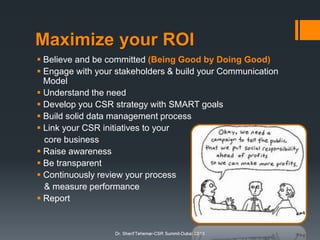
Maximize your ROI
 Believe and be committed (Being Good by Doing Good)
 Engage with your stakeholders & build your Communication
Model
 Understand the need
 Develop you CSR strategy with SMART goals
 Build solid data management process
 Link your CSR initiatives to your
core business
 Raise awareness
 Be transparent
 Continuously review your process
& measure performance
 Report
Challenges in Healthcare
Sectors
 Retain highly professional employees
 Access to care for poor people
Brand
2011
2010
2009
2008

1

2

2

Brand Audit

1
Employee’ Satisfaction
Overall Staff Satisfaction

45.90%

2008

49.90%

55.70%

57.20%
36%

2009

2010

2011

Int. Benchmark
Employees’ Loyalty
International rate of hospital turnover

17.5 %to 19.4%

DSFH overall turnover in 2011

13%

International nursing turnover

17.1 %to 25.2%

DSFH nursing turnover 2011

13%

19%
16%
13%

2009

2010

2011
Patients’ Visit
Total Patients Visit
599259
443993

2008

641938

472307

2009

2010

2011
Charity Office
 Deduction of 1 SR from each hospital bill.
 Free Treatment for 10,000 patients
We live by ethics & we grow by knowledge
S. Tehemar

Measuring Social Return on Investment (SROI)

  • 1.
    ROI in theCSR Context. Does it Matter? Dr. Sherif Tehemar BDS/DDS, MSC, PhD, FACOMS, CSSGB Sustainability Reporting Certified (GRI) CSR Certified (World Bank) CSR Consultant
  • 2.
    Monitor Percentage Target Input Performance Indicators Develop Return onInvestment Outcome SMART Plan Value Impact Formula Output Sustainability CSR Measure SocialStakeholders
  • 3.
    Points to Consider Businesses have the RIGHT to earn profits.  CSR is NOT a philanthropic activity.  Businesses have COMMITMENTS toward society.  Implementing CSR programs by Businesses SHOULD improve their TBL.  ETICAL profits of the Company should have an impact on the PROSPERITY of the society.  The CSR in improving the COMPETETIVE ADVANTAGE of the company should be well realized and appreciated by all stakeholders. role of
  • 5.
    Important Statistics  Employeesat green companies are 16% more productive  NG Survey: 80% of US workers want to work for an organization which makes the environment a priority  DSFH: 6% Decrease in employee turnover after 2 years  2012 Neilsen survey: 66% customers prefer to buy from companies that give back to society -62% want to work for these companies -59% want to invest in these companies
  • 6.
    Financial Data  IBM:“We earn a 3:1 return on our investment in Corporate Citizenship’  Westpac CEO, Morgan, 2006: “Benefits from reducing our employee turnover are $50 million of avoided costs per annum”  DSFH: 150% reduction in SR in stationery after GO Green campaign & digital environment (over 3 years)  Jumeirah Group: $ 870,000 Saved efficiencies in the last quarter of 2008 through energy  Wal-Mart: $2.4 million per year saved from eliminating excessive packaging in ONE toy line
  • 7.
    Branding  Increase by200% in brand recognition after year 1 (reference: Scandic)  Brand recognition, reputation and loyalty, reflect on profits starting year 2  DSFH: Brand Audit DSFH ranked 1st brand in healthcare for two years in a row.
  • 8.
    Studies: UAE(2012)  Thedriving forces are  Preserving the environment.  Better image and reputation,  Developing and sustaining better relationships with the government,  Increases productivity and contributes to employee loyalty. Dubai Chamber of Commerce and Industry (Dubai Chamber) funded by the Emirates Foundation for Philanthropy (2012)
  • 9.
    Why we measureROI?  Improved program management  More effective planning  More effective evaluation  Increased understanding of the impact of your work  Stronger communication of the value of your work to ‘the people that matter’ (internal and external stakeholders)  Enhanced attention to the social, economic and environmental value created by your business or organization
  • 10.
    KPI in theCSR Guidelines  GRI: Performance indicators in the GRI Guidelines.  IIRC: Integrated Reporting  SROI Network: Mandatory Indicators
  • 11.
    Maximize your ROI Believe and be committed (Being Good by Doing Good)  Engage with your stakeholders & build your Communication Model  Understand the need  Develop you CSR strategy with SMART goals  Build solid data management process  Link your CSR initiatives to your core business  Raise awareness  Be transparent  Continuously review your process & measure performance  Report
  • 12.
    Challenges in Healthcare Sectors Retain highly professional employees  Access to care for poor people
  • 13.
  • 14.
    Employee’ Satisfaction Overall StaffSatisfaction 45.90% 2008 49.90% 55.70% 57.20% 36% 2009 2010 2011 Int. Benchmark
  • 15.
    Employees’ Loyalty International rateof hospital turnover 17.5 %to 19.4% DSFH overall turnover in 2011 13% International nursing turnover 17.1 %to 25.2% DSFH nursing turnover 2011 13% 19% 16% 13% 2009 2010 2011
  • 16.
    Patients’ Visit Total PatientsVisit 599259 443993 2008 641938 472307 2009 2010 2011
  • 17.
    Charity Office  Deductionof 1 SR from each hospital bill.  Free Treatment for 10,000 patients
  • 18.
    We live byethics & we grow by knowledge S. Tehemar