Measurements
Mass
Volume
Time
Temperature
Mass
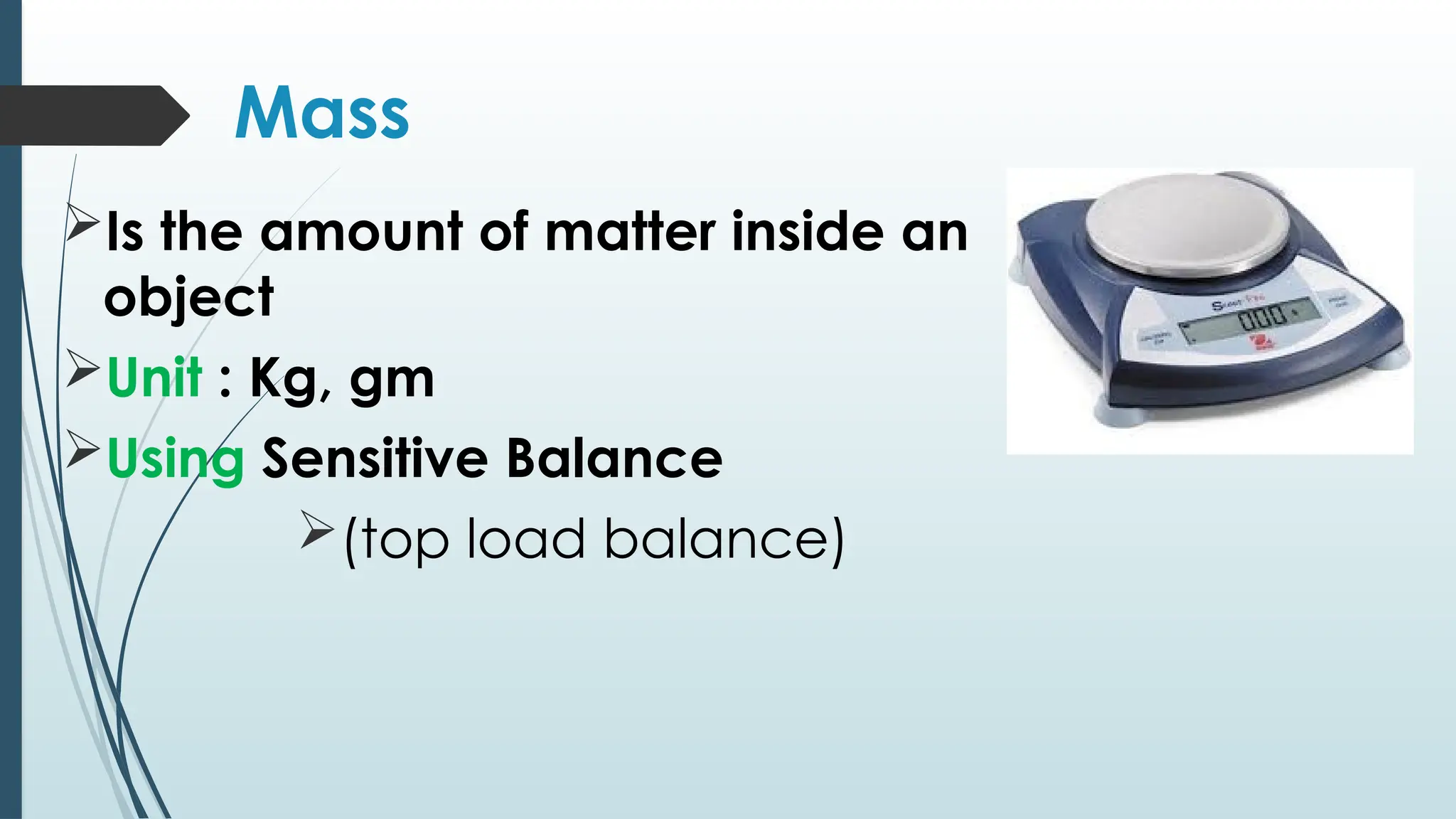
Is the amount of matter inside an
object
Unit : Kg, gm
Using Sensitive Balance
(top load balance)
Volume
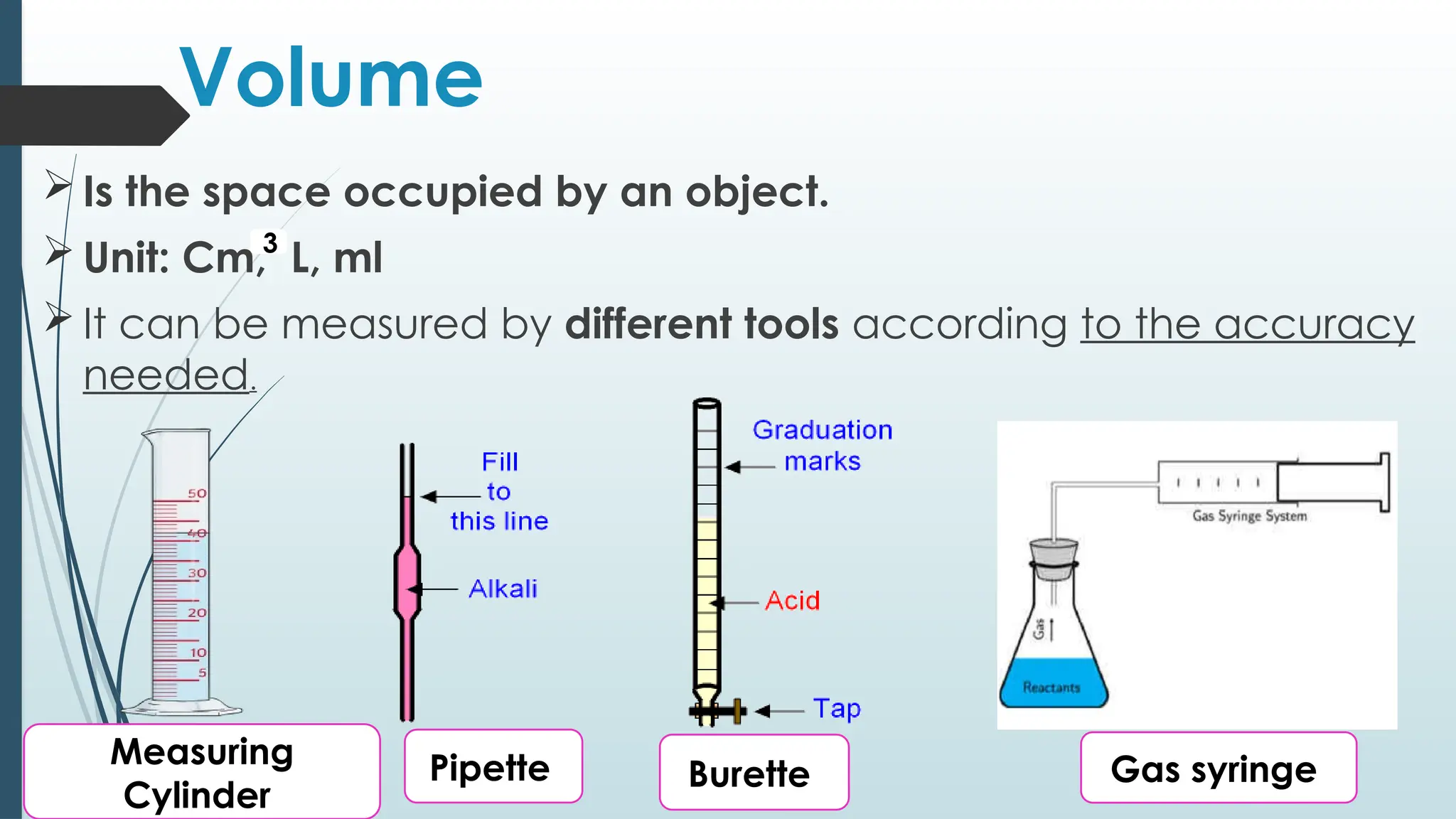
 Is the space occupied by an object.
 Unit: Cm, L, ml
 It can be measured by different tools according to the accuracy
needed.
3
Measuring
Cylinder
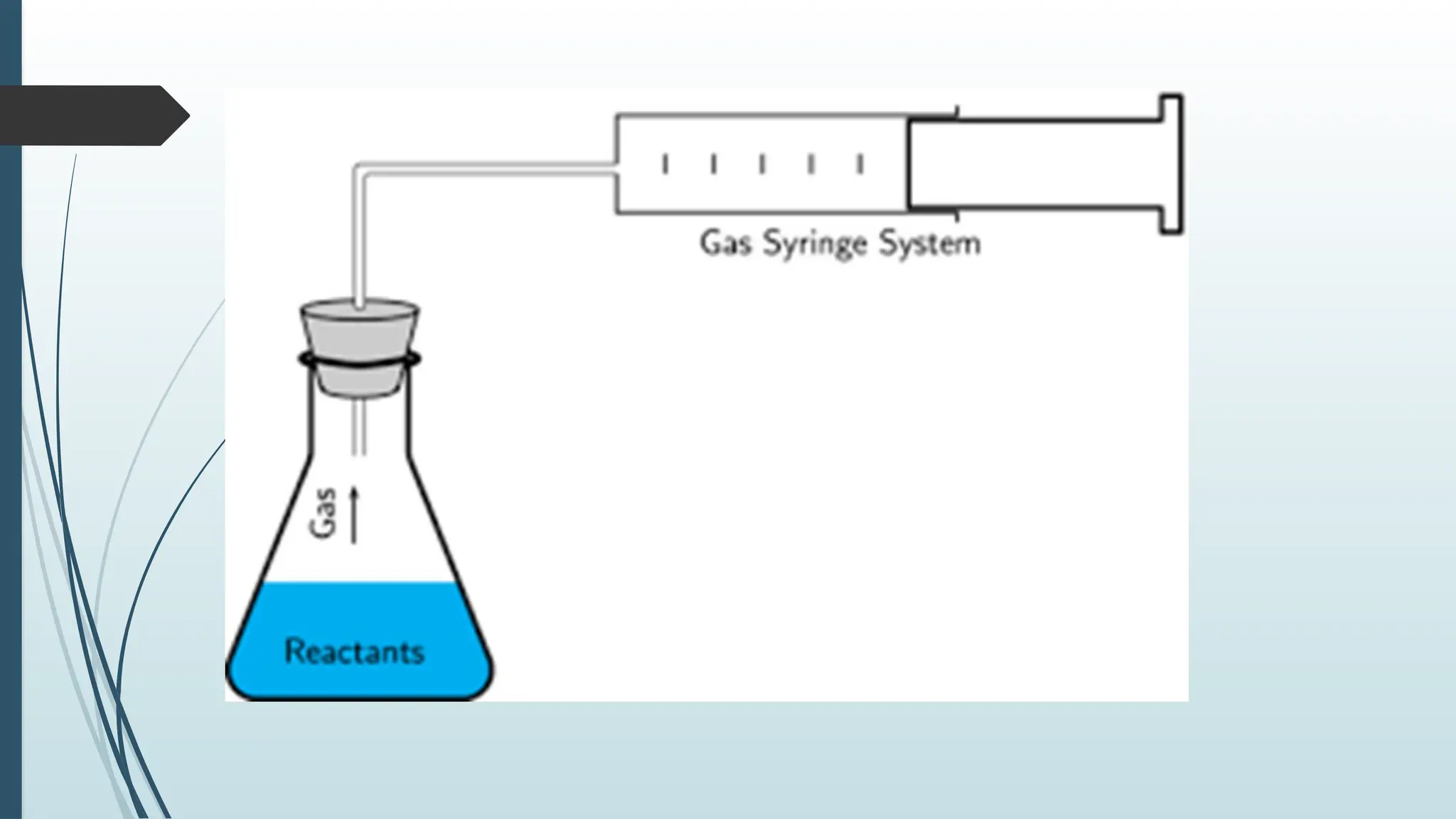
Pipette Burette Gas syringe
Correct way of reading volume
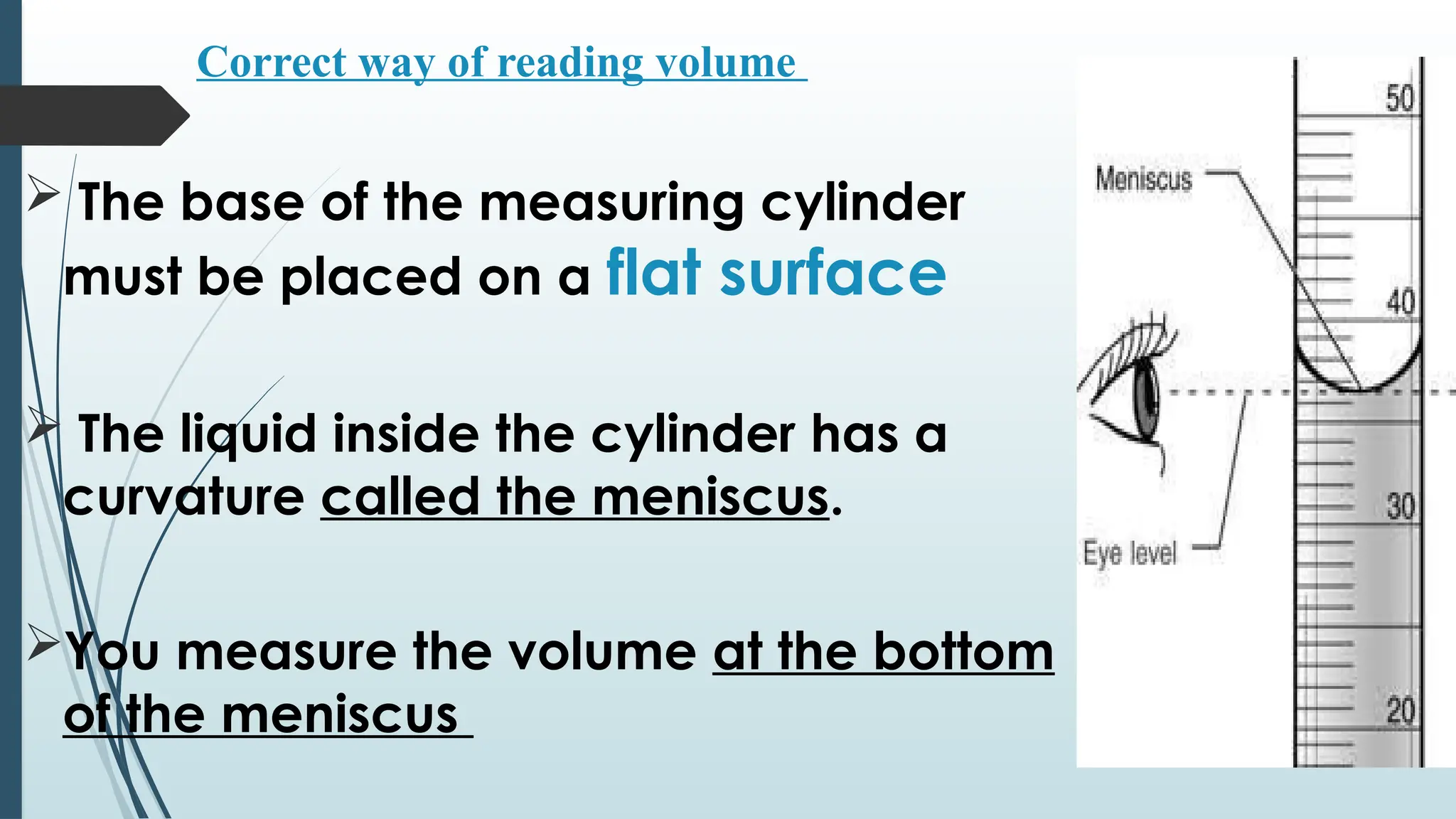
 The base of the measuring cylinder
must be placed on a flat surface
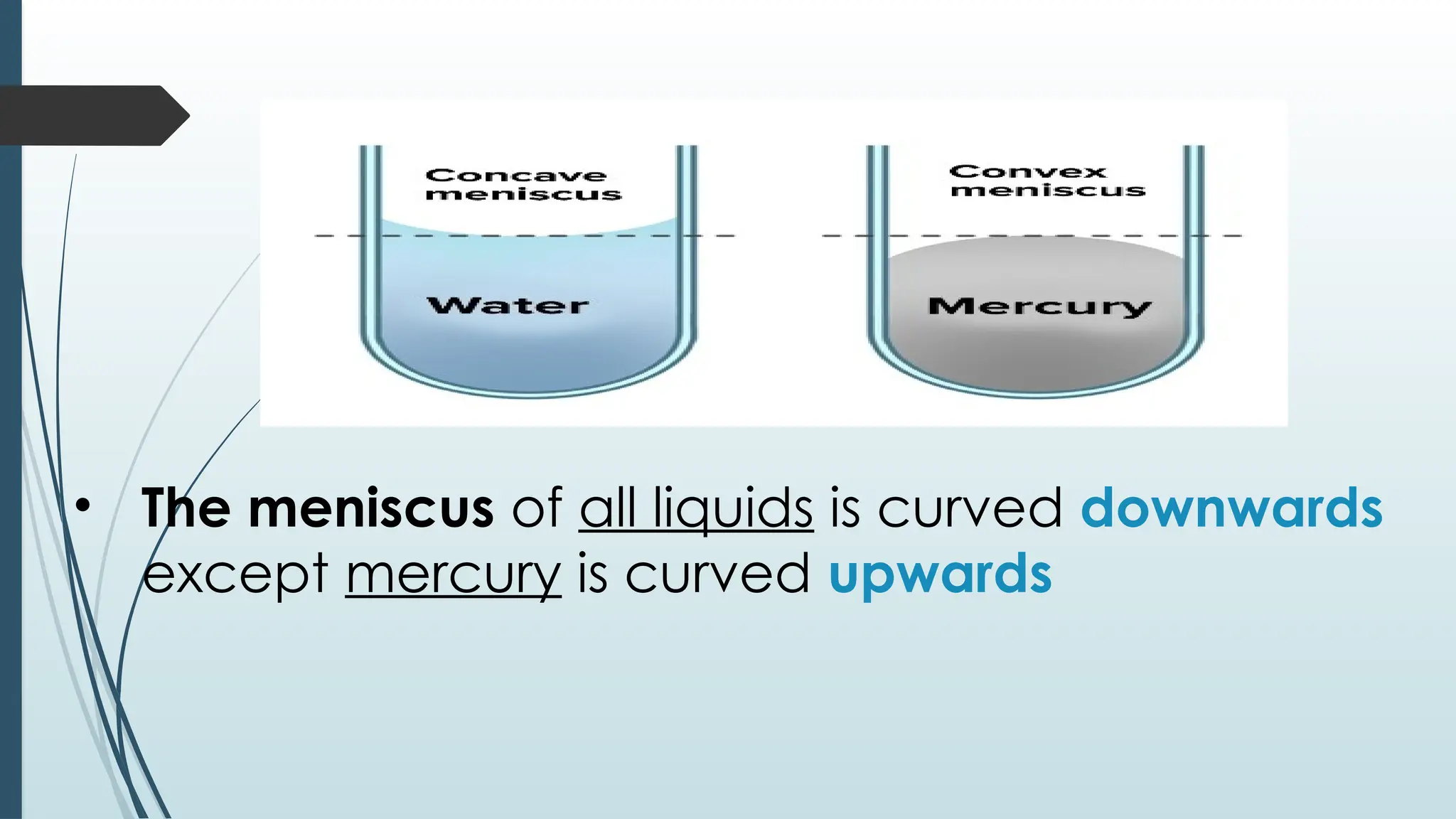
 The liquid inside the cylinder has a
curvature called the meniscus.
You measure the volume at the bottom
of the meniscus
• The meniscus of all liquids is curved downwards
except mercury is curved upwards
Temperature
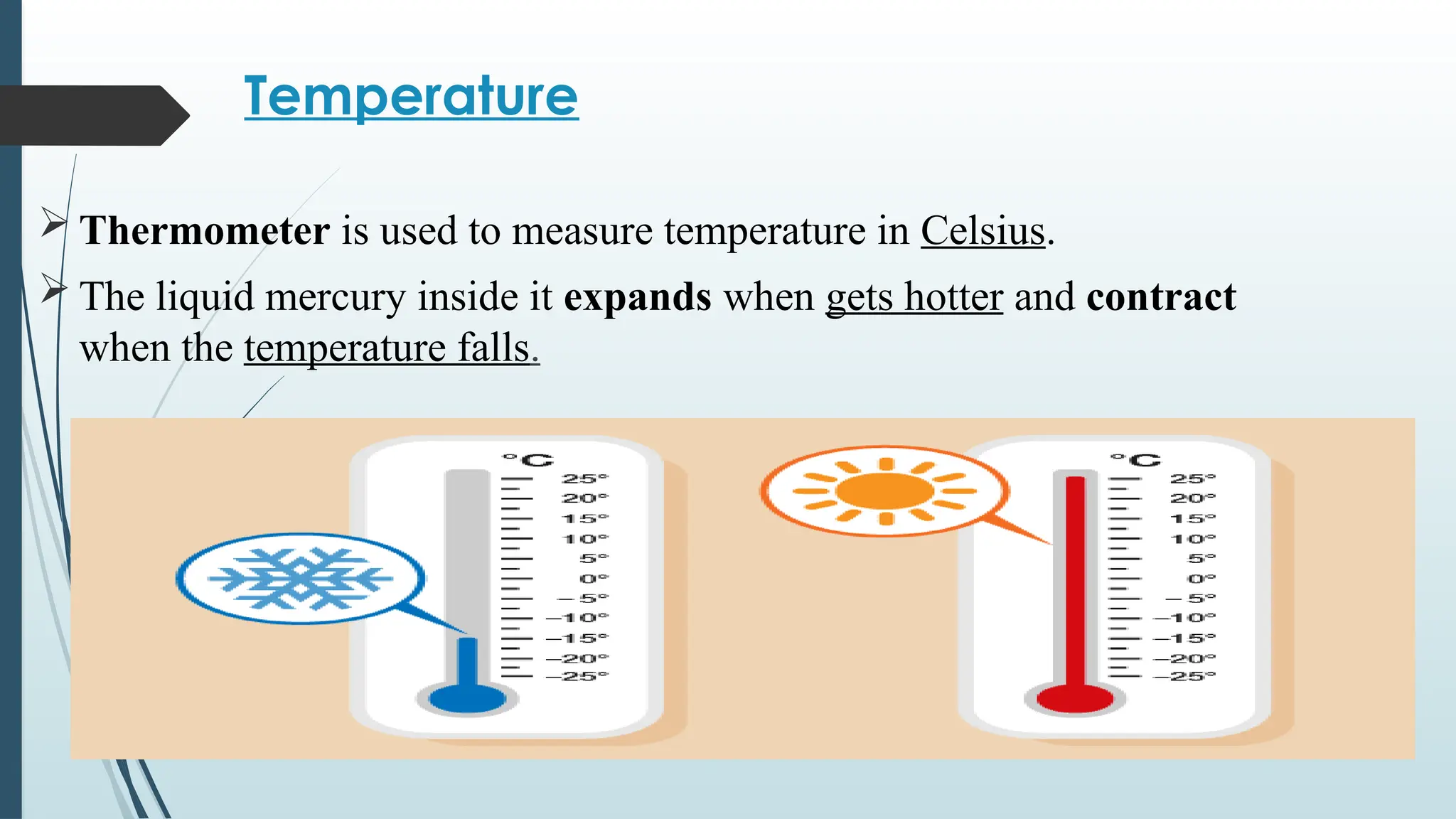
 Thermometer is used to measure temperature in Celsius.
 The liquid mercury inside it expands when gets hotter and contract
when the temperature falls.
Time
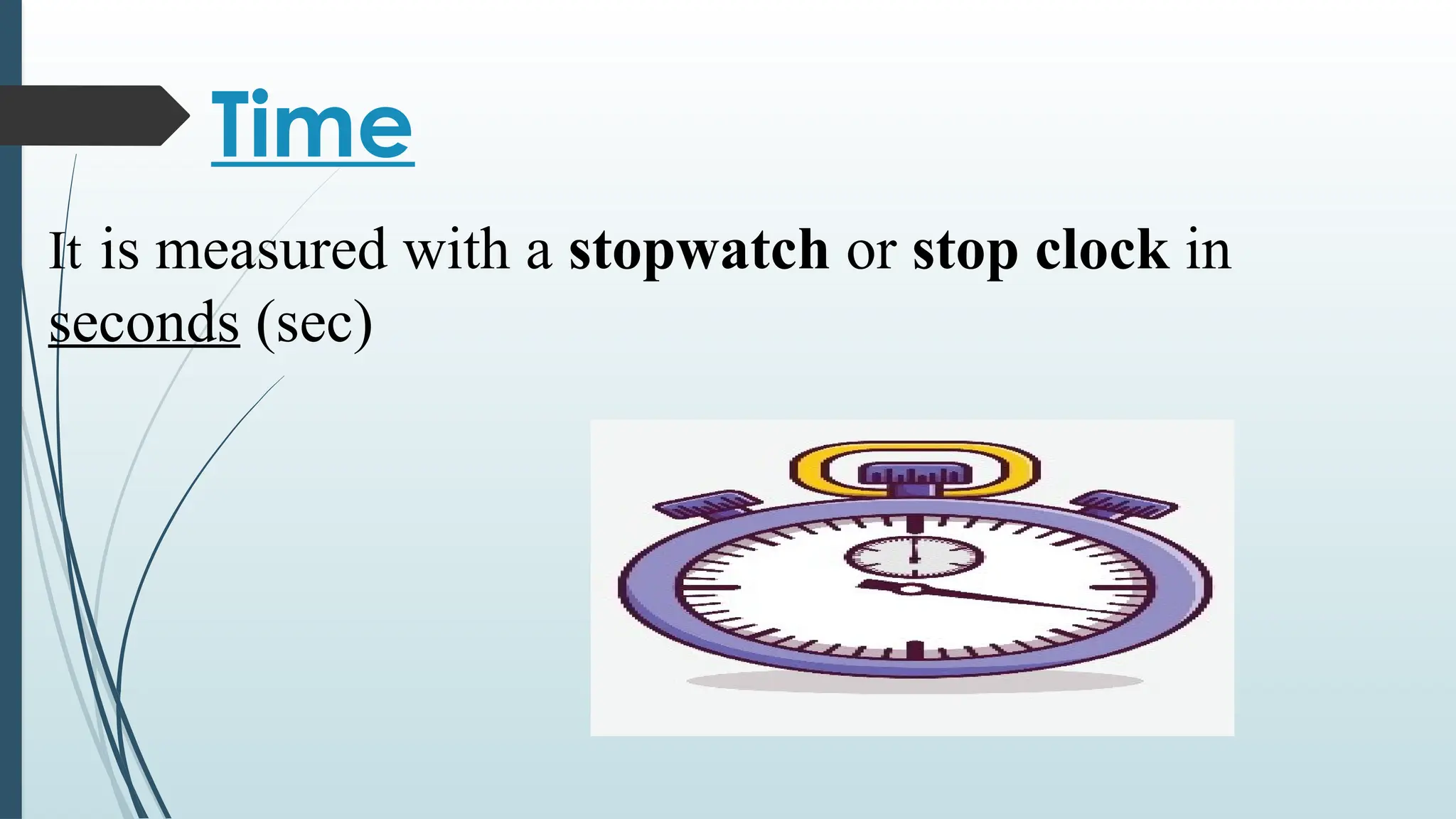
It is measured with a stopwatch or stop clock in
seconds (sec)
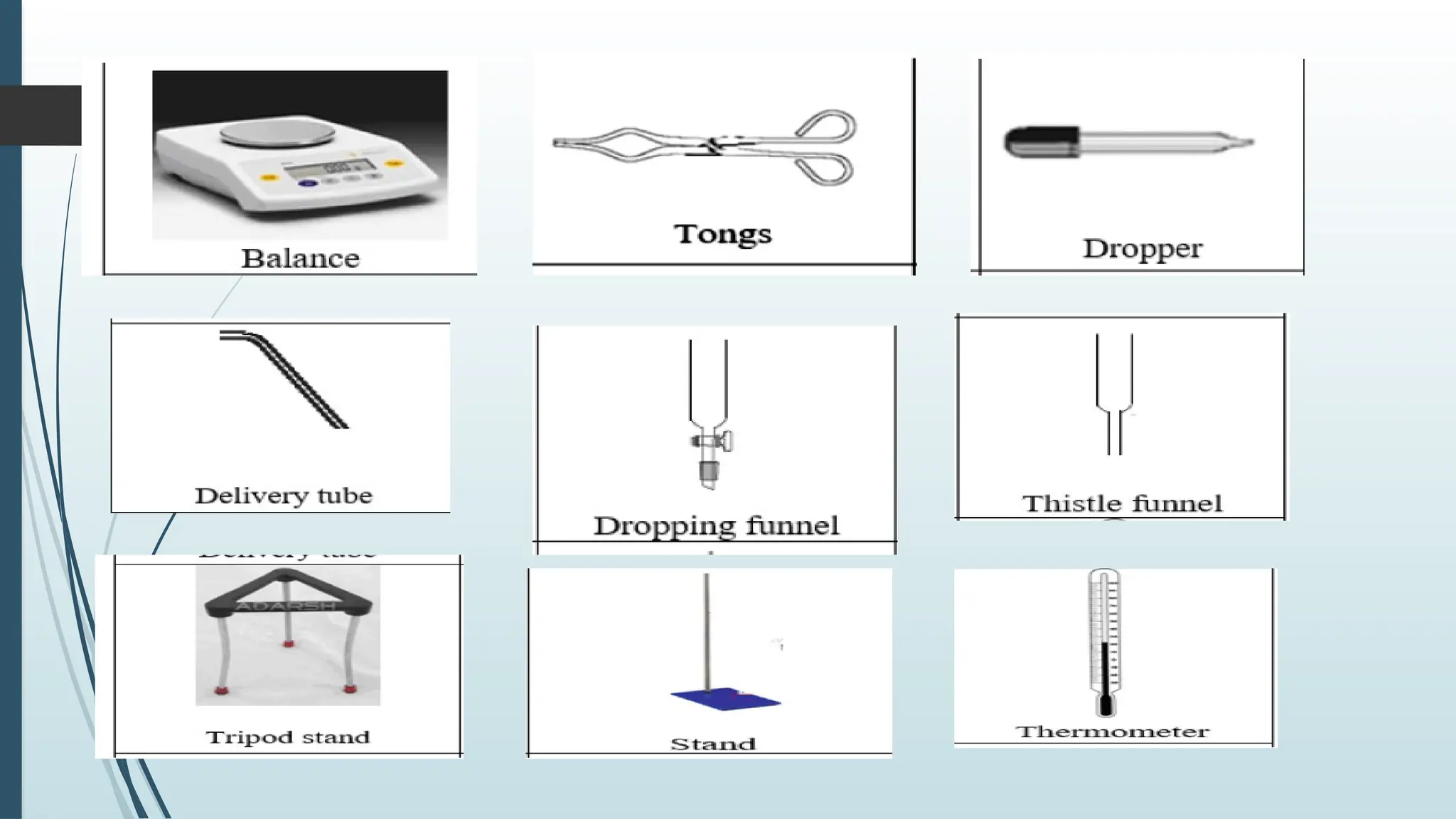
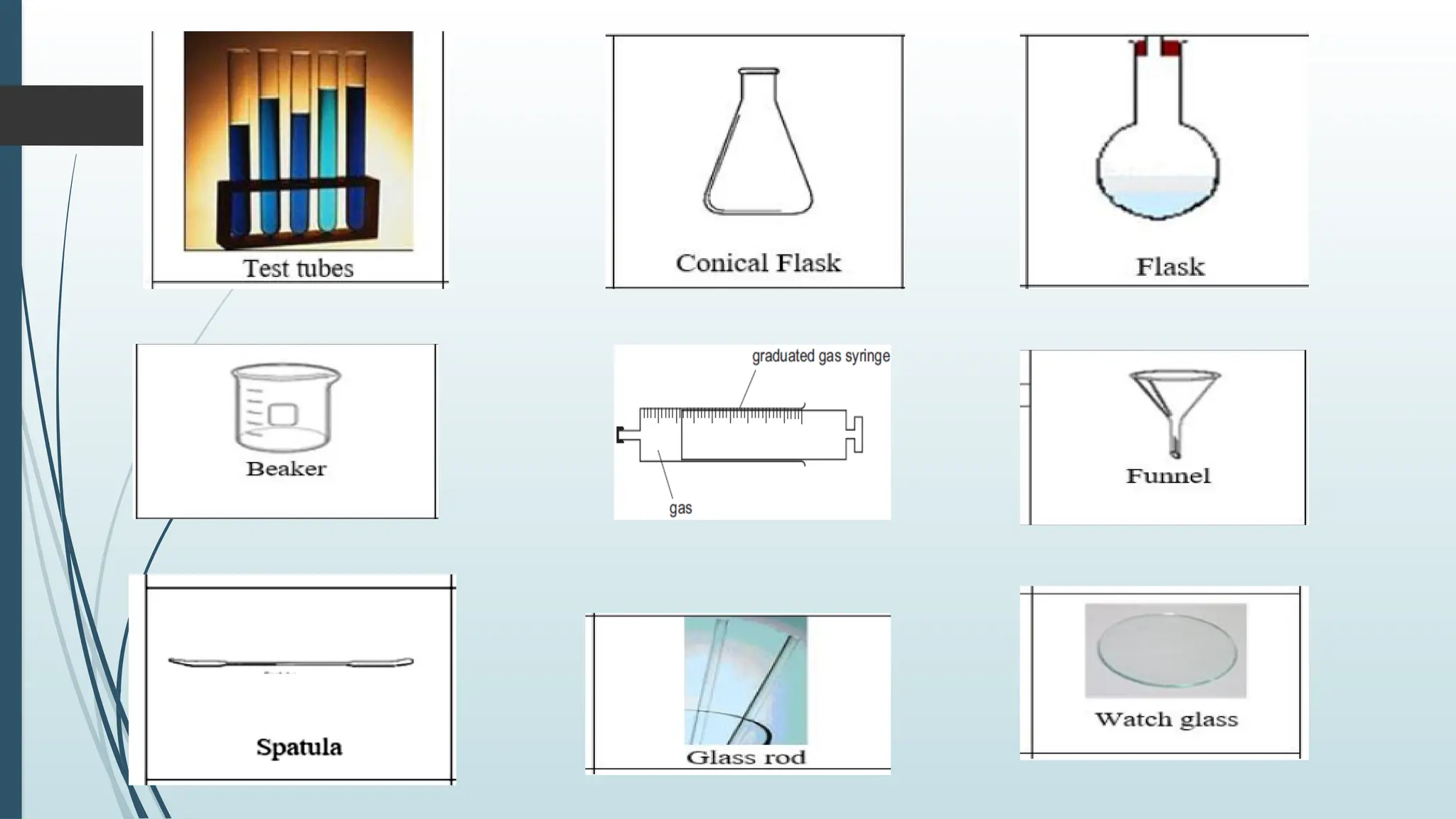
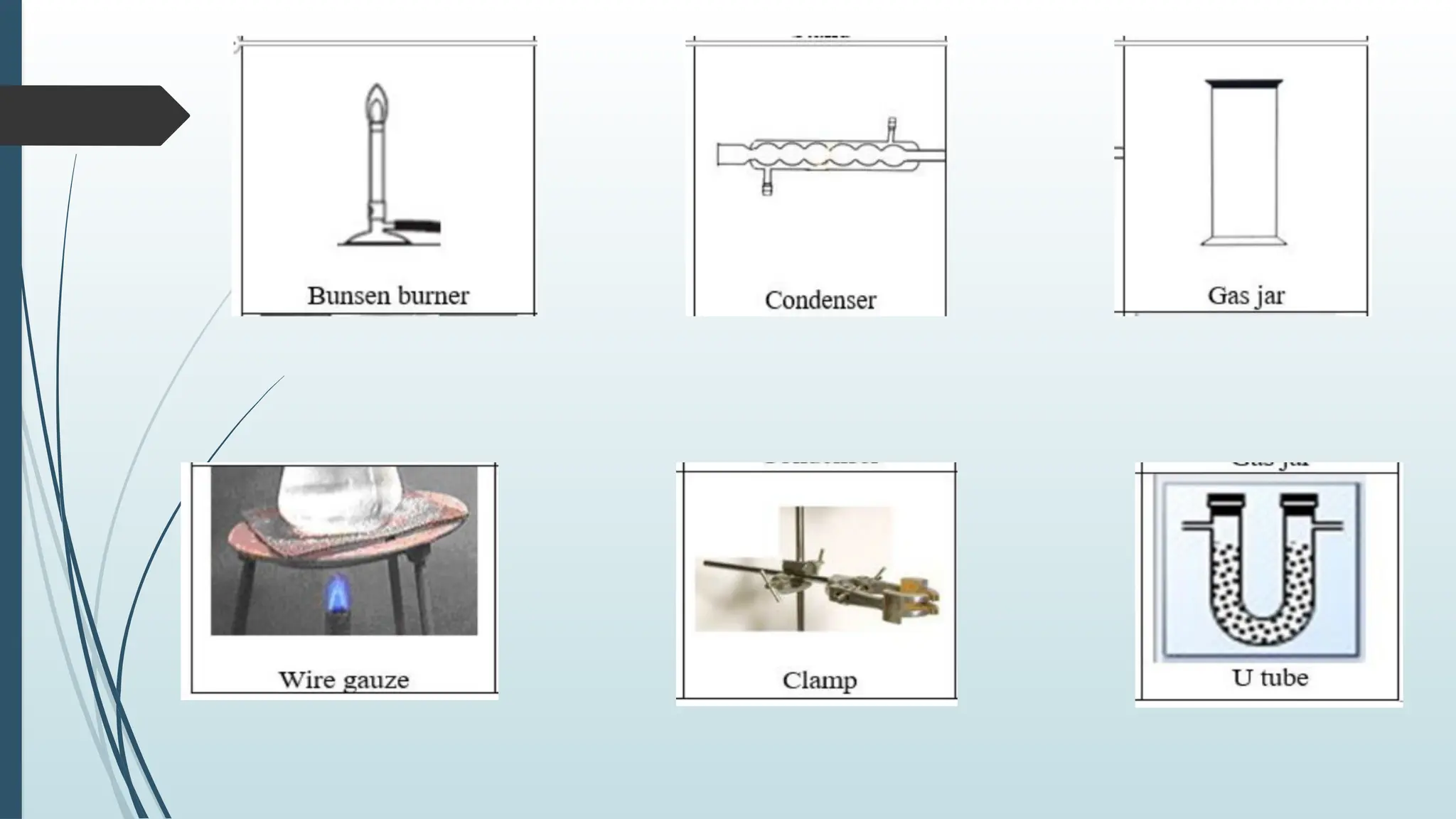
Apparatus used in the laboratory
The glass apparatus or tools that are
used in the lab are made from Pyrex
Glass is Inert (doesn’t react)
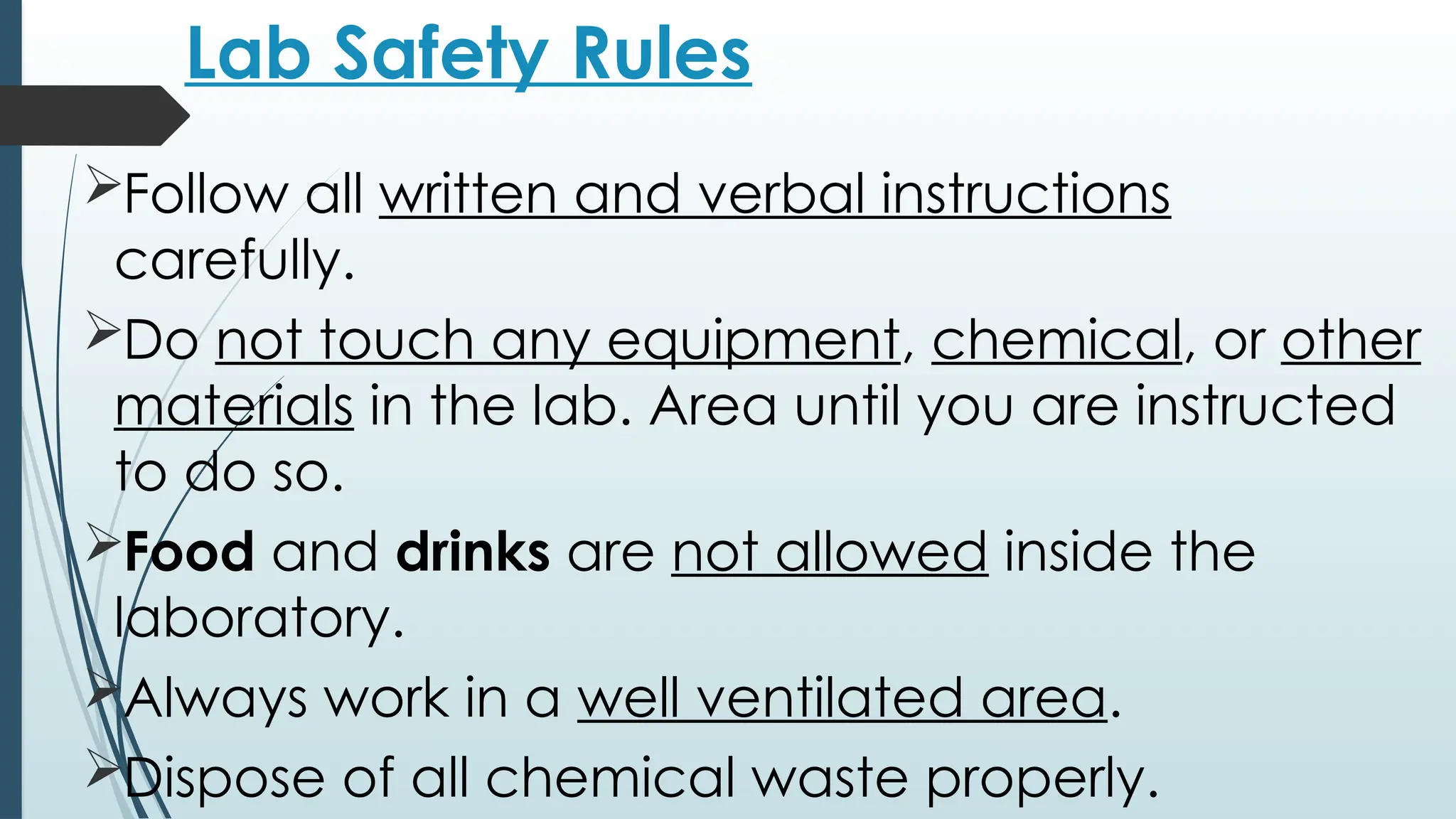
Lab Safety Rules
Follow all written and verbal instructions
carefully.
Do not touch any equipment, chemical, or other
materials in the lab. Area until you are instructed
to do so.
Food and drinks are not allowed inside the
laboratory.
Always work in a well ventilated area.
Dispose of all chemical waste properly.
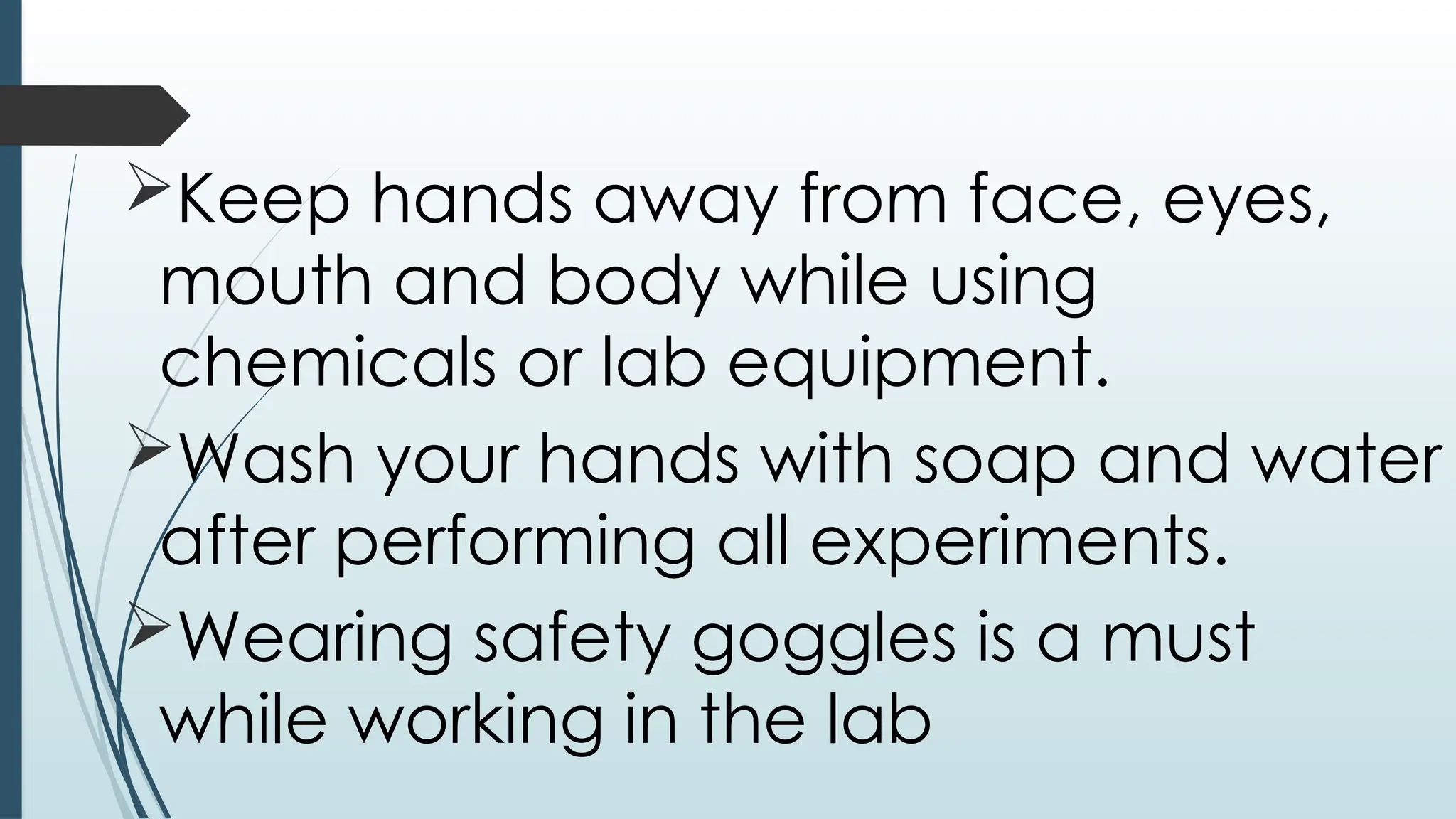
Keep hands away from face, eyes,
mouth and body while using
chemicals or lab equipment.
Wash your hands with soap and water
after performing all experiments.
Wearing safety goggles is a must
while working in the lab
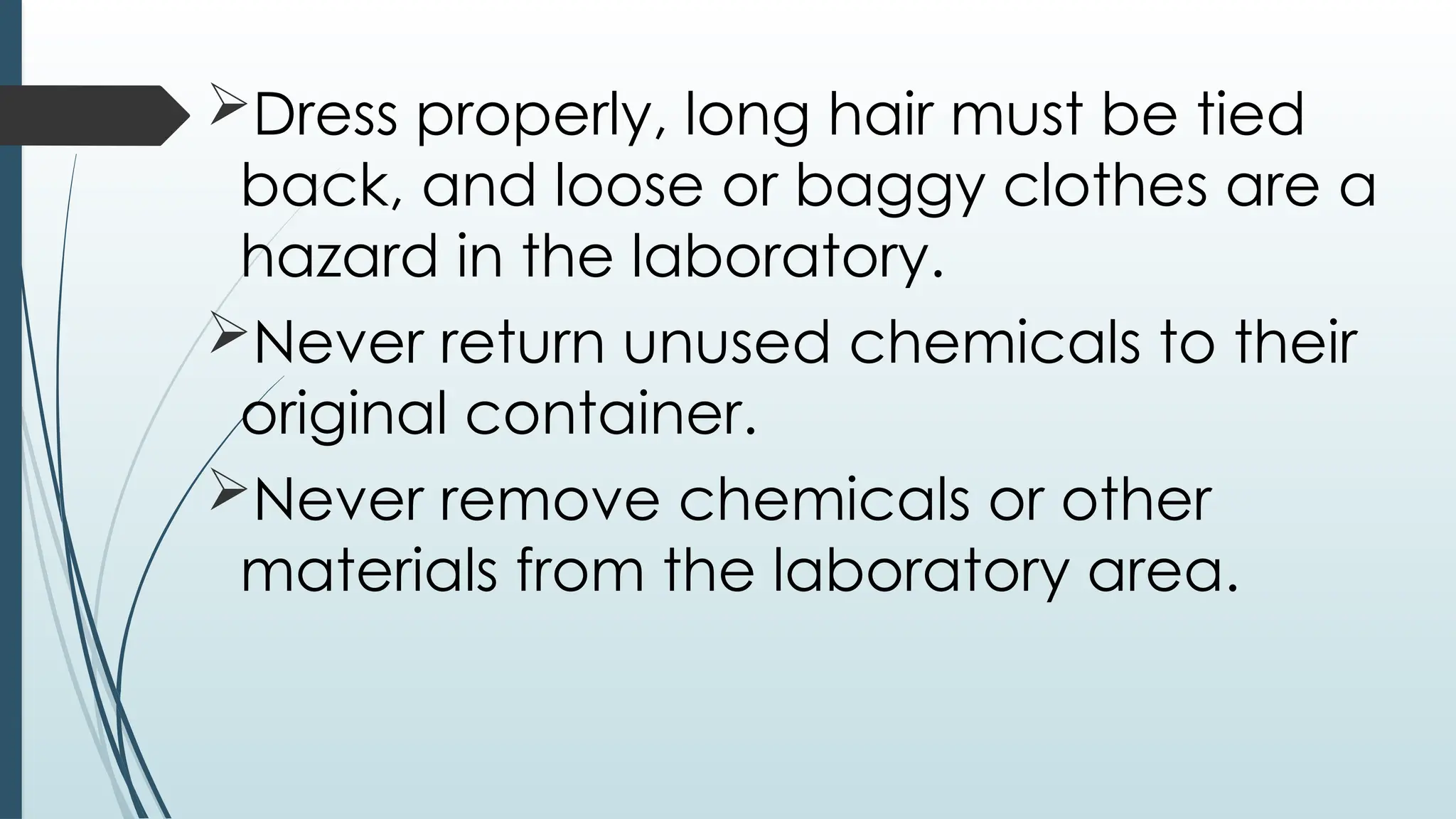
Dress properly, long hair must be tied
back, and loose or baggy clothes are a
hazard in the laboratory.
Never return unused chemicals to their
original container.
Never remove chemicals or other
materials from the laboratory area.
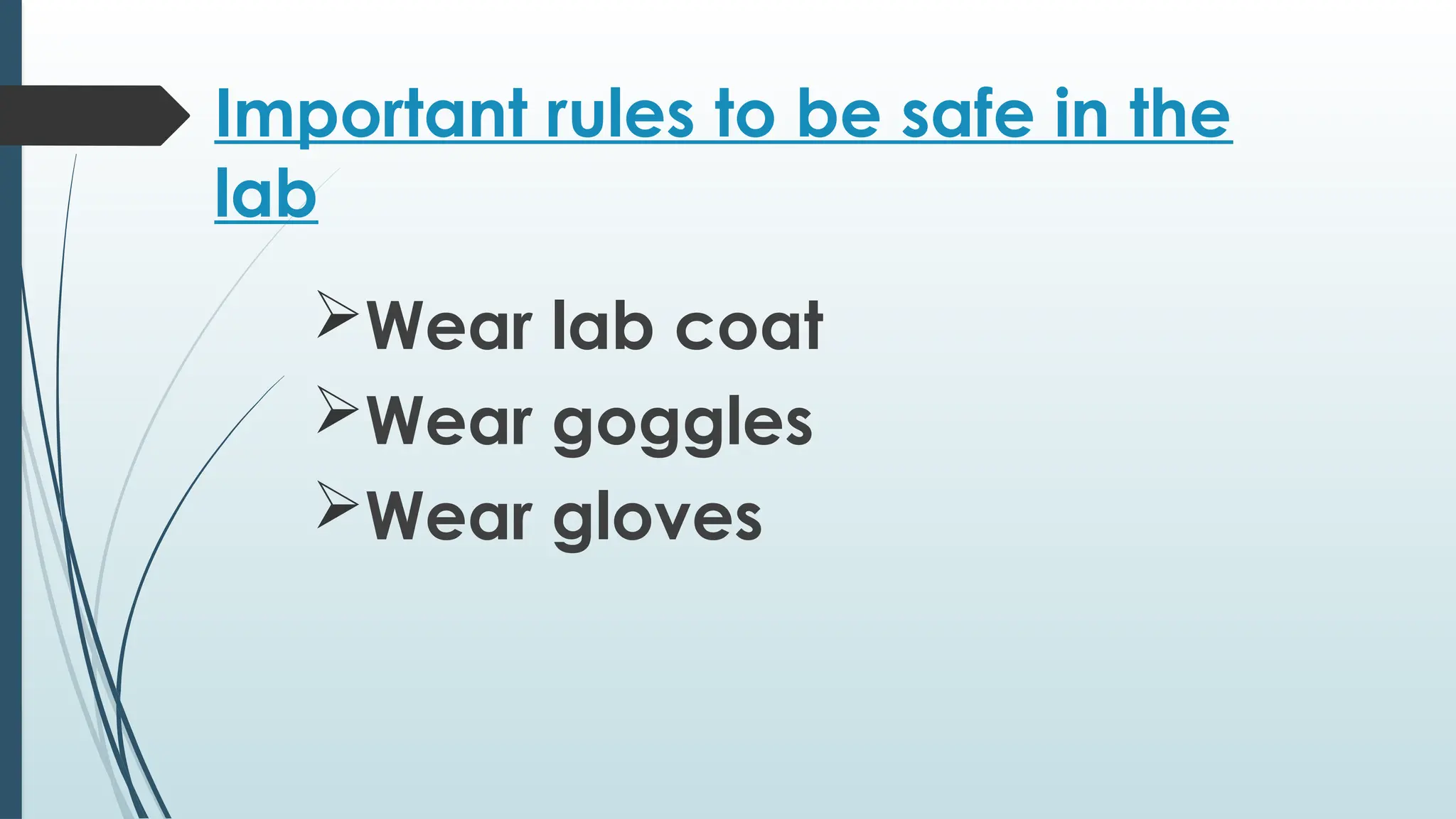
Important rules to be safe in the
lab
Wear lab coat
Wear goggles
Wear gloves
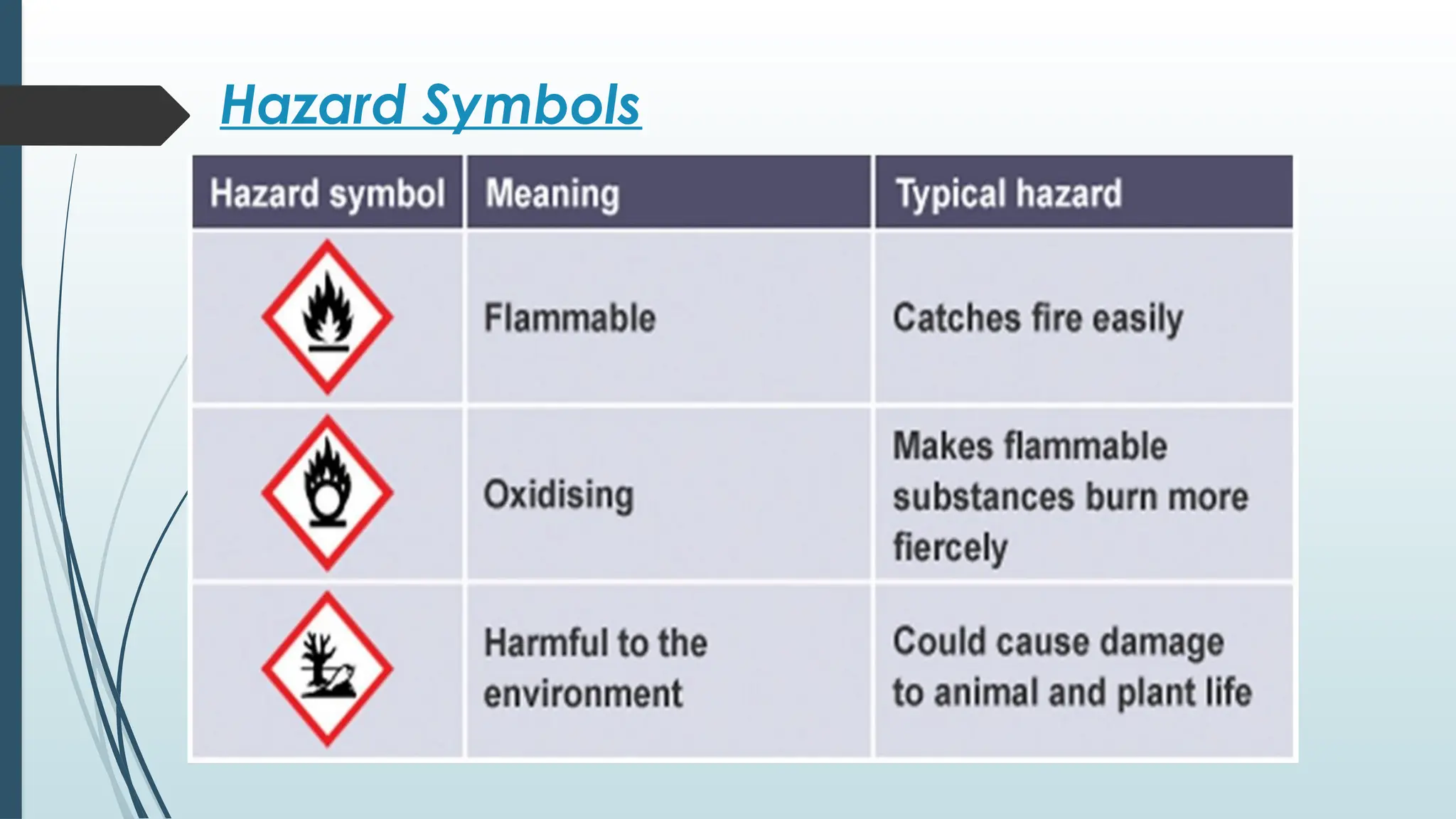
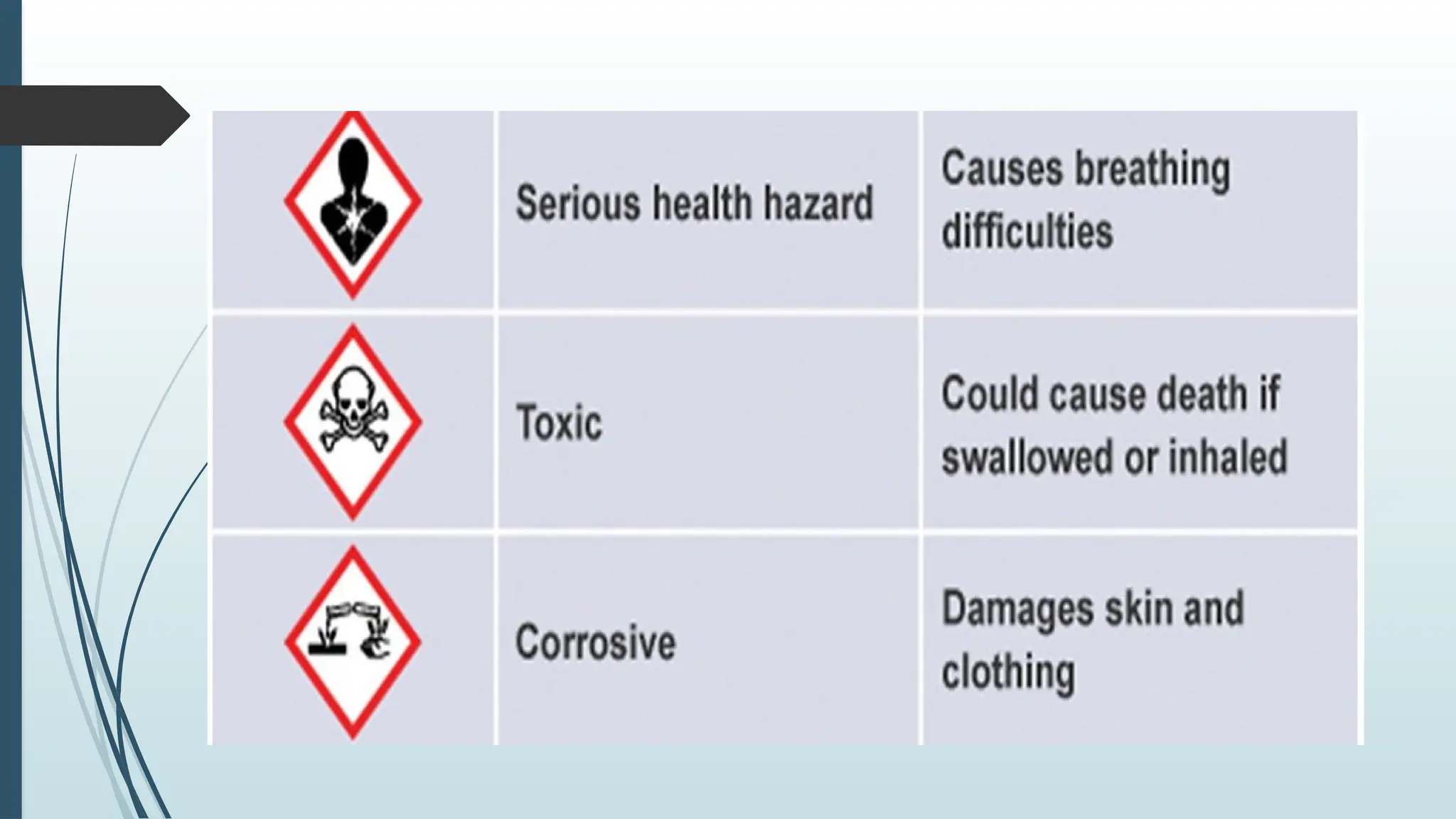
Hazard Symbols
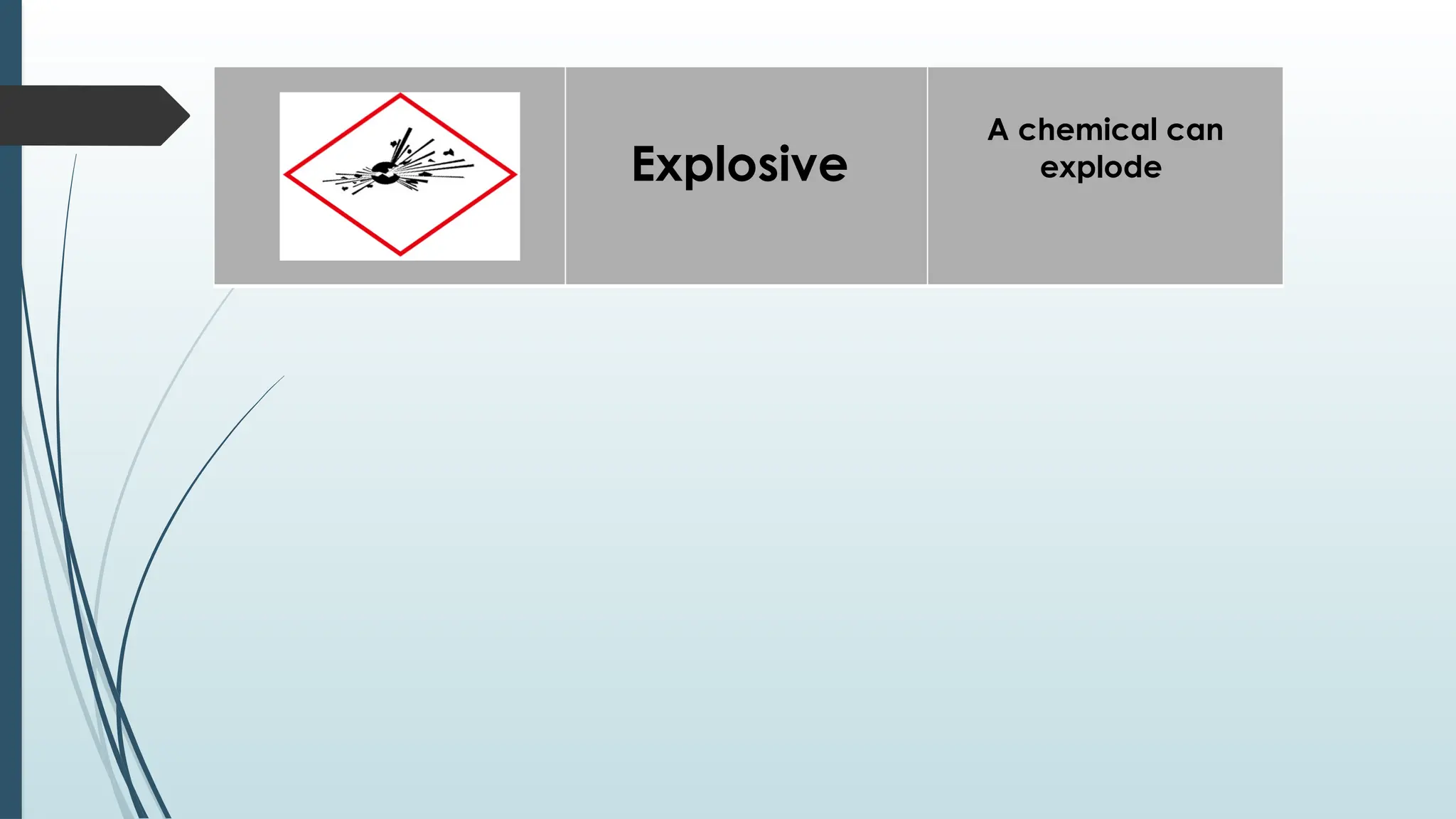
Explosive
A chemical can
explode

Measurements ,measuring tools and their uses

  • 1.
  • 2.
    Mass Is the amountof matter inside an object Unit : Kg, gm Using Sensitive Balance (top load balance)
  • 3.
    Volume  Is thespace occupied by an object.  Unit: Cm, L, ml  It can be measured by different tools according to the accuracy needed. 3 Measuring Cylinder Pipette Burette Gas syringe
  • 4.
    Correct way ofreading volume  The base of the measuring cylinder must be placed on a flat surface  The liquid inside the cylinder has a curvature called the meniscus. You measure the volume at the bottom of the meniscus
  • 5.
    • The meniscusof all liquids is curved downwards except mercury is curved upwards
  • 6.
    Temperature  Thermometer isused to measure temperature in Celsius.  The liquid mercury inside it expands when gets hotter and contract when the temperature falls.
  • 7.
    Time It is measuredwith a stopwatch or stop clock in seconds (sec)
  • 8.
    Apparatus used inthe laboratory The glass apparatus or tools that are used in the lab are made from Pyrex Glass is Inert (doesn’t react)
  • 17.
    Lab Safety Rules Followall written and verbal instructions carefully. Do not touch any equipment, chemical, or other materials in the lab. Area until you are instructed to do so. Food and drinks are not allowed inside the laboratory. Always work in a well ventilated area. Dispose of all chemical waste properly.
  • 18.
    Keep hands awayfrom face, eyes, mouth and body while using chemicals or lab equipment. Wash your hands with soap and water after performing all experiments. Wearing safety goggles is a must while working in the lab
  • 19.
    Dress properly, longhair must be tied back, and loose or baggy clothes are a hazard in the laboratory. Never return unused chemicals to their original container. Never remove chemicals or other materials from the laboratory area.
  • 20.
    Important rules tobe safe in the lab Wear lab coat Wear goggles Wear gloves
  • 21.
  • 23.