HISTORY 
William Rosenberg opened the first Dunkin 
Donuts in 1950. Just five years later, Dunkin 
Donuts began to sell licenses as franchises. 
Dunkin Donuts has established its dominance 
as one of the most competitive brands 
specializing baked goods products, coffee 
beverages, and over the past couple decades 
has expanded into the breakfast goods, selling 
a variety of different breakfast sandwiches. 
Currently, worldwide there are over “11,000” 
Dunkin Donut restaurants in 33 different 
countries across the world, which operates on 
a “Franchising Model” and plans on developing 
into other parts of the world.
SUPPLIERS 
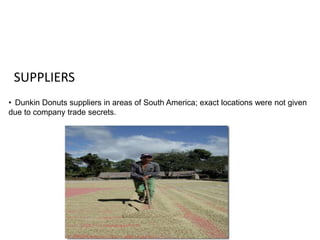
• Dunkin Donuts suppliers in areas of South America; exact locations were not given 
due to company trade secrets.
SUPPLIER PROCESS 
• GROWTH 
• SEASON 
• HARVEST 
• PULPING 
• DRYING 
• FERMENTING 
• STORING
GROWING SEASONS 
. Since Dunkin Donut specializing in selling and manufacturing 
“Arabica Beans” there needs to be very specified growing conditions 
for the supplier that need to be met 
The environmental regions must be at high altitudes of “16-24 
degrees” (1800-3600 feet) and amount of rain and dryness must be 
forecasted to some degree of accuracy so that planning of crops can 
be implemented. 
These environmental growing conditions only allow for just a single 
coffee bean season and one maturation season.
• 
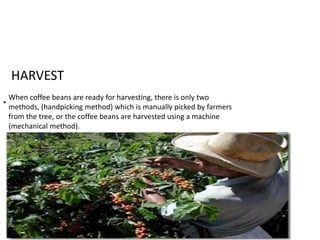
HARVEST 
When coffee beans are ready for harvesting, there is only two 
methods, (handpicking method) which is manually picked by farmers 
from the tree, or the coffee beans are harvested using a machine 
(mechanical method).
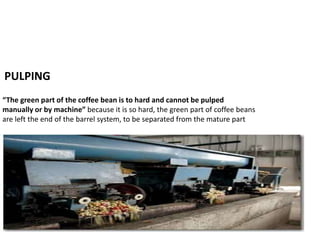
PULPING 
“The green part of the coffee bean is to hard and cannot be pulped 
manually or by machine” because it is so hard, the green part of coffee beans 
are left the end of the barrel system, to be separated from the mature part
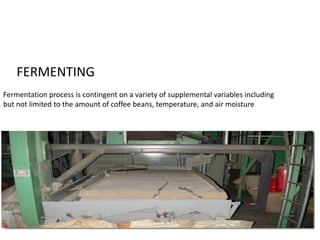
FERMENTING 
Fermentation process is contingent on a variety of supplemental variables including 
but not limited to the amount of coffee beans, temperature, and air moisture
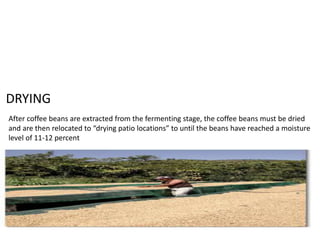
DRYING 
After coffee beans are extracted from the fermenting stage, the coffee beans must be dried 
and are then relocated to “drying patio locations” to until the beans have reached a moisture 
level of 11-12 percent
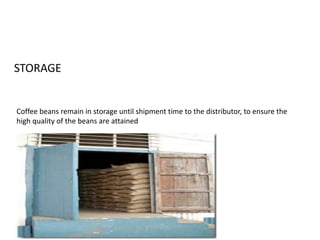
STORAGE 
Coffee beans remain in storage until shipment time to the distributor, to ensure the 
high quality of the beans are attained
DISTRIBUTING 
About 7 years ago, Dunkin Donuts teamed up with Procter & Gamble and 
announced that hey entered into an agreement to launch Dunkin' Donuts 
coffee products at retail locations.
Just over a year later, Proctor & Gamble would no longer be the distributor of Dunkin 
Donuts, because of a merger with J. M. Smucker Company, this also included the Dunkin 
Donuts agreement that P&G had with Dunkin Donuts
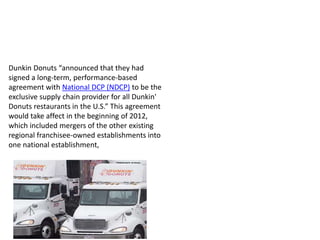
Dunkin Donuts “announced that they had 
signed a long-term, performance-based 
agreement with National DCP (NDCP) to be the 
exclusive supply chain provider for all Dunkin' 
Donuts restaurants in the U.S.” This agreement 
would take affect in the beginning of 2012, 
which included mergers of the other existing 
regional franchisee-owned establishments into 
one national establishment,
Franchising 
Dunkin Donuts started Franinshing in 1955 and in 1975, Dunkin Donuts has worked with 
Sara Lee to supply their franchisees with coffee. According to Sara Lee’s 2005 annual report, 
they still roasted “much of” Dunkin Donuts coffee. In 2007, Sara Lee partnered with Dunkin’ 
Donuts, in a multi-year deal, to be the exclusive provider of Dunkin’ Donuts coffee to 
foodservice outlets across the country 
Startup Costs, Ongoing Fees and Financing 
Total Investment: $216,100 - $1,530,050 
Franchise Fee: $40,000 - $90,000 
Ongoing Royalty Fee: 5.9% 
Term of Franchise Agreement: Term of agreement not renewable 
Veteran Incentives: 20% off franchise fee for up to 5 units 
FINANCIAL REQUIREMENTS 
Net Worth: $250,000
Retail Stores 
Dunkin Donuts coffee products can be also be purchased at retailer 
outlets at many popular US the retailers. The sale of goods by an 
indirect retailers make more easily attainable for consumers who enjoy 
the beverage in the convenience of there own home
CUSTOMERS
CUSTOMERS 
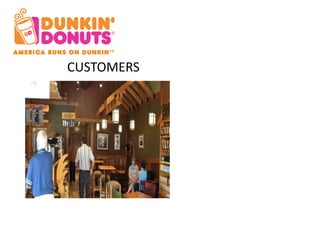
Dunkin Donuts customers are loyal coffee drinkers which is why Dunkin 
Donuts adjusted its market focus, Dunkin’ Donuts shifted its focus from 
doughnuts to coffee in the 90s, and went on to earn 62 per cent sales from 
coffee within a few years 
Currently there are “10,000 Dunkin”' Donuts establishments worldwide, 
including over 7,000 franchised retailers, and “3,100 stores in 30 countries 
outside of the U.S” to service customers
WORK CITED 
WORK CITED PAGE 
(Company Snapshot." DunkinDonuts.com. 
N.p., 2013. Web. 12 Oct. 2014.) 
"List of Public Companies Worldwide, Letter - 
Businessweek - Businessweek." 
Businessweek.com. N.p., n.d. Web. 01 Nov. 
2014. 
Soil Analysis Examples and Coffee Nutrients." 
Soil Analysis Examples and Coffee Nutrients. 
N.p., n.d. Web. 13 Oct. 2014 
"Phun Physics - Topics." Phun Physics - Topics. 
Phun Physics, n.d. Web. 20 Oct. 2014. 
"Coffee Processing." Coffee Processing. Coffee 
Research Institue, 2008. Web. 9 Nov. 2014. 
"Bean Defects." Coffee Terms -. Zeppa, 3 June 
2006. Web. 01 Oct. 2014. 
"Procter & Gamble." Forbes. Forbes Magazine, 
2007. Web. 19 Sept. 2014. 
"4 Things You May Not Know About J.M. 
Smucker." 4 Things You May Not Know About 
J.M. Smucker. Investors, July 2008. Web. 13 
Nov. 2014. 
Carvella, Stacey. "DNKN - NASDAQ." DNKN - 
NASDAQ. Investo Relations, 04 Jan. 2012. Web. 
01 Nov. 2014

MBA PP

  • 2.
    HISTORY William Rosenbergopened the first Dunkin Donuts in 1950. Just five years later, Dunkin Donuts began to sell licenses as franchises. Dunkin Donuts has established its dominance as one of the most competitive brands specializing baked goods products, coffee beverages, and over the past couple decades has expanded into the breakfast goods, selling a variety of different breakfast sandwiches. Currently, worldwide there are over “11,000” Dunkin Donut restaurants in 33 different countries across the world, which operates on a “Franchising Model” and plans on developing into other parts of the world.
  • 3.
    SUPPLIERS • DunkinDonuts suppliers in areas of South America; exact locations were not given due to company trade secrets.
  • 4.
    SUPPLIER PROCESS •GROWTH • SEASON • HARVEST • PULPING • DRYING • FERMENTING • STORING
  • 5.
    GROWING SEASONS .Since Dunkin Donut specializing in selling and manufacturing “Arabica Beans” there needs to be very specified growing conditions for the supplier that need to be met The environmental regions must be at high altitudes of “16-24 degrees” (1800-3600 feet) and amount of rain and dryness must be forecasted to some degree of accuracy so that planning of crops can be implemented. These environmental growing conditions only allow for just a single coffee bean season and one maturation season.
  • 6.
    • HARVEST Whencoffee beans are ready for harvesting, there is only two methods, (handpicking method) which is manually picked by farmers from the tree, or the coffee beans are harvested using a machine (mechanical method).
  • 7.
    PULPING “The greenpart of the coffee bean is to hard and cannot be pulped manually or by machine” because it is so hard, the green part of coffee beans are left the end of the barrel system, to be separated from the mature part
  • 8.
    FERMENTING Fermentation processis contingent on a variety of supplemental variables including but not limited to the amount of coffee beans, temperature, and air moisture
  • 9.
    DRYING After coffeebeans are extracted from the fermenting stage, the coffee beans must be dried and are then relocated to “drying patio locations” to until the beans have reached a moisture level of 11-12 percent
  • 10.
    STORAGE Coffee beansremain in storage until shipment time to the distributor, to ensure the high quality of the beans are attained
  • 11.
    DISTRIBUTING About 7years ago, Dunkin Donuts teamed up with Procter & Gamble and announced that hey entered into an agreement to launch Dunkin' Donuts coffee products at retail locations.
  • 12.
    Just over ayear later, Proctor & Gamble would no longer be the distributor of Dunkin Donuts, because of a merger with J. M. Smucker Company, this also included the Dunkin Donuts agreement that P&G had with Dunkin Donuts
  • 13.
    Dunkin Donuts “announcedthat they had signed a long-term, performance-based agreement with National DCP (NDCP) to be the exclusive supply chain provider for all Dunkin' Donuts restaurants in the U.S.” This agreement would take affect in the beginning of 2012, which included mergers of the other existing regional franchisee-owned establishments into one national establishment,
  • 14.
    Franchising Dunkin Donutsstarted Franinshing in 1955 and in 1975, Dunkin Donuts has worked with Sara Lee to supply their franchisees with coffee. According to Sara Lee’s 2005 annual report, they still roasted “much of” Dunkin Donuts coffee. In 2007, Sara Lee partnered with Dunkin’ Donuts, in a multi-year deal, to be the exclusive provider of Dunkin’ Donuts coffee to foodservice outlets across the country Startup Costs, Ongoing Fees and Financing Total Investment: $216,100 - $1,530,050 Franchise Fee: $40,000 - $90,000 Ongoing Royalty Fee: 5.9% Term of Franchise Agreement: Term of agreement not renewable Veteran Incentives: 20% off franchise fee for up to 5 units FINANCIAL REQUIREMENTS Net Worth: $250,000
  • 15.
    Retail Stores DunkinDonuts coffee products can be also be purchased at retailer outlets at many popular US the retailers. The sale of goods by an indirect retailers make more easily attainable for consumers who enjoy the beverage in the convenience of there own home
  • 16.
  • 17.
    CUSTOMERS Dunkin Donutscustomers are loyal coffee drinkers which is why Dunkin Donuts adjusted its market focus, Dunkin’ Donuts shifted its focus from doughnuts to coffee in the 90s, and went on to earn 62 per cent sales from coffee within a few years Currently there are “10,000 Dunkin”' Donuts establishments worldwide, including over 7,000 franchised retailers, and “3,100 stores in 30 countries outside of the U.S” to service customers
  • 18.
    WORK CITED WORKCITED PAGE (Company Snapshot." DunkinDonuts.com. N.p., 2013. Web. 12 Oct. 2014.) "List of Public Companies Worldwide, Letter - Businessweek - Businessweek." Businessweek.com. N.p., n.d. Web. 01 Nov. 2014. Soil Analysis Examples and Coffee Nutrients." Soil Analysis Examples and Coffee Nutrients. N.p., n.d. Web. 13 Oct. 2014 "Phun Physics - Topics." Phun Physics - Topics. Phun Physics, n.d. Web. 20 Oct. 2014. "Coffee Processing." Coffee Processing. Coffee Research Institue, 2008. Web. 9 Nov. 2014. "Bean Defects." Coffee Terms -. Zeppa, 3 June 2006. Web. 01 Oct. 2014. "Procter & Gamble." Forbes. Forbes Magazine, 2007. Web. 19 Sept. 2014. "4 Things You May Not Know About J.M. Smucker." 4 Things You May Not Know About J.M. Smucker. Investors, July 2008. Web. 13 Nov. 2014. Carvella, Stacey. "DNKN - NASDAQ." DNKN - NASDAQ. Investo Relations, 04 Jan. 2012. Web. 01 Nov. 2014