Steps to CompareNumbers:
Look at the Thousands Place: Start
with the leftmost place value, which
is the thousands. The number with
the higher thousands digit is the
larger number.
10.
Example:
To compare 7,345and 5,432, check
the thousands digits (7 and 5). Since 7 is
greater than 5, we can write 7,345 >
5,432.
If Thousands are Equal, Move to the
Hundreds Place: If the thousands digits
are the same, compare the hundreds
place.
11.
Example:
To compare 4,378and 4,256, the
thousands digits are both 4. Moving to the
hundreds place, we see 3 is greater than 2,
so 4,378 > 4,256.
Continue to Tens and Units if Necessary:
If both thousands and hundreds digits
are the same, check the tens, and finally,
the units.
12.
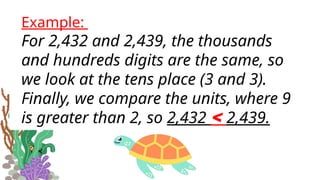
Example:
For 2,432 and2,439, the thousands
and hundreds digits are the same, so
we look at the tens place (3 and 3).
Finally, we compare the units, where 9
is greater than 2, so 2,432 < 2,439.
Editor's Notes
#3 Before doing the motivation activity for the next lesson, assess the learner’s prior knowledge by giving the diagnostic test (This is What I Know!) which is found in the worksheet file.
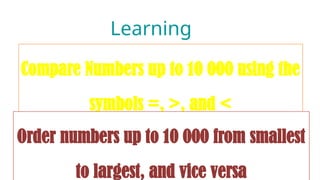
#4 Hand each student a card with a number between 1 and 10,000.
Challenge the students to arrange themselves in a line, from smallest to largest, without talking.
Once they’re in order, check as a class to see if everyone is in the correct place.
For a variation, after they complete it from smallest to largest, ask them to rearrange from largest to smallest.
#5 Distribute number cards to the pupils.
456
465
654
546
564
Let the pupils do the following:
1. Arrange yourself from smallest to largest.
2. Arrange yourself from largest to smallest.
3. Call Pupil A and B.
Let’s compare the numbers at A and B.
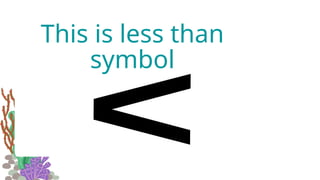
Which is smaller? Let’s use this symbol < to show less than. 456 < than 465
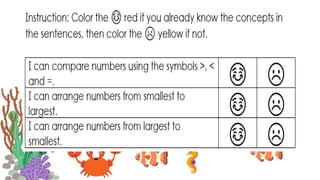
#6 When comparing numbers, we use symbols to show the relationship between them: