Math and Mega Pixels
             2nd Grade

                  Nikki Davis
                March 2, 2010
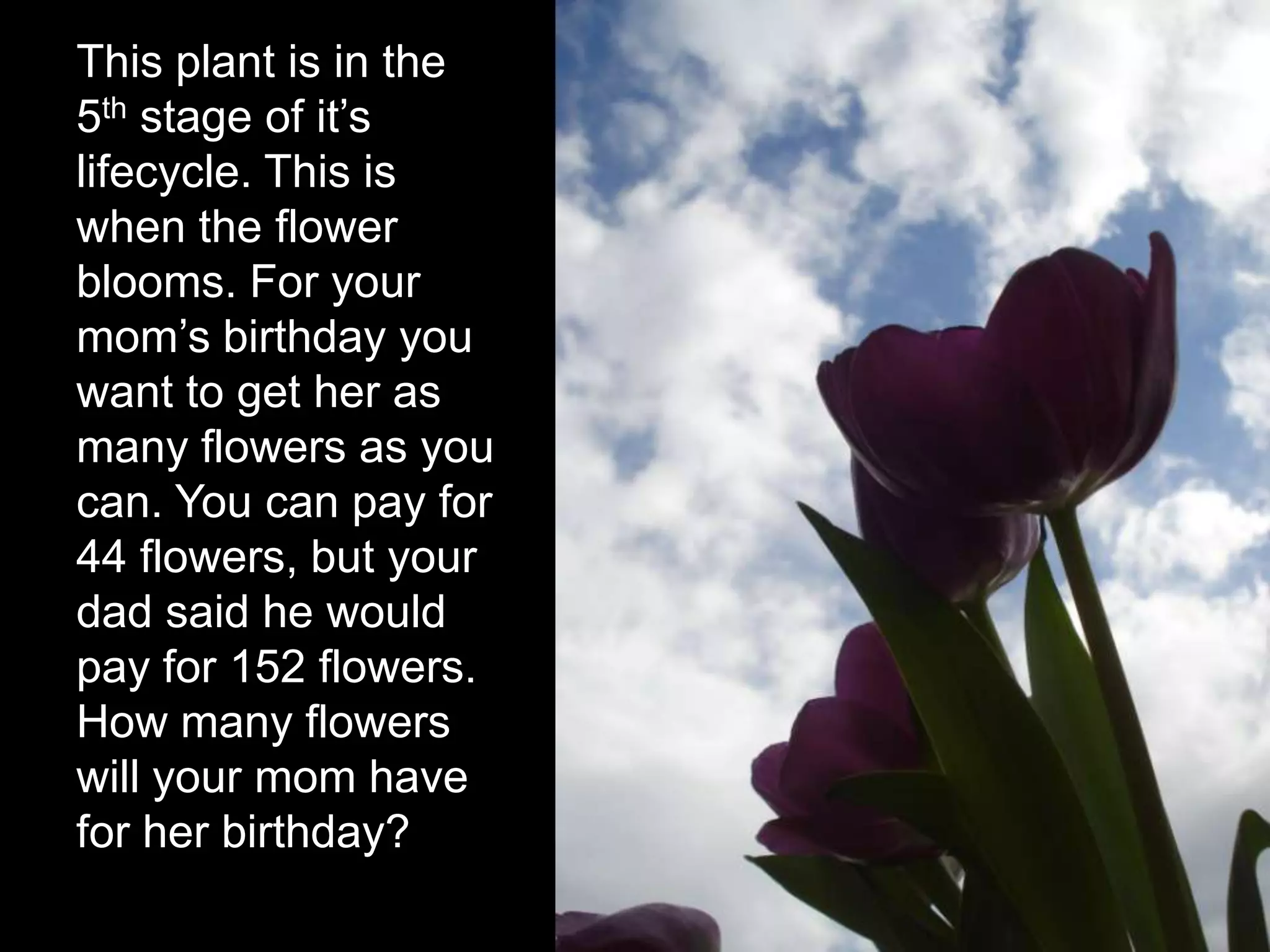
This plant is in the
5th stage of it’s
lifecycle. This is
when the flower
blooms. For your
mom’s birthday you
want to get her as
many flowers as you
can. You can pay for
44 flowers, but your
dad said he would
pay for 152 flowers.
How many flowers
will your mom have
for her birthday?
If you are stuck, try this:
• Estimate what your answer should be. Will
  it be more than 100?
• Use the benchmark of 50 to solve the
  problem.
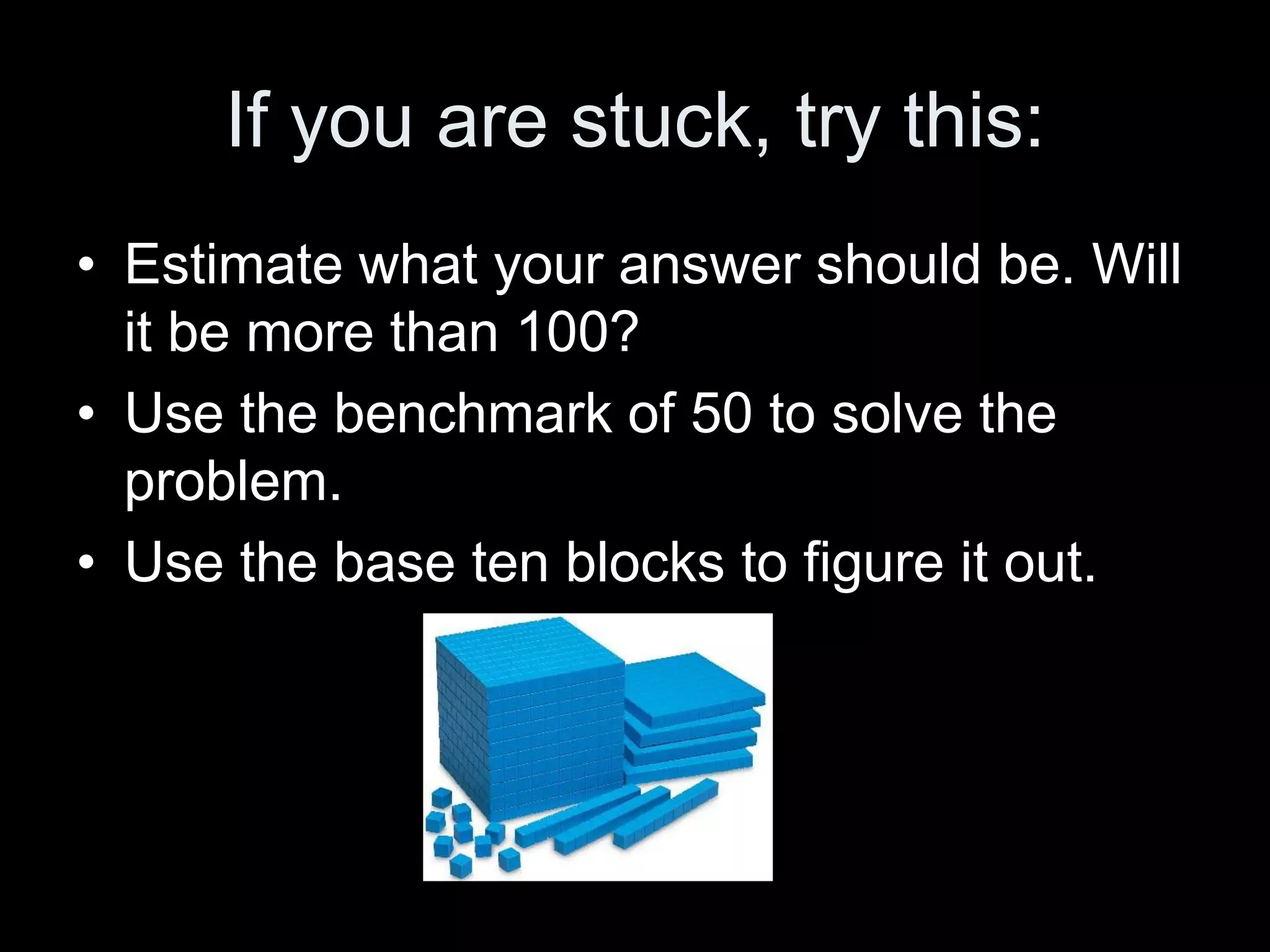
• Use the base ten blocks to figure it out.
Baby Grace is in the
toddler stage of the
human life cycle. I am
in the young adult
stage of the human life
cycle. I am 65 inches
tall and Baby Grace is
26 inches tall. How
much taller am I then
she is?
If you are stuck, think about this:
• Do you need to regroup in order to solve
  the problem?
• Estimate the answer. What should the
  answer be close to?
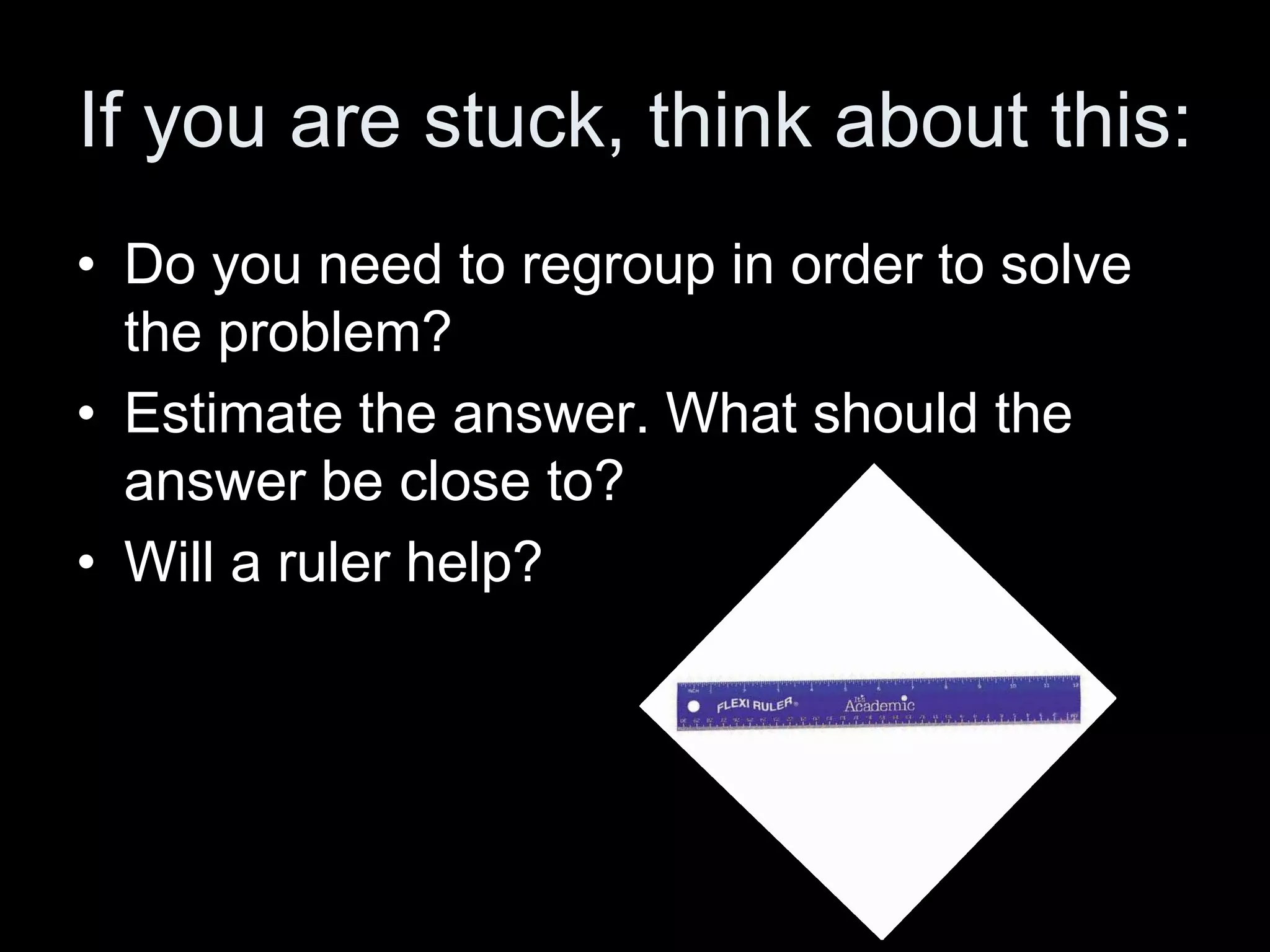
• Will a ruler help?
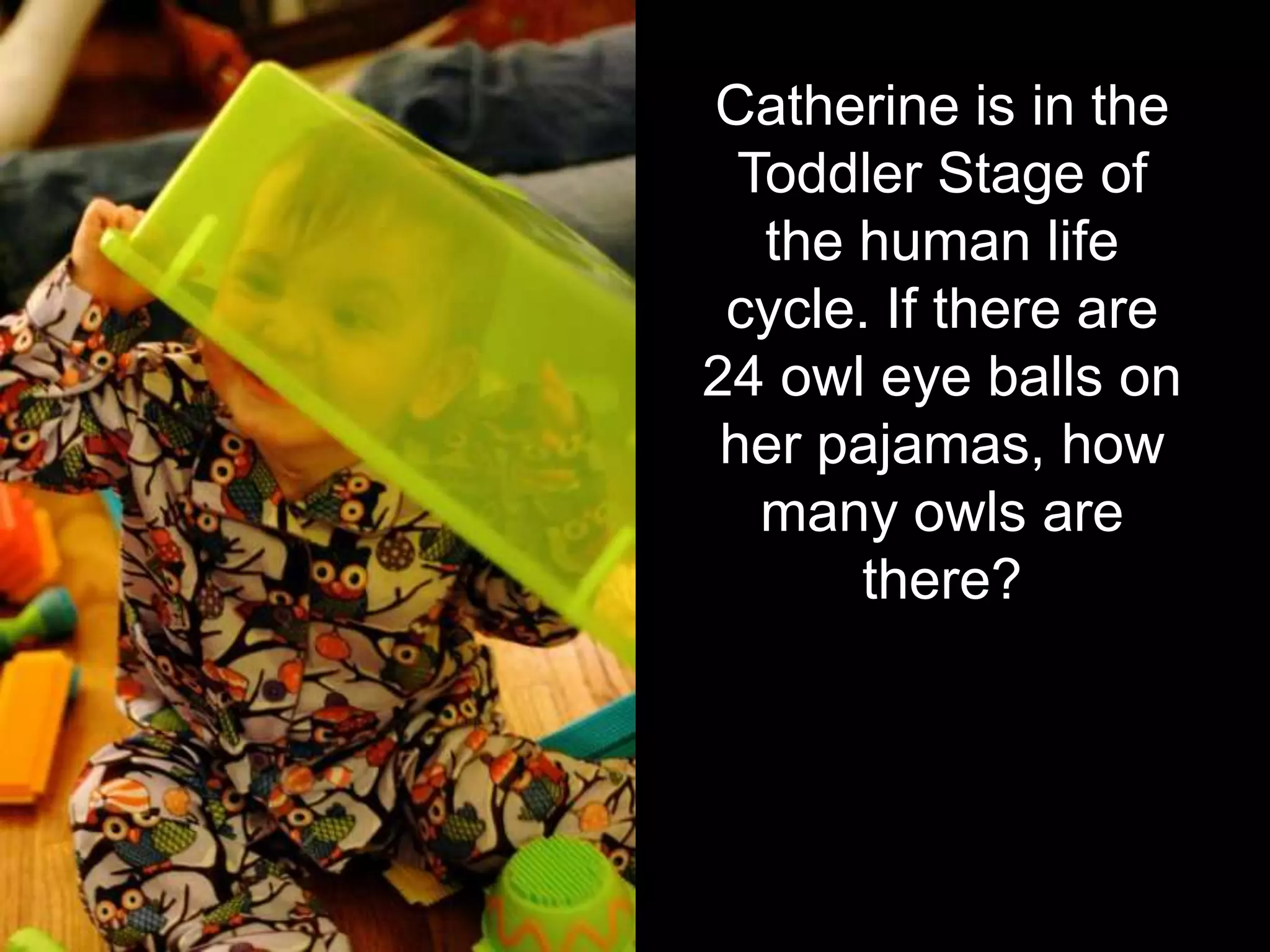
Catherine is in the
  Toddler Stage of
   the human life
 cycle. If there are
24 owl eye balls on
 her pajamas, how
   many owls are
       there?
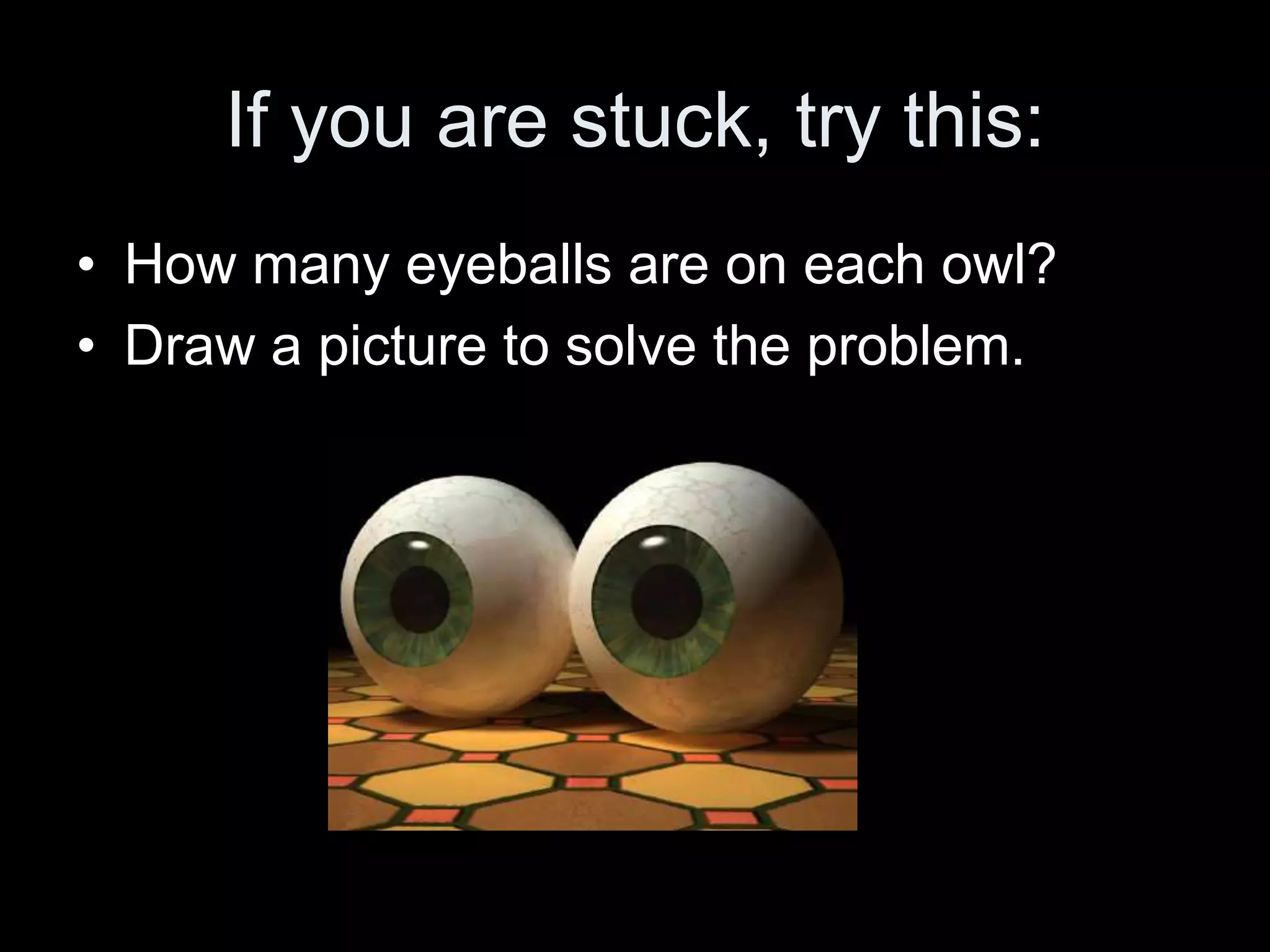
If you are stuck, try this:
• How many eyeballs are on each owl?
• Draw a picture to solve the problem.
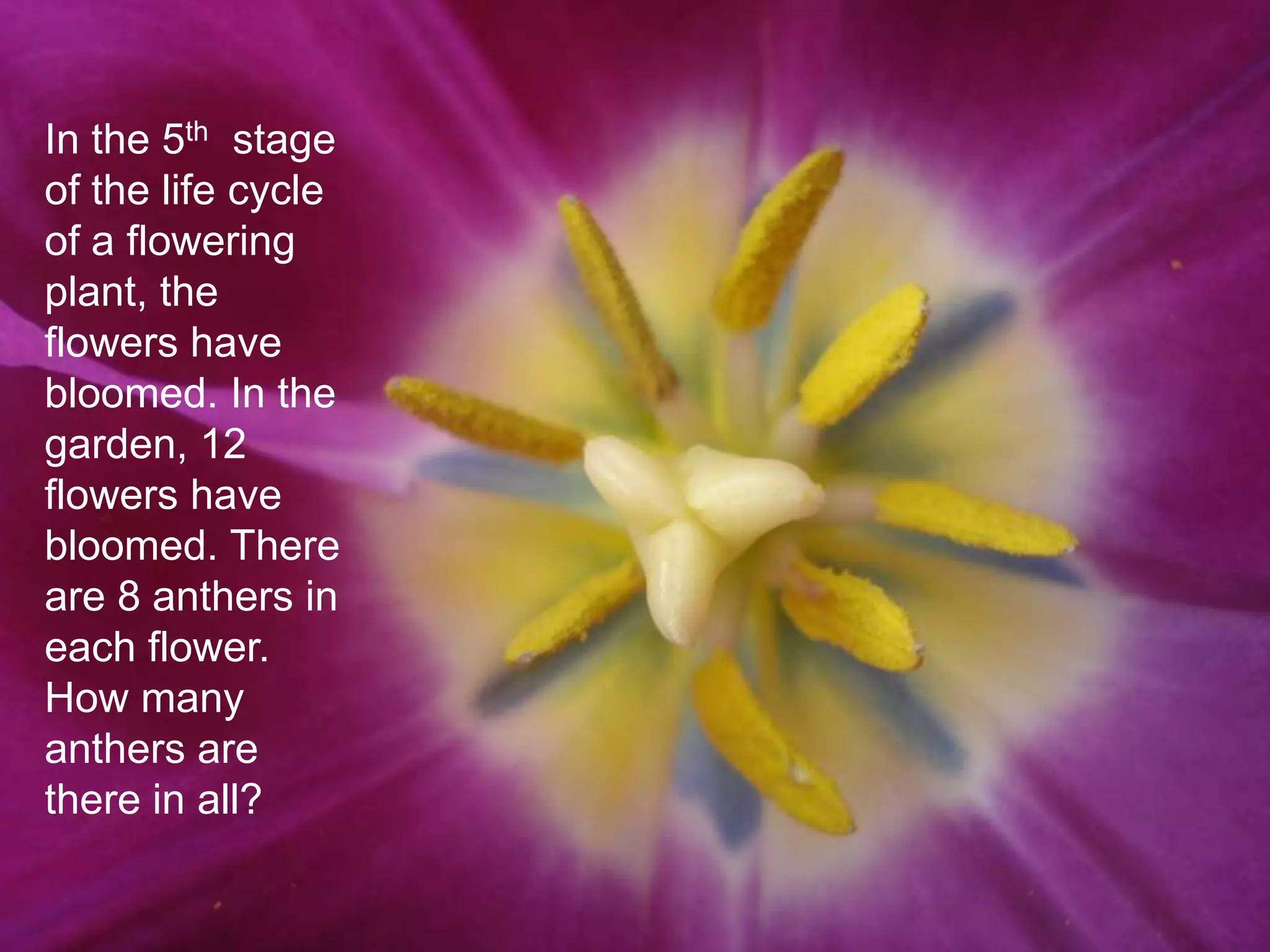
In the 5th stage
of the life cycle
of a flowering
plant, the
flowers have
bloomed. In the
garden, 12
flowers have
bloomed. There
are 8 anthers in
each flower.
How many
anthers are
there in all?
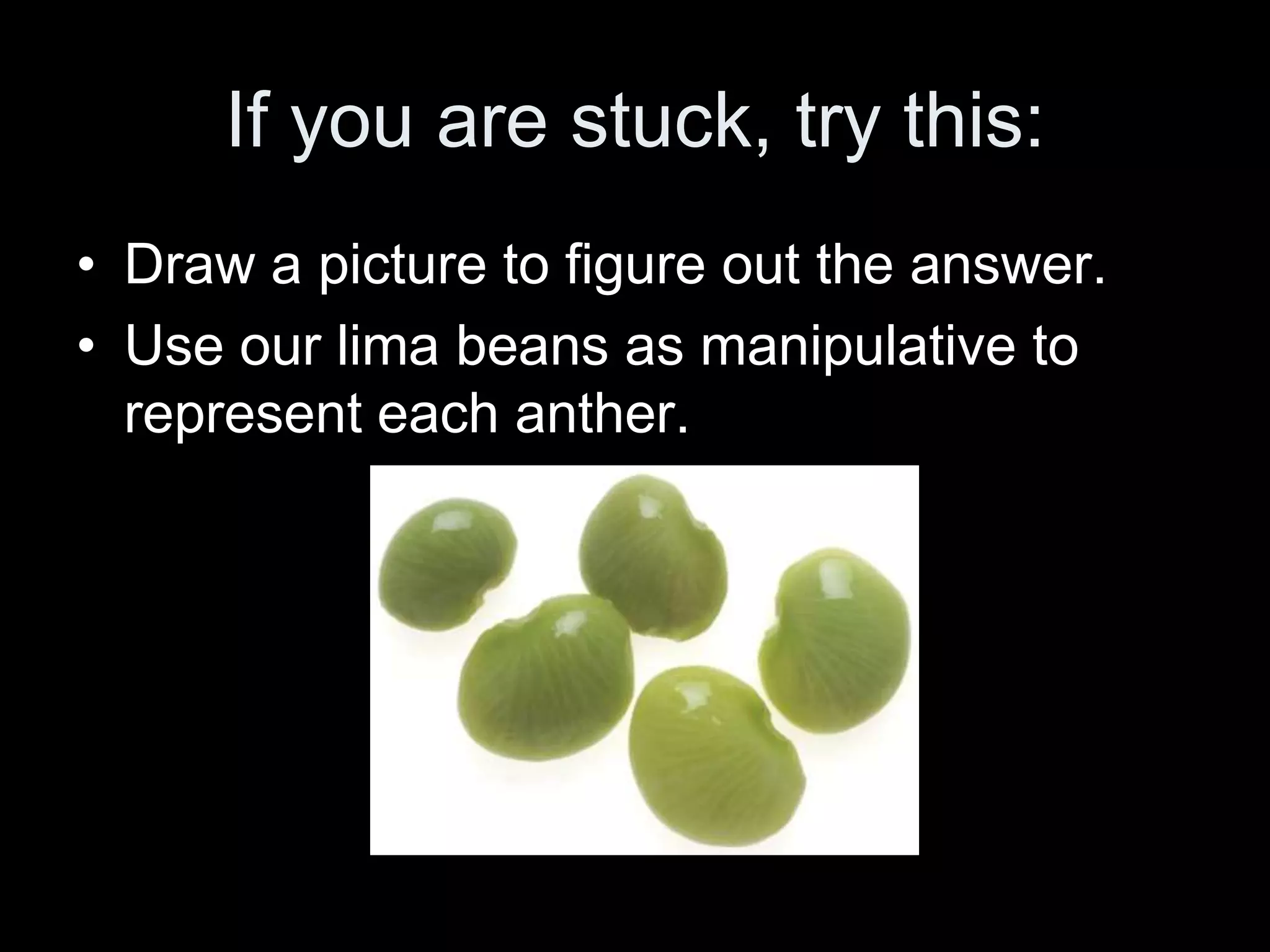
If you are stuck, try this:
• Draw a picture to figure out the answer.
• Use our lima beans as manipulative to
  represent each anther.
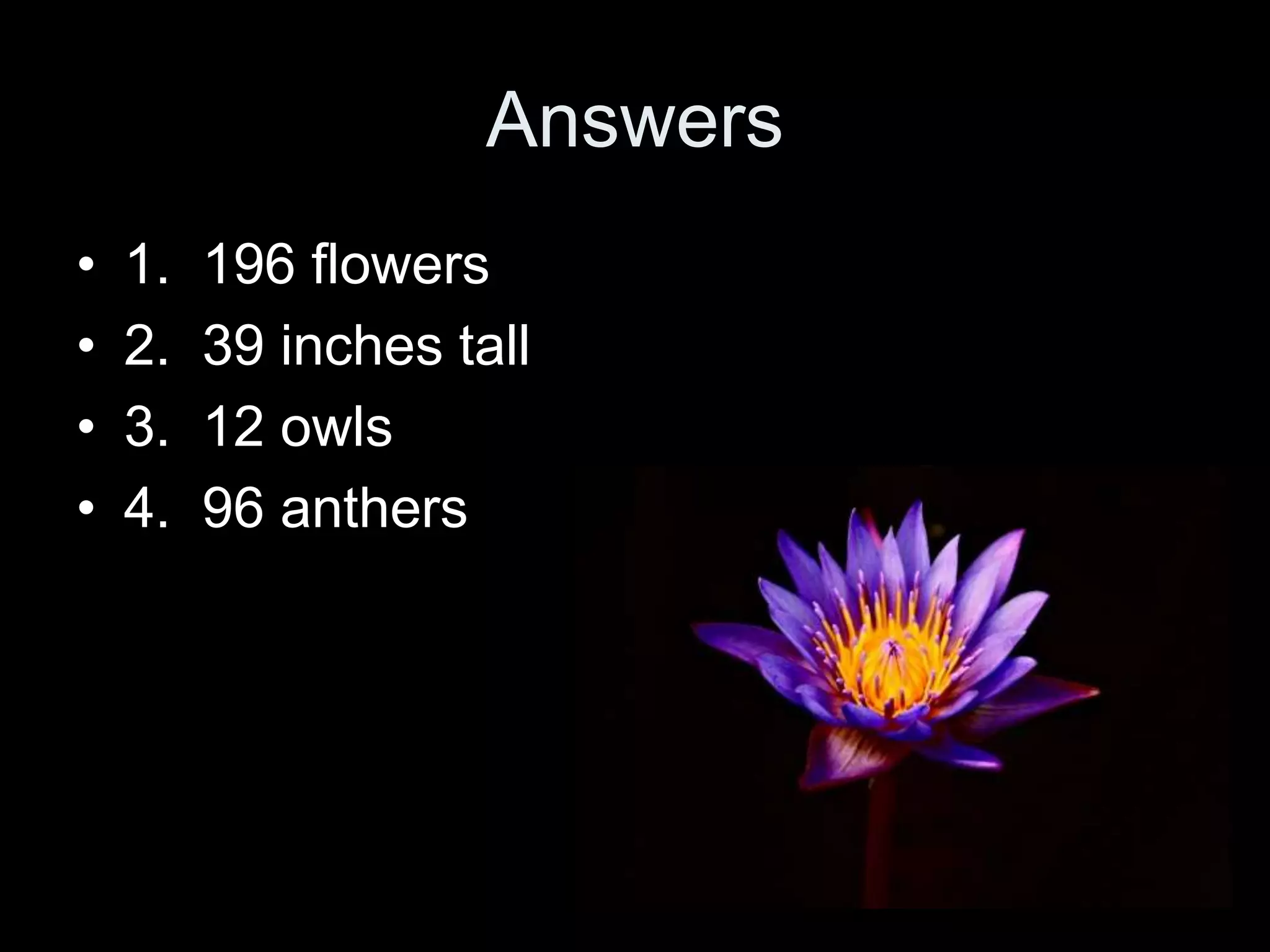
Answers
•   1.   196 flowers
•   2.   39 inches tall
•   3.   12 owls
•   4.   96 anthers
Georgia Performance Standards
M2N2. Students will build fluency with multi-digit addition and subtraction.

a. Correctly add and subtract two whole numbers up to three digits each with
    regrouping.

b. Understand and use the inverse relation between addition and subtraction to solve
    problems and check solutions.

c. Use mental math strategies such as benchmark numbers to solve problems.

d. Use basic properties of addition (commutative, associative, and identity) to simplify
    problems (e.g. 98 + 17 by taking two from 17 and adding it to the 98 to make 100
    and replacing the original problem by the sum 100 + 15).

e. Estimate to determine if solutions are reasonable for addition and subtraction.

M2N3. Students will understand multiplication, multiply numbers, and verify
results.

a. Understand multiplication as repeated addition.

c. Use the multiplication table (grid) to determine a product of two numbers.

d. Use repeated subtraction, equal sharing, and forming equal groups to divide large
    collections of objects and determine factors for multiplication.

Math And Mega Pixels

  • 1.
    Math and MegaPixels 2nd Grade Nikki Davis March 2, 2010
  • 2.
    This plant isin the 5th stage of it’s lifecycle. This is when the flower blooms. For your mom’s birthday you want to get her as many flowers as you can. You can pay for 44 flowers, but your dad said he would pay for 152 flowers. How many flowers will your mom have for her birthday?
  • 3.
    If you arestuck, try this: • Estimate what your answer should be. Will it be more than 100? • Use the benchmark of 50 to solve the problem. • Use the base ten blocks to figure it out.
  • 4.
    Baby Grace isin the toddler stage of the human life cycle. I am in the young adult stage of the human life cycle. I am 65 inches tall and Baby Grace is 26 inches tall. How much taller am I then she is?
  • 5.
    If you arestuck, think about this: • Do you need to regroup in order to solve the problem? • Estimate the answer. What should the answer be close to? • Will a ruler help?
  • 6.
    Catherine is inthe Toddler Stage of the human life cycle. If there are 24 owl eye balls on her pajamas, how many owls are there?
  • 7.
    If you arestuck, try this: • How many eyeballs are on each owl? • Draw a picture to solve the problem.
  • 8.
    In the 5thstage of the life cycle of a flowering plant, the flowers have bloomed. In the garden, 12 flowers have bloomed. There are 8 anthers in each flower. How many anthers are there in all?
  • 9.
    If you arestuck, try this: • Draw a picture to figure out the answer. • Use our lima beans as manipulative to represent each anther.
  • 10.
    Answers • 1. 196 flowers • 2. 39 inches tall • 3. 12 owls • 4. 96 anthers
  • 11.
    Georgia Performance Standards M2N2.Students will build fluency with multi-digit addition and subtraction. a. Correctly add and subtract two whole numbers up to three digits each with regrouping. b. Understand and use the inverse relation between addition and subtraction to solve problems and check solutions. c. Use mental math strategies such as benchmark numbers to solve problems. d. Use basic properties of addition (commutative, associative, and identity) to simplify problems (e.g. 98 + 17 by taking two from 17 and adding it to the 98 to make 100 and replacing the original problem by the sum 100 + 15). e. Estimate to determine if solutions are reasonable for addition and subtraction. M2N3. Students will understand multiplication, multiply numbers, and verify results. a. Understand multiplication as repeated addition. c. Use the multiplication table (grid) to determine a product of two numbers. d. Use repeated subtraction, equal sharing, and forming equal groups to divide large collections of objects and determine factors for multiplication.