Material Science
Eng. Kareem. H. Mokhtar
Important notes
 Make sure to submit your work BEFORE the Due date
 50% minus if you submit after it.
Assignments
You will get your feed back
After submitting your
assignment and you should:
1- submit before the due date
2- solve all the questions
3- submit your assignment as
neat as possible
Quizzes
1- Quizzes will start at a certain time
2- You are not allowed to flip your
quiz until you hear that the quiz will
start now.
3- When you hear put your pens
down, stop answering immediately.
4- Follow the instructor’s directions
Never Cheat !!
Report and a presentation
 Form groups of ”2”
 Be on time
 Stick to the time limit
Classification
Material can be divided into
1- Crystalline material
These materials contains one or more crystal, In each crystall atoms
show a periodic arrangement.
2- Non- crytalline material (amorphous material)
These materials does not contain a periodic arrangement of ions or
atoms
Basic Concepts
 Deformation
 Elastic Deformation
 Plastic Deformation
 Stress
 Strain
Deformation
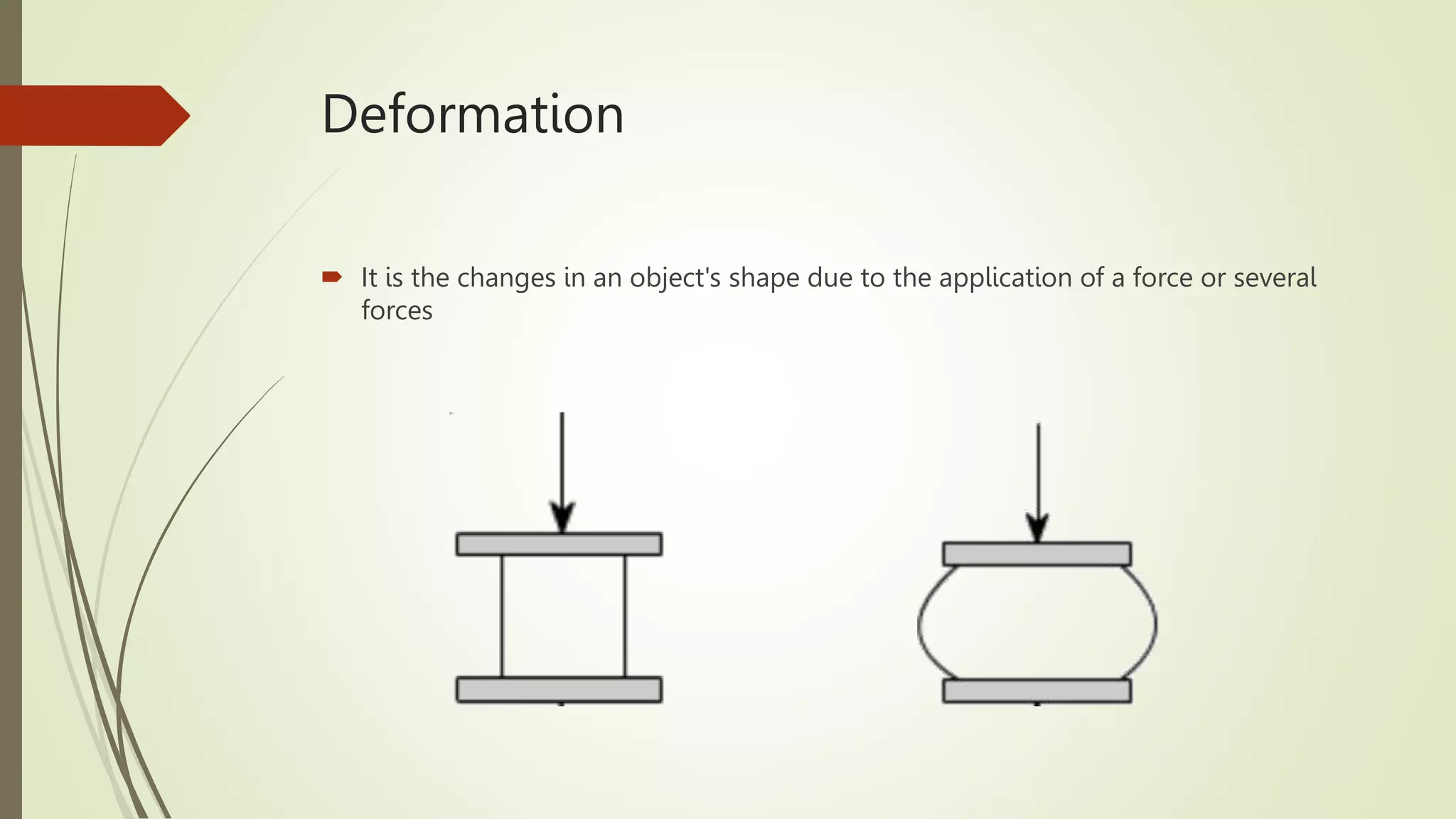
 It is the changes in an object's shape due to the application of a force or several
forces
Types of Deformation
 Deformation can be classified into two groups
 1- Elastic deformation
 It is a reversible deformation, which means the body will return to it’s original
shape when the stress is removed
 2- Plastic Deformation
 It is an irreversible deformation (permanent)
Stress
 It is the force applied per area of the body
 Different forms of stresses will be discussed later
= F
A
stress
Strain
Mechanical Properties
 A- Elasticity
 B-Ductility
 C- strength
 D- Hardness
 E- Brittleness
 F-Toughness
Elasticity
 Elastic material: material that springs back to its original
shape after the removal of the stress
Ductility
 It is the ability of the material to bend or stretch without breaking
Brittleness
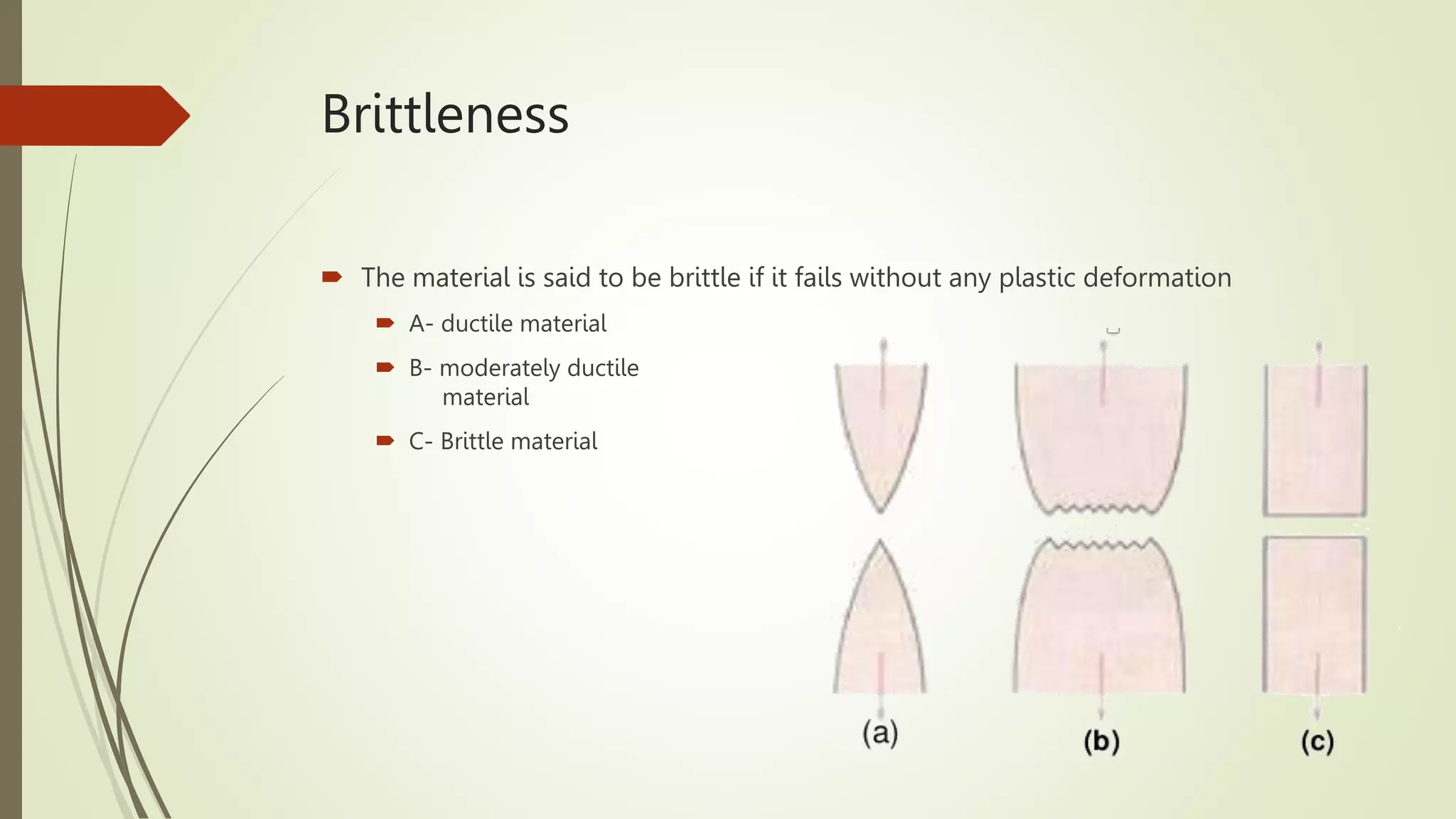
 The material is said to be brittle if it fails without any plastic deformation
 A- ductile material
 B- moderately ductile
material
 C- Brittle material
Hardness
 It is the resistance of the material to scratch or penetration
Stress- Strain curve
TS
stress
strain
Stress-strain curve
stress
strain
P
P : Proportional limit
E
E : Elasticity limit
Y : Yield point
U
U: Ultimate tensile strength
B: Break point
B
Elastic Plastic
Y
Stress-strain curve
 Elasticity limit :
 is the maximum stress within a material can withstand before permanent deformation.
 This point is the limit of the elastic region
 Yield point:
 marks the beginning of plasticity.
 Ultimate tensile strength:
 The maximum stress that a material can withstand while being stretched or pulled before
breaking
Toughness
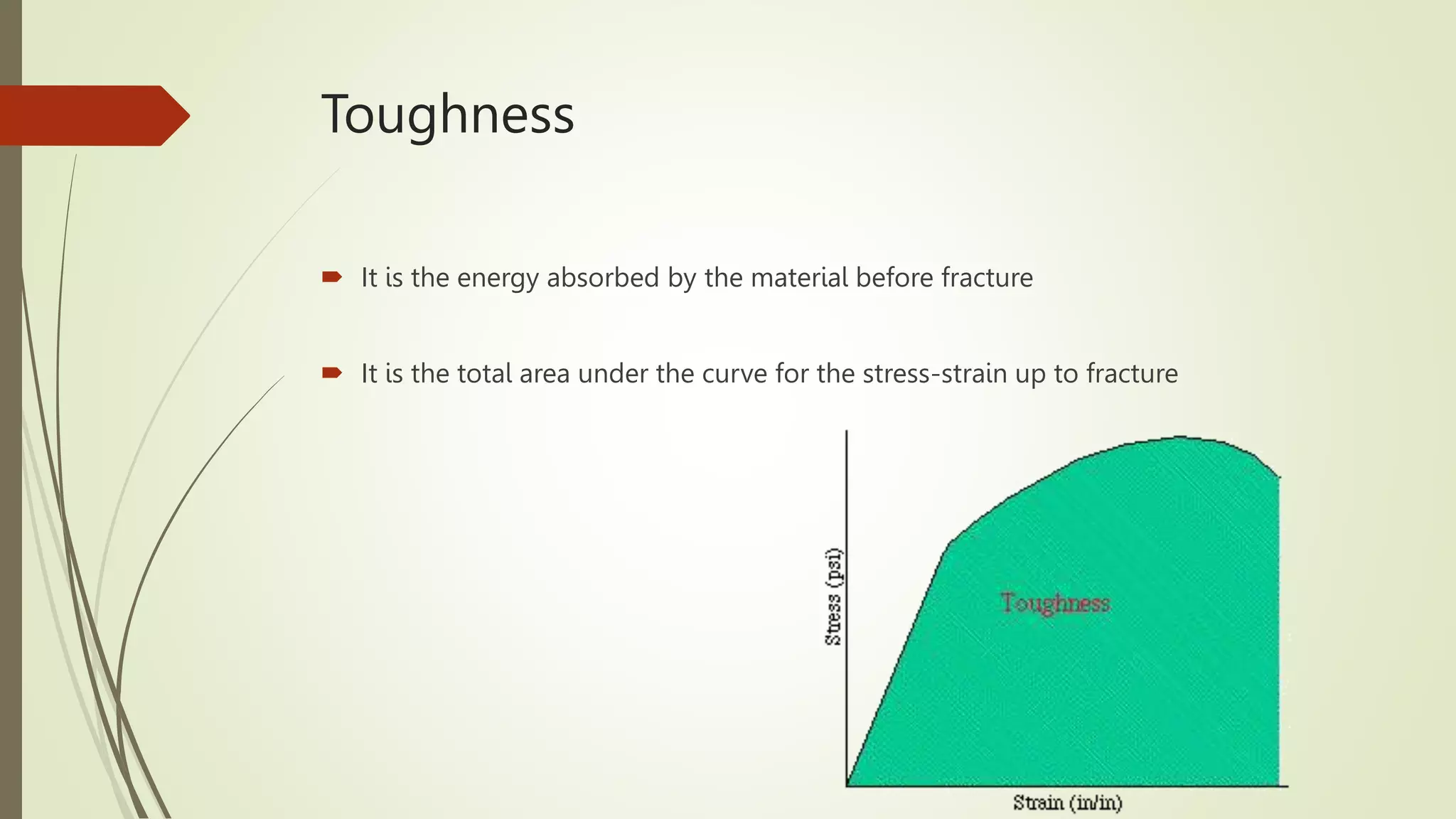
 It is the energy absorbed by the material before fracture
 It is the total area under the curve for the stress-strain up to fracture
material science 1 .pptx

material science 1 .pptx

  • 1.
  • 2.
    Important notes  Makesure to submit your work BEFORE the Due date  50% minus if you submit after it.
  • 3.
    Assignments You will getyour feed back After submitting your assignment and you should: 1- submit before the due date 2- solve all the questions 3- submit your assignment as neat as possible
  • 4.
    Quizzes 1- Quizzes willstart at a certain time 2- You are not allowed to flip your quiz until you hear that the quiz will start now. 3- When you hear put your pens down, stop answering immediately. 4- Follow the instructor’s directions Never Cheat !!
  • 5.
    Report and apresentation  Form groups of ”2”  Be on time  Stick to the time limit
  • 7.
    Classification Material can bedivided into 1- Crystalline material These materials contains one or more crystal, In each crystall atoms show a periodic arrangement. 2- Non- crytalline material (amorphous material) These materials does not contain a periodic arrangement of ions or atoms
  • 8.
    Basic Concepts  Deformation Elastic Deformation  Plastic Deformation  Stress  Strain
  • 9.
    Deformation  It isthe changes in an object's shape due to the application of a force or several forces
  • 10.
    Types of Deformation Deformation can be classified into two groups  1- Elastic deformation  It is a reversible deformation, which means the body will return to it’s original shape when the stress is removed  2- Plastic Deformation  It is an irreversible deformation (permanent)
  • 11.
    Stress  It isthe force applied per area of the body  Different forms of stresses will be discussed later = F A stress
  • 12.
  • 13.
    Mechanical Properties  A-Elasticity  B-Ductility  C- strength  D- Hardness  E- Brittleness  F-Toughness
  • 14.
    Elasticity  Elastic material:material that springs back to its original shape after the removal of the stress
  • 15.
    Ductility  It isthe ability of the material to bend or stretch without breaking
  • 16.
    Brittleness  The materialis said to be brittle if it fails without any plastic deformation  A- ductile material  B- moderately ductile material  C- Brittle material
  • 17.
    Hardness  It isthe resistance of the material to scratch or penetration
  • 18.
  • 19.
    Stress-strain curve stress strain P P :Proportional limit E E : Elasticity limit Y : Yield point U U: Ultimate tensile strength B: Break point B Elastic Plastic Y
  • 20.
    Stress-strain curve  Elasticitylimit :  is the maximum stress within a material can withstand before permanent deformation.  This point is the limit of the elastic region  Yield point:  marks the beginning of plasticity.  Ultimate tensile strength:  The maximum stress that a material can withstand while being stretched or pulled before breaking
  • 21.
    Toughness  It isthe energy absorbed by the material before fracture  It is the total area under the curve for the stress-strain up to fracture