
Mastering Social Media for Sustained Business Growth Dr. Jim Hamill  Alan Stevenson Vincent Hamill www.energise2-0.com May, 2011
Mastering Social Media Welcome and Introductions About the Programme Workshop 1: ‘The Foundations’
Welcome and  Introductions
About the  Programme
SM Opportunities and Progress Made Used effectively, social media can lead to the following business benefits for SMEs Market/customer knowledge & insight through customer feedback and the use of social media monitoring tools Low cost brand awareness and reputation management Increase sales/repeat sales Build strong online community/ quality customer base of high value, high growth potential customers Engage and energise Enhanced customer experience and loyalty Sales/marketing effectiveness, efficiency and ROI Operational / internal process efficiency (open source and hosted apps)
SM Opportunities and Progress Made Interest and enthusiasm among SMEs is growing rapidly -  channels are being set up SMEs fall into three main groups in terms of progress made Progressive Adopters  Cautious/ Experimental Adopters Non Adopters
SM Opportunities and Progress Made While some good progress is being made, there is a need for a more ‘strategic’ approach Clear social media vision and strategy, agreed objectives, KPIs, targets, ROI and on-going performance measurement  More attention needs to be paid to organization, people, resource issues critical to on-going SM success Social Media Planning Pays
Programme Overview Key issues in planning, developing, implementing and managing a successful social media strategy, including performance measurement and ROI
Programme Overview The key strategic, management and organizational challenges involved in planning, implementing and managing an effective social media strategy ‘ Social Media Planning Pays’…….  SM success requires sound planning and the application of professional project management procedures ….  but not paralysis by analysis A key objective is to ensure that your SM Strategy is fully aligned behind and supportive of your core business/marcoms goals and objectives
Key Questions To Address  What social media channels should you engage with and how deep should your level of engagement be? How can social media best help you to achieve your overall strategic goals and objectives?  What resource should you commit to social media? What Key Performance Indicators (KPIs) should you use and how can Return on Investment be measured?
Key Questions To Address  How open should your organization become?  What new ‘mindsets’ are required?  What new skills, knowledge and staff training are required? Action plans for successful channel development
Programme Structure Three one day workshops Online support  www.energise2-0.com   ‘ Social Media Toolkit’ Exercises Follow-Up Meeting Implementation Support?
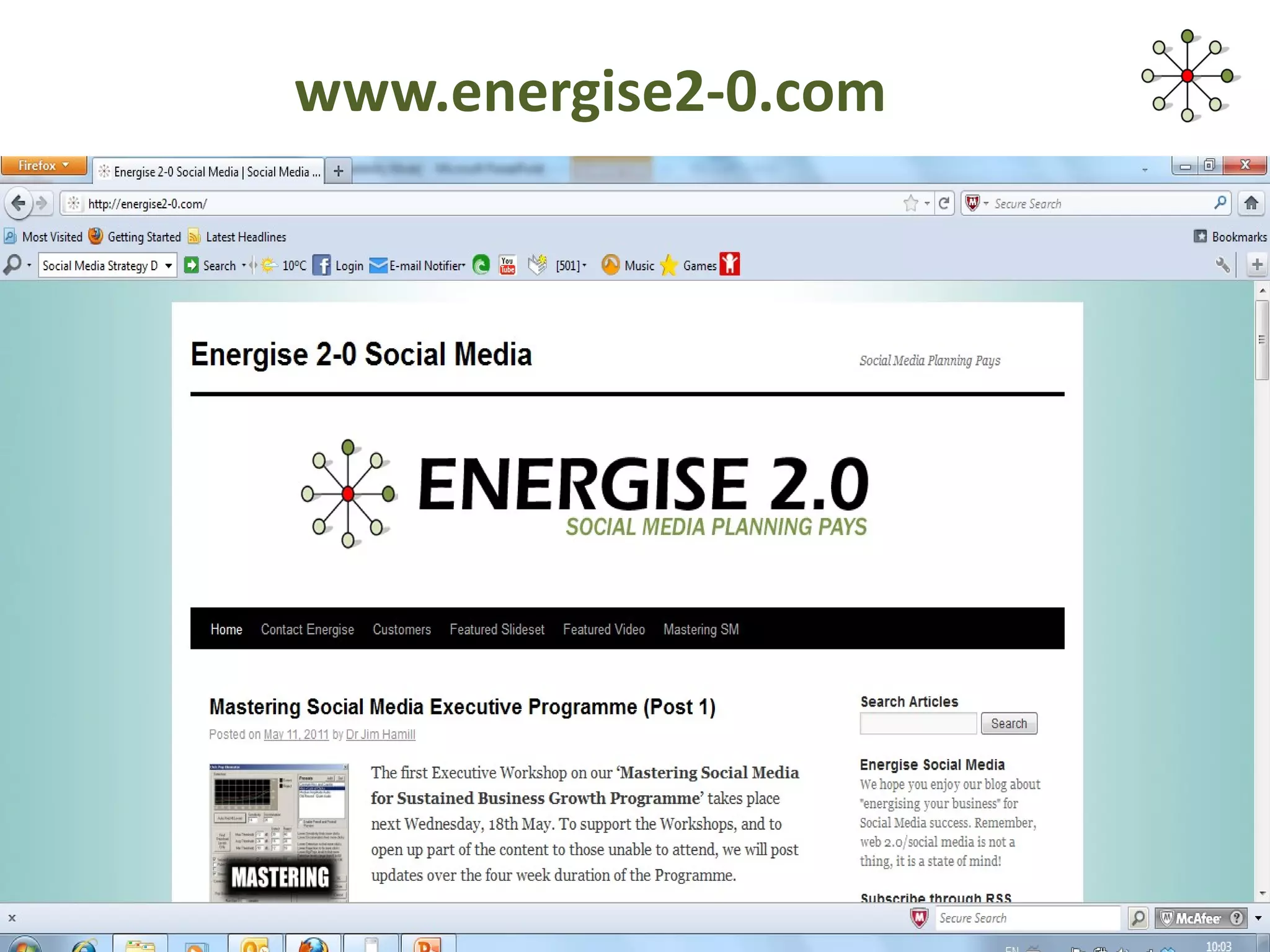
www.energise2-0.com
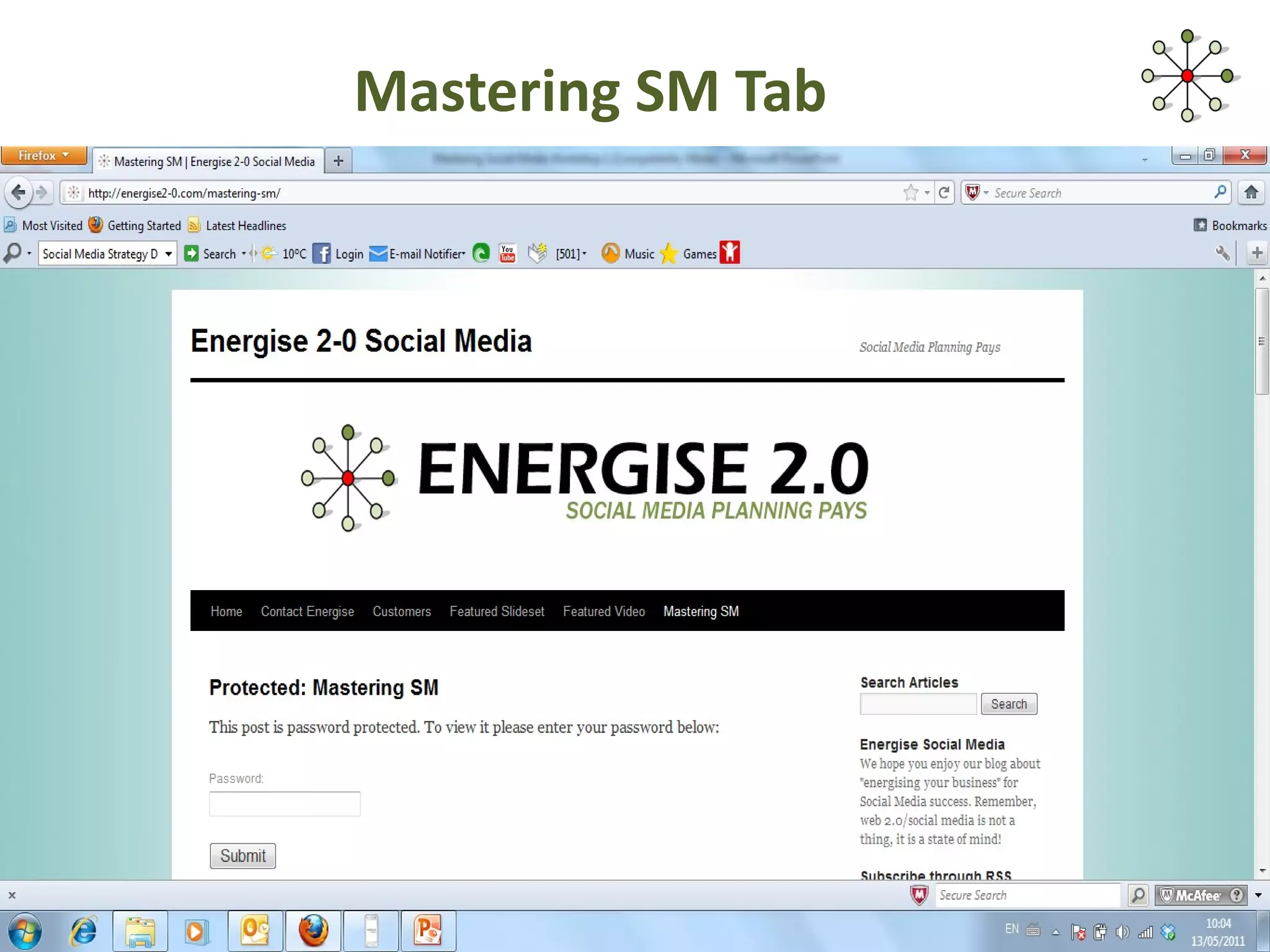
Mastering SM Tab
Programme ‘Mindset’ Interaction and two-way dialogue NOT broadcasting Crowdsourced learning – NOT ‘sage on the stage’ Input = Output
Questions about  the Programme?
Where are you in terms  of Social Media?
Mastering Social Media for Sustained Business Growth Workshop 1 ‘The Foundations’
Workshop 1 Overview Overview of social media – what is it? How important has it become? – social media size and growth Features and characteristics – the key things to remember about social media The new ‘mindset’ and performance measures required Potential business benefits of social media Social media in action – case examples Establish a strong foundation for developing, implementing and managing a successful Social Media Strategy – Workshops 2 and 3 ‘ Social Media Planning Pays’
‘ Stop and Reflect’ Exercises Three exercises to reinforce your knowledge/understanding and to establish a strong foundation for SM strategy development Social media landscape evaluation Internal audit of progress made Are you ‘ready to engage’?
What is Social Media?
 
 
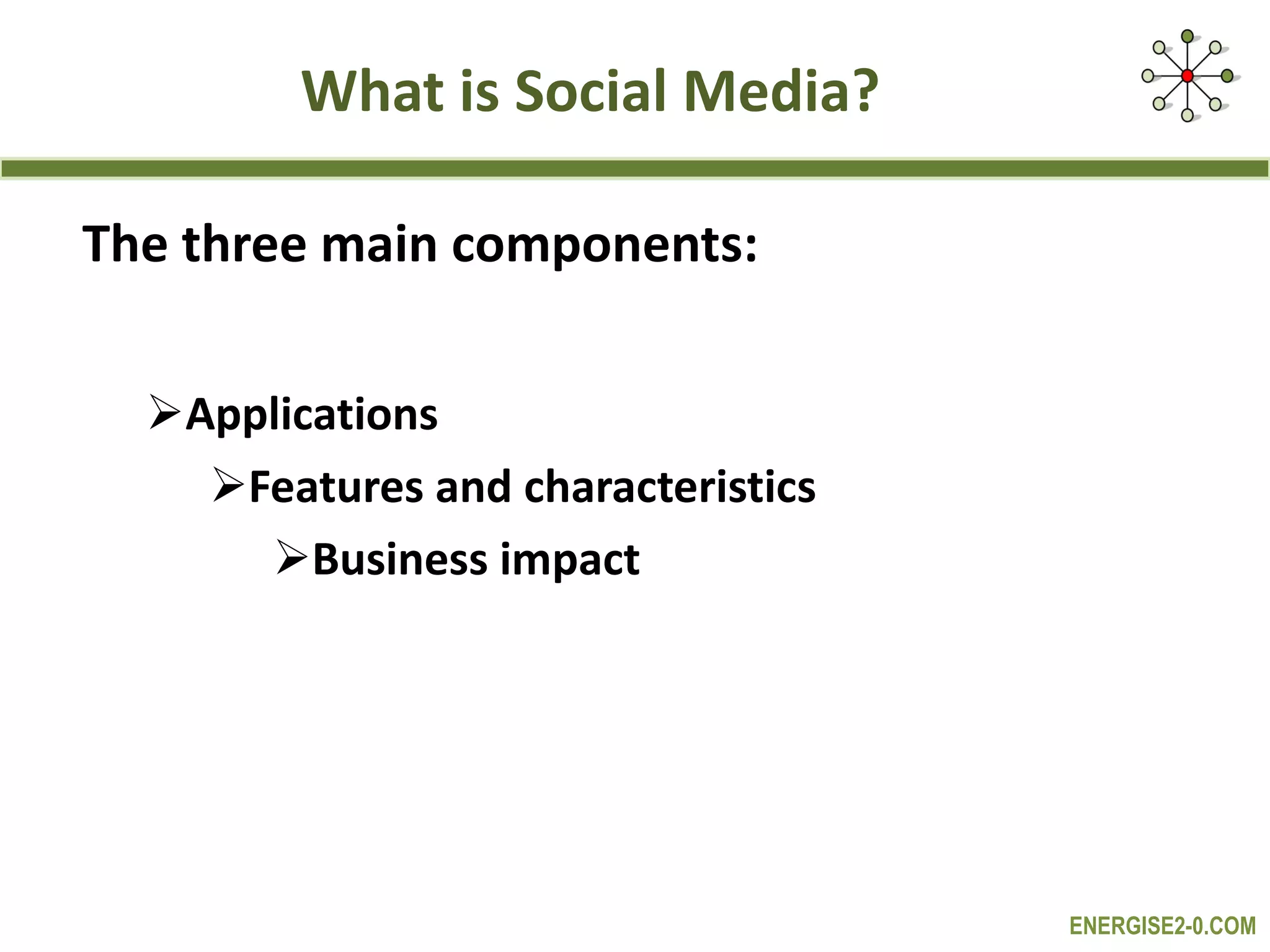
What is Social Media? The three main components: Applications Features and characteristics Business impact
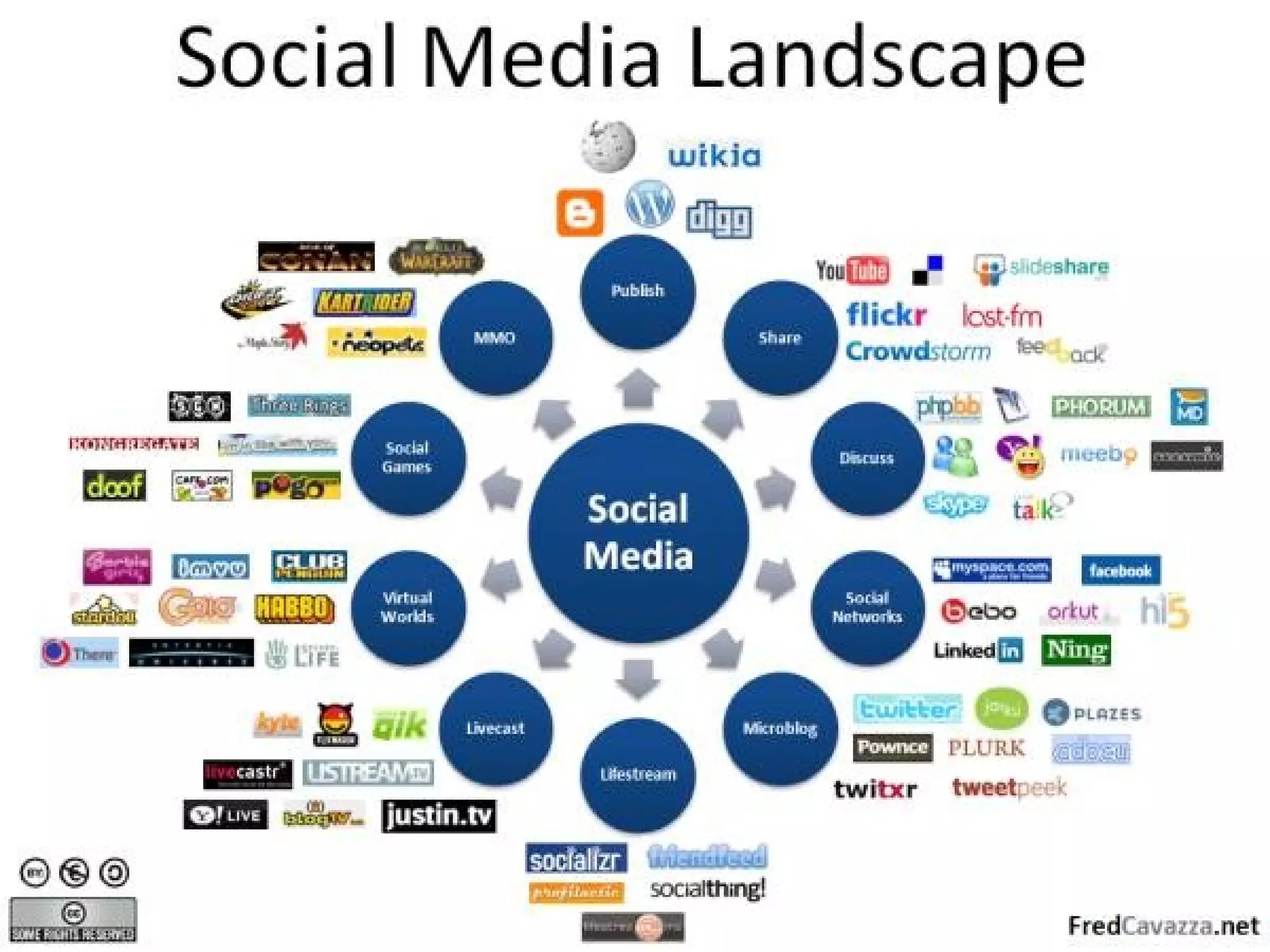
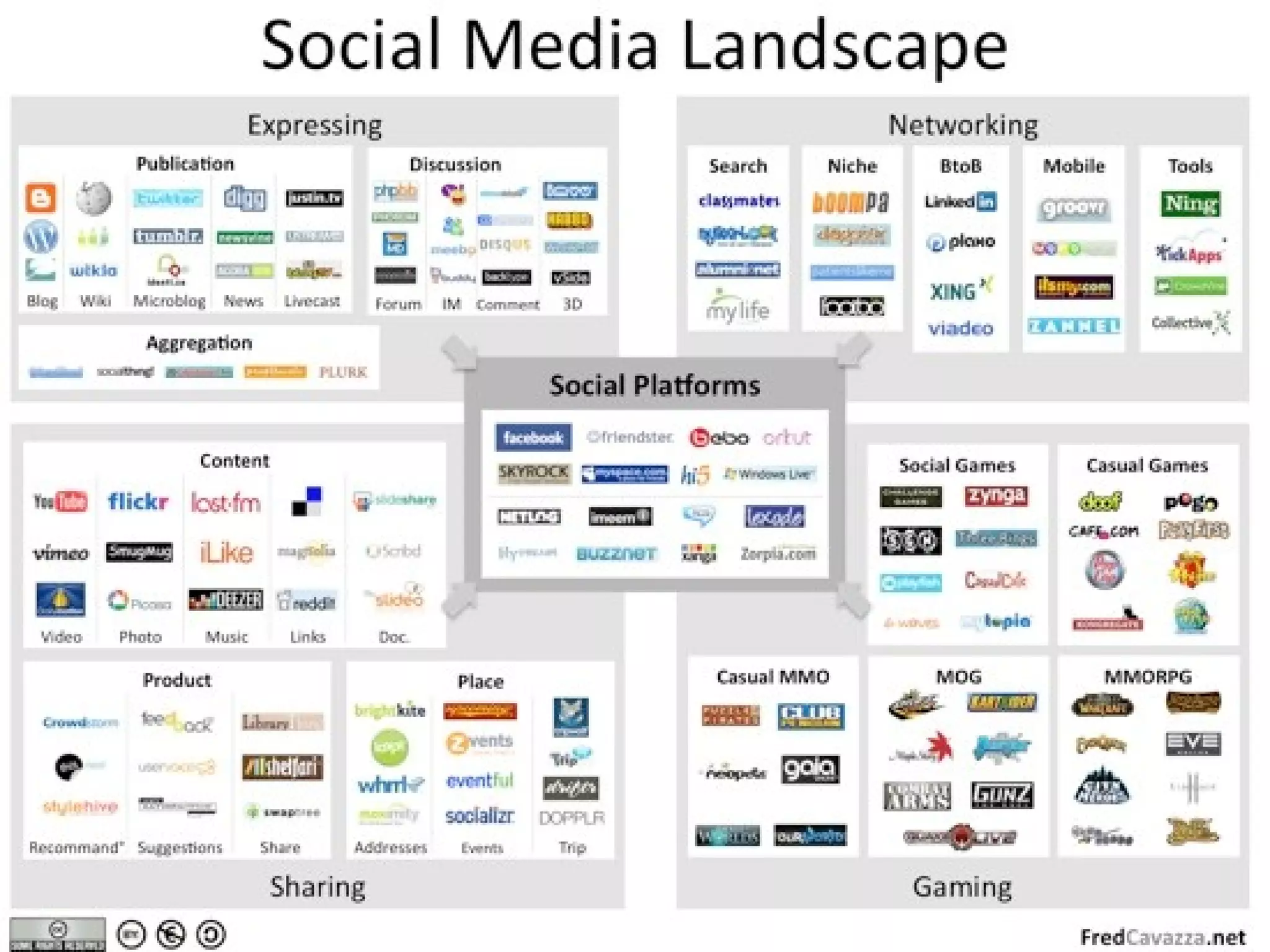
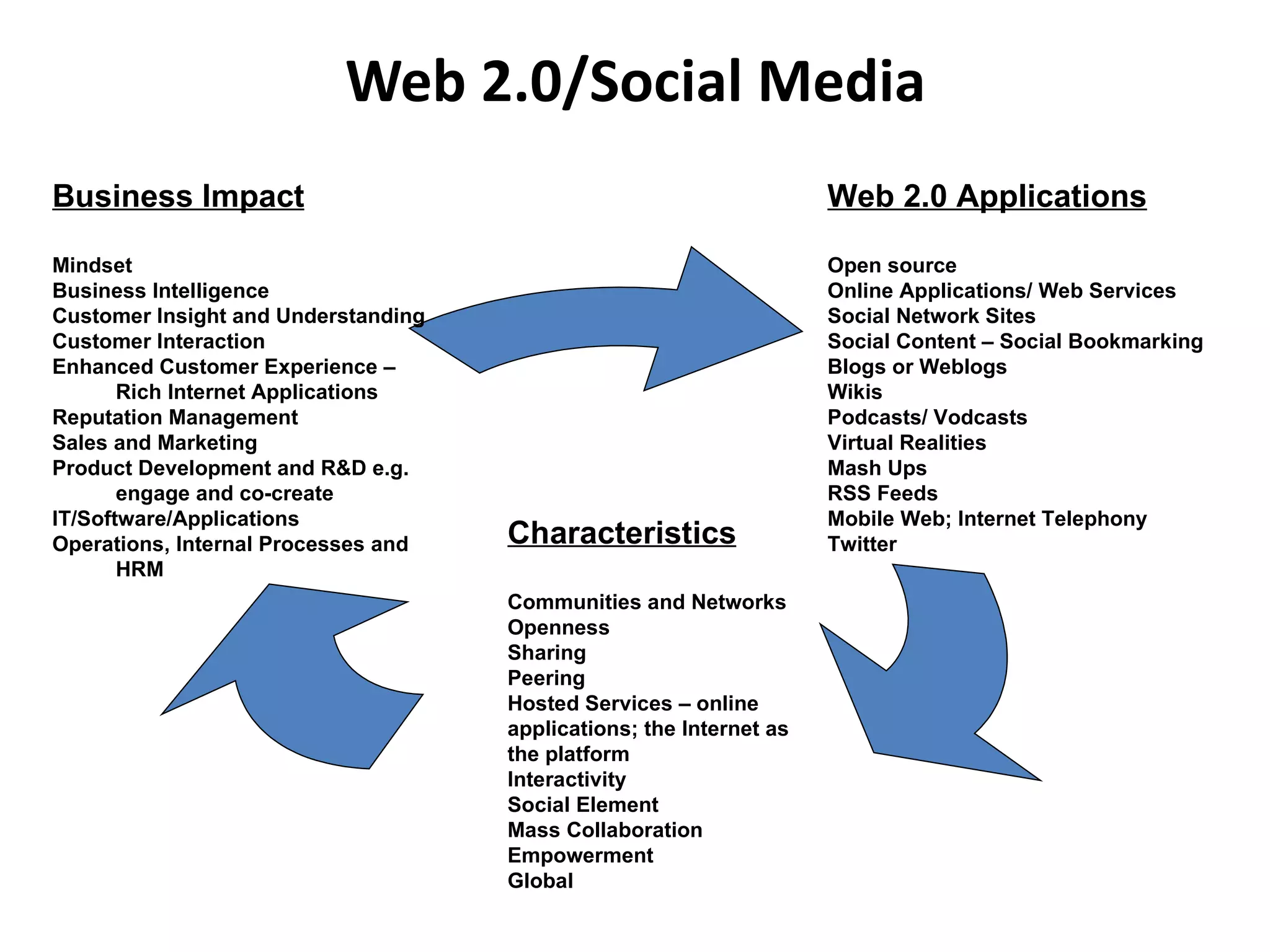
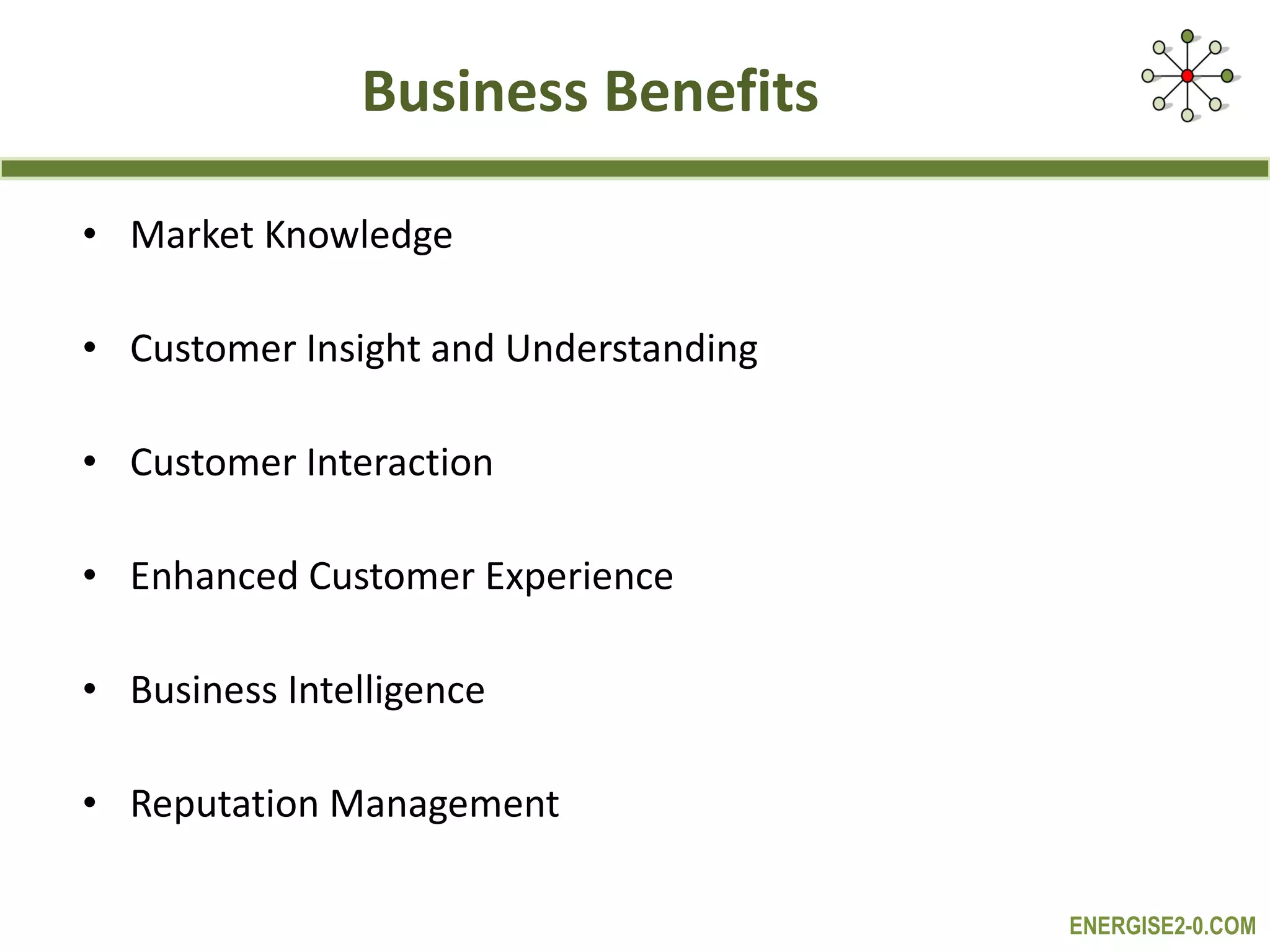
  Web 2.0/Social Media  Web 2.0 Applications Open source Online Applications/ Web Services Social Network Sites Social Content – Social Bookmarking Blogs or Weblogs Wikis Podcasts/ Vodcasts Virtual Realities Mash Ups RSS Feeds Mobile Web; Internet Telephony Twitter Characteristics Communities and Networks Openness Sharing Peering Hosted Services – online applications; the Internet as the platform Interactivity Social Element Mass Collaboration Empowerment Global Business Impact Mindset Business Intelligence Customer Insight and Understanding Customer Interaction Enhanced Customer Experience – Rich Internet Applications Reputation Management Sales and Marketing  Product Development and R&D e.g. engage and co-create IT/Software/Applications Operations, Internal Processes and HRM
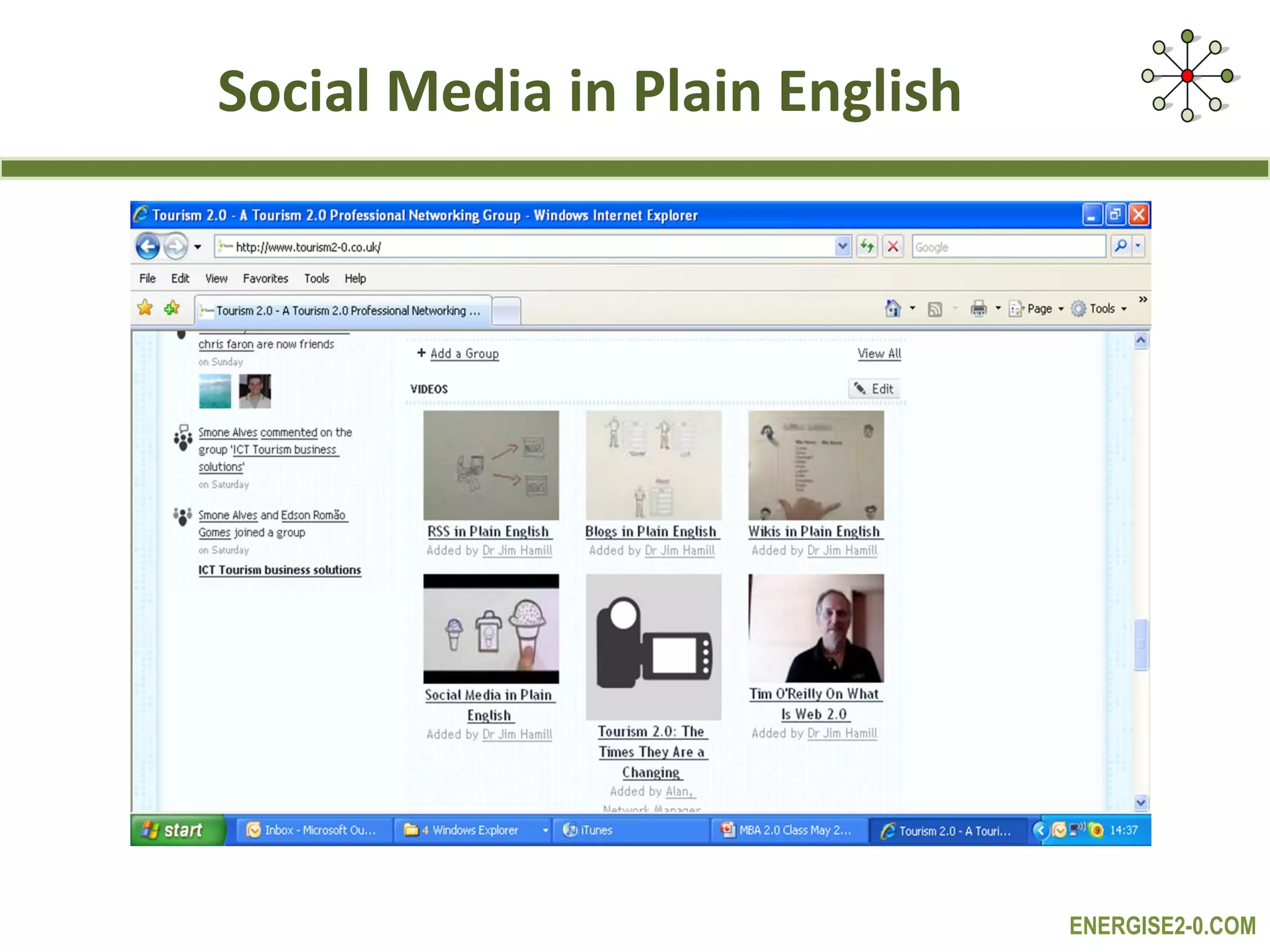
Social Media in Plain English
How important has it become?
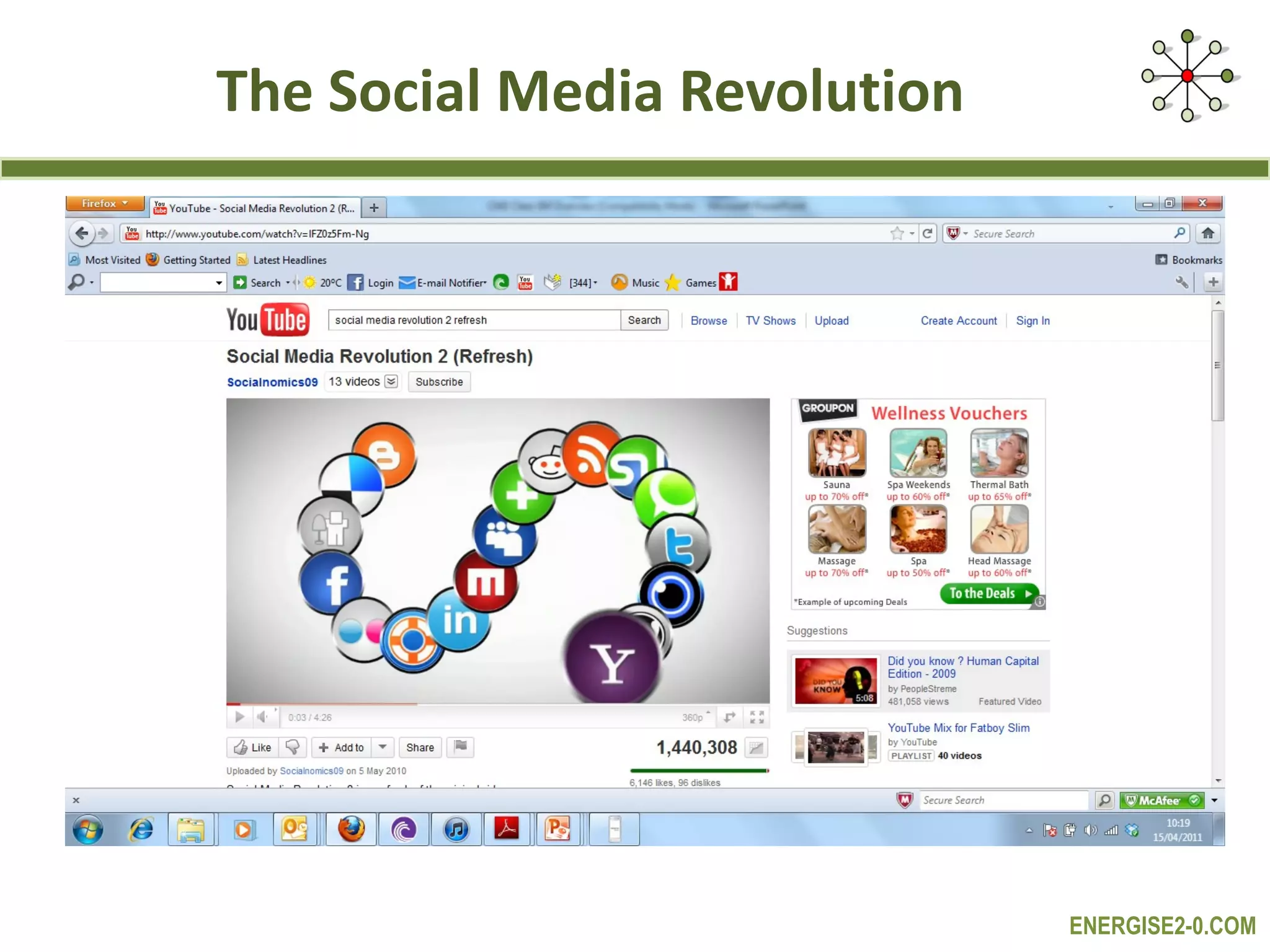
The Social Media Revolution
‘ Stop and Reflect’ Exercise 1: Impact - What impact is social media having on your industry?  How important has it/will it become? Customers – How are your customers using social media?  What impact is it having/will it have on customer behaviour? What are the opportunities and threats for your business?......discussion of business benefits to follow…..
Potential Business Benefits  of Social Media
Business Benefits Market Knowledge Customer Insight and Understanding Customer Interaction Enhanced Customer Experience Business Intelligence Reputation Management
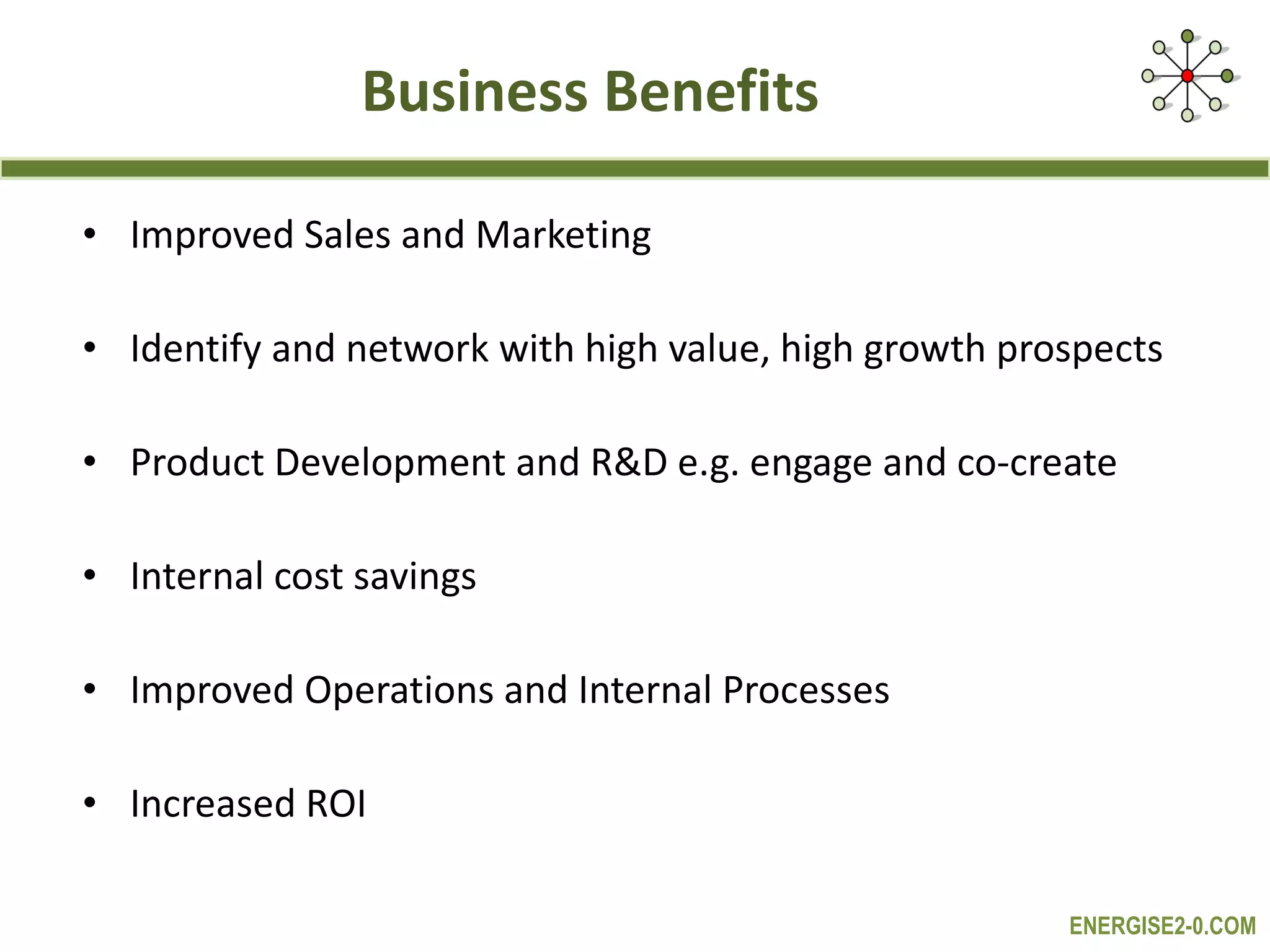
Business Benefits Improved Sales and Marketing  Identify and network with high value, high growth prospects Product Development and R&D e.g. engage and co-create Internal cost savings  Improved  Operations and Internal Processes Increased ROI
Potential Business Benefits 5 main areas: Market/Customer Knowledge & Insight Engagement & Reputation Management Enhanced Customer Experience and Loyalty Sales/Marketing Effectiveness, Efficiency and ROI Operations/ Internal Processes (open source and hosted apps)
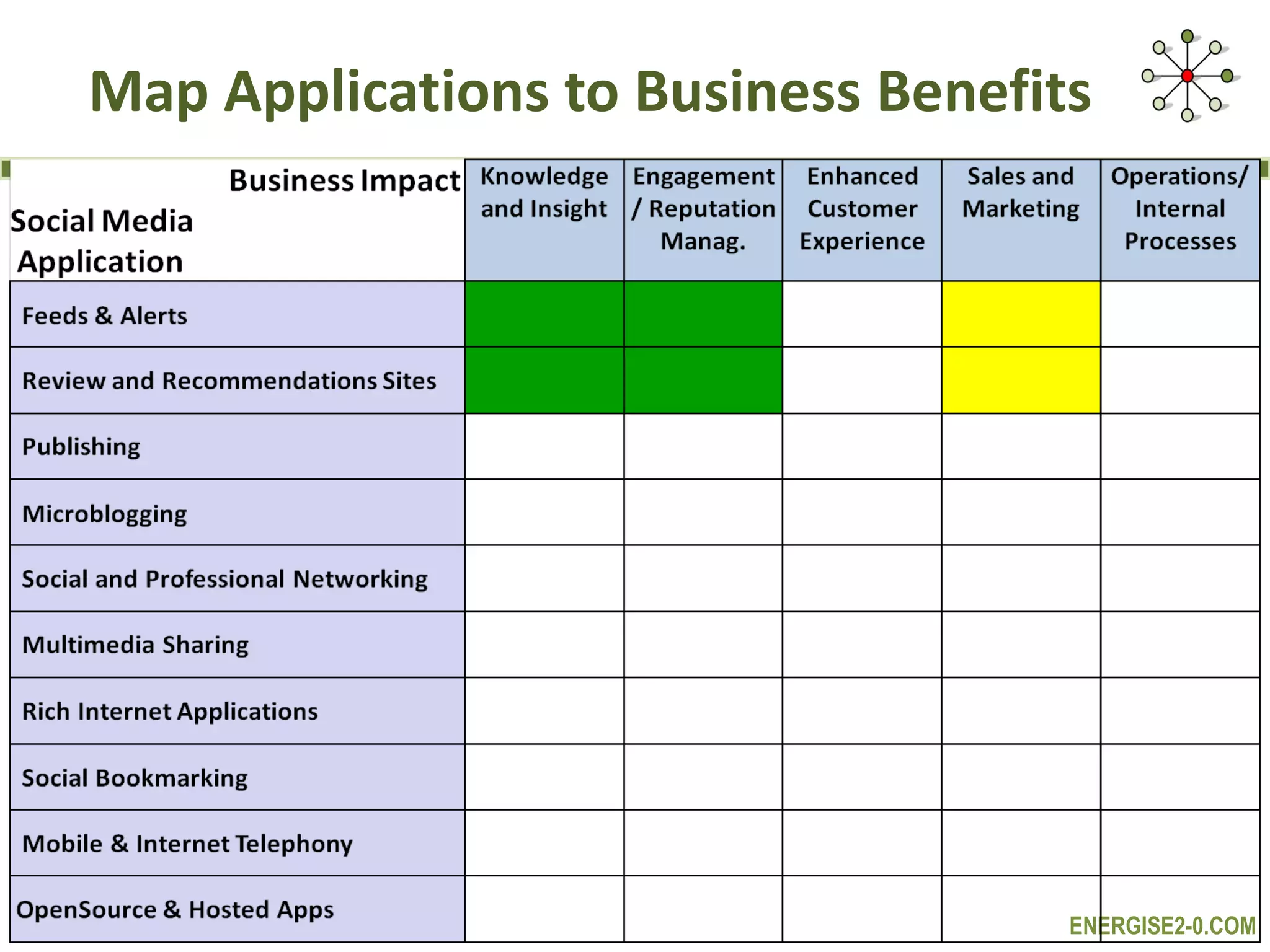
‘ Stop and Reflect’ Exercise 1 (continued): Applications – What social media applications are most relevant to your business? Map these against agreed business benefits
Map Applications to Business Benefits
Key Things to Remember about Social Media
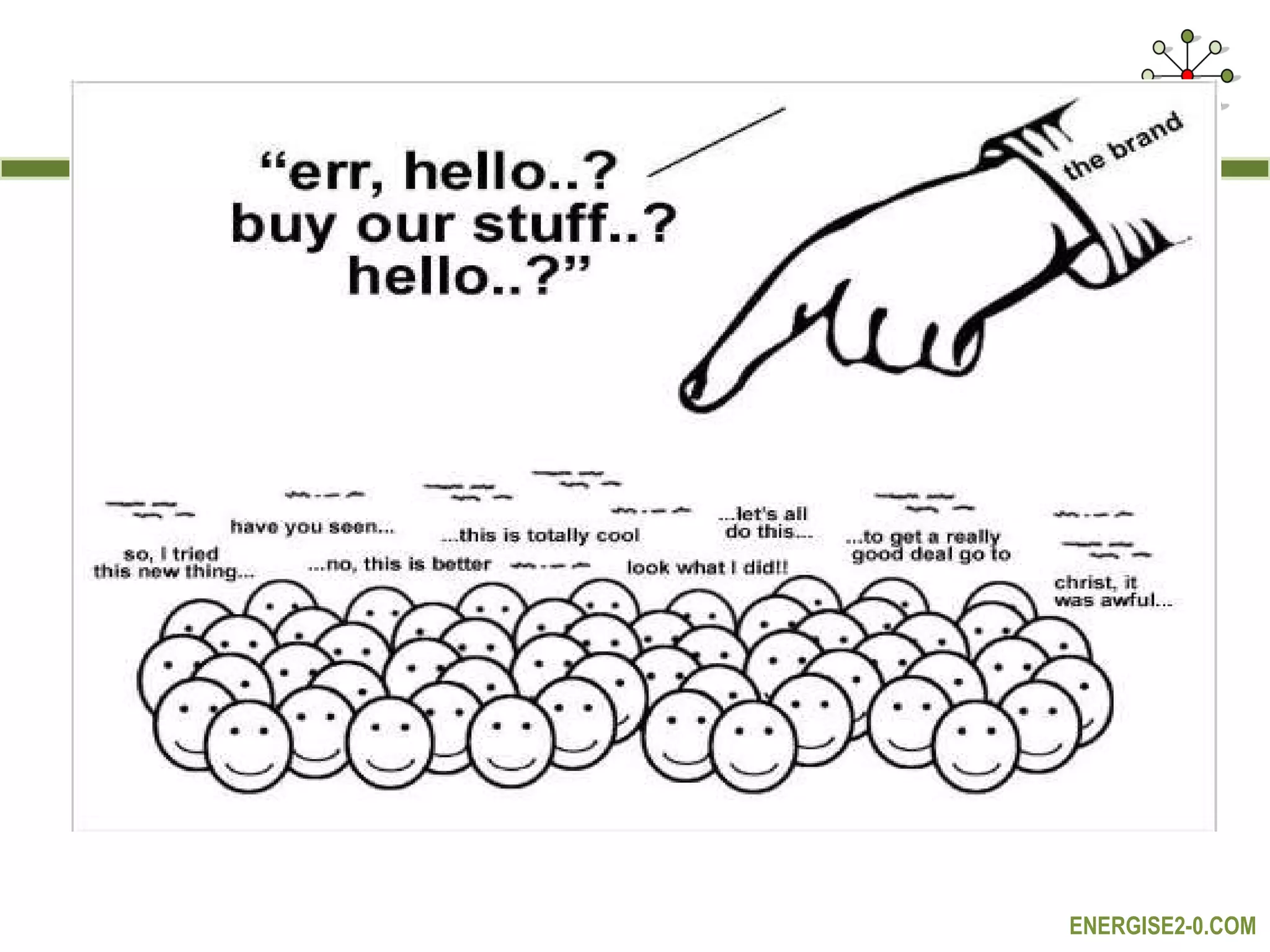
Key Things to Remember It’s social A key feature is online democracy – with content being provided by the network for the network – represents a fundamental and revolutionary change in online behaviour, expectations and the online customer experience.  The end of the ‘read only’ internet Conversations are taking place relevant to your business Power shift Social media empowers customers, empowers the network. Recognizing this shift is the cornerstone of future success  Especially true in information intense industries Declining effectiveness of traditional approaches  Does anyone listen to sales/brand messages anymore?
Source: The Future of Advertising, APA, 17/02/09 as published on  Slideshare  ( www.slideshare.com )
 
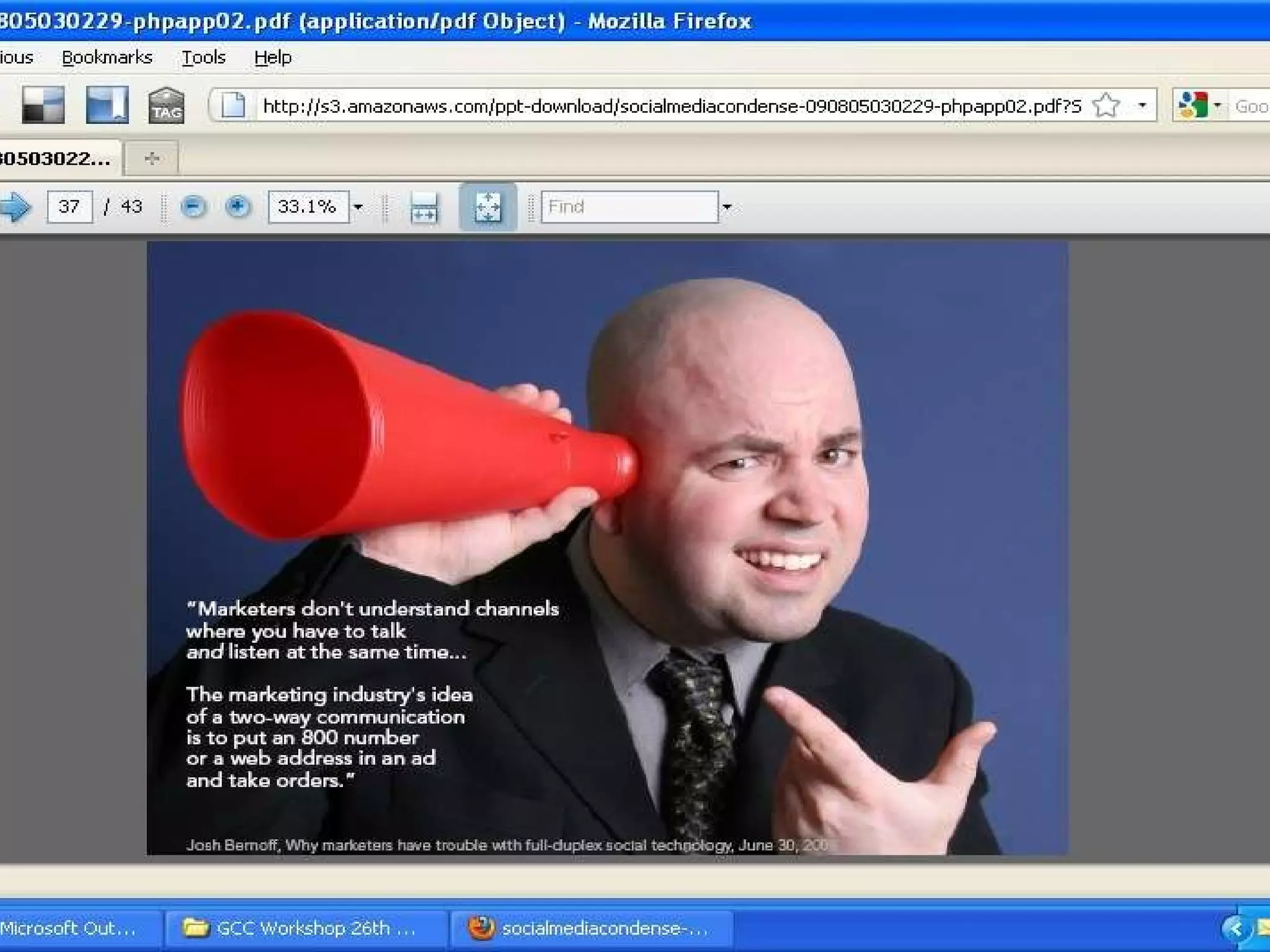
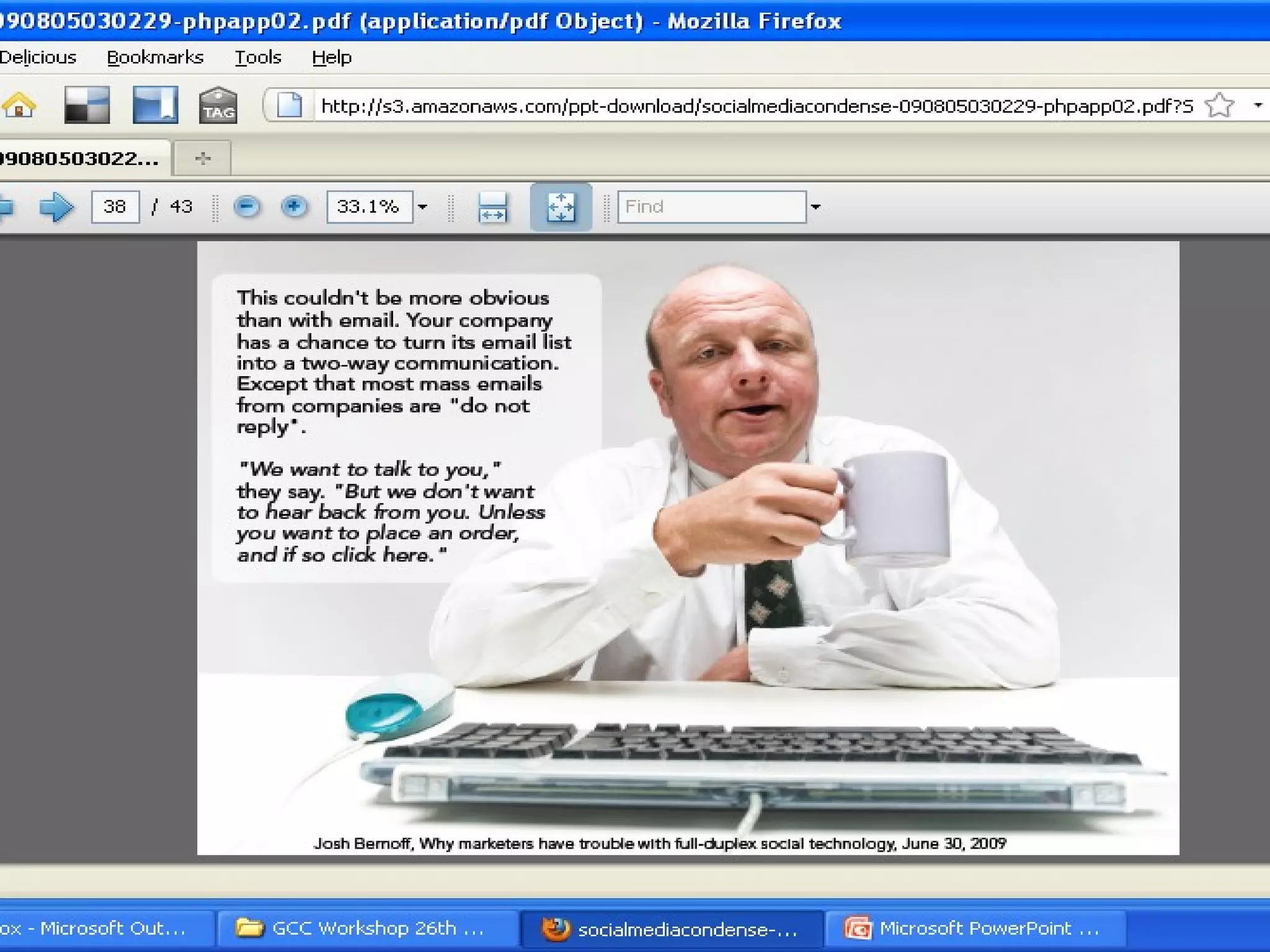
Key Things to Remember Pull v push Consumers/users decide what information they wish to access New ‘mindsets’ are required Marketing as a conversation with your customers/network– dialogue not broadcasting But this is something that most of us are not very good at doing. We prefer ‘telling’ people SM ‘winners’ and ‘losers’ ‘ Winners’ will be those organisations who fully utilise the interactive power of Web 2.0 technology for  engaging  with and  energising  customer and network relationships
 
 
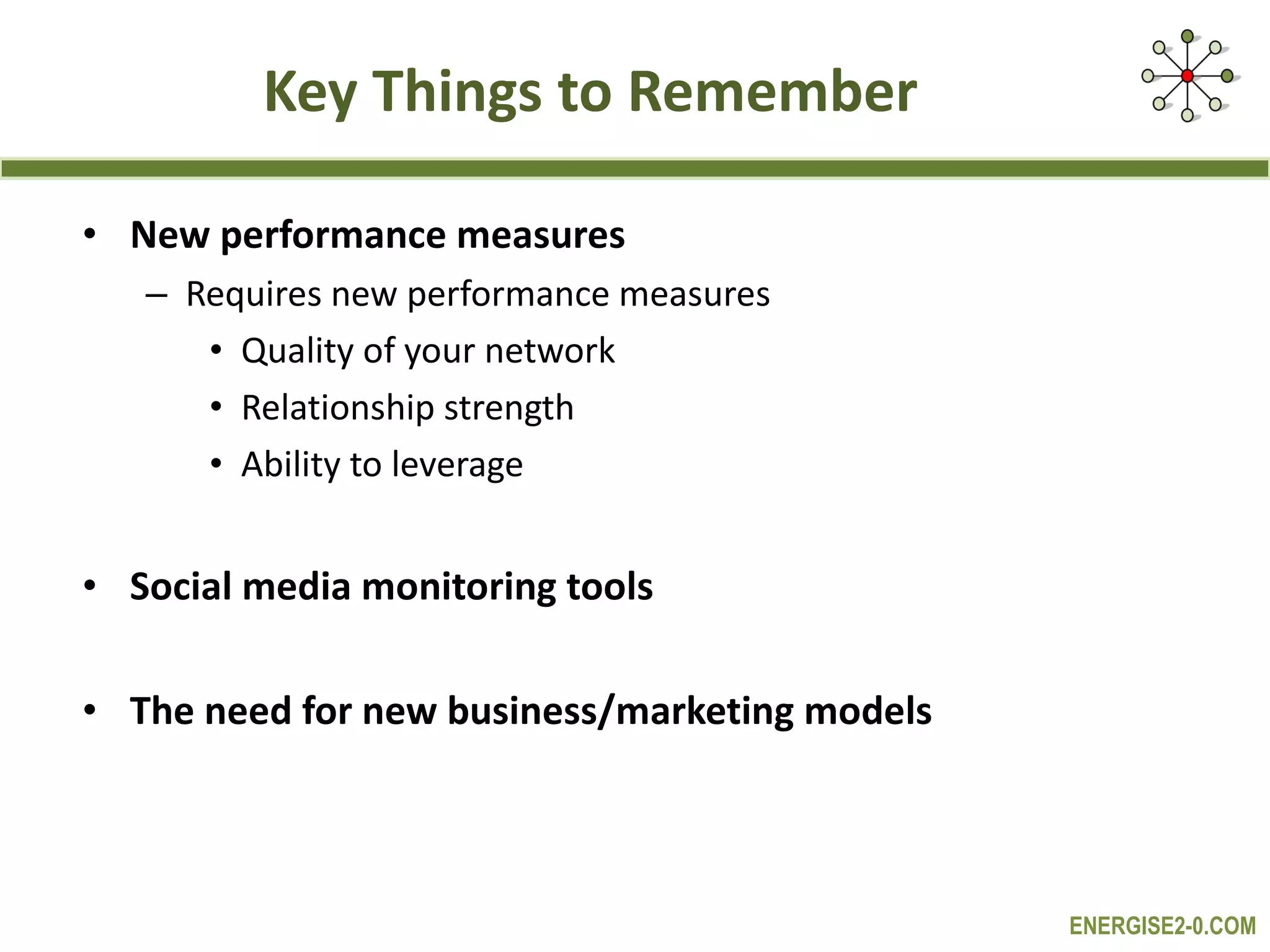
Key Things to Remember New performance measures Requires new performance measures  Quality of your network Relationship strength Ability to leverage Social media monitoring tools  The need for new business/marketing models
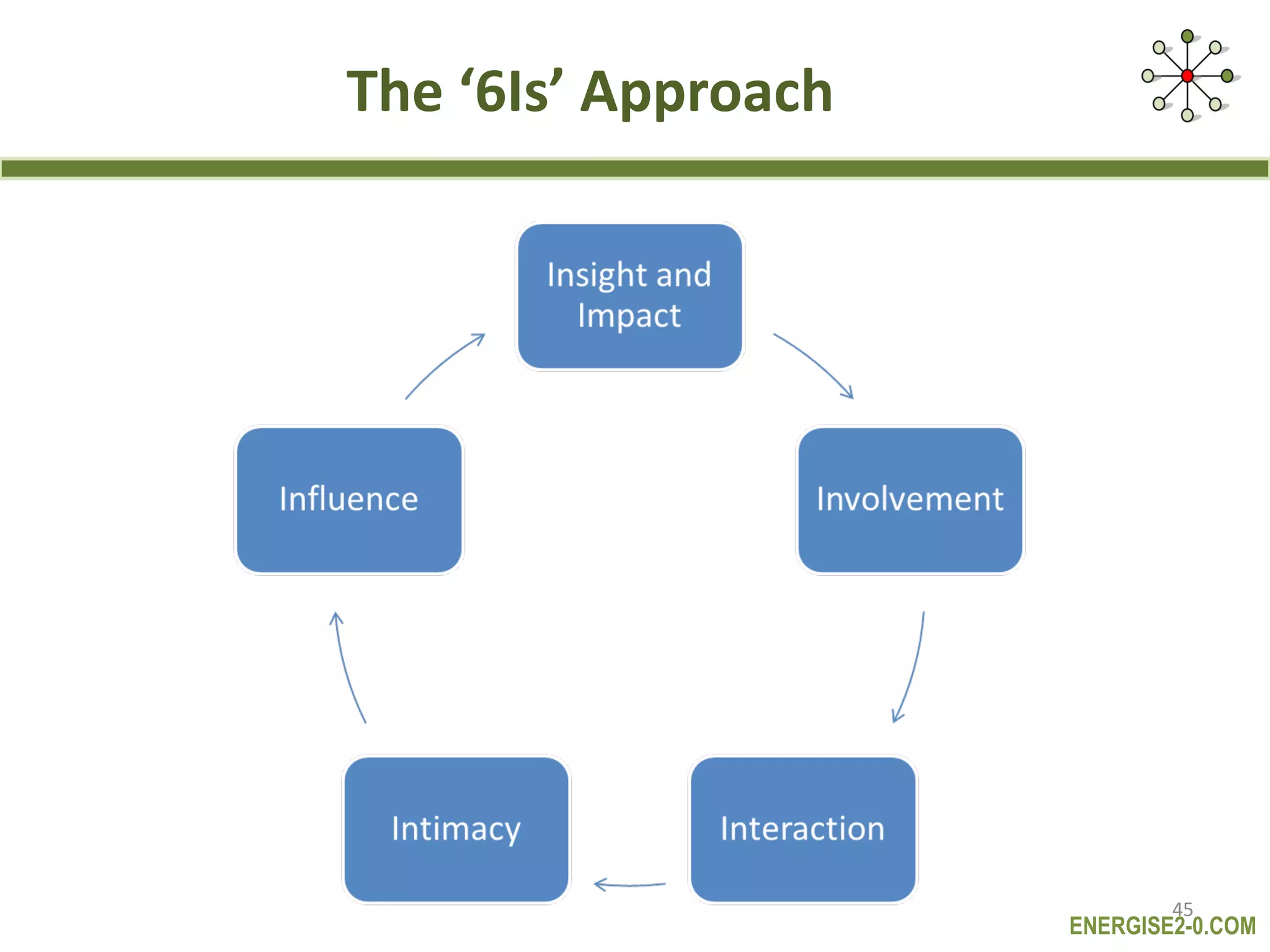
Performance Measurement  Involvement  – network/community numbers/quality,  time spent, frequency, geography Interaction  – actions they take – read, post, comment, reviews,  recommendations Intimacy  – affection or aversion to the brand ; community sentiments, opinions expressed etc  Influence  – advocacy, viral forwards, referrals and recommendations, social bookmarking  Insight  – customer insight Impact  – business impact Social Media Monitoring Tools –Audit, Assess, Impact
The ‘6Is’ Approach
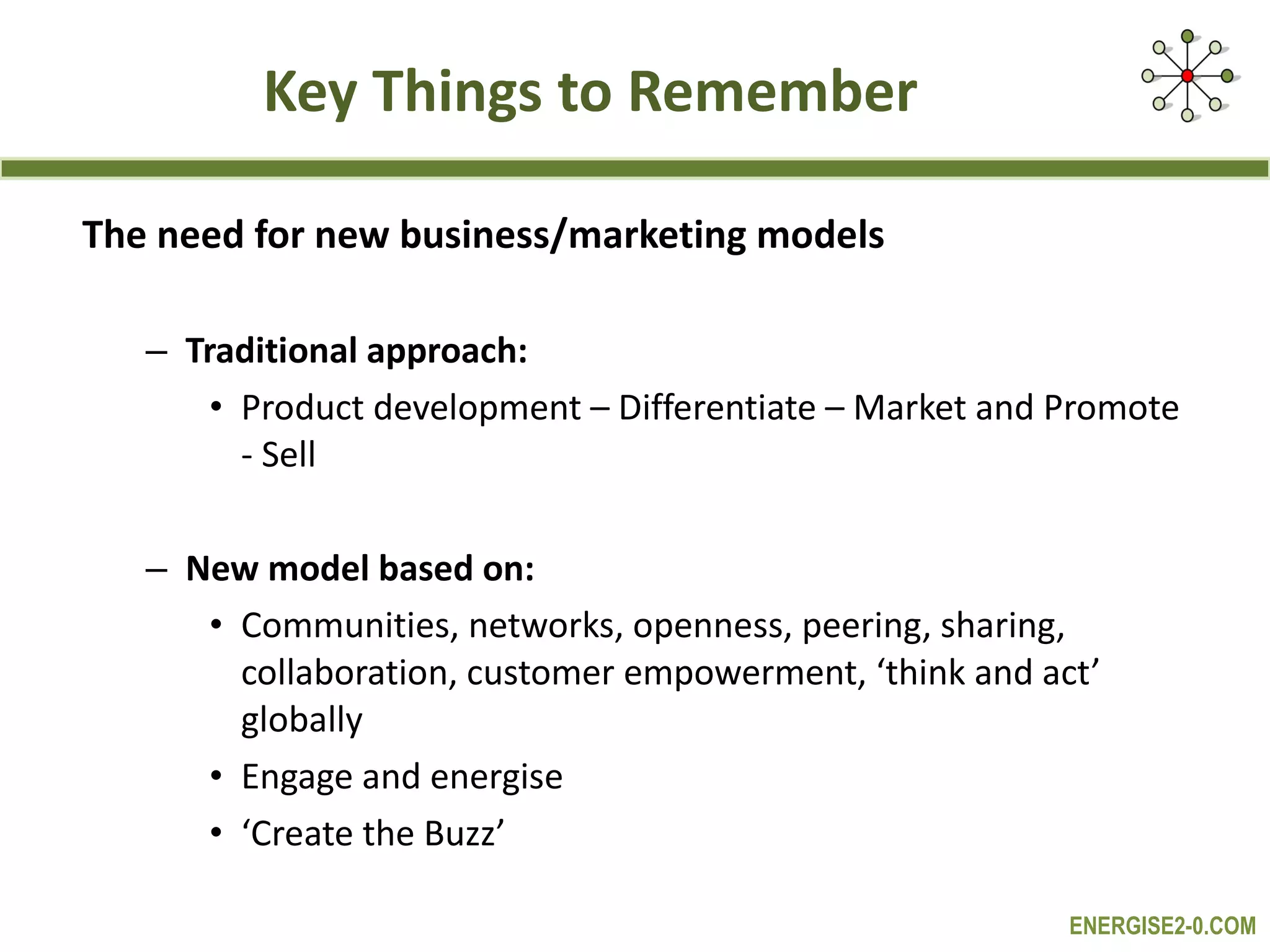
Key Things to Remember The need for new business/marketing models Traditional approach: Product development – Differentiate – Market and Promote - Sell New model based on:  Communities, networks, openness, peering, sharing, collaboration, customer empowerment, ‘think and act’ globally Engage and energise ‘ Create the Buzz’
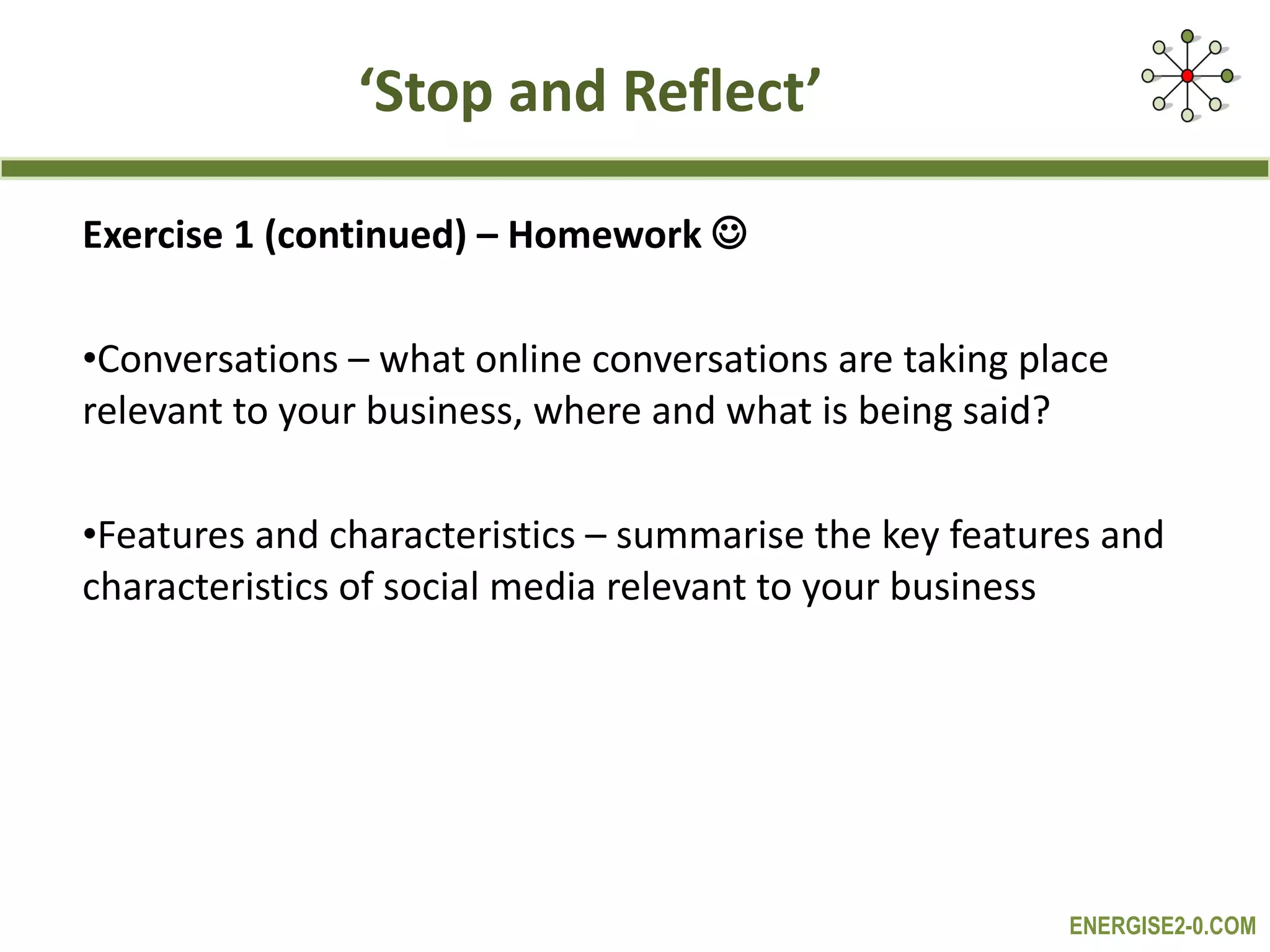
‘ Stop and Reflect’ Exercise 1 (continued) – Homework   Conversations – what online conversations are taking place relevant to your business, where and what is being said?  Features and characteristics – summarise the key features and characteristics of social media relevant to your business
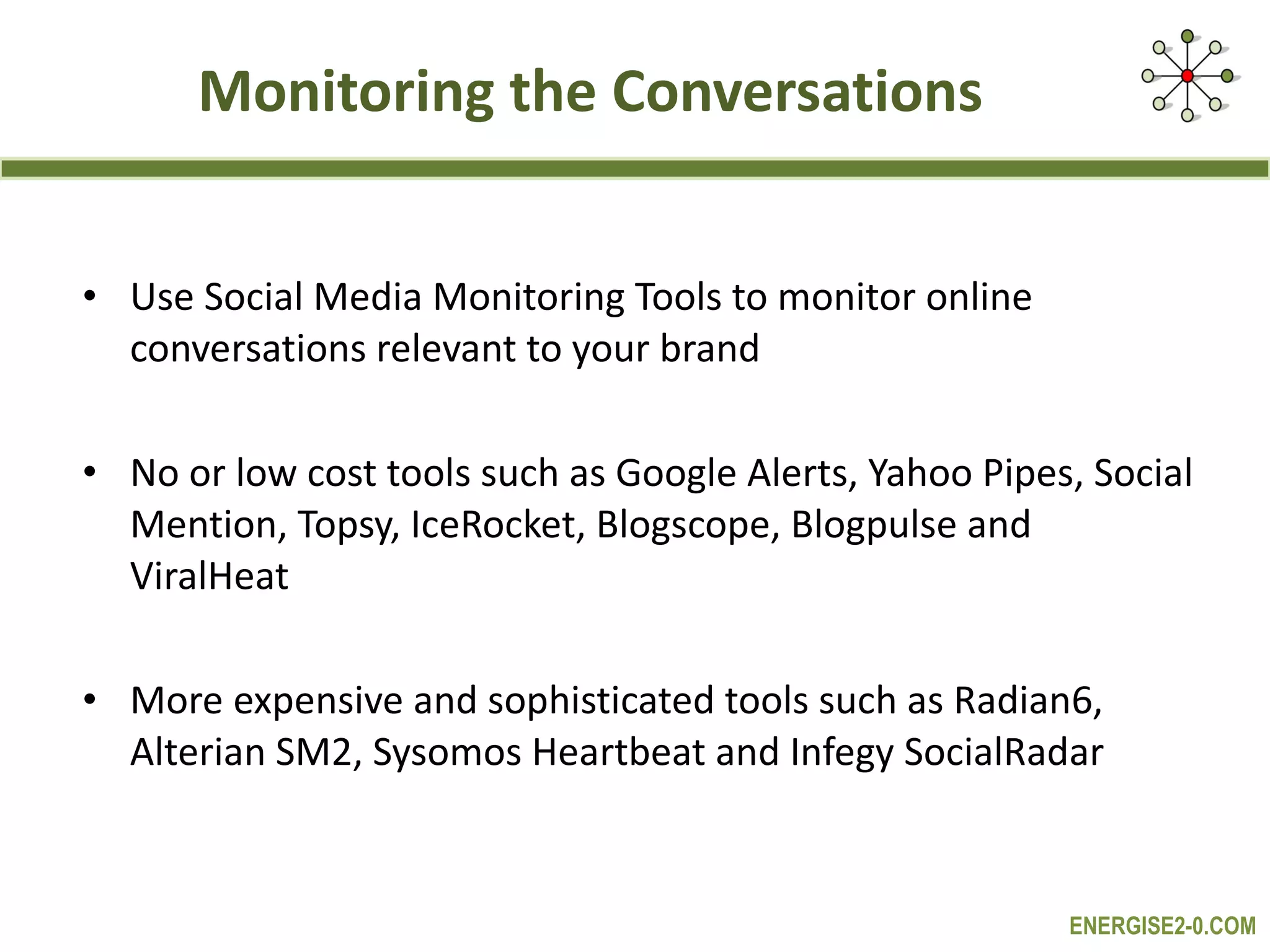
Monitoring the Conversations Use Social Media Monitoring Tools to monitor online conversations relevant to your brand No or low cost tools such as Google Alerts, Yahoo Pipes, Social Mention, Topsy, IceRocket, Blogscope, Blogpulse and ViralHeat More expensive and sophisticated tools such as Radian6, Alterian SM2, Sysomos Heartbeat and Infegy SocialRadar
Social Media in Action Quick Examples
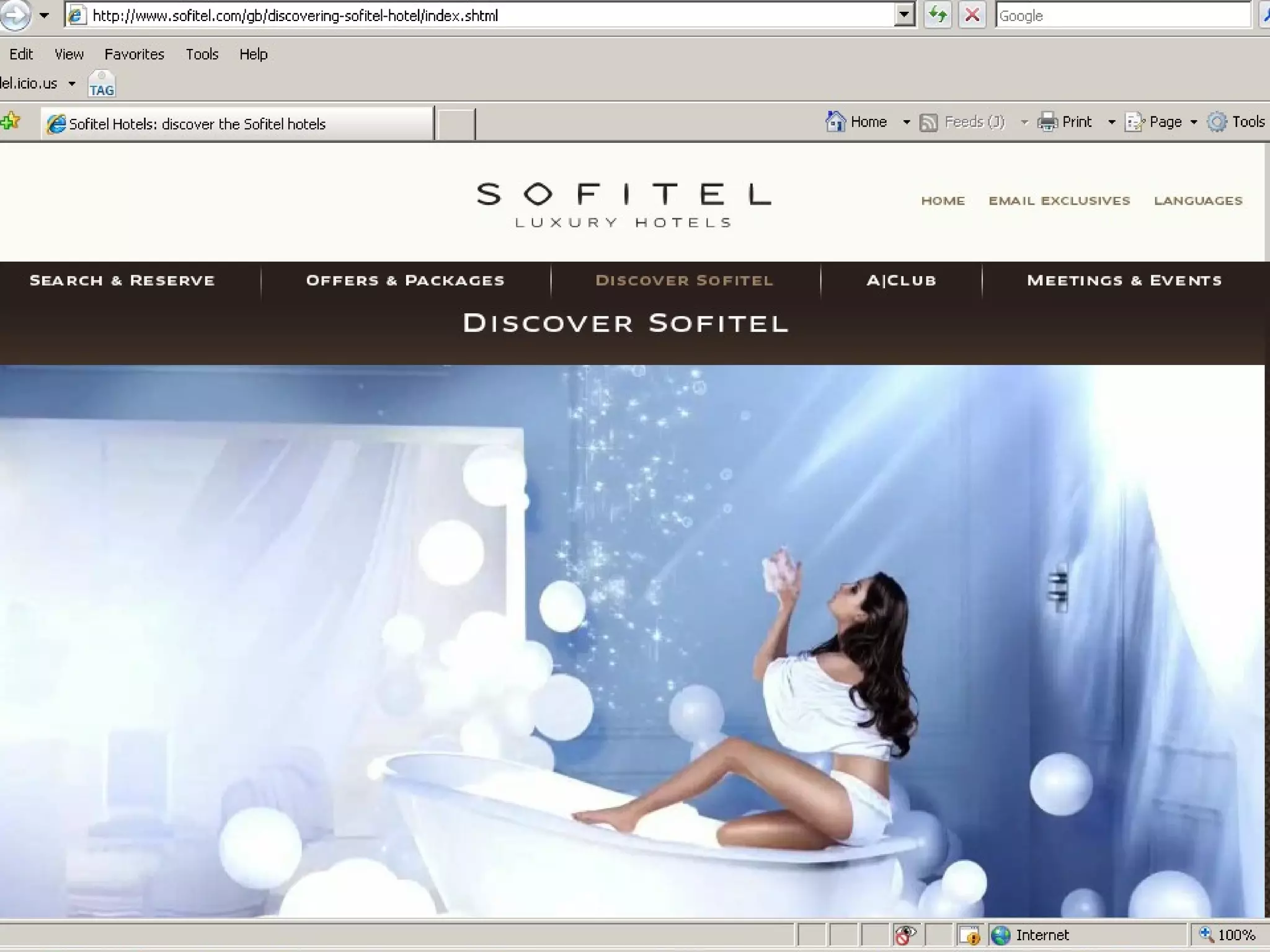
In a Web 2.0 Era, the Brand Becomes the Customer Experience of the Brand A quick ‘personal experience’ Dubai Hotel


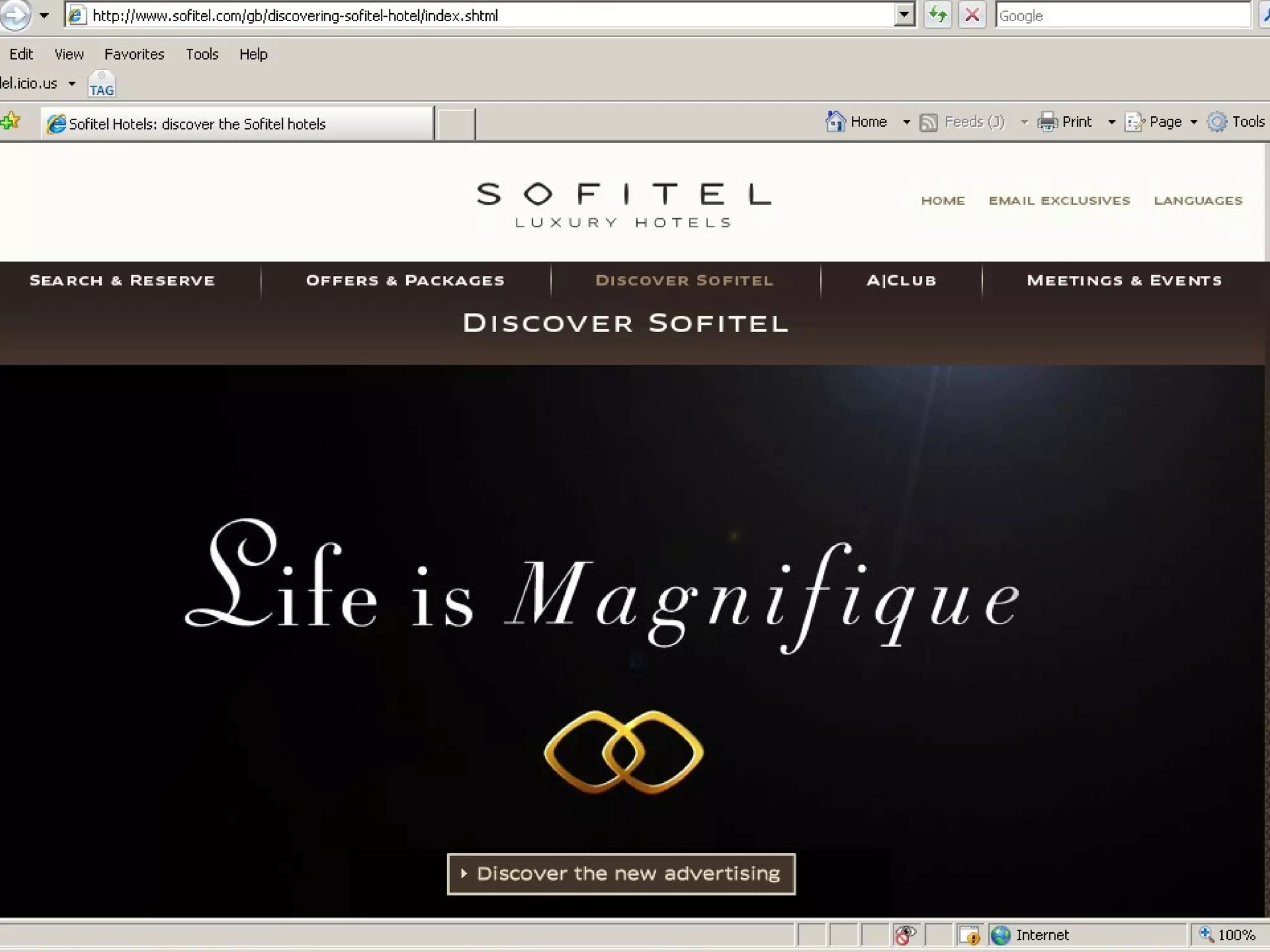
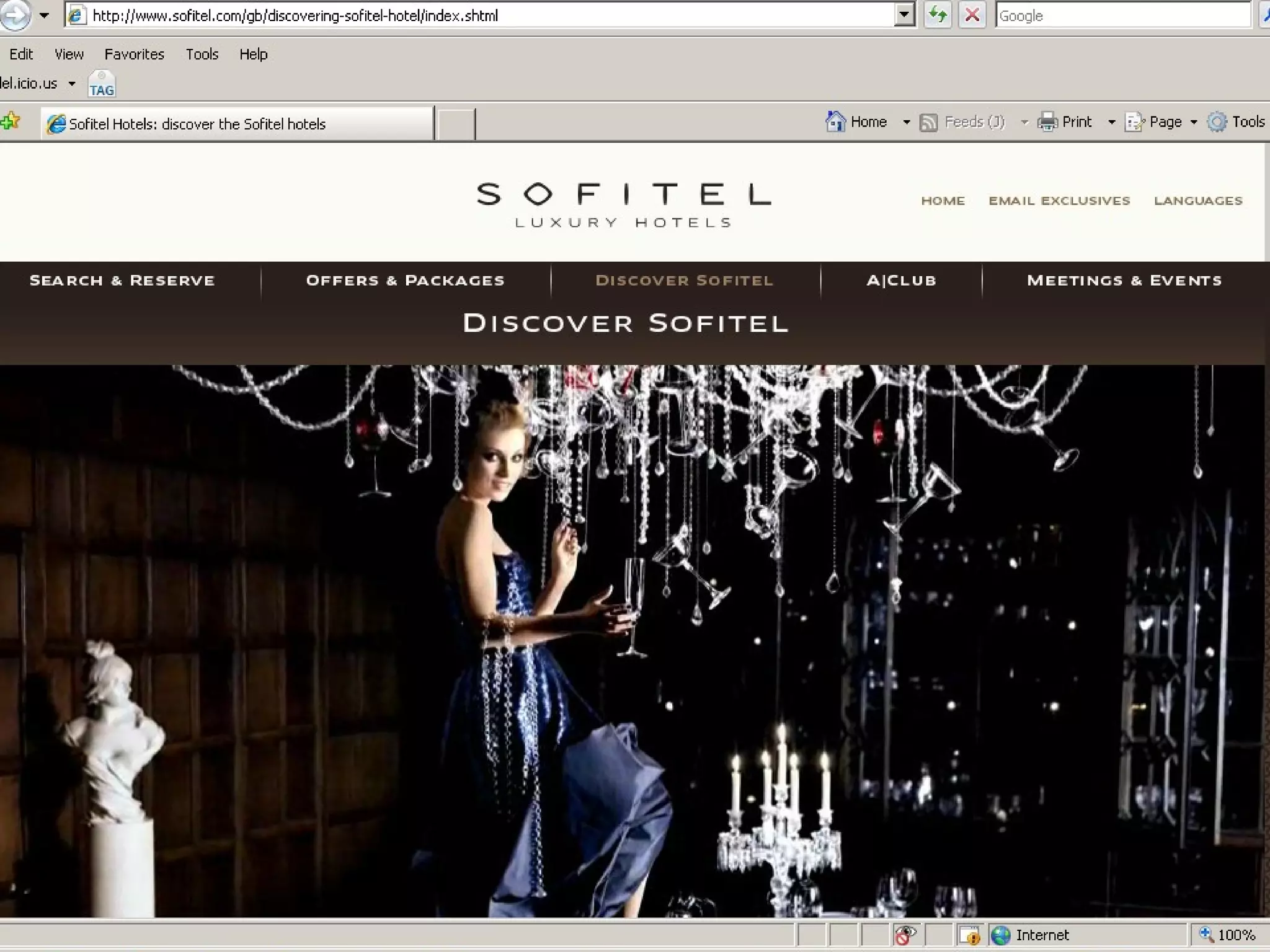
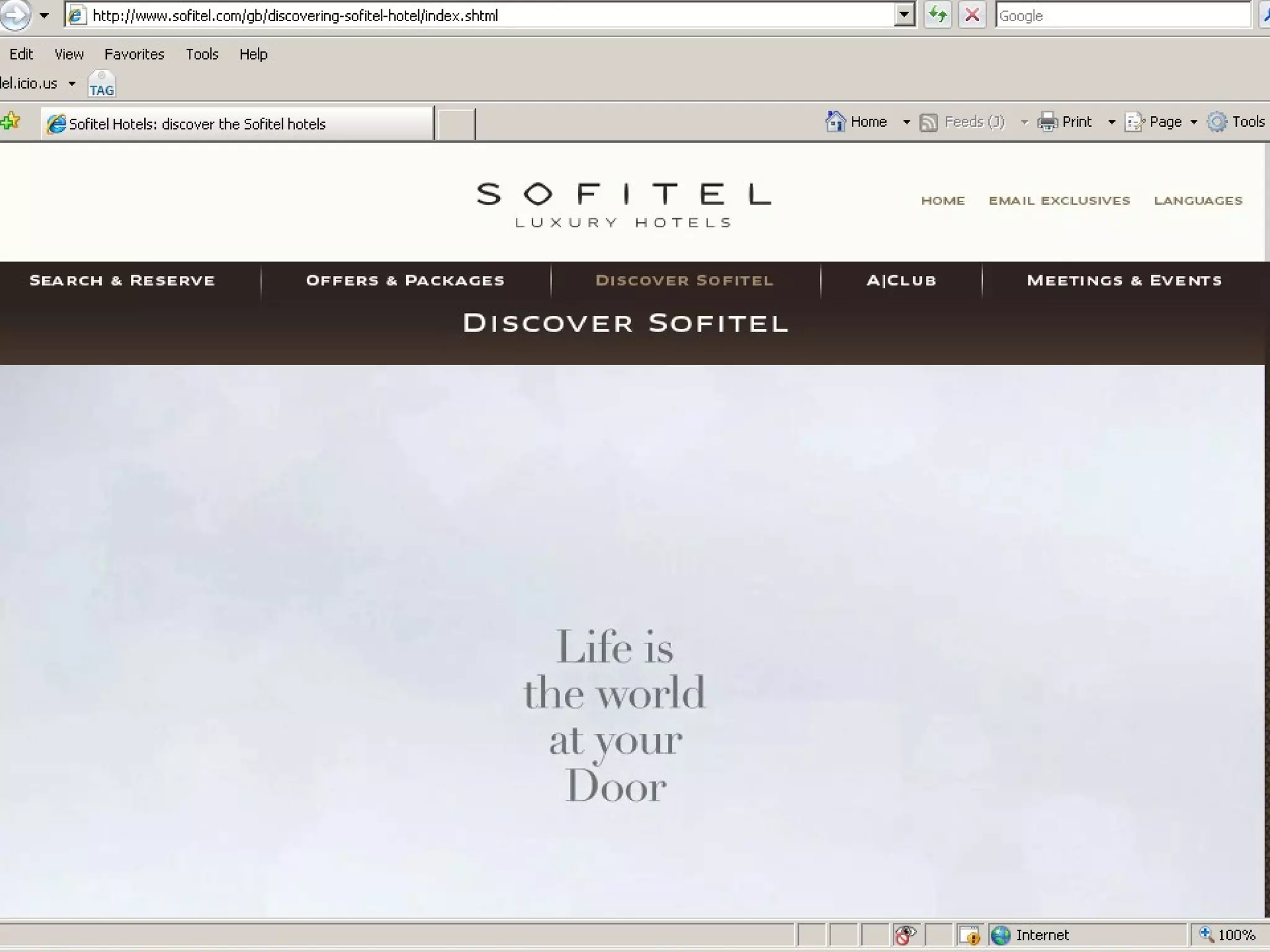
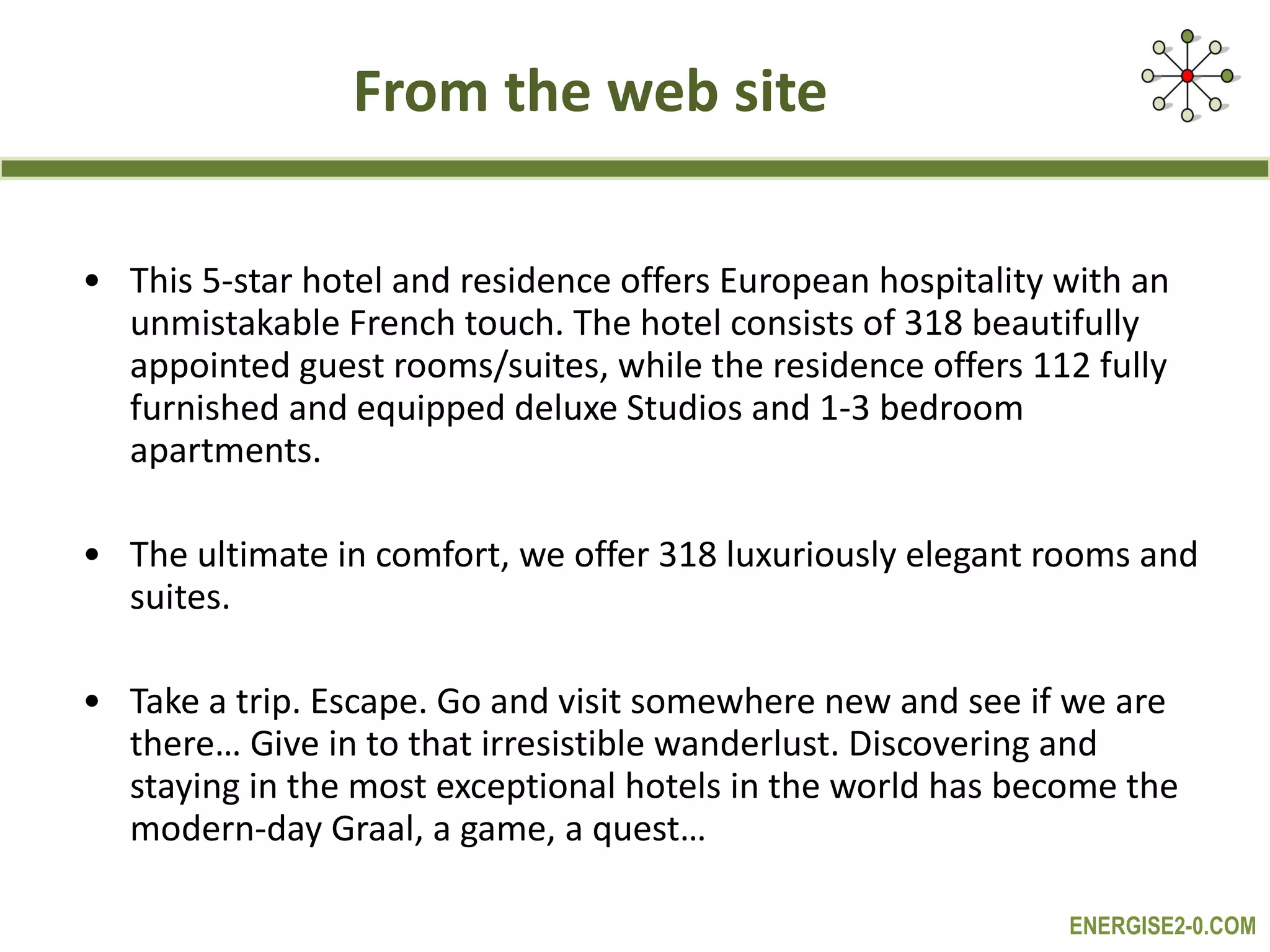
From the web site This 5-star hotel and residence offers European hospitality with an unmistakable French touch. The hotel consists of 318 beautifully appointed guest rooms/suites, while the residence offers 112 fully furnished and equipped deluxe Studios and 1-3 bedroom apartments.  The ultimate in comfort, we offer 318 luxuriously elegant rooms and suites.  Take a trip. Escape. Go and visit somewhere new and see if we are there… Give in to that irresistible wanderlust. Discovering and staying in the most exceptional hotels in the world has become the modern-day Graal, a game, a quest…
The Customer Experience  of the Brand Tripadvisor
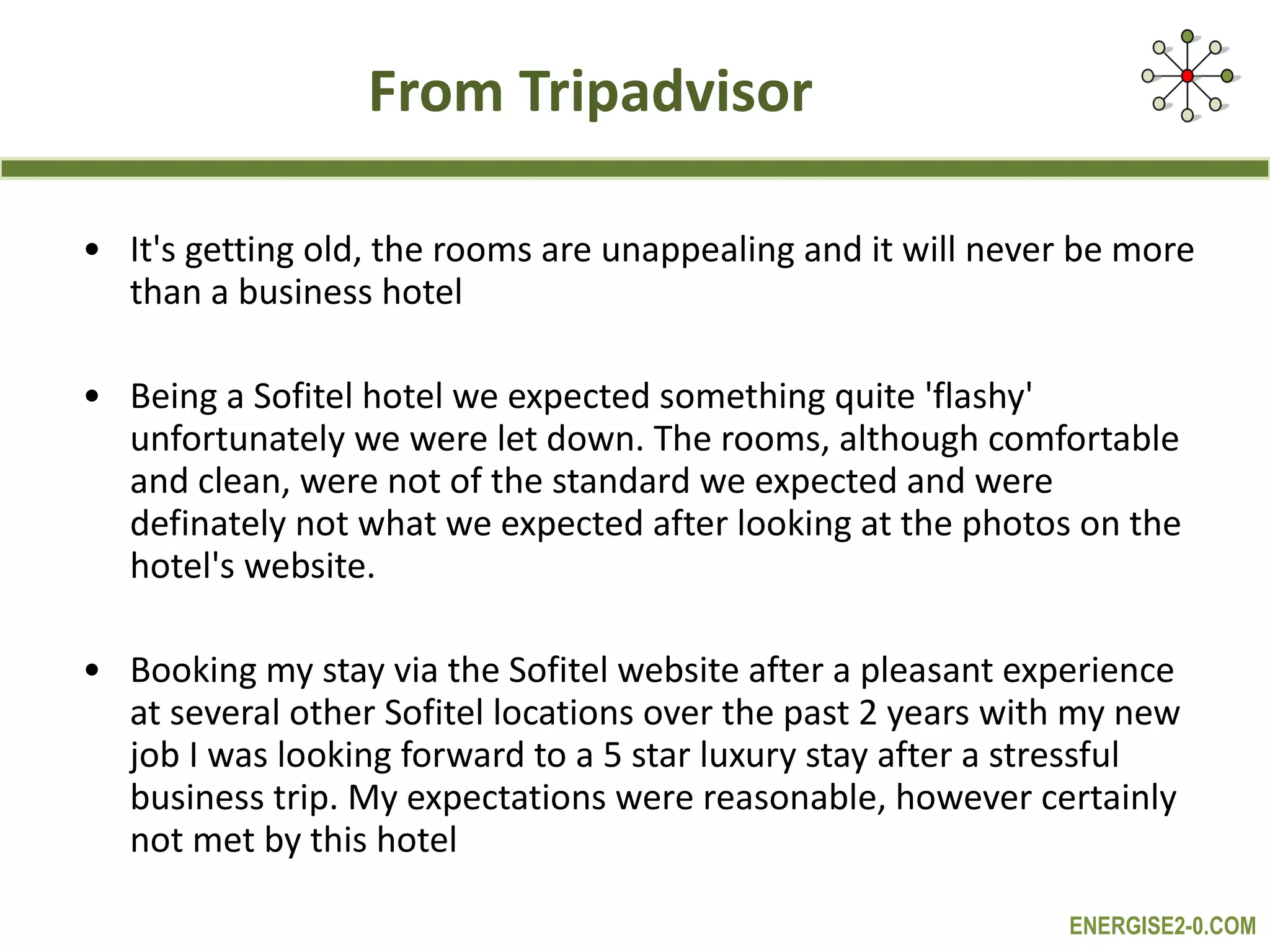
From Tripadvisor It's getting old, the rooms are unappealing and it will never be more than a business hotel Being a Sofitel hotel we expected something quite 'flashy' unfortunately we were let down. The rooms, although comfortable and clean, were not of the standard we expected and were definately not what we expected after looking at the photos on the hotel's website. Booking my stay via the Sofitel website after a pleasant experience at several other Sofitel locations over the past 2 years with my new job I was looking forward to a 5 star luxury stay after a stressful business trip. My expectations were reasonable, however certainly not met by this hotel
 
 
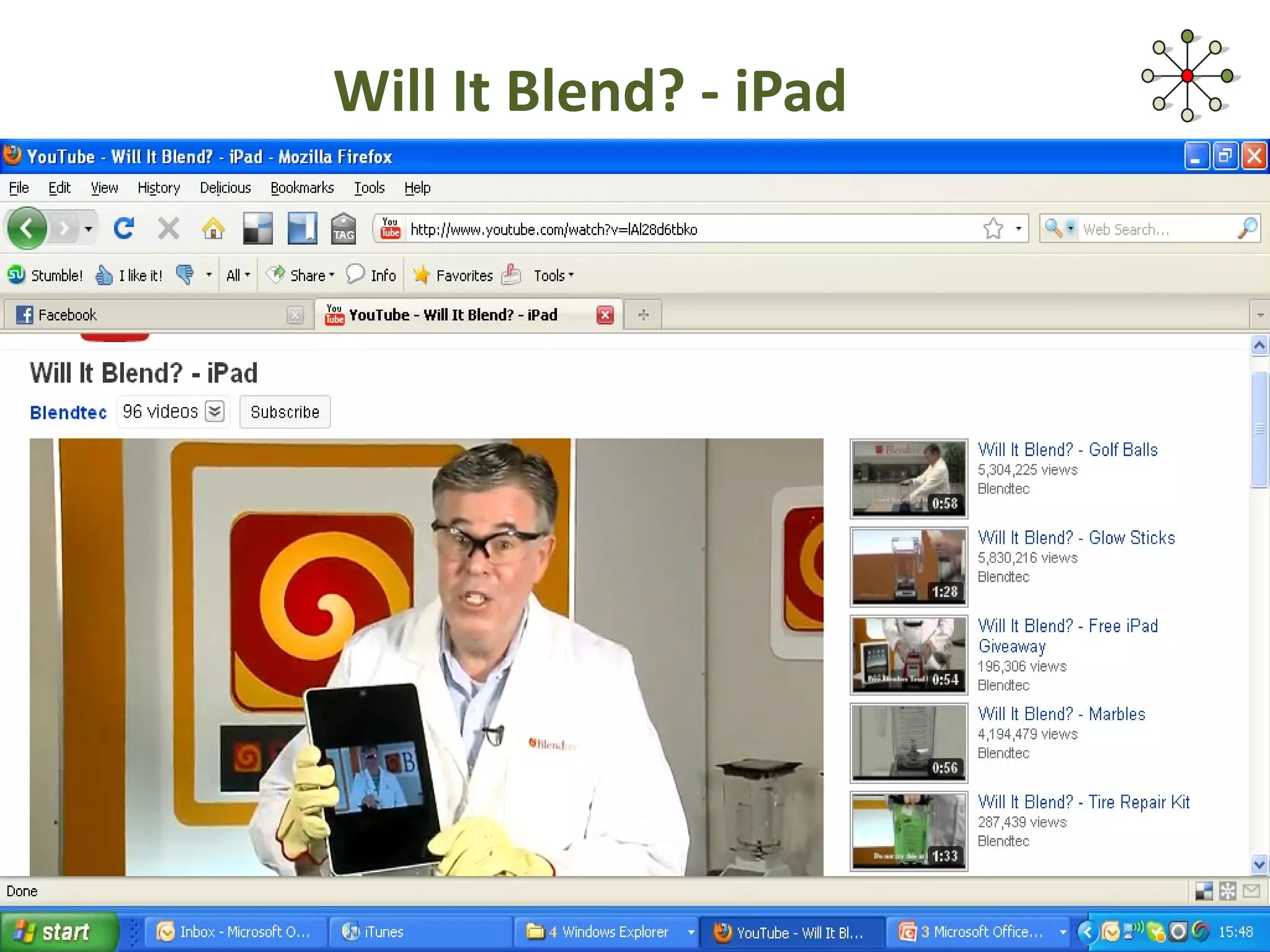
Will It Blend? - iPad
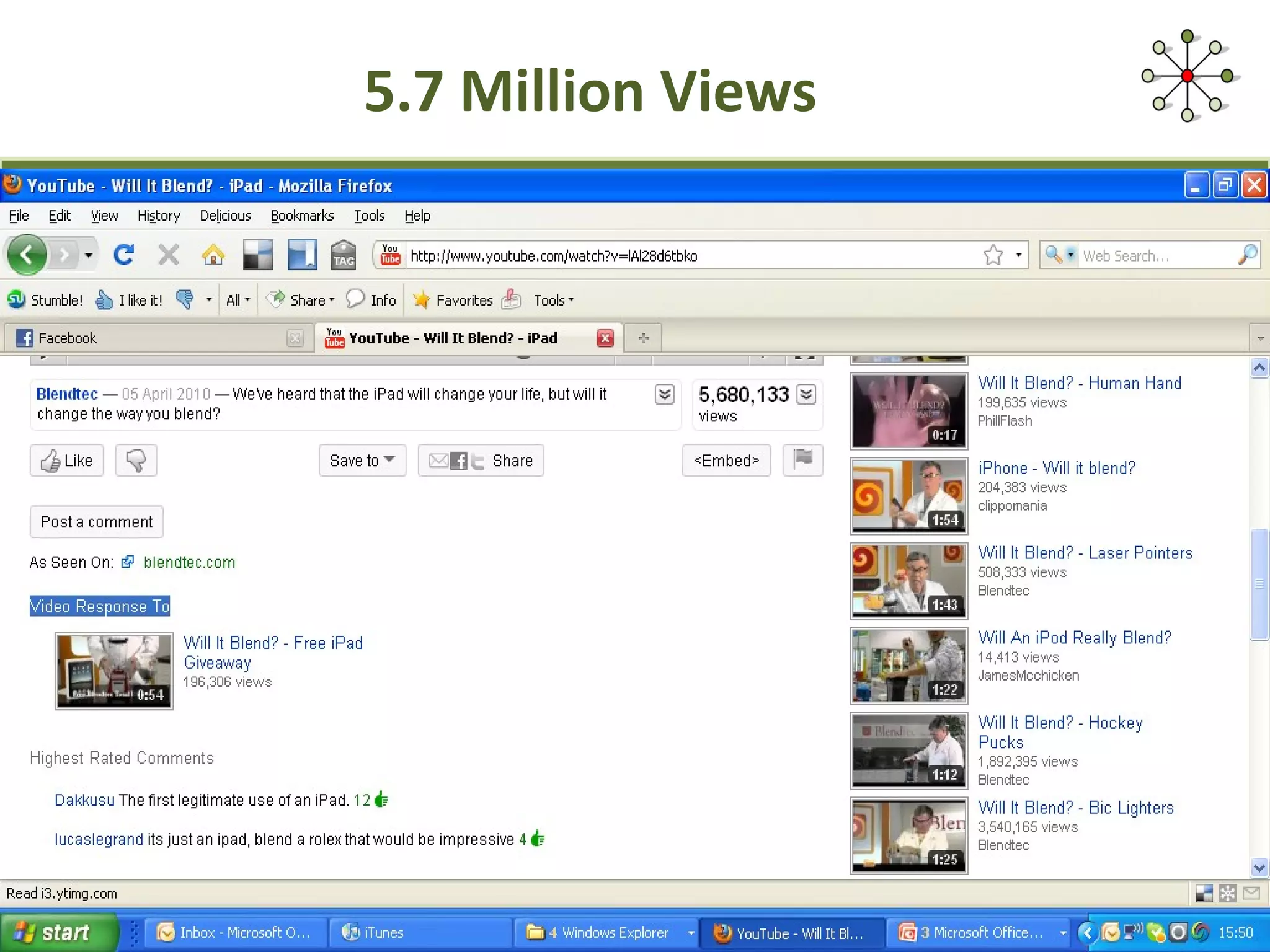
5.7 Million Views
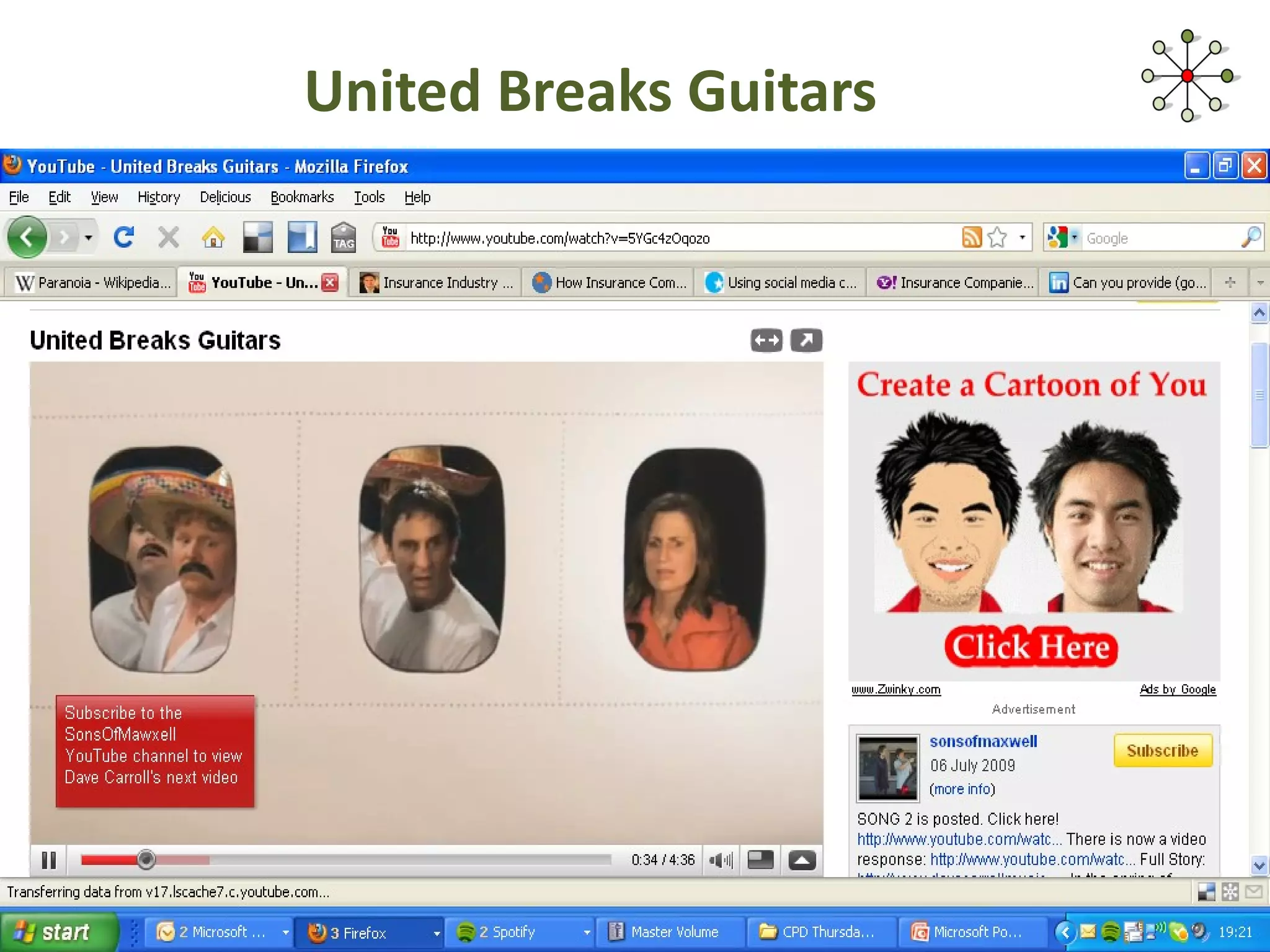
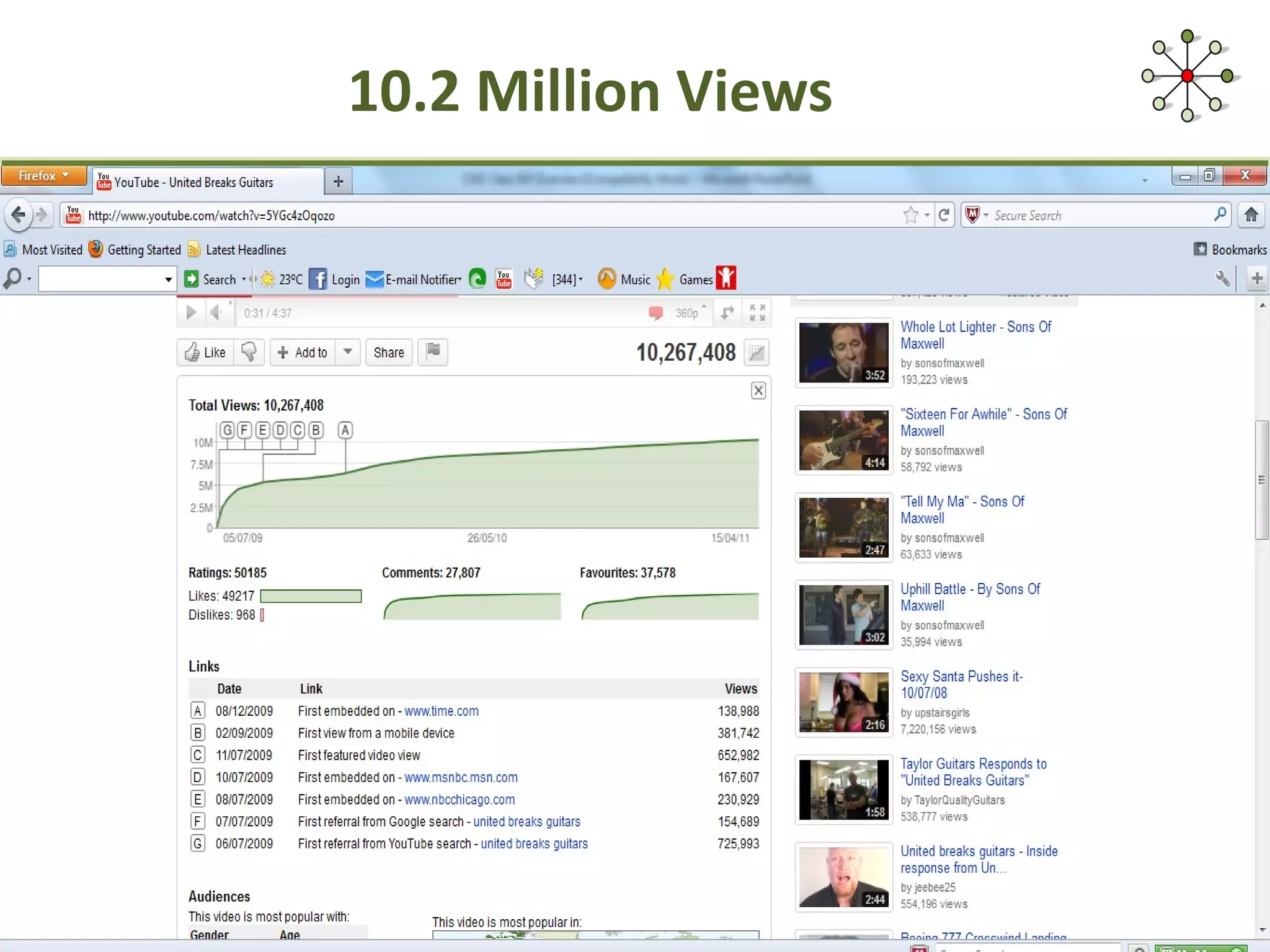
United Breaks Guitars
10.2 Million Views
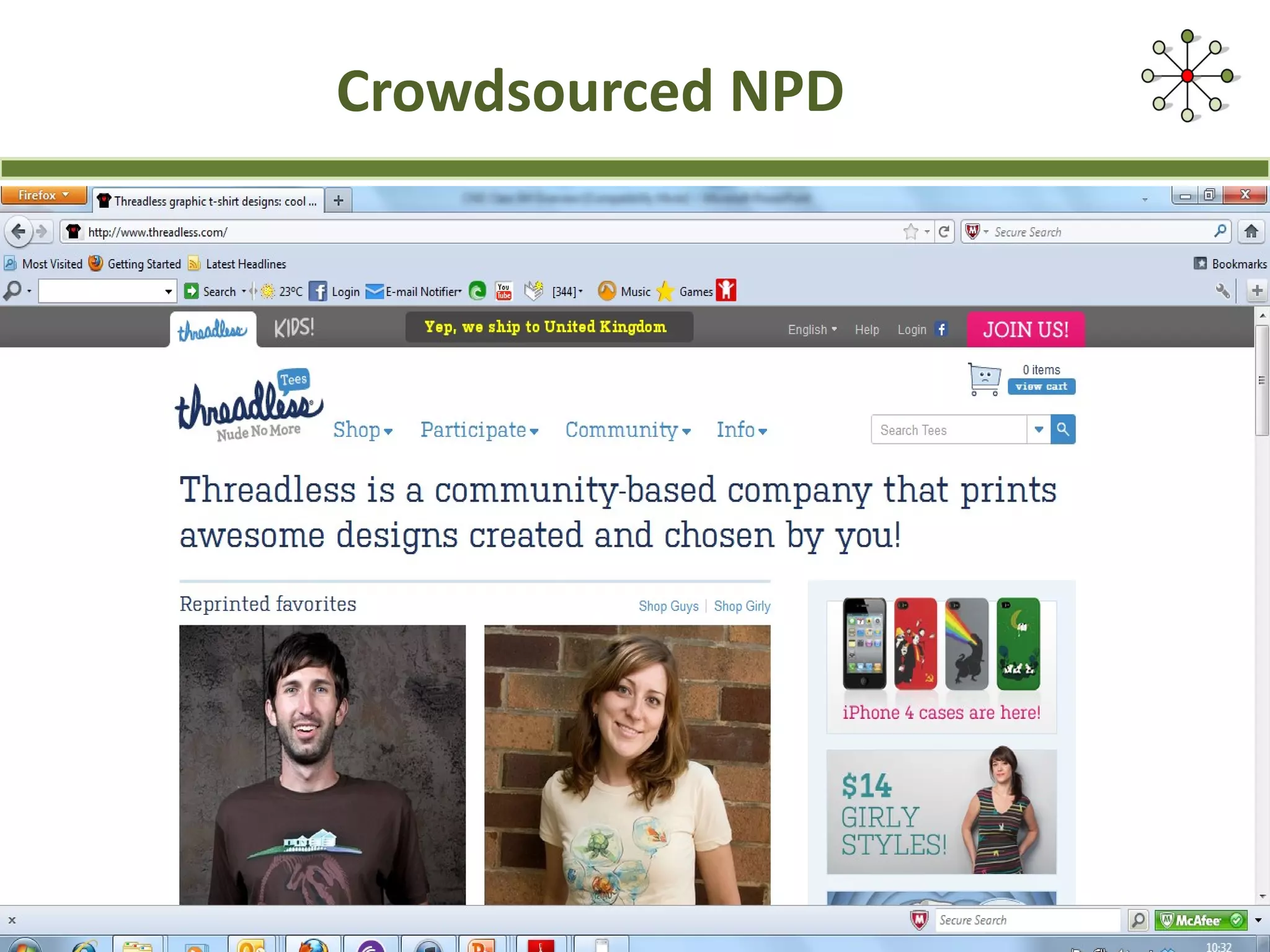
Crowdsourced NPD
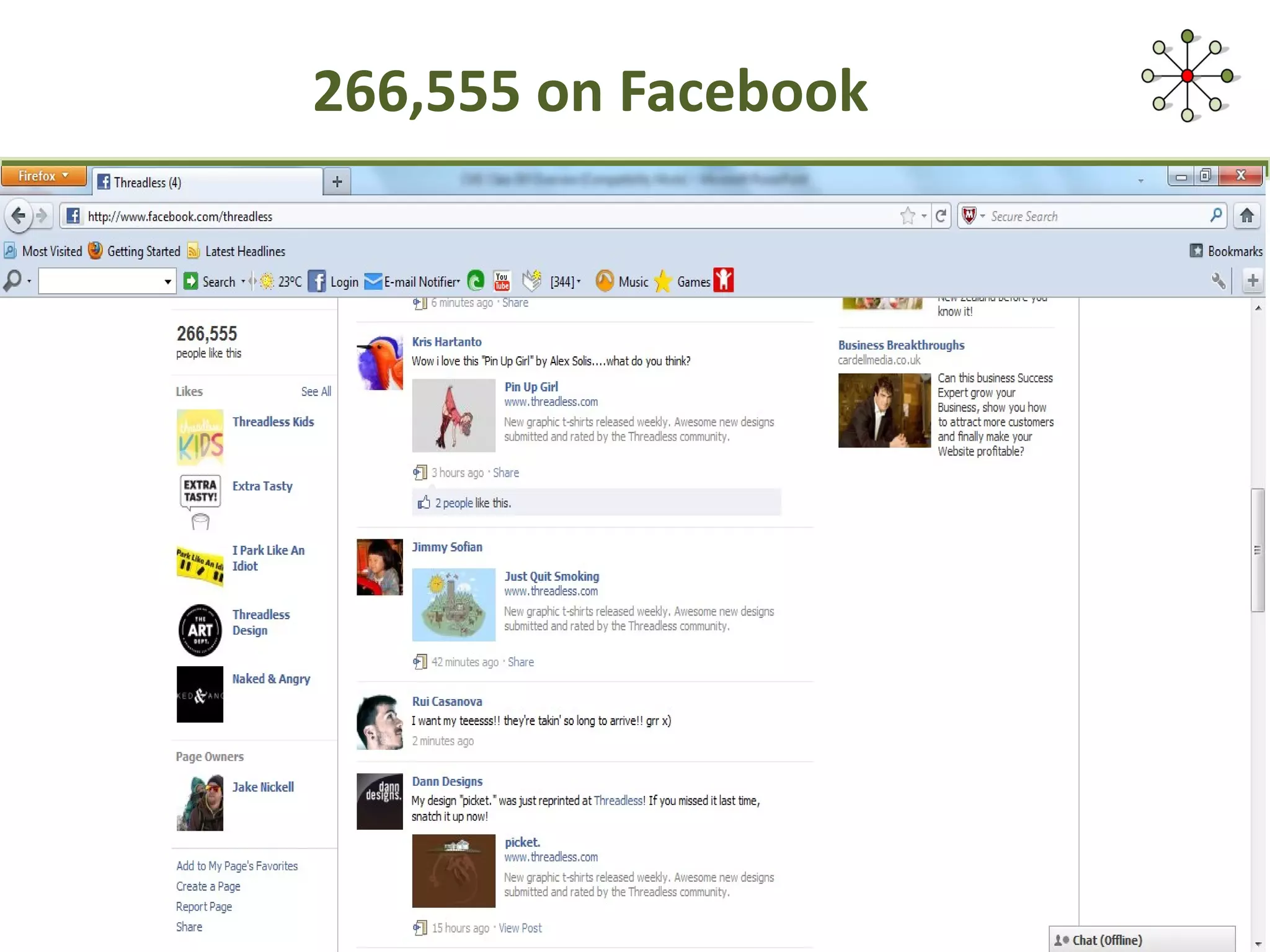
266,555 on Facebook
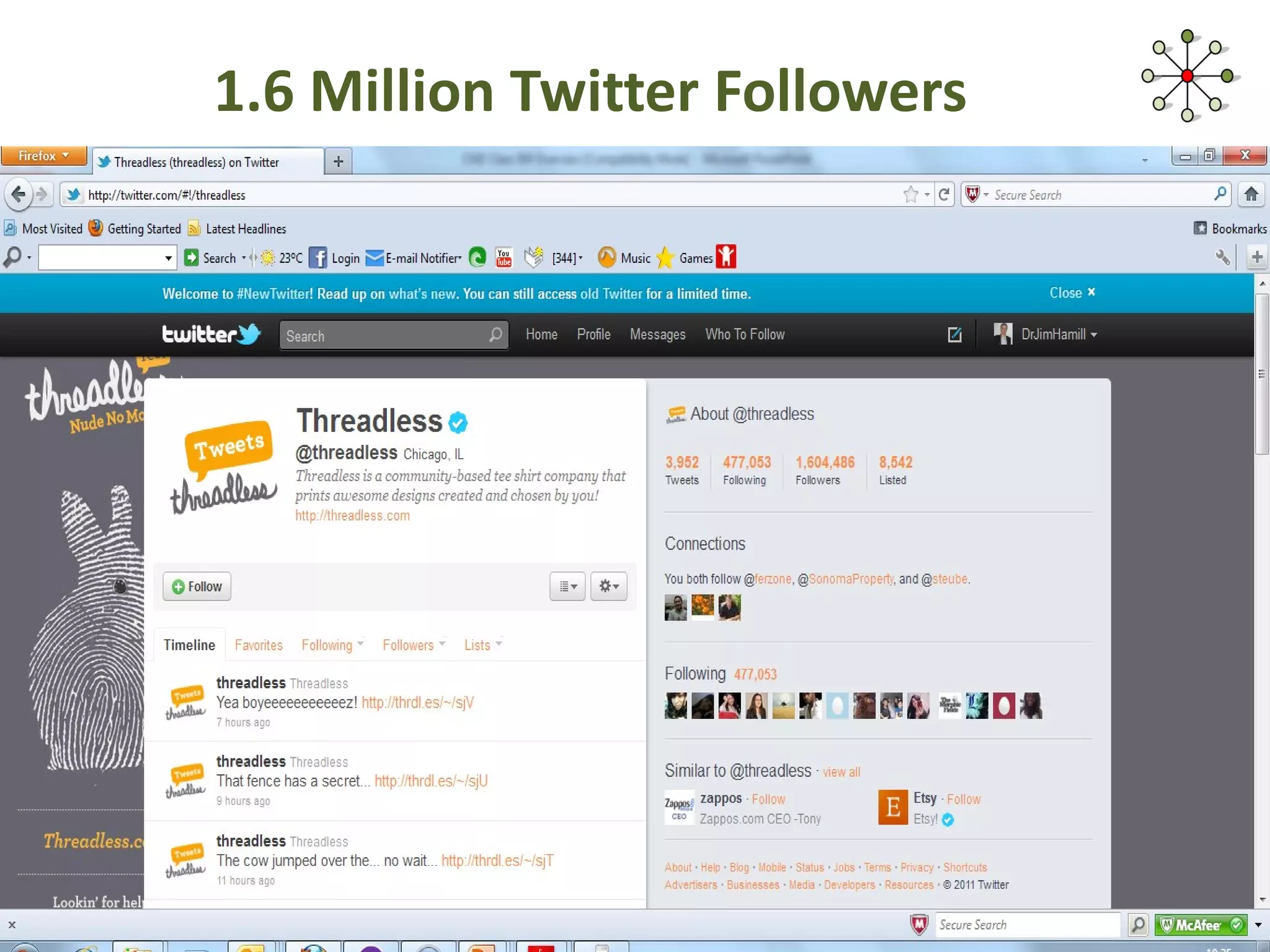
1.6 Million Twitter Followers
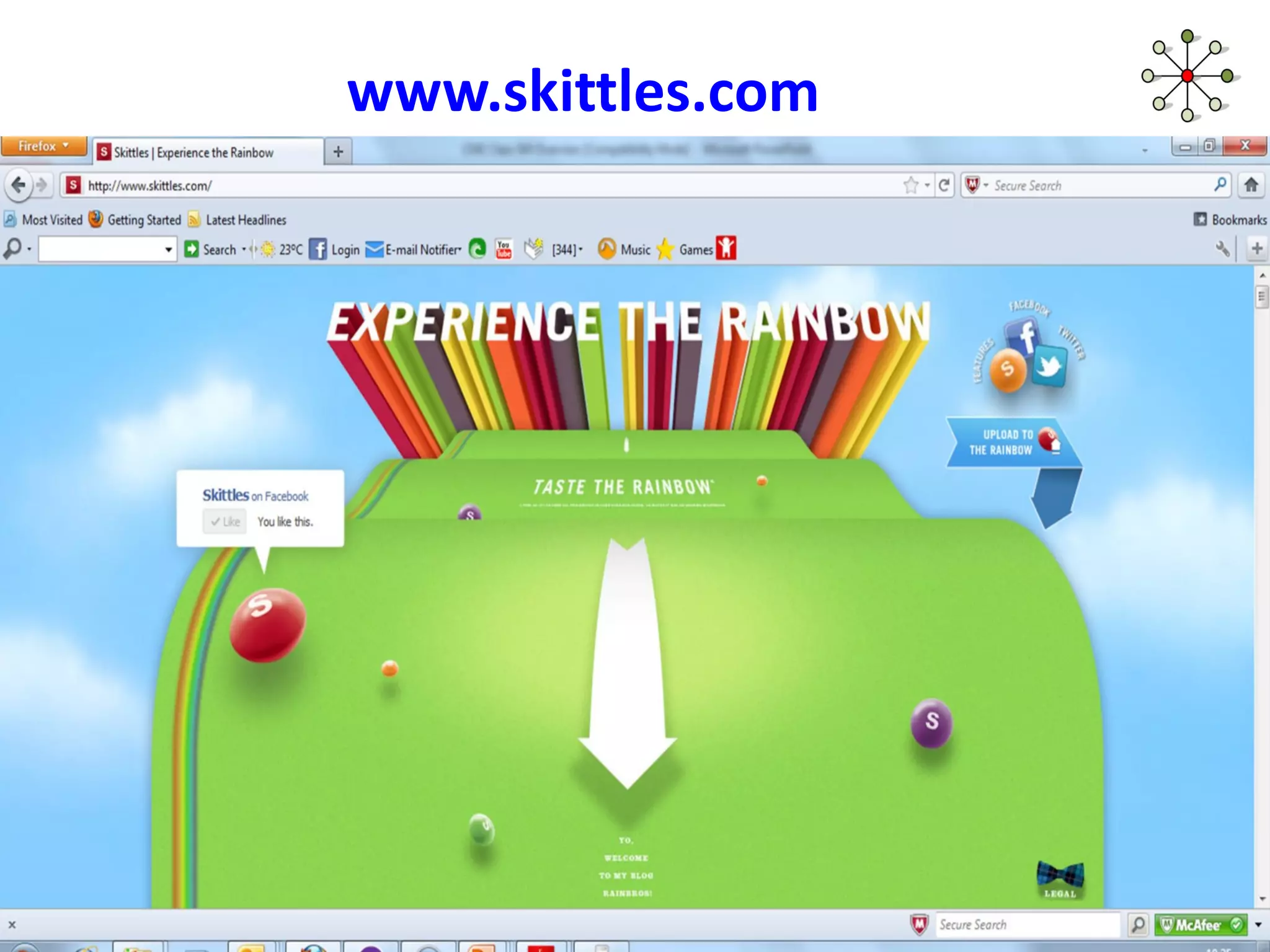
www.skittles.com
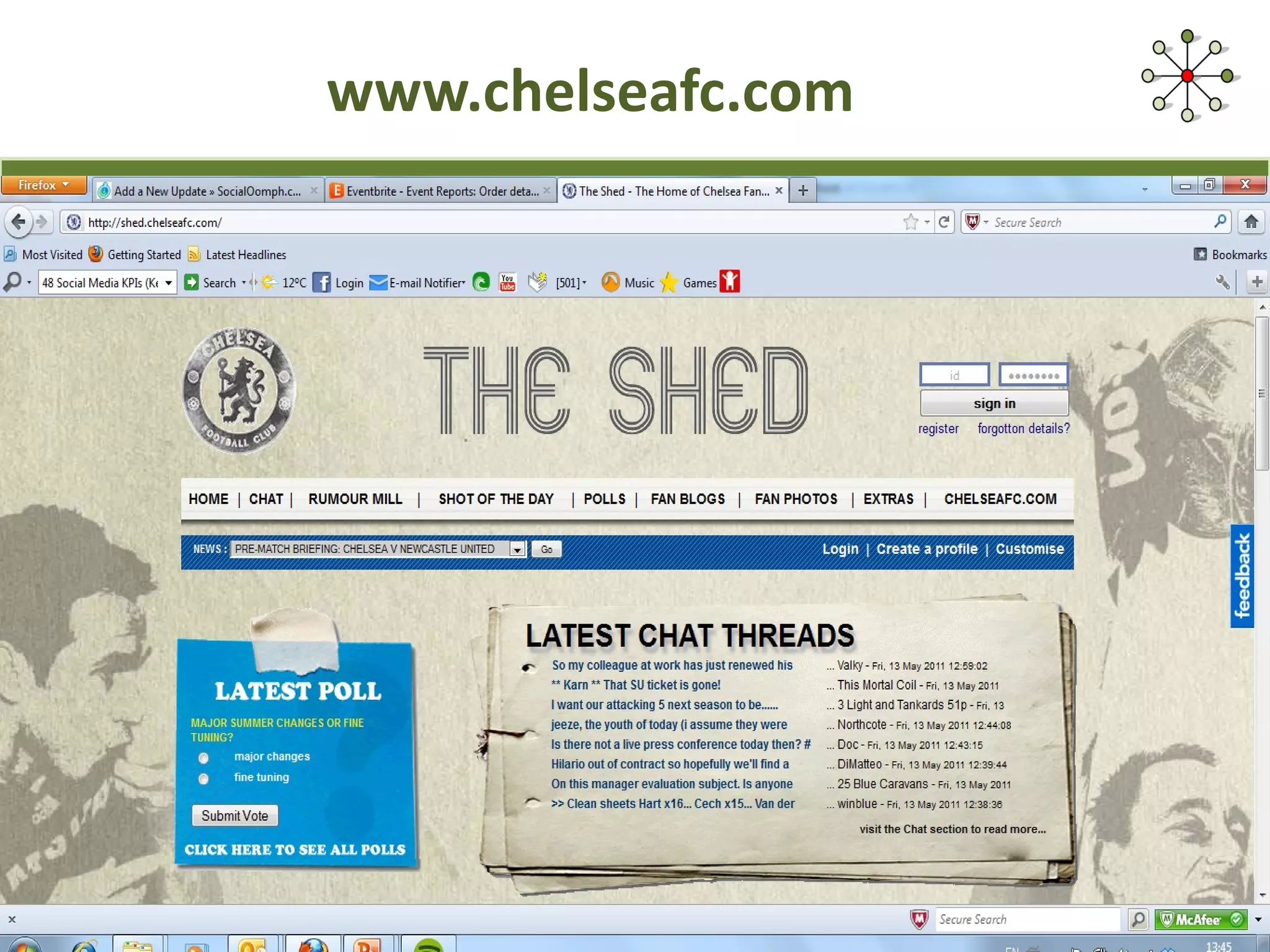
www.chelseafc.com
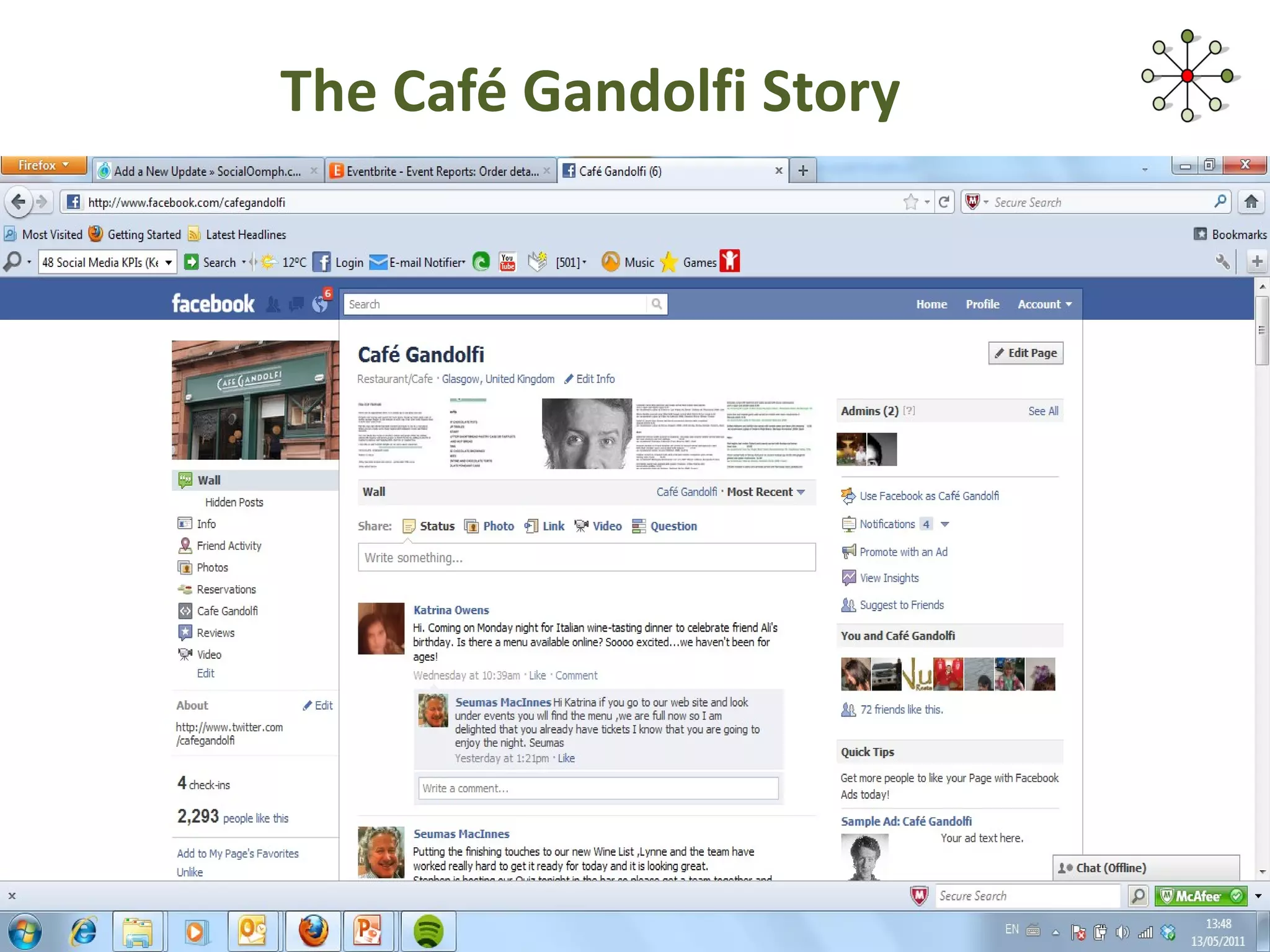
The Café Gandolfi Story
‘ Stop and Reflect’ Exercise 2: Undertake an Internal Social Media Audit. Key questions to address include: What progress have we made? What social media channels do we already use? What is the level of engagement with each channel? What positive business benefits have we derived from our social media activities? Where are the main areas for future improvement?
‘ Social Media Planning Pays’ Key Steps in Developing, Implementing and Managing a Successful Social Media Strategy Covered in more detail in Workshops 2 & 3
Social Media  Development Cycle
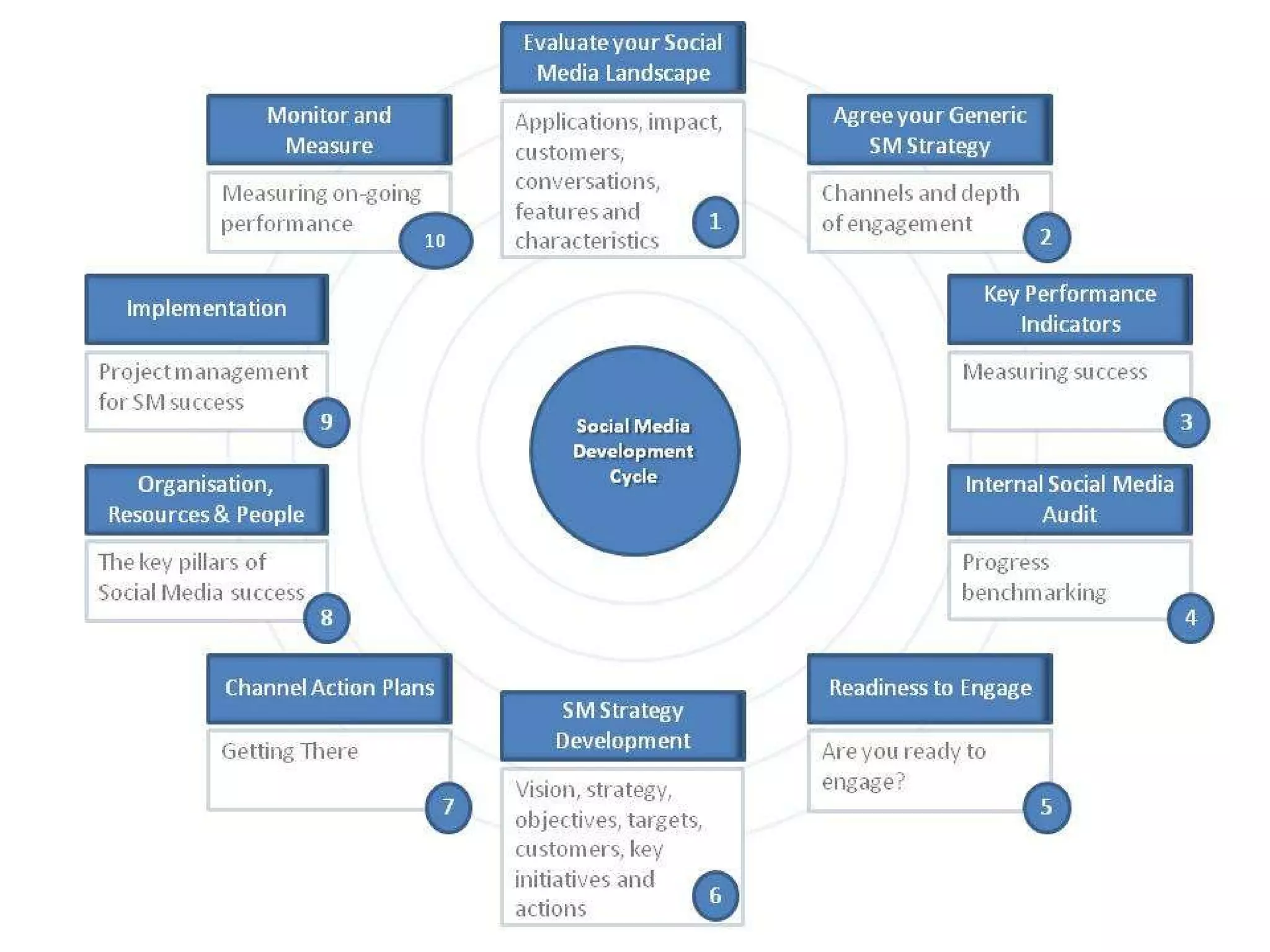
SM Development Cycle
Ten Key Steps EVALUATE YOUR SOCIAL MEDIA LANDSCAPE Applications, impact, customers, conversations, features and characteristics  AGREE YOUR GENERIC SOCIAL MEDIA STRATEGY Channels and depth of engagement KEY PERFORMANCE INDICATORS Measuring success INTERNAL SOCIAL MEDIA AUDIT Progress benchmarking READINESS TO ENGAGE Are you ready to engage?
Ten Key Steps SOCIAL MEDIA STRATEGY DEVELOPMENT Vision, strategy, objectives, targets, customers, key initiatives and actions CHANNEL ACTION PLANS “ Getting there” ORGANISATION, RESOURCE AND PEOPLE ISSUES The key pillars of social media success IMPLEMENTATION Professional project management for social media success MONITOR AND MEASURE On-going performance measurement
Each Step is being covered in detail on our blog at  www.energise2-0.com
Five Key Areas External Analysis: Evaluate Your Social Media Landscape Internal Analysis: Evaluate Your ‘Readiness to Engage’ Develop Your Social Media Strategy and Action Plans for ‘Getting There’ Evaluate Your Social Media Performance and ROI Organization, People and Resource Issues
Already covered the  External and Internal Analysis
Key Steps in Developing Your  Social Media Strategy and  Action Plans for ‘Getting There’
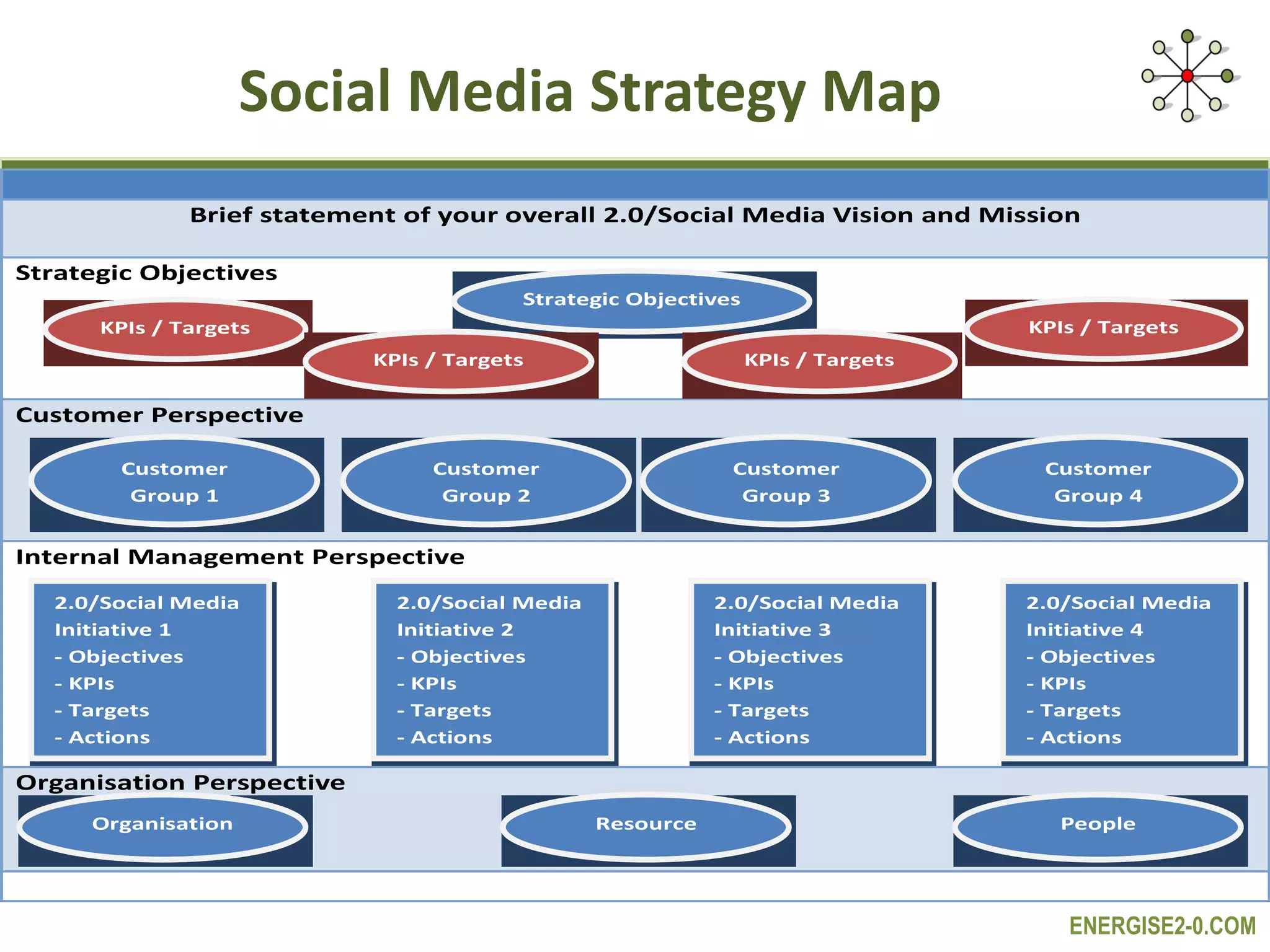
  Use a Simplified Balanced Scorecard  Will ensure that the social media actions and initiatives you take are fully aligned with and supportive of your overall business goals and objectives; that KPIs are agreed for monitoring and evaluating social media performance, business impact and ROI; and all key success factors are considered, especially the organization, people and resource aspects critical to successful strategy implementation A Scorecard approach can also be very useful for internal and external communications – a simple framework to present social media goals, objectives, key actions and initiatives to colleagues, partners and other stakeholders
Social Media Balanced Scorecard Not ‘paralysis by analysis’. By providing an agreed framework to follow, the Balanced Scorecard considerably speeds up strategy development and implementation The steps involved can be captured in a Social Media Strategy Map Five key questions to address……
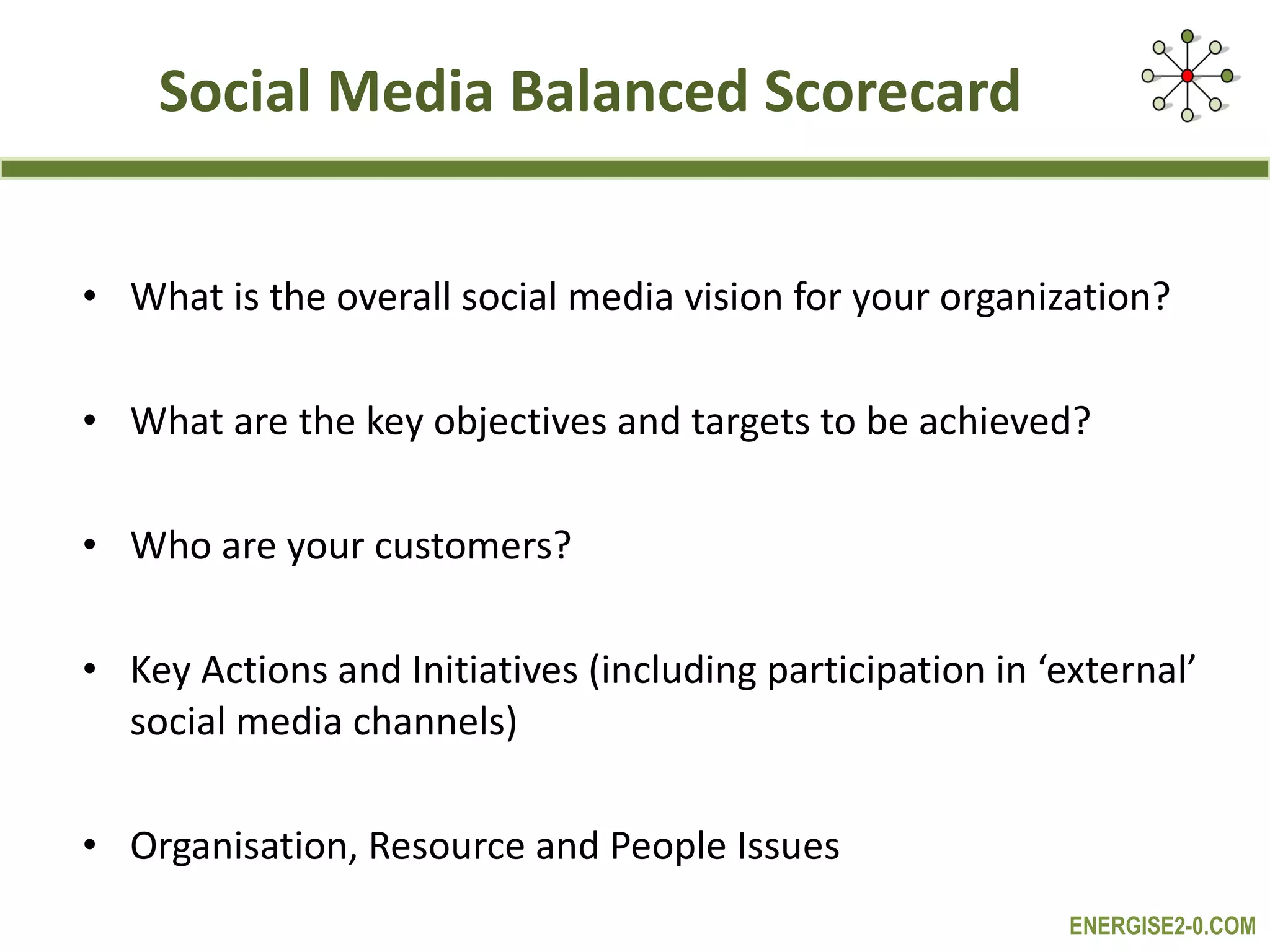
Social Media Balanced Scorecard What is the overall social media vision for your organization? What are the key objectives and targets to be achieved? Who are your customers? Key Actions and Initiatives (including participation in ‘external’ social media channels) Organisation, Resource and People Issues
Social Media Strategy Map
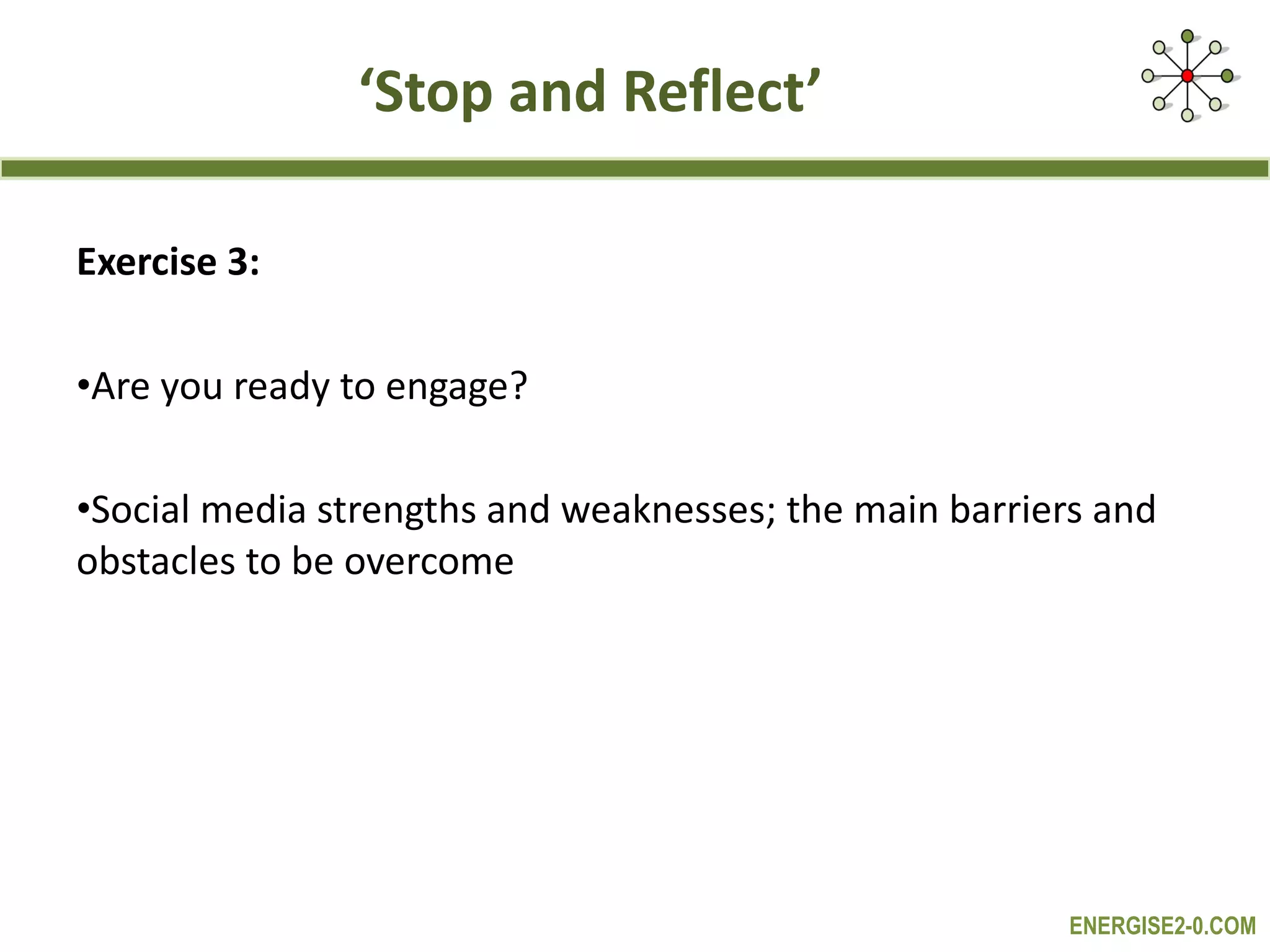
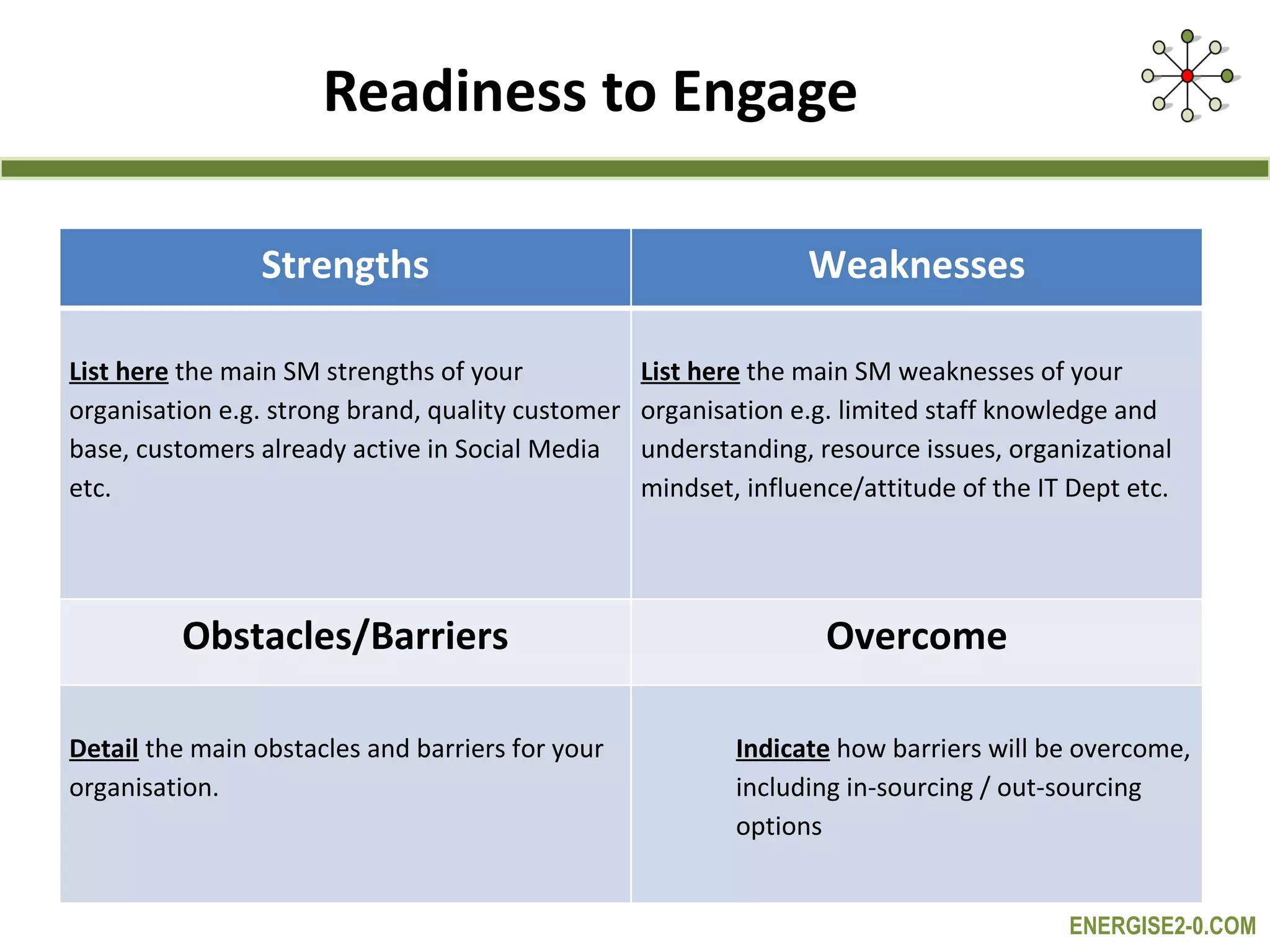
‘ Stop and Reflect’ Exercise 3: Are you ready to engage? Social media strengths and weaknesses; the main barriers and obstacles to be overcome  
Readiness to Engage Strengths Weaknesses List here  the main SM strengths of your organisation e.g. strong brand, quality customer base, customers already active in Social Media etc. List here  the main SM weaknesses of your organisation e.g. limited staff knowledge and understanding, resource issues, organizational mindset, influence/attitude of the IT Dept etc. Obstacles/Barriers Overcome Detail  the main obstacles and barriers for your organisation. Indicate  how barriers will be overcome, including in-sourcing / out-sourcing options
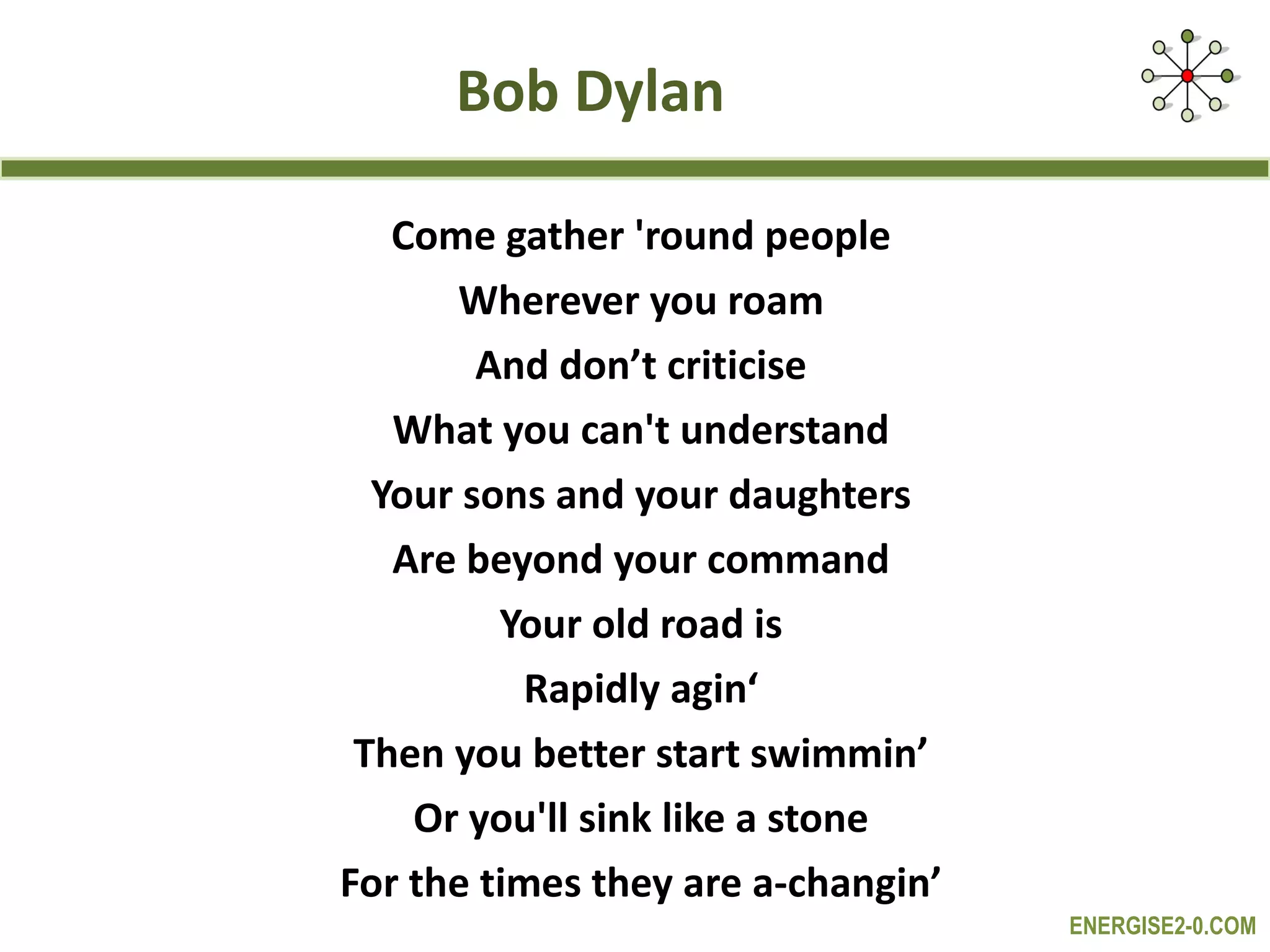
Bob Dylan Come gather 'round people Wherever you roam And don’t criticise What you can't understand Your sons and your daughters Are beyond your command Your old road is Rapidly agin‘ Then you better start swimmin’ Or you'll sink like a stone For the times they are a-changin’
Thank You Questions
Workshop 2 Social Media Strategy Development Using the ‘Toolkit’, participants will agree the social media vision and strategy for their company; the key objectives and targets to be achieved; KPIs; customer segmentation; the key social media actions and initiatives to take; organisation, people and resource issues.

Mastering Social Media Workshop 1

  • 1.
    Mastering Social Mediafor Sustained Business Growth Dr. Jim Hamill Alan Stevenson Vincent Hamill www.energise2-0.com May, 2011
  • 2.
    Mastering Social MediaWelcome and Introductions About the Programme Workshop 1: ‘The Foundations’
  • 3.
    Welcome and Introductions
  • 4.
    About the Programme
  • 5.
    SM Opportunities andProgress Made Used effectively, social media can lead to the following business benefits for SMEs Market/customer knowledge & insight through customer feedback and the use of social media monitoring tools Low cost brand awareness and reputation management Increase sales/repeat sales Build strong online community/ quality customer base of high value, high growth potential customers Engage and energise Enhanced customer experience and loyalty Sales/marketing effectiveness, efficiency and ROI Operational / internal process efficiency (open source and hosted apps)
  • 6.
    SM Opportunities andProgress Made Interest and enthusiasm among SMEs is growing rapidly - channels are being set up SMEs fall into three main groups in terms of progress made Progressive Adopters Cautious/ Experimental Adopters Non Adopters
  • 7.
    SM Opportunities andProgress Made While some good progress is being made, there is a need for a more ‘strategic’ approach Clear social media vision and strategy, agreed objectives, KPIs, targets, ROI and on-going performance measurement More attention needs to be paid to organization, people, resource issues critical to on-going SM success Social Media Planning Pays
  • 8.
    Programme Overview Keyissues in planning, developing, implementing and managing a successful social media strategy, including performance measurement and ROI
  • 9.
    Programme Overview Thekey strategic, management and organizational challenges involved in planning, implementing and managing an effective social media strategy ‘ Social Media Planning Pays’……. SM success requires sound planning and the application of professional project management procedures …. but not paralysis by analysis A key objective is to ensure that your SM Strategy is fully aligned behind and supportive of your core business/marcoms goals and objectives
  • 10.
    Key Questions ToAddress What social media channels should you engage with and how deep should your level of engagement be? How can social media best help you to achieve your overall strategic goals and objectives? What resource should you commit to social media? What Key Performance Indicators (KPIs) should you use and how can Return on Investment be measured?
  • 11.
    Key Questions ToAddress How open should your organization become? What new ‘mindsets’ are required? What new skills, knowledge and staff training are required? Action plans for successful channel development
  • 12.
    Programme Structure Threeone day workshops Online support www.energise2-0.com ‘ Social Media Toolkit’ Exercises Follow-Up Meeting Implementation Support?
  • 13.
  • 14.
  • 15.
    Programme ‘Mindset’ Interactionand two-way dialogue NOT broadcasting Crowdsourced learning – NOT ‘sage on the stage’ Input = Output
  • 16.
    Questions about the Programme?
  • 17.
    Where are youin terms of Social Media?
  • 18.
    Mastering Social Mediafor Sustained Business Growth Workshop 1 ‘The Foundations’
  • 19.
    Workshop 1 OverviewOverview of social media – what is it? How important has it become? – social media size and growth Features and characteristics – the key things to remember about social media The new ‘mindset’ and performance measures required Potential business benefits of social media Social media in action – case examples Establish a strong foundation for developing, implementing and managing a successful Social Media Strategy – Workshops 2 and 3 ‘ Social Media Planning Pays’
  • 20.
    ‘ Stop andReflect’ Exercises Three exercises to reinforce your knowledge/understanding and to establish a strong foundation for SM strategy development Social media landscape evaluation Internal audit of progress made Are you ‘ready to engage’?
  • 21.
  • 22.
  • 23.
  • 24.
    What is SocialMedia? The three main components: Applications Features and characteristics Business impact
  • 25.
    Web2.0/Social Media Web 2.0 Applications Open source Online Applications/ Web Services Social Network Sites Social Content – Social Bookmarking Blogs or Weblogs Wikis Podcasts/ Vodcasts Virtual Realities Mash Ups RSS Feeds Mobile Web; Internet Telephony Twitter Characteristics Communities and Networks Openness Sharing Peering Hosted Services – online applications; the Internet as the platform Interactivity Social Element Mass Collaboration Empowerment Global Business Impact Mindset Business Intelligence Customer Insight and Understanding Customer Interaction Enhanced Customer Experience – Rich Internet Applications Reputation Management Sales and Marketing Product Development and R&D e.g. engage and co-create IT/Software/Applications Operations, Internal Processes and HRM
  • 26.
    Social Media inPlain English
  • 27.
  • 28.
    The Social MediaRevolution
  • 29.
    ‘ Stop andReflect’ Exercise 1: Impact - What impact is social media having on your industry? How important has it/will it become? Customers – How are your customers using social media? What impact is it having/will it have on customer behaviour? What are the opportunities and threats for your business?......discussion of business benefits to follow…..
  • 30.
  • 31.
    Business Benefits MarketKnowledge Customer Insight and Understanding Customer Interaction Enhanced Customer Experience Business Intelligence Reputation Management
  • 32.
    Business Benefits ImprovedSales and Marketing Identify and network with high value, high growth prospects Product Development and R&D e.g. engage and co-create Internal cost savings Improved Operations and Internal Processes Increased ROI
  • 33.
    Potential Business Benefits5 main areas: Market/Customer Knowledge & Insight Engagement & Reputation Management Enhanced Customer Experience and Loyalty Sales/Marketing Effectiveness, Efficiency and ROI Operations/ Internal Processes (open source and hosted apps)
  • 34.
    ‘ Stop andReflect’ Exercise 1 (continued): Applications – What social media applications are most relevant to your business? Map these against agreed business benefits
  • 35.
    Map Applications toBusiness Benefits
  • 36.
    Key Things toRemember about Social Media
  • 37.
    Key Things toRemember It’s social A key feature is online democracy – with content being provided by the network for the network – represents a fundamental and revolutionary change in online behaviour, expectations and the online customer experience. The end of the ‘read only’ internet Conversations are taking place relevant to your business Power shift Social media empowers customers, empowers the network. Recognizing this shift is the cornerstone of future success Especially true in information intense industries Declining effectiveness of traditional approaches  Does anyone listen to sales/brand messages anymore?
  • 38.
    Source: The Futureof Advertising, APA, 17/02/09 as published on Slideshare ( www.slideshare.com )
  • 39.
  • 40.
    Key Things toRemember Pull v push Consumers/users decide what information they wish to access New ‘mindsets’ are required Marketing as a conversation with your customers/network– dialogue not broadcasting But this is something that most of us are not very good at doing. We prefer ‘telling’ people SM ‘winners’ and ‘losers’ ‘ Winners’ will be those organisations who fully utilise the interactive power of Web 2.0 technology for engaging with and energising customer and network relationships
  • 41.
  • 42.
  • 43.
    Key Things toRemember New performance measures Requires new performance measures Quality of your network Relationship strength Ability to leverage Social media monitoring tools The need for new business/marketing models
  • 44.
    Performance Measurement Involvement – network/community numbers/quality, time spent, frequency, geography Interaction – actions they take – read, post, comment, reviews, recommendations Intimacy – affection or aversion to the brand ; community sentiments, opinions expressed etc Influence – advocacy, viral forwards, referrals and recommendations, social bookmarking Insight – customer insight Impact – business impact Social Media Monitoring Tools –Audit, Assess, Impact
  • 45.
  • 46.
    Key Things toRemember The need for new business/marketing models Traditional approach: Product development – Differentiate – Market and Promote - Sell New model based on: Communities, networks, openness, peering, sharing, collaboration, customer empowerment, ‘think and act’ globally Engage and energise ‘ Create the Buzz’
  • 47.
    ‘ Stop andReflect’ Exercise 1 (continued) – Homework  Conversations – what online conversations are taking place relevant to your business, where and what is being said? Features and characteristics – summarise the key features and characteristics of social media relevant to your business
  • 48.
    Monitoring the ConversationsUse Social Media Monitoring Tools to monitor online conversations relevant to your brand No or low cost tools such as Google Alerts, Yahoo Pipes, Social Mention, Topsy, IceRocket, Blogscope, Blogpulse and ViralHeat More expensive and sophisticated tools such as Radian6, Alterian SM2, Sysomos Heartbeat and Infegy SocialRadar
  • 49.
    Social Media inAction Quick Examples
  • 50.
    In a Web2.0 Era, the Brand Becomes the Customer Experience of the Brand A quick ‘personal experience’ Dubai Hotel
  • 51.
  • 52.
  • 53.
  • 54.
  • 55.
  • 56.
    From the website This 5-star hotel and residence offers European hospitality with an unmistakable French touch. The hotel consists of 318 beautifully appointed guest rooms/suites, while the residence offers 112 fully furnished and equipped deluxe Studios and 1-3 bedroom apartments. The ultimate in comfort, we offer 318 luxuriously elegant rooms and suites. Take a trip. Escape. Go and visit somewhere new and see if we are there… Give in to that irresistible wanderlust. Discovering and staying in the most exceptional hotels in the world has become the modern-day Graal, a game, a quest…
  • 57.
    The Customer Experience of the Brand Tripadvisor
  • 58.
    From Tripadvisor It'sgetting old, the rooms are unappealing and it will never be more than a business hotel Being a Sofitel hotel we expected something quite 'flashy' unfortunately we were let down. The rooms, although comfortable and clean, were not of the standard we expected and were definately not what we expected after looking at the photos on the hotel's website. Booking my stay via the Sofitel website after a pleasant experience at several other Sofitel locations over the past 2 years with my new job I was looking forward to a 5 star luxury stay after a stressful business trip. My expectations were reasonable, however certainly not met by this hotel
  • 59.
  • 60.
  • 61.
  • 62.
  • 63.
  • 64.
  • 65.
  • 66.
  • 67.
  • 68.
  • 69.
  • 70.
  • 71.
    ‘ Stop andReflect’ Exercise 2: Undertake an Internal Social Media Audit. Key questions to address include: What progress have we made? What social media channels do we already use? What is the level of engagement with each channel? What positive business benefits have we derived from our social media activities? Where are the main areas for future improvement?
  • 72.
    ‘ Social MediaPlanning Pays’ Key Steps in Developing, Implementing and Managing a Successful Social Media Strategy Covered in more detail in Workshops 2 & 3
  • 73.
    Social Media Development Cycle
  • 74.
  • 75.
    Ten Key StepsEVALUATE YOUR SOCIAL MEDIA LANDSCAPE Applications, impact, customers, conversations, features and characteristics AGREE YOUR GENERIC SOCIAL MEDIA STRATEGY Channels and depth of engagement KEY PERFORMANCE INDICATORS Measuring success INTERNAL SOCIAL MEDIA AUDIT Progress benchmarking READINESS TO ENGAGE Are you ready to engage?
  • 76.
    Ten Key StepsSOCIAL MEDIA STRATEGY DEVELOPMENT Vision, strategy, objectives, targets, customers, key initiatives and actions CHANNEL ACTION PLANS “ Getting there” ORGANISATION, RESOURCE AND PEOPLE ISSUES The key pillars of social media success IMPLEMENTATION Professional project management for social media success MONITOR AND MEASURE On-going performance measurement
  • 77.
    Each Step isbeing covered in detail on our blog at www.energise2-0.com
  • 78.
    Five Key AreasExternal Analysis: Evaluate Your Social Media Landscape Internal Analysis: Evaluate Your ‘Readiness to Engage’ Develop Your Social Media Strategy and Action Plans for ‘Getting There’ Evaluate Your Social Media Performance and ROI Organization, People and Resource Issues
  • 79.
    Already covered the External and Internal Analysis
  • 80.
    Key Steps inDeveloping Your Social Media Strategy and Action Plans for ‘Getting There’
  • 81.
    Usea Simplified Balanced Scorecard Will ensure that the social media actions and initiatives you take are fully aligned with and supportive of your overall business goals and objectives; that KPIs are agreed for monitoring and evaluating social media performance, business impact and ROI; and all key success factors are considered, especially the organization, people and resource aspects critical to successful strategy implementation A Scorecard approach can also be very useful for internal and external communications – a simple framework to present social media goals, objectives, key actions and initiatives to colleagues, partners and other stakeholders
  • 82.
    Social Media BalancedScorecard Not ‘paralysis by analysis’. By providing an agreed framework to follow, the Balanced Scorecard considerably speeds up strategy development and implementation The steps involved can be captured in a Social Media Strategy Map Five key questions to address……
  • 83.
    Social Media BalancedScorecard What is the overall social media vision for your organization? What are the key objectives and targets to be achieved? Who are your customers? Key Actions and Initiatives (including participation in ‘external’ social media channels) Organisation, Resource and People Issues
  • 84.
  • 85.
    ‘ Stop andReflect’ Exercise 3: Are you ready to engage? Social media strengths and weaknesses; the main barriers and obstacles to be overcome  
  • 86.
    Readiness to EngageStrengths Weaknesses List here the main SM strengths of your organisation e.g. strong brand, quality customer base, customers already active in Social Media etc. List here the main SM weaknesses of your organisation e.g. limited staff knowledge and understanding, resource issues, organizational mindset, influence/attitude of the IT Dept etc. Obstacles/Barriers Overcome Detail the main obstacles and barriers for your organisation. Indicate how barriers will be overcome, including in-sourcing / out-sourcing options
  • 87.
    Bob Dylan Comegather 'round people Wherever you roam And don’t criticise What you can't understand Your sons and your daughters Are beyond your command Your old road is Rapidly agin‘ Then you better start swimmin’ Or you'll sink like a stone For the times they are a-changin’
  • 88.
  • 89.
    Workshop 2 SocialMedia Strategy Development Using the ‘Toolkit’, participants will agree the social media vision and strategy for their company; the key objectives and targets to be achieved; KPIs; customer segmentation; the key social media actions and initiatives to take; organisation, people and resource issues.

Editor's Notes

  • #32 Market Knowledge: Competitors, Suppliers, Buyers, Influencers; Google insight, Google Alerts will provide a view on most companies within an industry. Also, there are a range of blogs and networks where amateurs and professionals will share their knowledge of a market. Customer Insight and Understanding: Listening to customers and prospects through the range of channels they inhabit; comments on YouTube, Networks where they ‘hang out’ Customer Interaction: the tools exist to not only listen and observe but also to discuss and converse Business Intelligence: media monitoring, alerts and related analysis tools provide a great source of structured Business Intelligence. You need not pay £600/month for the privilege, SocialMention and Google Alerts can keep you informed where you need to be. Reputation Management: one of the key aspects of web 2.0 is that it is Real Time. You can see and respond to comments as they arise and often, where the response is efficient and effective, create a positive effect. Consider, the Ethiopian Growers that challenged the coffee used by Starbucks in a video posted on YouTube. This video was viewed by 10,000 people. The CEO posted a response within 24 hours on YouTube, the response was viewed by several million.
  • #33 We believe there is a strong correlation between positive word of mouth, online buzz and sales and marketing. Needless to say there are now numerous means of getting your message out there, growing followers (through sites like Twitter, and energising your customer base). Web 2.0 is immediate and direct. The example I like to use is of a safety harness company based in Edinburgh who considered using a traditional approach to International Sales and Marketing – find an agent, find prospects, etc. An alternative approach we suggested, used LinkedIn to find the Health And Safety Director of the largest Construction Project in the world. Now it is not a leap to suggest filming the harness on YouTube and sending an email with a link saying you are in Saudi Arabia and would he like to meet up. Numerous examples of customer insight and feedback leading to product improvement. Many car companies use Second Life to test their designs. A site called eBags sends out the latest designs to their top raters on the site. Internal cost savings. No 10 Downing Street example… Improved Operations and internal processes. There are applications for literally anything – wikis that compete with licenced intranets, email freeware that is better than Outlook, hosted network sites for £20/month that would cost £thousands to replicate. Increased Return on Investment. The holy grail or the achiles heal of Web 2.0. How do you make money from this thing…there is a growing level of evidence to suggest that it works.
  • #61 ICT Strategy Development and the Balanced Scorecard