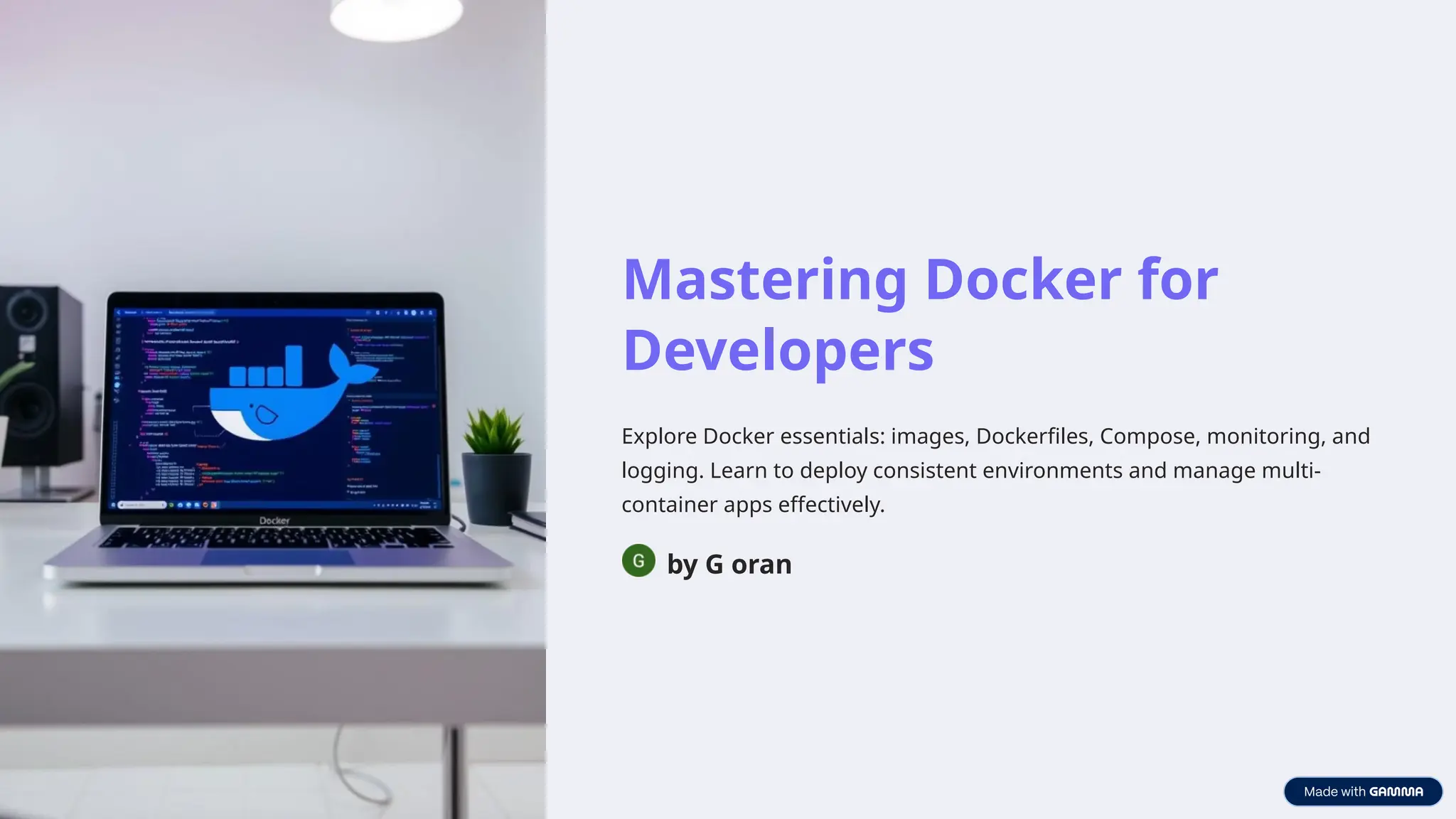
Mastering Docker for
Developers
ExploreDocker essentials: images, Dockerfiles, Compose, monitoring, and
logging. Learn to deploy consistent environments and manage multi-
container apps effectively.
by G oran
2.
Docker Images andDockerfiles
Docker Images
• Immutable, read-only app & environment templates
• Portable and version-controlled for consistency
Dockerfile Basics
1. FROM: Select base image
2. RUN: Install dependencies
3. COPY: Add app files
4. CMD/ENTRYPOINT: Set start commands
3.
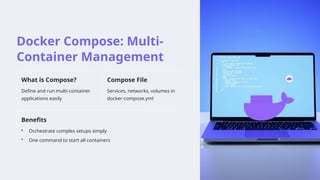
Docker Compose: Multi-
ContainerManagement
What is Compose?
Define and run multi-container
applications easily
Compose File
Services, networks, volumes in
docker-compose.yml
Benefits
• Orchestrate complex setups simply
• One command to start all containers
4.
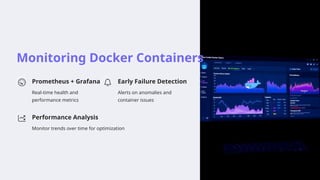
Monitoring Docker Containers
Prometheus+ Grafana
Real-time health and
performance metrics
Early Failure Detection
Alerts on anomalies and
container issues
Performance Analysis
Monitor trends over time for optimization
5.
Logging in DockerEnvironments
ELK Stack Components
• Elasticsearch: store & search logs
• Logstash: collect & parse data
• Kibana: visualize logs with dashboards
Logging Importance
• Centralized log management
• Improve troubleshooting speed
• Ensure production reliability
6.
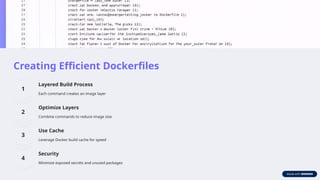
Creating Efficient Dockerfiles
LayeredBuild Process
Each command creates an image layer
Optimize Layers
Combine commands to reduce image size
Use Cache
Leverage Docker build cache for speed
Security
Minimize exposed secrets and unused packages
7.
Docker Compose UseCases
Local Development
Run web apps with databases smoothly
Test Environments
Replicate production multi-service apps easily
CI/CD Pipelines
Automate container setups and teardown
8.
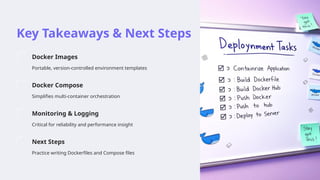
Key Takeaways &Next Steps
Docker Images
Portable, version-controlled environment templates
Docker Compose
Simplifies multi-container orchestration
Monitoring & Logging
Critical for reliability and performance insight
Next Steps
Practice writing Dockerfiles and Compose files



![제 23회 보아즈(BOAZ) 빅데이터 컨퍼런스 - [MBOAX] : ABSA를 활용한 소비자 반응 분석 기반 운영 효율화 대시보드 설계](https://cdn.slidesharecdn.com/ss_thumbnails/3-1boaz23rdconferencemboax-260203102709-9d519923-thumbnail.jpg?width=640&height=640&fit=bounds)

![Hacking-Uncovered-How-People-Get-Hacked-and-How-to-Stay-Safe[1].pptx](https://cdn.slidesharecdn.com/ss_thumbnails/hacking-uncovered-how-people-get-hacked-and-how-to-stay-safe1-260130170011-4883a9c7-thumbnail.jpg?width=640&height=640&fit=bounds)


