Marketing Segmentation,
Targeting, & Positioning
By: Lou Klingensmith
What
is a STP
Analysis?
 The segmentation, targeting, and position process is
a five-step process that helps companies' home in on
their ideal consumer base and how to position their
offerings in a way customers understand why it
meets their needs better than the competitions.
• Articulatethevision ororobjectives ofcompaniesmarketingstrategy
• Harmonious with and developed from the company's mission, objectives, and
currentSWOTanalysis
Step One:
Establish the Overall
Strategy or
Objectives
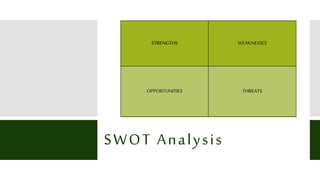
SWOT Analysis
STRENGTHS WEAKNESSES
OPPORTUNITIES THREATS
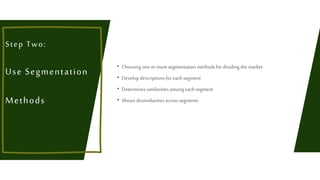
Step Two:
Use Segmentation
Methods
 Choosingone ormoresegmentationmethodsfordividing themarket
 Develop descriptionsforeach segment
 Determinessimilaritiesamongeach segment
 Showsdissimilarities acrosssegments
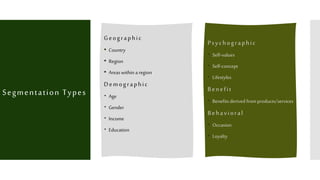
Segmentation Types
Geographic
• Country
• Region
• Areaswithin aregion
Demographic
 Age
 Gender
 Income
 Education
Psychographic
 Self-values
 Self-concept
 Lifestyles
Benefit
 Benefitsderived fromproducts/services
Behavioral
 Occasion
 Loyalty
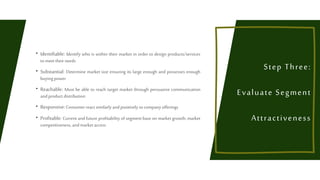
 Identifiable: Identify who is within their market in order to design products/services
to meet their needs
 Substantial: Determine market size ensuring its large enough and possesses enough
buyingpower
 Reachable: Must be able to reach target market through persuasive communication
and product distribution
 Responsive:Consumerreact similarly and positively to company offerings
 Profitable: Current and future profitability of segment base on market growth, market
competitiveness, and marketaccess
Step Three:
Evaluate Segment
Attractiveness
What
is a STP
Analysis?
The segmentation, targeting, and position process is a five-step process
that helps companies' home in on their ideal consumer base and how to
position their offerings in a way customers understand why it meets their
needsbetterthanthecompetitions.
Step Four:
Select a Target
Market
Undifferentiated Targeting Strategy (Mass
Marketing)
• Customersimilarity focused
• Perceivedto provided similarbenefits to
majorityof consumers
• No need for separatestrategy development
Micromarketing(One-to-One)
 Taylors product/serviceto individual wants&
needs
DifferentialTargetingStrategy
 Target severalmarketingsegmentswithoffers
tailored to eachsegment
 Helps diversify business &reducerisk
ConcentratedTargetingStrategy
 Single, primary targetmarket
 Focuses allenergyon providing a product to
meettheirtargetmarketsneeds
 Define the marketing mix variables so the target market
has a clear, distinctive, desirable, understanding of the
product/services compared to the competition's offerings
 Helps communicate value proposition
Value Proposition: Communicates benefits to be received
from product/service
Step Five:
Identify & Develop
Positioning Strategy

Marketing Segmentation, Targeting, & Positioning

  • 1.
    Marketing Segmentation, Targeting, &Positioning By: Lou Klingensmith
  • 2.
    What is a STP Analysis? The segmentation, targeting, and position process is a five-step process that helps companies' home in on their ideal consumer base and how to position their offerings in a way customers understand why it meets their needs better than the competitions.
  • 3.
    • Articulatethevision ororobjectivesofcompaniesmarketingstrategy • Harmonious with and developed from the company's mission, objectives, and currentSWOTanalysis Step One: Establish the Overall Strategy or Objectives
  • 4.
  • 5.
    Step Two: Use Segmentation Methods Choosingone ormoresegmentationmethodsfordividing themarket  Develop descriptionsforeach segment  Determinessimilaritiesamongeach segment  Showsdissimilarities acrosssegments
  • 6.
    Segmentation Types Geographic • Country •Region • Areaswithin aregion Demographic  Age  Gender  Income  Education Psychographic  Self-values  Self-concept  Lifestyles Benefit  Benefitsderived fromproducts/services Behavioral  Occasion  Loyalty
  • 7.
     Identifiable: Identifywho is within their market in order to design products/services to meet their needs  Substantial: Determine market size ensuring its large enough and possesses enough buyingpower  Reachable: Must be able to reach target market through persuasive communication and product distribution  Responsive:Consumerreact similarly and positively to company offerings  Profitable: Current and future profitability of segment base on market growth, market competitiveness, and marketaccess Step Three: Evaluate Segment Attractiveness
  • 8.
    What is a STP Analysis? Thesegmentation, targeting, and position process is a five-step process that helps companies' home in on their ideal consumer base and how to position their offerings in a way customers understand why it meets their needsbetterthanthecompetitions.
  • 9.
    Step Four: Select aTarget Market Undifferentiated Targeting Strategy (Mass Marketing) • Customersimilarity focused • Perceivedto provided similarbenefits to majorityof consumers • No need for separatestrategy development Micromarketing(One-to-One)  Taylors product/serviceto individual wants& needs DifferentialTargetingStrategy  Target severalmarketingsegmentswithoffers tailored to eachsegment  Helps diversify business &reducerisk ConcentratedTargetingStrategy  Single, primary targetmarket  Focuses allenergyon providing a product to meettheirtargetmarketsneeds
  • 10.
     Define themarketing mix variables so the target market has a clear, distinctive, desirable, understanding of the product/services compared to the competition's offerings  Helps communicate value proposition Value Proposition: Communicates benefits to be received from product/service Step Five: Identify & Develop Positioning Strategy