Market Segmentation,
Targeting, and
Positioning
The STP Process
 Segmentation is the process of classifying customers
into groups which share some common
characteristic
 Targeting involves the process of evaluating each
segments attractiveness and selecting one or more
segments to enter
 Positioning is arranging for a product to occupy a
clear, distinctive and desirable place relative to
competing products in the mind of the consumer
Target Market
 A market is a set of all actual and potential buyers
 A target market is a group of people toward
whom a firm markets its goods, services, or ideas
with a strategy designed to satisfy their specific
needs and preferences.
 Any marketing strategy must include a detailed
(specific) description of this.
Advantages of Segmentation
1. The process of breaking up a homogeneous market
into heterogeneous segments forces the marketer to
analyse and consider both the needs of the market and
the company’s ability to competently serve those needs
– thereby making the company better informed about
its customers
2. Competitor offerings and marketing positioning must
also be analysed in this context so the company must
consider what its competitive advantages and
disadvantages are, helping it to clarify its own
positioning strategy
3. Limited resources are used to best advantage, targeted
at those segments that offer the best potential
Requirements for Effective Segmentation
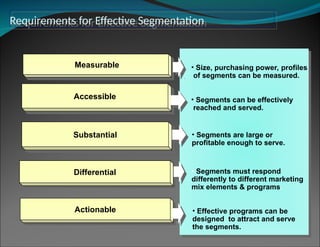
• Size, purchasing power, profiles
of segments can be measured.
• Segments can be effectively
reached and served.
• Segments are large or
profitable enough to serve.
Measurable
Accessible
Substantial
Differential
Actionable
• Segments must respond
differently to different marketing
mix elements & programs.
• Effective programs can be
designed to attract and serve
the segments.
Steps in Segmentation, Targeting,
and Positioning
1. Identify Bases
for Segmenting the Market
2. Develop Profiles
of Resulting Segments
3. Develop Selection Criteria
4. Select Target
Segment(s)
5. Develop Positioning
for Each Target Segment
6. Develop Marketing
Mix for Each Target Segment Market
Positioning
Market
Targeting
Market Segmentation
Segmentation
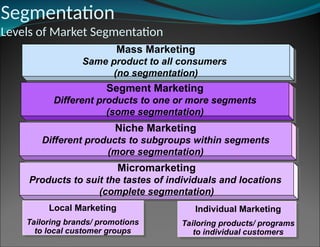
Levels of Market Segmentation
Mass Marketing
Same product to all consumers
(no segmentation)
Segment Marketing
Different products to one or more segments
(some segmentation)
Micromarketing
Products to suit the tastes of individuals and locations
(complete segmentation)
Niche Marketing
Different products to subgroups within segments
(more segmentation)
Local Marketing
Tailoring brands/ promotions
to local customer groups
Individual Marketing
Tailoring products/ programs
to individual customers
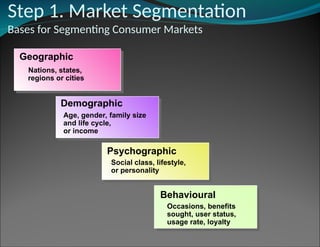
Step 1. Market Segmentation
Bases for Segmenting Consumer Markets
Geographic
Demographic
Age, gender, family size
and life cycle,
or income
Psychographic
Social class, lifestyle,
or personality
Behavioural
Occasions, benefits
sought, user status,
usage rate, loyalty
Nations, states,
regions or cities
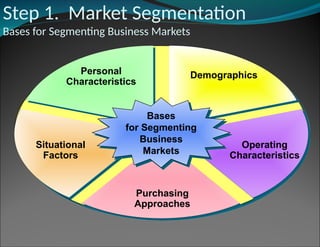
Step 1. Market Segmentation
Bases for Segmenting Business Markets
Bases
for Segmenting
Business
Markets
Demographics
Personal
Characteristics
Situational
Factors
Operating
Characteristics
Purchasing
Approaches
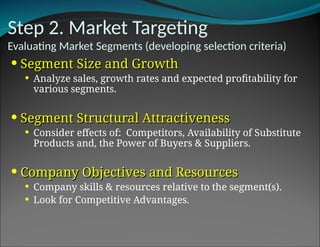
Step 2. Market Targeting
Evaluating Market Segments (developing selection criteria)
 Segment Size and Growth
Segment Size and Growth
 Analyze sales, growth rates and expected profitability for
various segments.
 Segment Structural Attractiveness
Segment Structural Attractiveness
 Consider effects of: Competitors, Availability of Substitute
Products and, the Power of Buyers & Suppliers.
 Company Objectives and Resources
Company Objectives and Resources
 Company skills & resources relative to the segment(s).
 Look for Competitive Advantages.
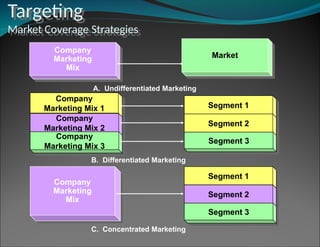
Targeting
Market Coverage Strategies
Segment 1
Segment 2
Segment 3
Segment 1
Segment 2
Segment 3
Company
Marketing
Mix
Company
Marketing
Mix
Company
Marketing Mix 1
Company
Marketing Mix 2
Company
Marketing Mix 3
Market
A. Undifferentiated Marketing
B. Differentiated Marketing
C. Concentrated Marketing
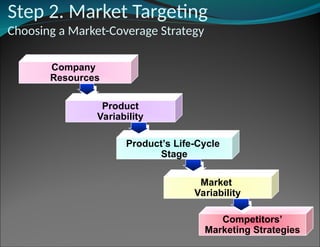
Step 2. Market Targeting
Choosing a Market-Coverage Strategy
Company
Resources
Product
Variability
Product’s Life-Cycle
Stage
Market
Variability
Competitors’
Marketing Strategies
Competitive
Advantage
 Product’s Position
Product’s Position - the way the product is
defined by consumers on important
attributes - the place the product occupies
in consumers’ minds relative to competing
products.
 Marketers must:
 Plan positions to give their products the greatest
advantage in selected target markets,
 Design marketing mixes to create these planned
positions.
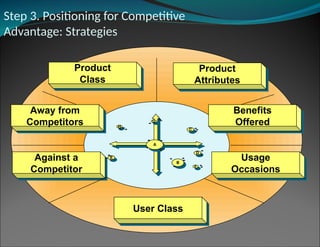
Step 3. Positioning for Competitive
Advantage: Strategies
Against a
Competitor
Usage
Occasions
Away from
Competitors
Product
Attributes
Product
Class
Benefits
Offered
User Class
B
A
E
D
C
H
G
F
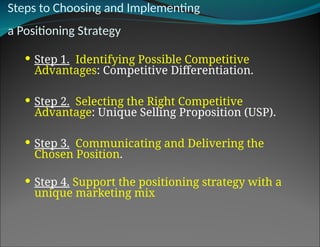
Steps to Choosing and Implementing
a Positioning Strategy
 Step 1. Identifying Possible Competitive
Advantages: Competitive Differentiation.
 Step 2. Selecting the Right Competitive
Advantage: Unique Selling Proposition (USP).
 Step 3. Communicating and Delivering the
Chosen Position.
 Step 4. Support the positioning strategy with a
unique marketing mix
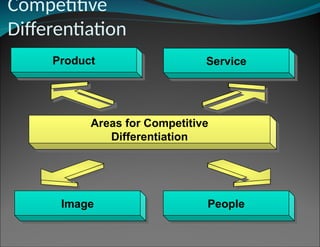
Competitive
Differentiation
Product Service
Image People
Areas for Competitive
Differentiation
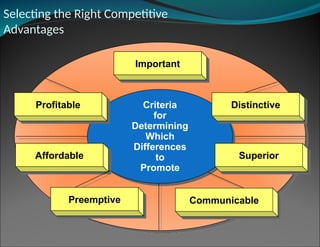
Selecting the Right Competitive
Advantages
Criteria
for
Determining
Which
Differences
to
Promote
Affordable Superior
Profitable
Preemptive
Distinctive
Important
Communicable
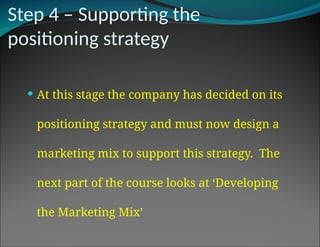
Step 4 – Supporting the
positioning strategy
 At this stage the company has decided on its
positioning strategy and must now design a
marketing mix to support this strategy. The
next part of the course looks at ‘Developing
the Marketing Mix’

Market Segmentation, Targeting and Positioning.ppt

  • 1.
  • 2.
    The STP Process Segmentation is the process of classifying customers into groups which share some common characteristic  Targeting involves the process of evaluating each segments attractiveness and selecting one or more segments to enter  Positioning is arranging for a product to occupy a clear, distinctive and desirable place relative to competing products in the mind of the consumer
  • 3.
    Target Market  Amarket is a set of all actual and potential buyers  A target market is a group of people toward whom a firm markets its goods, services, or ideas with a strategy designed to satisfy their specific needs and preferences.  Any marketing strategy must include a detailed (specific) description of this.
  • 4.
    Advantages of Segmentation 1.The process of breaking up a homogeneous market into heterogeneous segments forces the marketer to analyse and consider both the needs of the market and the company’s ability to competently serve those needs – thereby making the company better informed about its customers 2. Competitor offerings and marketing positioning must also be analysed in this context so the company must consider what its competitive advantages and disadvantages are, helping it to clarify its own positioning strategy 3. Limited resources are used to best advantage, targeted at those segments that offer the best potential
  • 5.
    Requirements for EffectiveSegmentation • Size, purchasing power, profiles of segments can be measured. • Segments can be effectively reached and served. • Segments are large or profitable enough to serve. Measurable Accessible Substantial Differential Actionable • Segments must respond differently to different marketing mix elements & programs. • Effective programs can be designed to attract and serve the segments.
  • 6.
    Steps in Segmentation,Targeting, and Positioning 1. Identify Bases for Segmenting the Market 2. Develop Profiles of Resulting Segments 3. Develop Selection Criteria 4. Select Target Segment(s) 5. Develop Positioning for Each Target Segment 6. Develop Marketing Mix for Each Target Segment Market Positioning Market Targeting Market Segmentation
  • 7.
    Segmentation Levels of MarketSegmentation Mass Marketing Same product to all consumers (no segmentation) Segment Marketing Different products to one or more segments (some segmentation) Micromarketing Products to suit the tastes of individuals and locations (complete segmentation) Niche Marketing Different products to subgroups within segments (more segmentation) Local Marketing Tailoring brands/ promotions to local customer groups Individual Marketing Tailoring products/ programs to individual customers
  • 8.
    Step 1. MarketSegmentation Bases for Segmenting Consumer Markets Geographic Demographic Age, gender, family size and life cycle, or income Psychographic Social class, lifestyle, or personality Behavioural Occasions, benefits sought, user status, usage rate, loyalty Nations, states, regions or cities
  • 9.
    Step 1. MarketSegmentation Bases for Segmenting Business Markets Bases for Segmenting Business Markets Demographics Personal Characteristics Situational Factors Operating Characteristics Purchasing Approaches
  • 10.
    Step 2. MarketTargeting Evaluating Market Segments (developing selection criteria)  Segment Size and Growth Segment Size and Growth  Analyze sales, growth rates and expected profitability for various segments.  Segment Structural Attractiveness Segment Structural Attractiveness  Consider effects of: Competitors, Availability of Substitute Products and, the Power of Buyers & Suppliers.  Company Objectives and Resources Company Objectives and Resources  Company skills & resources relative to the segment(s).  Look for Competitive Advantages.
  • 11.
    Targeting Market Coverage Strategies Segment1 Segment 2 Segment 3 Segment 1 Segment 2 Segment 3 Company Marketing Mix Company Marketing Mix Company Marketing Mix 1 Company Marketing Mix 2 Company Marketing Mix 3 Market A. Undifferentiated Marketing B. Differentiated Marketing C. Concentrated Marketing
  • 12.
    Step 2. MarketTargeting Choosing a Market-Coverage Strategy Company Resources Product Variability Product’s Life-Cycle Stage Market Variability Competitors’ Marketing Strategies
  • 13.
    Competitive Advantage  Product’s Position Product’sPosition - the way the product is defined by consumers on important attributes - the place the product occupies in consumers’ minds relative to competing products.  Marketers must:  Plan positions to give their products the greatest advantage in selected target markets,  Design marketing mixes to create these planned positions.
  • 14.
    Step 3. Positioningfor Competitive Advantage: Strategies Against a Competitor Usage Occasions Away from Competitors Product Attributes Product Class Benefits Offered User Class B A E D C H G F
  • 15.
    Steps to Choosingand Implementing a Positioning Strategy  Step 1. Identifying Possible Competitive Advantages: Competitive Differentiation.  Step 2. Selecting the Right Competitive Advantage: Unique Selling Proposition (USP).  Step 3. Communicating and Delivering the Chosen Position.  Step 4. Support the positioning strategy with a unique marketing mix
  • 16.
  • 17.
    Selecting the RightCompetitive Advantages Criteria for Determining Which Differences to Promote Affordable Superior Profitable Preemptive Distinctive Important Communicable
  • 18.
    Step 4 –Supporting the positioning strategy  At this stage the company has decided on its positioning strategy and must now design a marketing mix to support this strategy. The next part of the course looks at ‘Developing the Marketing Mix’