SEGOVIA
María Loureiro Pérez
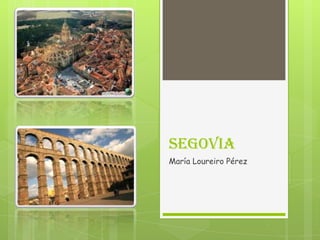
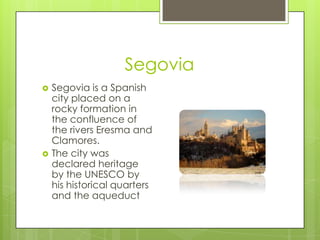
Segovia
   Segovia is a Spanish
    city placed on a
    rocky formation in
    the confluence of
    the rivers Eresma and
    Clamores.
   The city was
    declared heritage
    by the UNESCO by
    his historical quarters
    and the aqueduct
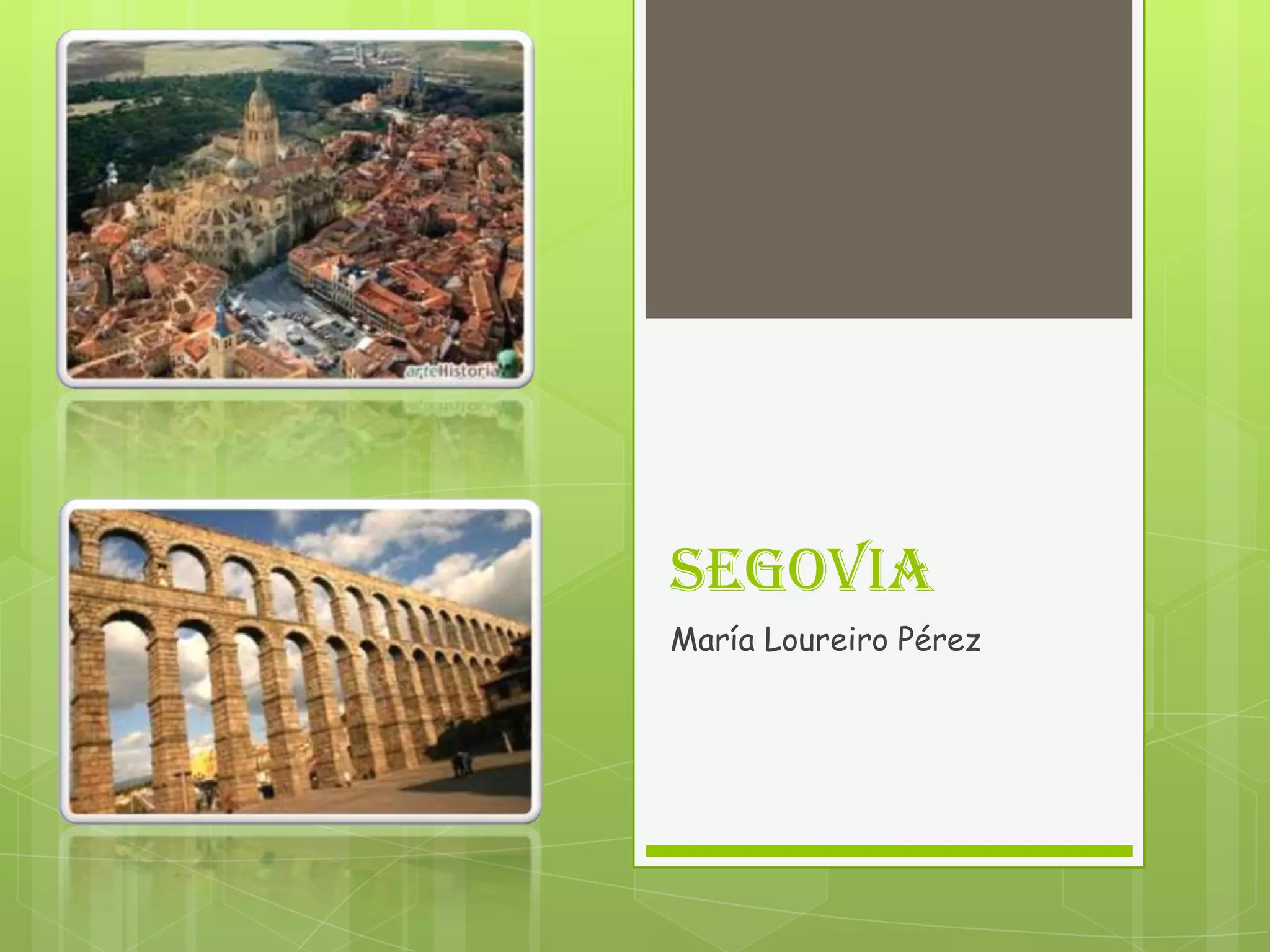
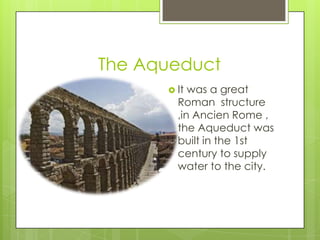
The Aqueduct
       It was a great
        Roman structure
        ,in Ancien Rome ,
        the Aqueduct was
        built in the 1st
        century to supply
        water to the city.
The walls
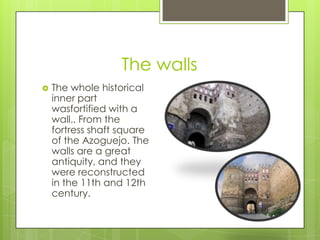
   The whole historical
    inner part
    wasfortified with a
    wall.. From the
    fortress shaft square
    of the Azoguejo. The
    walls are a great
    antiquity, and they
    were reconstructed
    in the 11th and 12th
    century.
Walking along the historical
         quarters
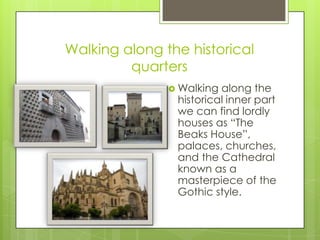
                Walking along the
                historical inner part
                we can find lordly
                houses as “The
                Beaks House”,
                palaces, churches,
                and the Cathedral
                known as a
                masterpiece of the
                Gothic style.
Walking along the historical
quarters
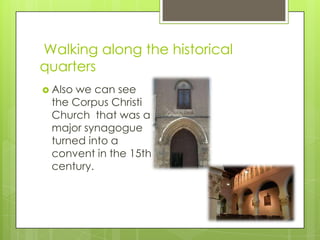
 Alsowe can see
 the Corpus Christi
 Church that was a
 major synagogue
 turned into a
 convent in the 15th
 century.
Walking along the historial
core
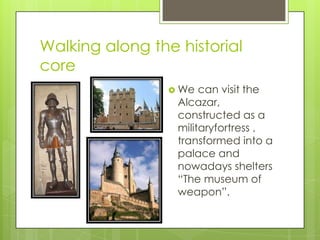
                  We  can visit the
                  Alcazar,
                  constructed as a
                  militaryfortress ,
                  transformed into a
                  palace and
                  nowadays shelters
                  “The museum of
                  weapon”.
Out of the walls
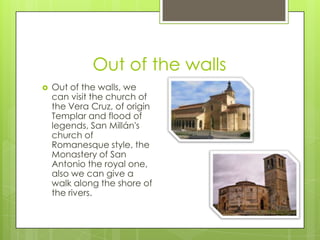
   Out of the walls, we
    can visit the church of
    the Vera Cruz, of origin
    Templar and flood of
    legends, San Millán's
    church of
    Romanesque style, the
    Monastery of San
    Antonio the royal one,
    also we can give a
    walk along the shore of
    the rivers.
Near Segovia
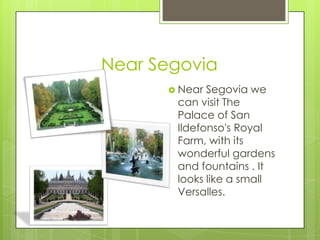
       Near Segovia we
       can visit The
       Palace of San
       Ildefonso's Royal
       Farm, with its
       wonderful gardens
       and fountains . It
       looks like a small
       Versalles.
Moreover
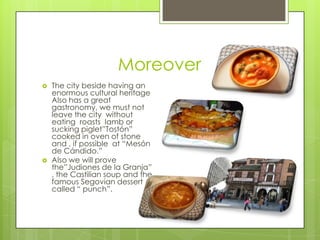
   The city beside having an
    enormous cultural heritage
    Also has a great
    gastronomy, we must not
    leave the city without
    eating roasts lamb or
    sucking piglet”Tostón”
    cooked in oven of stone
    and , if possible at “Mesón
    de Cándido.”
   Also we will prove
    the”Judiones de la Granja”
    , the Castilian soup and the
    famous Segovian dessert
    called “ punch”.
WELL DONE MARIA, I HAVE CORRECTED THE FEW
MISTAKES YOU HAVE MADE-
Notable-8

MariaLoureiro Segogia

  • 1.
  • 2.
    Segovia  Segovia is a Spanish city placed on a rocky formation in the confluence of the rivers Eresma and Clamores.  The city was declared heritage by the UNESCO by his historical quarters and the aqueduct
  • 3.
    The Aqueduct  It was a great Roman structure ,in Ancien Rome , the Aqueduct was built in the 1st century to supply water to the city.
  • 4.
    The walls  The whole historical inner part wasfortified with a wall.. From the fortress shaft square of the Azoguejo. The walls are a great antiquity, and they were reconstructed in the 11th and 12th century.
  • 5.
    Walking along thehistorical quarters  Walking along the historical inner part we can find lordly houses as “The Beaks House”, palaces, churches, and the Cathedral known as a masterpiece of the Gothic style.
  • 6.
    Walking along thehistorical quarters  Alsowe can see the Corpus Christi Church that was a major synagogue turned into a convent in the 15th century.
  • 7.
    Walking along thehistorial core  We can visit the Alcazar, constructed as a militaryfortress , transformed into a palace and nowadays shelters “The museum of weapon”.
  • 8.
    Out of thewalls  Out of the walls, we can visit the church of the Vera Cruz, of origin Templar and flood of legends, San Millán's church of Romanesque style, the Monastery of San Antonio the royal one, also we can give a walk along the shore of the rivers.
  • 9.
    Near Segovia  Near Segovia we can visit The Palace of San Ildefonso's Royal Farm, with its wonderful gardens and fountains . It looks like a small Versalles.
  • 10.
    Moreover  The city beside having an enormous cultural heritage Also has a great gastronomy, we must not leave the city without eating roasts lamb or sucking piglet”Tostón” cooked in oven of stone and , if possible at “Mesón de Cándido.”  Also we will prove the”Judiones de la Granja” , the Castilian soup and the famous Segovian dessert called “ punch”.
  • 11.
    WELL DONE MARIA,I HAVE CORRECTED THE FEW MISTAKES YOU HAVE MADE- Notable-8