Rimetea
“Fairy-Tale Village”
MOICEANU VALENTIN. , Group 8212
Coordinating teacher: Mihai Daniel Frumuselu
University of Agronomics Sciences Veterinary Medicine of Bucharest,
Romania
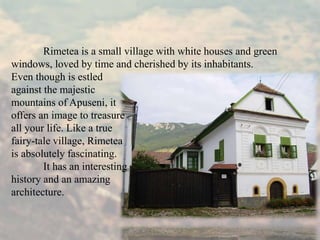
Rimetea is a small village with white houses and green
windows, loved by time and cherished by its inhabitants.
Even though is estled
against the majestic
mountains of Apuseni, it
offers an image to treasure
all your life. Like a true
fairy-tale village, Rimetea
is absolutely fascinating.
It has an interesting
history and an amazing
architecture.
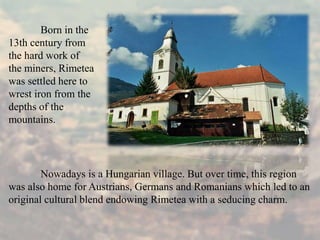
Nowadays is a Hungarian village. But over time, this region
was also home for Austrians, Germans and Romanians which led to an
original cultural blend endowing Rimetea with a seducing charm.
Born in the
13th century from
the hard work of
the miners, Rimetea
was settled here to
wrest iron from the
depths of the
mountains.
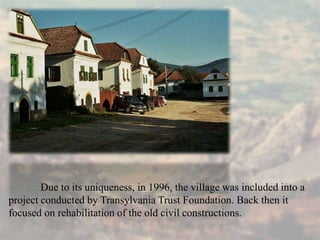
Due to its uniqueness, in 1996, the village was included into a
project conducted by Transylvania Trust Foundation. Back then it
focused on rehabilitation of the old civil constructions.
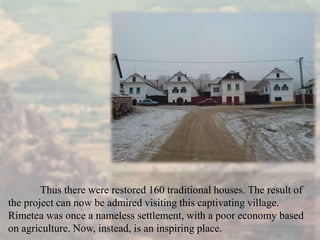
Thus there were restored 160 traditional houses. The result of
the project can now be admired visiting this captivating village.
Rimetea was once a nameless settlement, with a poor economy based
on agriculture. Now, instead, is an inspiring place.
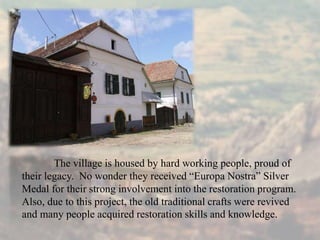
The village is housed by hard working people, proud of
their legacy. No wonder they received “Europa Nostra” Silver
Medal for their strong involvement into the restoration program.
Also, due to this project, the old traditional crafts were revived
and many people acquired restoration skills and knowledge.
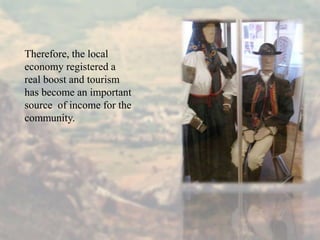
Therefore, the local
economy registered a
real boost and tourism
has become an important
source of income for the
community.
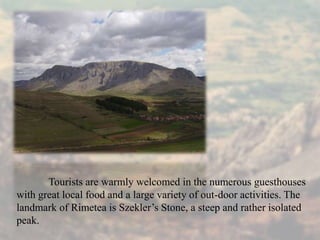
Tourists are warmly welcomed in the numerous guesthouses
with great local food and a large variety of out-door activities. The
landmark of Rimetea is Szekler’s Stone, a steep and rather isolated
peak.
That is because after the initial sunrise, the sun rays are
blocked for a while by the pointy rock and reapers later, this time,
for good. In close vicinity, there are many natural attractions.
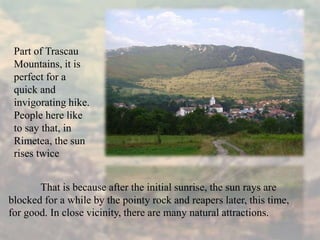
Part of Trascau
Mountains, it is
perfect for a
quick and
invigorating hike.
People here like
to say that, in
Rimetea, the sun
rises twice
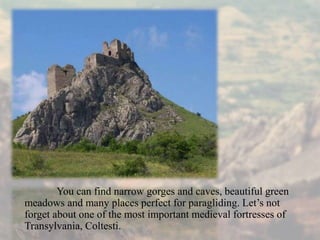
You can find narrow gorges and caves, beautiful green
meadows and many places perfect for paragliding. Let’s not
forget about one of the most important medieval fortresses of
Transylvania, Coltesti.
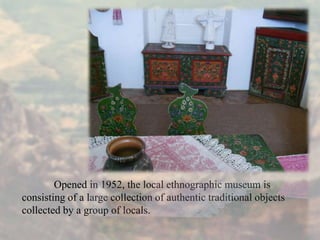
Opened in 1952, the local ethnographic museum is
consisting of a large collection of authentic traditional objects
collected by a group of locals.
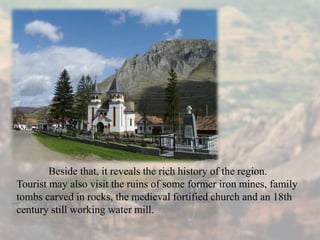
Beside that, it reveals the rich history of the region.
Tourist may also visit the ruins of some former iron mines, family
tombs carved in rocks, the medieval fortified church and an 18th
century still working water mill.
References
http://www.rolandia.eu
http://www.wikipedia.com
http://www.google.ro/imghp for images

Engleza

  • 1.
    Rimetea “Fairy-Tale Village” MOICEANU VALENTIN., Group 8212 Coordinating teacher: Mihai Daniel Frumuselu University of Agronomics Sciences Veterinary Medicine of Bucharest, Romania
  • 2.
    Rimetea is asmall village with white houses and green windows, loved by time and cherished by its inhabitants. Even though is estled against the majestic mountains of Apuseni, it offers an image to treasure all your life. Like a true fairy-tale village, Rimetea is absolutely fascinating. It has an interesting history and an amazing architecture.
  • 3.
    Nowadays is aHungarian village. But over time, this region was also home for Austrians, Germans and Romanians which led to an original cultural blend endowing Rimetea with a seducing charm. Born in the 13th century from the hard work of the miners, Rimetea was settled here to wrest iron from the depths of the mountains.
  • 4.
    Due to itsuniqueness, in 1996, the village was included into a project conducted by Transylvania Trust Foundation. Back then it focused on rehabilitation of the old civil constructions.
  • 5.
    Thus there wererestored 160 traditional houses. The result of the project can now be admired visiting this captivating village. Rimetea was once a nameless settlement, with a poor economy based on agriculture. Now, instead, is an inspiring place.
  • 6.
    The village ishoused by hard working people, proud of their legacy. No wonder they received “Europa Nostra” Silver Medal for their strong involvement into the restoration program. Also, due to this project, the old traditional crafts were revived and many people acquired restoration skills and knowledge.
  • 7.
    Therefore, the local economyregistered a real boost and tourism has become an important source of income for the community.
  • 8.
    Tourists are warmlywelcomed in the numerous guesthouses with great local food and a large variety of out-door activities. The landmark of Rimetea is Szekler’s Stone, a steep and rather isolated peak.
  • 9.
    That is becauseafter the initial sunrise, the sun rays are blocked for a while by the pointy rock and reapers later, this time, for good. In close vicinity, there are many natural attractions. Part of Trascau Mountains, it is perfect for a quick and invigorating hike. People here like to say that, in Rimetea, the sun rises twice
  • 10.
    You can findnarrow gorges and caves, beautiful green meadows and many places perfect for paragliding. Let’s not forget about one of the most important medieval fortresses of Transylvania, Coltesti.
  • 11.
    Opened in 1952,the local ethnographic museum is consisting of a large collection of authentic traditional objects collected by a group of locals.
  • 12.
    Beside that, itreveals the rich history of the region. Tourist may also visit the ruins of some former iron mines, family tombs carved in rocks, the medieval fortified church and an 18th century still working water mill.
  • 13.