Mapping Key Dimensions
of Industrial Relations
Andrea Fromm, Ricardo Rodriguez Contreras,
Christian Welz
Dublin, 21 April 2016
2
Research questions
Key dimensions
Views of stakeholders
IR cluster perspective
Indicators
Next steps / discussion
2
3
4
6
5
1
3
Research questions1
2
3
4
6
5
4
Which elements can be identified as
the
key dimensions of a
comparative framework
for industrial relations?
5
1. Which elements can be identified as the
key dimensions and sub-dimensions of
a comparative framework for industrial
relations?
2. Which indicators and which data
sources can be used for measuring these
dimensions?
6
Key dimensions
1
2
3
4
6
5
7
INDUSTRIAL
DEMOCRACY
JOB &
EMPLOYMENT
QUALITY
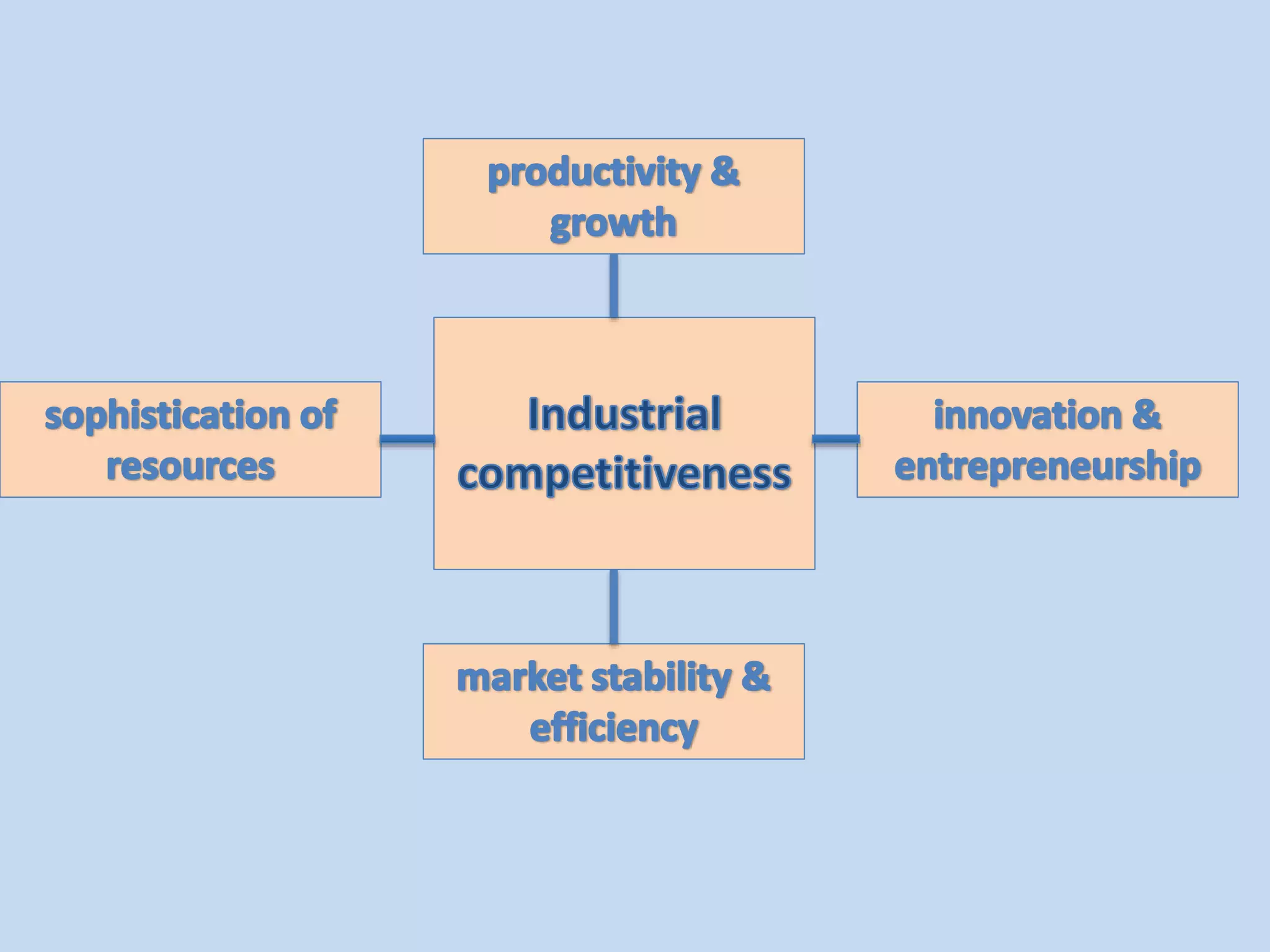
INDUSTRIAL
COMPETITVENESSSOCIAL JUSTICE
13
Views of stakeholders
1
2
3
4
6
5
14
15
16
17
IR cluster perspective
1
2
3
4
6
5
18
North Centre–West South West Centre–East
IR regime Nordic
corporatism
social partnership
polarised
pluralism
liberal
pluralism
transition economies
role of SPs in
public policy
institutionalised
irregular/
politicised
rare/event-driven
irregular/
politicised
role of State limited ‘shadow’ of hierarchy
frequent
intervention
non-intervention
organiser of
transition
power balance labour-oriented balanced alternating employer-oriented state
bargaining style integrative
distributive/
conflict-oriented
acquiescent
employee
representation
union based/
high coverage
dual channel/
high coverage
variable/ mixed
union based/
small coverage
predominant
level of CB
sector
sector/company company
19
Centre-East
South
Centre-West
North
West
20
Pre-testing the four key dimensions
Most predominant level of
acceptance
Industrial democracy
Competitiveness
Job quality
Social Justice
22
Indicators
1
2
3
4
6
5
24
- Relevance: Can the indicator be brought into strong association with one or
several issues of one of the four key dimensions? Will the indicator be able to
detect and display a variation that is important enough to warrant further
investigation? Due to its importance, this criterion was double-weighted.
- Validity & embeddedness: Does the indicator indeed measure what it claims to
measure? Is it not confounded by other factors? I.e. does the measure adequately
represent all facets of a concept? How well is it embedded in the overall concept?
- Availability and accessibility of data: Is time-series data available? In which
intervals? Is data accessible in the first place? The higher the interval, the more
useful the data!
- Comparability: Is aggregated comparable across all EU member states plus
Norway? I.e. are all countries in the EU covered by the indicator?
25
26
Sub-
dimension
Indicator Source
Score (e.g., Spain)
/ Year
Innovation &
Entrepreneur
ship
1. R&D personnel per 1000 labour
force World Bank
2,653
(2013)
2. Number of entreprises newly born in
t-2 having survived to
2,951,815
(2013)
3. R&D Expenditure Eurostat
4. Business Churn rate (birth+death)
Eurostat
entrepreneurship
5. Ease of doing businesses World Bank Group
Flagship Report
74.86
(33 out of 189)
Growth and
Productivity 6. GDP growth per capita Eurostat
23,100p
(2015)
7. Minimum wage increase Eurostat or OECD
8. Unit labour cost Eurostat
-4.2
(2014)
9. Total unemployment rate Eurostat
20.9
(2015Q4)
10. youth unemployment rate Eurostat
Sophisticatio
n of
resources
11. Individuals with at least medium
level of computer/internet skills Eurostat
12. % adults in education/training
Eurostat
13. Infrastructure ranking (survey of
businesses)
Global
Competitiveness
Report (WEF)
Market
Stability
14. Inflation rate Eurostat
15. property rights protection (survey of
businesses)
Global
Competitiveness
Report
16. Incidence of corruption
Transparency
International
27
any proposals for other indicators ???
-
-
-
-
-
-
-
28
Next steps / discussion
1
2
3
4
6
5
29
CAR
•Apply and test
selected indicators
•Assess relevance of
indicators
•Qualitative
contextualisation of
indicators
Overview report
•summarise findings
•visualize results
•discussion on
potential composite
index on IR
performance
Experts meeting
•discussion and
validation of results
Final report
•consolidated report
•... to be continued in
2016:
•EF working life
country profiles
•non-EU Member
States

Mapping key dimensions of industrial relations

  • 1.
    Mapping Key Dimensions ofIndustrial Relations Andrea Fromm, Ricardo Rodriguez Contreras, Christian Welz Dublin, 21 April 2016
  • 2.
    2 Research questions Key dimensions Viewsof stakeholders IR cluster perspective Indicators Next steps / discussion 2 3 4 6 5 1
  • 3.
  • 4.
    4 Which elements canbe identified as the key dimensions of a comparative framework for industrial relations?
  • 5.
    5 1. Which elementscan be identified as the key dimensions and sub-dimensions of a comparative framework for industrial relations? 2. Which indicators and which data sources can be used for measuring these dimensions?
  • 6.
  • 7.
  • 12.
  • 13.
  • 14.
  • 15.
  • 16.
  • 17.
  • 18.
    18 North Centre–West SouthWest Centre–East IR regime Nordic corporatism social partnership polarised pluralism liberal pluralism transition economies role of SPs in public policy institutionalised irregular/ politicised rare/event-driven irregular/ politicised role of State limited ‘shadow’ of hierarchy frequent intervention non-intervention organiser of transition power balance labour-oriented balanced alternating employer-oriented state bargaining style integrative distributive/ conflict-oriented acquiescent employee representation union based/ high coverage dual channel/ high coverage variable/ mixed union based/ small coverage predominant level of CB sector sector/company company
  • 19.
  • 20.
  • 21.
    Pre-testing the fourkey dimensions Most predominant level of acceptance Industrial democracy Competitiveness Job quality Social Justice
  • 22.
  • 24.
    24 - Relevance: Canthe indicator be brought into strong association with one or several issues of one of the four key dimensions? Will the indicator be able to detect and display a variation that is important enough to warrant further investigation? Due to its importance, this criterion was double-weighted. - Validity & embeddedness: Does the indicator indeed measure what it claims to measure? Is it not confounded by other factors? I.e. does the measure adequately represent all facets of a concept? How well is it embedded in the overall concept? - Availability and accessibility of data: Is time-series data available? In which intervals? Is data accessible in the first place? The higher the interval, the more useful the data! - Comparability: Is aggregated comparable across all EU member states plus Norway? I.e. are all countries in the EU covered by the indicator?
  • 25.
  • 26.
    26 Sub- dimension Indicator Source Score (e.g.,Spain) / Year Innovation & Entrepreneur ship 1. R&D personnel per 1000 labour force World Bank 2,653 (2013) 2. Number of entreprises newly born in t-2 having survived to 2,951,815 (2013) 3. R&D Expenditure Eurostat 4. Business Churn rate (birth+death) Eurostat entrepreneurship 5. Ease of doing businesses World Bank Group Flagship Report 74.86 (33 out of 189) Growth and Productivity 6. GDP growth per capita Eurostat 23,100p (2015) 7. Minimum wage increase Eurostat or OECD 8. Unit labour cost Eurostat -4.2 (2014) 9. Total unemployment rate Eurostat 20.9 (2015Q4) 10. youth unemployment rate Eurostat Sophisticatio n of resources 11. Individuals with at least medium level of computer/internet skills Eurostat 12. % adults in education/training Eurostat 13. Infrastructure ranking (survey of businesses) Global Competitiveness Report (WEF) Market Stability 14. Inflation rate Eurostat 15. property rights protection (survey of businesses) Global Competitiveness Report 16. Incidence of corruption Transparency International
  • 27.
    27 any proposals forother indicators ??? - - - - - - -
  • 28.
    28 Next steps /discussion 1 2 3 4 6 5
  • 29.
    29 CAR •Apply and test selectedindicators •Assess relevance of indicators •Qualitative contextualisation of indicators Overview report •summarise findings •visualize results •discussion on potential composite index on IR performance Experts meeting •discussion and validation of results Final report •consolidated report •... to be continued in 2016: •EF working life country profiles •non-EU Member States