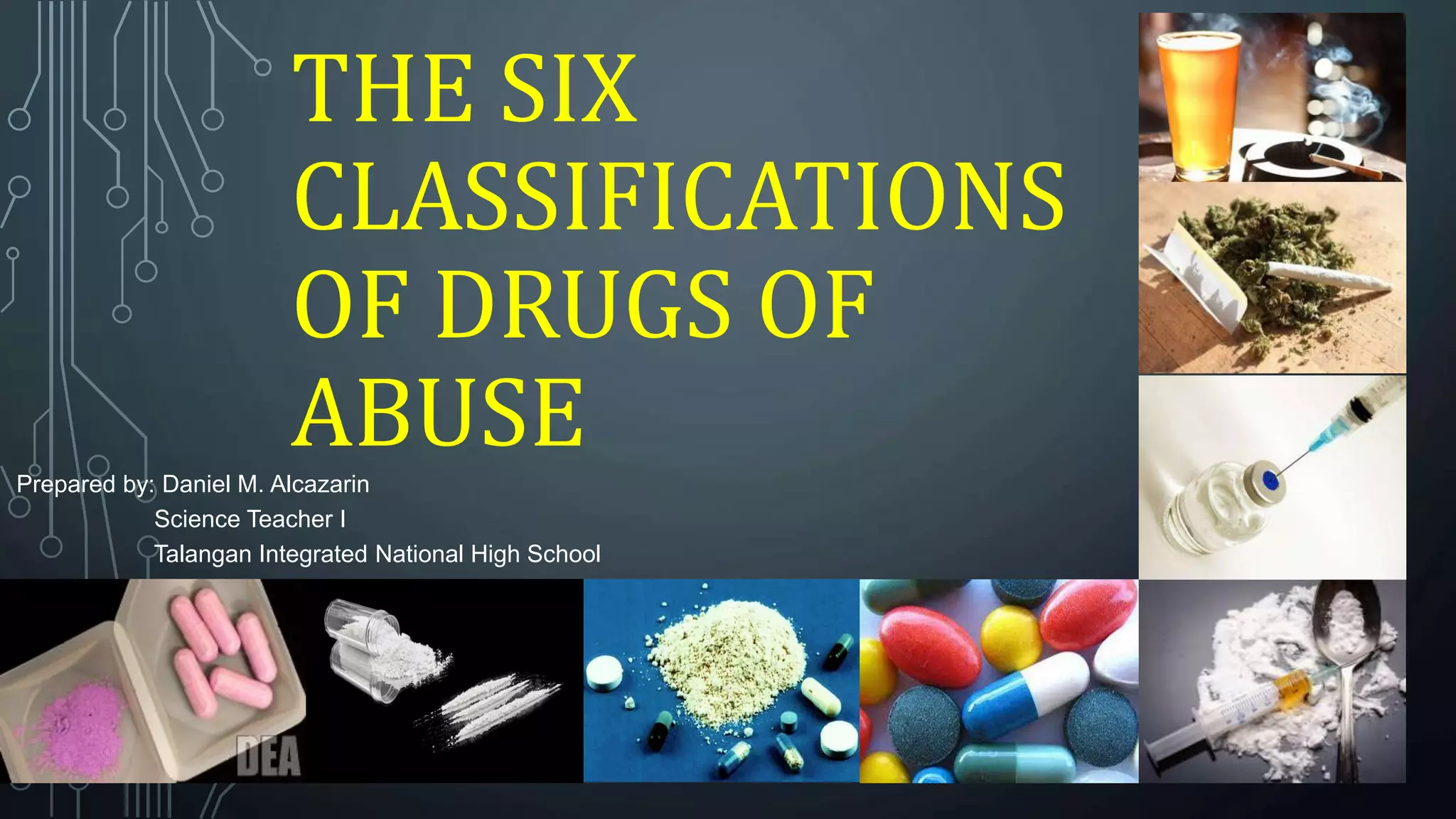
THE SIX
CLASSIFICATIONS
OF DRUGS OF
ABUSEPrepared by: Daniel M. Alcazarin
Science Teacher I
Talangan Integrated National High School
A drug, is any substance
that, when absorbed into
the body of a living
organism, alters normal
bodily function. Drugs are
chemicals that change the
way a person's body works
by altering emotions and
thoughts.
DRUGS –
WHAT THEY ARE AND WHAT THEY DO ?
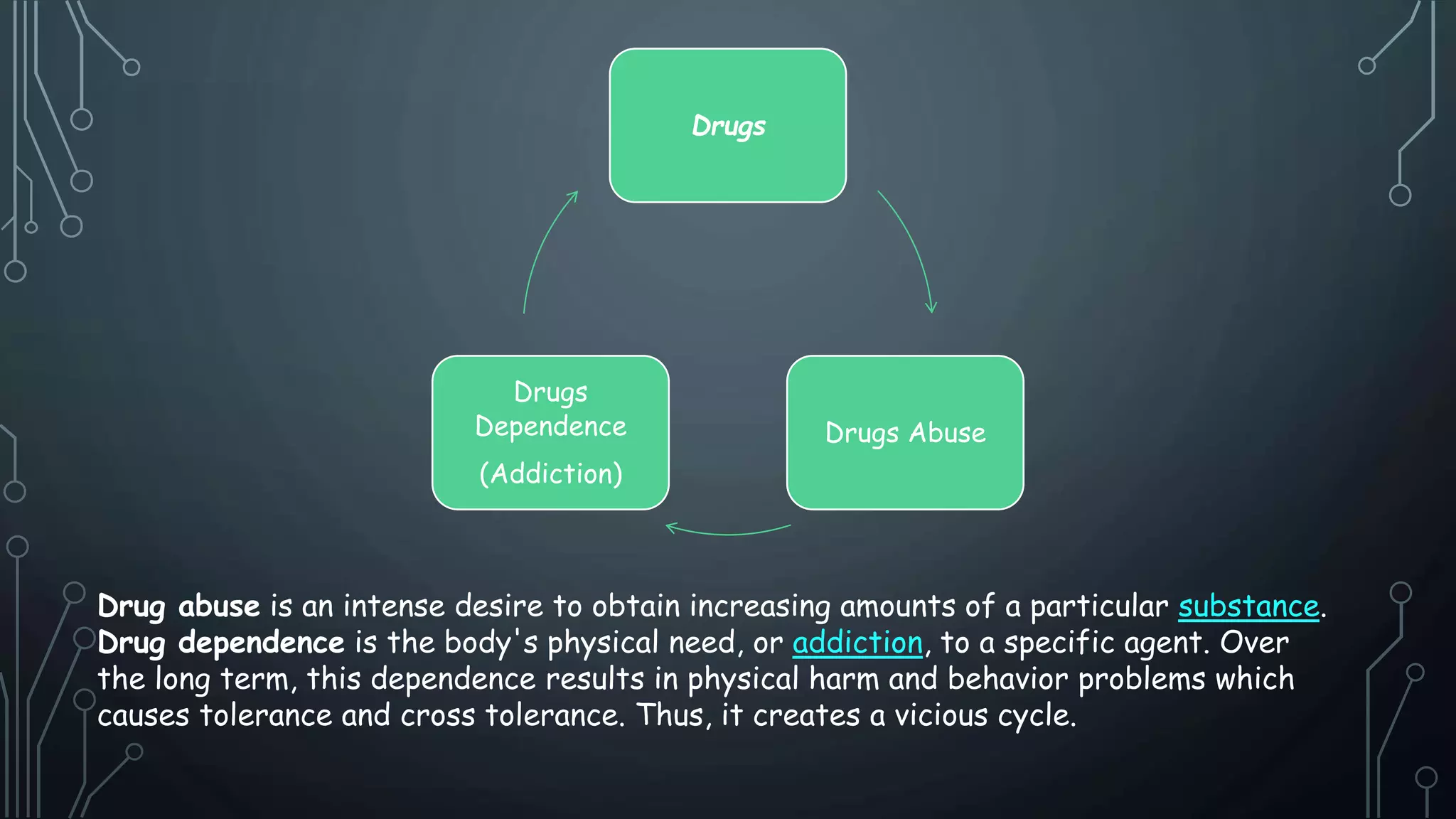
Drugs
Drugs Abuse
Drugs
Dependence
(Addiction)
Drug abuse is an intense desire to obtain increasing amounts of a particular substance.
Drug dependence is the body's physical need, or addiction, to a specific agent. Over
the long term, this dependence results in physical harm and behavior problems which
causes tolerance and cross tolerance. Thus, it creates a vicious cycle.
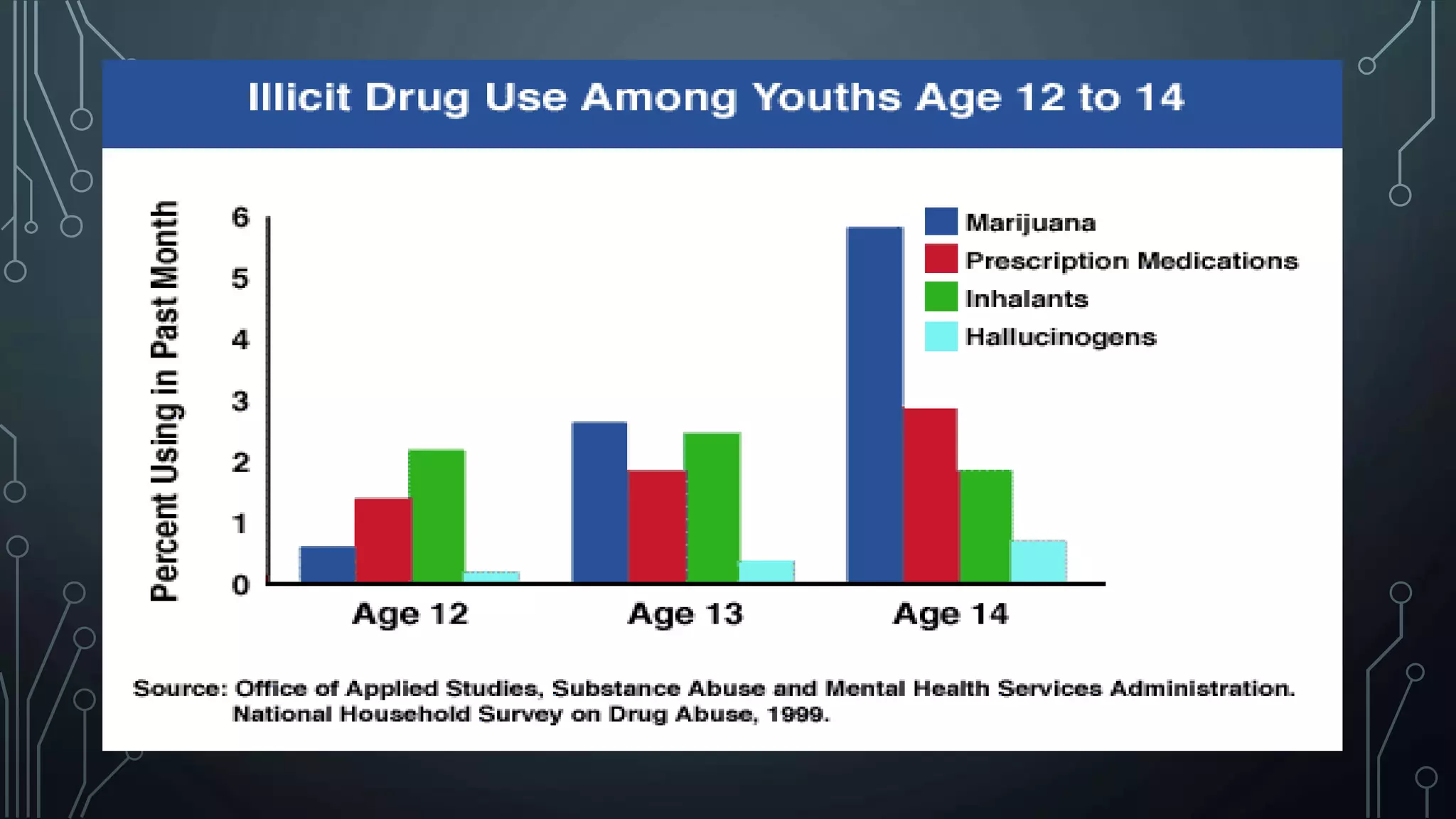
WHY DO SO MANY TEENAGERS START DOWN THIS
POTENTIALLY DANGEROUS PATH ?
THE SIX
CLASSIFICATIONS
OF DRUGS OF
ABUSE
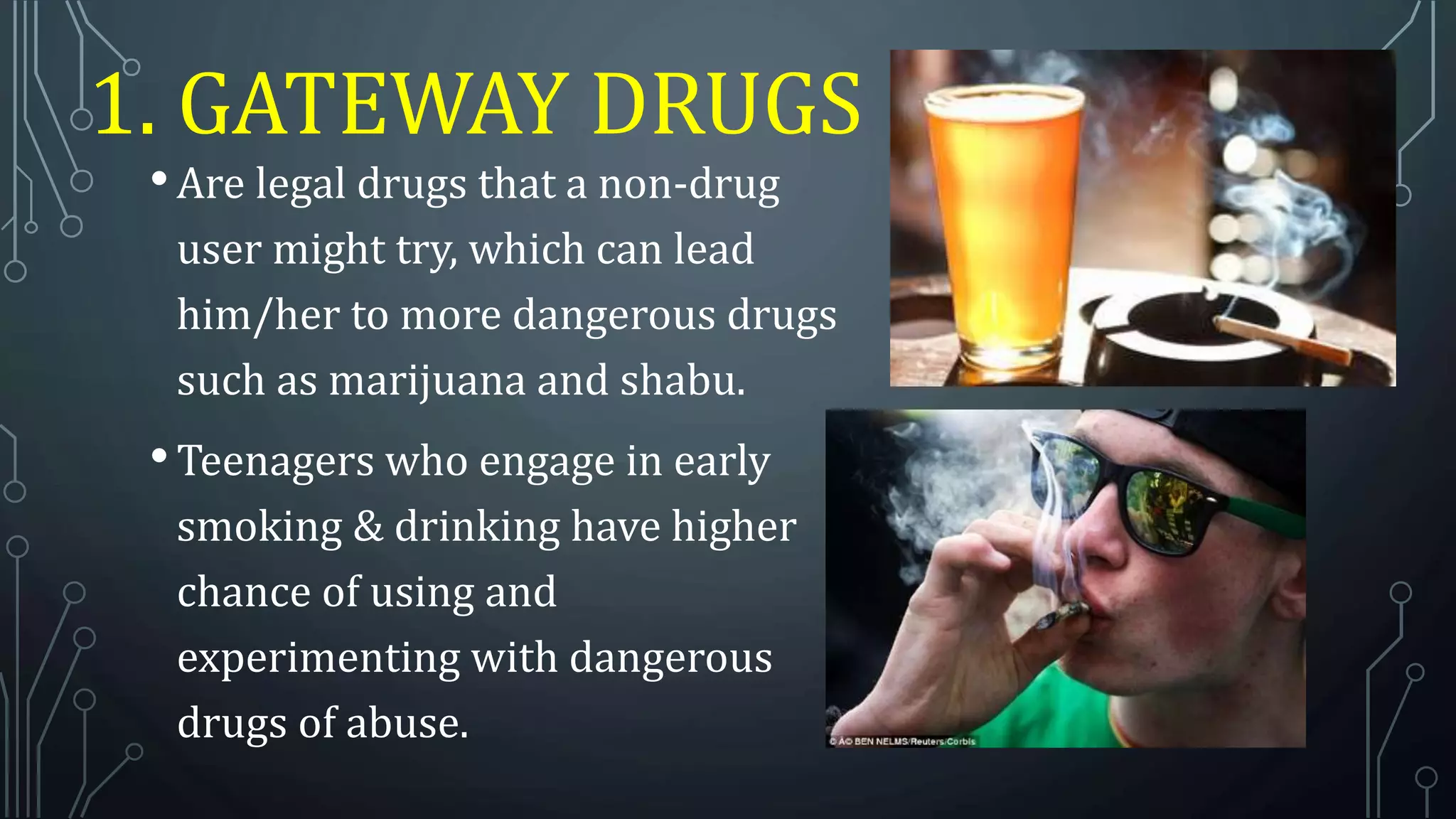
1. GATEWAY DRUGS
•Are legal drugs that a non-drug
user might try, which can lead
him/her to more dangerous drugs
such as marijuana and shabu.
•Teenagers who engage in early
smoking & drinking have higher
chance of using and
experimenting with dangerous
drugs of abuse.
2. DEPRESSANT DRUGS
• Slows down a persons central nervous
system (brain, spinal cord, nerves).
• Doctors commonly prescribe
depressants to help people who have
anger management issues, stressed or
tensed.
• Depressants relax muscles and nerves.
• These drugs make patients feel sleepy
and light headed.
Examples are: alcohol,
barbiturates & tranquilizers.
A barbiturate is a drug that acts
as a central nervous system
depressant, and can therefore
produce a wide spectrum of
effects, from mild sedation to total
anesthesia. They are also effective
as anxiolytics, hypnotics, and
anticonvulsants.
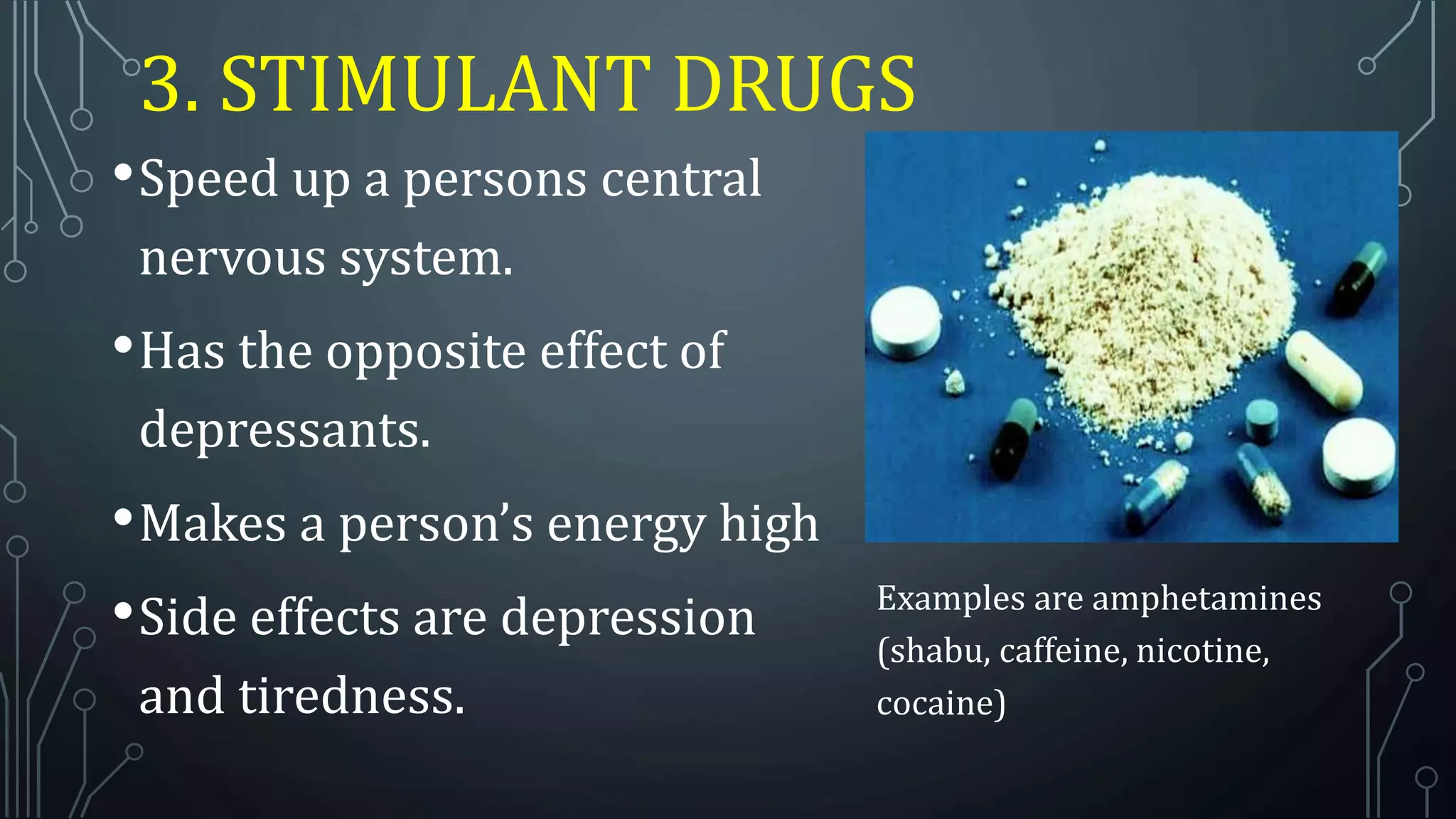
3. STIMULANT DRUGS
•Speed up a persons central
nervous system.
•Has the opposite effect of
depressants.
•Makes a person’s energy high
•Side effects are depression
and tiredness.
Examples are amphetamines
(shabu, caffeine, nicotine,
cocaine)
•Amphetamine is a potent
central nervous system
stimulant that is used in the
treatment of Attention Deficit
Disorder (ADD), narcolepsy,
and obesity.
•Methamphetamine
(SHABU) is a strong central
nervous system stimulant
that is mainly used as a
recreational drug and less
commonly as a treatment for
attention deficit hyperactivity
disorder and obesity.
•Caffeine is a central nervous
system stimulant of the
methylxanthine class. It is the
world's most widely
consumed psychoactive
drug. Unlike many other
psychoactive substances, it
is legal and unregulated in
nearly all parts of the world.
•Nicotine is a potent
parasympathomimetic
stimulant and an alkaloid
found in the nightshade
family of plants.
•Cocaine, also known as
coke, is a strong stimulant
mostly used as a
recreational drug. It is
commonly snorted, inhaled
as smoke, or as a solution
injected into a vein.
4. NARCOTICS
•Are drugs which relieve pain
and induce sleepiness.
•These are prescribed to
patients with mental disorders
or with patients dealing with
severe pain like cancer.
•These drugs are illicit and
dangerous if taken.
• Examples are cocaine, heroin
and marijuana.
•Heroin, also known as
morphine among other
names, is an opioid most
commonly used as a
recreational drug for its
euphoric effects. Medically it
is used in several countries to
relieve pain.
•Marijuana refers to the dried
leaves, flowers, stems, and seeds
from the Cannabis
sativa or Cannabis indicaplant.
The plant contains the mind-
altering chemical THC and other
similar compounds. It is also
called weed, herb, pot, grass, bud,
ganja, Mary Jane, and a vast
number of other slang terms.
5. HALLUCINOGENS
•Drugs which distort reality
and facts.
•Affects all senses; makes a
user feel, hear, see things that
don’t exist in the time being.
•Came from the word
hallucinate (to perceive
illusions)
• Examples are: Lysergic Acid
diethylamide, psilocybin (obtained
from mushrooms and mescaline
•Lysergic acid diethylamide,
also known as acid, is a
psychedelic drug known for
its psychological effects.
•Psilocybin mushrooms, also
known as psychedelic
mushrooms, are a
polyphyletic group of
mushrooms that contain the
psychedelic compounds
psilocybin, psilocin and
baeocystin. Common
colloquial terms include
magic mushrooms and
shrooms.
6. INHALANTS
• Found in ordinary household
chemical products and anesthetics.
• Readily available and accessible to
young children
• Inhalant toxins are similar to those
of alcohol, the only difference is
the foul smell.
• Abuse can lead to delusions, brain
damage, liver damage, comatose
and death.
• Examples are acetone, rugby
(solvent), spray paints, cleaning
fluids and air conditioner fluids
(Freon).
• Examples are acetone, rugby
(solvent), spray paints, cleaning
fluids and air conditioner fluids
(Freon).
6 CLASSIFICATIONS OF DRUGS
ARE:
1.Gateway Drugs
2.Depressant Drugs
3.Stimulant Drugs
4.Narcotics
5.Hallucinogens
6.Inhalants
GUIDE QUESTIONS 
1. Why is it important to know the
classifications of drugs?
2. Do you think knowing the classification
of drugs will help us someday in our
lives?
DEPARTMENT OF EDUCATION
REGION IV – A CALABARZON
DIVISION OF LAGUNA
DISTRICT OF NAGCARLAN-RIZAL
TALANGAN INTEGRATED
NATIONAL HIGH SCHOOL
Talangan, Nagcarlan, Laguna
Daniel M. Alcazarin
MAPEH/ Science Teacher I
For more inquiries, kindly message me in any of
my social media accts and follow me  :
FB acct: “Daniel Alcazarin”
IG acct. “@danielalcazarin”
Twitter acct: “@DanielAlcazarin”
 Let me know if you downloaded this presentation so I’ll
be more encouraged to upload more. Thank you!

MAPEH 9 - Health - Drugs of Abuse (The Six Classifications of Drugs of Abuse) - Second Quarter

  • 1.
    THE SIX CLASSIFICATIONS OF DRUGSOF ABUSEPrepared by: Daniel M. Alcazarin Science Teacher I Talangan Integrated National High School
  • 2.
    A drug, isany substance that, when absorbed into the body of a living organism, alters normal bodily function. Drugs are chemicals that change the way a person's body works by altering emotions and thoughts. DRUGS – WHAT THEY ARE AND WHAT THEY DO ?
  • 3.
    Drugs Drugs Abuse Drugs Dependence (Addiction) Drug abuseis an intense desire to obtain increasing amounts of a particular substance. Drug dependence is the body's physical need, or addiction, to a specific agent. Over the long term, this dependence results in physical harm and behavior problems which causes tolerance and cross tolerance. Thus, it creates a vicious cycle.
  • 6.
    WHY DO SOMANY TEENAGERS START DOWN THIS POTENTIALLY DANGEROUS PATH ?
  • 7.
  • 8.
    1. GATEWAY DRUGS •Arelegal drugs that a non-drug user might try, which can lead him/her to more dangerous drugs such as marijuana and shabu. •Teenagers who engage in early smoking & drinking have higher chance of using and experimenting with dangerous drugs of abuse.
  • 10.
    2. DEPRESSANT DRUGS •Slows down a persons central nervous system (brain, spinal cord, nerves). • Doctors commonly prescribe depressants to help people who have anger management issues, stressed or tensed. • Depressants relax muscles and nerves. • These drugs make patients feel sleepy and light headed. Examples are: alcohol, barbiturates & tranquilizers.
  • 11.
    A barbiturate isa drug that acts as a central nervous system depressant, and can therefore produce a wide spectrum of effects, from mild sedation to total anesthesia. They are also effective as anxiolytics, hypnotics, and anticonvulsants.
  • 12.
    3. STIMULANT DRUGS •Speedup a persons central nervous system. •Has the opposite effect of depressants. •Makes a person’s energy high •Side effects are depression and tiredness. Examples are amphetamines (shabu, caffeine, nicotine, cocaine)
  • 13.
    •Amphetamine is apotent central nervous system stimulant that is used in the treatment of Attention Deficit Disorder (ADD), narcolepsy, and obesity.
  • 14.
    •Methamphetamine (SHABU) is astrong central nervous system stimulant that is mainly used as a recreational drug and less commonly as a treatment for attention deficit hyperactivity disorder and obesity.
  • 15.
    •Caffeine is acentral nervous system stimulant of the methylxanthine class. It is the world's most widely consumed psychoactive drug. Unlike many other psychoactive substances, it is legal and unregulated in nearly all parts of the world.
  • 16.
    •Nicotine is apotent parasympathomimetic stimulant and an alkaloid found in the nightshade family of plants.
  • 17.
    •Cocaine, also knownas coke, is a strong stimulant mostly used as a recreational drug. It is commonly snorted, inhaled as smoke, or as a solution injected into a vein.
  • 18.
    4. NARCOTICS •Are drugswhich relieve pain and induce sleepiness. •These are prescribed to patients with mental disorders or with patients dealing with severe pain like cancer. •These drugs are illicit and dangerous if taken. • Examples are cocaine, heroin and marijuana.
  • 19.
    •Heroin, also knownas morphine among other names, is an opioid most commonly used as a recreational drug for its euphoric effects. Medically it is used in several countries to relieve pain.
  • 20.
    •Marijuana refers tothe dried leaves, flowers, stems, and seeds from the Cannabis sativa or Cannabis indicaplant. The plant contains the mind- altering chemical THC and other similar compounds. It is also called weed, herb, pot, grass, bud, ganja, Mary Jane, and a vast number of other slang terms.
  • 21.
    5. HALLUCINOGENS •Drugs whichdistort reality and facts. •Affects all senses; makes a user feel, hear, see things that don’t exist in the time being. •Came from the word hallucinate (to perceive illusions) • Examples are: Lysergic Acid diethylamide, psilocybin (obtained from mushrooms and mescaline
  • 22.
    •Lysergic acid diethylamide, alsoknown as acid, is a psychedelic drug known for its psychological effects.
  • 23.
    •Psilocybin mushrooms, also knownas psychedelic mushrooms, are a polyphyletic group of mushrooms that contain the psychedelic compounds psilocybin, psilocin and baeocystin. Common colloquial terms include magic mushrooms and shrooms.
  • 24.
    6. INHALANTS • Foundin ordinary household chemical products and anesthetics. • Readily available and accessible to young children • Inhalant toxins are similar to those of alcohol, the only difference is the foul smell. • Abuse can lead to delusions, brain damage, liver damage, comatose and death. • Examples are acetone, rugby (solvent), spray paints, cleaning fluids and air conditioner fluids (Freon).
  • 25.
    • Examples areacetone, rugby (solvent), spray paints, cleaning fluids and air conditioner fluids (Freon).
  • 26.
    6 CLASSIFICATIONS OFDRUGS ARE: 1.Gateway Drugs 2.Depressant Drugs 3.Stimulant Drugs 4.Narcotics 5.Hallucinogens 6.Inhalants
  • 27.
    GUIDE QUESTIONS  1.Why is it important to know the classifications of drugs? 2. Do you think knowing the classification of drugs will help us someday in our lives?
  • 28.
    DEPARTMENT OF EDUCATION REGIONIV – A CALABARZON DIVISION OF LAGUNA DISTRICT OF NAGCARLAN-RIZAL TALANGAN INTEGRATED NATIONAL HIGH SCHOOL Talangan, Nagcarlan, Laguna Daniel M. Alcazarin MAPEH/ Science Teacher I For more inquiries, kindly message me in any of my social media accts and follow me  : FB acct: “Daniel Alcazarin” IG acct. “@danielalcazarin” Twitter acct: “@DanielAlcazarin”  Let me know if you downloaded this presentation so I’ll be more encouraged to upload more. Thank you!