EDUCATION AND
MEXICO-UNITED STATES
IMMIGRATION:
EDUCATIONAL ACCESS
FOR ALL?
Heather Mangione, Clark University
Thesis & Research Statement
   There are a number of institutional barriers in
    place within both the Mexico & United States
    education systems that make it nearly
    impossible for Mexican children to succeed

   Both the United States and Mexico experience
    a negative rate of return from these children as
    they grow into labour-able adults.
Mexico & The Mexican Education
System
   Mexico is the 5th largest country in the Americas
    and the 13th largest nation in the world.

   The current population is estimated to be 112
    million people (2011).

   97% literacy rate for children under age 14

    91% literacy rate for adults over 15
    (www.unesco.org)
Indigenous & Migrant Education in
Mexico
   The National Council for Life and Work (Consejo Nacional
    de Educación para la Vida y el Trabajo, CONEVyT)
     Establish community plazas throughout the country
      where adults participate in continuing education
      certification programs and literacy/numeracy programs
      for free (Flores-Moreno, 2008).

       A significant percent of the country’s population did not
        receive an education past grade 9 (Secundaria)

       Many citizens are migrant farm workers and are not only
        illiterate but trained only in agricultural work

       CONEVyT strives to provide higher-level technological
        computer training and skills to adults all over Mexico and
        does target adults in rural areas.
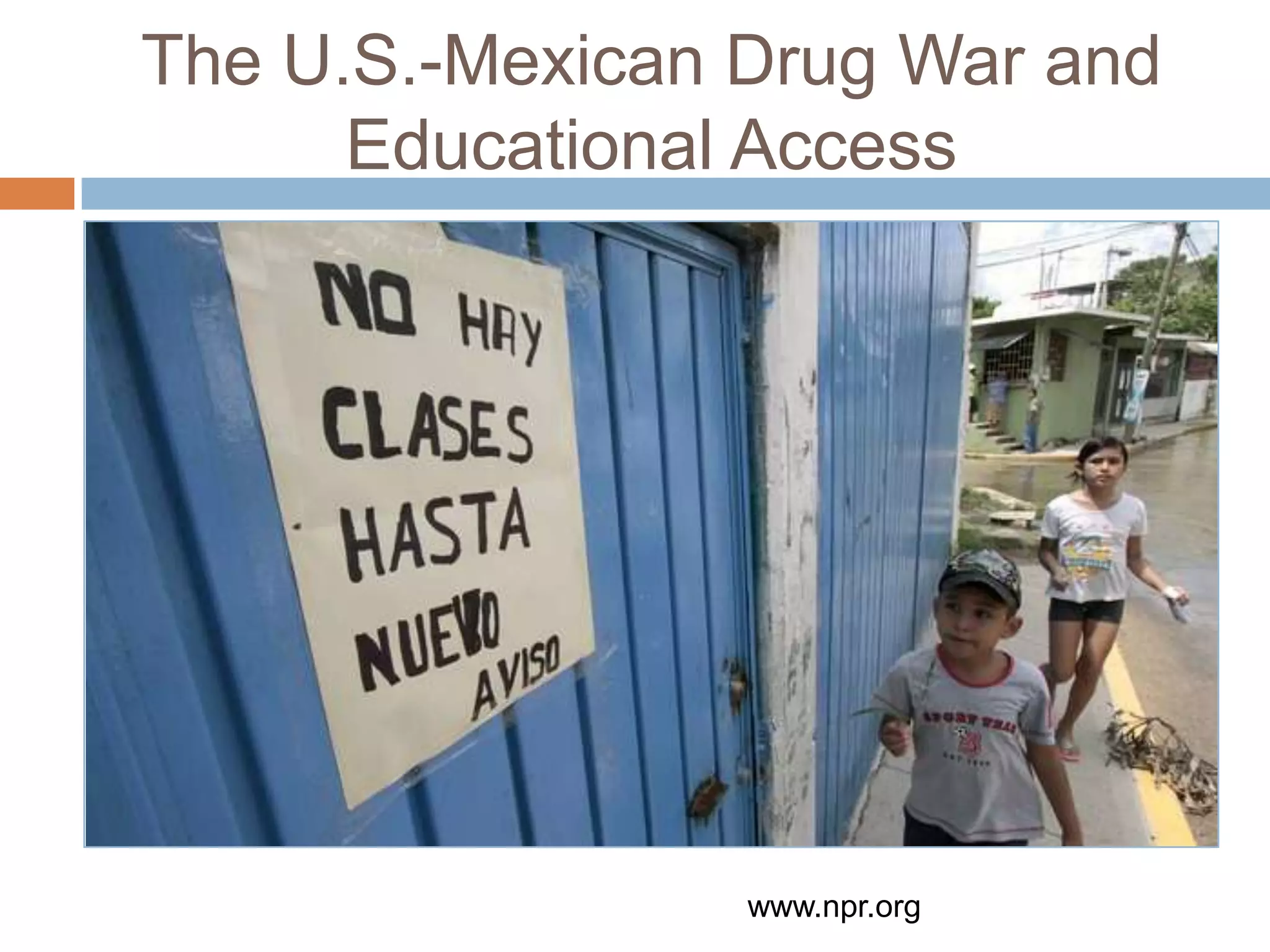
The U.S.-Mexican Drug War and
      Educational Access


                 www.npr.org
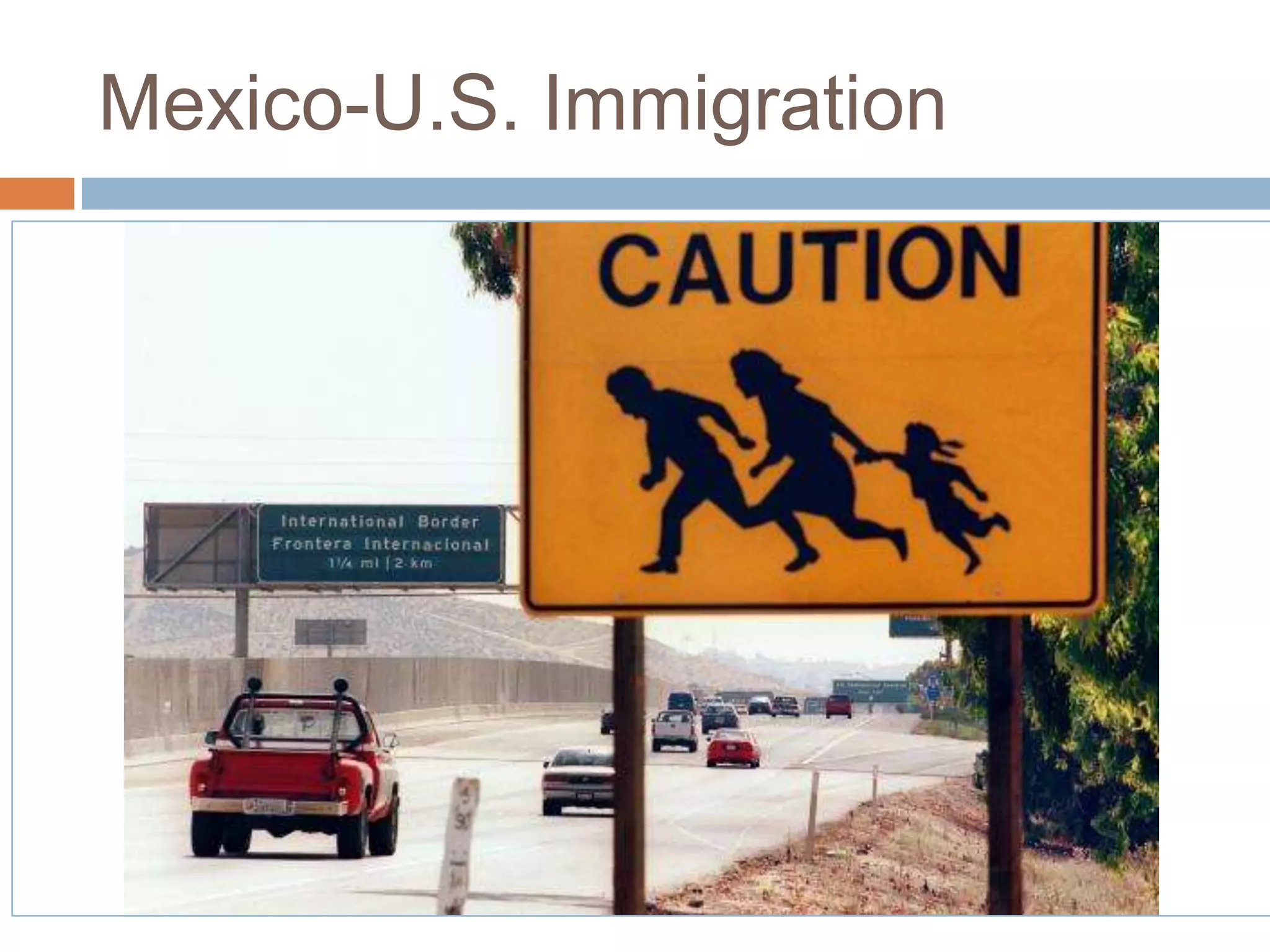
Mexico-U.S. Immigration
U.S.-Mexico Immigration:
Educational Access for Children
   Undocumented status issues
     Plyler vs. doe (1982): Undocumented
      children can attend public school
      through high school

     Mixed-status   families live in fear

     Transnational   parenting
U.S.-Mexico Immigration:
Educational Access for Children
(cont’d)
   Institutionalized
    racist sentiment in
    schools

   Anti-immigrant
    sentiment

   Deficit model
Young Adults, Immigration &
Educational Access
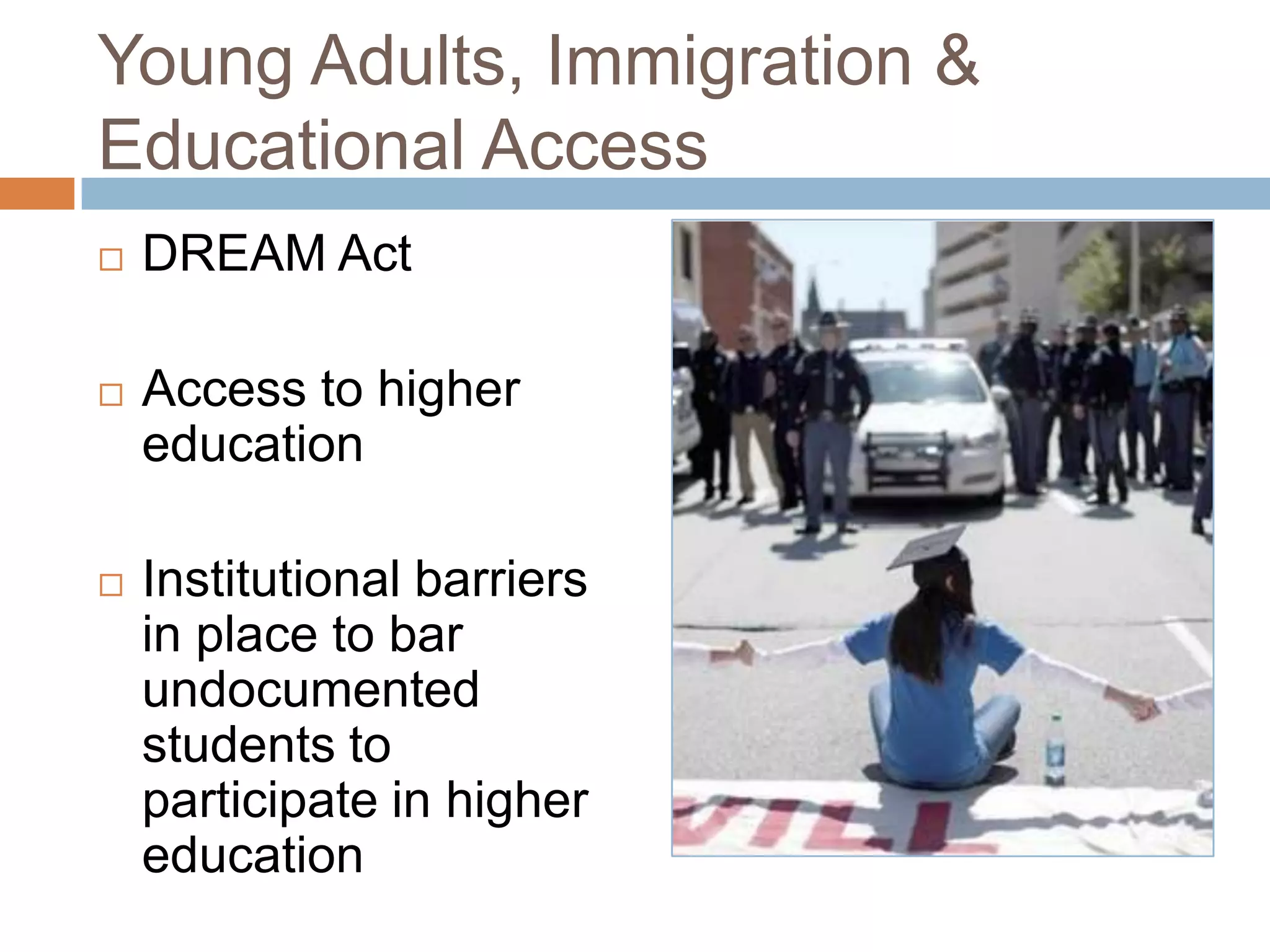
   DREAM Act

   Access to higher
    education

   Institutional barriers
    in place to bar
    undocumented
    students to
    participate in higher
    education
Education For All Goals (2000)
   1. Expand early childhood care and education
   2. Provide free and compulsory primary
    education to all
   3. Promote learning and life skills for young
    people and adults
   4. Increase adult literacy by 50 percent
   5. Achieve gender parity by 2005, gender
    equality by 2015
   6. Improve the quality of education
Immigration-based NGO in the
U.S.


             • Immigrant Child
               Advocacy

             • Home Studies Project

             • Deportation Issues
               Counseling & Safety
               Protection
Immigration-based Non-Profit
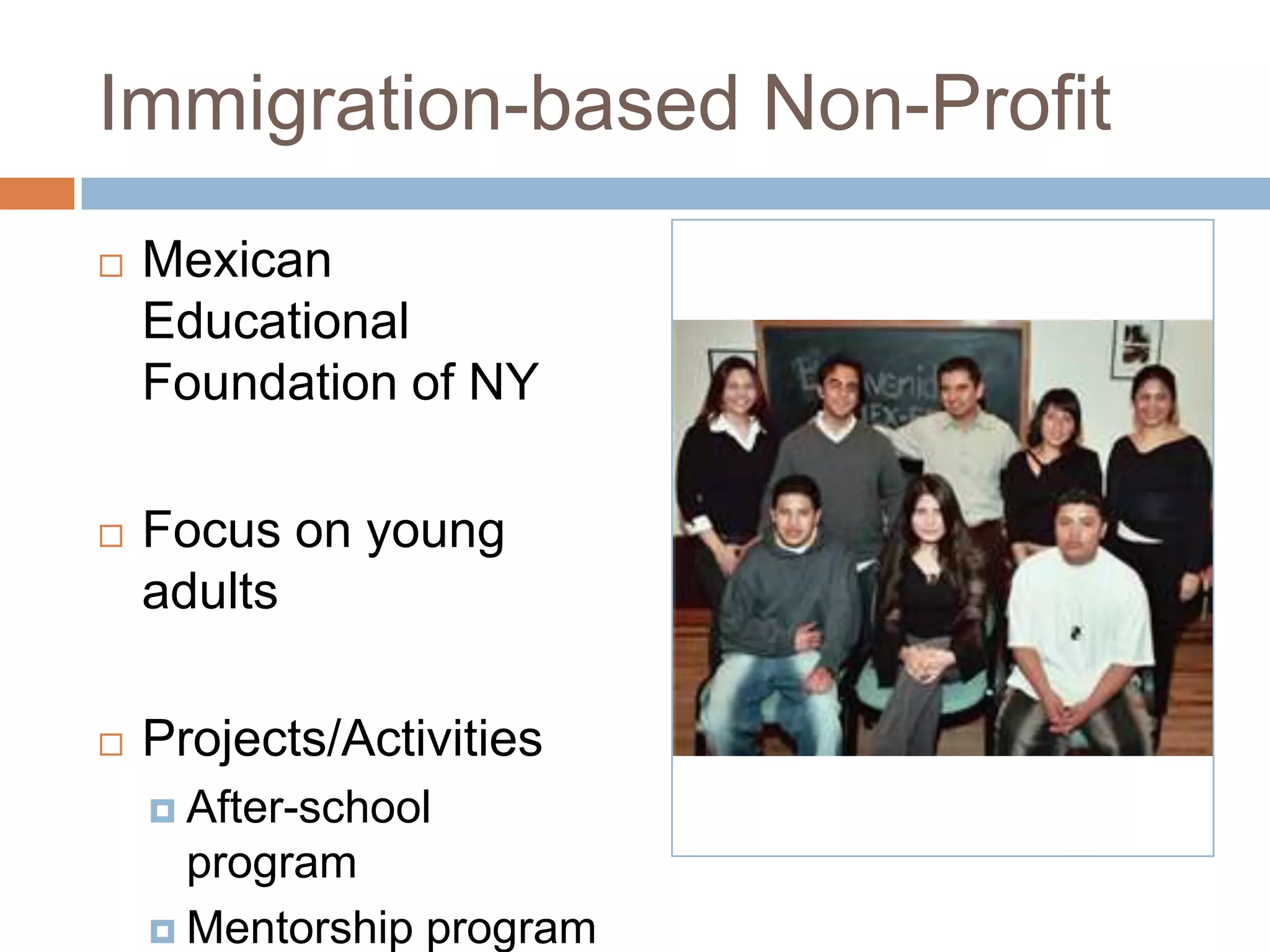
   Mexican
    Educational
    Foundation of NY

   Focus on young
    adults

   Projects/Activities
     After-school
      program
     Mentorship program

Mangione Ed & Dev Presentation

  • 1.
    EDUCATION AND MEXICO-UNITED STATES IMMIGRATION: EDUCATIONALACCESS FOR ALL? Heather Mangione, Clark University
  • 2.
    Thesis & ResearchStatement  There are a number of institutional barriers in place within both the Mexico & United States education systems that make it nearly impossible for Mexican children to succeed  Both the United States and Mexico experience a negative rate of return from these children as they grow into labour-able adults.
  • 3.
    Mexico & TheMexican Education System  Mexico is the 5th largest country in the Americas and the 13th largest nation in the world.  The current population is estimated to be 112 million people (2011).  97% literacy rate for children under age 14  91% literacy rate for adults over 15 (www.unesco.org)
  • 4.
    Indigenous & MigrantEducation in Mexico  The National Council for Life and Work (Consejo Nacional de Educación para la Vida y el Trabajo, CONEVyT)  Establish community plazas throughout the country where adults participate in continuing education certification programs and literacy/numeracy programs for free (Flores-Moreno, 2008).  A significant percent of the country’s population did not receive an education past grade 9 (Secundaria)  Many citizens are migrant farm workers and are not only illiterate but trained only in agricultural work  CONEVyT strives to provide higher-level technological computer training and skills to adults all over Mexico and does target adults in rural areas.
  • 5.
    The U.S.-Mexican DrugWar and Educational Access www.npr.org
  • 6.
  • 7.
    U.S.-Mexico Immigration: Educational Accessfor Children  Undocumented status issues  Plyler vs. doe (1982): Undocumented children can attend public school through high school  Mixed-status families live in fear  Transnational parenting
  • 8.
    U.S.-Mexico Immigration: Educational Accessfor Children (cont’d)  Institutionalized racist sentiment in schools  Anti-immigrant sentiment  Deficit model
  • 9.
    Young Adults, Immigration& Educational Access  DREAM Act  Access to higher education  Institutional barriers in place to bar undocumented students to participate in higher education
  • 10.
    Education For AllGoals (2000)  1. Expand early childhood care and education  2. Provide free and compulsory primary education to all  3. Promote learning and life skills for young people and adults  4. Increase adult literacy by 50 percent  5. Achieve gender parity by 2005, gender equality by 2015  6. Improve the quality of education
  • 11.
    Immigration-based NGO inthe U.S. • Immigrant Child Advocacy • Home Studies Project • Deportation Issues Counseling & Safety Protection
  • 12.
    Immigration-based Non-Profit  Mexican Educational Foundation of NY  Focus on young adults  Projects/Activities  After-school program  Mentorship program