Managing Change: Strategiesfor
Success
A Professional Discussion on
Adapting and Leading Change
Presented by: [Your Name]
2.
What is ChangeManagement?
• Change management is a structured approach
to transitioning individuals, teams, and
organizations from a current state to a desired
future state.
Discussion: Why do people resist change, even when it is beneficial?
3.
The Importance ofChange
Management
• Effective change management minimizes
disruptions, improves adaptability, and
ensures long-term success.
Discussion: What are the risks of poor change management in organizations?
4.
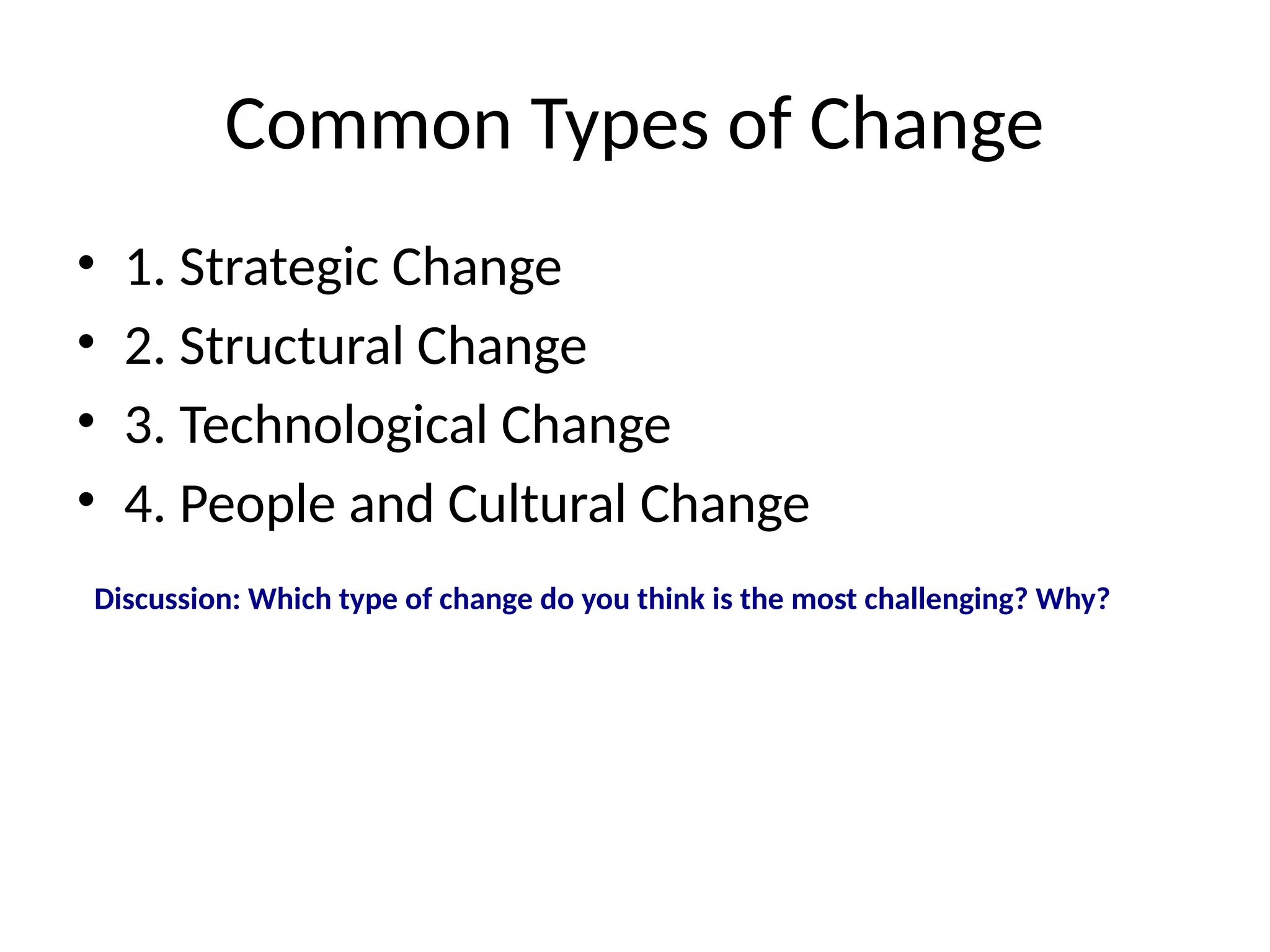
Common Types ofChange
• 1. Strategic Change
• 2. Structural Change
• 3. Technological Change
• 4. People and Cultural Change
Discussion: Which type of change do you think is the most challenging? Why?
5.
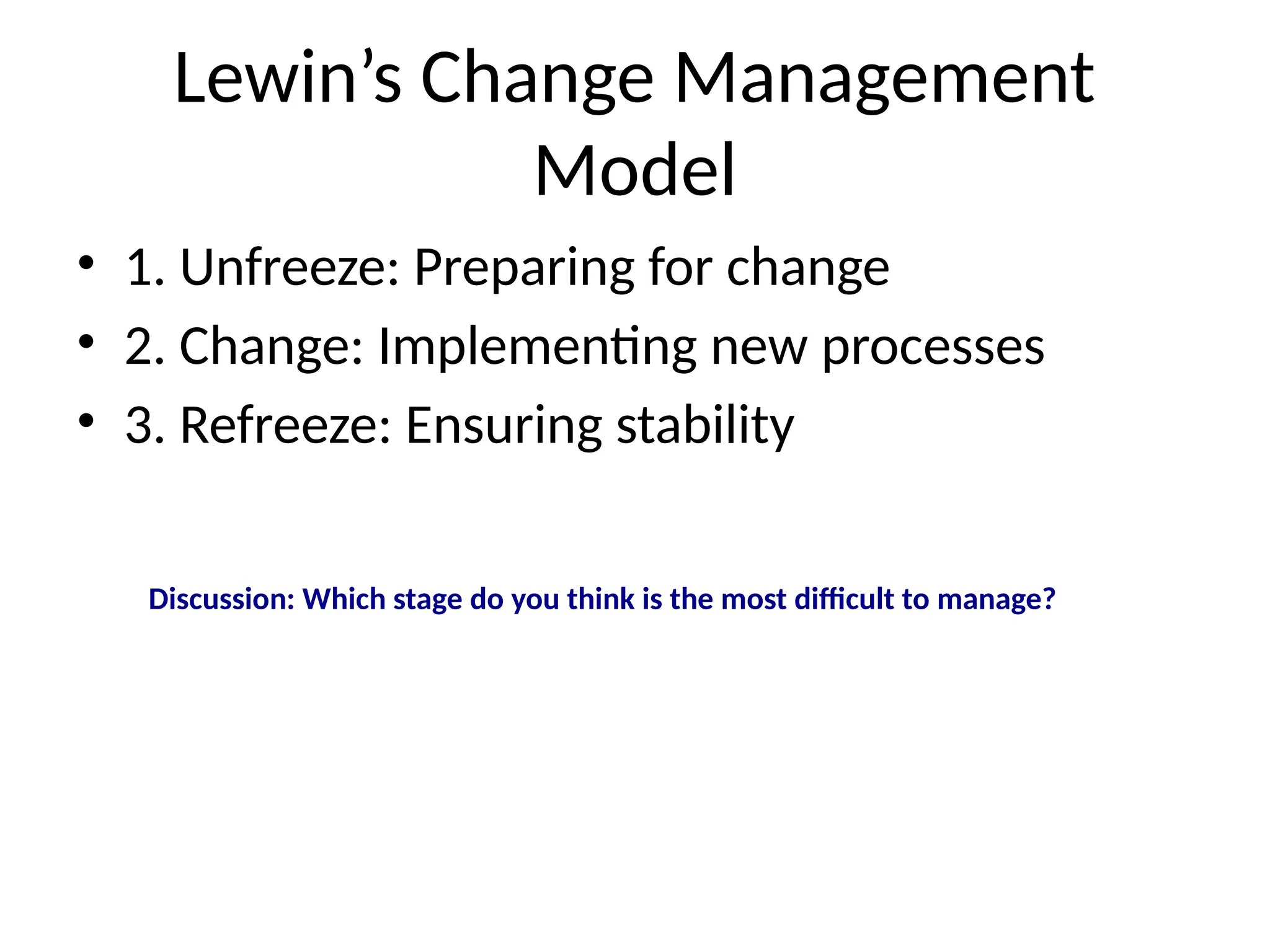
Lewin’s Change Management
Model
•1. Unfreeze: Preparing for change
• 2. Change: Implementing new processes
• 3. Refreeze: Ensuring stability
Discussion: Which stage do you think is the most difficult to manage?
6.
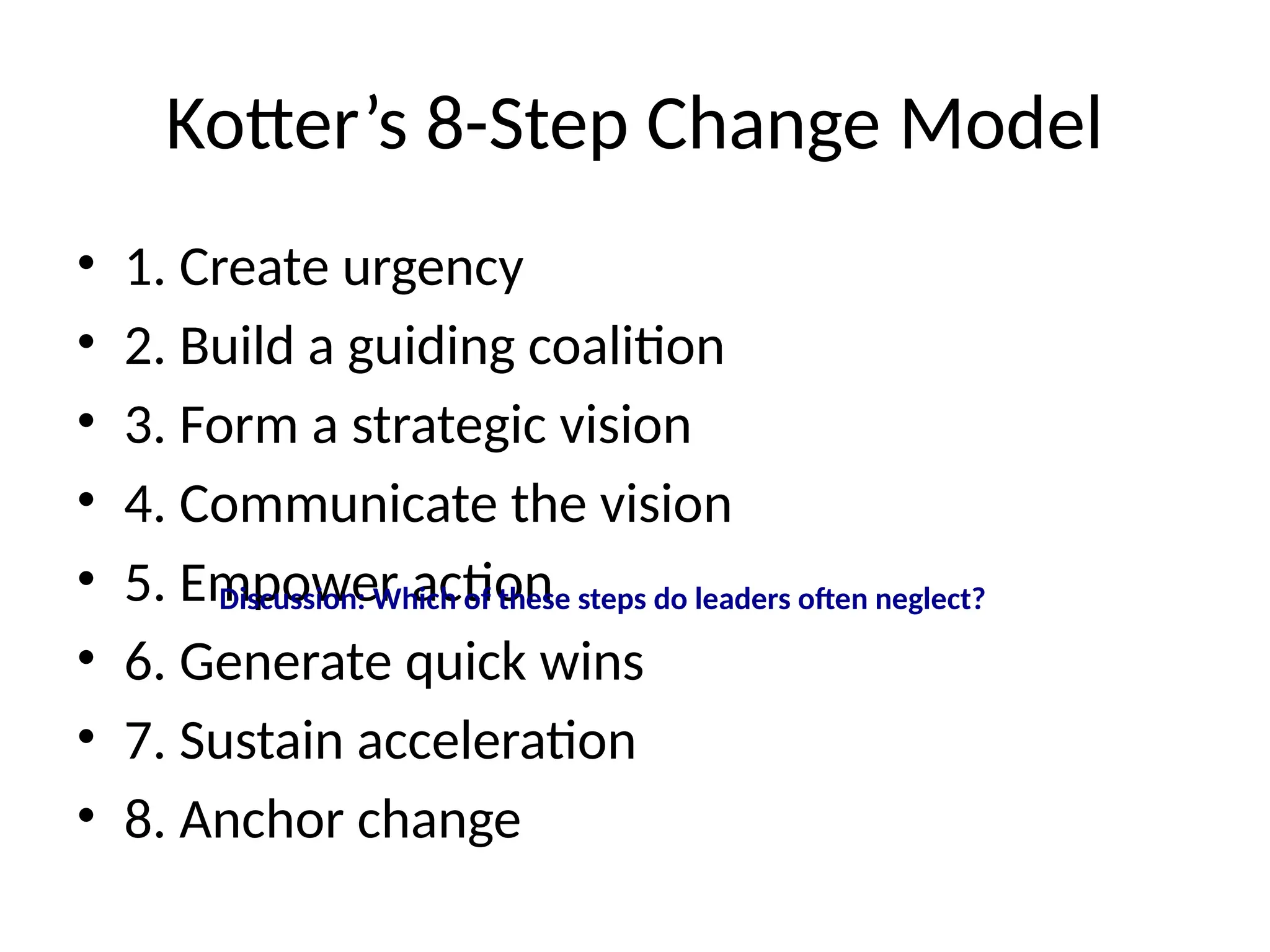
Kotter’s 8-Step ChangeModel
• 1. Create urgency
• 2. Build a guiding coalition
• 3. Form a strategic vision
• 4. Communicate the vision
• 5. Empower action
• 6. Generate quick wins
• 7. Sustain acceleration
• 8. Anchor change
Discussion: Which of these steps do leaders often neglect?
7.
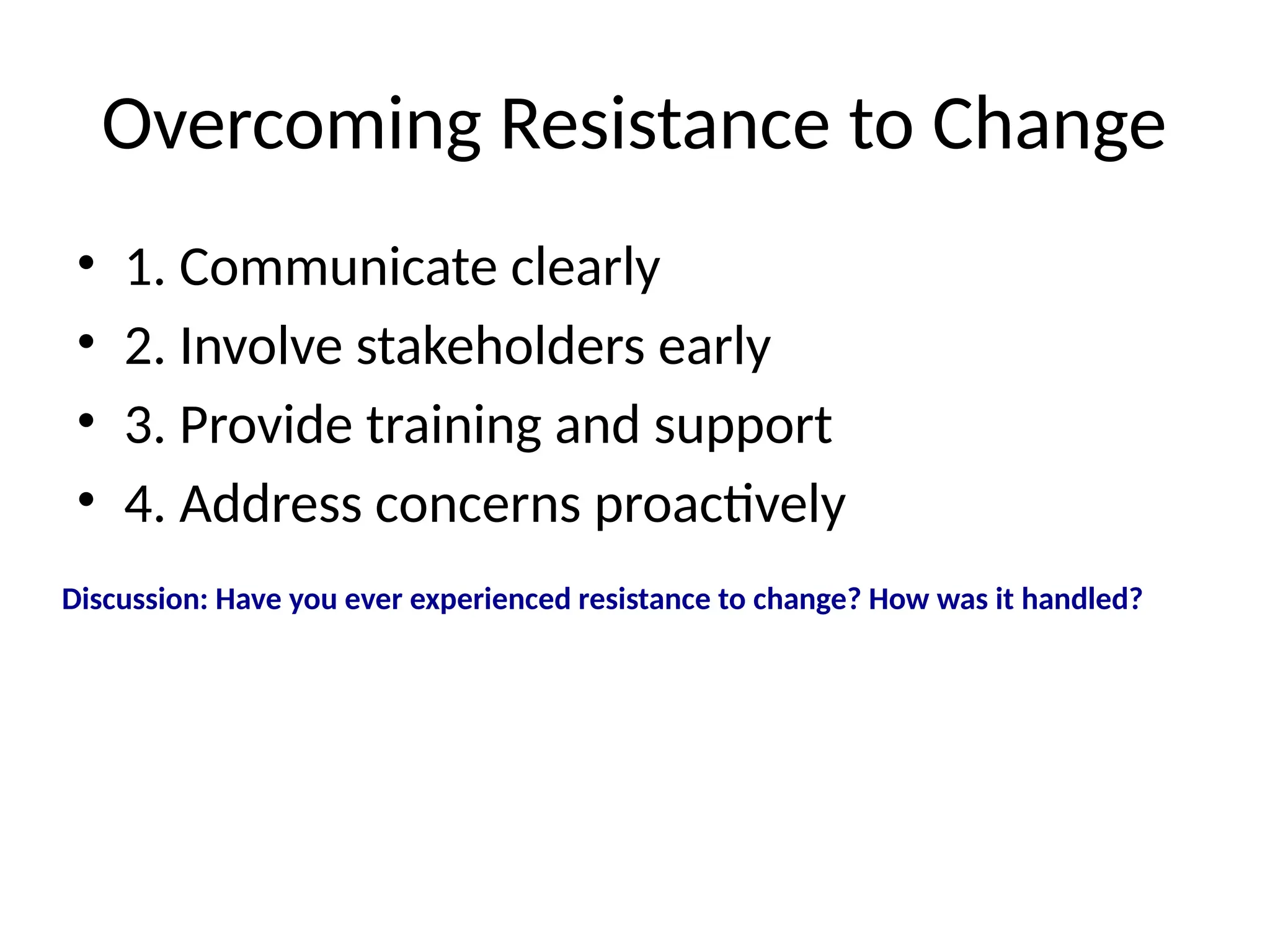
Overcoming Resistance toChange
• 1. Communicate clearly
• 2. Involve stakeholders early
• 3. Provide training and support
• 4. Address concerns proactively
Discussion: Have you ever experienced resistance to change? How was it handled?
8.
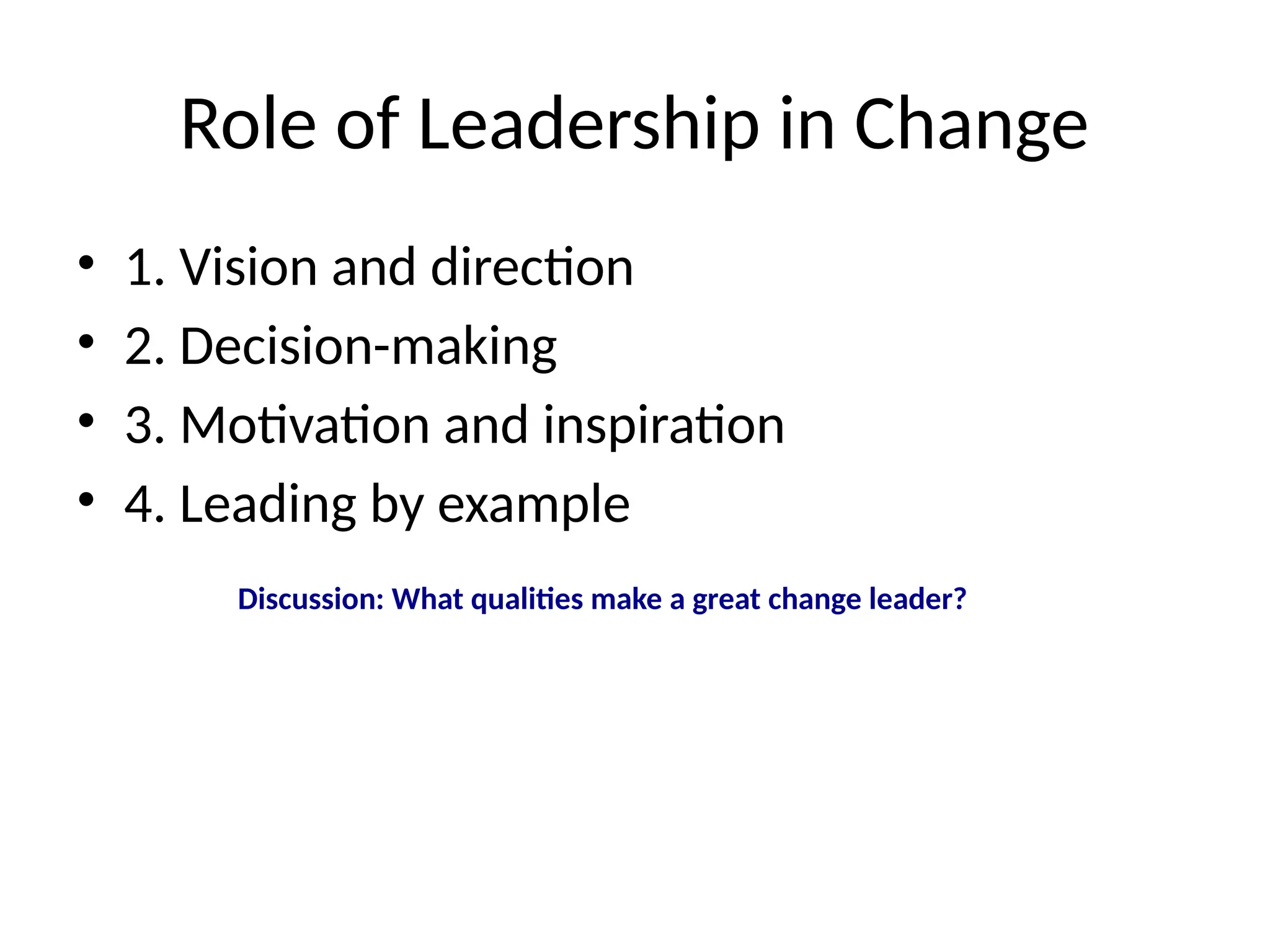
Role of Leadershipin Change
• 1. Vision and direction
• 2. Decision-making
• 3. Motivation and inspiration
• 4. Leading by example
Discussion: What qualities make a great change leader?
9.
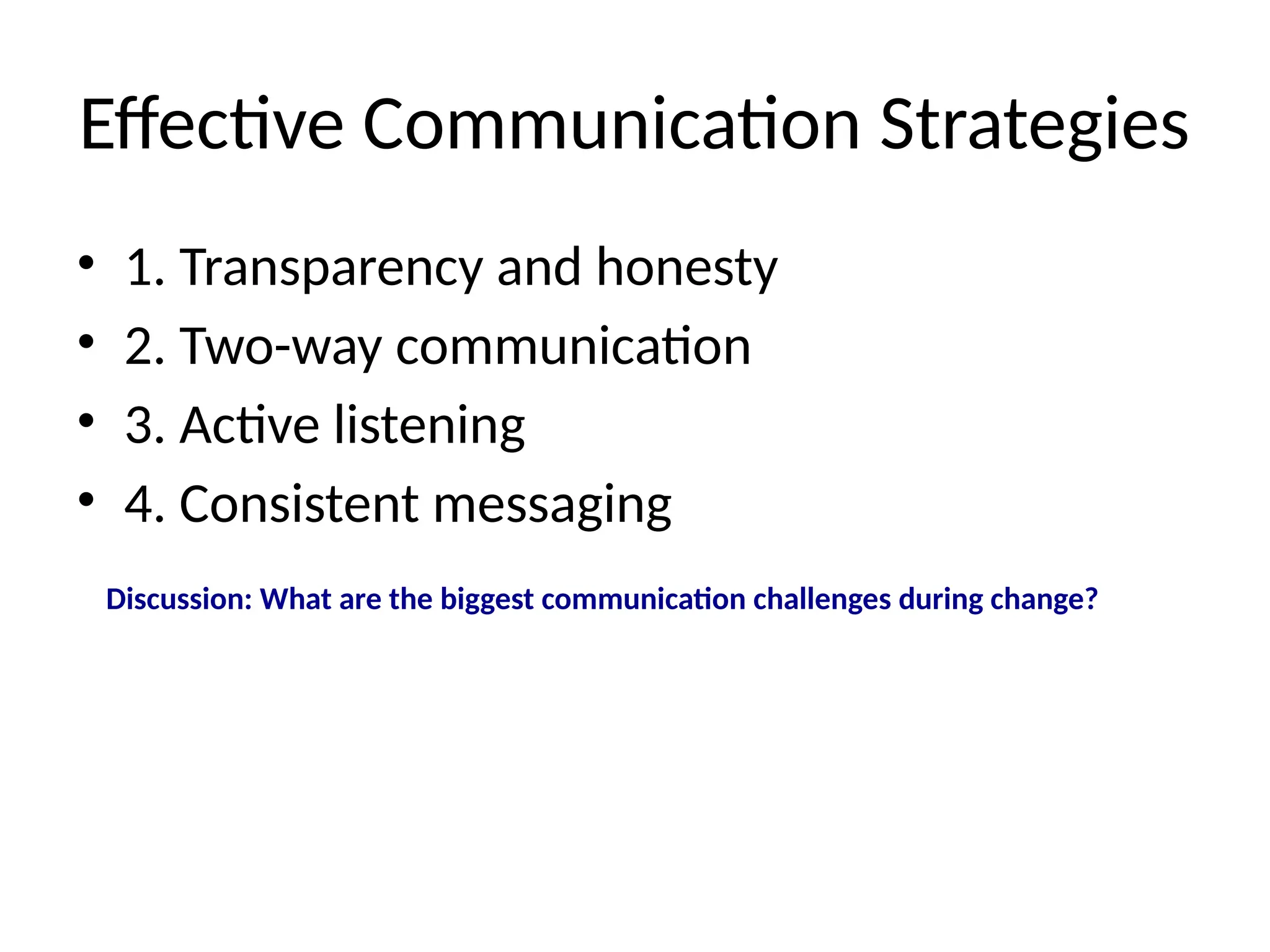
Effective Communication Strategies
•1. Transparency and honesty
• 2. Two-way communication
• 3. Active listening
• 4. Consistent messaging
Discussion: What are the biggest communication challenges during change?
10.
Case Study: SuccessfulChange
Implementation
• Example: A company/school adapting to
digital transformation
Discussion: What lessons can we learn from successful change efforts?
11.
Final Thoughts &Open Discussion
• Change is inevitable. How we manage it
determines success or failure.
Discussion: What is your key takeaway from this discussion?
![Managing Change: Strategies for
Success
A Professional Discussion on
Adapting and Leading Change
Presented by: [Your Name]](https://image.slidesharecdn.com/managingchangeprofessionalpresentation-250301121100-323f9df2/75/Managing_Change_Professional_Presentation-pptx-1-2048.jpg)