1
3
CHAPTER
MONETARY POLICY
Objectives
After studying this chapter, you will able to
 Explain what an open market operation is, how it works, and how it changes
the quantity of money
 Explain what determines the demand for money
 Explain how the Fed influences interest rates
 Explain how the Fed’s actions influence spending plans, real GDP, and the
price level
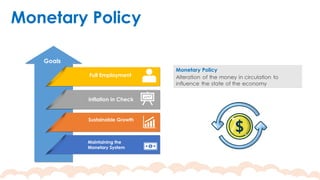
Monetary Policy
Maintaining the
Monetary System
Full Employment
Inflation in Check
Sustainable Growth
Goals
Who is Responsible
for the Monetary
Policy
A CENTRAL BANK is the public
authority that regulates a
nation’s depository institutions
and controls the quantity of
money.
It is an independent authority in
most of countries of the world
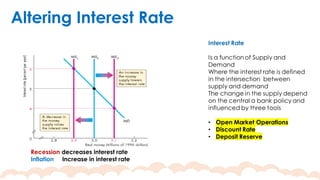
Interest Rate
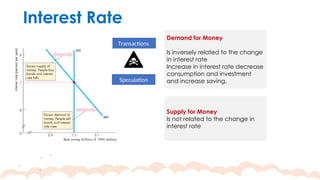
Demand for Money
Is inversely related to the change
in interest rate
Increase in interest rate decrease
consumption and investment
and increase saving.
Supply for Money
Is not related to the change in
interest rate
Transactions
Speculation
Altering Interest Rate
Recession decreases interest rate
Inflation Increase in interest rate
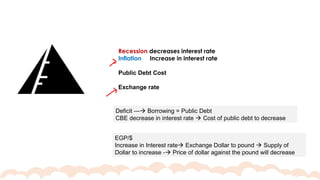
Recession decreases interest rate
Inflation Increase in interest rate
Public Debt Cost
Exchange rate
Deficit --- Borrowing = Public Debt
CBE decrease in interest rate  Cost of public debt to decrease
EGP/$
Increase in Interest rate Exchange Dollar to pound  Supply of
Dollar to increase - Price of dollar against the pound will decrease
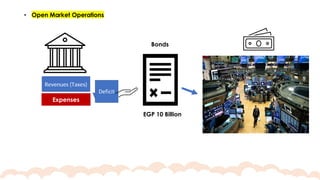
Revenues (Taxes)
Expenses
EGP 10 Billion
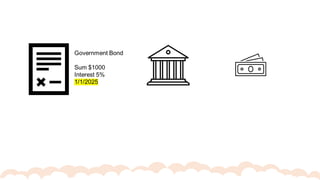
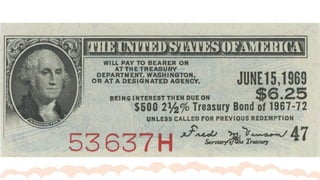
Bonds
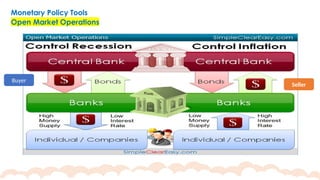
Buyer
Seller
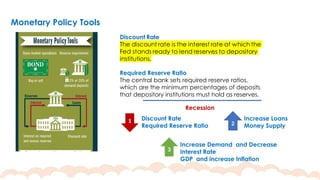
Monetary Policy Tools
Required Reserve Ratio
The central bank sets required reserve ratios,
which are the minimum percentages of deposits
that depository institutions must hold as reserves.
Recession
1 Discount Rate
Required Reserve Ratio
Increase Loans
Money Supply
2
Increase Demand and Decrease
Interest Rate
GDP and increase Inflation
3
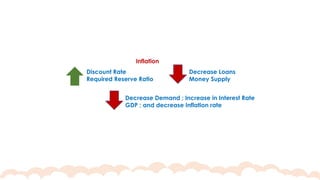
Inflation
Discount Rate
Required Reserve Ratio
Decrease Loans
Money Supply
Decrease Demand ; Increase in Interest Rate
GDP ; and decrease Inflation rate
3
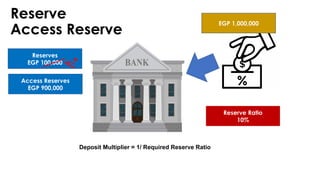
Reserve
Access Reserve
EGP 1,000,000
Reserve Ratio
10%
Reserves
EGP 100,000
Access Reserves
EGP 900,000
Deposit Multiplier = 1/ Required Reserve Ratio
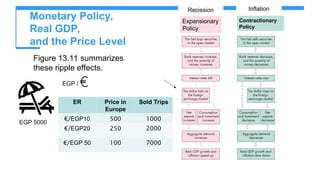
Monetary Policy,
Real GDP,
and the Price Level
Figure 13.11 summarizes
these ripple effects.
EGP 5000
EGP /
ER Price in
Europe
Sold Trips
EGP10
/
€ 500 1000
EGP20
/
€ 250 2000
EGP 50
/
€ 100 7000
Expansionary
Policy
Contractionary
Policy
Recission Inflation
Inflation Rate
• Watch the interest
rate closely
• If interest rates are
expected to
decrease
• Make loans in
variable rate
• Make deposits on
fixed rate
• Interest rate is
important to evaluate
business opportunities
Monetary Policy
What in it for me?
THE END
1
3
CHAPTER
MONETARY POLICY

managerial economics MONETARY POLICY.ppt

  • 1.
  • 2.
    Objectives After studying thischapter, you will able to  Explain what an open market operation is, how it works, and how it changes the quantity of money  Explain what determines the demand for money  Explain how the Fed influences interest rates  Explain how the Fed’s actions influence spending plans, real GDP, and the price level
  • 3.
    Monetary Policy Maintaining the MonetarySystem Full Employment Inflation in Check Sustainable Growth Goals
  • 4.
    Who is Responsible forthe Monetary Policy A CENTRAL BANK is the public authority that regulates a nation’s depository institutions and controls the quantity of money. It is an independent authority in most of countries of the world
  • 5.
    Interest Rate Demand forMoney Is inversely related to the change in interest rate Increase in interest rate decrease consumption and investment and increase saving. Supply for Money Is not related to the change in interest rate Transactions Speculation
  • 6.
    Altering Interest Rate Recessiondecreases interest rate Inflation Increase in interest rate
  • 7.
    Recession decreases interestrate Inflation Increase in interest rate Public Debt Cost Exchange rate Deficit --- Borrowing = Public Debt CBE decrease in interest rate  Cost of public debt to decrease EGP/$ Increase in Interest rate Exchange Dollar to pound  Supply of Dollar to increase - Price of dollar against the pound will decrease
  • 8.
  • 9.
  • 12.
    Monetary Policy Tools RequiredReserve Ratio The central bank sets required reserve ratios, which are the minimum percentages of deposits that depository institutions must hold as reserves. Recession 1 Discount Rate Required Reserve Ratio Increase Loans Money Supply 2 Increase Demand and Decrease Interest Rate GDP and increase Inflation 3
  • 13.
    Inflation Discount Rate Required ReserveRatio Decrease Loans Money Supply Decrease Demand ; Increase in Interest Rate GDP ; and decrease Inflation rate 3
  • 14.
    Reserve Access Reserve EGP 1,000,000 ReserveRatio 10% Reserves EGP 100,000 Access Reserves EGP 900,000 Deposit Multiplier = 1/ Required Reserve Ratio
  • 15.
    Monetary Policy, Real GDP, andthe Price Level Figure 13.11 summarizes these ripple effects. EGP 5000 EGP / ER Price in Europe Sold Trips EGP10 / € 500 1000 EGP20 / € 250 2000 EGP 50 / € 100 7000 Expansionary Policy Contractionary Policy Recission Inflation
  • 16.
    Inflation Rate • Watchthe interest rate closely • If interest rates are expected to decrease • Make loans in variable rate • Make deposits on fixed rate • Interest rate is important to evaluate business opportunities Monetary Policy What in it for me?
  • 17.