By Benjamin Sanders
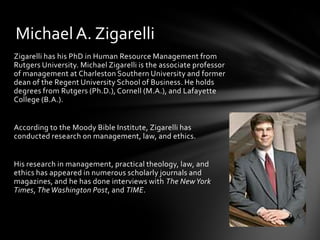
Michael A. Zigarelli
Zigarelli has his PhD in Human Resource Management from
Rutgers University. Michael Zigarelli is the associate professor
of management at Charleston Southern University and former
dean of the Regent University School of Business. He holds
degrees from Rutgers (Ph.D.), Cornell (M.A.), and Lafayette
College (B.A.).


According to the Moody Bible Institute, Zigarelli has
conducted research on management, law, and ethics.


His research in management, practical theology, law, and
ethics has appeared in numerous scholarly journals and
magazines, and he has done interviews with The New York
Times, The Washington Post, and TIME.
Principle 1: Devote Your Life to the Real Boss
Identifying the real CEO-
“Commit thy works unto the LORD, and thy thoughts shall be established.”
Proverbs 16:3.


Zigarelli says that once this new perspective is established, the ground is
made fertile for us to succeed; not necessarily in the eyes of the world, but
certainly in the eyes of God.
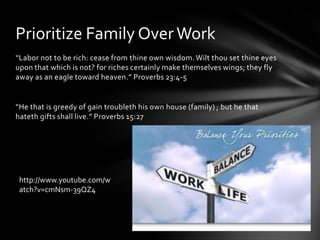
Prioritize Family Over Work
“Labor not to be rich: cease from thine own wisdom. Wilt thou set thine eyes
upon that which is not? for riches certainly make themselves wings; they fly
away as an eagle toward heaven.” Proverbs 23:4-5


“He that is greedy of gain troubleth his own house (family) ; but he that
hateth gifts shall live.” Proverbs 15:27


 http://www.youtube.com/w
 atch?v=cmNsm-39QZ4
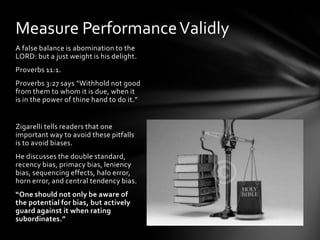
Measure Performance Validly
A false balance is abomination to the
LORD: but a just weight is his delight.
Proverbs 11:1.
Proverbs 3:27 says “Withhold not good
from them to whom it is due, when it
is in the power of thine hand to do it.”


Zigarelli tells readers that one
important way to avoid these pitfalls
is to avoid biases.
He discusses the double standard,
recency bias, primacy bias, leniency
bias, sequencing effects, halo error,
horn error, and central tendency bias.
“One should not only be aware of
the potential for bias, but actively
guard against it when rating
subordinates.”
Build Organizational Trust


“Love and faithfulness keep a king safe; through this love his throne is made
secure.” -Proverbs 20:28
Building Trust Continued…
“When it comes to organizational trust, the principle of reaping and sowing is clearly in full
operation. Trust begets trust. Distrust begets distrust. This begins by intentionally adopting
a Christ-like attitude towards your subordinates and thereby permitting unconventional,
trust-oriented questions to enter your decision making.” -Zigarelli


Some of these questions include-

Will my decision have the effect of increasing or decreasing the trust that employees place
in me?

Will the manner in which I am reaching this decision make my employees suspicious?

If I were on the receiving end of this decision, would I trust the decision maker had my best
interests in mind?
Trust Building Questions
These very trust-oriented questions are often powerful
but inconvenient. Taking them seriously will decelerate
the process and, in many cases, will entail defending your
unorthodox approach to skeptical higher ups.
It’s important to remember though that things like
convenience, expediency, and political palatability
tend to be the enemies of love and faithfulness.
Questions?

Management by proverbs

  • 1.
  • 2.
    Michael A. Zigarelli Zigarellihas his PhD in Human Resource Management from Rutgers University. Michael Zigarelli is the associate professor of management at Charleston Southern University and former dean of the Regent University School of Business. He holds degrees from Rutgers (Ph.D.), Cornell (M.A.), and Lafayette College (B.A.). According to the Moody Bible Institute, Zigarelli has conducted research on management, law, and ethics. His research in management, practical theology, law, and ethics has appeared in numerous scholarly journals and magazines, and he has done interviews with The New York Times, The Washington Post, and TIME.
  • 3.
    Principle 1: DevoteYour Life to the Real Boss Identifying the real CEO- “Commit thy works unto the LORD, and thy thoughts shall be established.” Proverbs 16:3. Zigarelli says that once this new perspective is established, the ground is made fertile for us to succeed; not necessarily in the eyes of the world, but certainly in the eyes of God.
  • 4.
    Prioritize Family OverWork “Labor not to be rich: cease from thine own wisdom. Wilt thou set thine eyes upon that which is not? for riches certainly make themselves wings; they fly away as an eagle toward heaven.” Proverbs 23:4-5 “He that is greedy of gain troubleth his own house (family) ; but he that hateth gifts shall live.” Proverbs 15:27 http://www.youtube.com/w atch?v=cmNsm-39QZ4
  • 5.
    Measure Performance Validly Afalse balance is abomination to the LORD: but a just weight is his delight. Proverbs 11:1. Proverbs 3:27 says “Withhold not good from them to whom it is due, when it is in the power of thine hand to do it.” Zigarelli tells readers that one important way to avoid these pitfalls is to avoid biases. He discusses the double standard, recency bias, primacy bias, leniency bias, sequencing effects, halo error, horn error, and central tendency bias. “One should not only be aware of the potential for bias, but actively guard against it when rating subordinates.”
  • 6.
    Build Organizational Trust “Loveand faithfulness keep a king safe; through this love his throne is made secure.” -Proverbs 20:28
  • 7.
    Building Trust Continued… “Whenit comes to organizational trust, the principle of reaping and sowing is clearly in full operation. Trust begets trust. Distrust begets distrust. This begins by intentionally adopting a Christ-like attitude towards your subordinates and thereby permitting unconventional, trust-oriented questions to enter your decision making.” -Zigarelli Some of these questions include- Will my decision have the effect of increasing or decreasing the trust that employees place in me? Will the manner in which I am reaching this decision make my employees suspicious? If I were on the receiving end of this decision, would I trust the decision maker had my best interests in mind?
  • 8.
    Trust Building Questions Thesevery trust-oriented questions are often powerful but inconvenient. Taking them seriously will decelerate the process and, in many cases, will entail defending your unorthodox approach to skeptical higher ups. It’s important to remember though that things like convenience, expediency, and political palatability tend to be the enemies of love and faithfulness.
  • 9.