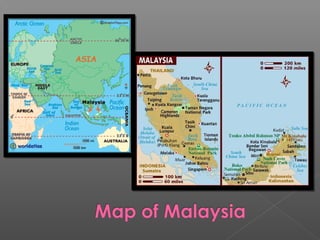
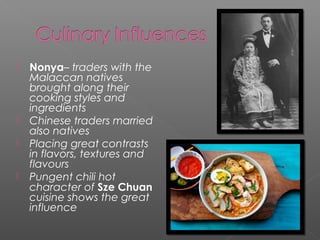
 Capital: Kuala Lumpur 
 Malaysia has 
always been pivotal to 
trade routes from Europe, 
the Orient, India and 
China 
 warm tropical climate 
 
 abundant natural 
blessings
 Hindu-Buddhist-temple 
sites of the 
Bujang Valley and 
Merbok Estuary in 
Kedah in the north 
west of Peninsular 
Malaysia 
 The spread of Islam, 
introduced by Arab 
and Indian traders, 
brought the Hindu- 
Buddhist era to an end 
by the 13th century.
 In 1511, the Portuguese 
captured Malaka and 
the rulers of the Melaka 
Sultanate fled south to 
Johor where they tried 
to establish a new 
kingdom. 
 The Portuguese were in 
turn defeated in 1641 by 
the Dutch, who 
colonized Melaka until 
the advent of the British 
in the Dutch exerted 
any profound influence 
on Malay society.
 The British acquired 
Melaka from the Dutch in 
1824 in exchange for 
Bencoolen in Sumatra. 
 From their new bases in 
Malaka, Penang and 
Singapore, collectively 
known as the Straits 
settlements, the British 
began the process of 
political integration of 
the Malay states of 
Peninsular 
Malaysia.
 Nonya– traders with the 
Malaccan natives 
brought along their 
cooking styles and 
ingredients 
 Chinese traders married 
also natives 
 Placing great contrasts 
in flavors, textures and 
flavours 
 Pungent chili hot 
character of Sze Chuan 
cuisine shows the great 
influence
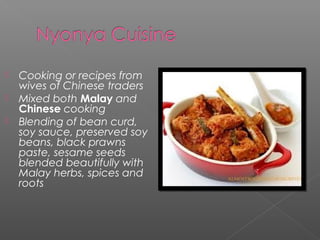
 Cooking or recipes from 
wives of Chinese traders 
 Mixed both Malay and 
Chinese cooking 
 Blending of bean curd, 
soy sauce, preserved soy 
beans, black prawns 
paste, sesame seeds 
blended beautifully with 
Malay herbs, spices and 
roots
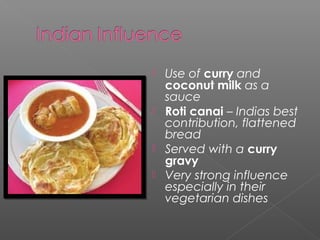
 Use of curry and 
coconut milk as a 
sauce 
 Roti canai – Indias best 
contribution, flattened 
bread 
 Served with a curry 
gravy 
 Very strong influence 
especially in their 
vegetarian dishes
 Malaysian cuisine has 
spawned many individual 
cuisines mainly : 
1. Kelantanese 
2. Kedah 
3. Nyonya
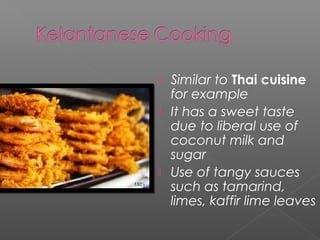
 Similar to Thai cuisine 
for example 
 It has a sweet taste 
due to liberal use of 
coconut milk and 
sugar 
 Use of tangy sauces 
such as tamarind, 
limes, kaffir lime leaves
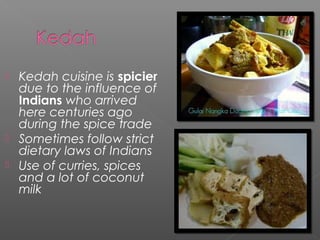
 Kedah cuisine is spicier 
due to the influence of 
Indians who arrived 
here centuries ago 
during the spice trade 
 Sometimes follow strict 
dietary laws of Indians 
 Use of curries, spices 
and a lot of coconut 
milk
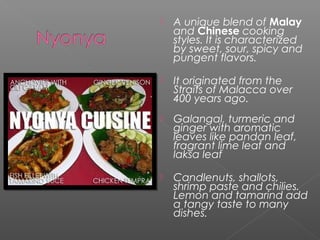
 A unique blend of Malay 
and Chinese cooking 
styles. It is characterized 
by sweet, sour, spicy and 
pungent flavors. 
 It originated from the 
Straits of Malacca over 
400 years ago. 
 Galangal, turmeric and 
ginger with aromatic 
leaves like pandan leaf, 
fragrant lime leaf and 
laksa leaf 
 Candlenuts, shallots, 
shrimp paste and chilies. 
Lemon and tamarind add 
a tangy taste to many 
dishes.
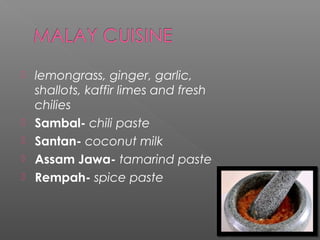
 lemongrass, ginger, garlic, 
shallots, kaffir limes and fresh 
chilies 
 Sambal- chili paste 
 Santan- coconut milk 
 Assam Jawa- tamarind paste 
 Rempah- spice paste
 Nasi Kosong 
› plain rice 
 Nasi Kunyit 
› turmeric rice 
 Nasi Minyak 
› ghee rice 
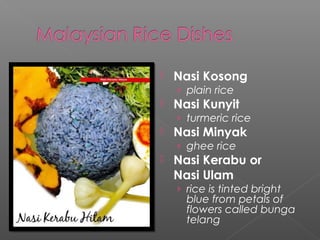
 Nasi Kerabu or 
Nasi Ulam 
› rice is tinted bright 
blue from petals of 
flowers called bunga 
telang
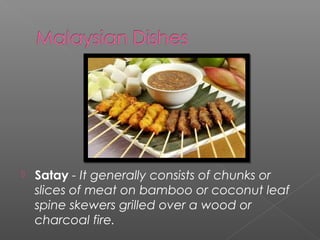
 Satay - It generally consists of chunks or 
slices of meat on bamboo or coconut leaf 
spine skewers grilled over a wood or 
charcoal fire.
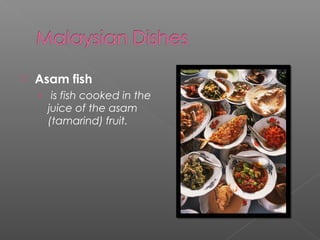
 Asam fish 
› is fish cooked in the 
juice of the asam 
(tamarind) fruit.
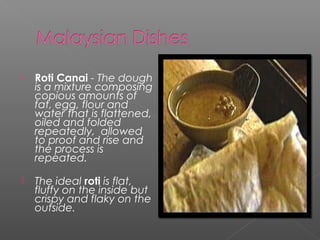
 Roti Canai - The dough 
is a mixture composing 
copious amounts of 
fat, egg, flour and 
water that is flattened, 
oiled and folded 
repeatedly, allowed 
to proof and rise and 
the process is 
repeated. 
 The ideal roti is flat, 
fluffy on the inside but 
crispy and flaky on the 
outside.
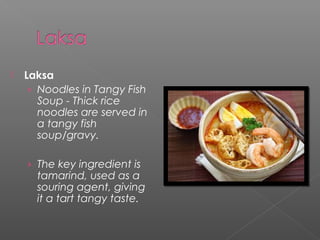
 Laksa 
› Noodles in Tangy Fish 
Soup - Thick rice 
noodles are served in 
a tangy fish 
soup/gravy. 
› The key ingredient is 
tamarind, used as a 
souring agent, giving 
it a tart tangy taste.
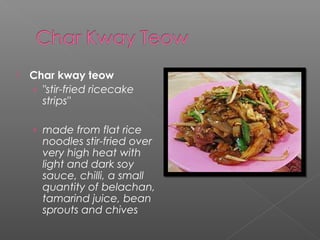
 Char kway teow 
› "stir-fried ricecake 
strips" 
› made from flat rice 
noodles stir-fried over 
very high heat with 
light and dark soy 
sauce, chilli, a small 
quantity of belachan, 
tamarind juice, bean 
sprouts and chives
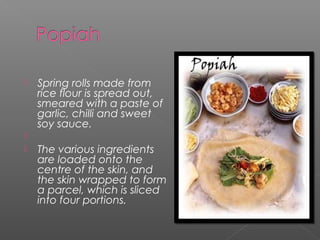
 Spring rolls made from 
rice flour is spread out, 
smeared with a paste of 
garlic, chilli and sweet 
soy sauce. 
 
 The various ingredients 
are loaded onto the 
centre of the skin, and 
the skin wrapped to form 
a parcel, which is sliced 
into four portions.
 Nasi Lemak- Coconut-flavored 
Rice Meal - is 
rice cooked in coconut 
milk made aromatic 
with pandan leaves 
[screwpine leaves]. It is 
typically served 
with Sambal Ikan Bilis. 
 Sambal Ikan Bilis - fried 
dried anchovies 
cooked in a dry 
sambal sauce, and 
garnished with 
cucumber slices, hard 
boiled egg and 
roasted peanuts.
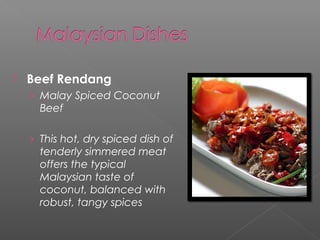
 Beef Rendang 
› Malay Spiced Coconut 
Beef 
› This hot, dry spiced dish of 
tenderly simmered meat 
offers the typical 
Malaysian taste of 
coconut, balanced with 
robust, tangy spices
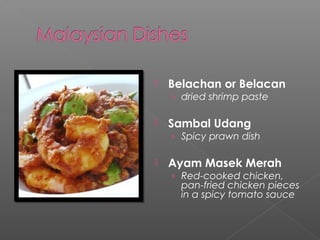
 Belachan or Belacan 
› dried shrimp paste 
 Sambal Udang 
› Spicy prawn dish 
 Ayam Masek Merah 
› Red-cooked chicken, 
pan-fried chicken pieces 
in a spicy tomato sauce
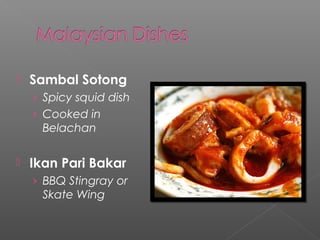
 Sambal Sotong 
› Spicy squid dish 
› Cooked in 
Belachan 
 Ikan Pari Bakar 
› BBQ Stingray or 
Skate Wing
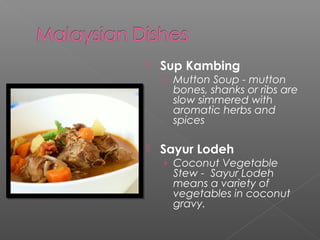
 Sup Kambing 
› Mutton Soup - mutton 
bones, shanks or ribs are 
slow simmered with 
aromatic herbs and 
spices 
 Sayur Lodeh 
› Coconut Vegetable 
Stew - Sayur Lodeh 
means a variety of 
vegetables in coconut 
gravy.

Malaysia (asian cuisine)

  • 3.
     Capital: KualaLumpur  Malaysia has always been pivotal to trade routes from Europe, the Orient, India and China  warm tropical climate   abundant natural blessings
  • 4.
     Hindu-Buddhist-temple sitesof the Bujang Valley and Merbok Estuary in Kedah in the north west of Peninsular Malaysia  The spread of Islam, introduced by Arab and Indian traders, brought the Hindu- Buddhist era to an end by the 13th century.
  • 5.
     In 1511,the Portuguese captured Malaka and the rulers of the Melaka Sultanate fled south to Johor where they tried to establish a new kingdom.  The Portuguese were in turn defeated in 1641 by the Dutch, who colonized Melaka until the advent of the British in the Dutch exerted any profound influence on Malay society.
  • 6.
     The Britishacquired Melaka from the Dutch in 1824 in exchange for Bencoolen in Sumatra.  From their new bases in Malaka, Penang and Singapore, collectively known as the Straits settlements, the British began the process of political integration of the Malay states of Peninsular Malaysia.
  • 7.
     Nonya– traderswith the Malaccan natives brought along their cooking styles and ingredients  Chinese traders married also natives  Placing great contrasts in flavors, textures and flavours  Pungent chili hot character of Sze Chuan cuisine shows the great influence
  • 8.
     Cooking orrecipes from wives of Chinese traders  Mixed both Malay and Chinese cooking  Blending of bean curd, soy sauce, preserved soy beans, black prawns paste, sesame seeds blended beautifully with Malay herbs, spices and roots
  • 9.
     Use ofcurry and coconut milk as a sauce  Roti canai – Indias best contribution, flattened bread  Served with a curry gravy  Very strong influence especially in their vegetarian dishes
  • 10.
     Malaysian cuisinehas spawned many individual cuisines mainly : 1. Kelantanese 2. Kedah 3. Nyonya
  • 11.
     Similar toThai cuisine for example  It has a sweet taste due to liberal use of coconut milk and sugar  Use of tangy sauces such as tamarind, limes, kaffir lime leaves
  • 12.
     Kedah cuisineis spicier due to the influence of Indians who arrived here centuries ago during the spice trade  Sometimes follow strict dietary laws of Indians  Use of curries, spices and a lot of coconut milk
  • 13.
     A uniqueblend of Malay and Chinese cooking styles. It is characterized by sweet, sour, spicy and pungent flavors.  It originated from the Straits of Malacca over 400 years ago.  Galangal, turmeric and ginger with aromatic leaves like pandan leaf, fragrant lime leaf and laksa leaf  Candlenuts, shallots, shrimp paste and chilies. Lemon and tamarind add a tangy taste to many dishes.
  • 14.
     lemongrass, ginger,garlic, shallots, kaffir limes and fresh chilies  Sambal- chili paste  Santan- coconut milk  Assam Jawa- tamarind paste  Rempah- spice paste
  • 15.
     Nasi Kosong › plain rice  Nasi Kunyit › turmeric rice  Nasi Minyak › ghee rice  Nasi Kerabu or Nasi Ulam › rice is tinted bright blue from petals of flowers called bunga telang
  • 16.
     Satay -It generally consists of chunks or slices of meat on bamboo or coconut leaf spine skewers grilled over a wood or charcoal fire.
  • 17.
     Asam fish › is fish cooked in the juice of the asam (tamarind) fruit.
  • 18.
     Roti Canai- The dough is a mixture composing copious amounts of fat, egg, flour and water that is flattened, oiled and folded repeatedly, allowed to proof and rise and the process is repeated.  The ideal roti is flat, fluffy on the inside but crispy and flaky on the outside.
  • 19.
     Laksa ›Noodles in Tangy Fish Soup - Thick rice noodles are served in a tangy fish soup/gravy. › The key ingredient is tamarind, used as a souring agent, giving it a tart tangy taste.
  • 20.
     Char kwayteow › "stir-fried ricecake strips" › made from flat rice noodles stir-fried over very high heat with light and dark soy sauce, chilli, a small quantity of belachan, tamarind juice, bean sprouts and chives
  • 21.
     Spring rollsmade from rice flour is spread out, smeared with a paste of garlic, chilli and sweet soy sauce.   The various ingredients are loaded onto the centre of the skin, and the skin wrapped to form a parcel, which is sliced into four portions.
  • 22.
     Nasi Lemak-Coconut-flavored Rice Meal - is rice cooked in coconut milk made aromatic with pandan leaves [screwpine leaves]. It is typically served with Sambal Ikan Bilis.  Sambal Ikan Bilis - fried dried anchovies cooked in a dry sambal sauce, and garnished with cucumber slices, hard boiled egg and roasted peanuts.
  • 23.
     Beef Rendang › Malay Spiced Coconut Beef › This hot, dry spiced dish of tenderly simmered meat offers the typical Malaysian taste of coconut, balanced with robust, tangy spices
  • 24.
     Belachan orBelacan › dried shrimp paste  Sambal Udang › Spicy prawn dish  Ayam Masek Merah › Red-cooked chicken, pan-fried chicken pieces in a spicy tomato sauce
  • 25.
     Sambal Sotong › Spicy squid dish › Cooked in Belachan  Ikan Pari Bakar › BBQ Stingray or Skate Wing
  • 26.
     Sup Kambing › Mutton Soup - mutton bones, shanks or ribs are slow simmered with aromatic herbs and spices  Sayur Lodeh › Coconut Vegetable Stew - Sayur Lodeh means a variety of vegetables in coconut gravy.