Making AR4D Partnerships Work at Scale: 
Innovation platforms engaging local actors 
R. Buruchara 
NAME 
Since 1967 / Science to cultivate change www.ciat.cgiar.org
IAR4D Concept (Context of SSACP) 
• The IAR4D concept appraises agriculture as a system that is 
made of many sub‐systems that must work together to foster 
development 
• Uses both the system and the commodity approach 
• Uses Innovation Platform (IP) as its operational instrument. 
• The IP is a forum for a group of relevant actors along the value 
chains of specific commodity or system of production that 
influence the chain to interact and provide solutions to jointly 
identified constraints on the platform. 
• The actors include those; 
– Along the value chains: Farmers, traders, processors consumers 
– External actors like: researchers, extension agents, policy makers, 
service providers (financial) insurance, regulators. 
– Organizations and institutions involved in the development of 
agricultural sector
Implementation 
Since 2004, the SSACP implemented in three phases: 
• Inception phase (2005‐07): 
• Appraisals & planning 
• Research Phase (2008‐10): 
• Proof of IAR4D concept 
• Research Extension Phase (2011‐2013): 
• Complete unfinished aspects of proof of concept, 
• Initiate scaling–up activities
Some IAR4D Elements
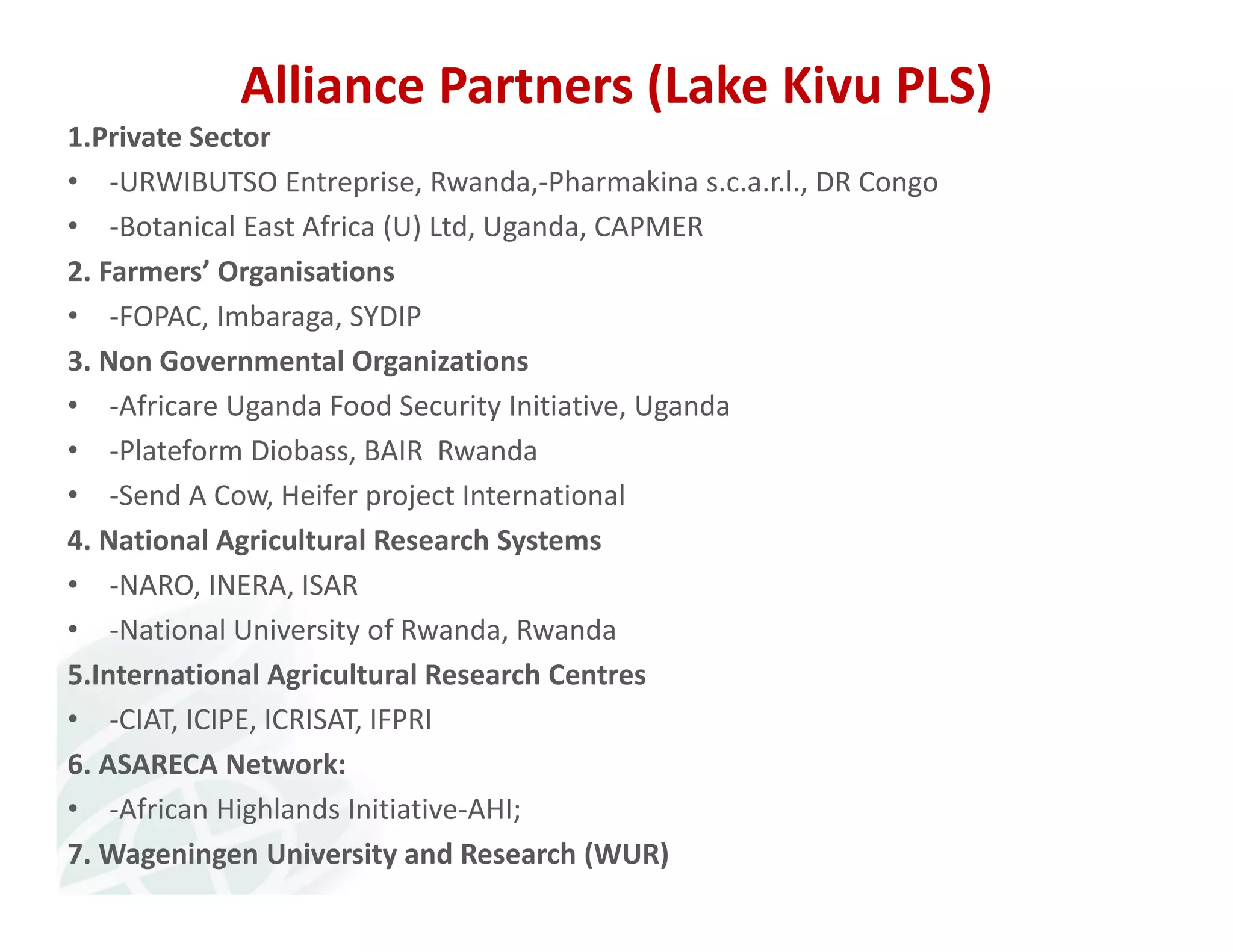
Alliance Partners (Lake Kivu PLS) 
1.Private Sector 
• ‐URWIBUTSO Entreprise, Rwanda,‐Pharmakina s.c.a.r.l., DR Congo 
• ‐Botanical East Africa (U) Ltd, Uganda, CAPMER 
2. Farmers’ Organisations 
• ‐FOPAC, Imbaraga, SYDIP 
3. Non Governmental Organizations 
• ‐Africare Uganda Food Security Initiative, Uganda 
• ‐Plateform Diobass, BAIR Rwanda 
• ‐Send A Cow, Heifer project International 
4. National Agricultural Research Systems 
• ‐NARO, INERA, ISAR 
• ‐National University of Rwanda, Rwanda 
5.International Agricultural Research Centres 
• ‐CIAT, ICIPE, ICRISAT, IFPRI 
6. ASARECA Network: 
• ‐African Highlands Initiative‐AHI; 
7. Wageningen University and Research (WUR)
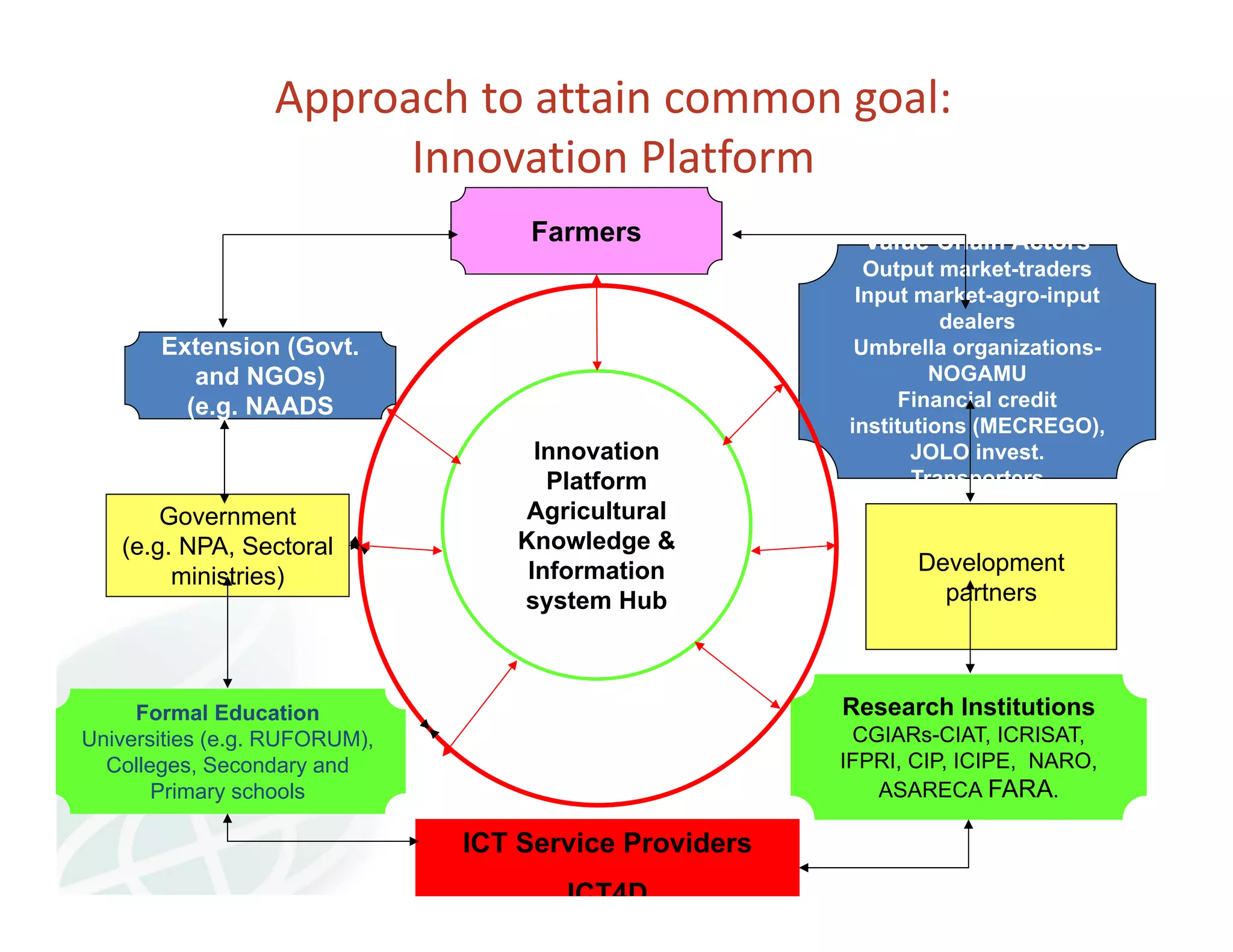
Approach to attain common goal: 
Innovation 
Platform 
Agricultural 
Knowledge & 
Information 
system Hub 
ICT Service Providers 
ICT4D 
Development 
partners 
Extension (Govt. 
and NGOs) 
(e.g. NAADS 
Value Chain Actors 
Output market-traders 
Input market-agro-input 
dealers 
Umbrella organizations- 
NOGAMU 
Financial credit 
institutions (MECREGO), 
JOLO invest. 
Transporters 
Farmers 
Formal Education 
Universities (e.g. RUFORUM), 
Colleges, Secondary and 
Primary schools 
Research Institutions 
CGIARs-CIAT, ICRISAT, 
IFPRI, CIP, ICIPE, NARO, 
ASARECA FARA. 
Government 
(e.g. NPA, Sectoral 
ministries) 
Innovation Platform
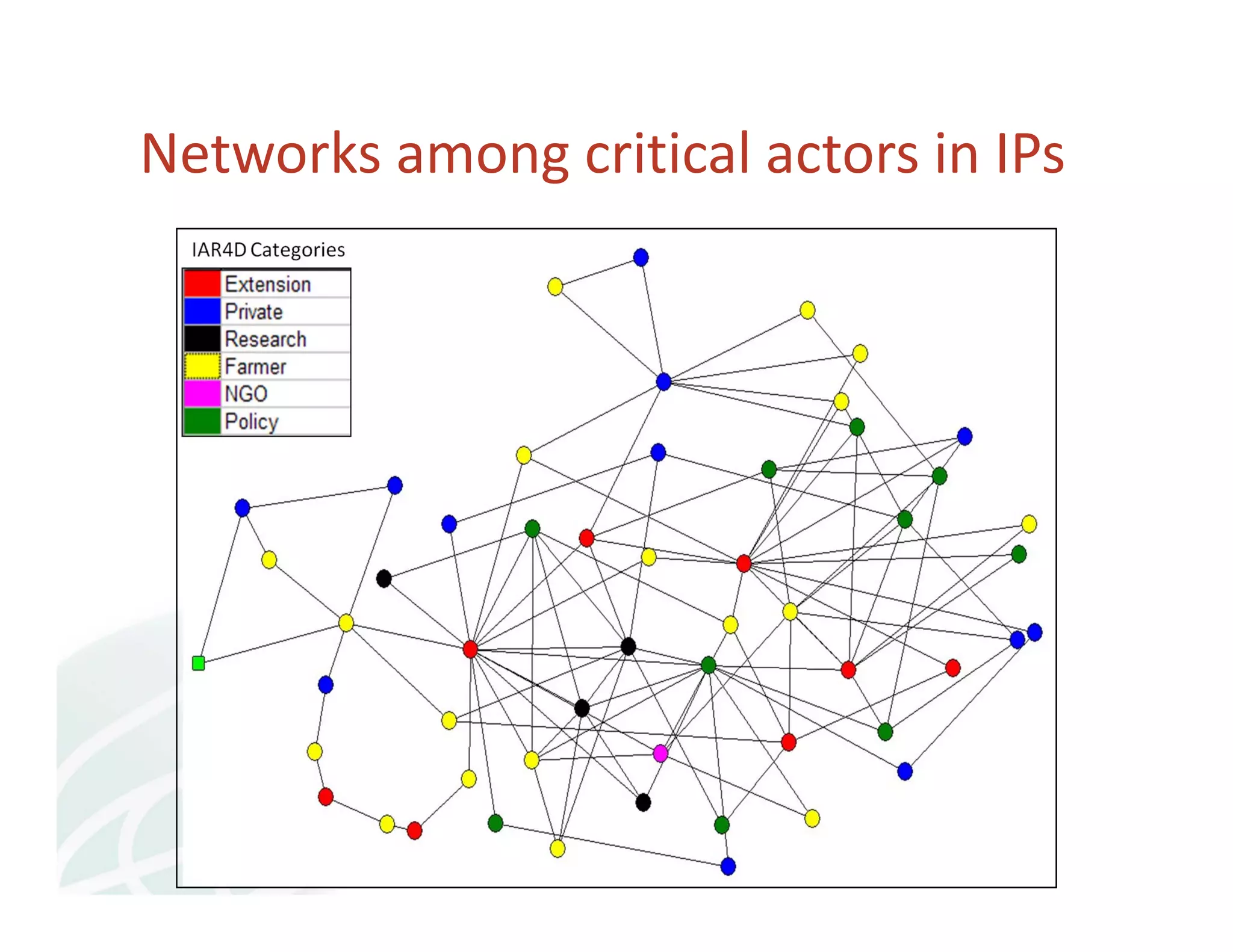
Networks among critical actors in IPs
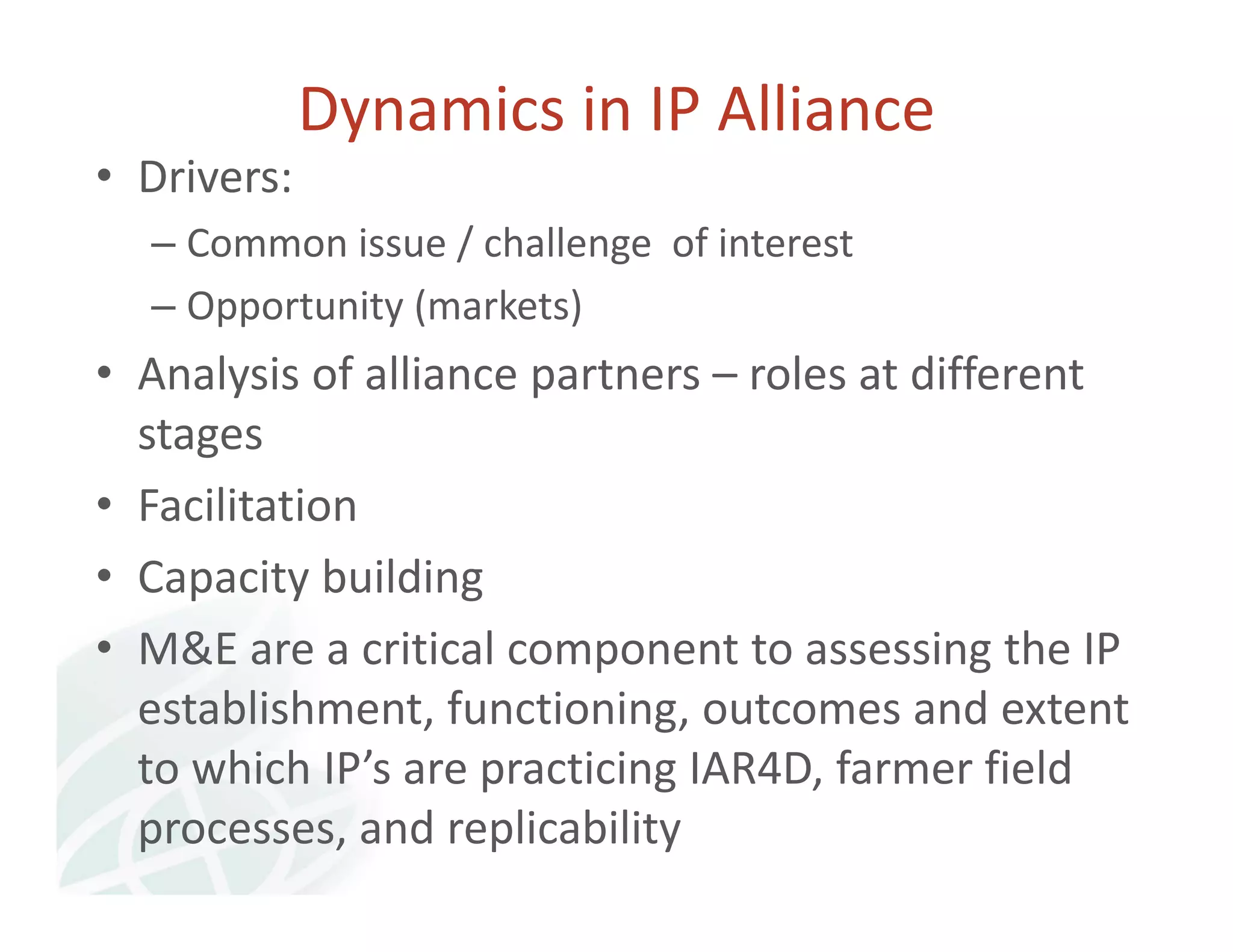
Dynamics in IP Alliance 
• Drivers: 
– Common issue / challenge of interest 
– Opportunity (markets) 
• Analysis of alliance partners – roles at different 
stages 
• Facilitation 
• Capacity building 
• M&E are a critical component to assessing the IP 
establishment, functioning, outcomes and extent 
to which IP’s are practicing IAR4D, farmer field 
processes, and replicability
9 
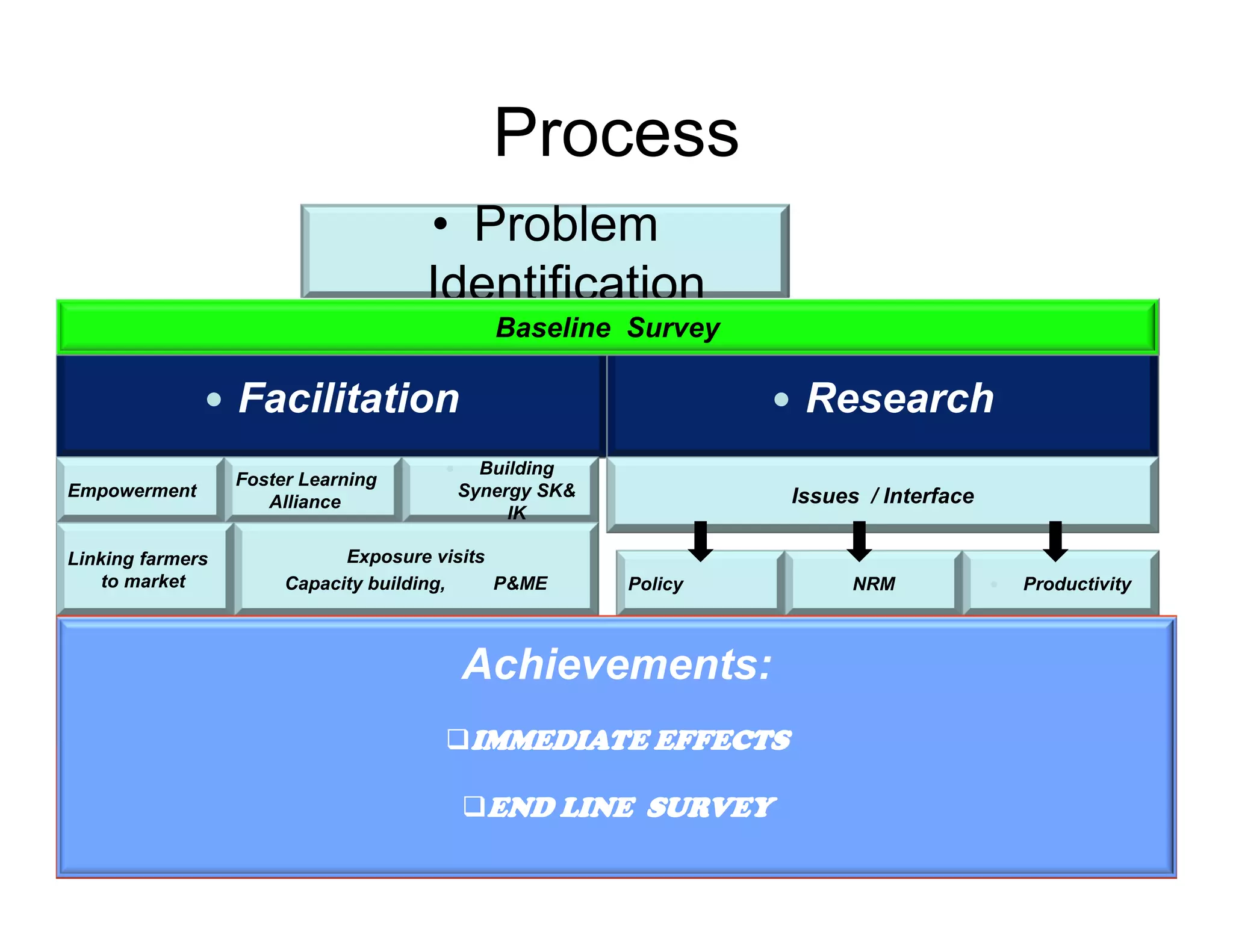
Process 
• Problem 
Identification 
Baseline Survey 
 Facilitation  Research 
Empowerment Foster Learning 
Alliance 
 Building 
Synergy SK& 
IK 
Linking farmers 
to market 
Exposure visits 
Issues / Interface 
Capacity building, P&ME Policy NRM  Productivity 
Achievements: 
IMMEDIATE EFFECTS 
END LINE SURVEY
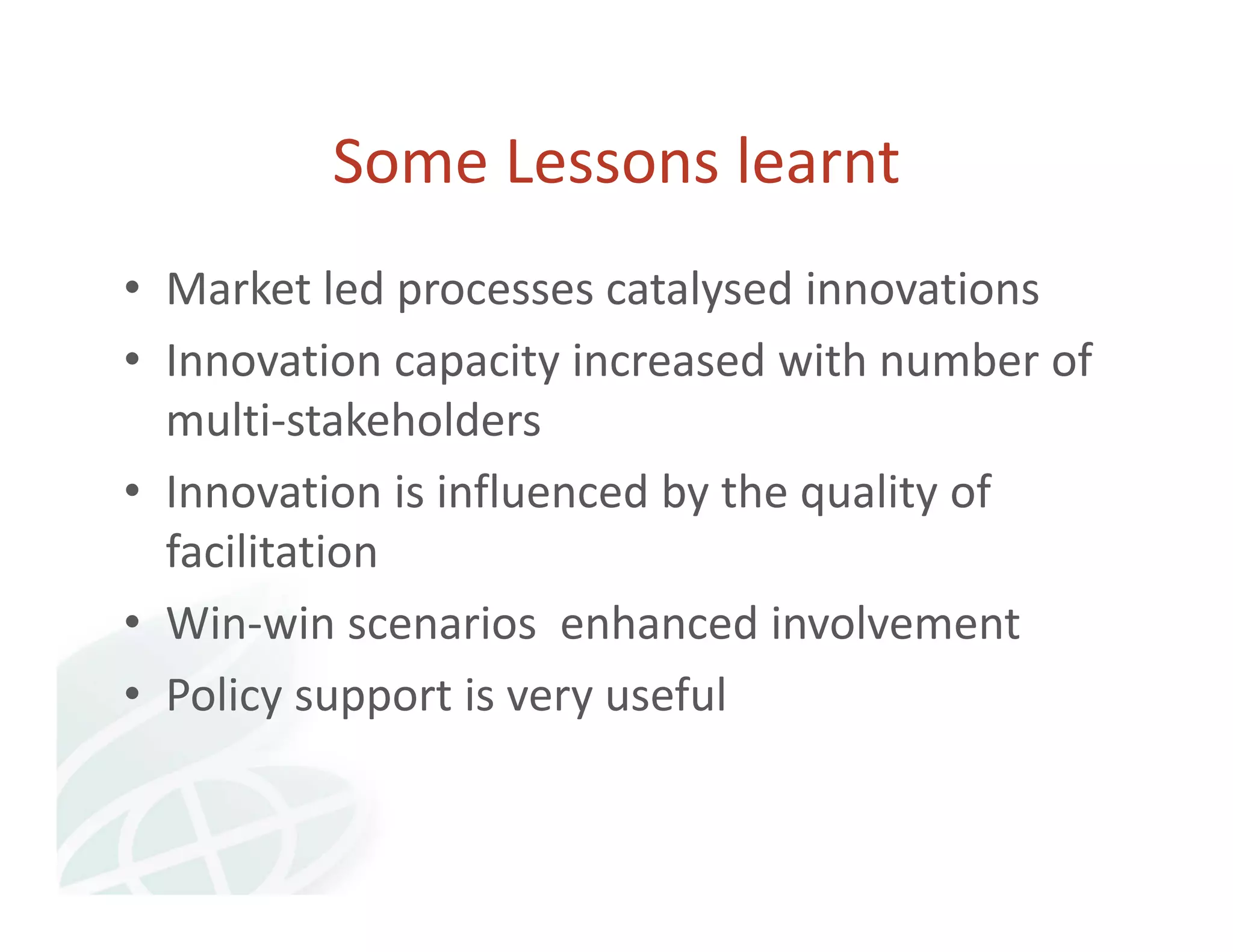
Some Lessons learnt 
• Market led processes catalysed innovations 
• Innovation capacity increased with number of 
multi‐stakeholders 
• Innovation is influenced by the quality of 
facilitation 
• Win‐win scenarios enhanced involvement 
• Policy support is very useful
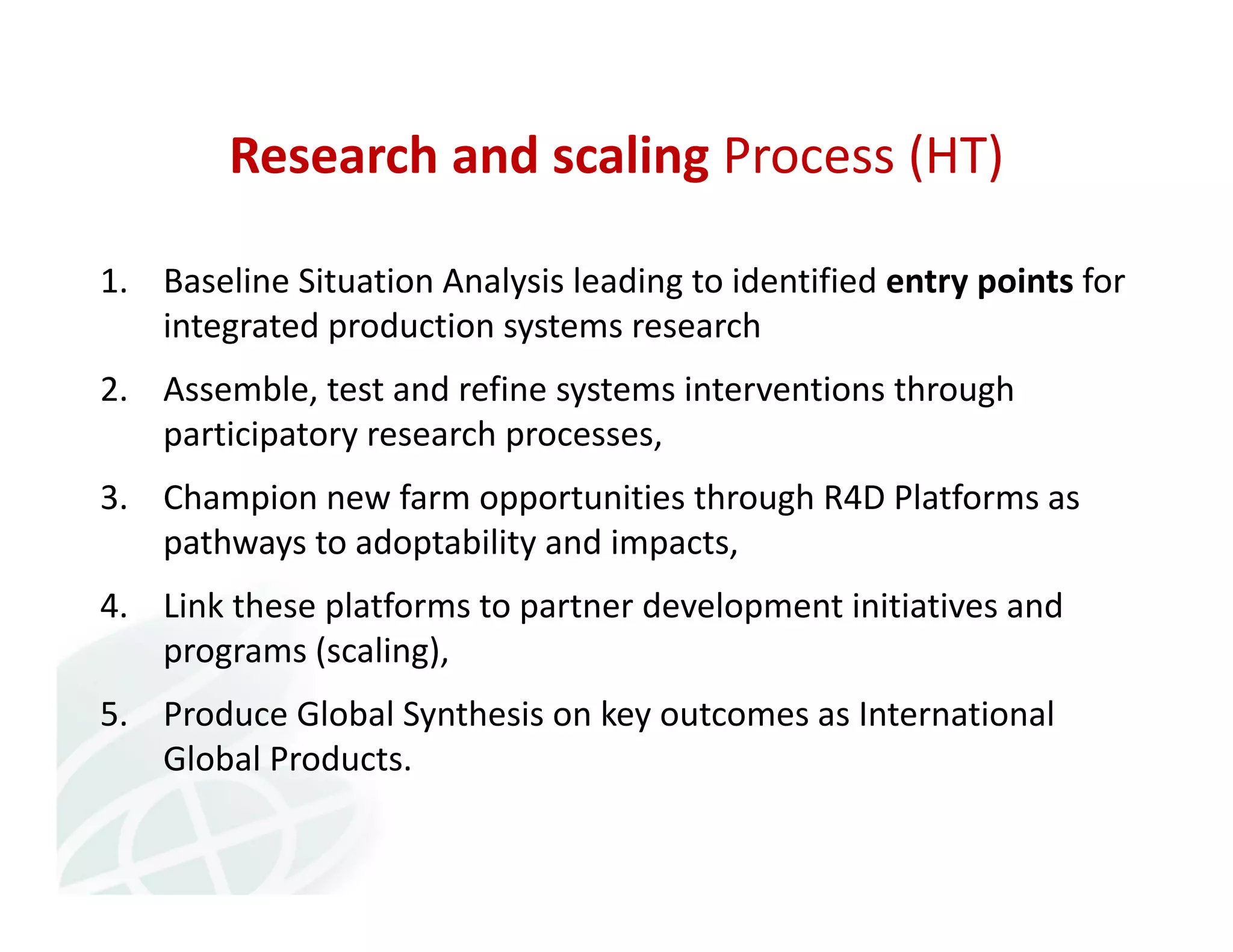
Research and scaling Process (HT) 
1. Baseline Situation Analysis leading to identified entry points for 
integrated production systems research 
2. Assemble, test and refine systems interventions through 
participatory research processes, 
3. Champion new farm opportunities through R4D Platforms as 
pathways to adoptability and impacts, 
4. Link these platforms to partner development initiatives and 
programs (scaling), 
5. Produce Global Synthesis on key outcomes as International 
Global Products.
Scaling up Scenarios 
• Multiplicity of IPs 
• Enlarging of IPs: Bubare 
• Institutionalization of IAR4D: Institutions 
adopt the use of the IAR4D concept. 
• Increasing the number of enterprises within 
the IPs
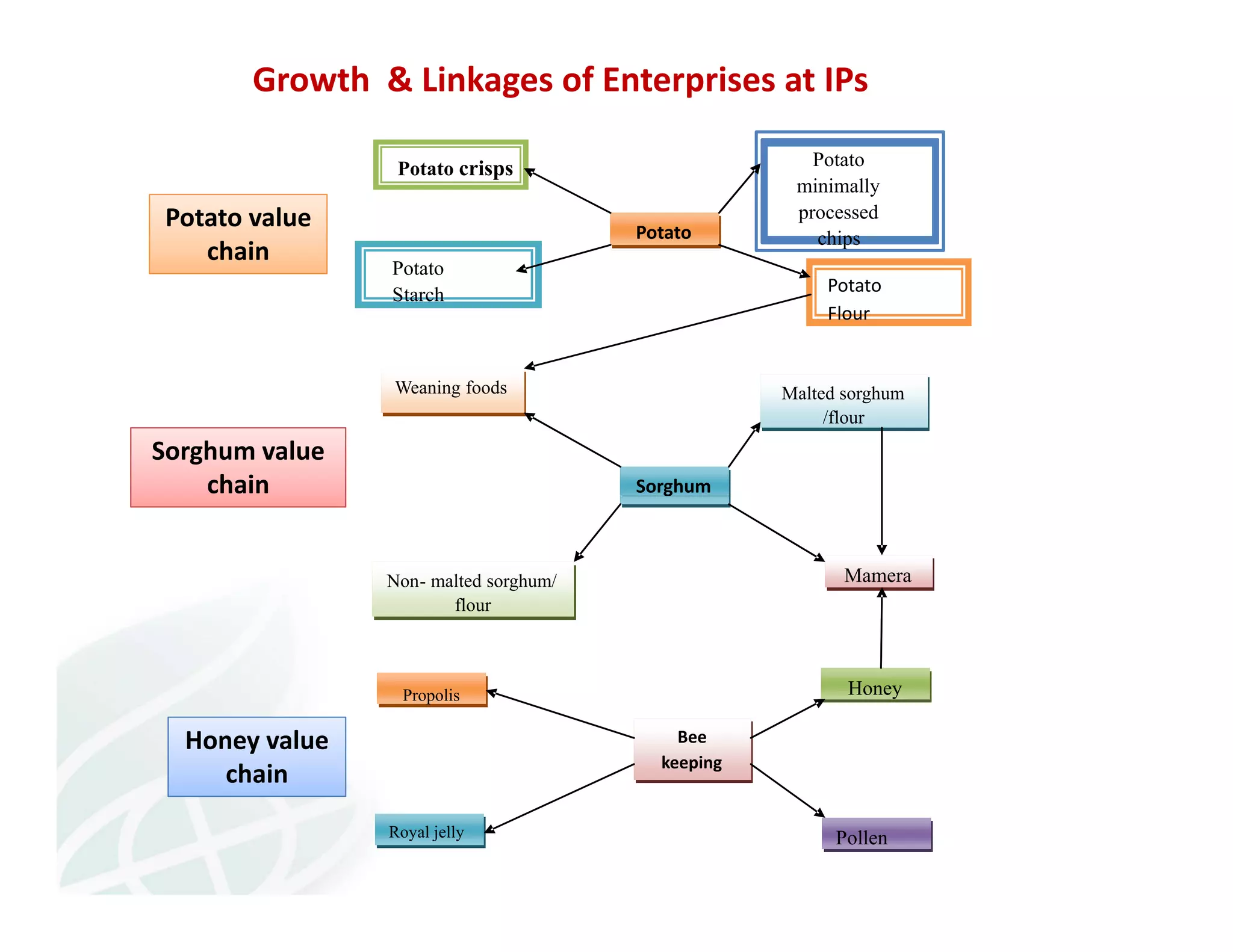
Growth & Linkages of Enterprises at IPs 
Sorghum value 
chain 
Honey value 
chain 
Potato 
Sorghum 
Bee 
keeping 
Potato 
minimally 
processed 
chips 
Potato crisps 
Potato 
Flour 
Potato 
Starch 
Malted sorghum 
/flour 
Weaning foods 
Non- malted sorghum/ 
flour 
Mamera 
Propolis 
Royal jelly 
Honey 
Pollen 
Potato value 
chain
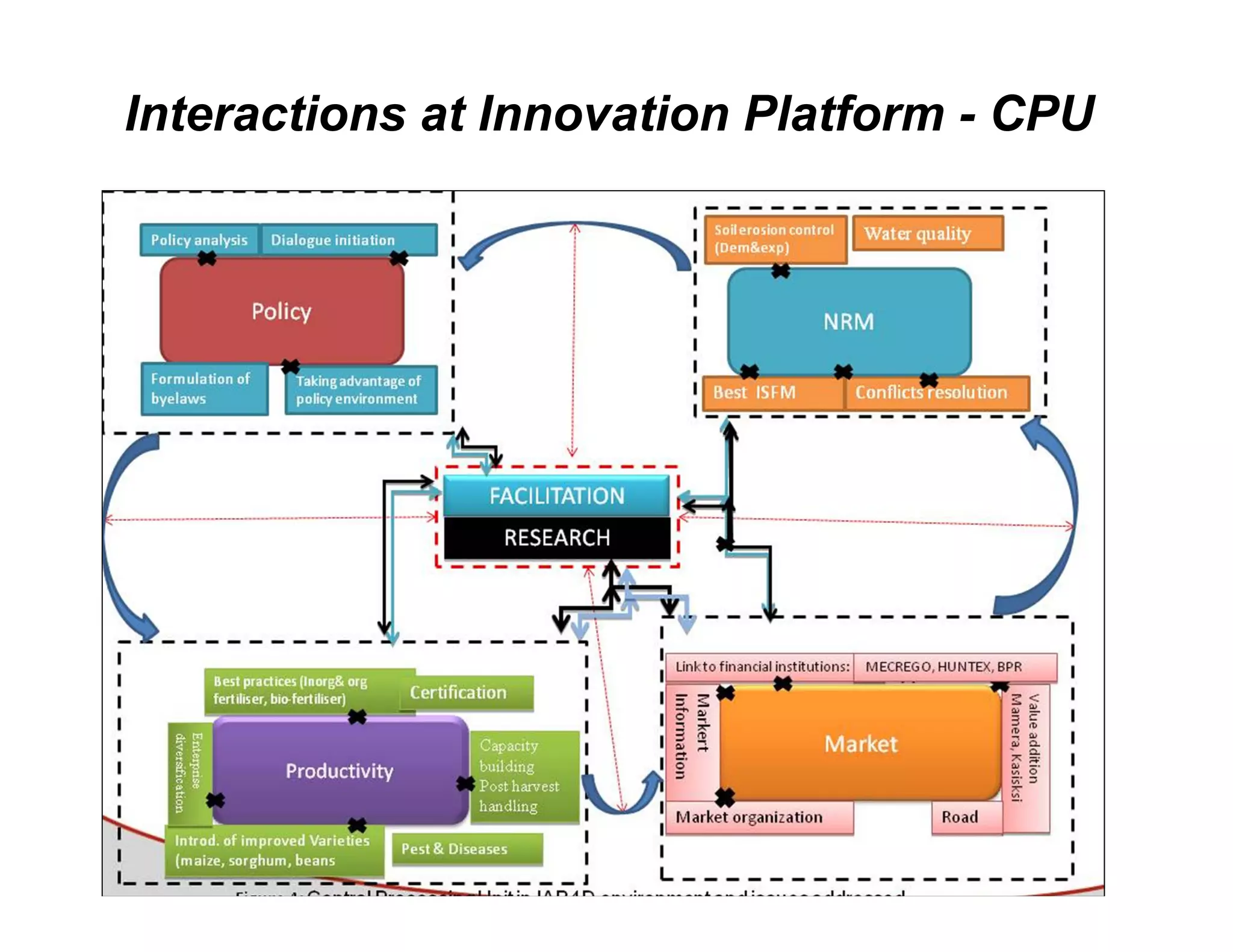
Interactions at Innovation Platform - CPU

Making ar4 d_partnerships_work_at_scale

  • 1.
    Making AR4D PartnershipsWork at Scale: Innovation platforms engaging local actors R. Buruchara NAME Since 1967 / Science to cultivate change www.ciat.cgiar.org
  • 2.
    IAR4D Concept (Contextof SSACP) • The IAR4D concept appraises agriculture as a system that is made of many sub‐systems that must work together to foster development • Uses both the system and the commodity approach • Uses Innovation Platform (IP) as its operational instrument. • The IP is a forum for a group of relevant actors along the value chains of specific commodity or system of production that influence the chain to interact and provide solutions to jointly identified constraints on the platform. • The actors include those; – Along the value chains: Farmers, traders, processors consumers – External actors like: researchers, extension agents, policy makers, service providers (financial) insurance, regulators. – Organizations and institutions involved in the development of agricultural sector
  • 3.
    Implementation Since 2004,the SSACP implemented in three phases: • Inception phase (2005‐07): • Appraisals & planning • Research Phase (2008‐10): • Proof of IAR4D concept • Research Extension Phase (2011‐2013): • Complete unfinished aspects of proof of concept, • Initiate scaling–up activities
  • 4.
  • 5.
    Alliance Partners (LakeKivu PLS) 1.Private Sector • ‐URWIBUTSO Entreprise, Rwanda,‐Pharmakina s.c.a.r.l., DR Congo • ‐Botanical East Africa (U) Ltd, Uganda, CAPMER 2. Farmers’ Organisations • ‐FOPAC, Imbaraga, SYDIP 3. Non Governmental Organizations • ‐Africare Uganda Food Security Initiative, Uganda • ‐Plateform Diobass, BAIR Rwanda • ‐Send A Cow, Heifer project International 4. National Agricultural Research Systems • ‐NARO, INERA, ISAR • ‐National University of Rwanda, Rwanda 5.International Agricultural Research Centres • ‐CIAT, ICIPE, ICRISAT, IFPRI 6. ASARECA Network: • ‐African Highlands Initiative‐AHI; 7. Wageningen University and Research (WUR)
  • 6.
    Approach to attaincommon goal: Innovation Platform Agricultural Knowledge & Information system Hub ICT Service Providers ICT4D Development partners Extension (Govt. and NGOs) (e.g. NAADS Value Chain Actors Output market-traders Input market-agro-input dealers Umbrella organizations- NOGAMU Financial credit institutions (MECREGO), JOLO invest. Transporters Farmers Formal Education Universities (e.g. RUFORUM), Colleges, Secondary and Primary schools Research Institutions CGIARs-CIAT, ICRISAT, IFPRI, CIP, ICIPE, NARO, ASARECA FARA. Government (e.g. NPA, Sectoral ministries) Innovation Platform
  • 7.
  • 8.
    Dynamics in IPAlliance • Drivers: – Common issue / challenge of interest – Opportunity (markets) • Analysis of alliance partners – roles at different stages • Facilitation • Capacity building • M&E are a critical component to assessing the IP establishment, functioning, outcomes and extent to which IP’s are practicing IAR4D, farmer field processes, and replicability
  • 9.
    9 Process •Problem Identification Baseline Survey  Facilitation  Research Empowerment Foster Learning Alliance  Building Synergy SK& IK Linking farmers to market Exposure visits Issues / Interface Capacity building, P&ME Policy NRM  Productivity Achievements: IMMEDIATE EFFECTS END LINE SURVEY
  • 10.
    Some Lessons learnt • Market led processes catalysed innovations • Innovation capacity increased with number of multi‐stakeholders • Innovation is influenced by the quality of facilitation • Win‐win scenarios enhanced involvement • Policy support is very useful
  • 11.
    Research and scalingProcess (HT) 1. Baseline Situation Analysis leading to identified entry points for integrated production systems research 2. Assemble, test and refine systems interventions through participatory research processes, 3. Champion new farm opportunities through R4D Platforms as pathways to adoptability and impacts, 4. Link these platforms to partner development initiatives and programs (scaling), 5. Produce Global Synthesis on key outcomes as International Global Products.
  • 12.
    Scaling up Scenarios • Multiplicity of IPs • Enlarging of IPs: Bubare • Institutionalization of IAR4D: Institutions adopt the use of the IAR4D concept. • Increasing the number of enterprises within the IPs
  • 13.
    Growth & Linkagesof Enterprises at IPs Sorghum value chain Honey value chain Potato Sorghum Bee keeping Potato minimally processed chips Potato crisps Potato Flour Potato Starch Malted sorghum /flour Weaning foods Non- malted sorghum/ flour Mamera Propolis Royal jelly Honey Pollen Potato value chain
  • 14.