MAKE IN INDIA : SUCCESS OR FAILURE
Economics presentation 2020
NARSEE MONJEE INSTITUTE OF MANAGEMENT
STUDIES , INDORE
Presented by – Punit Agrawal and Priyal Kothari (BBA-LL.B. I)
1
CONTENT
 Introduction
 Objective of Make In India
 Sectors Involved
 Impact on Indian Economy
 Make In India : Success or Failure
 Suggestions
 Conclusion
2
INTRODUCTION
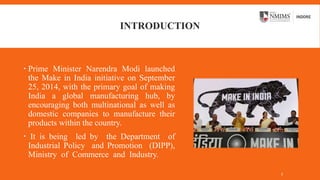
 Prime Minister Narendra Modi launched
the Make in India initiative on September
25, 2014, with the primary goal of making
India a global manufacturing hub, by
encouraging both multinational as well as
domestic companies to manufacture their
products within the country.
 It is being led by the Department of
Industrial Policy and Promotion (DIPP),
Ministry of Commerce and Industry.
3
SIGNIFICANCE OF THE LOGO
 The logo The “Make in India” logo is
derived from India’s national emblem.
The wheel denotes the peaceful progress
and dynamism – a sign from India’s
enlightened past, pointing the way to a
vibrant future. The prowling lion stands
for strength, courage, tenacity and
wisdom – values that are every bit as
Indian today as they have ever been.
4
OBJECTIVE OF MAKE IN INDIA
Objectives of Make In India Initiative are as
follows –
I. The initiative aimed to increase the
manufacturing sector’s growth rate to 12-
14 percent per annum.
II. The initiative also intended to create 100
million additional jobs to the economy.
5
CONTD.
III. The other objective is to ensure that the
manufacturing sector which contributes
around 15% of the country’s Gross
Domestic Products is increased to
25% in the few years.
IV.'Make in India' also aims to create a
conducive environment for investment,
development of modern and efficient
infrastructure, opening up new sectors
for foreign investment
6
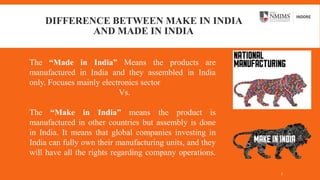
DIFFERENCE BETWEEN MAKE IN INDIA
AND MADE IN INDIA
The “Made in India” Means the products are
manufactured in India and they assembled in India
only. Focuses mainly electronics sector
Vs.
The “Make in India” means the product is
manufactured in other countries but assembly is done
in India. It means that global companies investing in
India can fully own their manufacturing units, and they
will have all the rights regarding company operations.
7
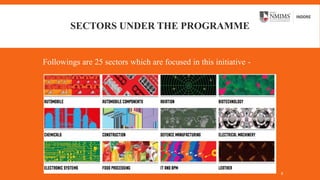
SECTORS UNDER THE PROGRAMME
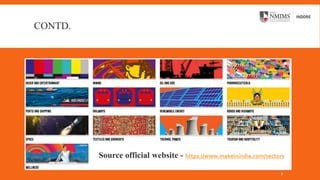
Followings are 25 sectors which are focused in this initiative -
8
CONTD.
Source official website - https://www.makeinindia.com/sectors
9
IMPACT ON INDIAN ECONOMY
The impact of this iniitiative is felt both
domestically and internationally. The development
of the manufacturing sector will create employment
opportunities for the youth of the country, alleviate
poverty, attract investments, create value for
Indian goods and fix the rising trade deficit.
Internationally, it will improve India's standing in
the world and investors will look at India not
merely as a market but as an opportunity. The
interaction between domestic and international
firms will, inevitably, help transform domestic firms
into MNCs
10
FOREIGN INVESTMENT IN INDIAN
MANUFACTURING
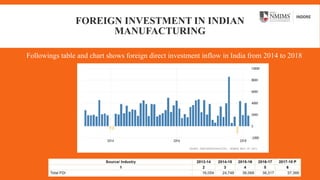
Followings table and chart shows foreign direct investment inflow in India from 2014 to 2018
11
MAKE IN INDIA : SUCCESS OR FAILURE
India has witnessed an increase in FDI from $16 billion in
2013-14 to $36 billion in 2015-16. But, since 2016, the
FDIs have plateaued that interns not contributing to India’s
industrialization. The contribution FDI has been declining in
the manufacturing sector as in previous slide $7 billion
(2017), as against $9.6 billion in 2014-15.
Why has ‘Make in India’ failed to deliver its objectives?
1. No Direct Investment
2. Low productivity of Indian factories
3. Insufficient Skills
12
CONTD.
4. Complicated Labour Regulations
5. Small Size of Industrial Units
6. Inconvenient transportation
7. Power outages are much higher in India
and the electricity cost is about the same
in India and China.
13
WHAT NEEDS TO BE DONE?
(SUGGESTIONS)
1. Reduction of the company tax
2. Improving Ease of Doing Business
3. Simplified Rules
4. Encouraging Innovation
5. Creating favourable policy environment for
manufacturing
6. India needs to leverage new technologies to
resist the counterparts
14
CONCLUSION
India has the capability to push its manufacturing
contribution to GDP to 25% by 2025. Government has to act
as the central pivot of aligning industries, private
companies, public sectors and all stakeholders in realizing
this vision. Government has to put policies in place be it
sector reforms, labor reforms or the elimination of business
barriers. The Government of India has taken a number of
steps to further encourage investment and improve business
climate. “Make in India” mission is one such long term
initiative which will help to realize the dream of
transforming India into a “manufacturing hub”.
15
THANK YOU
Hope this presentation was Interesting and knowledgeable!
16

make in india economics 2.pptx

  • 1.
    MAKE IN INDIA: SUCCESS OR FAILURE Economics presentation 2020 NARSEE MONJEE INSTITUTE OF MANAGEMENT STUDIES , INDORE Presented by – Punit Agrawal and Priyal Kothari (BBA-LL.B. I) 1
  • 2.
    CONTENT  Introduction  Objectiveof Make In India  Sectors Involved  Impact on Indian Economy  Make In India : Success or Failure  Suggestions  Conclusion 2
  • 3.
    INTRODUCTION  Prime MinisterNarendra Modi launched the Make in India initiative on September 25, 2014, with the primary goal of making India a global manufacturing hub, by encouraging both multinational as well as domestic companies to manufacture their products within the country.  It is being led by the Department of Industrial Policy and Promotion (DIPP), Ministry of Commerce and Industry. 3
  • 4.
    SIGNIFICANCE OF THELOGO  The logo The “Make in India” logo is derived from India’s national emblem. The wheel denotes the peaceful progress and dynamism – a sign from India’s enlightened past, pointing the way to a vibrant future. The prowling lion stands for strength, courage, tenacity and wisdom – values that are every bit as Indian today as they have ever been. 4
  • 5.
    OBJECTIVE OF MAKEIN INDIA Objectives of Make In India Initiative are as follows – I. The initiative aimed to increase the manufacturing sector’s growth rate to 12- 14 percent per annum. II. The initiative also intended to create 100 million additional jobs to the economy. 5
  • 6.
    CONTD. III. The otherobjective is to ensure that the manufacturing sector which contributes around 15% of the country’s Gross Domestic Products is increased to 25% in the few years. IV.'Make in India' also aims to create a conducive environment for investment, development of modern and efficient infrastructure, opening up new sectors for foreign investment 6
  • 7.
    DIFFERENCE BETWEEN MAKEIN INDIA AND MADE IN INDIA The “Made in India” Means the products are manufactured in India and they assembled in India only. Focuses mainly electronics sector Vs. The “Make in India” means the product is manufactured in other countries but assembly is done in India. It means that global companies investing in India can fully own their manufacturing units, and they will have all the rights regarding company operations. 7
  • 8.
    SECTORS UNDER THEPROGRAMME Followings are 25 sectors which are focused in this initiative - 8
  • 9.
    CONTD. Source official website- https://www.makeinindia.com/sectors 9
  • 10.
    IMPACT ON INDIANECONOMY The impact of this iniitiative is felt both domestically and internationally. The development of the manufacturing sector will create employment opportunities for the youth of the country, alleviate poverty, attract investments, create value for Indian goods and fix the rising trade deficit. Internationally, it will improve India's standing in the world and investors will look at India not merely as a market but as an opportunity. The interaction between domestic and international firms will, inevitably, help transform domestic firms into MNCs 10
  • 11.
    FOREIGN INVESTMENT ININDIAN MANUFACTURING Followings table and chart shows foreign direct investment inflow in India from 2014 to 2018 11
  • 12.
    MAKE IN INDIA: SUCCESS OR FAILURE India has witnessed an increase in FDI from $16 billion in 2013-14 to $36 billion in 2015-16. But, since 2016, the FDIs have plateaued that interns not contributing to India’s industrialization. The contribution FDI has been declining in the manufacturing sector as in previous slide $7 billion (2017), as against $9.6 billion in 2014-15. Why has ‘Make in India’ failed to deliver its objectives? 1. No Direct Investment 2. Low productivity of Indian factories 3. Insufficient Skills 12
  • 13.
    CONTD. 4. Complicated LabourRegulations 5. Small Size of Industrial Units 6. Inconvenient transportation 7. Power outages are much higher in India and the electricity cost is about the same in India and China. 13
  • 14.
    WHAT NEEDS TOBE DONE? (SUGGESTIONS) 1. Reduction of the company tax 2. Improving Ease of Doing Business 3. Simplified Rules 4. Encouraging Innovation 5. Creating favourable policy environment for manufacturing 6. India needs to leverage new technologies to resist the counterparts 14
  • 15.
    CONCLUSION India has thecapability to push its manufacturing contribution to GDP to 25% by 2025. Government has to act as the central pivot of aligning industries, private companies, public sectors and all stakeholders in realizing this vision. Government has to put policies in place be it sector reforms, labor reforms or the elimination of business barriers. The Government of India has taken a number of steps to further encourage investment and improve business climate. “Make in India” mission is one such long term initiative which will help to realize the dream of transforming India into a “manufacturing hub”. 15
  • 16.
    THANK YOU Hope thispresentation was Interesting and knowledgeable! 16