Peds/PICU Fellowship
Mahdi Hemmat
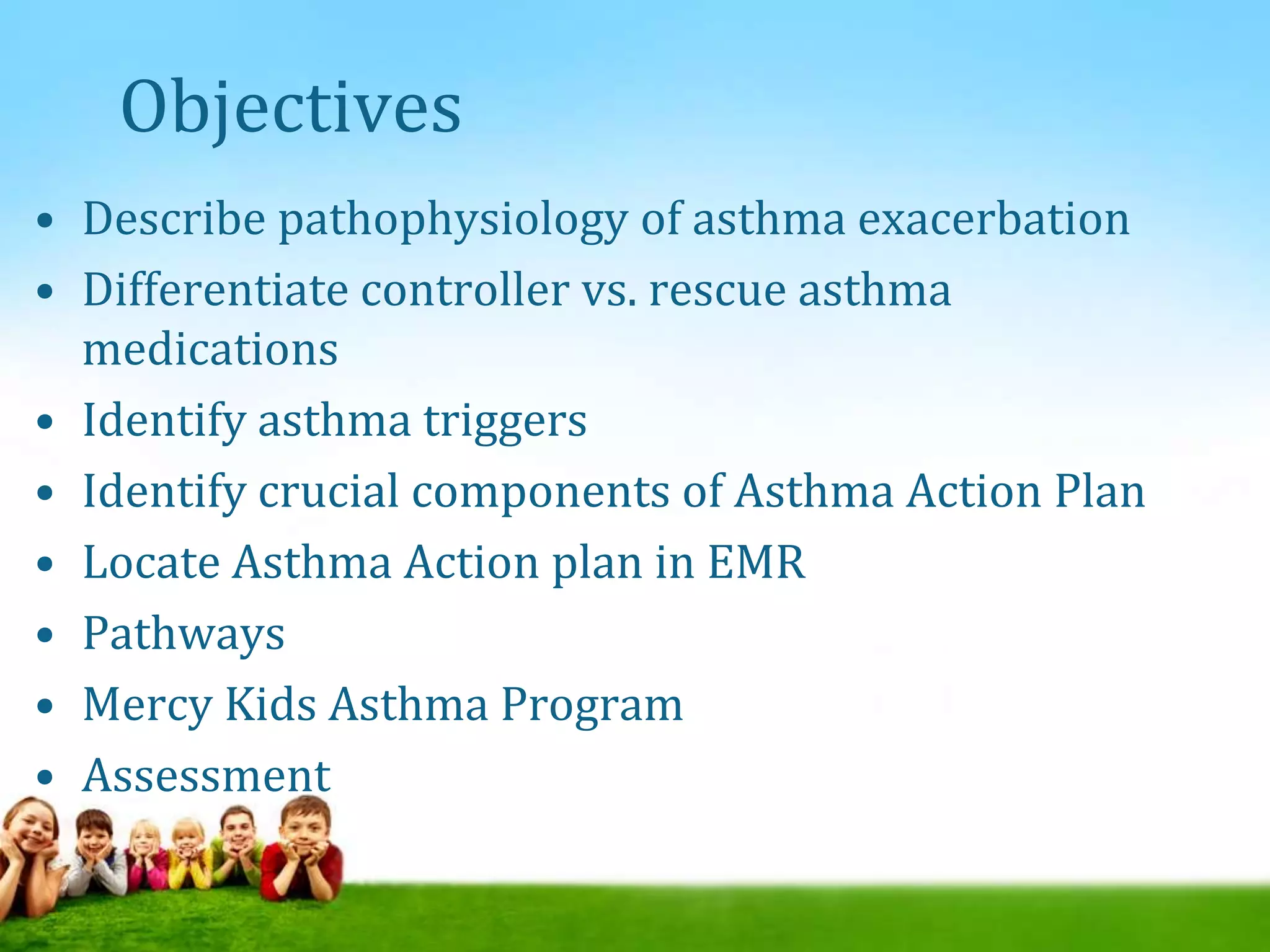
Objectives
• Describe pathophysiology of asthma exacerbation
• Differentiate controller vs. rescue asthma
medications
• Identify asthma triggers
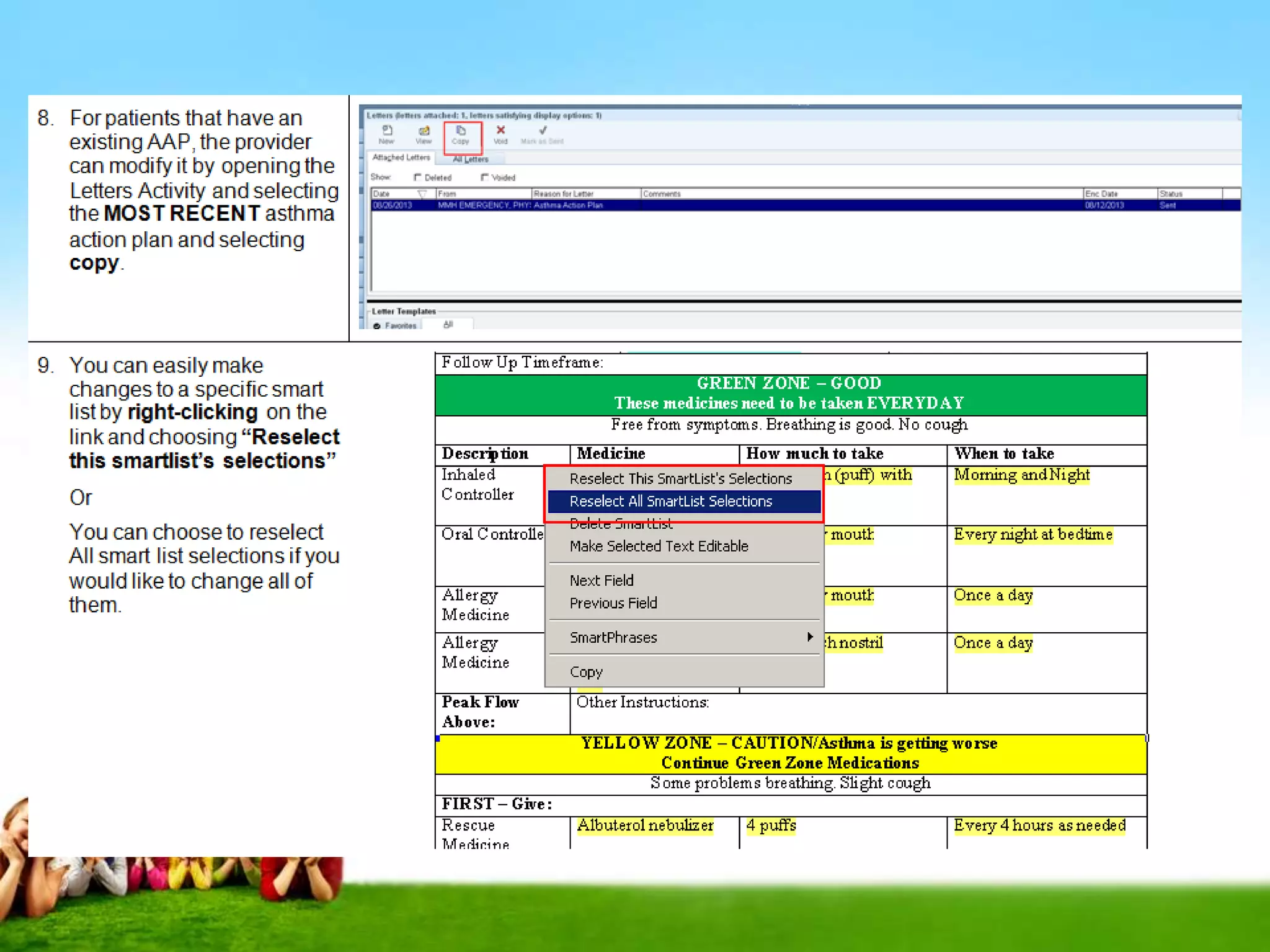
• Identify crucial components of Asthma Action Plan
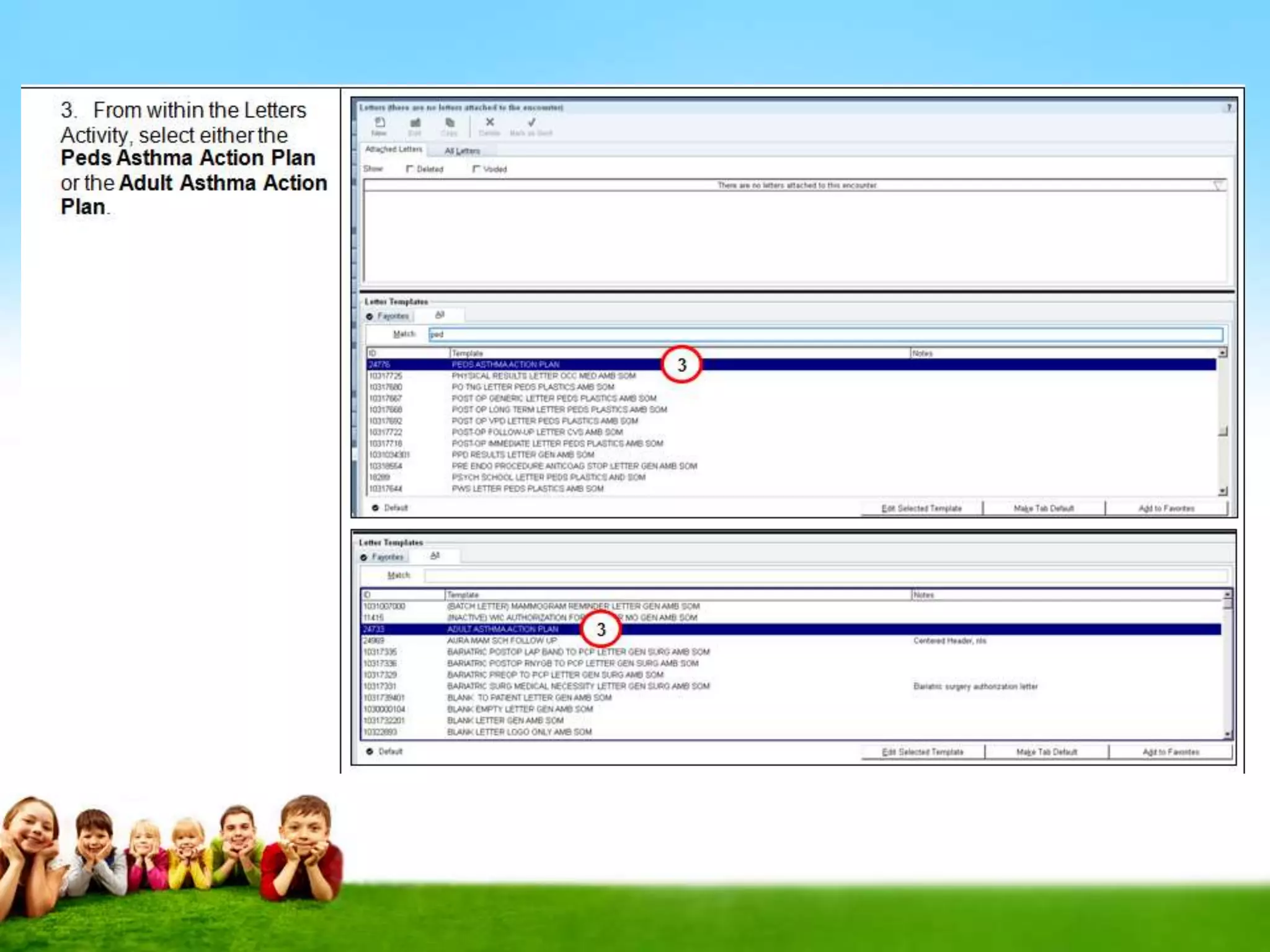
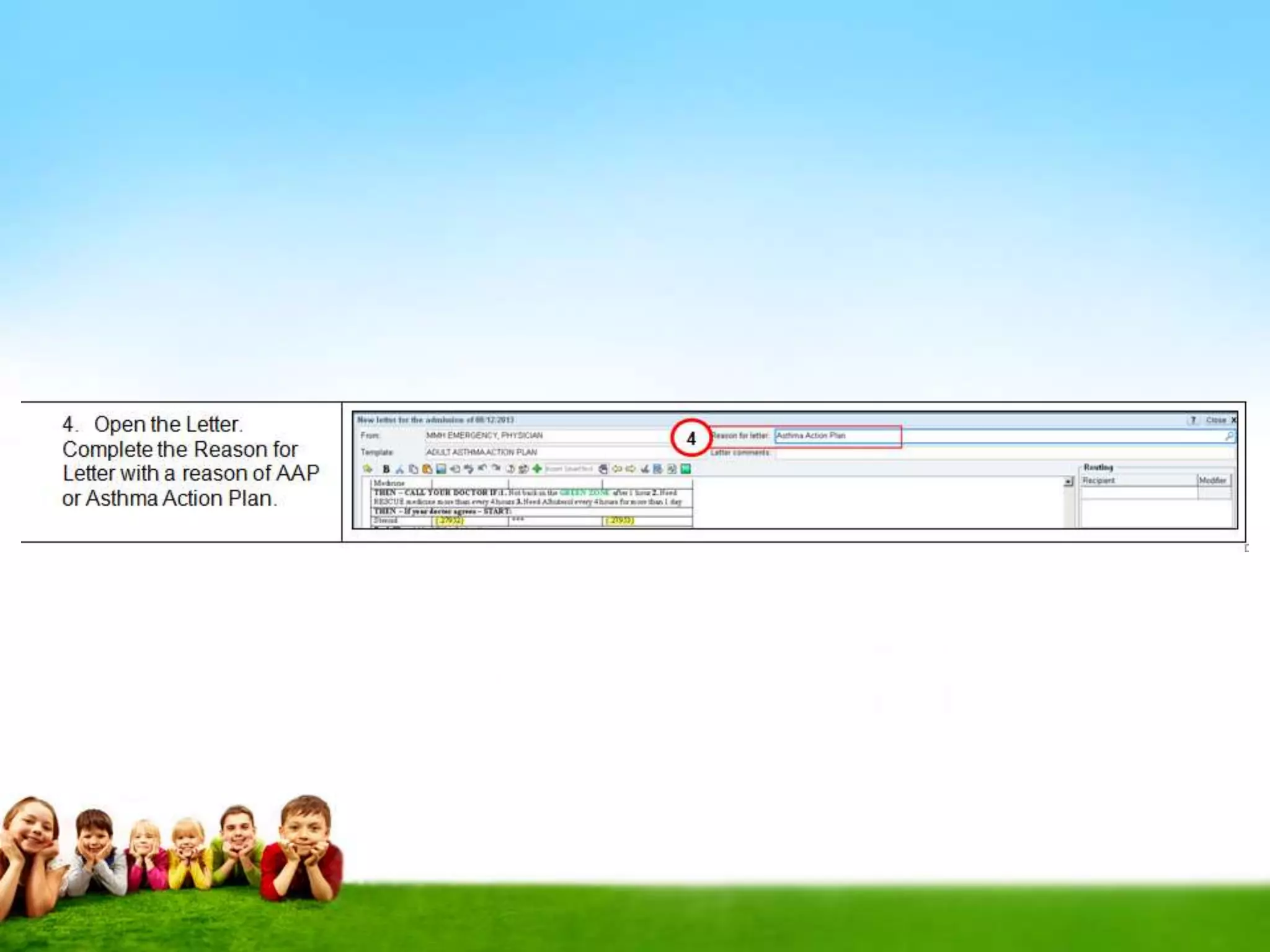
• Locate Asthma Action plan in EMR
• Pathways
• Mercy Kids Asthma Program
• Assessment
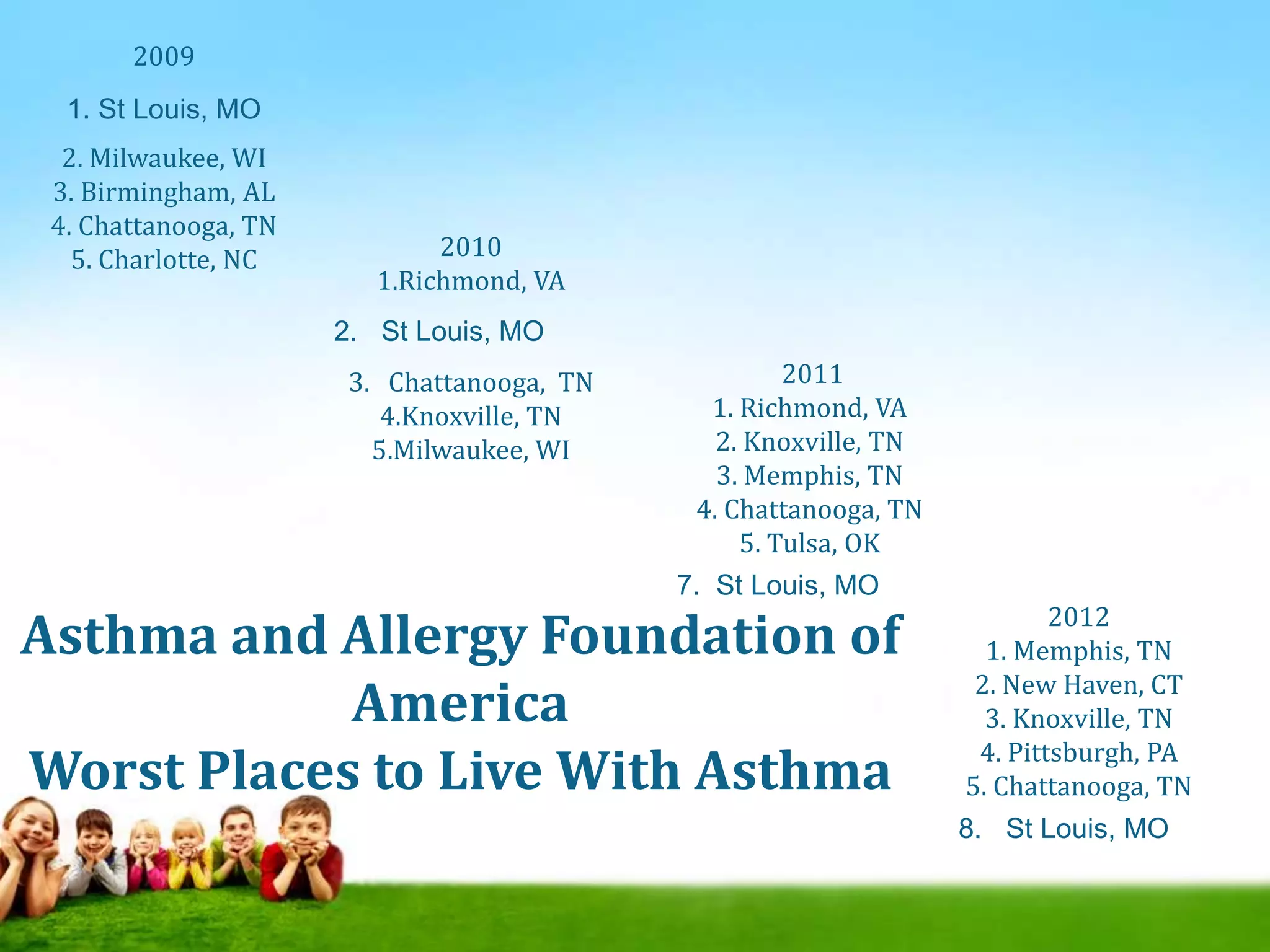
2009
2. Milwaukee, WI
3. Birmingham, AL
4. Chattanooga, TN
5. Charlotte, NC
2012
1. Memphis, TN
2. New Haven, CT
3. Knoxville, TN
4. Pittsburgh, PA
5. Chattanooga, TN
2011
1. Richmond, VA
2. Knoxville, TN
3. Memphis, TN
4. Chattanooga, TN
5. Tulsa, OK
2010
1.Richmond, VA
3. Chattanooga, TN
4.Knoxville, TN
5.Milwaukee, WI
1. St Louis, MO
2. St Louis, MO
7. St Louis, MO
8. St Louis, MO
Asthma and Allergy Foundation of
America
Worst Places to Live With Asthma
Most common signs and
symptoms of asthma?
• Cough (night)
• Wheeze
• Shortness of breath
• Increased work of breathing
• Per the NHLBI: Asthma (AZ-ma) is a chronic (long-term)
lung disease that inflames and narrows the airways.
Asthma causes recurring periods of wheezing (a whistling
sound when you breathe), chest tightness, shortness of
breath, and coughing.
• Per Mayo Clinic: Asthma is a condition in which your
airways narrow and swell and produce extra mucus. This
can make breathing difficult and trigger coughing,
wheezing and shortness of breath.
• Asthma is a common chronic disorder of the airways that is
complex and characterized by variable and recurring
symptoms, airflow obstruction, bronchial hyper-
responsiveness, and an underlying inflammation
What is asthma?
In short…..
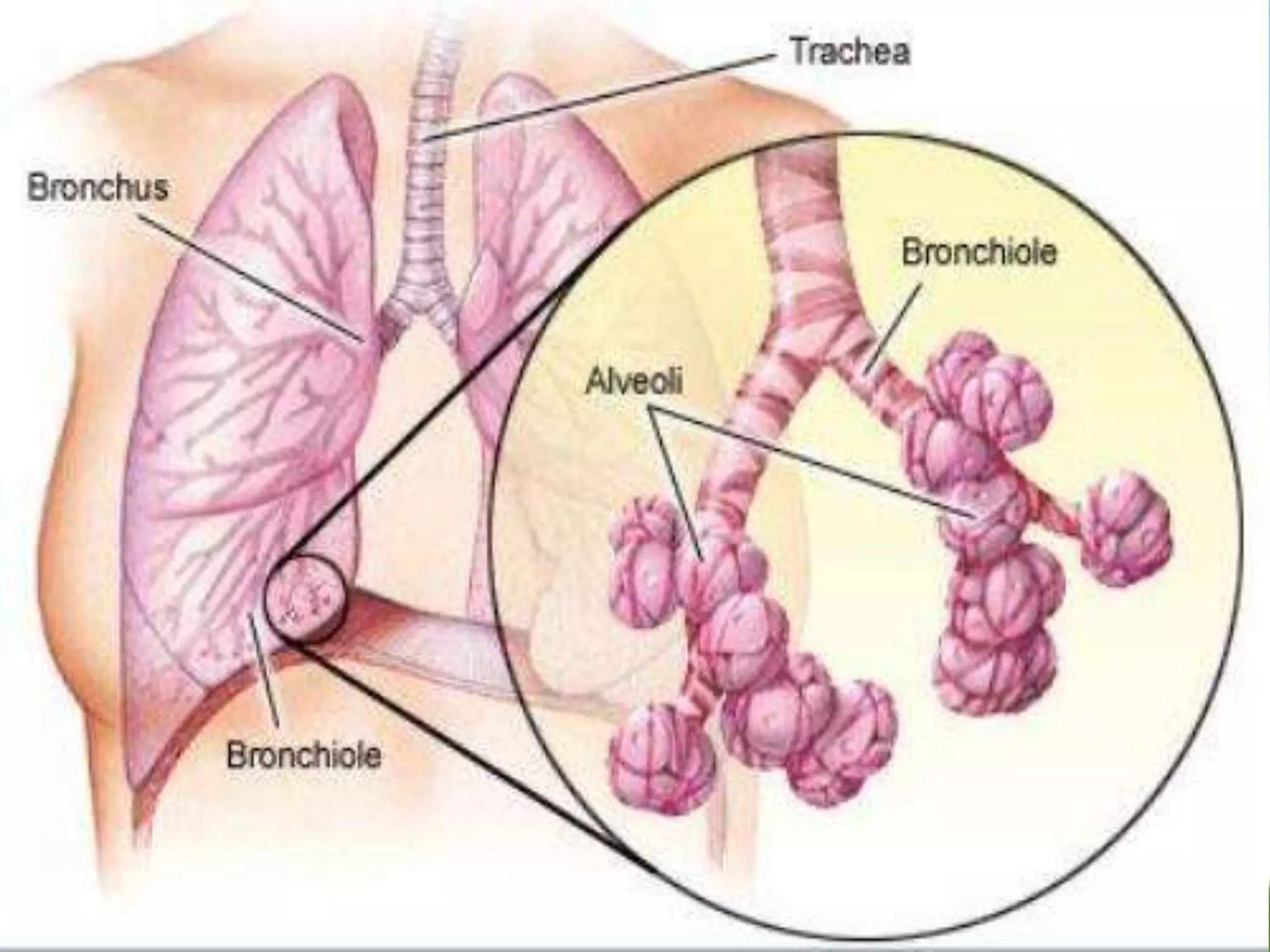
• Airway swells (airway inflammation)
• Muscles around airway get tight
(airway constriction)
• Increase in mucus production
** Hypersensitivity or hyper-responsive
to triggers (irritants and allergens)
Tree Pollen
Feb-June
Ragweed
Aug -Oct
Grass Pollen
May -Aug
Mold
Dander
Perennial
Dust
Perennial
Medications
and foods
Things you
are
allergic to
Smoke
Change in
Weather
Changes
Colds
Fumes/ strong
smells
Sinus infections
Gerd
Cold air
Exercise
Things that
irritate the
airway
What does asthma feel like?
What does it look like?
What does it sound like?
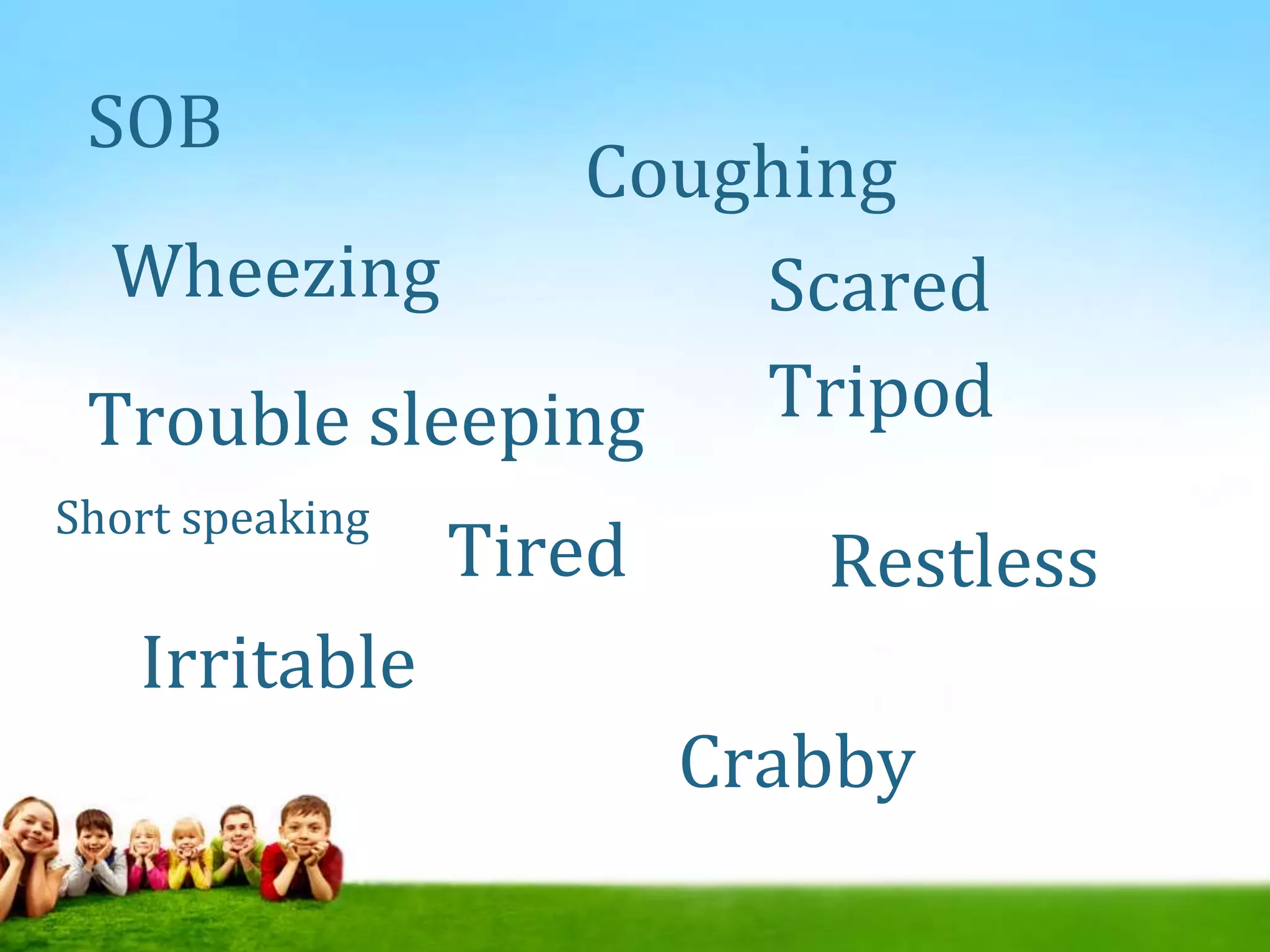
SOB
Restless
Irritable
Wheezing
Trouble sleeping
Tired
Scared
Short speaking
Crabby
Tripod
Coughing
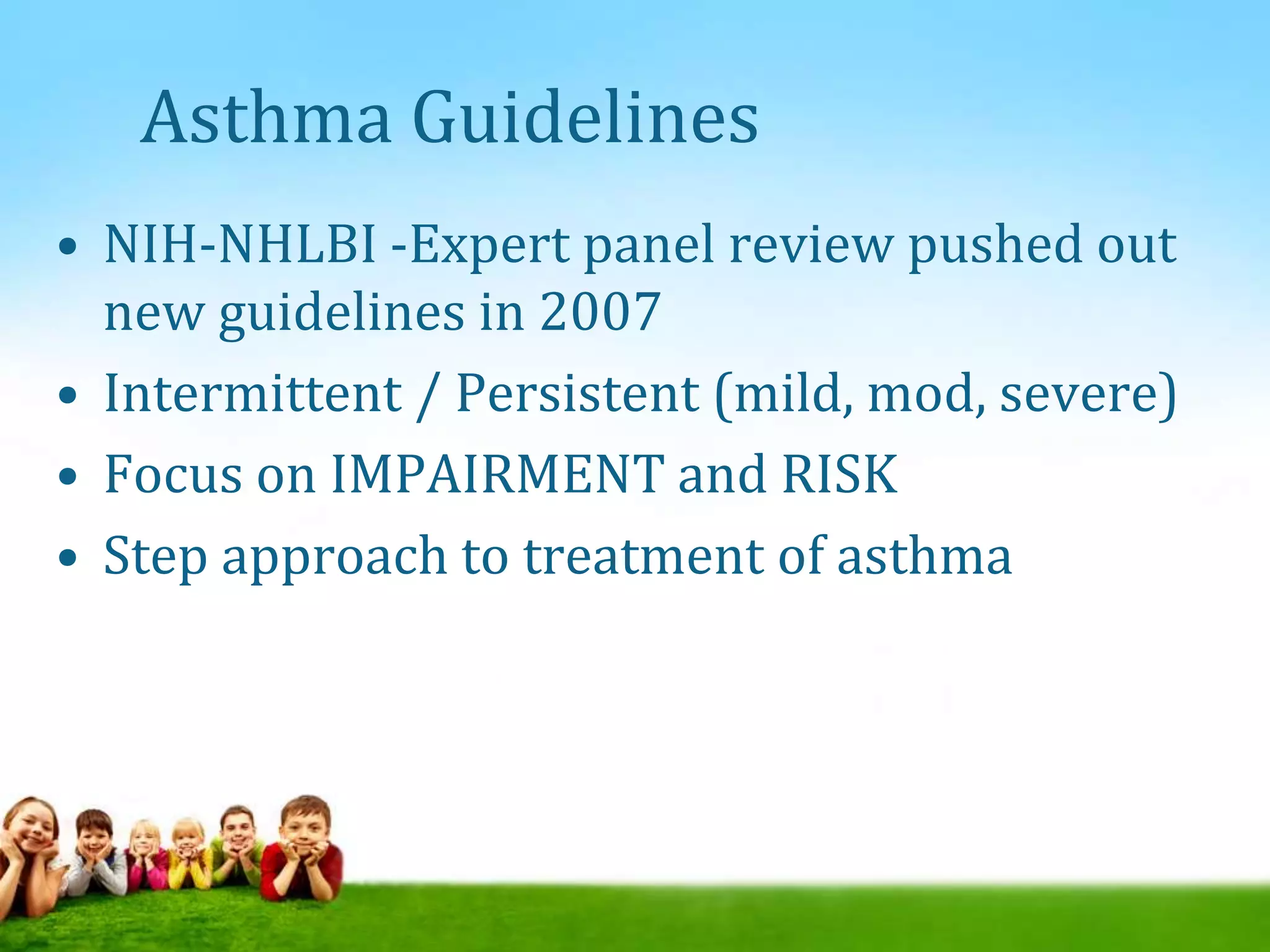
Asthma Guidelines
• NIH-NHLBI -Expert panel review pushed out
new guidelines in 2007
• Intermittent / Persistent (mild, mod, severe)
• Focus on IMPAIRMENT and RISK
• Step approach to treatment of asthma
Medication Management
• Controller medications- Keeping
symptoms from happening in the first
place
• Rescue or reliever medicines-Treating
symptoms when I have them
Rescue medications
Bronchodilators
• Proair- Albuterol
• Ventolin-Albuterol
• Preventil- Albuterol
• Xopenex-Levalbuterol
• Albuterol Nebulizer solution
FIREMAN MEDICATIONS
Controller medications
• These medicines help protect the lungs.
• You don’t feel immediate relief with these when taken.
• Can take weeks to get maximum affect
• They work over time to reduce and control
inflammation in the lungs
• They help reduce hyper-responsiveness
• Controller medicines are taken on a daily basis to
CONTROL asthma
“Seat belt” medications
Controller medications
 Inhaled corticosteroids (ICS)-They can come in the
form of a Dry powder inhaler (DPI), a metered dose
inhaler (MDI) or a nebulizer vials
 **Rinse mouth and spit after these medicines to
avoid a fungal infection called “thrush” in the mouth
 Long acting beta agonist (LABA)
 Leukotriene modifier- Singulair, Xyflo
 Allergy medications- Claritin, Zyrtec, Allegra
 Immunotherapy- Xolair
19
How do we treat asthma?
What needs to be ordered?
• ALBUTEROL
• STEROIDS
• ASTHMA EDUCATION
• FOLLOW UP APPT
• SCRIPTS on DC must MATCH AAP
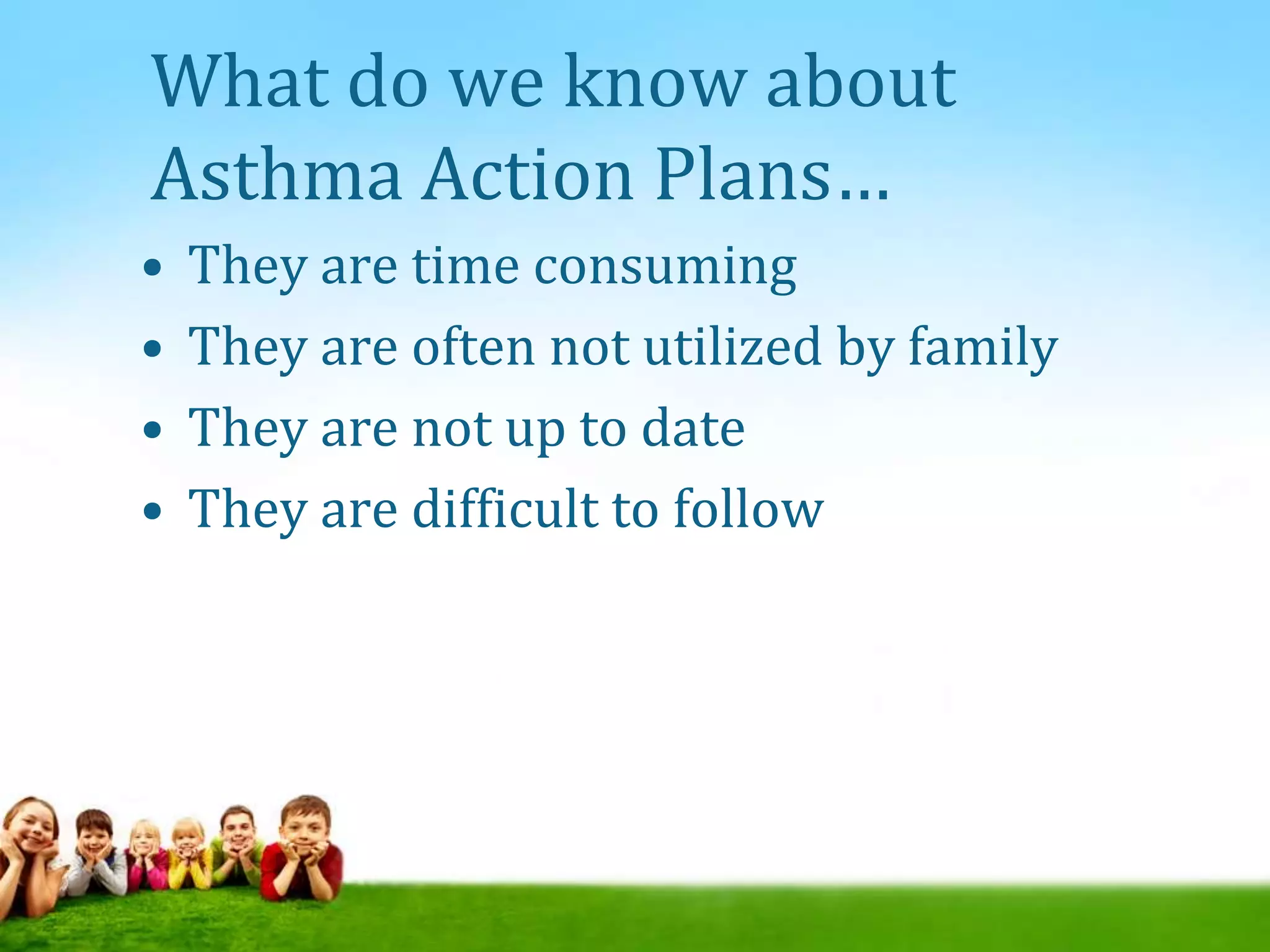
What do we know about
Asthma Action Plans…
• They are time consuming
• They are often not utilized by family
• They are not up to date
• They are difficult to follow
Why?
• Helps minimize or eliminate the need
for trips to the ED and
hospitalizations.
• Allows the family and other caregivers
to manage their asthma with the help
of their provider.
• Most school systems now require
them.
This is a chronic life
threatening disease……
• You wouldn’t send a diabetic home and say …
“ Use your insulin as needed”
So why are we sending home children with asthma
without instruction?
You have less time for education once they leave
the hospital.
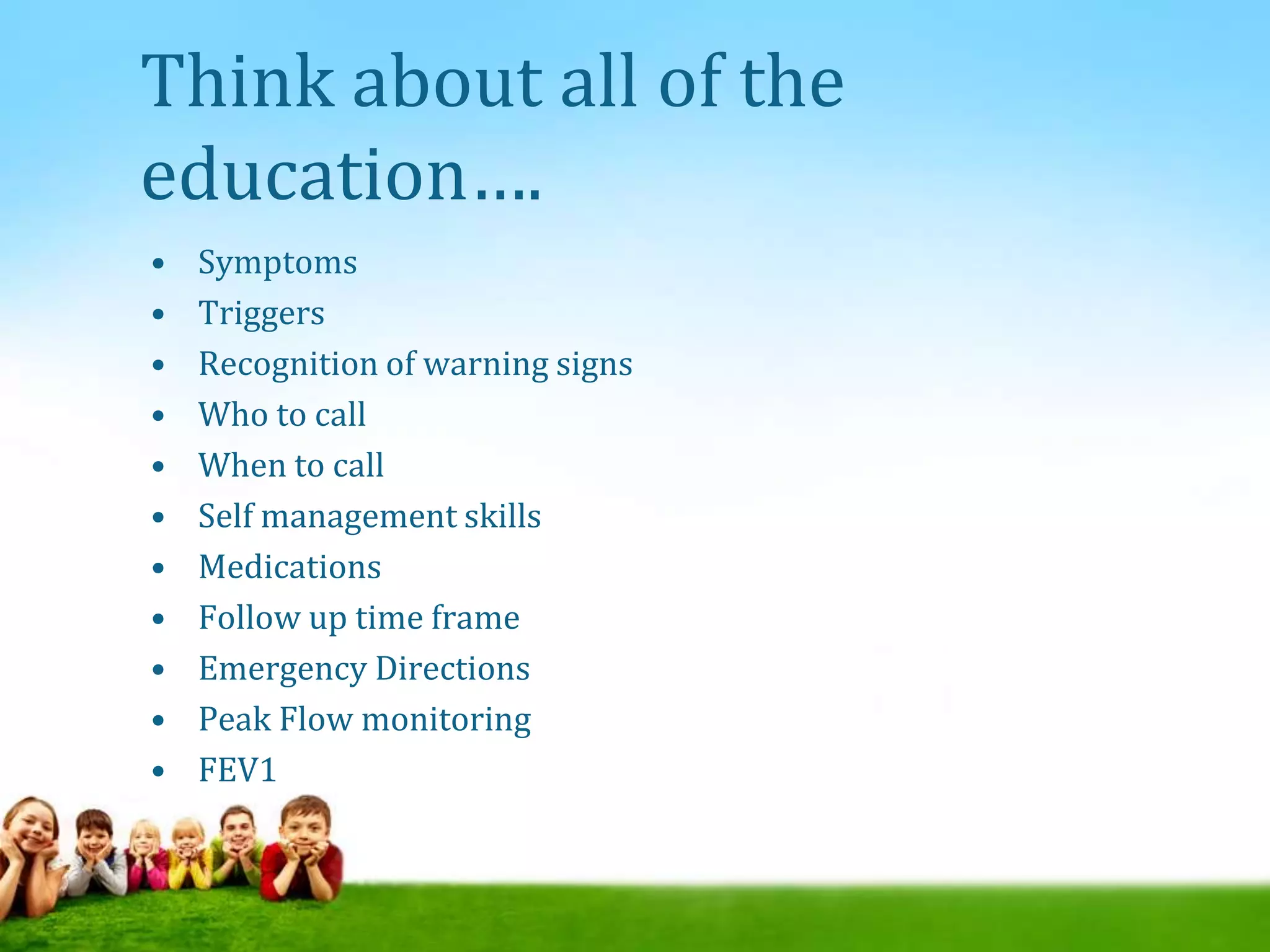
Think about all of the
education….
• Symptoms
• Triggers
• Recognition of warning signs
• Who to call
• When to call
• Self management skills
• Medications
• Follow up time frame
• Emergency Directions
• Peak Flow monitoring
• FEV1
NHLBI EPR-3:2007
Includes two aspects:
Daily management and how to recognize and handle
worsening asthma. Written action plans are
particularly recommended for patients who have
moderate or severe persistent asthma, a history of
severe exacerbations, or poorly controlled asthma
(Evidence B).”
The 2006 AHRQ /Agency for Healthcare Research and
Quality Report indicates that only 28% of patients
receive an adequate Asthma Action Plan.
In summary…
• We will be 100%
• When in doubt…fill one out
• There is no such thing as too much
education
• Call for assistance when filling it out
• Education in office
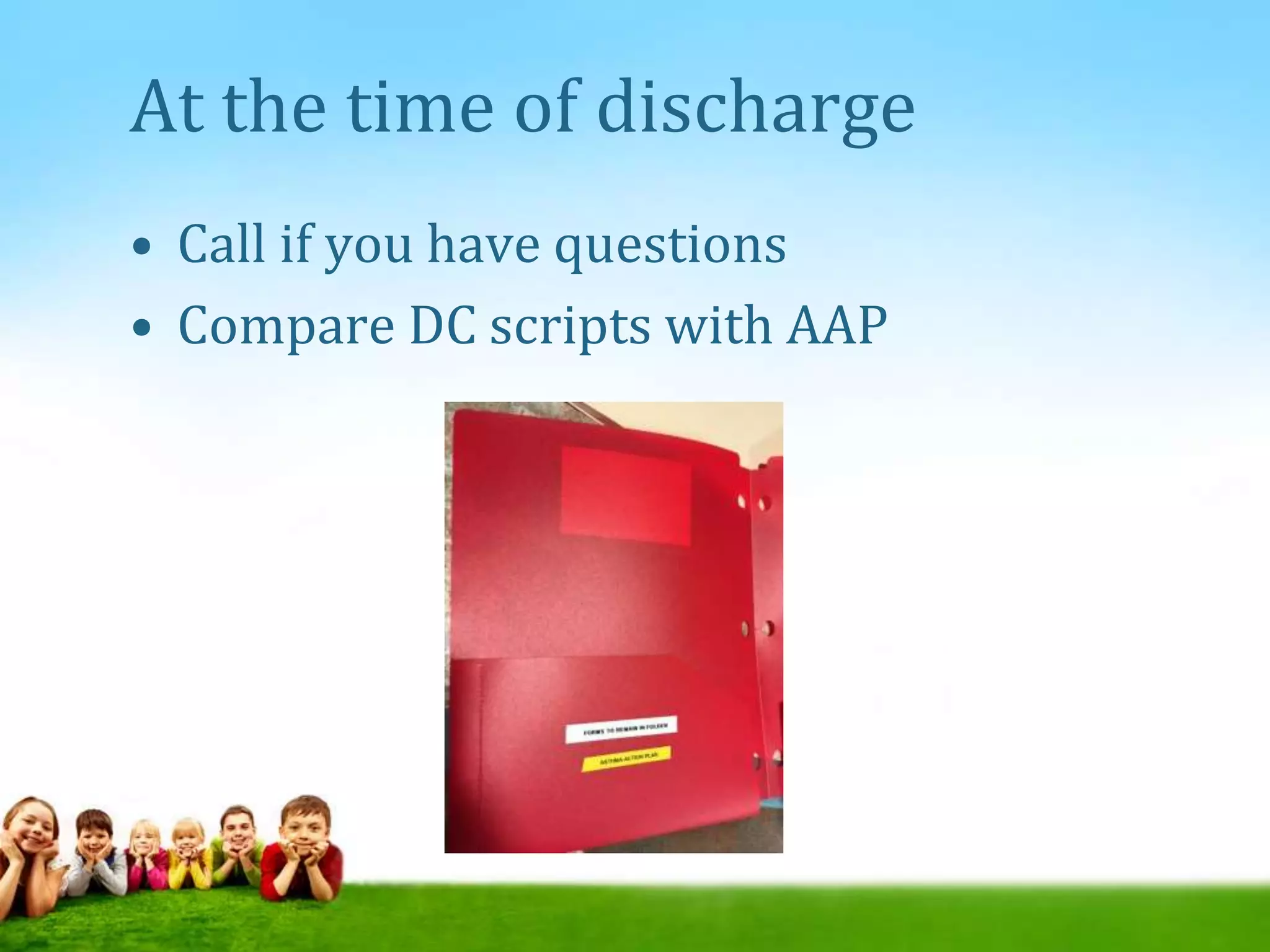
At the time of discharge
• Call if you have questions
• Compare DC scripts with AAP
When in
doubt….
PLEASE ASK
MCH Asthma Program
• Asthma Education/ order on admission
• Pulmonary consult when indicated
• Asthma Coordination Follow Up
• Asthma Education Session with Assessor
• Asthma Action Plan
• Discharge Planning/ DME
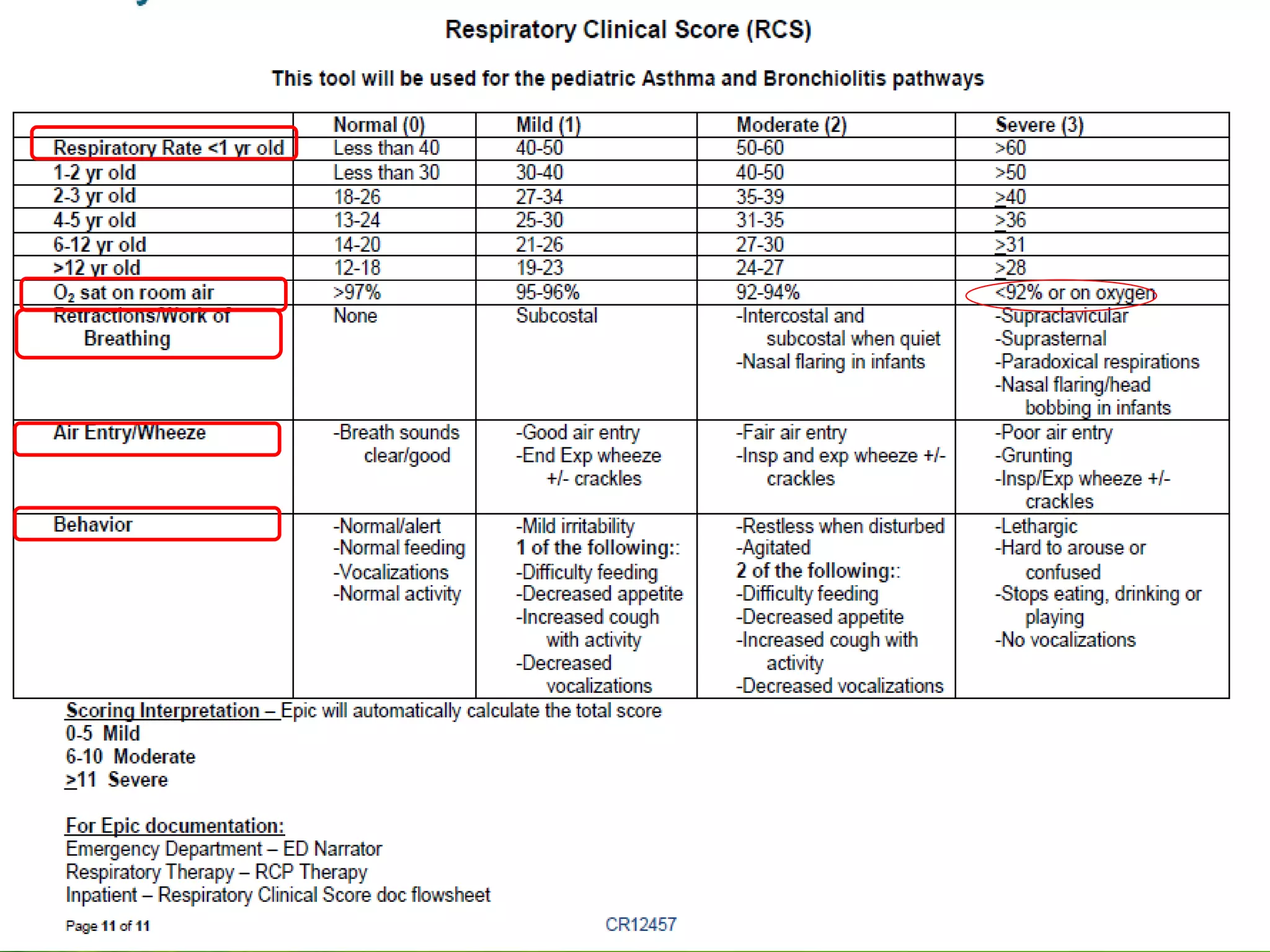
RCS Score with vitals
• RT/ RN model
• Facilitates communication
• Max of 15
Remember
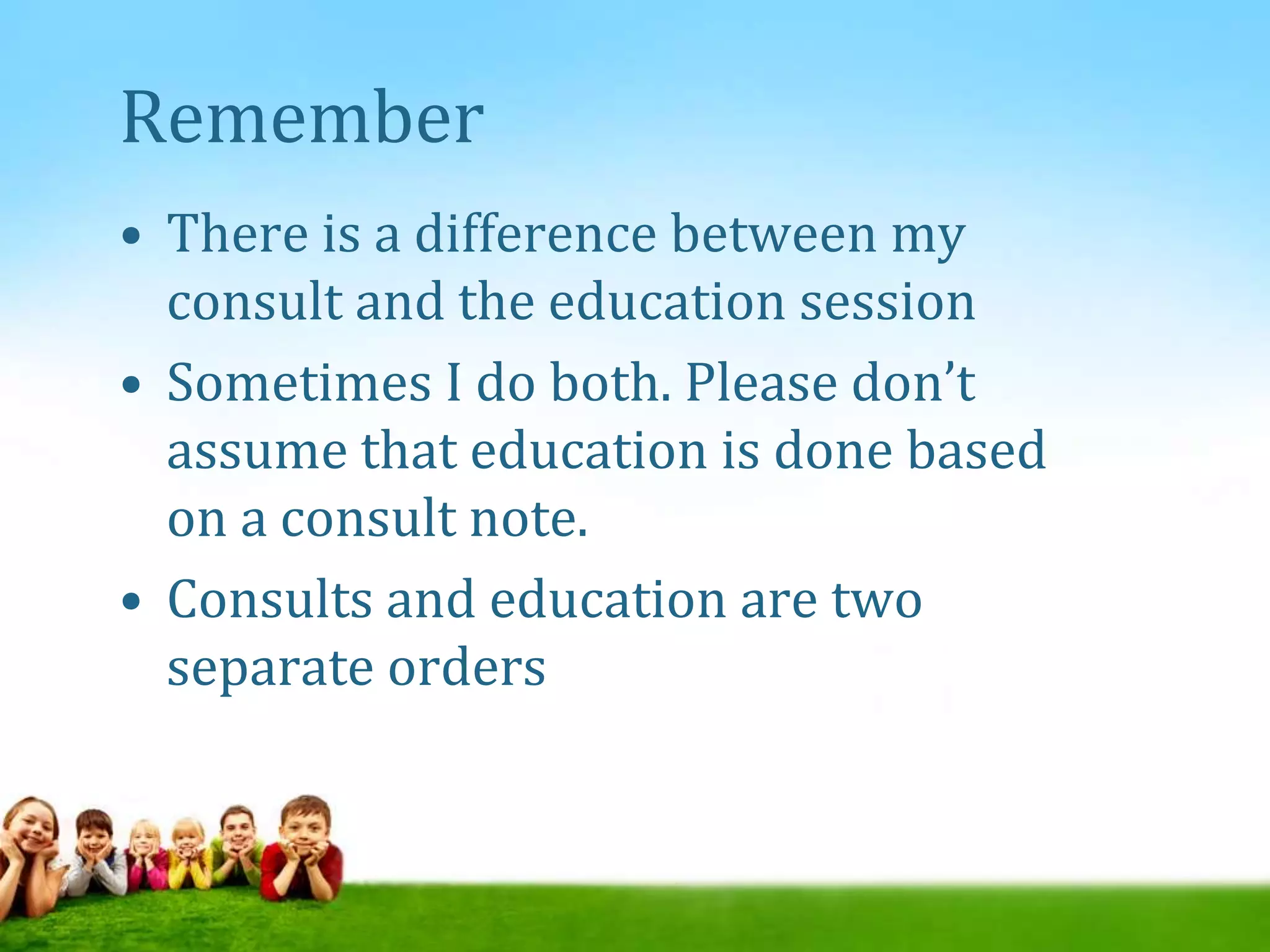
• There is a difference between my
consult and the education session
• Sometimes I do both. Please don’t
assume that education is done based
on a consult note.
• Consults and education are two
separate orders
Pathways!
Physician order
sets
Nurse outcomes
and
documentation
New!!!
• Pathway BPA started to fire this week!
• Will alert you when a pathway order
has been placed and you need to go in
and initiate
• You must to the Asthma and the
Universal separately.
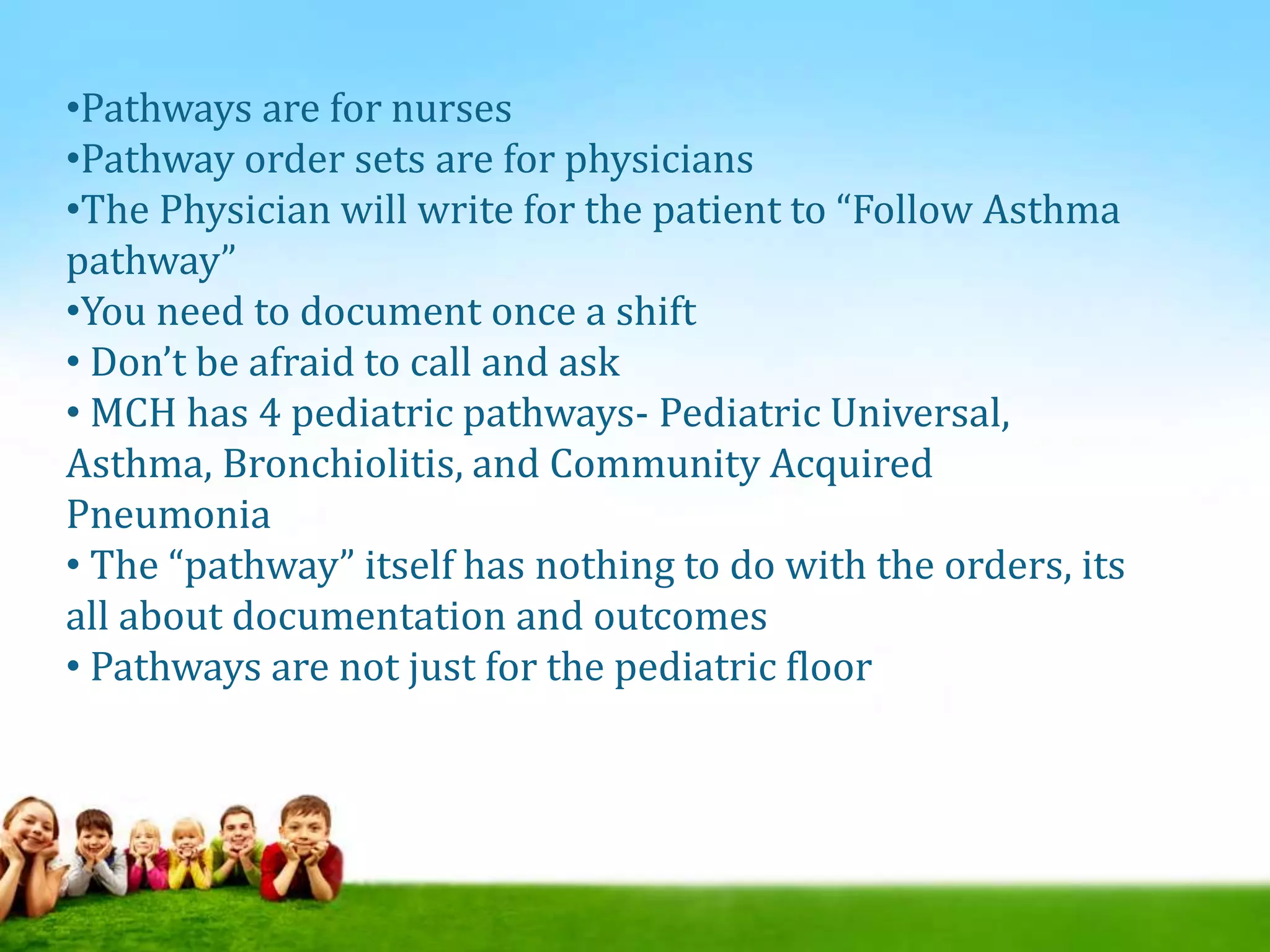
•Pathways are for nurses
•Pathway order sets are for physicians
•The Physician will write for the patient to “Follow Asthma
pathway”
•You need to document once a shift
• Don’t be afraid to call and ask
• MCH has 4 pediatric pathways- Pediatric Universal,
Asthma, Bronchiolitis, and Community Acquired
Pneumonia
• The “pathway” itself has nothing to do with the orders, its
all about documentation and outcomes
• Pathways are not just for the pediatric floor
What is Mercy Children’s doing?
• Med to bed process
• PIPA-Pathways for Improving
Pediatric Asthma Care” (PIPA)
• PACT- Pediatric Asthma Certification
Team
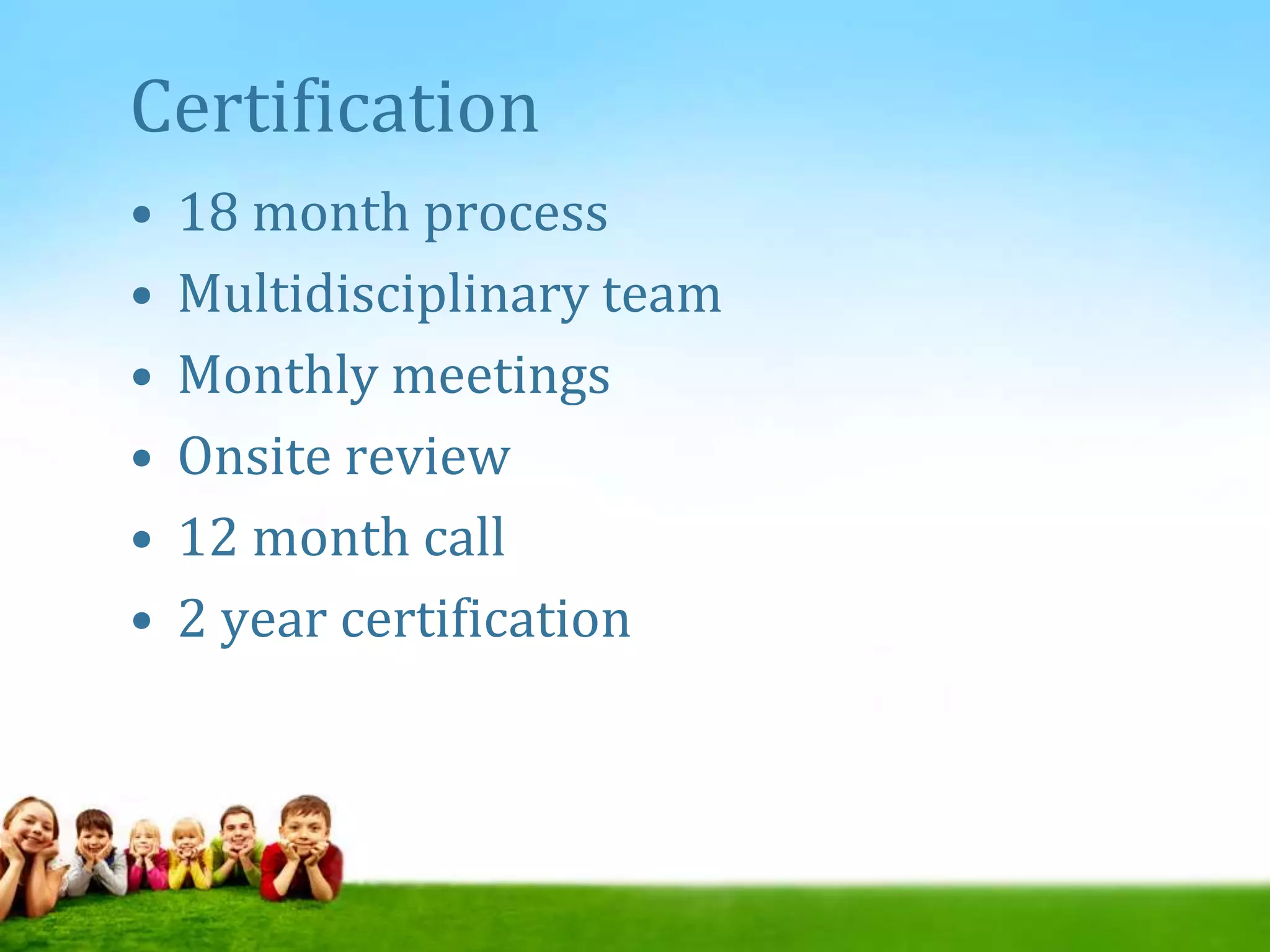
Certification
• 18 month process
• Multidisciplinary team
• Monthly meetings
• Onsite review
• 12 month call
• 2 year certification
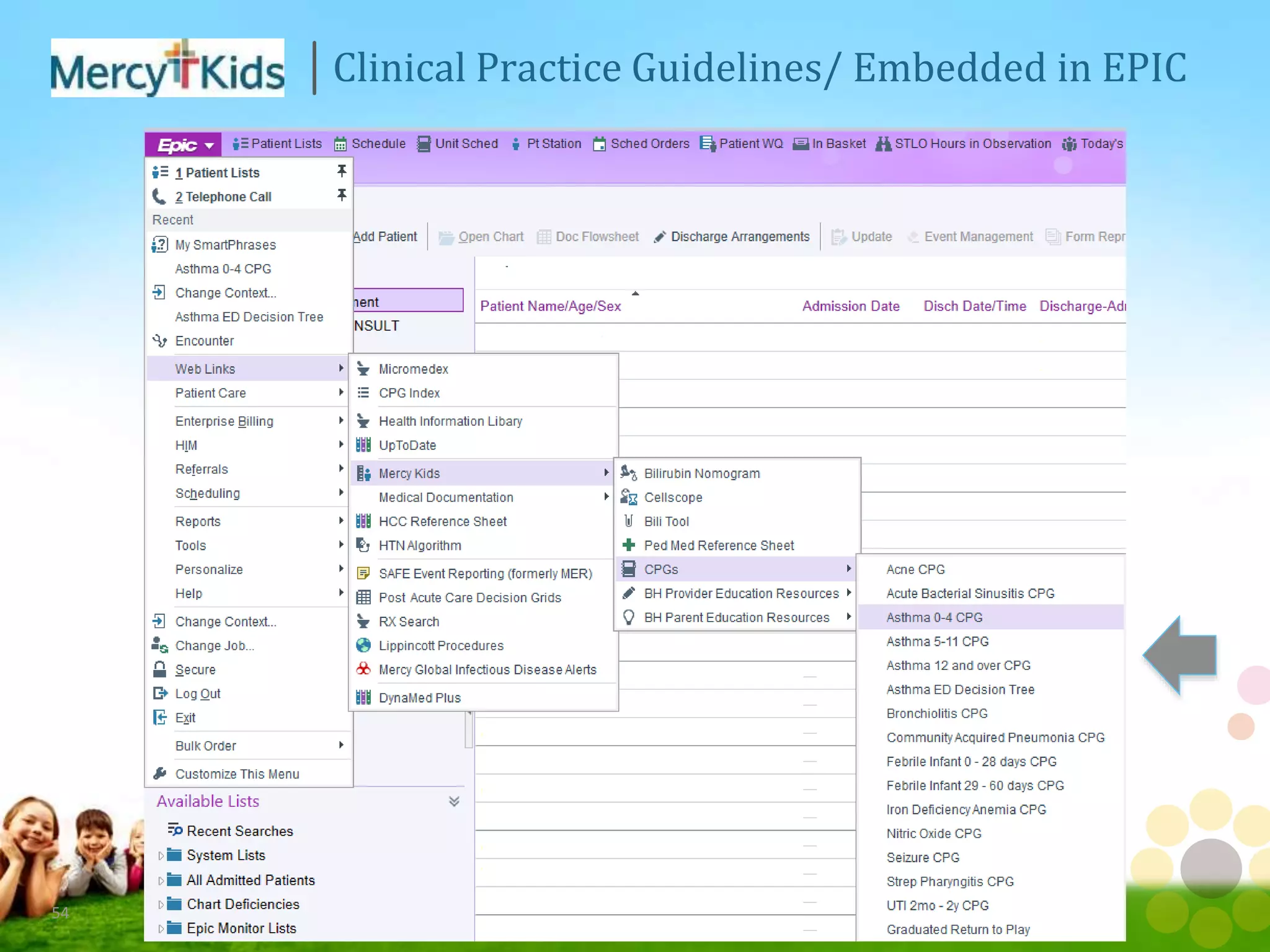
Clinical Practice Guidelines/ Embedded in EPIC
54
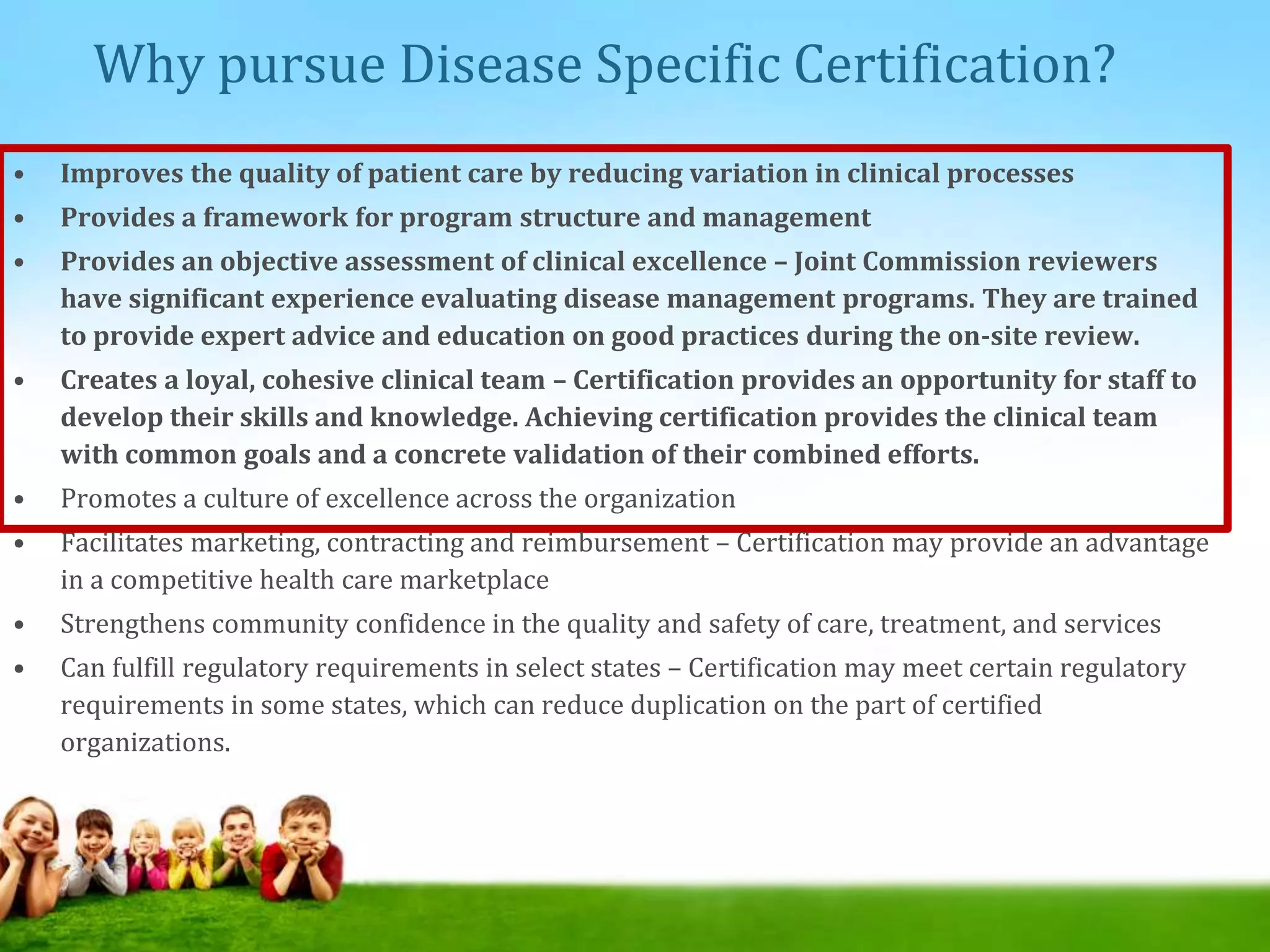
Why pursue Disease Specific Certification?
• Improves the quality of patient care by reducing variation in clinical processes
• Provides a framework for program structure and management
• Provides an objective assessment of clinical excellence – Joint Commission reviewers
have significant experience evaluating disease management programs. They are trained
to provide expert advice and education on good practices during the on-site review.
• Creates a loyal, cohesive clinical team – Certification provides an opportunity for staff to
develop their skills and knowledge. Achieving certification provides the clinical team
with common goals and a concrete validation of their combined efforts.
• Promotes a culture of excellence across the organization
• Facilitates marketing, contracting and reimbursement – Certification may provide an advantage
in a competitive health care marketplace
• Strengthens community confidence in the quality and safety of care, treatment, and services
• Can fulfill regulatory requirements in select states – Certification may meet certain regulatory
requirements in some states, which can reduce duplication on the part of certified
organizations.
Dashboard Asthma Metrics
Time to beta- agonist <1 hour Sills, M.R., et al. (2011)
Time to Steroid < 1 hour
(ED or 1st order)
Sills, M.R., et al.(2011)
Rowe, B.H., et al. (2008)
Respiratory Clinical Score; determined prior to initiation of
treatment
Sills, M.R., et al. (2011)
NHLBI EPR-3 (2007)
Prescribed oral corticosteroid at discharge NHLBI EPR-3 (2007)
Completion of Asthma Action Plan at discharge (IP) TJC Core Measure
Follow up with PCP within 7 days (IP) NHLBI EPR-3 (2007)
LOS in ER without ED order set utilization Trend
LOS in ER with ED order set utilization Trend
CXR orders occurring for asthma patients 26% benchmark CHA report
Antibiotic Administration; Zithromax? ever give an ABX
without documented pneumonia; disposition critical vs.
non-critical care
6% benchmark CHA report
Atrovent > 3 doses ( % of children) 0% benchmark CHA report
PACT Performance Measures 2018*
1. Time to oral steroids/ door to dose/ 60
minute goal
2. Early Nebulizer to MDI transition
3. Smoke exposure intervention
documentation
4. Program evaluation
*retired 2 measures: Utilization of pathway order set and asthma action plan
due to 100% compliance after process was hardwired
Med to Bed
• Piloting a new process for Inhaled Corticosteroids for Asthma patients
• (Flovent, Advair, QVAR, Dulera, Symbicort, Pulmicort Flexhaler, Asmanex)
• We will be filling their ICS’s therapy as OUTPATIENT prescriptions to be used
during their inpatient stay (within 24 hours of DC)
• The prescription for their ICS, will be e-scribed to the MERCY LOBBY
PHARMACY
• From there, the “med to bed” process will start
• Tip sheets
• The bedside RT will administer the ICS as directed
• The OUTPATIENT ICS will go home with the patient at the time of
discharge…..WIN!!!!
• Please see tip sheet on how to order ICS therapy
• Please review email sent for process specifics
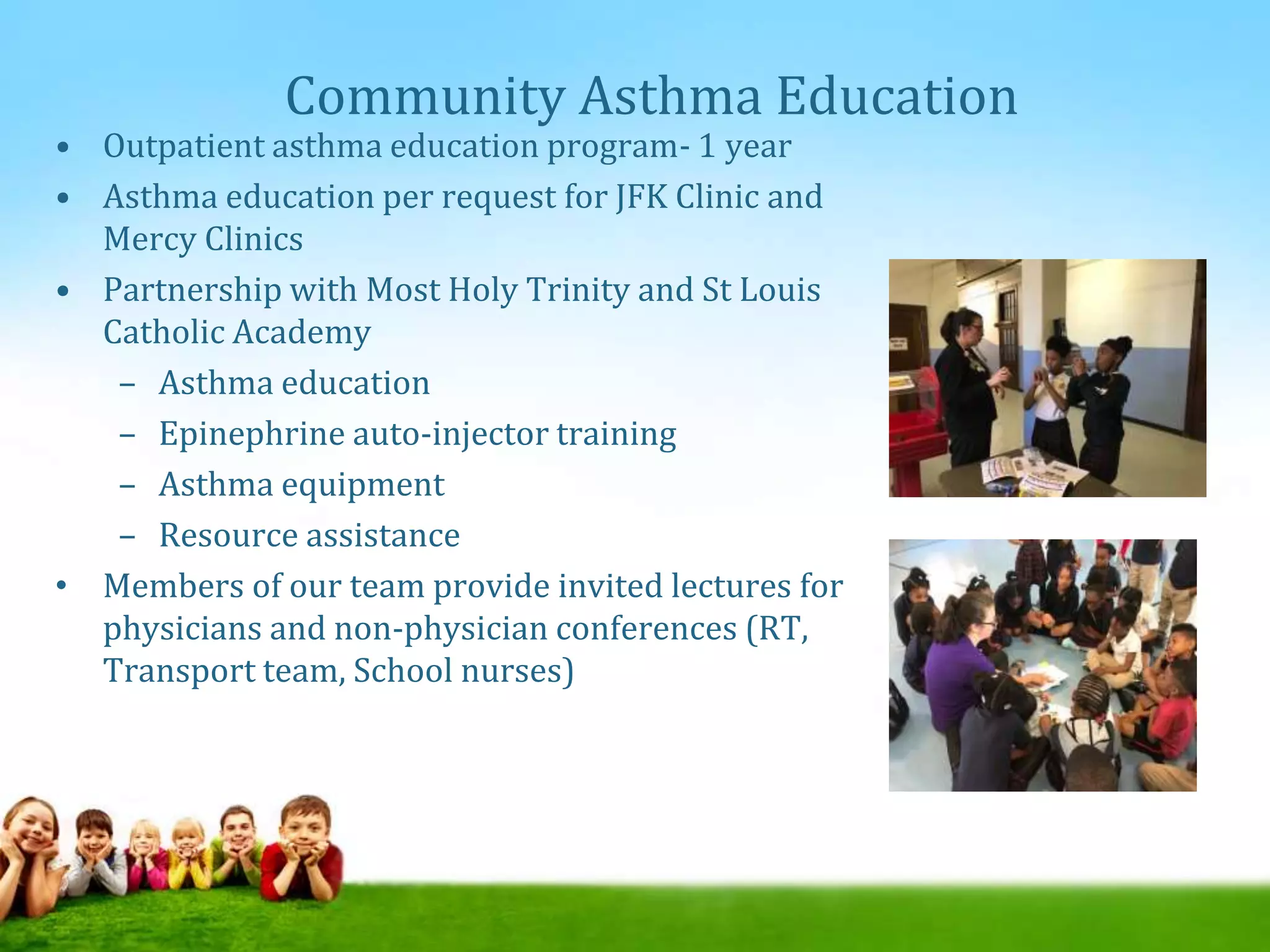
Community Asthma Education
• Outpatient asthma education program- 1 year
• Asthma education per request for JFK Clinic and
Mercy Clinics
• Partnership with Most Holy Trinity and St Louis
Catholic Academy
– Asthma education
– Epinephrine auto-injector training
– Asthma equipment
– Resource assistance
• Members of our team provide invited lectures for
physicians and non-physician conferences (RT,
Transport team, School nurses)
Future Endeavors
• Virtual Care component
• Ambulatory case management for high
risk children/ non payer based
• Weight management identification with
automatic BPA on admission
• Asthma Champions
• Infrastructure of asthma program into
ambulatory areas
Documentation on
respiratory kids
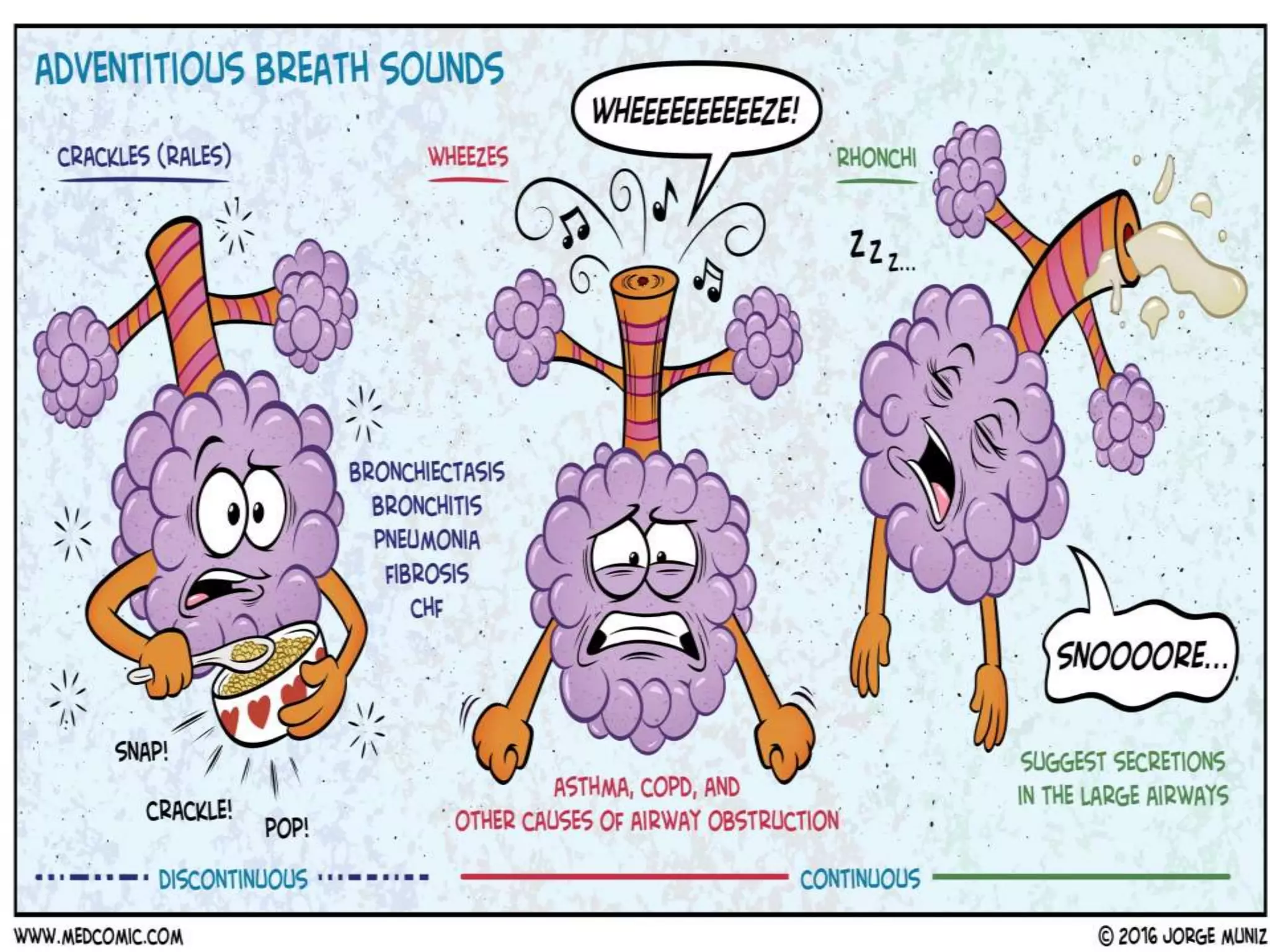
Rales= Fluid
Wheeze= Constriction (high)
Rhonchi= Mucus (low)
Stridor= Obstruction
RALES IN THE “TAILS”/ Crackles
• Rales = Crackles
• Air flowing by fluid in small airways
• Crackles can be fine, medium, or coarse
• Usually unaltered by coughing
• Discontinuous sound
• Bubbling sound
Fine - high pitched/ popping quality/ end
inspiration
Medium- lower/ moist sound/ mid inspiration
Coarse crackles- loud/low pitched/longer
WHEEZE- High Pitched
• Sibilant/High Pitched
• Wheeze = constriction
• Musical noise during inspiration/expiration
• Usually louder on expiration
• Continuous sound longer than crackles
• Monophonic or Polyphonic
• Produced when air flows through narrowed
airways
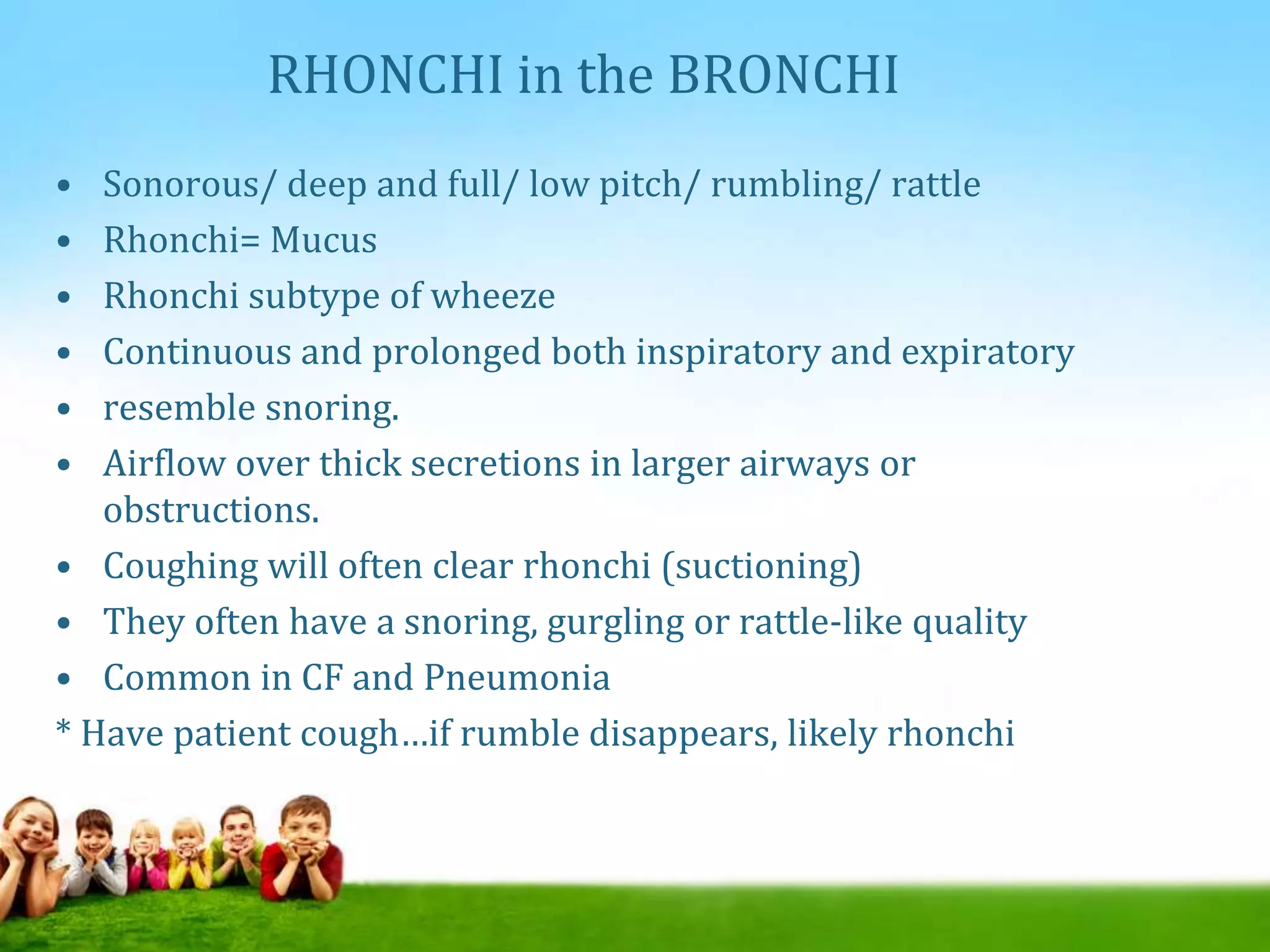
RHONCHI in the BRONCHI
• Sonorous/ deep and full/ low pitch/ rumbling/ rattle
• Rhonchi= Mucus
• Rhonchi subtype of wheeze
• Continuous and prolonged both inspiratory and expiratory
• resemble snoring.
• Airflow over thick secretions in larger airways or
obstructions.
• Coughing will often clear rhonchi (suctioning)
• They often have a snoring, gurgling or rattle-like quality
• Common in CF and Pneumonia
* Have patient cough…if rumble disappears, likely rhonchi
Think about what your patient is presenting with…
Wheezes, Rhonchi, Crackles…
Bilateral
• Asthma
• Bronchiolitis
• Mycoplasma
• CF
Unilateral
• Pneumonia
• FB
• Bronchiectaisis
#1
#2
#3
#4
#5
#6
#7
#8
Case Study
JP is a 9 year old child with asthma who presented 2 days ago to the ED. She has been
on SABA therapy at home for 2 weeks. She has a family history of asthma in her mother
and older brother. She suffers from “dry itchy skin”. Her mother is very tired and wants to
know why we just keep doing the same thing for her. The mom is using ICS therapy as
needed when she is sick. The RT just did her vital signs and she has RCS’s a 9.
She has been admitted on the asthma pathway.
VS- HR 86, RR 27, 95% on 1 liter of 02, Inspiratory and expiratory wheezes and rhonchi,
she displays intercostal retractions. She is crabby and she coughs with ambulation.
What medications?
What other orders?
What is her RCS?
At this time in her care, what is the next step for her?
What other interventions do you need to think about before she goes home?
Thank You !

Mahdi Hemmat peds picu fellowship.ppt

  • 1.
  • 2.
    Objectives • Describe pathophysiologyof asthma exacerbation • Differentiate controller vs. rescue asthma medications • Identify asthma triggers • Identify crucial components of Asthma Action Plan • Locate Asthma Action plan in EMR • Pathways • Mercy Kids Asthma Program • Assessment
  • 3.
    2009 2. Milwaukee, WI 3.Birmingham, AL 4. Chattanooga, TN 5. Charlotte, NC 2012 1. Memphis, TN 2. New Haven, CT 3. Knoxville, TN 4. Pittsburgh, PA 5. Chattanooga, TN 2011 1. Richmond, VA 2. Knoxville, TN 3. Memphis, TN 4. Chattanooga, TN 5. Tulsa, OK 2010 1.Richmond, VA 3. Chattanooga, TN 4.Knoxville, TN 5.Milwaukee, WI 1. St Louis, MO 2. St Louis, MO 7. St Louis, MO 8. St Louis, MO Asthma and Allergy Foundation of America Worst Places to Live With Asthma
  • 6.
    Most common signsand symptoms of asthma? • Cough (night) • Wheeze • Shortness of breath • Increased work of breathing
  • 7.
    • Per theNHLBI: Asthma (AZ-ma) is a chronic (long-term) lung disease that inflames and narrows the airways. Asthma causes recurring periods of wheezing (a whistling sound when you breathe), chest tightness, shortness of breath, and coughing. • Per Mayo Clinic: Asthma is a condition in which your airways narrow and swell and produce extra mucus. This can make breathing difficult and trigger coughing, wheezing and shortness of breath. • Asthma is a common chronic disorder of the airways that is complex and characterized by variable and recurring symptoms, airflow obstruction, bronchial hyper- responsiveness, and an underlying inflammation What is asthma?
  • 9.
    In short….. • Airwayswells (airway inflammation) • Muscles around airway get tight (airway constriction) • Increase in mucus production ** Hypersensitivity or hyper-responsive to triggers (irritants and allergens)
  • 10.
    Tree Pollen Feb-June Ragweed Aug -Oct GrassPollen May -Aug Mold Dander Perennial Dust Perennial Medications and foods Things you are allergic to
  • 11.
    Smoke Change in Weather Changes Colds Fumes/ strong smells Sinusinfections Gerd Cold air Exercise Things that irritate the airway
  • 12.
    What does asthmafeel like? What does it look like? What does it sound like?
  • 13.
  • 14.
    Asthma Guidelines • NIH-NHLBI-Expert panel review pushed out new guidelines in 2007 • Intermittent / Persistent (mild, mod, severe) • Focus on IMPAIRMENT and RISK • Step approach to treatment of asthma
  • 15.
    Medication Management • Controllermedications- Keeping symptoms from happening in the first place • Rescue or reliever medicines-Treating symptoms when I have them
  • 16.
    Rescue medications Bronchodilators • Proair-Albuterol • Ventolin-Albuterol • Preventil- Albuterol • Xopenex-Levalbuterol • Albuterol Nebulizer solution FIREMAN MEDICATIONS
  • 17.
    Controller medications • Thesemedicines help protect the lungs. • You don’t feel immediate relief with these when taken. • Can take weeks to get maximum affect • They work over time to reduce and control inflammation in the lungs • They help reduce hyper-responsiveness • Controller medicines are taken on a daily basis to CONTROL asthma “Seat belt” medications
  • 18.
    Controller medications  Inhaledcorticosteroids (ICS)-They can come in the form of a Dry powder inhaler (DPI), a metered dose inhaler (MDI) or a nebulizer vials  **Rinse mouth and spit after these medicines to avoid a fungal infection called “thrush” in the mouth  Long acting beta agonist (LABA)  Leukotriene modifier- Singulair, Xyflo  Allergy medications- Claritin, Zyrtec, Allegra  Immunotherapy- Xolair
  • 19.
  • 20.
    How do wetreat asthma? What needs to be ordered?
  • 21.
    • ALBUTEROL • STEROIDS •ASTHMA EDUCATION • FOLLOW UP APPT • SCRIPTS on DC must MATCH AAP
  • 22.
    What do weknow about Asthma Action Plans… • They are time consuming • They are often not utilized by family • They are not up to date • They are difficult to follow
  • 23.
    Why? • Helps minimizeor eliminate the need for trips to the ED and hospitalizations. • Allows the family and other caregivers to manage their asthma with the help of their provider. • Most school systems now require them.
  • 24.
    This is achronic life threatening disease…… • You wouldn’t send a diabetic home and say … “ Use your insulin as needed” So why are we sending home children with asthma without instruction? You have less time for education once they leave the hospital.
  • 25.
    Think about allof the education…. • Symptoms • Triggers • Recognition of warning signs • Who to call • When to call • Self management skills • Medications • Follow up time frame • Emergency Directions • Peak Flow monitoring • FEV1
  • 26.
    NHLBI EPR-3:2007 Includes twoaspects: Daily management and how to recognize and handle worsening asthma. Written action plans are particularly recommended for patients who have moderate or severe persistent asthma, a history of severe exacerbations, or poorly controlled asthma (Evidence B).” The 2006 AHRQ /Agency for Healthcare Research and Quality Report indicates that only 28% of patients receive an adequate Asthma Action Plan.
  • 35.
    In summary… • Wewill be 100% • When in doubt…fill one out • There is no such thing as too much education • Call for assistance when filling it out • Education in office
  • 36.
    At the timeof discharge • Call if you have questions • Compare DC scripts with AAP
  • 37.
  • 38.
    MCH Asthma Program •Asthma Education/ order on admission • Pulmonary consult when indicated • Asthma Coordination Follow Up • Asthma Education Session with Assessor • Asthma Action Plan • Discharge Planning/ DME
  • 40.
    RCS Score withvitals • RT/ RN model • Facilitates communication • Max of 15
  • 41.
    Remember • There isa difference between my consult and the education session • Sometimes I do both. Please don’t assume that education is done based on a consult note. • Consults and education are two separate orders
  • 43.
  • 44.
    New!!! • Pathway BPAstarted to fire this week! • Will alert you when a pathway order has been placed and you need to go in and initiate • You must to the Asthma and the Universal separately.
  • 45.
    •Pathways are fornurses •Pathway order sets are for physicians •The Physician will write for the patient to “Follow Asthma pathway” •You need to document once a shift • Don’t be afraid to call and ask • MCH has 4 pediatric pathways- Pediatric Universal, Asthma, Bronchiolitis, and Community Acquired Pneumonia • The “pathway” itself has nothing to do with the orders, its all about documentation and outcomes • Pathways are not just for the pediatric floor
  • 50.
    What is MercyChildren’s doing? • Med to bed process • PIPA-Pathways for Improving Pediatric Asthma Care” (PIPA) • PACT- Pediatric Asthma Certification Team
  • 53.
    Certification • 18 monthprocess • Multidisciplinary team • Monthly meetings • Onsite review • 12 month call • 2 year certification
  • 54.
    Clinical Practice Guidelines/Embedded in EPIC 54
  • 55.
    Why pursue DiseaseSpecific Certification? • Improves the quality of patient care by reducing variation in clinical processes • Provides a framework for program structure and management • Provides an objective assessment of clinical excellence – Joint Commission reviewers have significant experience evaluating disease management programs. They are trained to provide expert advice and education on good practices during the on-site review. • Creates a loyal, cohesive clinical team – Certification provides an opportunity for staff to develop their skills and knowledge. Achieving certification provides the clinical team with common goals and a concrete validation of their combined efforts. • Promotes a culture of excellence across the organization • Facilitates marketing, contracting and reimbursement – Certification may provide an advantage in a competitive health care marketplace • Strengthens community confidence in the quality and safety of care, treatment, and services • Can fulfill regulatory requirements in select states – Certification may meet certain regulatory requirements in some states, which can reduce duplication on the part of certified organizations.
  • 56.
    Dashboard Asthma Metrics Timeto beta- agonist <1 hour Sills, M.R., et al. (2011) Time to Steroid < 1 hour (ED or 1st order) Sills, M.R., et al.(2011) Rowe, B.H., et al. (2008) Respiratory Clinical Score; determined prior to initiation of treatment Sills, M.R., et al. (2011) NHLBI EPR-3 (2007) Prescribed oral corticosteroid at discharge NHLBI EPR-3 (2007) Completion of Asthma Action Plan at discharge (IP) TJC Core Measure Follow up with PCP within 7 days (IP) NHLBI EPR-3 (2007) LOS in ER without ED order set utilization Trend LOS in ER with ED order set utilization Trend CXR orders occurring for asthma patients 26% benchmark CHA report Antibiotic Administration; Zithromax? ever give an ABX without documented pneumonia; disposition critical vs. non-critical care 6% benchmark CHA report Atrovent > 3 doses ( % of children) 0% benchmark CHA report
  • 58.
    PACT Performance Measures2018* 1. Time to oral steroids/ door to dose/ 60 minute goal 2. Early Nebulizer to MDI transition 3. Smoke exposure intervention documentation 4. Program evaluation *retired 2 measures: Utilization of pathway order set and asthma action plan due to 100% compliance after process was hardwired
  • 59.
    Med to Bed •Piloting a new process for Inhaled Corticosteroids for Asthma patients • (Flovent, Advair, QVAR, Dulera, Symbicort, Pulmicort Flexhaler, Asmanex) • We will be filling their ICS’s therapy as OUTPATIENT prescriptions to be used during their inpatient stay (within 24 hours of DC) • The prescription for their ICS, will be e-scribed to the MERCY LOBBY PHARMACY • From there, the “med to bed” process will start • Tip sheets • The bedside RT will administer the ICS as directed • The OUTPATIENT ICS will go home with the patient at the time of discharge…..WIN!!!! • Please see tip sheet on how to order ICS therapy • Please review email sent for process specifics
  • 60.
    Community Asthma Education •Outpatient asthma education program- 1 year • Asthma education per request for JFK Clinic and Mercy Clinics • Partnership with Most Holy Trinity and St Louis Catholic Academy – Asthma education – Epinephrine auto-injector training – Asthma equipment – Resource assistance • Members of our team provide invited lectures for physicians and non-physician conferences (RT, Transport team, School nurses)
  • 61.
    Future Endeavors • VirtualCare component • Ambulatory case management for high risk children/ non payer based • Weight management identification with automatic BPA on admission • Asthma Champions • Infrastructure of asthma program into ambulatory areas
  • 68.
  • 69.
    Rales= Fluid Wheeze= Constriction(high) Rhonchi= Mucus (low) Stridor= Obstruction
  • 70.
    RALES IN THE“TAILS”/ Crackles • Rales = Crackles • Air flowing by fluid in small airways • Crackles can be fine, medium, or coarse • Usually unaltered by coughing • Discontinuous sound • Bubbling sound Fine - high pitched/ popping quality/ end inspiration Medium- lower/ moist sound/ mid inspiration Coarse crackles- loud/low pitched/longer
  • 71.
    WHEEZE- High Pitched •Sibilant/High Pitched • Wheeze = constriction • Musical noise during inspiration/expiration • Usually louder on expiration • Continuous sound longer than crackles • Monophonic or Polyphonic • Produced when air flows through narrowed airways
  • 72.
    RHONCHI in theBRONCHI • Sonorous/ deep and full/ low pitch/ rumbling/ rattle • Rhonchi= Mucus • Rhonchi subtype of wheeze • Continuous and prolonged both inspiratory and expiratory • resemble snoring. • Airflow over thick secretions in larger airways or obstructions. • Coughing will often clear rhonchi (suctioning) • They often have a snoring, gurgling or rattle-like quality • Common in CF and Pneumonia * Have patient cough…if rumble disappears, likely rhonchi
  • 73.
    Think about whatyour patient is presenting with… Wheezes, Rhonchi, Crackles… Bilateral • Asthma • Bronchiolitis • Mycoplasma • CF Unilateral • Pneumonia • FB • Bronchiectaisis
  • 75.
  • 76.
  • 77.
  • 78.
  • 79.
  • 80.
  • 81.
  • 82.
  • 83.
    Case Study JP isa 9 year old child with asthma who presented 2 days ago to the ED. She has been on SABA therapy at home for 2 weeks. She has a family history of asthma in her mother and older brother. She suffers from “dry itchy skin”. Her mother is very tired and wants to know why we just keep doing the same thing for her. The mom is using ICS therapy as needed when she is sick. The RT just did her vital signs and she has RCS’s a 9. She has been admitted on the asthma pathway. VS- HR 86, RR 27, 95% on 1 liter of 02, Inspiratory and expiratory wheezes and rhonchi, she displays intercostal retractions. She is crabby and she coughs with ambulation. What medications? What other orders? What is her RCS? At this time in her care, what is the next step for her? What other interventions do you need to think about before she goes home?
  • 84.