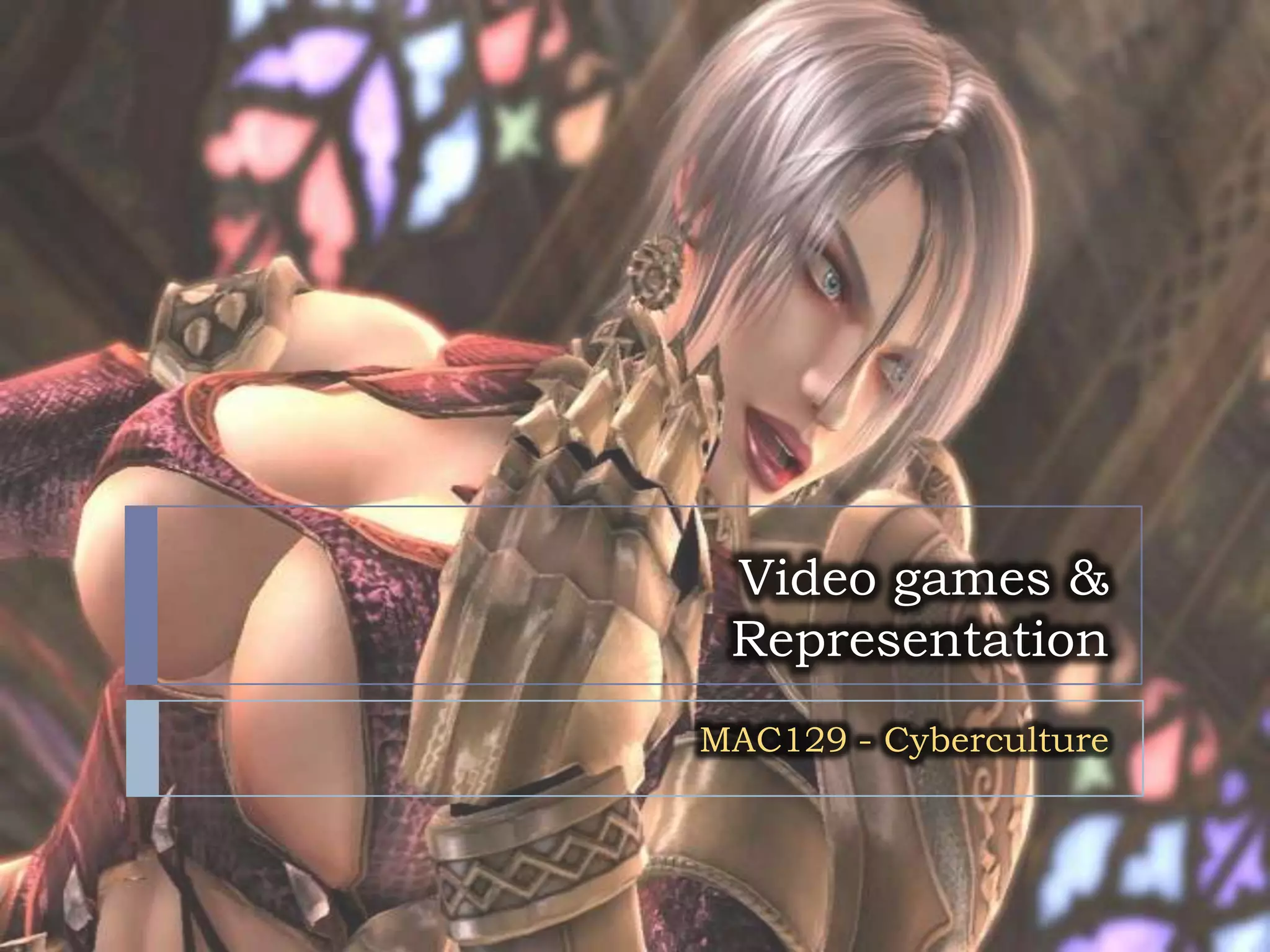






Video games &Representation MAC129 - Cyberculture
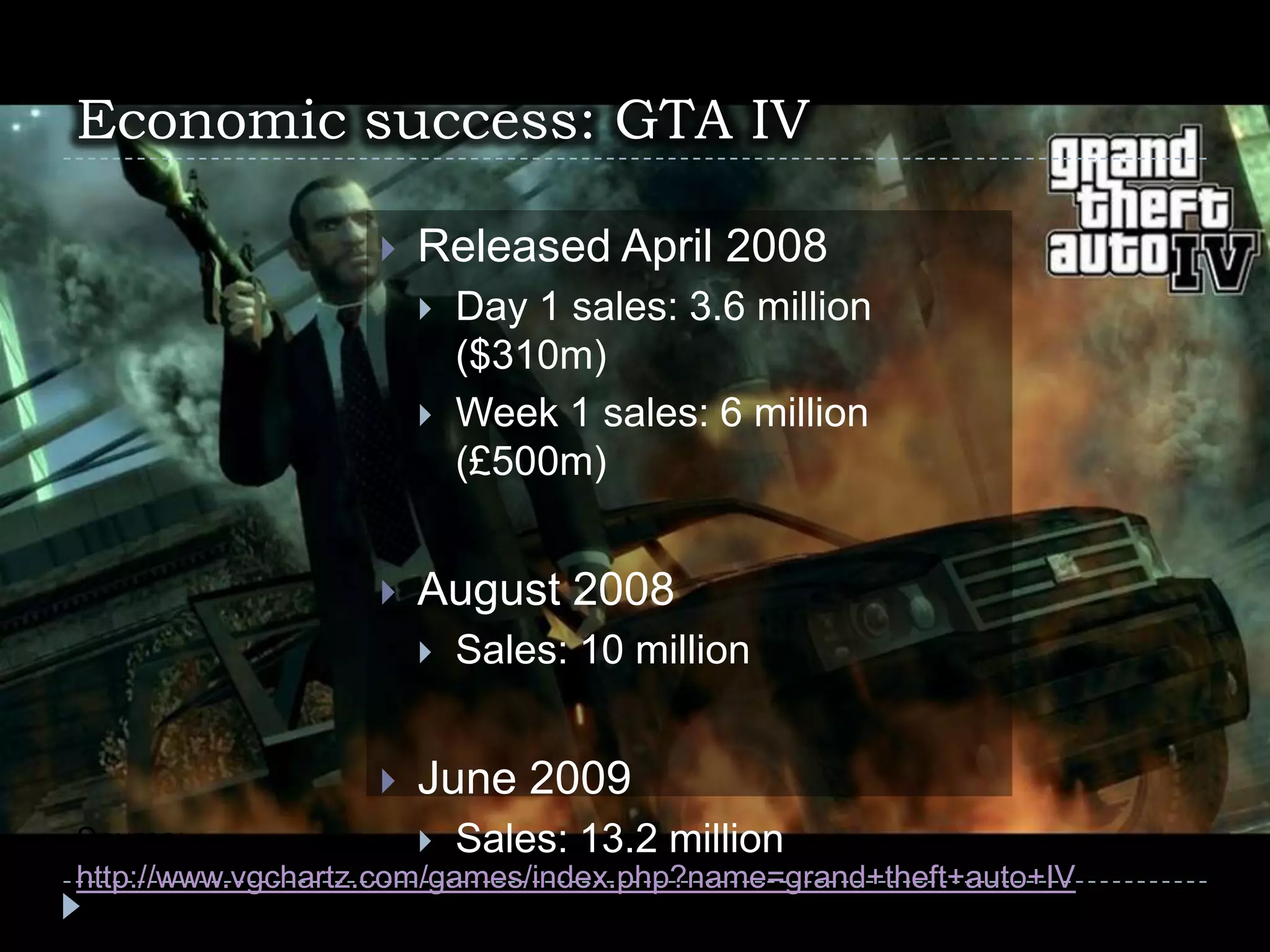
Economic success: GTA IVReleased April 2008Day 1 sales: 3.6 million ($310m)Week 1 sales: 6 million (£500m)August 2008Sales: 10 millionJune 2009Sales: 13.2 millionSource: http://www.vgchartz.com/games/index.php?name=grand+theft+auto+IV
Historical businessA struggle to define a place for early games (see Marvin, 1988; Poole, 2004)Historical accounts tend to be lists of names and dates
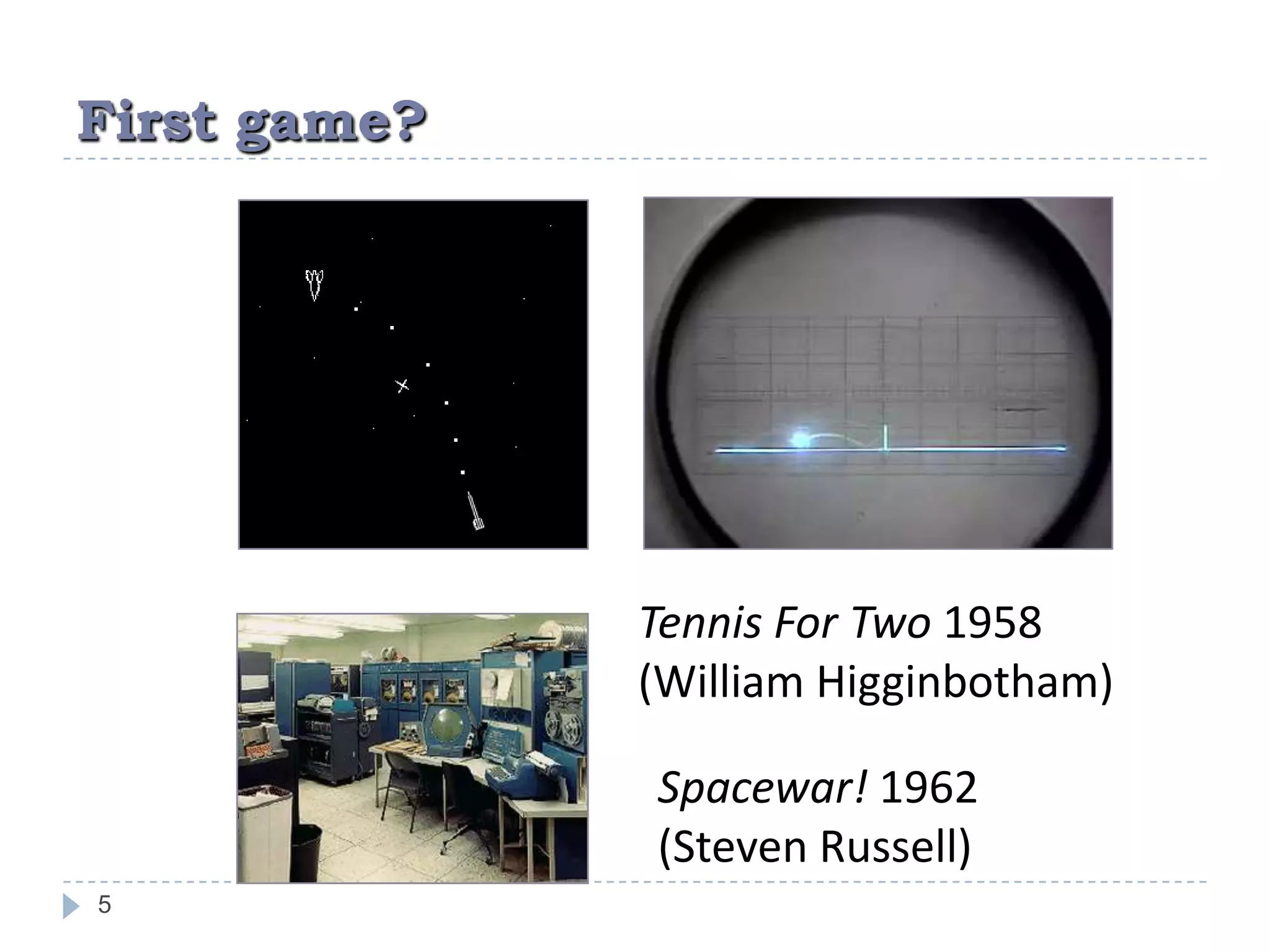
First game?5Tennis For Two 1958 (William Higginbotham)Spacewar! 1962(Steven Russell)
Cold War kids1950s….Emerged during a period of intense socio-economic and geo-political changes:Space Race (USSR)Cold War paranoia (nuclear anxiety)Decline of heavy industryMajor changes in life styleAdvent of domestic mass communicationConsumer confidence
Game development…Largely due to“university computing departments, the military, the interest of the first game developers, the first games and the subsequent development of game playing as an activity embraced largely by young males” (Kerr, 2006: 14; see also Haddon, 1988; 1993)
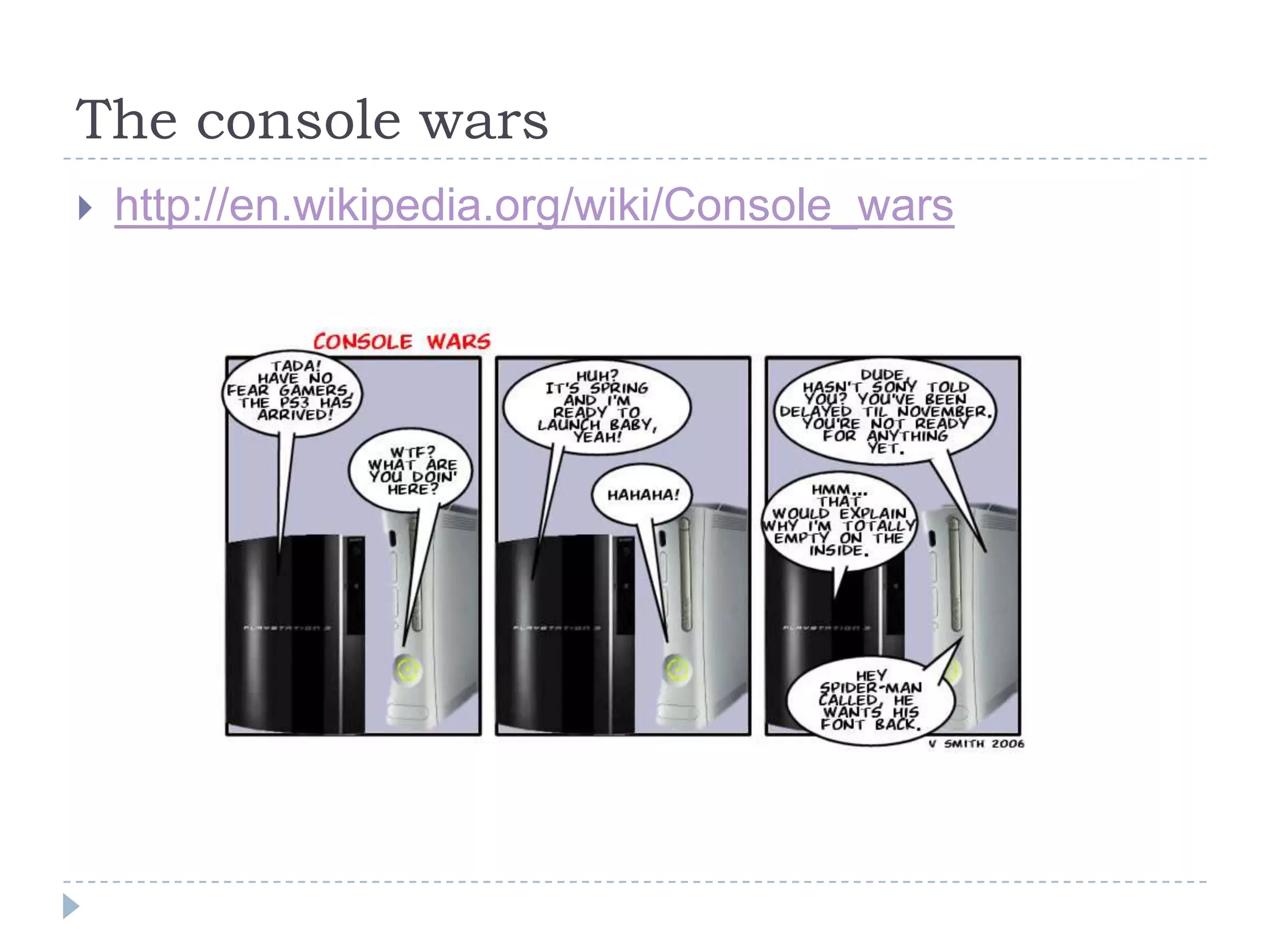
The console warshttp://en.wikipedia.org/wiki/Console_wars
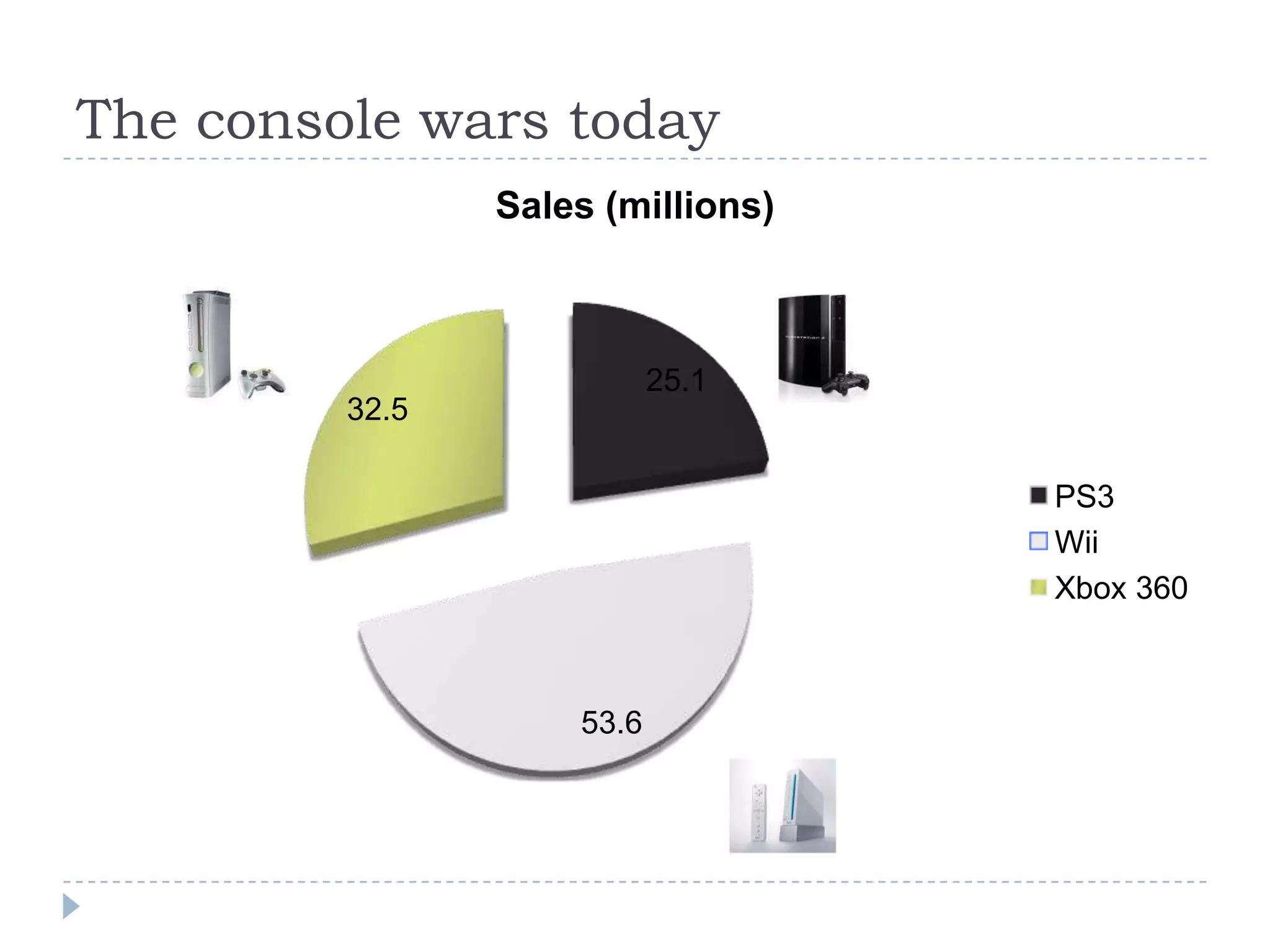
The console wars today
Popular claims about video gamesNegative associations – health and violencehttp://www.youtube.com/watch?v=tCuKQIMg0I4Columbine shooting: Doomhttp://news.bbc.co.uk/1/hi/sci/tech/1295920.stmCar-jacking: Grand Theft Autohttp://news.bbc.co.uk/1/hi/scotland/3680481.stmStabbings: Manhunthttp://news.bbc.co.uk/1/hi/uk/3936237.stm
(Un)popular claims about video gamesPositive claims?Surgeons who played games for at least 3 hours a week  made ‘37% fewer errors, were 27% faster’ than surgeons who did not play games. (Hall, 2007)Safe environment to enact fantasyCreativity of ‘modders’
Games emerge from a cultural contextUS military funding?http://www.youtube.com/watch?v=hHLJ_hZt2ds
Always a ‘politics’ in every representationRepresentations are never innocent. Representations are always a ‘construction’ in accordance with the producer’s politics.
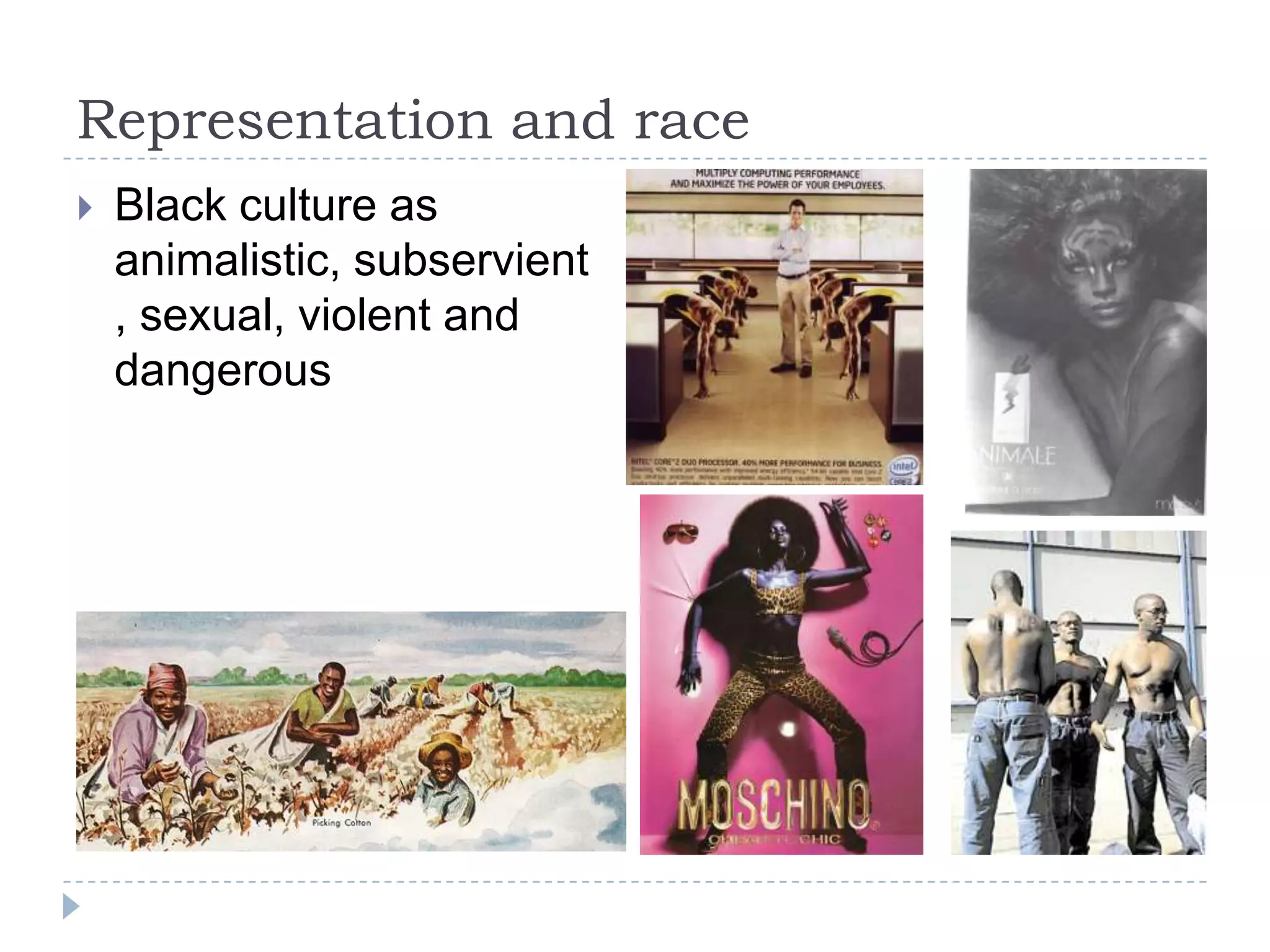
Representation and raceBlack culture as animalistic, subservient, sexual, violent and dangerous
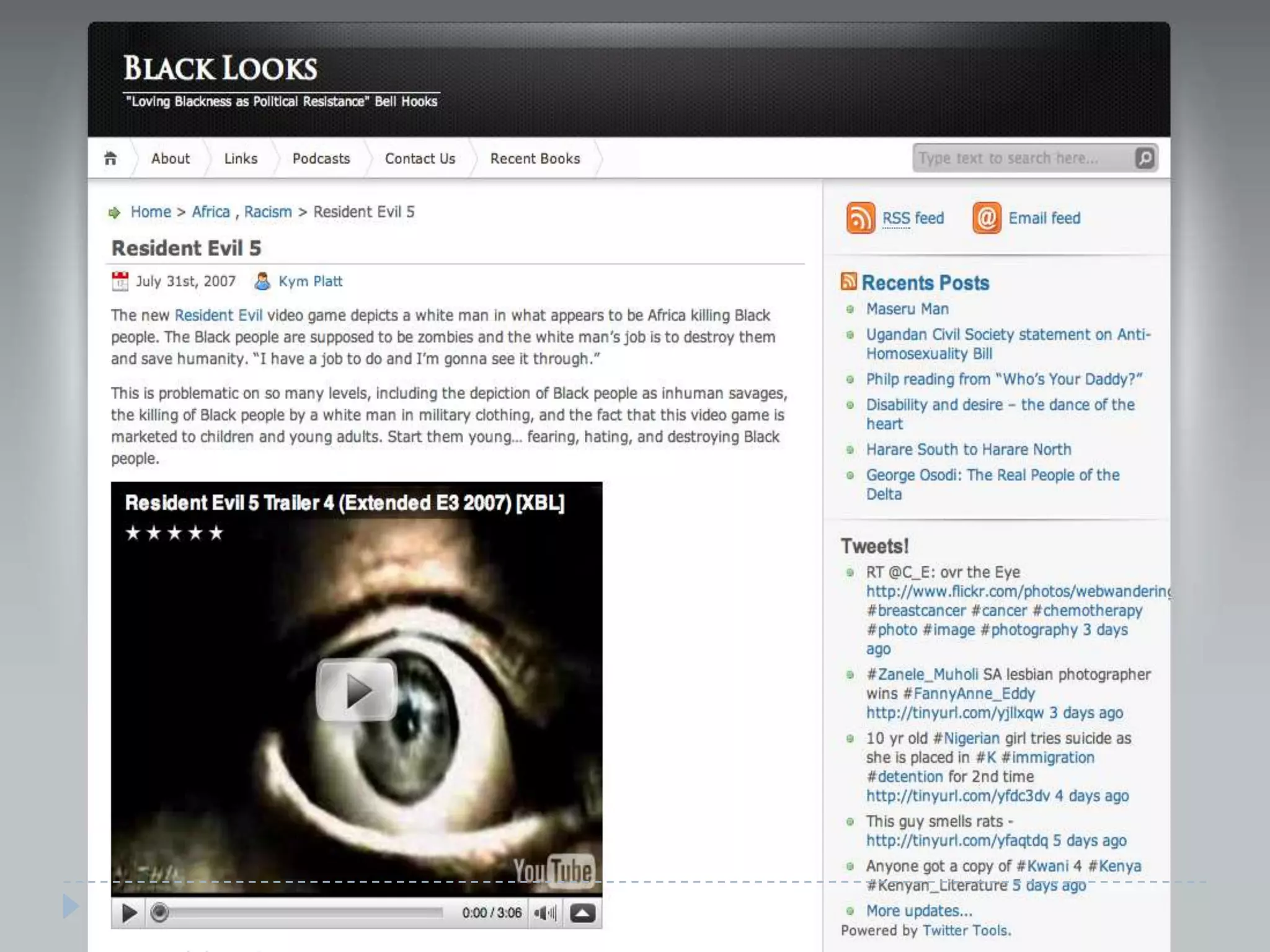
Resident Evil 5 Race Row
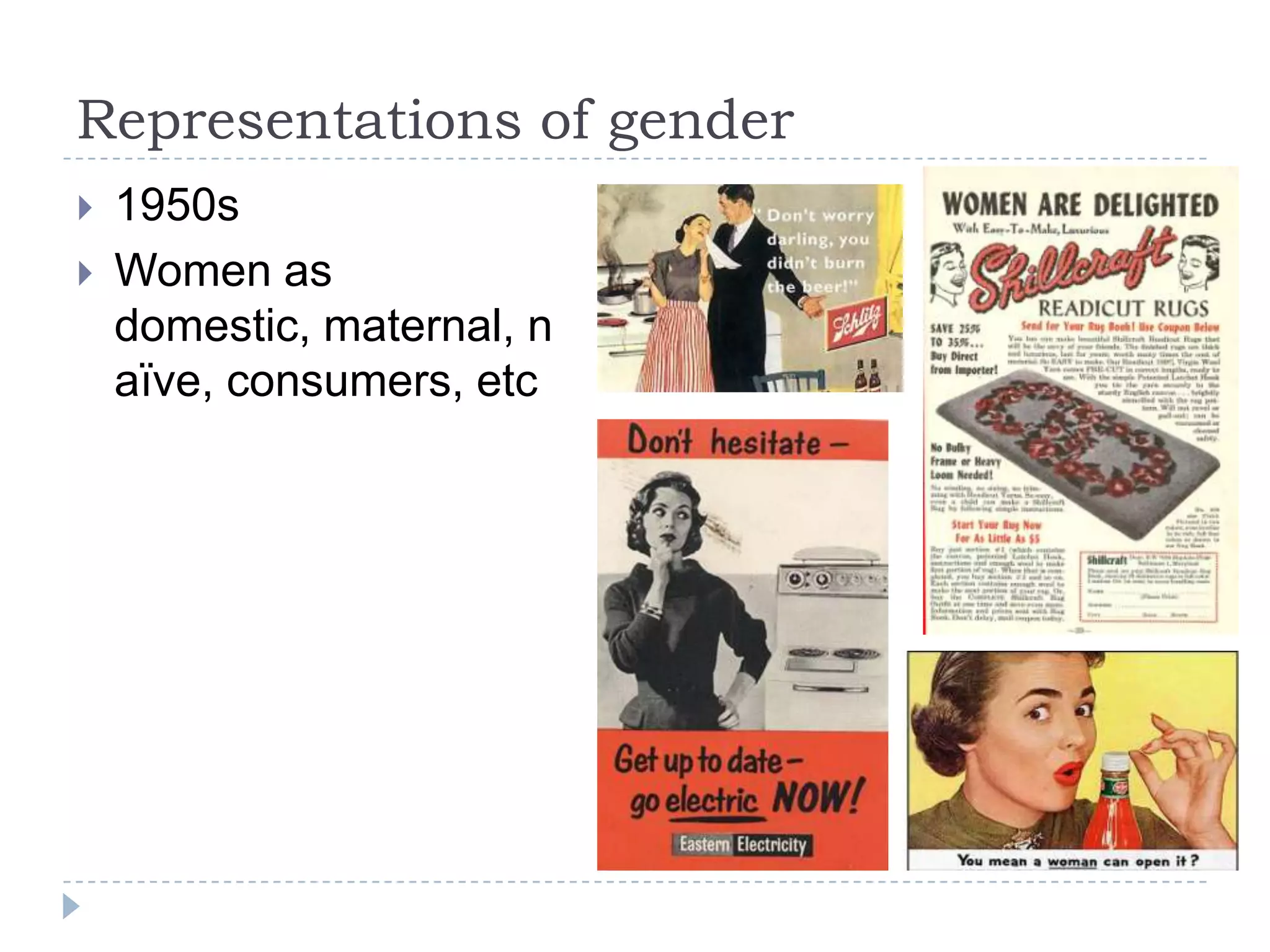
Representations of gender1950sWomen as domestic, maternal, naïve, consumers, etc
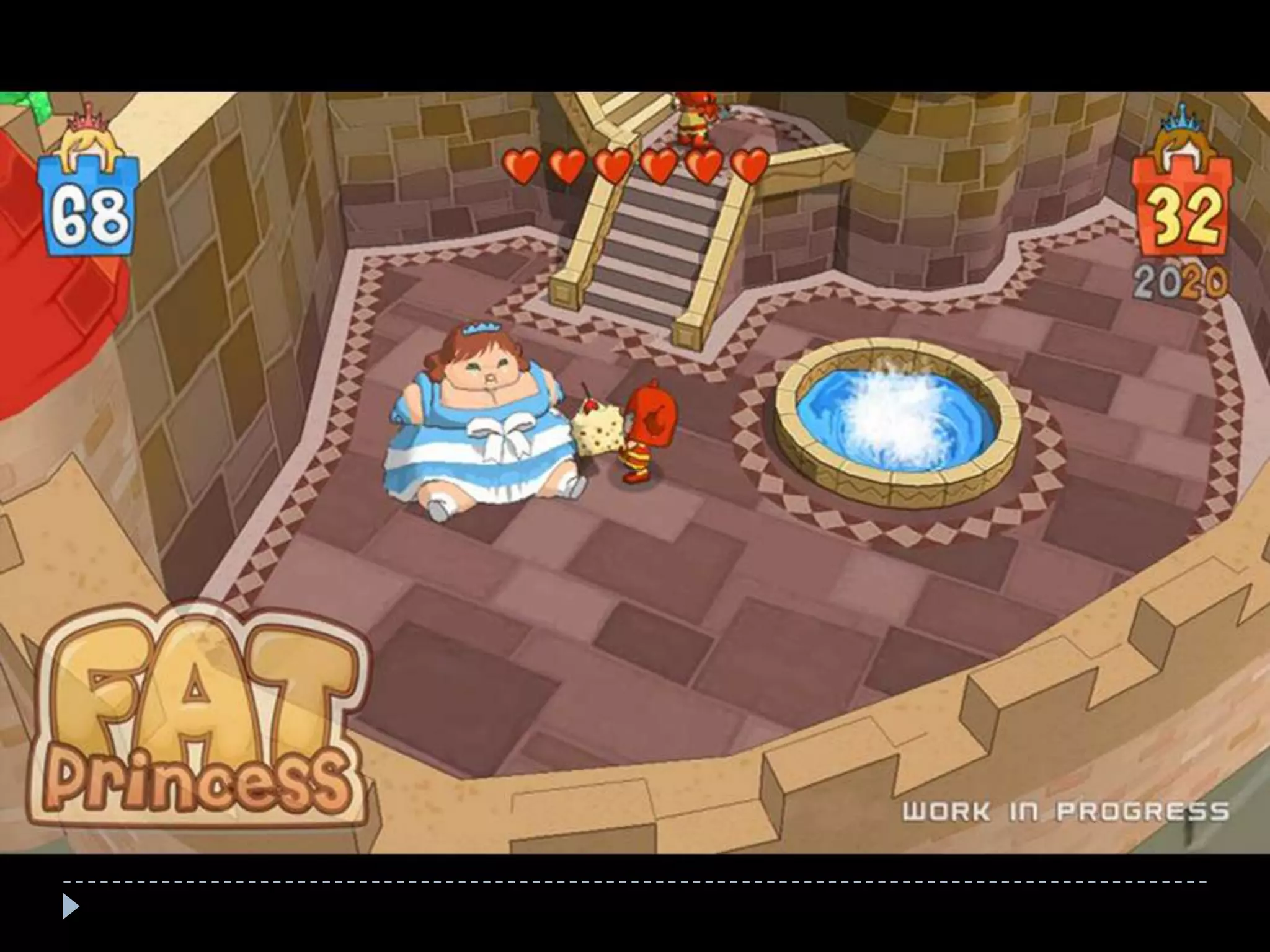
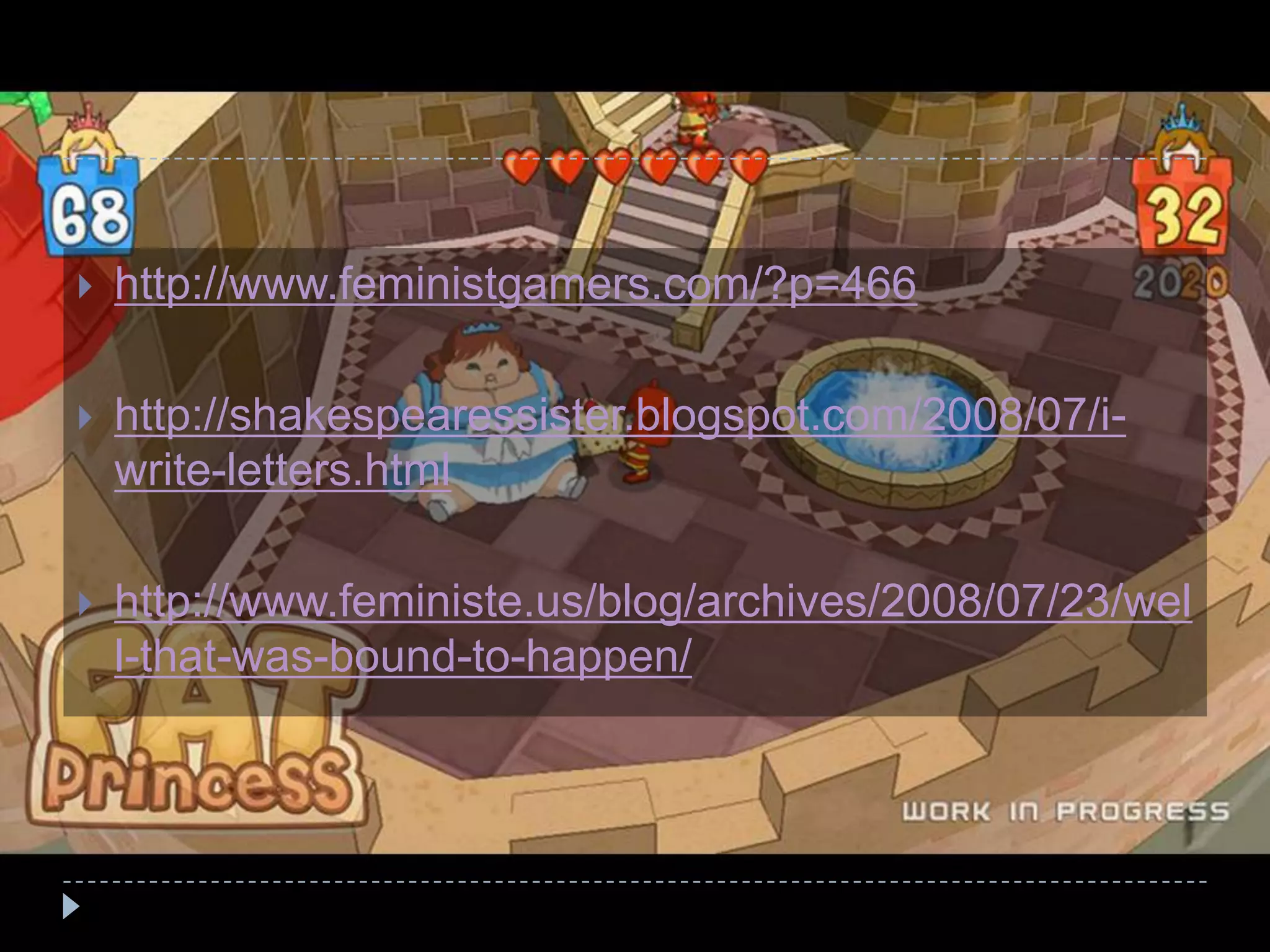
http://www.feministgamers.com/?p=466http://shakespearessister.blogspot.com/2008/07/i-write-letters.htmlhttp://www.feministe.us/blog/archives/2008/07/23/well-that-was-bound-to-happen/
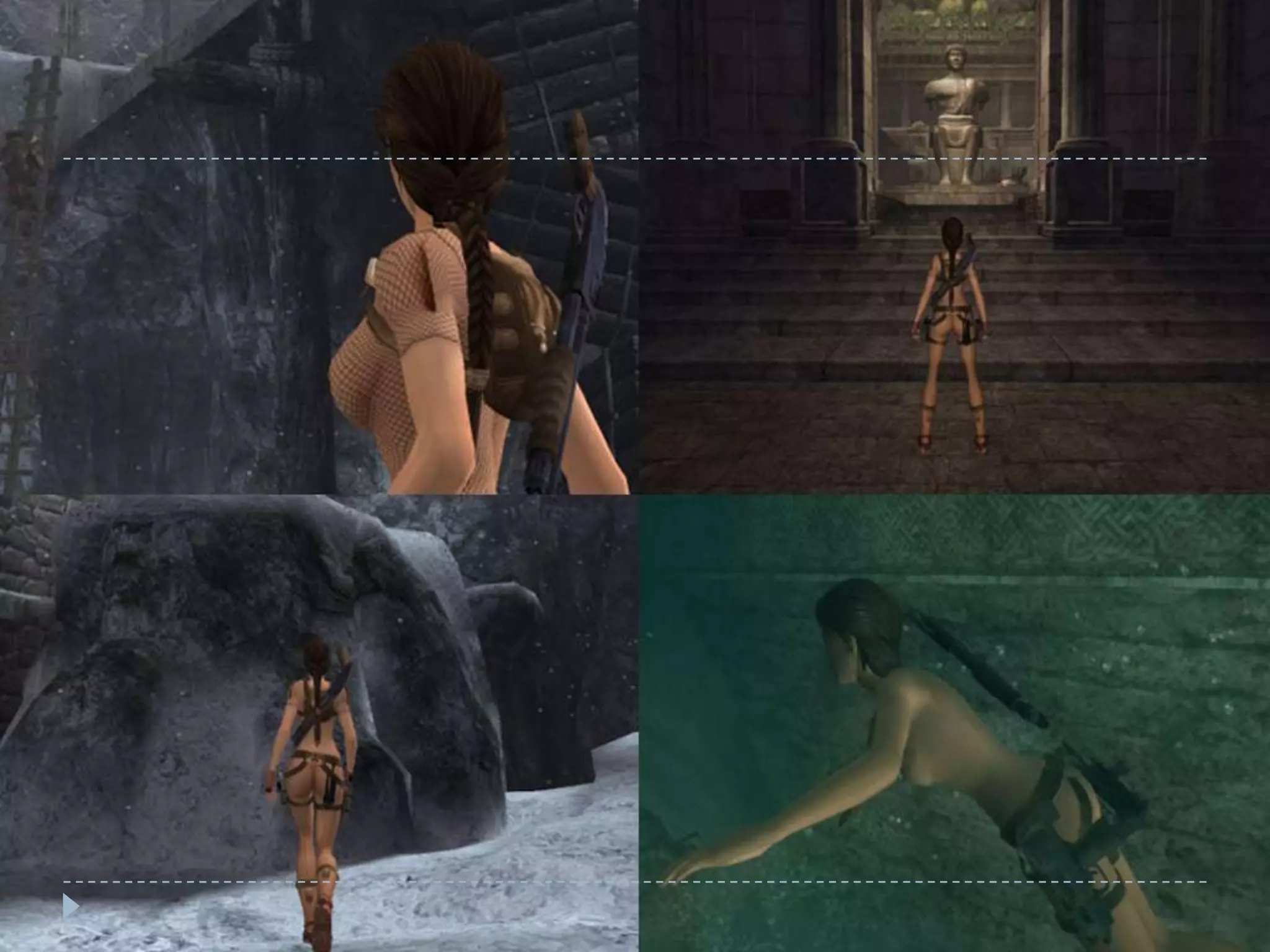
Representation of genderFeminist critics have argued that many media texts represent women as:Sex objectsDutiful housewives / virginal daughtersMad, bad, dangerous women who need punishmentAre video games any different?Jiggle physics?http://archive.gamespy.com/fargo/january02/jiggle/See also:‘Top 10 Boobies in Video Games’‘Sexy Video Game Babes’
Game designStudies of digital games have noted a ‘consistent pattern of male technocratic privilege’ Williams, cited in Kerr, 2006: 19  Game development & design, production, marketing & construction, dominated by heterosexual masculine fantasiesGansmoet al, 2003
Gender in gamesTraditional stereotype of femininity evokedRelationshipsRomanceEmotionsRole-playGansmo (2003): little understanding within the industry about how game design might be linked to gender socialisation
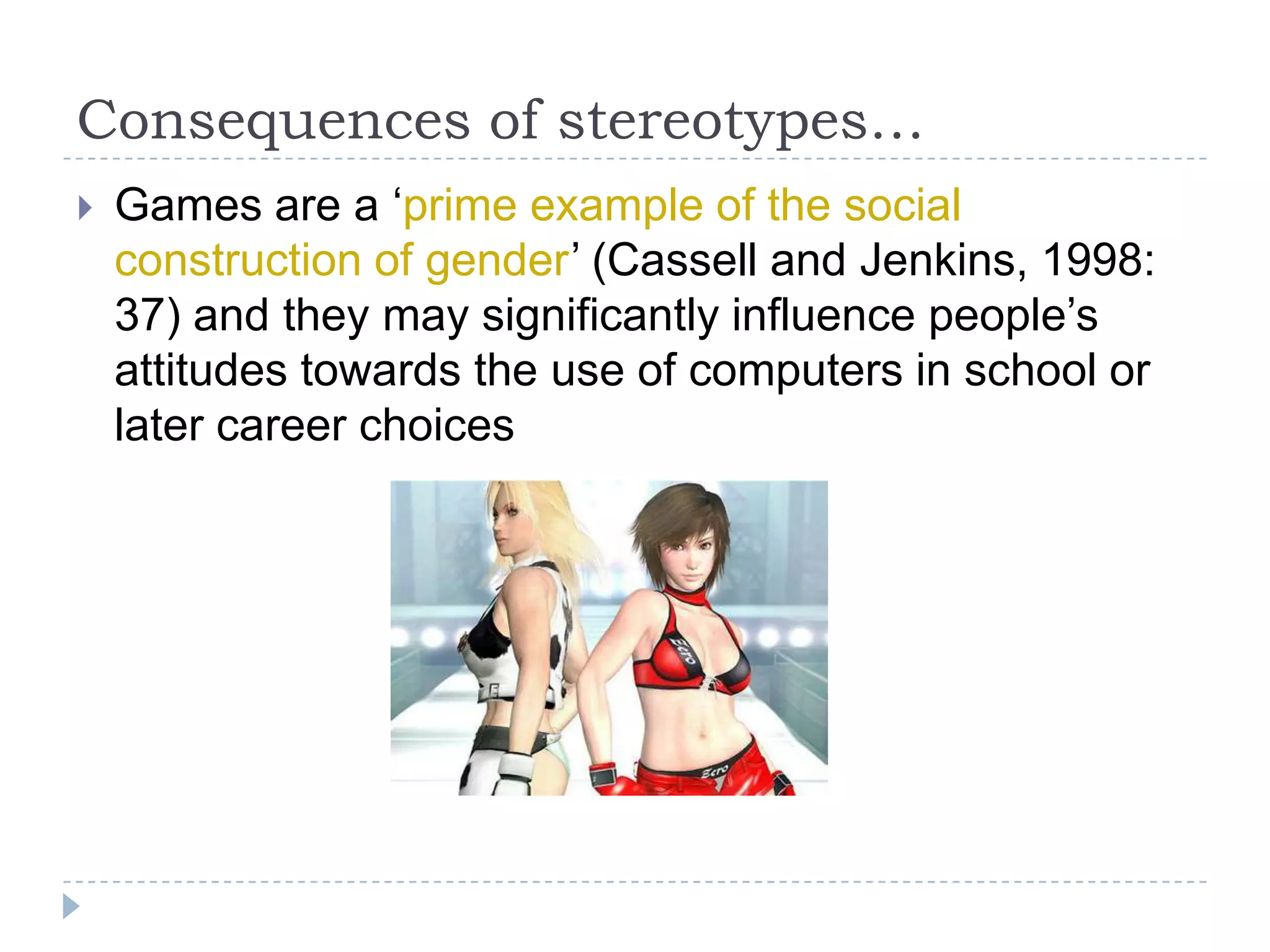
Consequences of stereotypes…Games are a ‘prime example of the social construction of gender’ (Cassell and Jenkins, 1998: 37) and they may significantly influence people’s attitudes towards the use of computers in school or later career choices
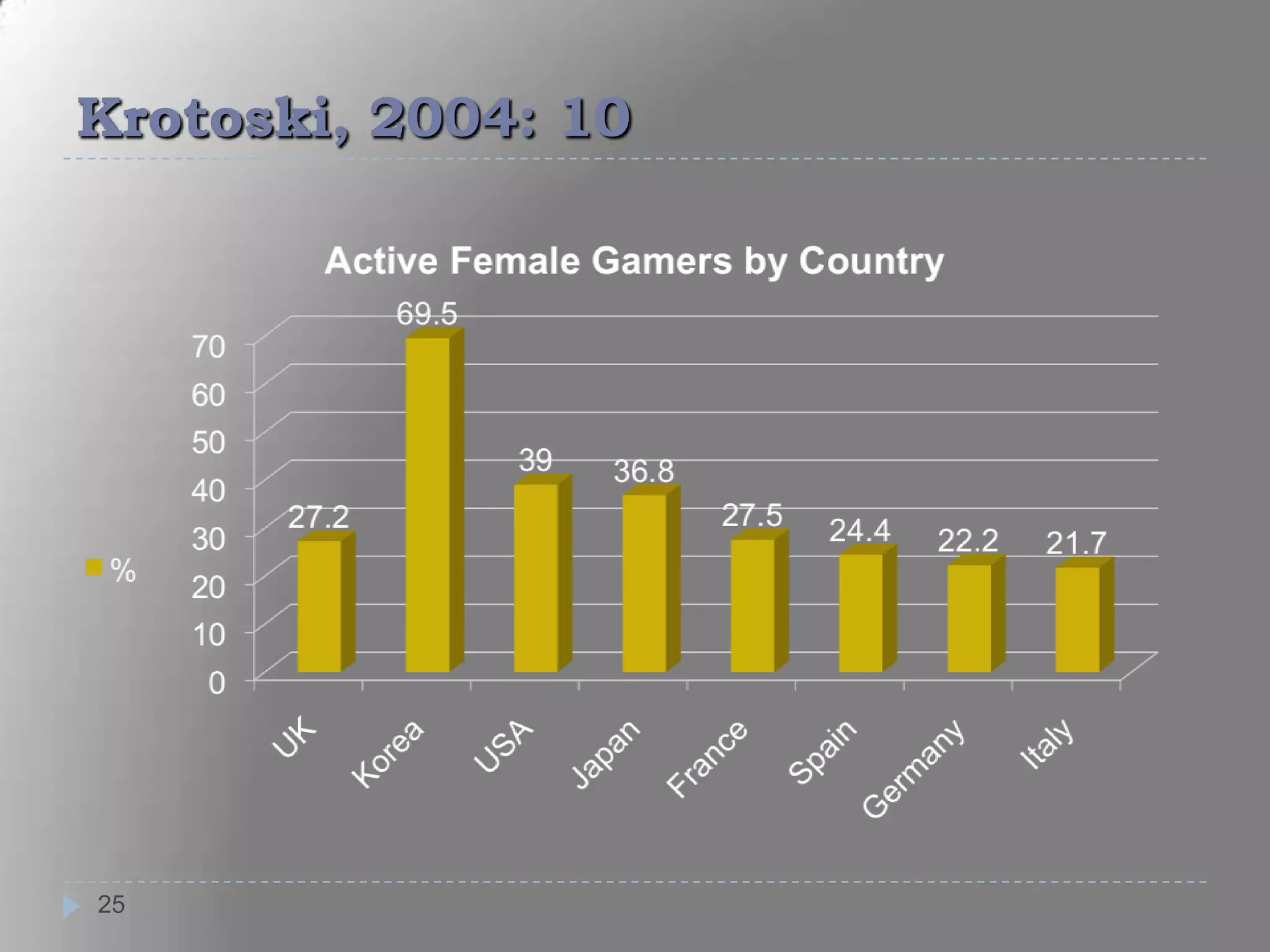
Women do play games!?Funk (1993): 75% of females play games at home (90% males)Colwell and Payne (2000): 88% of females aged 12-14 play games regularlyESA (2004): 39% of US gamers are female and females account for 40% of online players.Krotoski (2004): approx 25% of gamers are female in Europe, compared to 70% in KoreaCrawford & Gosling (2005): Women much less likely to play the older they getAlexanda (2009):Female console gamers grew from 23 to 28 percent in 2009
Krotoski, 2004: 1025
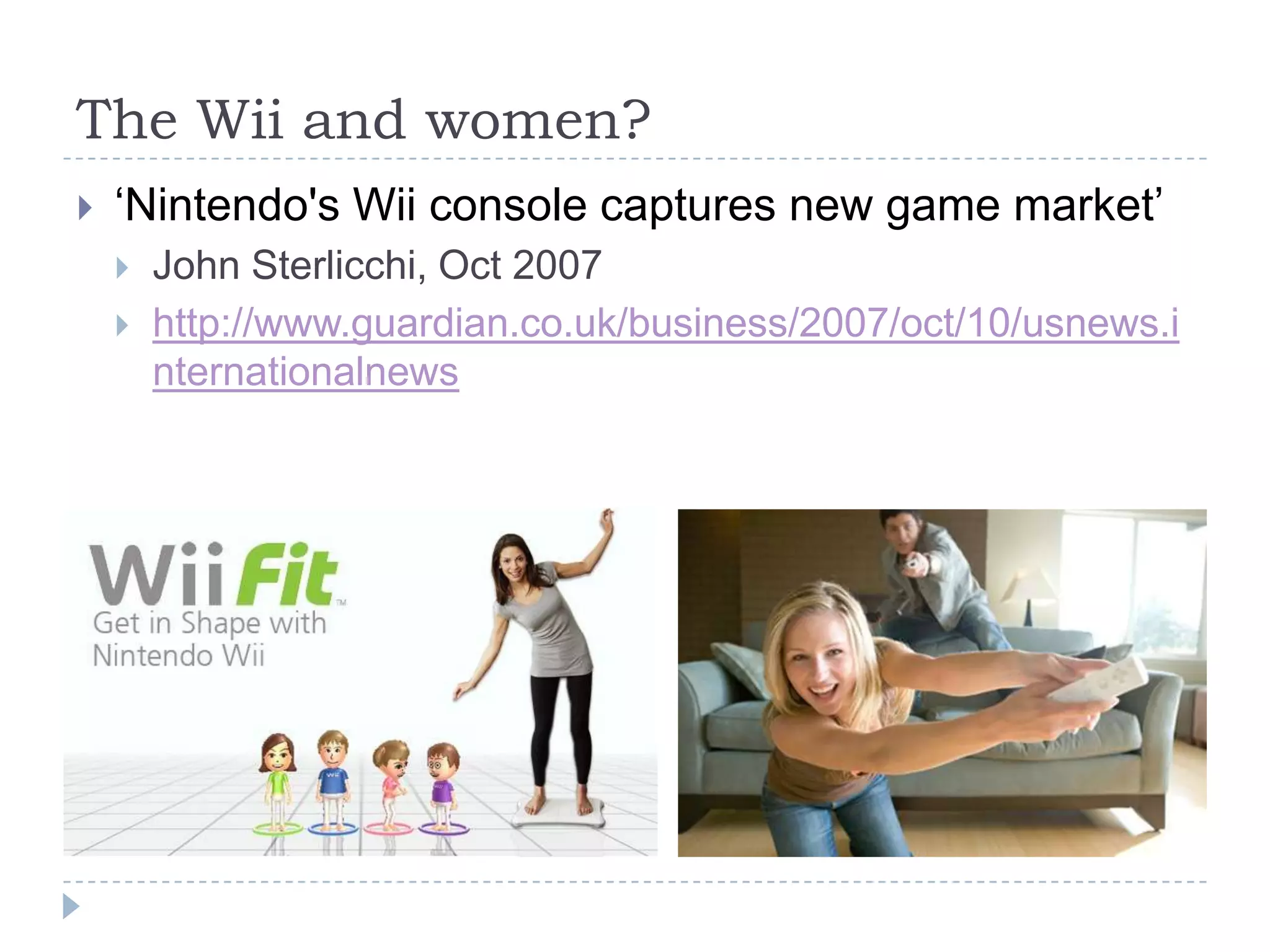
The Wii and women?‘Nintendo's Wii console captures new game market’ John Sterlicchi, Oct 2007http://www.guardian.co.uk/business/2007/oct/10/usnews.internationalnews
Domestic accessAccess to gadgets in home is not gender neutralHighly masculine and potentially hostile to femalesIs this changing?www.girlzclan.comwww.everground.comwww.girlgamer.comhttp://female-gamer.com/
Domestic contextSpace a greater percentage of girls’ play has been centred in or around the homeTimefemales still spend more time engaged in domestic labour than males (typically 1.5 hours per day more than males in the UK)
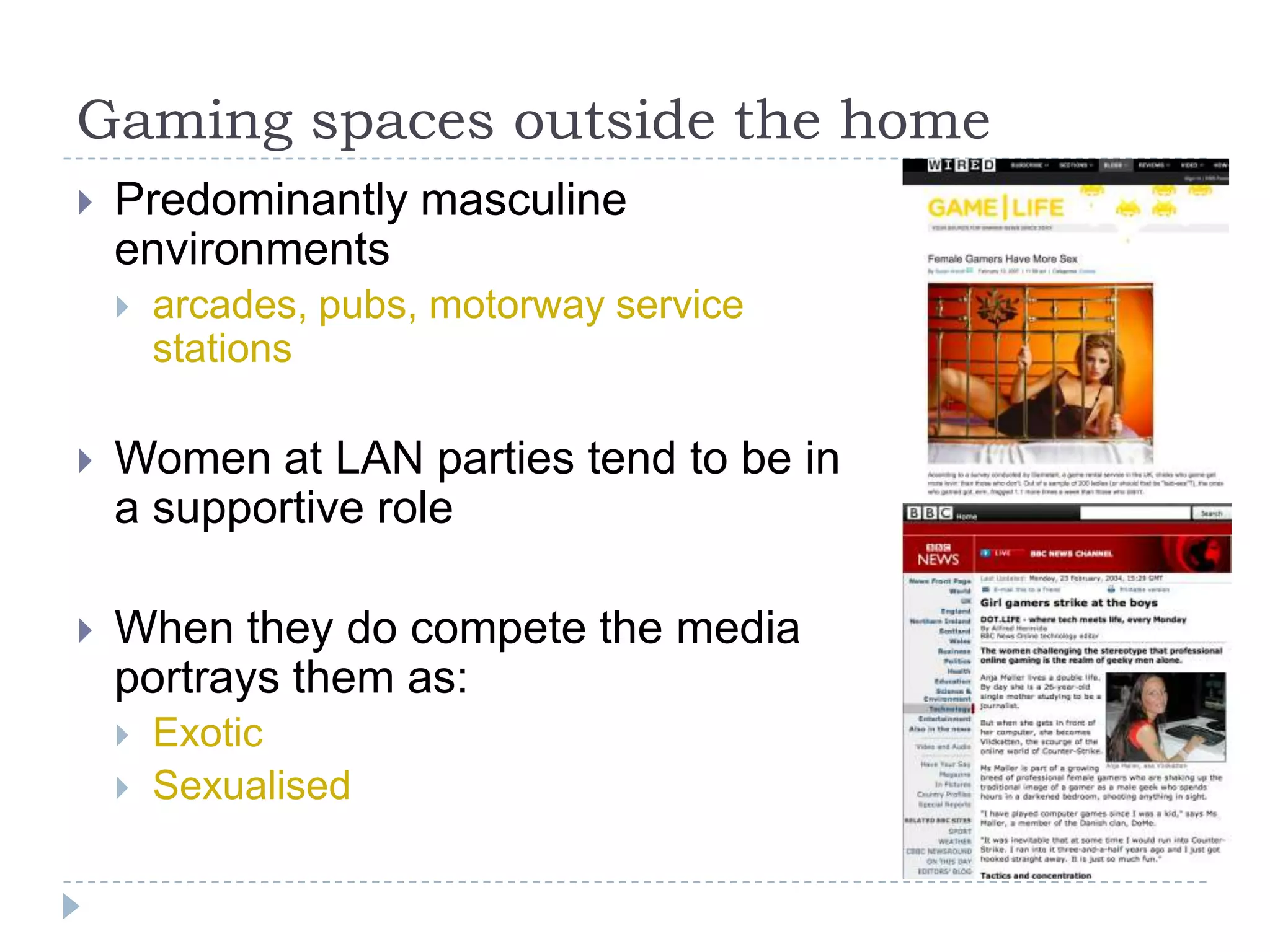
Gaming spaces outside the homePredominantly masculine environmentsarcades, pubs, motorway service stationsWomen at LAN parties tend to be in a supportive roleWhen they do compete the media portrays them as:ExoticSexualised
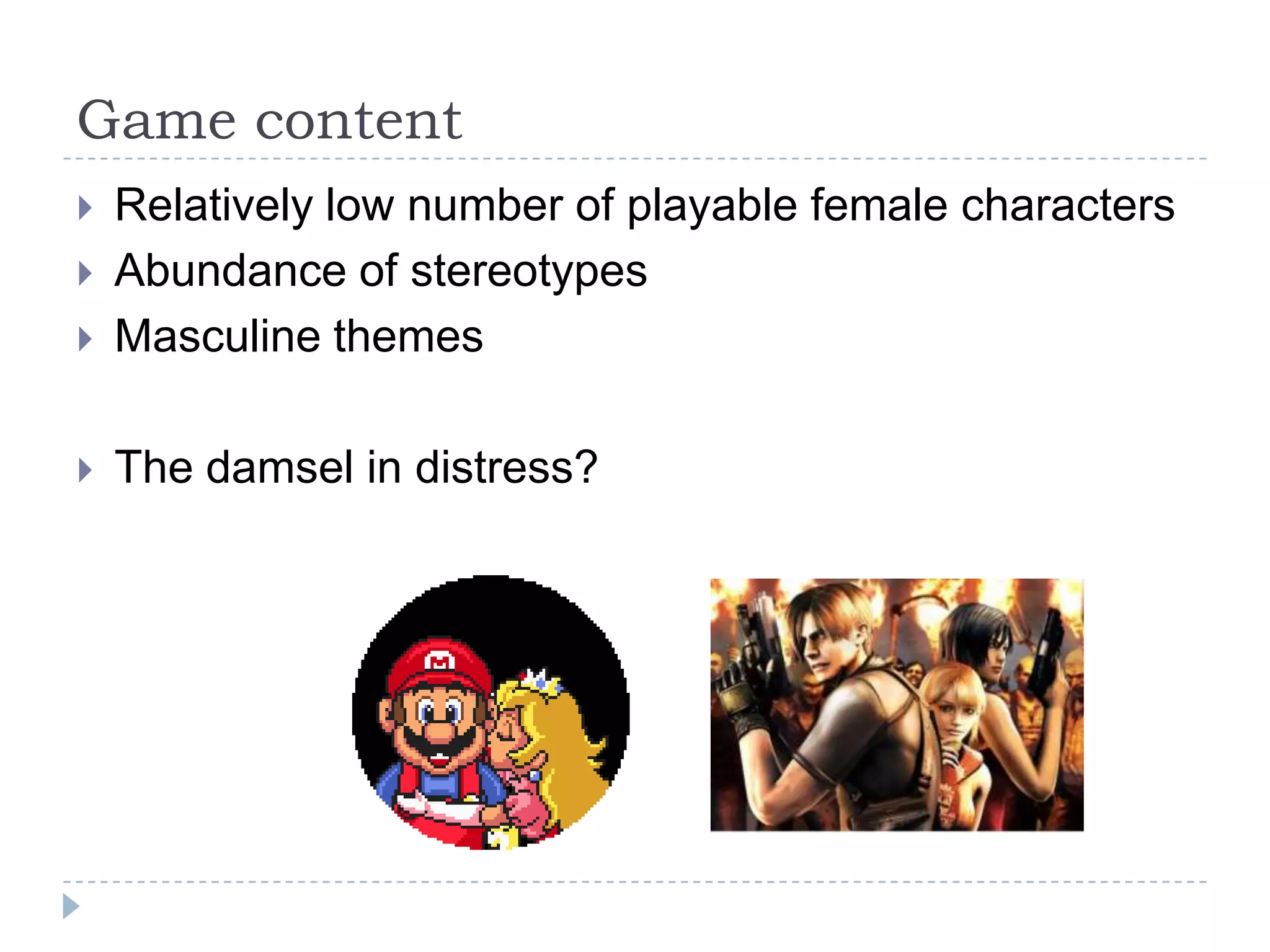
Game contentRelatively low number of playable female charactersAbundance of stereotypesMasculine themesThe damsel in distress?
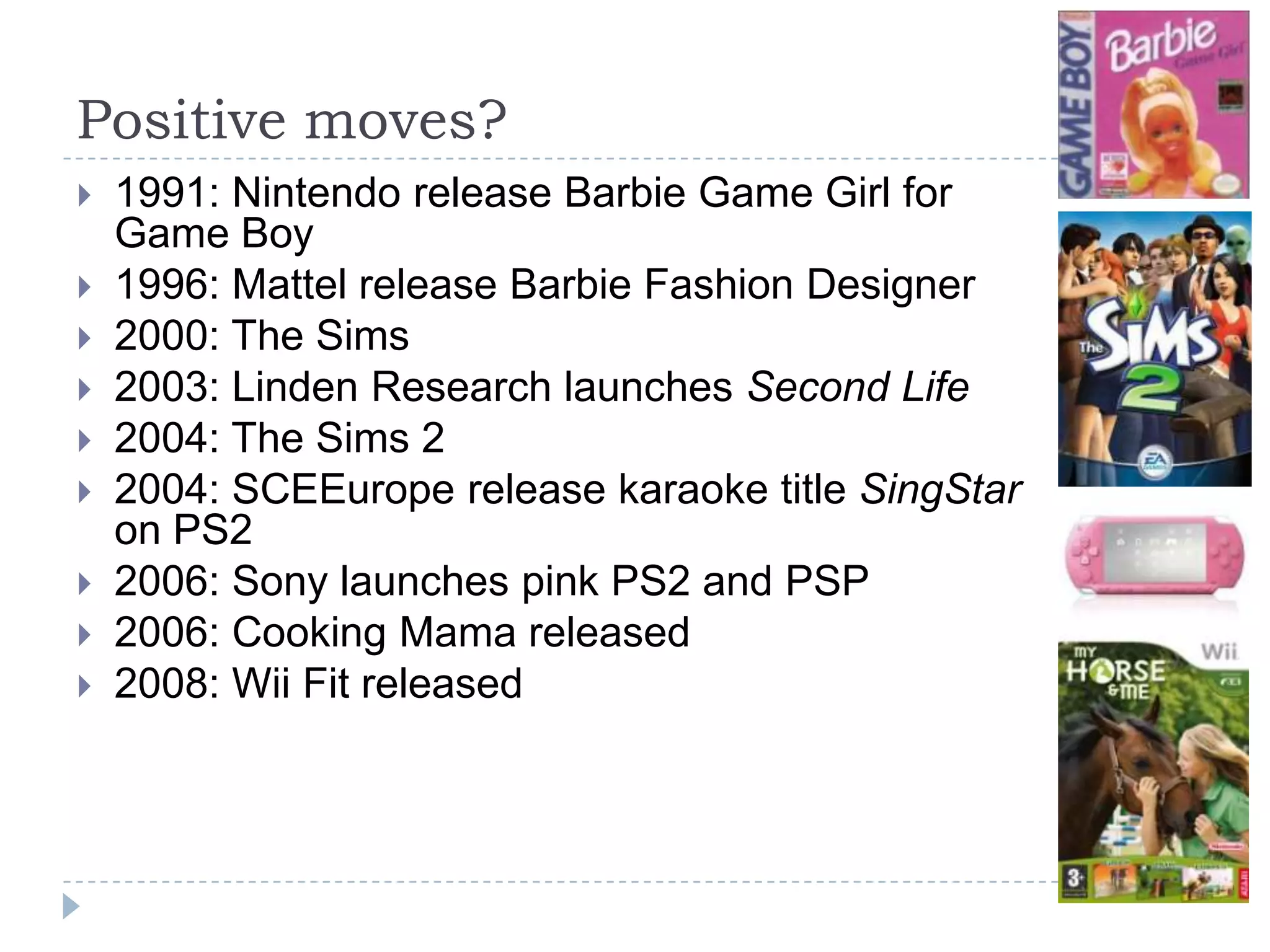
Positive moves?1991: Nintendo release Barbie Game Girl for Game Boy1996: Mattel release Barbie Fashion Designer2000: The Sims 2003: Linden Research launches Second Life2004: The Sims 22004: SCEEurope release karaoke title SingStar on PS2 2006: Sony launches pink PS2 and PSP2006: Cooking Mama released2008: Wii Fit released
Children Now study (2000)92% games have a male lead (54% female)50% women portrayed in a stereotypical way.38% displayed women with significant body exposure (23% breasts; 31% thighs; 15% backsides; 31% stomachs/midriffs)Female characters defined by ‘disproportionately large’ breasts (38%) and ‘excessively tiny’ waists (46%)33
See: http://www.remedialthoughts.com/2008/11/can-women-in-games-ever-be-more-than.html
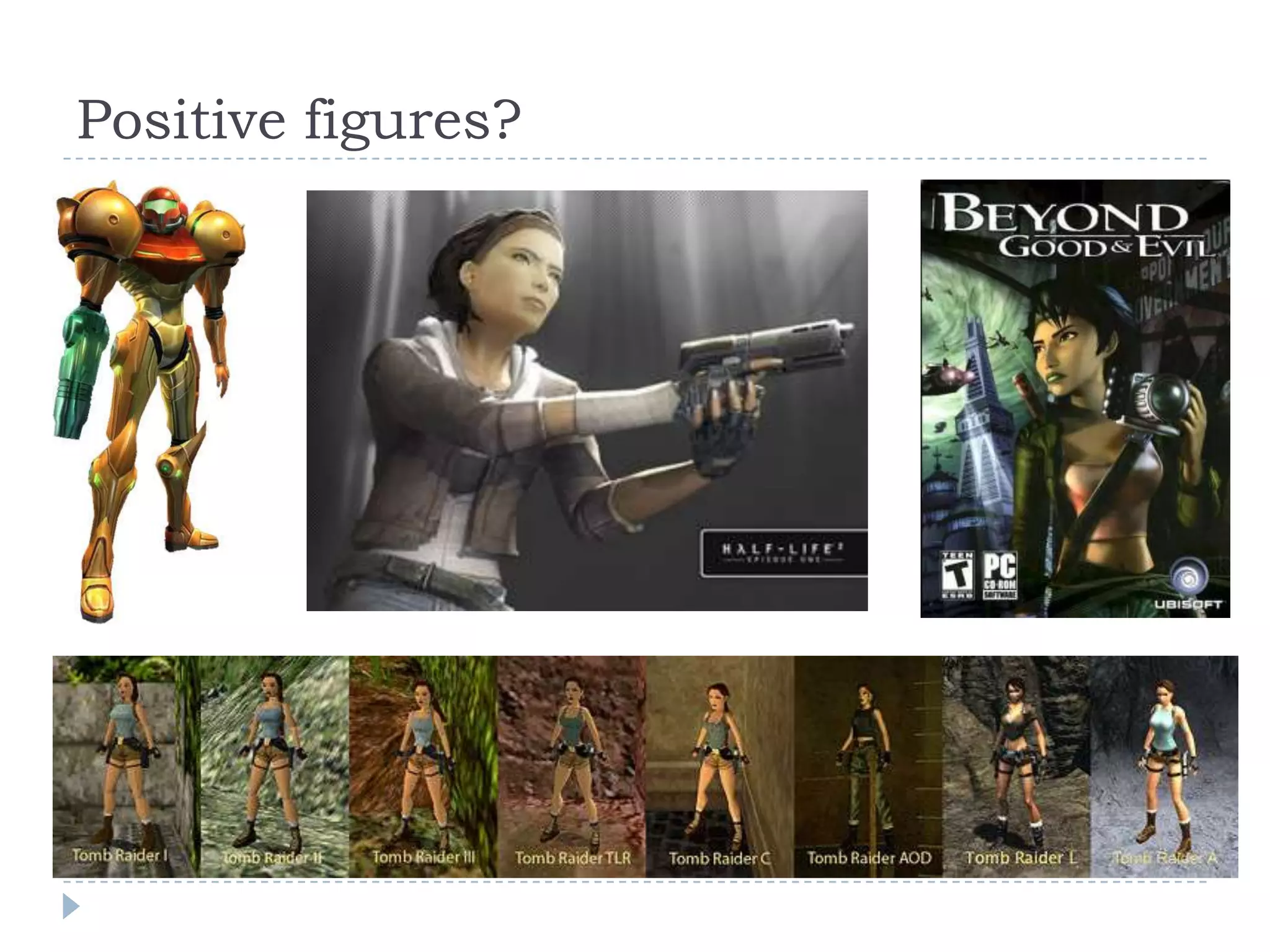
Positive figures?
ConclusionHistory of games has been male dominatedIndustry can be conservative and not welcome change (can be risky)Women increasingly more important to the industryPositive changes ahead?
Sources and further readingLeigh Alexander, 2009, ‘NPD: Female Gamer Population Increasing On Consoles’, Gamasutra, http://www.gamasutra.com/php-bin/news_index.php?story=24245Jo Bryce & Jason Rutter, 2003, ‘Gender dynamics and the social and spatial organisation of computer gaming’, Leisure Studies, 22: 1-15Jo Bryce, Jason Rutter and Cath Sullivan, 2006, ‘Digital games and gender’, in Jason Rutter & Jo Bryce (eds.), Understanding Digital Games, London: Sage.Judith Butler, 1990, Gender Trouble: Feminism and the Subversion of Identity, London: Routledge.Children Now, 2000,  Girls and Gaming: A Console Video Game Content Analysis, Oakland, CA: Children NowJ. Colwell & J. Payne, 2000, ‘Negative correlates of computer game play in adolescents’, British Journal of Psychology, 91: 295-310.G. Crawford & V. Gosling, 2005, ‘Toys for boys? Women’s marginalization and participation as digital gamers’, Sociological Research Online, 10, (1),  http://www.socresonline.org.uk/10/1/crawford.htmlT.L. Dietz, 1998, ‘An Examination of violence and gender role portrayals in video games’, Sex Roles, 38 (5-6): 425-42J. B. Funk, 1993, ‘Re-evaluating the impact of computer games’, Clinical Paediatrics, 32: 86-90AleksKrotoski, 2004, ‘Chicks and joysticks: an exploration of women and gaming’, ELSPA white paper, http://www.elspa.com/assets/files/c/chicksandjoysticksanexplorationofwomenandgaming_176.pdfCarolyn Marvin, 1988, When Old Technologies Were New.  Thinking about Electric Communication in the Late Nineteenth Century, New York: Oxford University PressSteven Poole, 2000, Trigger Happy: the inner life of videogames, London: Fourth EstateSteven Poole, 2004, Trigger Happy: videogames and the entertainment revolution, New York: Arcade PublishingG. R. Schott & K.R. Horrell, 2000, ‘Girl gamers and their relationship with the gaming culture’ Convergence, 6: 36-53

Mac129 Video Games And Representation

  • 1.
    Video games &RepresentationMAC129 - Cyberculture
  • 2.
    Economic success: GTAIVReleased April 2008Day 1 sales: 3.6 million ($310m)Week 1 sales: 6 million (£500m)August 2008Sales: 10 millionJune 2009Sales: 13.2 millionSource: http://www.vgchartz.com/games/index.php?name=grand+theft+auto+IV
  • 4.
    Historical businessA struggleto define a place for early games (see Marvin, 1988; Poole, 2004)Historical accounts tend to be lists of names and dates
  • 5.
    First game?5Tennis ForTwo 1958 (William Higginbotham)Spacewar! 1962(Steven Russell)
  • 6.
    Cold War kids1950s….Emergedduring a period of intense socio-economic and geo-political changes:Space Race (USSR)Cold War paranoia (nuclear anxiety)Decline of heavy industryMajor changes in life styleAdvent of domestic mass communicationConsumer confidence
  • 7.
    Game development…Largely dueto“university computing departments, the military, the interest of the first game developers, the first games and the subsequent development of game playing as an activity embraced largely by young males” (Kerr, 2006: 14; see also Haddon, 1988; 1993)
  • 8.
  • 9.
  • 10.
    Popular claims aboutvideo gamesNegative associations – health and violencehttp://www.youtube.com/watch?v=tCuKQIMg0I4Columbine shooting: Doomhttp://news.bbc.co.uk/1/hi/sci/tech/1295920.stmCar-jacking: Grand Theft Autohttp://news.bbc.co.uk/1/hi/scotland/3680481.stmStabbings: Manhunthttp://news.bbc.co.uk/1/hi/uk/3936237.stm
  • 11.
    (Un)popular claims aboutvideo gamesPositive claims?Surgeons who played games for at least 3 hours a week made ‘37% fewer errors, were 27% faster’ than surgeons who did not play games. (Hall, 2007)Safe environment to enact fantasyCreativity of ‘modders’
  • 12.
    Games emerge froma cultural contextUS military funding?http://www.youtube.com/watch?v=hHLJ_hZt2ds
  • 13.
    Always a ‘politics’in every representationRepresentations are never innocent. Representations are always a ‘construction’ in accordance with the producer’s politics.
  • 14.
    Representation and raceBlackculture as animalistic, subservient, sexual, violent and dangerous
  • 15.
  • 17.
    Representations of gender1950sWomenas domestic, maternal, naïve, consumers, etc
  • 19.
  • 20.
    Representation of genderFeministcritics have argued that many media texts represent women as:Sex objectsDutiful housewives / virginal daughtersMad, bad, dangerous women who need punishmentAre video games any different?Jiggle physics?http://archive.gamespy.com/fargo/january02/jiggle/See also:‘Top 10 Boobies in Video Games’‘Sexy Video Game Babes’
  • 21.
    Game designStudies ofdigital games have noted a ‘consistent pattern of male technocratic privilege’ Williams, cited in Kerr, 2006: 19 Game development & design, production, marketing & construction, dominated by heterosexual masculine fantasiesGansmoet al, 2003
  • 22.
    Gender in gamesTraditionalstereotype of femininity evokedRelationshipsRomanceEmotionsRole-playGansmo (2003): little understanding within the industry about how game design might be linked to gender socialisation
  • 23.
    Consequences of stereotypes…Gamesare a ‘prime example of the social construction of gender’ (Cassell and Jenkins, 1998: 37) and they may significantly influence people’s attitudes towards the use of computers in school or later career choices
  • 24.
    Women do playgames!?Funk (1993): 75% of females play games at home (90% males)Colwell and Payne (2000): 88% of females aged 12-14 play games regularlyESA (2004): 39% of US gamers are female and females account for 40% of online players.Krotoski (2004): approx 25% of gamers are female in Europe, compared to 70% in KoreaCrawford & Gosling (2005): Women much less likely to play the older they getAlexanda (2009):Female console gamers grew from 23 to 28 percent in 2009
  • 25.
  • 26.
    The Wii andwomen?‘Nintendo's Wii console captures new game market’ John Sterlicchi, Oct 2007http://www.guardian.co.uk/business/2007/oct/10/usnews.internationalnews
  • 27.
    Domestic accessAccess togadgets in home is not gender neutralHighly masculine and potentially hostile to femalesIs this changing?www.girlzclan.comwww.everground.comwww.girlgamer.comhttp://female-gamer.com/
  • 29.
    Domestic contextSpace agreater percentage of girls’ play has been centred in or around the homeTimefemales still spend more time engaged in domestic labour than males (typically 1.5 hours per day more than males in the UK)
  • 30.
    Gaming spaces outsidethe homePredominantly masculine environmentsarcades, pubs, motorway service stationsWomen at LAN parties tend to be in a supportive roleWhen they do compete the media portrays them as:ExoticSexualised
  • 31.
    Game contentRelatively lownumber of playable female charactersAbundance of stereotypesMasculine themesThe damsel in distress?
  • 32.
    Positive moves?1991: Nintendorelease Barbie Game Girl for Game Boy1996: Mattel release Barbie Fashion Designer2000: The Sims 2003: Linden Research launches Second Life2004: The Sims 22004: SCEEurope release karaoke title SingStar on PS2 2006: Sony launches pink PS2 and PSP2006: Cooking Mama released2008: Wii Fit released
  • 33.
    Children Now study(2000)92% games have a male lead (54% female)50% women portrayed in a stereotypical way.38% displayed women with significant body exposure (23% breasts; 31% thighs; 15% backsides; 31% stomachs/midriffs)Female characters defined by ‘disproportionately large’ breasts (38%) and ‘excessively tiny’ waists (46%)33
  • 34.
  • 36.
  • 37.
    ConclusionHistory of gameshas been male dominatedIndustry can be conservative and not welcome change (can be risky)Women increasingly more important to the industryPositive changes ahead?
  • 38.
    Sources and furtherreadingLeigh Alexander, 2009, ‘NPD: Female Gamer Population Increasing On Consoles’, Gamasutra, http://www.gamasutra.com/php-bin/news_index.php?story=24245Jo Bryce & Jason Rutter, 2003, ‘Gender dynamics and the social and spatial organisation of computer gaming’, Leisure Studies, 22: 1-15Jo Bryce, Jason Rutter and Cath Sullivan, 2006, ‘Digital games and gender’, in Jason Rutter & Jo Bryce (eds.), Understanding Digital Games, London: Sage.Judith Butler, 1990, Gender Trouble: Feminism and the Subversion of Identity, London: Routledge.Children Now, 2000, Girls and Gaming: A Console Video Game Content Analysis, Oakland, CA: Children NowJ. Colwell & J. Payne, 2000, ‘Negative correlates of computer game play in adolescents’, British Journal of Psychology, 91: 295-310.G. Crawford & V. Gosling, 2005, ‘Toys for boys? Women’s marginalization and participation as digital gamers’, Sociological Research Online, 10, (1), http://www.socresonline.org.uk/10/1/crawford.htmlT.L. Dietz, 1998, ‘An Examination of violence and gender role portrayals in video games’, Sex Roles, 38 (5-6): 425-42J. B. Funk, 1993, ‘Re-evaluating the impact of computer games’, Clinical Paediatrics, 32: 86-90AleksKrotoski, 2004, ‘Chicks and joysticks: an exploration of women and gaming’, ELSPA white paper, http://www.elspa.com/assets/files/c/chicksandjoysticksanexplorationofwomenandgaming_176.pdfCarolyn Marvin, 1988, When Old Technologies Were New. Thinking about Electric Communication in the Late Nineteenth Century, New York: Oxford University PressSteven Poole, 2000, Trigger Happy: the inner life of videogames, London: Fourth EstateSteven Poole, 2004, Trigger Happy: videogames and the entertainment revolution, New York: Arcade PublishingG. R. Schott & K.R. Horrell, 2000, ‘Girl gamers and their relationship with the gaming culture’ Convergence, 6: 36-53