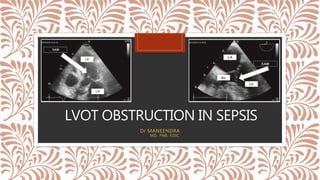
LVOT OBSTRUCTION IN SEPSIS
Dr MANEENDRA
MD, FNB, EDIC
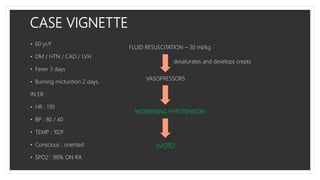
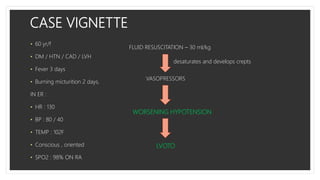
CASE VIGNETTE
• 60 yr/f
• DM / HTN / CAD / LVH
• Fever 3 days
• Burning micturition 2 days,
IN ER :
• HR : 130
• BP : 80 / 40
• TEMP : 102F
• Conscious , oriented
• SPO2 : 98% ON RA
FLUID RESUSCITATION – 30 ml/kg
VASOPRESSORS
desaturates and develops crepts
WORSENING HYPOTENSION
LVOTO
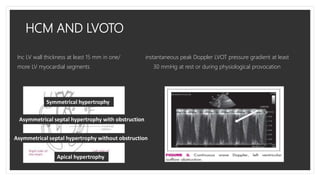
HCM AND LVOTO
Apical hypertrophy
Symmetrical hypertrophy
Asymmetrical septal hypertrophy without obstruction
Asymmetrical septal hypertrophy with obstruction
Inc LV wall thickness at least 15 mm in one/
more LV myocardial segments
instantaneous peak Doppler LVOT pressure gradient at least
30 mmHg at rest or during physiological provocation
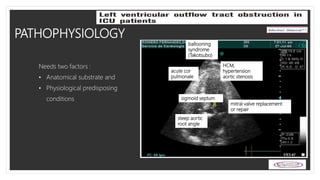
PATHOPHYSIOLOGY
HCM,
hypertension
aortic stenosis
mitral valve replacement
or repair
steep aortic
root angle
acute cor
pulmonale
ballooning
syndrome
(Takotsubo)
sigmoid septum
Needs two factors :
• Anatomical substrate and
• Physiological predisposing
conditions
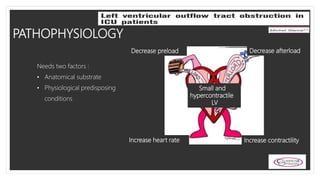
PATHOPHYSIOLOGY
Decrease preload Decrease afterload
Increase heart rate Increase contractility
Small and
hypercontractile
LV
Needs two factors :
• Anatomical substrate
• Physiological predisposing
conditions
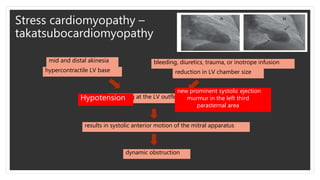
Stress cardiomyopathy –
takatsubocardiomyopathy
hypercontractile LV base
mid and distal akinesia
reduction in LV chamber size
bleeding, diuretics, trauma, or inotrope infusion
crowding at the LV outflow level
results in systolic anterior motion of the mitral apparatus
dynamic obstruction
Hypotension
new prominent systolic ejection
murmur in the left third
parasternal area
DIAGNOSIS
• new systolic murmur in the left low sternal border that increases with Valsalva maneuver or
postextrasystole
• Definitive diagnosis requires performing an echocardiogram as soon as possible
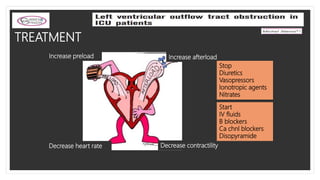
TREATMENT
Increase preload Increase afterload
Decrease heart rate Decrease contractility
Stop
Diuretics
Vasopressors
Ionotropic agents
Nitrates
Start
IV fluids
B blockers
Ca chnl blockers
Disopyramide
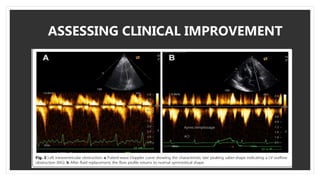
ASSESSING CLINICAL IMPROVEMENT
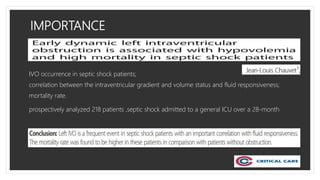
IMPORTANCE
IVO occurrence in septic shock patients;
correlation between the intraventricular gradient and volume status and fluid responsiveness;
mortality rate.
prospectively analyzed 218 patients ,septic shock admitted to a general ICU over a 28-month
CASE VIGNETTE
• 60 yr/f
• DM / HTN / CAD / LVH
• Fever 3 days
• Burning micturition 2 days,
IN ER :
• HR : 130
• BP : 80 / 40
• TEMP : 102F
• Conscious , oriented
• SPO2 : 98% ON RA
FLUID RESUSCITATION – 30 ml/kg
VASOPRESSORS
desaturates and develops crepts
WORSENING HYPOTENSION
LVOTO
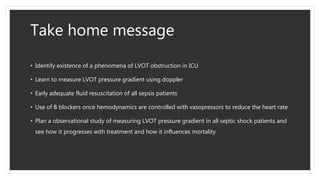
Take home message
• Identify existence of a phenomena of LVOT obstruction in ICU
• Learn to measure LVOT pressure gradient using doppler
• Early adequate fluid resuscitation of all sepsis patients
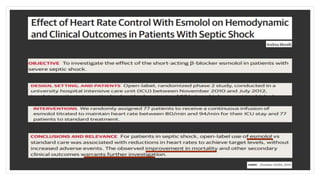
• Use of B blockers once hemodynamics are controlled with vasopressors to reduce the heart rate
• Plan a observational study of measuring LVOT pressure gradient in all septic shock patients and
see how it progresses with treatment and how it influences mortality
EYES WILL SEE ONLY WHAT THE MIND KNOWS…….
THANK YOU……

LVOT OBSTRUCTION IN ICU

  • 1.
    LVOT OBSTRUCTION INSEPSIS Dr MANEENDRA MD, FNB, EDIC
  • 2.
    CASE VIGNETTE • 60yr/f • DM / HTN / CAD / LVH • Fever 3 days • Burning micturition 2 days, IN ER : • HR : 130 • BP : 80 / 40 • TEMP : 102F • Conscious , oriented • SPO2 : 98% ON RA FLUID RESUSCITATION – 30 ml/kg VASOPRESSORS desaturates and develops crepts WORSENING HYPOTENSION LVOTO
  • 3.
    HCM AND LVOTO Apicalhypertrophy Symmetrical hypertrophy Asymmetrical septal hypertrophy without obstruction Asymmetrical septal hypertrophy with obstruction Inc LV wall thickness at least 15 mm in one/ more LV myocardial segments instantaneous peak Doppler LVOT pressure gradient at least 30 mmHg at rest or during physiological provocation
  • 4.
    PATHOPHYSIOLOGY HCM, hypertension aortic stenosis mitral valvereplacement or repair steep aortic root angle acute cor pulmonale ballooning syndrome (Takotsubo) sigmoid septum Needs two factors : • Anatomical substrate and • Physiological predisposing conditions
  • 5.
    PATHOPHYSIOLOGY Decrease preload Decreaseafterload Increase heart rate Increase contractility Small and hypercontractile LV Needs two factors : • Anatomical substrate • Physiological predisposing conditions
  • 6.
    Stress cardiomyopathy – takatsubocardiomyopathy hypercontractileLV base mid and distal akinesia reduction in LV chamber size bleeding, diuretics, trauma, or inotrope infusion crowding at the LV outflow level results in systolic anterior motion of the mitral apparatus dynamic obstruction Hypotension new prominent systolic ejection murmur in the left third parasternal area
  • 7.
    DIAGNOSIS • new systolicmurmur in the left low sternal border that increases with Valsalva maneuver or postextrasystole • Definitive diagnosis requires performing an echocardiogram as soon as possible
  • 8.
    TREATMENT Increase preload Increaseafterload Decrease heart rate Decrease contractility Stop Diuretics Vasopressors Ionotropic agents Nitrates Start IV fluids B blockers Ca chnl blockers Disopyramide
  • 10.
  • 11.
    IMPORTANCE IVO occurrence inseptic shock patients; correlation between the intraventricular gradient and volume status and fluid responsiveness; mortality rate. prospectively analyzed 218 patients ,septic shock admitted to a general ICU over a 28-month
  • 12.
    CASE VIGNETTE • 60yr/f • DM / HTN / CAD / LVH • Fever 3 days • Burning micturition 2 days, IN ER : • HR : 130 • BP : 80 / 40 • TEMP : 102F • Conscious , oriented • SPO2 : 98% ON RA FLUID RESUSCITATION – 30 ml/kg VASOPRESSORS desaturates and develops crepts WORSENING HYPOTENSION LVOTO
  • 13.
    Take home message •Identify existence of a phenomena of LVOT obstruction in ICU • Learn to measure LVOT pressure gradient using doppler • Early adequate fluid resuscitation of all sepsis patients • Use of B blockers once hemodynamics are controlled with vasopressors to reduce the heart rate • Plan a observational study of measuring LVOT pressure gradient in all septic shock patients and see how it progresses with treatment and how it influences mortality
  • 14.
    EYES WILL SEEONLY WHAT THE MIND KNOWS……. THANK YOU……