Lunar Sighting Zach Clark 9/15/09
Science Standard 3-The Physical Setting Indicator: 4.3.1-Observe and report that the moon can be seen sometimes at night and sometimes during the day. Taken from:  http://dc.doe.in.gov/Standards/AcademicStandards/StandardSearch.aspx Activity Link: http://www.indianastandardsresources.org/files/sci/sci_4_3_1.pdf
Definitions Lunar- pertaining to the moon Observe- To be or become aware of, especially through careful and directed attention notice. Reflect- to cast back light, heat, etc.  Taken From: www.dictionary.com
Background Information The Moon Much smaller than the earth Orbits the earth Revolves around the earth in 29 ½ days Taken from: http://www.nasa.gov/worldbook/moon_worldbook.html
The Earth and the Moon Taken From Google Images
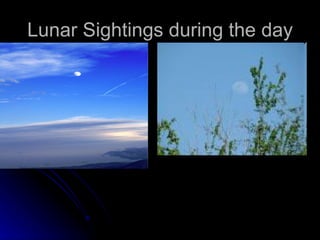
Lunar Sightings during the day
Questions? Why can we see the moon during the day? Is the moon always visible during the day? Why can’t you see stars when you can see the moon?
Findings By doing the activity provided at the beginning of the PowerPoint will help students discover a better understanding Additional Info:http://imagine.gsfc.nasa.gov/docs/ask_astro/answers/970314b2.html
Resources Definitions www.dictionary.com Pictures Google Image search Moon/earth/moon during the day Additional Information http://imagine.gsfc.nasa.gov/docs/ask_astro/answers/970314b2.html http://www.indianastandardsresources.org/files/sci/sci_4_3_1.pdf http://dc.doe.in.gov/Standards/AcademicStandards/StandardSearch.aspx

Lunar Sighting

  • 1.
    Lunar Sighting ZachClark 9/15/09
  • 2.
    Science Standard 3-ThePhysical Setting Indicator: 4.3.1-Observe and report that the moon can be seen sometimes at night and sometimes during the day. Taken from: http://dc.doe.in.gov/Standards/AcademicStandards/StandardSearch.aspx Activity Link: http://www.indianastandardsresources.org/files/sci/sci_4_3_1.pdf
  • 3.
    Definitions Lunar- pertainingto the moon Observe- To be or become aware of, especially through careful and directed attention notice. Reflect- to cast back light, heat, etc. Taken From: www.dictionary.com
  • 4.
    Background Information TheMoon Much smaller than the earth Orbits the earth Revolves around the earth in 29 ½ days Taken from: http://www.nasa.gov/worldbook/moon_worldbook.html
  • 5.
    The Earth andthe Moon Taken From Google Images
  • 6.
  • 7.
    Questions? Why canwe see the moon during the day? Is the moon always visible during the day? Why can’t you see stars when you can see the moon?
  • 8.
    Findings By doingthe activity provided at the beginning of the PowerPoint will help students discover a better understanding Additional Info:http://imagine.gsfc.nasa.gov/docs/ask_astro/answers/970314b2.html
  • 9.
    Resources Definitions www.dictionary.comPictures Google Image search Moon/earth/moon during the day Additional Information http://imagine.gsfc.nasa.gov/docs/ask_astro/answers/970314b2.html http://www.indianastandardsresources.org/files/sci/sci_4_3_1.pdf http://dc.doe.in.gov/Standards/AcademicStandards/StandardSearch.aspx