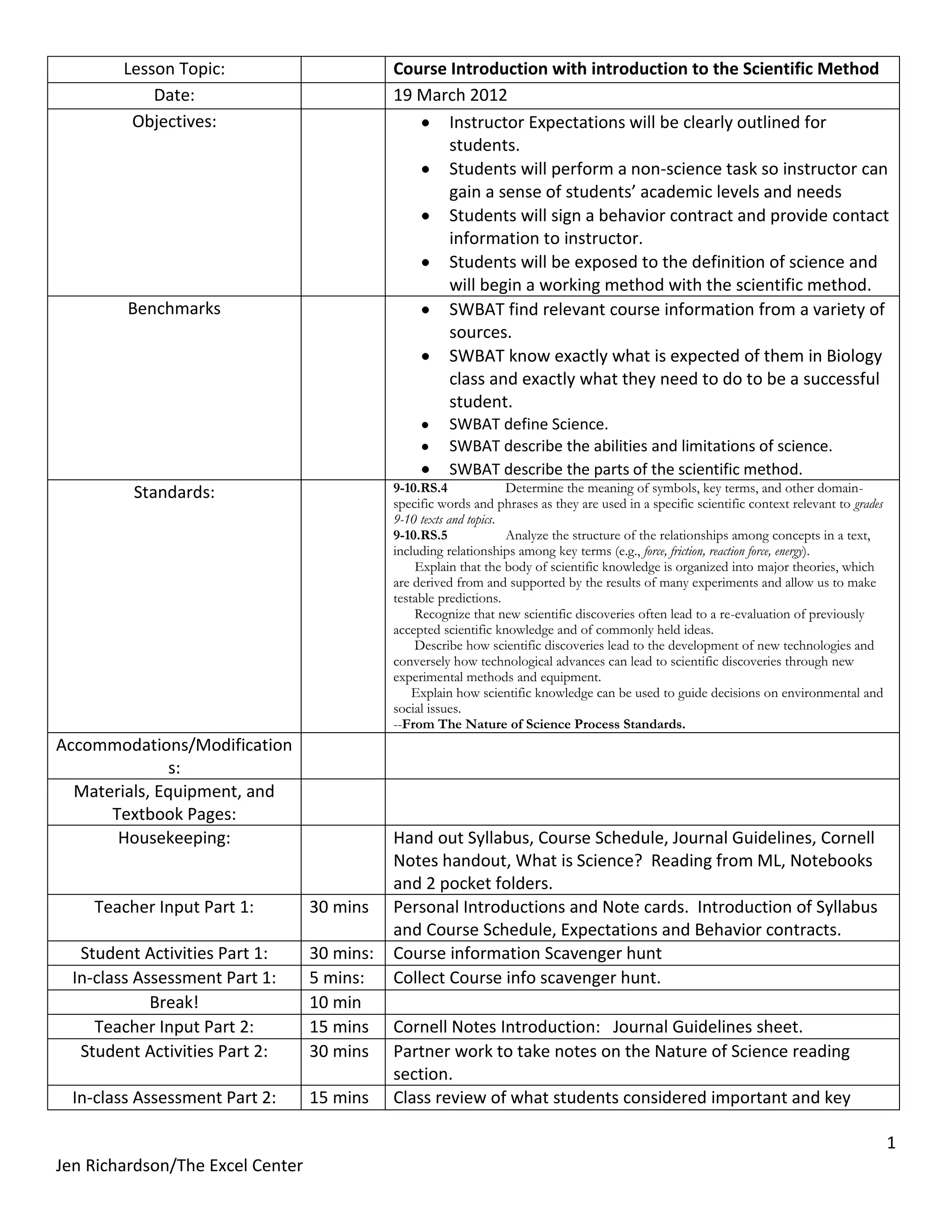
Lesson Topic:                        Course Introduction with introduction to the Scientific Method
            Date:                            19 March 2012
         Objectives:                                Instructor Expectations will be clearly outlined for
                                                    students.
                                                    Students will perform a non-science task so instructor can
                                                    gain a sense of students’ academic levels and needs
                                                    Students will sign a behavior contract and provide contact
                                                    information to instructor.
                                                    Students will be exposed to the definition of science and
                                                    will begin a working method with the scientific method.
         Benchmarks                                 SWBAT find relevant course information from a variety of
                                                    sources.
                                                    SWBAT know exactly what is expected of them in Biology
                                                    class and exactly what they need to do to be a successful
                                                    student.
                                                       SWBAT define Science.
                                                       SWBAT describe the abilities and limitations of science.
                                                       SWBAT describe the parts of the scientific method.
          Standards:                         9-10.RS.4              Determine the meaning of symbols, key terms, and other domain-
                                             specific words and phrases as they are used in a specific scientific context relevant to grades
                                             9-10 texts and topics.
                                             9-10.RS.5              Analyze the structure of the relationships among concepts in a text,
                                             including relationships among key terms (e.g., force, friction, reaction force, energy).
                                                 Explain that the body of scientific knowledge is organized into major theories, which
                                             are derived from and supported by the results of many experiments and allow us to make
                                             testable predictions.
                                                 Recognize that new scientific discoveries often lead to a re-evaluation of previously
                                             accepted scientific knowledge and of commonly held ideas.
                                                 Describe how scientific discoveries lead to the development of new technologies and
                                             conversely how technological advances can lead to scientific discoveries through new
                                             experimental methods and equipment.
                                                 Explain how scientific knowledge can be used to guide decisions on environmental and
                                             social issues.
                                             --From The Nature of Science Process Standards.
Accommodations/Modification
               s:
  Materials, Equipment, and
      Textbook Pages:
       Housekeeping:                         Hand out Syllabus, Course Schedule, Journal Guidelines, Cornell
                                             Notes handout, What is Science? Reading from ML, Notebooks
                                             and 2 pocket folders.
    Teacher Input Part 1:         30 mins    Personal Introductions and Note cards. Introduction of Syllabus
                                             and Course Schedule, Expectations and Behavior contracts.
   Student Activities Part 1:     30 mins:   Course information Scavenger hunt
  In-class Assessment Part 1:     5 mins:    Collect Course info scavenger hunt.
             Break!               10 min
     Teacher Input Part 2:        15 mins    Cornell Notes Introduction: Journal Guidelines sheet.
   Student Activities Part 2:     30 mins    Partner work to take notes on the Nature of Science reading
                                             section.
  In-class Assessment Part 2:     15 mins    Class review of what students considered important and key

                                                                                                                                               1
Jen Richardson/The Excel Center
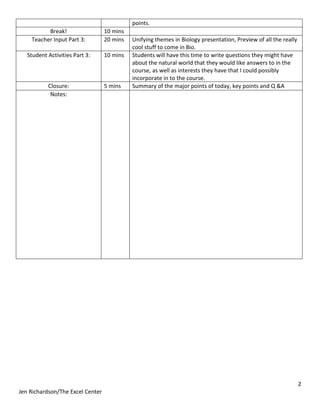
points.
          Break!                  10 mins
    Teacher Input Part 3:         20 mins   Unifying themes in Biology presentation, Preview of all the really
                                            cool stuff to come in Bio.
   Student Activities Part 3:     10 mins   Students will have this time to write questions they might have
                                            about the natural world that they would like answers to in the
                                            course, as well as interests they have that I could possibly
                                            incorporate in to the course.
           Closure:               5 mins    Summary of the major points of today, key points and Q &A
            Notes:


                                                                                                                 2
Jen Richardson/The Excel Center

Lp course intro and what is science t5

  • 1.
    Lesson Topic: Course Introduction with introduction to the Scientific Method Date: 19 March 2012 Objectives: Instructor Expectations will be clearly outlined for students. Students will perform a non-science task so instructor can gain a sense of students’ academic levels and needs Students will sign a behavior contract and provide contact information to instructor. Students will be exposed to the definition of science and will begin a working method with the scientific method. Benchmarks SWBAT find relevant course information from a variety of sources. SWBAT know exactly what is expected of them in Biology class and exactly what they need to do to be a successful student. SWBAT define Science. SWBAT describe the abilities and limitations of science. SWBAT describe the parts of the scientific method. Standards: 9-10.RS.4 Determine the meaning of symbols, key terms, and other domain- specific words and phrases as they are used in a specific scientific context relevant to grades 9-10 texts and topics. 9-10.RS.5 Analyze the structure of the relationships among concepts in a text, including relationships among key terms (e.g., force, friction, reaction force, energy). Explain that the body of scientific knowledge is organized into major theories, which are derived from and supported by the results of many experiments and allow us to make testable predictions. Recognize that new scientific discoveries often lead to a re-evaluation of previously accepted scientific knowledge and of commonly held ideas. Describe how scientific discoveries lead to the development of new technologies and conversely how technological advances can lead to scientific discoveries through new experimental methods and equipment. Explain how scientific knowledge can be used to guide decisions on environmental and social issues. --From The Nature of Science Process Standards. Accommodations/Modification s: Materials, Equipment, and Textbook Pages: Housekeeping: Hand out Syllabus, Course Schedule, Journal Guidelines, Cornell Notes handout, What is Science? Reading from ML, Notebooks and 2 pocket folders. Teacher Input Part 1: 30 mins Personal Introductions and Note cards. Introduction of Syllabus and Course Schedule, Expectations and Behavior contracts. Student Activities Part 1: 30 mins: Course information Scavenger hunt In-class Assessment Part 1: 5 mins: Collect Course info scavenger hunt. Break! 10 min Teacher Input Part 2: 15 mins Cornell Notes Introduction: Journal Guidelines sheet. Student Activities Part 2: 30 mins Partner work to take notes on the Nature of Science reading section. In-class Assessment Part 2: 15 mins Class review of what students considered important and key 1 Jen Richardson/The Excel Center
  • 2.
    points. Break! 10 mins Teacher Input Part 3: 20 mins Unifying themes in Biology presentation, Preview of all the really cool stuff to come in Bio. Student Activities Part 3: 10 mins Students will have this time to write questions they might have about the natural world that they would like answers to in the course, as well as interests they have that I could possibly incorporate in to the course. Closure: 5 mins Summary of the major points of today, key points and Q &A Notes: 2 Jen Richardson/The Excel Center