C.P.TIWARI
PGT ENG.
K.V.ARA
 An excerpt from the book titled Lost Spring: Stories of
Stolen Childhood
 Highlights poverty and traditions
 Exploitation of children
 Helpless parents and society
 Child Labour
 Migrants from Dhaka and lives in Seemapuri
 They left green fields, storms destroyed their fields and
home
 Saheb-e-Alam means „lord of the universe‟- ironical
 Saheb is presented as a rag picker at the beginning
 Later he works in a tea-stall and earns Rs 800
 Saheb has a master now- the tea shop owner
 Saheb no longer his own master
 Saheb admires tennis player
 gets shoes
 has unfulfilled dreams like going to school and playing
tennis
 Saheb represents thousands of Ragpickers –
 barefoot
 scrounge through garbage
 sometimes find a 10 rupee note or even a silver coin
 love element of surprise and suspense
 carefree life yet burdened
 childhood stolen
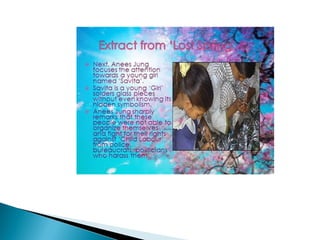
 A child in a bangle making family
 He desires to be his own master
 Different from other young children of Firozabad and
has a dream
 Wants to be a motor mechanic
 He is ready to walk a long way in order to fulfill his
goal-motor mechanic
 20,000 children work near hot furnace
 Lose their eyesight
 Have the tradition of same work –making bangles
 Do not live a life of joy
 No change possible
 The tradition of making bangles
 Poverty
 Social forces- law, police, middlemen, politicians,
bureaucrats, sahukars
 No leader to protest
 children are burdened
 Plight of street children
 Forced labour in the early life
 Denied opportunity of schooling
 Society and political class are responsible for such
situations
 What could be some of the reasons for the migration of
people from villages?
 Would you agree that the promises made to the
children are rarely kept?
 In your opinion can Mukesh and Saheb realize their
dream?
 Is Saheb happy working at the tea-stall?
 Take an interview of a young girl or a boy working at
somebody‟s house, dhaba, factory or any shop
 Ask questions like: his name, age, family, hometown,
salary and dream
 What are some of the problems working children may
experience?
 Write an article on “ Dreams of the poor and their
reality”
THANKYOU…

Lost Spring.pdf

  • 1.
  • 3.
     An excerptfrom the book titled Lost Spring: Stories of Stolen Childhood  Highlights poverty and traditions  Exploitation of children  Helpless parents and society  Child Labour
  • 10.
     Migrants fromDhaka and lives in Seemapuri  They left green fields, storms destroyed their fields and home  Saheb-e-Alam means „lord of the universe‟- ironical  Saheb is presented as a rag picker at the beginning  Later he works in a tea-stall and earns Rs 800  Saheb has a master now- the tea shop owner  Saheb no longer his own master
  • 11.
     Saheb admirestennis player  gets shoes  has unfulfilled dreams like going to school and playing tennis  Saheb represents thousands of Ragpickers –  barefoot  scrounge through garbage  sometimes find a 10 rupee note or even a silver coin  love element of surprise and suspense  carefree life yet burdened  childhood stolen
  • 14.
     A childin a bangle making family  He desires to be his own master  Different from other young children of Firozabad and has a dream  Wants to be a motor mechanic  He is ready to walk a long way in order to fulfill his goal-motor mechanic
  • 16.
     20,000 childrenwork near hot furnace  Lose their eyesight  Have the tradition of same work –making bangles  Do not live a life of joy  No change possible
  • 18.
     The traditionof making bangles  Poverty  Social forces- law, police, middlemen, politicians, bureaucrats, sahukars  No leader to protest  children are burdened
  • 19.
     Plight ofstreet children  Forced labour in the early life  Denied opportunity of schooling  Society and political class are responsible for such situations
  • 27.
     What couldbe some of the reasons for the migration of people from villages?  Would you agree that the promises made to the children are rarely kept?  In your opinion can Mukesh and Saheb realize their dream?  Is Saheb happy working at the tea-stall?
  • 28.
     Take aninterview of a young girl or a boy working at somebody‟s house, dhaba, factory or any shop  Ask questions like: his name, age, family, hometown, salary and dream  What are some of the problems working children may experience?
  • 29.
     Write anarticle on “ Dreams of the poor and their reality”
  • 30.