CITY PROVINCE
Objectives:
1. Recognize mood in literary works.
2. Appreciate the beauty of living a
simple life.
3. Present a jingle, drawing, slogan
and a 3-minute role play showing
the differences between the old
and modern lifestyle.
Bruce Ignacio
• He studied creative
writing and jewelry
making in the
Institute of American
Indian Arts in Sta. Fe,
New Mexico.
• He represents the
modern-day
descendants of a
native American
group.
Lost
By: Bruce Ignacio
I know not of my forefathers
nor of their beliefs
For I was brought up in the
city.
Our home seemed
smothered and surrounded
as were other homes on
city sites.
When the rain came
I would slush my way to
school
as though the street were a
wading pool.
Those streets were always crowded.
I brushed by people with every step,
Covered my nose once in awhile,
Gasping against the smell of
perspiration on humid days.
Lights flashed everywhere
until my head became a
signal, flashing on and off.
Noise so unbearable
I wished the whole place
would come to a standstill,
leaving only peace and quiet
And still, would I like this kind of
life? . . .
The life of my forefathers
who wandered, not knowing where
they were going,
but just moving, further and further
from where they had been,
To be in quiet,
to kind of be lost in their dreams and
wishing,
as I have been to this day,
I awake.
Then I recall this trail
Swept away by the north wind,
It wasn’t for me to follow
The trail of the long walk.
Comprehension
Questions
Mood is the general
feeling or atmosphere in
a literary work. It is the
feeling the reader gets
from reading .
How to Identify Mood?
• Choice of words
• Line length
• Rhythm
• Setting
• Plot
• details
Identify its mood
1. Bouncing into the
room, she lit up the
vicinity with a joyous
glow on her face as
she told her fiancé
about their wedding
plans.
2. Bursting through the
door, the mother screamed
uncontrollably at the
innocent teacher who gave
her child an F.
3. She huddled in the corner,
clutching her tattered
blanket and shaking
convulsively, as she
feverishly searched the
room for the unknown
dangers that awaited her.
What’s the
difference
between
mood and
tone?
Mood vs. Tone
Mood is the
emotions
that the
reader feels
while he is
reading.
Tone is the
feeling the
author meant
to set in the
story or
towards the
subject.
MOOD
-the overall
feeling of
the work .
TONE
-the way
feelings are
expressed.
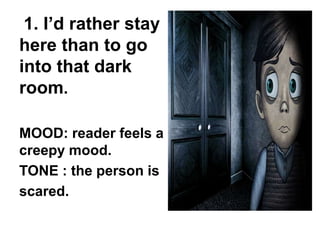
1. I’d rather stay
here than to go
into that dark
room.
MOOD: reader feels a
creepy mood.
TONE : the person is
scared.
2.Gerry kicked
and threw the
poor cat out of
the house.
MOOD: the reader felt
pitiful towards the cat
and furious to Gerry.
TONE: Gerry is angry
to the cat.
Essential Question
Why study
poetry?
Fixing Skills
Directions
Read the following
lines then write the
letter of its correct
mood.
1.) There is quiet in my heart
Like one who rests in days of pain
Outside the sparrows on the roof
Are chirping in the dripping rain.
from Rain in my heart
Edgar Lee Masten
a. calm c. joyful
b. reflective d. resigned
2) The city is so big,
Its bridges quake with fear
I know I have seen at night
from The City Is So Big
Richard Garcia
a. amazed c. fearful
b. horrified d. nostalgic
3.) Love, leave me like the light,
The gently passing day;
We would not know but for the night,
When it has slipped away
from If You Should Go
Countee Cullen
a. ecstatic c. euphoria
b. gloomy d. regretful
Formative Assessment
Directions: Read the
following passages carefully
and identify its mood by
writing the letter of the
correct answer
Choices
A. triumphant
B. silly
C. calm
D. boring
E. despairing
F. desolate
1. My Glider”
by Jack Prelutsky
My glider is graceful,
my glider is grand,
I launch it aloft
with a flick of my hand.
It smoothly ascends,
then it pauses and swoops,
it hovers in space and turns intricate loops.
2. “The Bean Eaters”
by Gwendolyn Brooks
They eat beans mostly, this old
yellow pair.
Dinner is a casual affair.
Plain chipware on a plain and
creaking wood,
Tin flatware.
3. “Buffalo Dusk”
by Carl Sandburg
The buffaloes are gone.
And those who saw the buffaloes are gone.
Those who saw the buffaloes by thousands and
how they
pawed the prairie sod into dust with their hoofs,
their great heads down pawing on in a great
pageant of dusk,
Those who saw the buffaloes are gone.
And the buffaloes are gone.
4. Animal Farm
by George Orwell
A little way down the pasture there was a knoll
that commanded a view of most of the farm. The
animals rushed to the top of it and gazed round
them in the clear morning light. Yes, it was
theirs—everything that they could see was theirs!
In the ecstasy of that thought they gamboled
round and round, they hurled themselves into the
air in great leaps of excitement. It was as though
they had never seen these things before, and even
now they could hardly believe that it was all their
own.
5. Siddhartha
by Hermann Hesse
The Buddha went quietly on his way, lost in
thought. His peaceful countenance was neither
happy nor sad. He seemed to be smiling gently
inwardly. With a secret smile, not unlike that
of a healthy child, he walked along, peacefully,
quietly. He wore his gown and walked along
exactly like the other monks, but his face and
his step, his peaceful downward glance, his
peaceful downward-
Answer Key
Answer Key
1.B
2.D
3.F
4.A
5.C
Group Enrichment
Activities
Group 1: Present a jingle expressing the
diverse idea of antiquity and modernity
Group 2: Present a drawing showing the old
and modern architecture designs of a
Filipino home.
Group 3: Present a slogan about change.
Group 4: Present a 3-minute role play
showing the different lifestyles now and
then.
6 Facets of Understanding Questions:
Explanation: What is the key concept of
the poem “Lost”?
Interpretation: What does the poem
reveal about the complexities and
nature of modern-day life?
Application: How can you use what you
have learned today in real life
situations?
Perspective: How does the
speaker’s point of view similar or
different to your point of view?
Empathy: What was the poem
trying to make us feel and see?
Self-knowledge: How are your
views about modernization
shaped by the lesson?
Assignment
Write a poem
about the happiest
day in your life.

Lost by bruce ignacio

  • 1.
  • 2.
    Objectives: 1. Recognize moodin literary works. 2. Appreciate the beauty of living a simple life. 3. Present a jingle, drawing, slogan and a 3-minute role play showing the differences between the old and modern lifestyle.
  • 3.
    Bruce Ignacio • Hestudied creative writing and jewelry making in the Institute of American Indian Arts in Sta. Fe, New Mexico. • He represents the modern-day descendants of a native American group.
  • 4.
    Lost By: Bruce Ignacio Iknow not of my forefathers nor of their beliefs For I was brought up in the city.
  • 5.
    Our home seemed smotheredand surrounded as were other homes on city sites.
  • 6.
    When the raincame I would slush my way to school as though the street were a wading pool.
  • 7.
    Those streets werealways crowded. I brushed by people with every step, Covered my nose once in awhile, Gasping against the smell of perspiration on humid days.
  • 8.
    Lights flashed everywhere untilmy head became a signal, flashing on and off.
  • 9.
    Noise so unbearable Iwished the whole place would come to a standstill, leaving only peace and quiet
  • 10.
    And still, wouldI like this kind of life? . . . The life of my forefathers who wandered, not knowing where they were going, but just moving, further and further from where they had been,
  • 11.
    To be inquiet, to kind of be lost in their dreams and wishing, as I have been to this day, I awake.
  • 12.
    Then I recallthis trail Swept away by the north wind, It wasn’t for me to follow The trail of the long walk.
  • 13.
  • 14.
    Mood is thegeneral feeling or atmosphere in a literary work. It is the feeling the reader gets from reading .
  • 15.
    How to IdentifyMood? • Choice of words • Line length • Rhythm • Setting • Plot • details
  • 16.
    Identify its mood 1.Bouncing into the room, she lit up the vicinity with a joyous glow on her face as she told her fiancé about their wedding plans.
  • 17.
    2. Bursting throughthe door, the mother screamed uncontrollably at the innocent teacher who gave her child an F.
  • 18.
    3. She huddledin the corner, clutching her tattered blanket and shaking convulsively, as she feverishly searched the room for the unknown dangers that awaited her.
  • 19.
  • 20.
    Mood vs. Tone Moodis the emotions that the reader feels while he is reading. Tone is the feeling the author meant to set in the story or towards the subject.
  • 21.
    MOOD -the overall feeling of thework . TONE -the way feelings are expressed.
  • 22.
    1. I’d ratherstay here than to go into that dark room. MOOD: reader feels a creepy mood. TONE : the person is scared.
  • 23.
    2.Gerry kicked and threwthe poor cat out of the house. MOOD: the reader felt pitiful towards the cat and furious to Gerry. TONE: Gerry is angry to the cat.
  • 24.
  • 25.
  • 26.
    Directions Read the following linesthen write the letter of its correct mood.
  • 27.
    1.) There isquiet in my heart Like one who rests in days of pain Outside the sparrows on the roof Are chirping in the dripping rain. from Rain in my heart Edgar Lee Masten a. calm c. joyful b. reflective d. resigned
  • 28.
    2) The cityis so big, Its bridges quake with fear I know I have seen at night from The City Is So Big Richard Garcia a. amazed c. fearful b. horrified d. nostalgic
  • 29.
    3.) Love, leaveme like the light, The gently passing day; We would not know but for the night, When it has slipped away from If You Should Go Countee Cullen a. ecstatic c. euphoria b. gloomy d. regretful
  • 30.
    Formative Assessment Directions: Readthe following passages carefully and identify its mood by writing the letter of the correct answer
  • 31.
    Choices A. triumphant B. silly C.calm D. boring E. despairing F. desolate
  • 32.
    1. My Glider” byJack Prelutsky My glider is graceful, my glider is grand, I launch it aloft with a flick of my hand. It smoothly ascends, then it pauses and swoops, it hovers in space and turns intricate loops.
  • 33.
    2. “The BeanEaters” by Gwendolyn Brooks They eat beans mostly, this old yellow pair. Dinner is a casual affair. Plain chipware on a plain and creaking wood, Tin flatware.
  • 34.
    3. “Buffalo Dusk” byCarl Sandburg The buffaloes are gone. And those who saw the buffaloes are gone. Those who saw the buffaloes by thousands and how they pawed the prairie sod into dust with their hoofs, their great heads down pawing on in a great pageant of dusk, Those who saw the buffaloes are gone. And the buffaloes are gone.
  • 35.
    4. Animal Farm byGeorge Orwell A little way down the pasture there was a knoll that commanded a view of most of the farm. The animals rushed to the top of it and gazed round them in the clear morning light. Yes, it was theirs—everything that they could see was theirs! In the ecstasy of that thought they gamboled round and round, they hurled themselves into the air in great leaps of excitement. It was as though they had never seen these things before, and even now they could hardly believe that it was all their own.
  • 36.
    5. Siddhartha by HermannHesse The Buddha went quietly on his way, lost in thought. His peaceful countenance was neither happy nor sad. He seemed to be smiling gently inwardly. With a secret smile, not unlike that of a healthy child, he walked along, peacefully, quietly. He wore his gown and walked along exactly like the other monks, but his face and his step, his peaceful downward glance, his peaceful downward-
  • 37.
  • 38.
  • 39.
    Group Enrichment Activities Group 1:Present a jingle expressing the diverse idea of antiquity and modernity Group 2: Present a drawing showing the old and modern architecture designs of a Filipino home. Group 3: Present a slogan about change. Group 4: Present a 3-minute role play showing the different lifestyles now and then.
  • 40.
    6 Facets ofUnderstanding Questions: Explanation: What is the key concept of the poem “Lost”? Interpretation: What does the poem reveal about the complexities and nature of modern-day life? Application: How can you use what you have learned today in real life situations?
  • 41.
    Perspective: How doesthe speaker’s point of view similar or different to your point of view? Empathy: What was the poem trying to make us feel and see? Self-knowledge: How are your views about modernization shaped by the lesson?
  • 42.
    Assignment Write a poem aboutthe happiest day in your life.