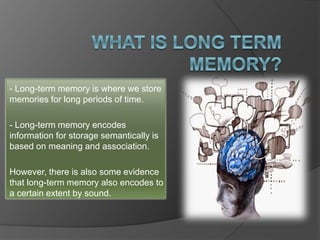
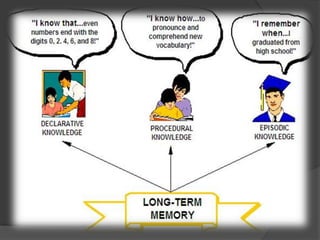
Long-term memory stores memories and information for long periods of time through semantic encoding based on meaning and association, though some evidence suggests sound also plays a role. Semantic memory contains general factual knowledge and concepts. Repetition helps build memory through asking students to repeat sounds, words, or phrases, and even short, repetitive exposure to new words induces rapid neural responses that indicate memory formation.