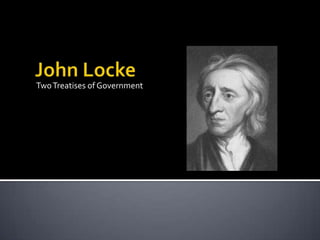
Two Treatises of GovernmentJohn Locke
Context1673, Catholic Test Act attempts to prevent Charles from assuming thrownCharles gains thrown, passes it to his brother, James IIJames II has Presbyterians killed and removes members of ParliamentAppoints Roman Catholics to Public and Church Office
Glorious Revolution1688, Glorious Revolution, Parliament supports revolt against James II William of Orange invades Britain and Becomes William III.Locke justifies this since, a government without the consent of the people can be overthrown.
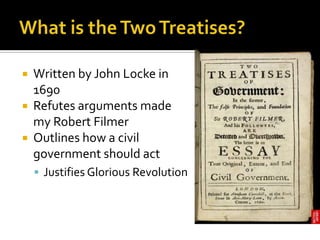
What is the Two Treatises?Written by John Locke in 1690Refutes arguments made my Robert FilmerOutlines how a civil government should actJustifies Glorious Revolution
Filmer Vs Locke
FilmerVs LockeFILMERGod gives authorityFather passes authority to sonKings have power to grant authorityLOCKEGod created people to be superior among other species, yet equal amongst themselves
God creates life, not father
Individuals can choose who they grant authority to Views on GovernmentPreservation of Property “There remains still in the people a supreme power to remove or alter the legislative, when they find the legislative act contrary to the trust reposed in them.” (CH. XII)People have the power to adjust or erase an unjust law.Separate Branches of Government
Executive Authority“Secondly, the power of punishing he wholly gives up, and engages his natural force to assist the executive power of the society as the law thereof shall require.” (CH. IX)Executive power (punishment) is public rather than private“The supreme power cannot take from any man any part of his property without his own consent” (CH. X)
State of NatureMen are free to act “how they think fit, within the bounds of the law of nature, without asking leave, or depending upon the will of any other man.” (CH. II)HOWEVER, a man voids these laws of nature when he joins private, particular political society. (CH. IX)

Locke

  • 1.
    Two Treatises ofGovernmentJohn Locke
  • 2.
    Context1673, Catholic TestAct attempts to prevent Charles from assuming thrownCharles gains thrown, passes it to his brother, James IIJames II has Presbyterians killed and removes members of ParliamentAppoints Roman Catholics to Public and Church Office
  • 3.
    Glorious Revolution1688, GloriousRevolution, Parliament supports revolt against James II William of Orange invades Britain and Becomes William III.Locke justifies this since, a government without the consent of the people can be overthrown.
  • 4.
    What is theTwo Treatises?Written by John Locke in 1690Refutes arguments made my Robert FilmerOutlines how a civil government should actJustifies Glorious Revolution
  • 5.
  • 6.
    FilmerVs LockeFILMERGod givesauthorityFather passes authority to sonKings have power to grant authorityLOCKEGod created people to be superior among other species, yet equal amongst themselves
  • 7.
  • 8.
    Individuals can choosewho they grant authority to Views on GovernmentPreservation of Property “There remains still in the people a supreme power to remove or alter the legislative, when they find the legislative act contrary to the trust reposed in them.” (CH. XII)People have the power to adjust or erase an unjust law.Separate Branches of Government
  • 9.
    Executive Authority“Secondly, thepower of punishing he wholly gives up, and engages his natural force to assist the executive power of the society as the law thereof shall require.” (CH. IX)Executive power (punishment) is public rather than private“The supreme power cannot take from any man any part of his property without his own consent” (CH. X)
  • 10.
    State of NatureMenare free to act “how they think fit, within the bounds of the law of nature, without asking leave, or depending upon the will of any other man.” (CH. II)HOWEVER, a man voids these laws of nature when he joins private, particular political society. (CH. IX)