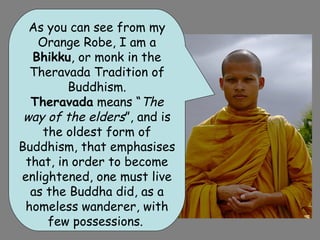
As you can see from my
   Orange Robe, I am a
  Bhikku, or monk in the
  Theravada Tradition of
         Buddhism.
  Theravada means “The
 way of the elders”, and is
    the oldest form of
Buddhism, that emphasises
 that, in order to become
enlightened, one must live
  as the Buddha did, as a
 homeless wanderer, with
     few possessions.
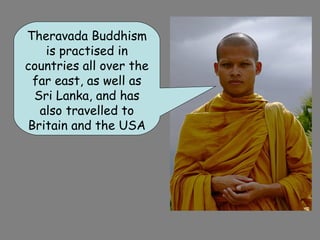
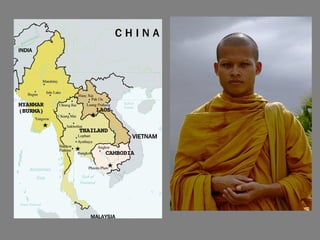
Theravada Buddhism
   is practised in
countries all over the
 far east, as well as
 Sri Lanka, and has
  also travelled to
Britain and the USA
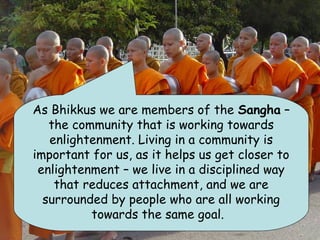
As Bhikkus we are members of the Sangha –
   the community that is working towards
   enlightenment. Living in a community is
important for us, as it helps us get closer to
 enlightenment – we live in a disciplined way
    that reduces attachment, and we are
  surrounded by people who are all working
          towards the same goal.
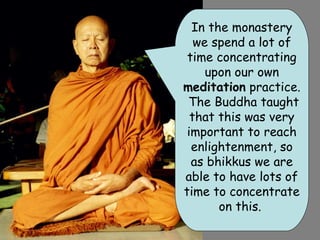
In the monastery
   we spend a lot of
 time concentrating
     upon our own
meditation practice.
 The Buddha taught
  that this was very
 important to reach
  enlightenment, so
  as bhikkus we are
able to have lots of
time to concentrate
       on this.
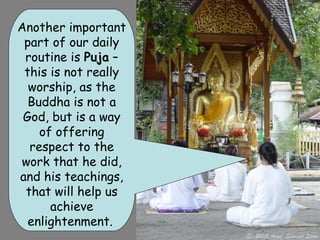
Another important
 part of our daily
 routine is Puja –
 this is not really
  worship, as the
  Buddha is not a
 God, but is a way
    of offering
  respect to the
work that he did,
and his teachings,
 that will help us
      achieve
  enlightenment.
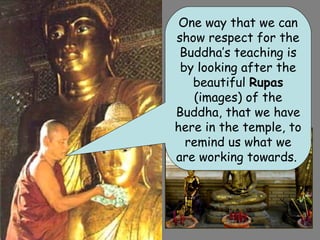
One way that we can
show respect for the
 Buddha’s teaching is
 by looking after the
   beautiful Rupas
   (images) of the
Buddha, that we have
here in the temple, to
  remind us what we
are working towards.
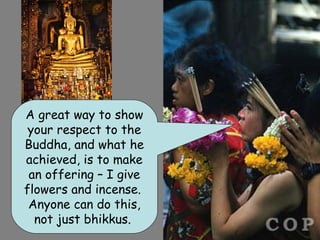
A great way to show
 your respect to the
Buddha, and what he
achieved, is to make
 an offering – I give
flowers and incense.
 Anyone can do this,
  not just bhikkus.
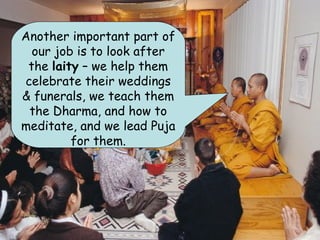
Another important part of
  our job is to look after
 the laity – we help them
celebrate their weddings
& funerals, we teach them
 the Dharma, and how to
meditate, and we lead Puja
         for them.
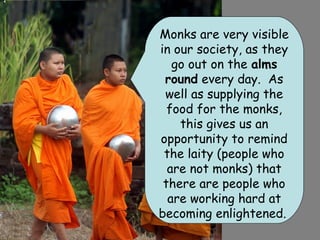
Monks are very visible
in our society, as they
   go out on the alms
 round every day. As
 well as supplying the
  food for the monks,
    this gives us an
opportunity to remind
 the laity (people who
  are not monks) that
 there are people who
  are working hard at
becoming enlightened.
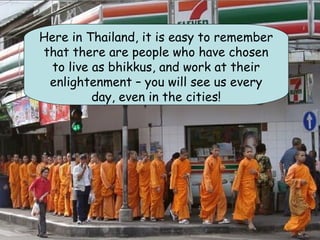
Here in Thailand, it is easy to remember
that there are people who have chosen
  to live as bhikkus, and work at their
 enlightenment – you will see us every
          day, even in the cities!
It is important
 Living as bhikkus
 for members of
       we are
    the laity to
 concentrating on
 provide for the
  the dharma, so
bhikkus – not only
do we gain have
   we don’t merit
  time to grow or
 by this selfless
 prepare our own
giving (which may
 food.us towards
 help We go out
    on the Alms
enlightenment in
future every day,
 round lives), but
we also collect
     to show that
offerings of food
   we value the
bhikkus’the laity
   from presence
  in our society!
We think it is
 important to look
after the bhikkus,
so we place food in
  their alms bowls
 when we visit the
 temple every day,
as well as giving to
monks on the alms
       round.
As well as meditating,
and doing Pujas, a lot
 of our time is spent
studying – we have to
  know the Buddha’s
teachings really well,
so that we can teach
 people. I’m reading
 the Dhammapadda,
  which is a book of
    the Buddha’s
      teaching.
And I’m studying the
 Vinaya Pitaka, which
 contains all the rules
 on how we should live
as Monks – there are a
 lot to learn, and I’ve
 got to learn them all,
   as we chant them
together on Uposatha
         Days.
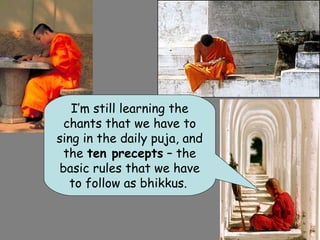
I’m still learning the
 chants that we have to
sing in the daily puja, and
 the ten precepts – the
basic rules that we have
  to follow as bhikkus.
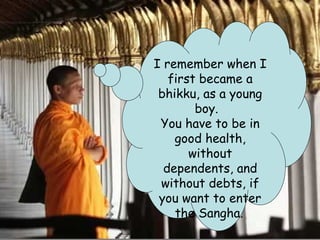
I remember when I
   first became a
 bhikku, as a young
        boy.
 You have to be in
    good health,
       without
  dependents, and
 without debts, if
 you want to enter
    the Sangha.
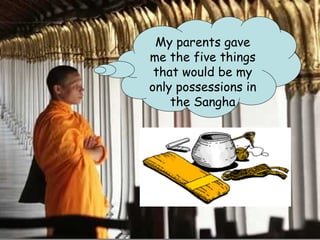
My parents gave
me the five things
 that would be my
only possessions in
    the Sangha
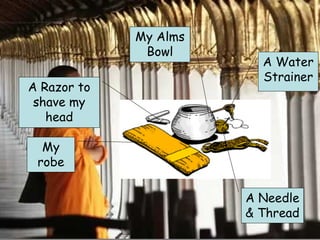
My Alms
              Bowl
                         A Water
                         Strainer
A Razor to
 shave my
   head

  My
 robe

                       A Needle
                       & Thread
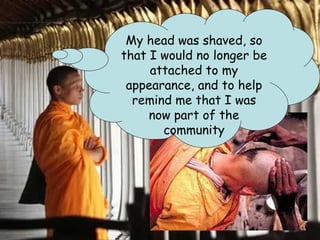
My head was shaved, so
that I would no longer be
     attached to my
 appearance, and to help
  remind me that I was
     now part of the
       community
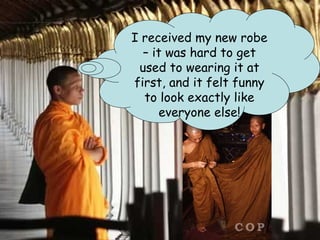
I received my new robe
  – it was hard to get
 used to wearing it at
first, and it felt funny
  to look exactly like
     everyone else!
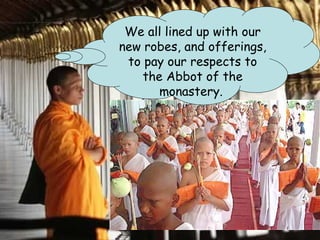
We all lined up with our
new robes, and offerings,
 to pay our respects to
    the Abbot of the
       monastery.
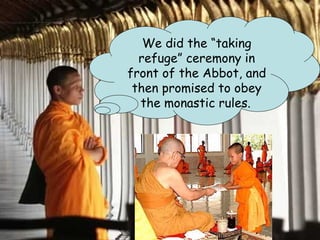
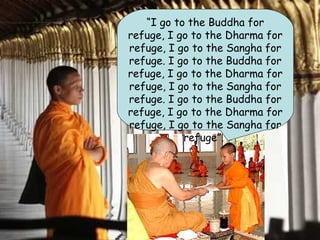
We did the “taking
  refuge” ceremony in
front of the Abbot, and
 then promised to obey
  the monastic rules.
“I go to the Buddha for
refuge, I go to the Dharma for
refuge, I go to the Sangha for
refuge. I go to the Buddha for
refuge, I go to the Dharma for
refuge, I go to the Sangha for
refuge. I go to the Buddha for
refuge, I go to the Dharma for
refuge, I go to the Sangha for
           refuge”.
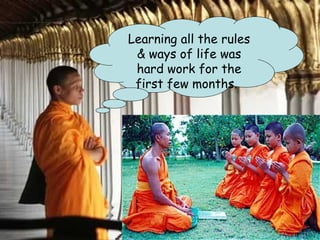
Learning all the rules
 & ways of life was
 hard work for the
 first few months.
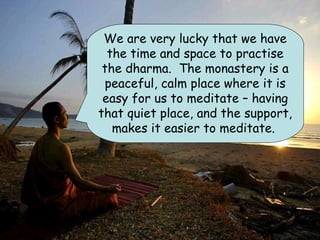
We are very lucky that we have
  the time and space to practise
 the dharma. The monastery is a
  peaceful, calm place where it is
 easy for us to meditate – having
that quiet place, and the support,
   makes it easier to meditate.

Living as a monk

  • 2.
    As you cansee from my Orange Robe, I am a Bhikku, or monk in the Theravada Tradition of Buddhism. Theravada means “The way of the elders”, and is the oldest form of Buddhism, that emphasises that, in order to become enlightened, one must live as the Buddha did, as a homeless wanderer, with few possessions.
  • 3.
    Theravada Buddhism is practised in countries all over the far east, as well as Sri Lanka, and has also travelled to Britain and the USA
  • 5.
    As Bhikkus weare members of the Sangha – the community that is working towards enlightenment. Living in a community is important for us, as it helps us get closer to enlightenment – we live in a disciplined way that reduces attachment, and we are surrounded by people who are all working towards the same goal.
  • 6.
    In the monastery we spend a lot of time concentrating upon our own meditation practice. The Buddha taught that this was very important to reach enlightenment, so as bhikkus we are able to have lots of time to concentrate on this.
  • 7.
    Another important partof our daily routine is Puja – this is not really worship, as the Buddha is not a God, but is a way of offering respect to the work that he did, and his teachings, that will help us achieve enlightenment.
  • 8.
    One way thatwe can show respect for the Buddha’s teaching is by looking after the beautiful Rupas (images) of the Buddha, that we have here in the temple, to remind us what we are working towards.
  • 9.
    A great wayto show your respect to the Buddha, and what he achieved, is to make an offering – I give flowers and incense. Anyone can do this, not just bhikkus.
  • 10.
    Another important partof our job is to look after the laity – we help them celebrate their weddings & funerals, we teach them the Dharma, and how to meditate, and we lead Puja for them.
  • 11.
    Monks are veryvisible in our society, as they go out on the alms round every day. As well as supplying the food for the monks, this gives us an opportunity to remind the laity (people who are not monks) that there are people who are working hard at becoming enlightened.
  • 12.
    Here in Thailand,it is easy to remember that there are people who have chosen to live as bhikkus, and work at their enlightenment – you will see us every day, even in the cities!
  • 13.
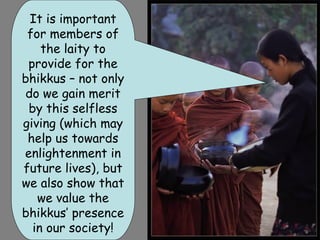
    It is important Living as bhikkus for members of we are the laity to concentrating on provide for the the dharma, so bhikkus – not only do we gain have we don’t merit time to grow or by this selfless prepare our own giving (which may food.us towards help We go out on the Alms enlightenment in future every day, round lives), but we also collect to show that offerings of food we value the bhikkus’the laity from presence in our society!
  • 14.
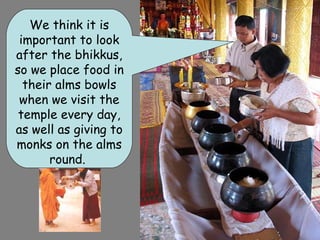
    We think itis important to look after the bhikkus, so we place food in their alms bowls when we visit the temple every day, as well as giving to monks on the alms round.
  • 15.
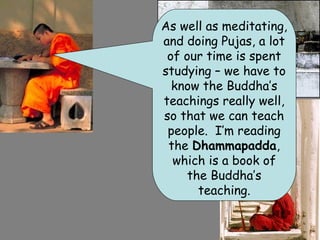
    As well asmeditating, and doing Pujas, a lot of our time is spent studying – we have to know the Buddha’s teachings really well, so that we can teach people. I’m reading the Dhammapadda, which is a book of the Buddha’s teaching.
  • 16.
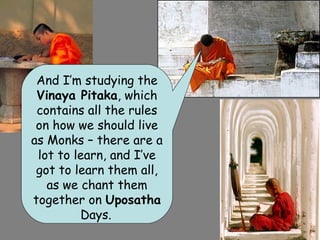
    And I’m studyingthe Vinaya Pitaka, which contains all the rules on how we should live as Monks – there are a lot to learn, and I’ve got to learn them all, as we chant them together on Uposatha Days.
  • 17.
    I’m still learningthe chants that we have to sing in the daily puja, and the ten precepts – the basic rules that we have to follow as bhikkus.
  • 18.
    I remember whenI first became a bhikku, as a young boy. You have to be in good health, without dependents, and without debts, if you want to enter the Sangha.
  • 19.
    My parents gave methe five things that would be my only possessions in the Sangha
  • 20.
    My Alms Bowl A Water Strainer A Razor to shave my head My robe A Needle & Thread
  • 21.
    My head wasshaved, so that I would no longer be attached to my appearance, and to help remind me that I was now part of the community
  • 22.
    I received mynew robe – it was hard to get used to wearing it at first, and it felt funny to look exactly like everyone else!
  • 23.
    We all linedup with our new robes, and offerings, to pay our respects to the Abbot of the monastery.
  • 24.
    We did the“taking refuge” ceremony in front of the Abbot, and then promised to obey the monastic rules.
  • 25.
    “I go tothe Buddha for refuge, I go to the Dharma for refuge, I go to the Sangha for refuge. I go to the Buddha for refuge, I go to the Dharma for refuge, I go to the Sangha for refuge. I go to the Buddha for refuge, I go to the Dharma for refuge, I go to the Sangha for refuge”.
  • 26.
    Learning all therules & ways of life was hard work for the first few months.
  • 27.
    We are verylucky that we have the time and space to practise the dharma. The monastery is a peaceful, calm place where it is easy for us to meditate – having that quiet place, and the support, makes it easier to meditate.