Basics of Lipid and
Lipoprotein Metabolism
Faisal , M.D.
Associate Professor
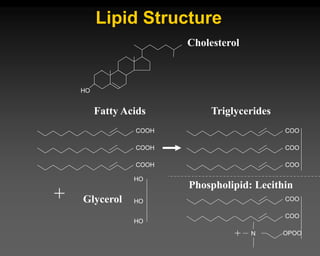
Lipid Structure
HO
Cholesterol
COOH
COOH
COOH
HO
HO
HO
+
Fatty Acids
Glycerol
COO
COO
COO
Triglycerides
COO
COO
OPOO
N
Phospholipid: Lecithin
+
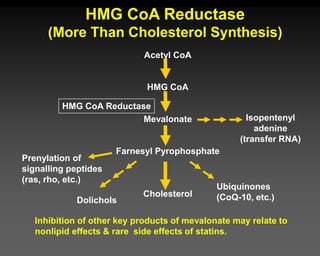
HMG CoA Reductase
(More Than Cholesterol Synthesis)
Acetyl CoA
HMG CoA
Mevalonate
Farnesyl Pyrophosphate
Cholesterol
HMG CoA Reductase
Isopentenyl
adenine
(transfer RNA)
Prenylation of
signalling peptides
(ras, rho, etc.)
Ubiquinones
(CoQ-10, etc.)
Dolichols
Inhibition of other key products of mevalonate may relate to
nonlipid effects & rare side effects of statins.
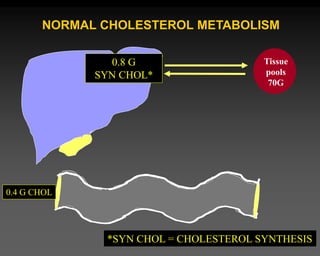
NORMAL CHOLESTEROL METABOLISM
Tissue
pools
70G
0.8 G
SYN CHOL*
*SYN CHOL = CHOLESTEROL SYNTHESIS
0.4 G CHOL
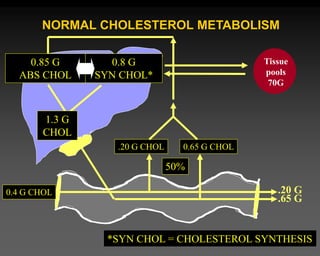
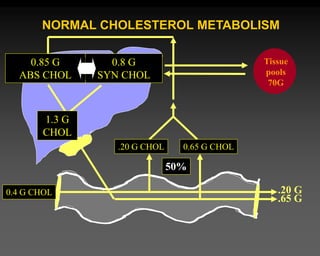
NORMAL CHOLESTEROL METABOLISM
Tissue
pools
70G
.65 G
.20 G
.20 G CHOL 0.65 G CHOL
0.85 G
ABS CHOL
50%
0.4 G CHOL
0.8 G
SYN CHOL*
*SYN CHOL = CHOLESTEROL SYNTHESIS
1.3 G
CHOL
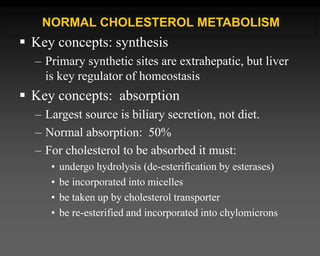
 Key concepts: synthesis
– Primary synthetic sites are extrahepatic, but liver
is key regulator of homeostasis
 Key concepts: absorption
– Largest source is biliary secretion, not diet.
– Normal absorption: 50%
– For cholesterol to be absorbed it must:
• undergo hydrolysis (de-esterification by esterases)
• be incorporated into micelles
• be taken up by cholesterol transporter
• be re-esterified and incorporated into chylomicrons
NORMAL CHOLESTEROL METABOLISM
400 mg/day
1,300 mg/day
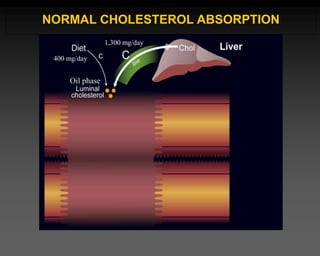
NORMAL CHOLESTEROL ABSORPTION
Oil phase
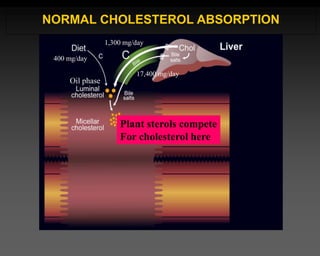
400 mg/day
1,300 mg/day
17,400 mg/day
NORMAL CHOLESTEROL ABSORPTION
Plant sterols compete
For cholesterol here
Oil phase
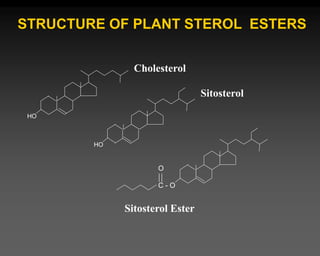
STRUCTURE OF PLANT STEROL ESTERS
HO
Cholesterol
Sitosterol
HO
O
C - O
Sitosterol Ester
400 mg/day
1,300 mg/day
17,400 mg/day
850 mg/day
NORMAL CHOLESTEROL ABSORPTION
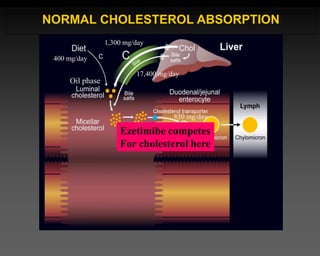
Ezetimibe competes
For cholesterol here
Oil phase
400 mg/day
1,300 mg/day
17,400 mg/day
850 mg/day
NORMAL CHOLESTEROL ABSORPTION
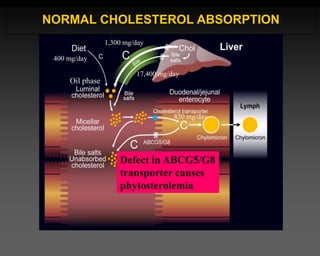
Defect in ABCG5/G8
transporter causes
phytosterolemia
Oil phase
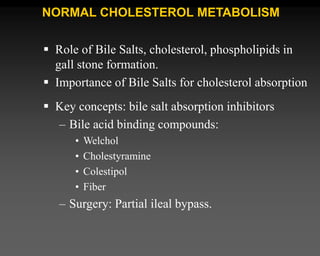
 Role of Bile Salts, cholesterol, phospholipids in
gall stone formation.
 Importance of Bile Salts for cholesterol absorption
NORMAL CHOLESTEROL METABOLISM
 Key concepts: bile salt absorption inhibitors
– Bile acid binding compounds:
• Welchol
• Cholestyramine
• Colestipol
• Fiber
– Surgery: Partial ileal bypass.
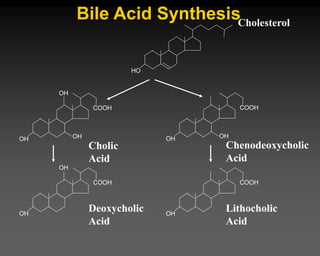
Bile Acid Synthesis
HO
Cholesterol
OH
OH
OH
COOH
OH OH
COOH
OH
COOH
OH
OH
COOH
Chenodeoxycholic
Acid
Lithocholic
Acid
Cholic
Acid
Deoxycholic
Acid
NORMAL CHOLESTEROL METABOLISM
Tissue
pools
70G
0.8 G
SYN CHOL
.65 G
.20 G
0.85 G
ABS CHOL
50%
0.4 G CHOL
1.3 G
CHOL
.20 G CHOL 0.65 G CHOL
17 G
BA*
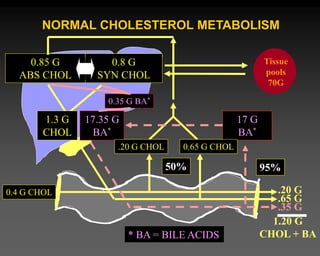
NORMAL CHOLESTEROL METABOLISM
Tissue
pools
70G
0.8 G
SYN CHOL
17.35 G
BA*
0.85 G
ABS CHOL
0.35 G BA*
.35 G
.65 G
.20 G
1.20 G
CHOL + BA
50% 95%
0.4 G CHOL
1.3 G
CHOL
* BA = BILE ACIDS
.20 G CHOL 0.65 G CHOL
 Key concepts: absorption
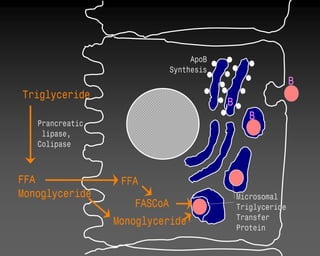
– Triglyceride (i.e. energy) assimilation is key to
the survival of the organism.
– Dietary triglyceride must be hydrolyzed to fatty
acids, mono-glycerides and glycerol prior to
absorption.
– Fatty acids must partition to micellar phase for
absorption.
– For transport, triglyceride must be reconstituted
from glycerol and fatty acid and incorporated into
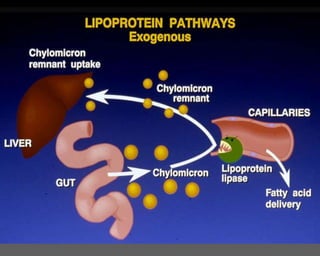
chylomicrons.
NORMAL TRIGLYCERIDE METABOLISM
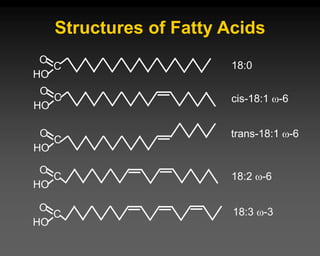
Structures of Fatty Acids
C
HO
O
C
HO
O
C
HO
O
C
HO
O
C
HO
O
18:0
cis-18:1 -6
trans-18:1 -6
18:2 -6
18:3 -3
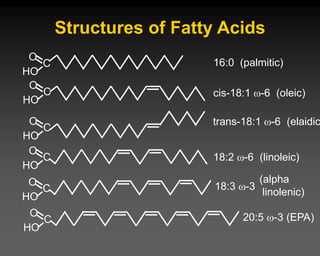
Structures of Fatty Acids
C
HO
O
C
HO
O
C
HO
O
C
HO
O
C
HO
O
16:0 (palmitic)
cis-18:1 -6 (oleic)
trans-18:1 -6 (elaidic
18:2 -6 (linoleic)
18:3 -3
(alpha
linolenic)
C
HO
O 20:5 -3 (EPA)
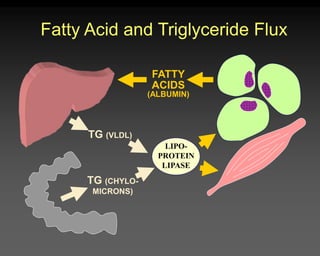
FATTY
ACIDS
(ALBUMIN)
TG (VLDL)
TG (CHYLO-
MICRONS)
LIPO-
PROTEIN
LIPASE
Fatty Acid and Triglyceride Flux
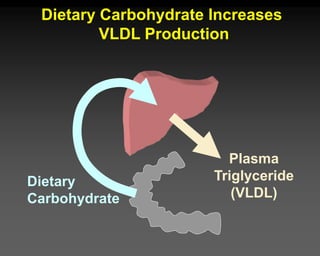
Plasma
Triglyceride
(VLDL)
Dietary Carbohydrate Increases
VLDL Production
Dietary
Carbohydrate
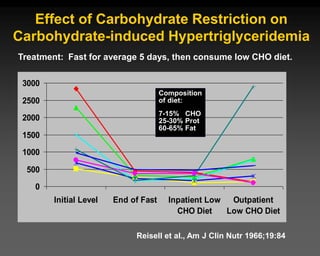
Effect of Carbohydrate Restriction on
Carbohydrate-induced Hypertriglyceridemia
0
500
1000
1500
2000
2500
3000
Initial Level End of Fast Inpatient Low
CHO Diet
Outpatient
Low CHO Diet
Reisell et al., Am J Clin Nutr 1966;19:84
Treatment: Fast for average 5 days, then consume low CHO diet.
Composition
of diet:
7-15% CHO
25-30% Prot
60-65% Fat
Lipoprotein Metabolism
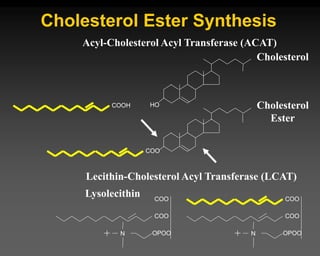
Cholesterol Ester Synthesis
HO
Cholesterol
COOH
COO
COO
OPOO
N
+
Cholesterol
Ester
COO
COO
COO
OPOO
N
+
Lysolecithin
Lecithin-Cholesterol Acyl Transferase (LCAT)
Acyl-Cholesterol Acyl Transferase (ACAT)
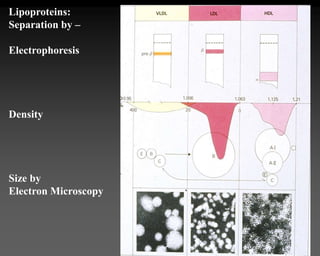
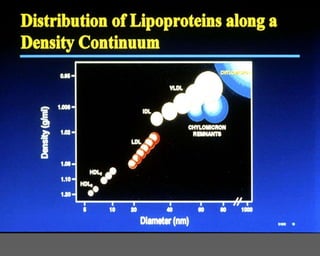
Lipoproteins:
Separation by –
Electrophoresis
Density
Size by
Electron Microscopy
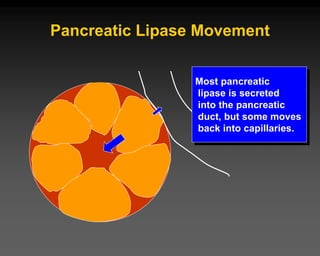
Pancreatic Lipase Movement
Most pancreatic
lipase is secreted
into the pancreatic
duct, but some moves
back into capillaries.
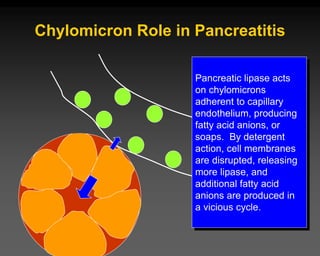
Chylomicron Role in Pancreatitis
Pancreatic lipase acts
on chylomicrons
adherent to capillary
endothelium, producing
fatty acid anions, or
soaps. By detergent
action, cell membranes
are disrupted, releasing
more lipase, and
additional fatty acid
anions are produced in
a vicious cycle.
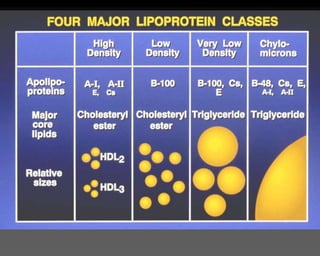
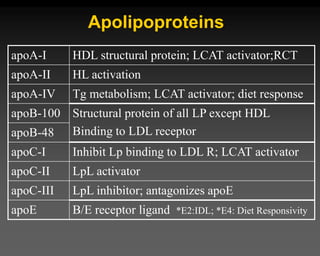
Apolipoproteins
B/E receptor ligand *E2:IDL; *E4: Diet Responsivity
apoE
LpL inhibitor; antagonizes apoE
apoC-III
LpL activator
apoC-II
Inhibit Lp binding to LDL R; LCAT activator
apoC-I
apoB-48
Structural protein of all LP except HDL
Binding to LDL receptor
apoB-100
Tg metabolism; LCAT activator; diet response
apoA-IV
HL activation
apoA-II
HDL structural protein; LCAT activator;RCT
apoA-I
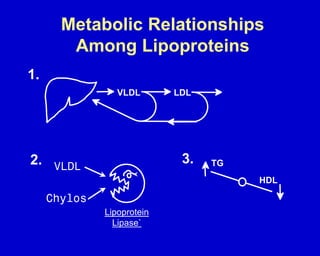
Metabolic Relationships
Among Lipoproteins
LDL
1.
3.
2.
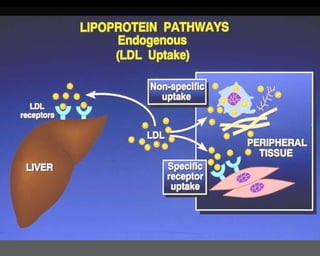
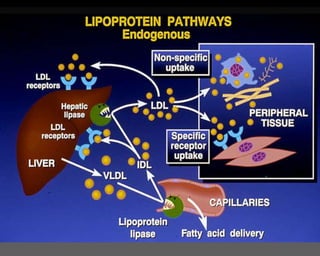
Lipoprotein
Lipase`
TG
HDL
VLDL
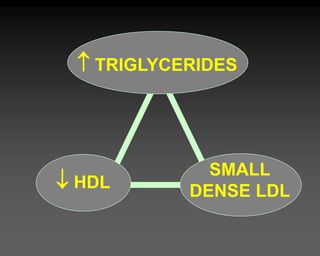
 TRIGLYCERIDES
 HDL
SMALL
DENSE LDL
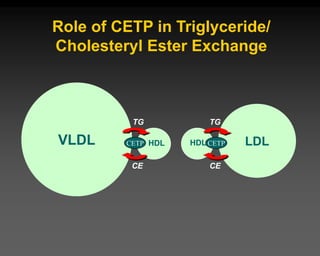
Role of CETP in Triglyceride/
Cholesteryl Ester Exchange
VLDL CETP HDL
TG
CE
LDL
CETP
HDL
TG
CE
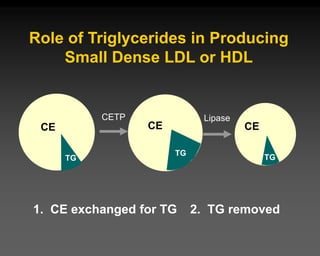
Role of Triglycerides in Producing
Small Dense LDL or HDL
TG
TG
TG
CE CE CE
CETP Lipase
1. CE exchanged for TG 2. TG removed
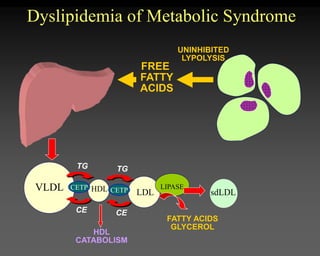
FREE
FATTY
ACIDS
Dyslipidemia of Metabolic Syndrome
VLDL CETP
TG
CE
HDL LDL
CETP
TG
CE
LIPASE
sdLDL
FATTY ACIDS
GLYCEROL
HDL
CATABOLISM
UNINHIBITED
LYPOLYSIS
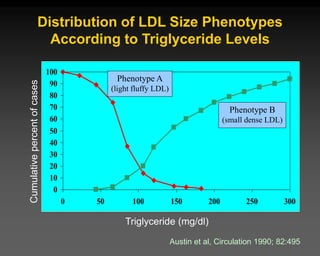
Distribution of LDL Size Phenotypes
According to Triglyceride Levels
0
10
20
30
40
50
60
70
80
90
100
0 50 100 150 200 250 300
Phenotype A
(light fluffy LDL)
Phenotype B
(small dense LDL)
Cumulative
percent
of
cases
Triglyceride (mg/dl)
Austin et al, Circulation 1990; 82:495
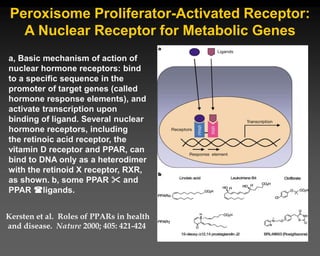
Peroxisome Proliferator-Activated Receptor:
A Nuclear Receptor for Metabolic Genes
a, Basic mechanism of action of
nuclear hormone receptors: bind
to a specific sequence in the
promoter of target genes (called
hormone response elements), and
activate transcription upon
binding of ligand. Several nuclear
hormone receptors, including
the retinoic acid receptor, the
vitamin D receptor and PPAR, can
bind to DNA only as a heterodimer
with the retinoid X receptor, RXR,
as shown. b, some PPAR  and
PPAR ligands.
Kersten et al. Roles of PPARs in health
and disease. Nature 2000; 405: 421-424
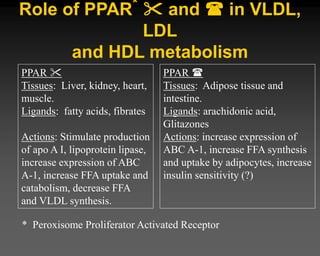
Role of PPAR*  and  in VLDL,
LDL
and HDL metabolism
* Peroxisome Proliferator Activated Receptor
PPAR 
Tissues: Liver, kidney, heart,
muscle.
Ligands: fatty acids, fibrates
Actions: Stimulate production
of apo A I, lipoprotein lipase,
increase expression of ABC
A-1, increase FFA uptake and
catabolism, decrease FFA
and VLDL synthesis.
PPAR 
Tissues: Adipose tissue and
intestine.
Ligands: arachidonic acid,
Glitazones
Actions: increase expression of
ABC A-1, increase FFA synthesis
and uptake by adipocytes, increase
insulin sensitivity (?)
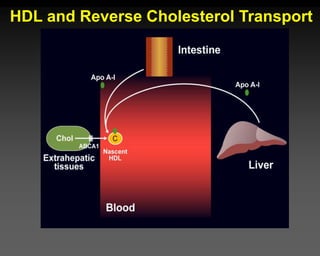
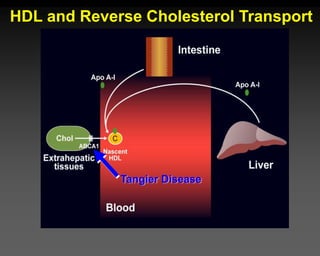
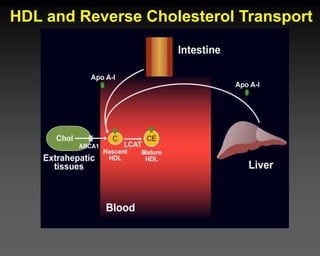
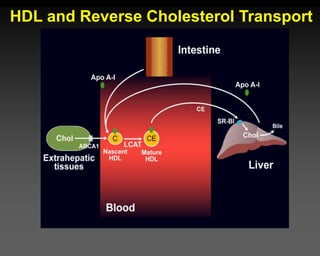
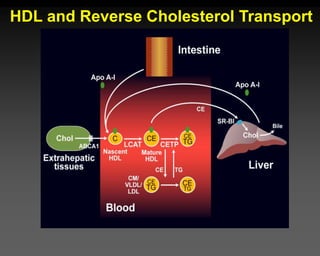
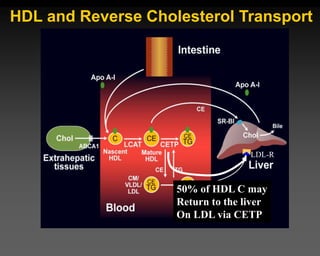
HDL and Reverse Cholesterol Transport
Tangier Disease
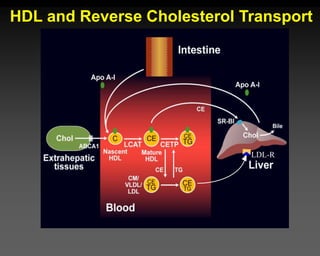
HDL and Reverse Cholesterol Transport
LDL-R
HDL and Reverse Cholesterol Transport
LDL-R
50% of HDL C may
Return to the liver
On LDL via CETP
HDL and Reverse Cholesterol Transport
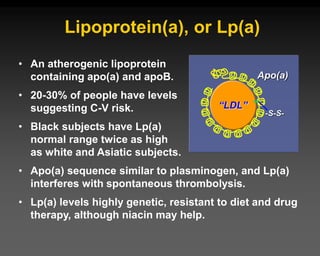
• An atherogenic lipoprotein
containing apo(a) and apoB.
• 20-30% of people have levels
suggesting C-V risk.
• Black subjects have Lp(a)
normal range twice as high
as white and Asiatic subjects.
• Apo(a) sequence similar to plasminogen, and Lp(a)
interferes with spontaneous thrombolysis.
• Lp(a) levels highly genetic, resistant to diet and drug
therapy, although niacin may help.
“LDL”
Apo(a)
-S-S-
Lipoprotein(a), or Lp(a)
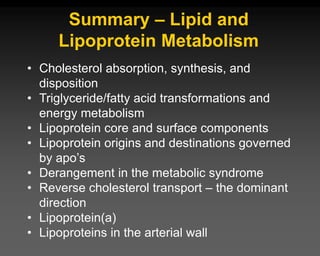
Summary – Lipid and
Lipoprotein Metabolism
• Cholesterol absorption, synthesis, and
disposition
• Triglyceride/fatty acid transformations and
energy metabolism
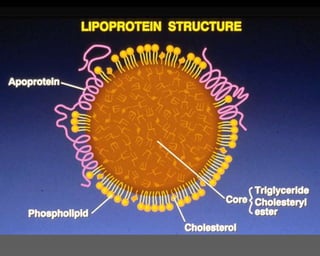
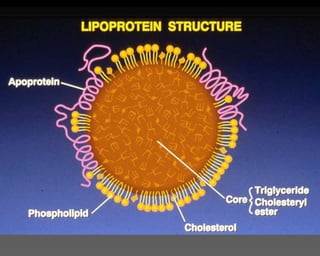
• Lipoprotein core and surface components
• Lipoprotein origins and destinations governed
by apo’s
• Derangement in the metabolic syndrome
• Reverse cholesterol transport – the dominant
direction
• Lipoprotein(a)
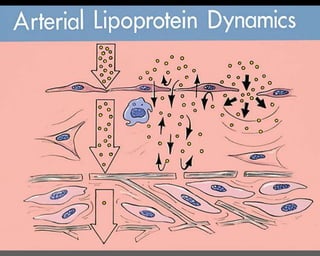
• Lipoproteins in the arterial wall

lipoprotein metabolism.ppt

  • 1.
    Basics of Lipidand Lipoprotein Metabolism Faisal , M.D. Associate Professor
  • 2.
  • 3.
    HMG CoA Reductase (MoreThan Cholesterol Synthesis) Acetyl CoA HMG CoA Mevalonate Farnesyl Pyrophosphate Cholesterol HMG CoA Reductase Isopentenyl adenine (transfer RNA) Prenylation of signalling peptides (ras, rho, etc.) Ubiquinones (CoQ-10, etc.) Dolichols Inhibition of other key products of mevalonate may relate to nonlipid effects & rare side effects of statins.
  • 4.
    NORMAL CHOLESTEROL METABOLISM Tissue pools 70G 0.8G SYN CHOL* *SYN CHOL = CHOLESTEROL SYNTHESIS 0.4 G CHOL
  • 5.
    NORMAL CHOLESTEROL METABOLISM Tissue pools 70G .65G .20 G .20 G CHOL 0.65 G CHOL 0.85 G ABS CHOL 50% 0.4 G CHOL 0.8 G SYN CHOL* *SYN CHOL = CHOLESTEROL SYNTHESIS 1.3 G CHOL
  • 6.
     Key concepts:synthesis – Primary synthetic sites are extrahepatic, but liver is key regulator of homeostasis  Key concepts: absorption – Largest source is biliary secretion, not diet. – Normal absorption: 50% – For cholesterol to be absorbed it must: • undergo hydrolysis (de-esterification by esterases) • be incorporated into micelles • be taken up by cholesterol transporter • be re-esterified and incorporated into chylomicrons NORMAL CHOLESTEROL METABOLISM
  • 7.
    400 mg/day 1,300 mg/day NORMALCHOLESTEROL ABSORPTION Oil phase
  • 8.
    400 mg/day 1,300 mg/day 17,400mg/day NORMAL CHOLESTEROL ABSORPTION Plant sterols compete For cholesterol here Oil phase
  • 9.
    STRUCTURE OF PLANTSTEROL ESTERS HO Cholesterol Sitosterol HO O C - O Sitosterol Ester
  • 10.
    400 mg/day 1,300 mg/day 17,400mg/day 850 mg/day NORMAL CHOLESTEROL ABSORPTION Ezetimibe competes For cholesterol here Oil phase
  • 11.
    400 mg/day 1,300 mg/day 17,400mg/day 850 mg/day NORMAL CHOLESTEROL ABSORPTION Defect in ABCG5/G8 transporter causes phytosterolemia Oil phase
  • 12.
     Role ofBile Salts, cholesterol, phospholipids in gall stone formation.  Importance of Bile Salts for cholesterol absorption NORMAL CHOLESTEROL METABOLISM  Key concepts: bile salt absorption inhibitors – Bile acid binding compounds: • Welchol • Cholestyramine • Colestipol • Fiber – Surgery: Partial ileal bypass.
  • 13.
    Bile Acid Synthesis HO Cholesterol OH OH OH COOH OHOH COOH OH COOH OH OH COOH Chenodeoxycholic Acid Lithocholic Acid Cholic Acid Deoxycholic Acid
  • 14.
    NORMAL CHOLESTEROL METABOLISM Tissue pools 70G 0.8G SYN CHOL .65 G .20 G 0.85 G ABS CHOL 50% 0.4 G CHOL 1.3 G CHOL .20 G CHOL 0.65 G CHOL
  • 15.
    17 G BA* NORMAL CHOLESTEROLMETABOLISM Tissue pools 70G 0.8 G SYN CHOL 17.35 G BA* 0.85 G ABS CHOL 0.35 G BA* .35 G .65 G .20 G 1.20 G CHOL + BA 50% 95% 0.4 G CHOL 1.3 G CHOL * BA = BILE ACIDS .20 G CHOL 0.65 G CHOL
  • 16.
     Key concepts:absorption – Triglyceride (i.e. energy) assimilation is key to the survival of the organism. – Dietary triglyceride must be hydrolyzed to fatty acids, mono-glycerides and glycerol prior to absorption. – Fatty acids must partition to micellar phase for absorption. – For transport, triglyceride must be reconstituted from glycerol and fatty acid and incorporated into chylomicrons. NORMAL TRIGLYCERIDE METABOLISM
  • 17.
    Structures of FattyAcids C HO O C HO O C HO O C HO O C HO O 18:0 cis-18:1 -6 trans-18:1 -6 18:2 -6 18:3 -3
  • 18.
    Structures of FattyAcids C HO O C HO O C HO O C HO O C HO O 16:0 (palmitic) cis-18:1 -6 (oleic) trans-18:1 -6 (elaidic 18:2 -6 (linoleic) 18:3 -3 (alpha linolenic) C HO O 20:5 -3 (EPA)
  • 20.
  • 21.
  • 22.
    Effect of CarbohydrateRestriction on Carbohydrate-induced Hypertriglyceridemia 0 500 1000 1500 2000 2500 3000 Initial Level End of Fast Inpatient Low CHO Diet Outpatient Low CHO Diet Reisell et al., Am J Clin Nutr 1966;19:84 Treatment: Fast for average 5 days, then consume low CHO diet. Composition of diet: 7-15% CHO 25-30% Prot 60-65% Fat
  • 23.
  • 24.
  • 29.
  • 32.
    Pancreatic Lipase Movement Mostpancreatic lipase is secreted into the pancreatic duct, but some moves back into capillaries.
  • 33.
    Chylomicron Role inPancreatitis Pancreatic lipase acts on chylomicrons adherent to capillary endothelium, producing fatty acid anions, or soaps. By detergent action, cell membranes are disrupted, releasing more lipase, and additional fatty acid anions are produced in a vicious cycle.
  • 38.
    Apolipoproteins B/E receptor ligand*E2:IDL; *E4: Diet Responsivity apoE LpL inhibitor; antagonizes apoE apoC-III LpL activator apoC-II Inhibit Lp binding to LDL R; LCAT activator apoC-I apoB-48 Structural protein of all LP except HDL Binding to LDL receptor apoB-100 Tg metabolism; LCAT activator; diet response apoA-IV HL activation apoA-II HDL structural protein; LCAT activator;RCT apoA-I
  • 39.
  • 40.
  • 41.
    Role of CETPin Triglyceride/ Cholesteryl Ester Exchange VLDL CETP HDL TG CE LDL CETP HDL TG CE
  • 42.
    Role of Triglyceridesin Producing Small Dense LDL or HDL TG TG TG CE CE CE CETP Lipase 1. CE exchanged for TG 2. TG removed
  • 43.
    FREE FATTY ACIDS Dyslipidemia of MetabolicSyndrome VLDL CETP TG CE HDL LDL CETP TG CE LIPASE sdLDL FATTY ACIDS GLYCEROL HDL CATABOLISM UNINHIBITED LYPOLYSIS
  • 44.
    Distribution of LDLSize Phenotypes According to Triglyceride Levels 0 10 20 30 40 50 60 70 80 90 100 0 50 100 150 200 250 300 Phenotype A (light fluffy LDL) Phenotype B (small dense LDL) Cumulative percent of cases Triglyceride (mg/dl) Austin et al, Circulation 1990; 82:495
  • 45.
    Peroxisome Proliferator-Activated Receptor: ANuclear Receptor for Metabolic Genes a, Basic mechanism of action of nuclear hormone receptors: bind to a specific sequence in the promoter of target genes (called hormone response elements), and activate transcription upon binding of ligand. Several nuclear hormone receptors, including the retinoic acid receptor, the vitamin D receptor and PPAR, can bind to DNA only as a heterodimer with the retinoid X receptor, RXR, as shown. b, some PPAR  and PPAR ligands. Kersten et al. Roles of PPARs in health and disease. Nature 2000; 405: 421-424
  • 46.
    Role of PPAR* and  in VLDL, LDL and HDL metabolism * Peroxisome Proliferator Activated Receptor PPAR  Tissues: Liver, kidney, heart, muscle. Ligands: fatty acids, fibrates Actions: Stimulate production of apo A I, lipoprotein lipase, increase expression of ABC A-1, increase FFA uptake and catabolism, decrease FFA and VLDL synthesis. PPAR  Tissues: Adipose tissue and intestine. Ligands: arachidonic acid, Glitazones Actions: increase expression of ABC A-1, increase FFA synthesis and uptake by adipocytes, increase insulin sensitivity (?)
  • 47.
    HDL and ReverseCholesterol Transport
  • 48.
    HDL and ReverseCholesterol Transport Tangier Disease
  • 49.
    HDL and ReverseCholesterol Transport
  • 50.
    HDL and ReverseCholesterol Transport
  • 51.
    HDL and ReverseCholesterol Transport
  • 52.
    LDL-R HDL and ReverseCholesterol Transport
  • 53.
    LDL-R 50% of HDLC may Return to the liver On LDL via CETP HDL and Reverse Cholesterol Transport
  • 54.
    • An atherogeniclipoprotein containing apo(a) and apoB. • 20-30% of people have levels suggesting C-V risk. • Black subjects have Lp(a) normal range twice as high as white and Asiatic subjects. • Apo(a) sequence similar to plasminogen, and Lp(a) interferes with spontaneous thrombolysis. • Lp(a) levels highly genetic, resistant to diet and drug therapy, although niacin may help. “LDL” Apo(a) -S-S- Lipoprotein(a), or Lp(a)
  • 57.
    Summary – Lipidand Lipoprotein Metabolism • Cholesterol absorption, synthesis, and disposition • Triglyceride/fatty acid transformations and energy metabolism • Lipoprotein core and surface components • Lipoprotein origins and destinations governed by apo’s • Derangement in the metabolic syndrome • Reverse cholesterol transport – the dominant direction • Lipoprotein(a) • Lipoproteins in the arterial wall