Hossam Elamir,TQMD, MBBCh
Quality & Accreditation Office, MKH
 Quality
 Definitions
 The Global Situation
 Causes
 The Local Problem
 EB Solutions
2
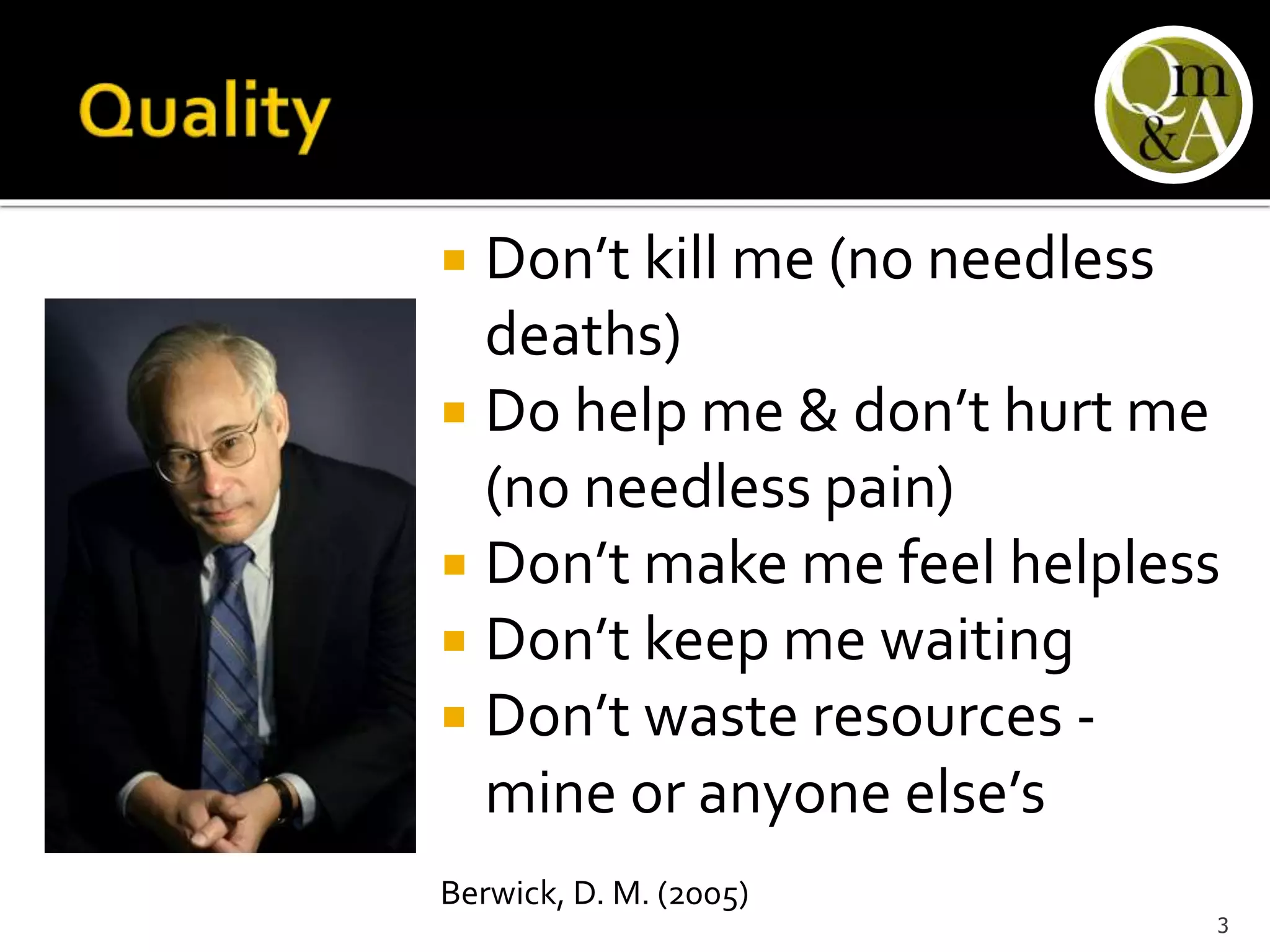
 Don’t kill me (no needless
deaths)
 Do help me & don’t hurt me
(no needless pain)
 Don’t make me feel helpless
 Don’t keep me waiting
 Don’t waste resources -
mine or anyone else’s
Berwick, D. M. (2005)
3
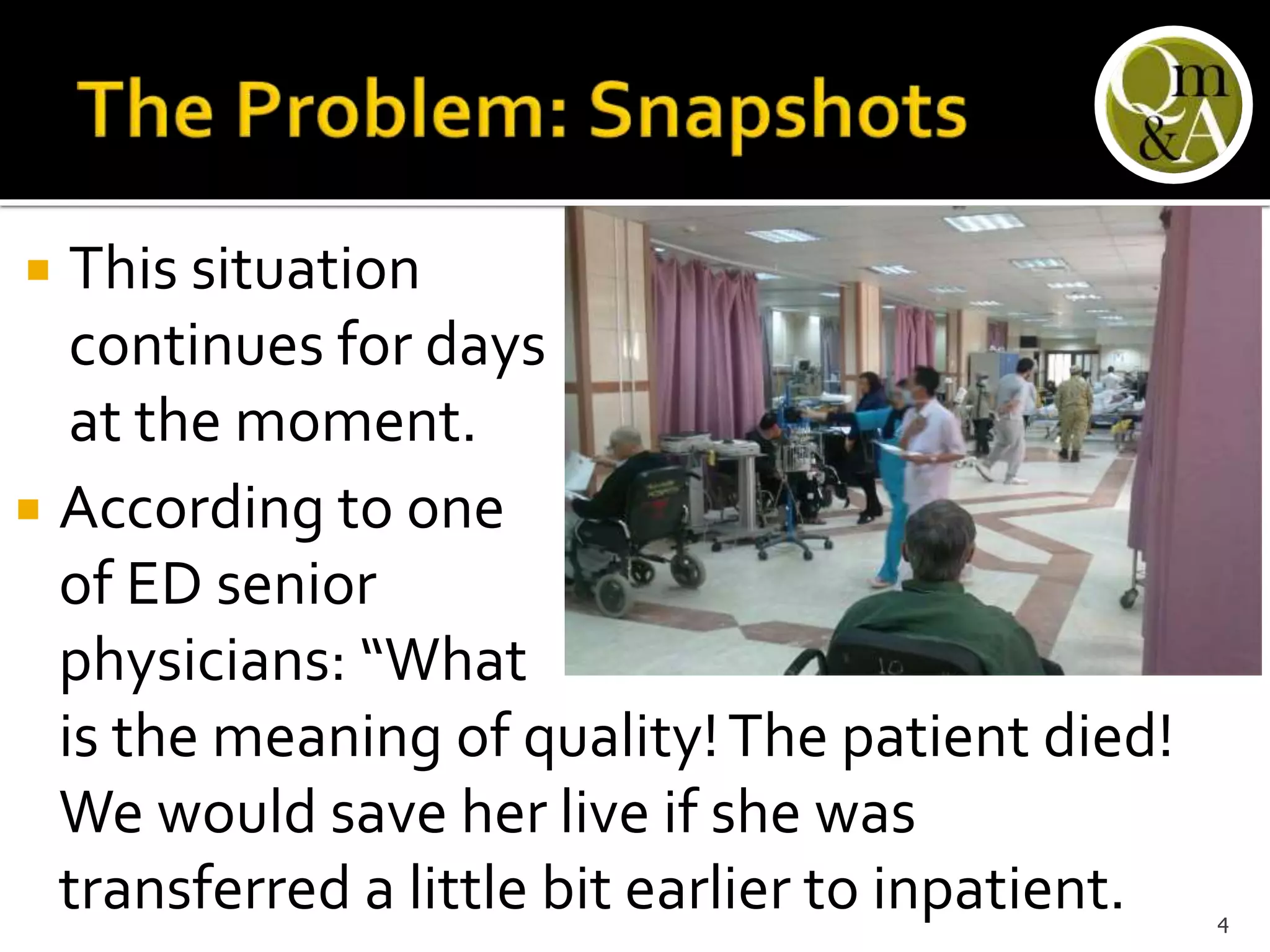
 This situation
continues for days
at the moment.
 According to one
of ED senior
physicians: “What
is the meaning of quality!The patient died!
We would save her live if she was
transferred a little bit earlier to inpatient. 4
 EDOC: “institutional resources available are
insufficient to meet the basic service needs of
emergency patients.”
 Patient Boarding: “a known practice in which
patients are held or "boarded" in emergency
departments waiting for inpatient beds in the
hospital.”
Blum et al. (2006)
5
 Access block: A situation when“….. patients’ who
were admitted or planned for admission but
discharged from the emergency department (ED)
without reaching an inpatient bed, transferred to
another hospital for admission, or died in the ED
….total ED time exceeded 8 hours.”
ACEM. (2013)
 Prolonged EDLOS: was defined as 4 hours in the
UK, 4-6 hours in Canada and 8 hours inAustralia.
Horwitz et al. (2010)
6
 LM: “……a management practice based on the
philosophy of continuously improving processes by
either increasing customer value or reducing non-
value adding activities (Muda), process variation
(Mura), and poor work conditions (Muri).” (p.365)
Radnor et al. (2012)
7
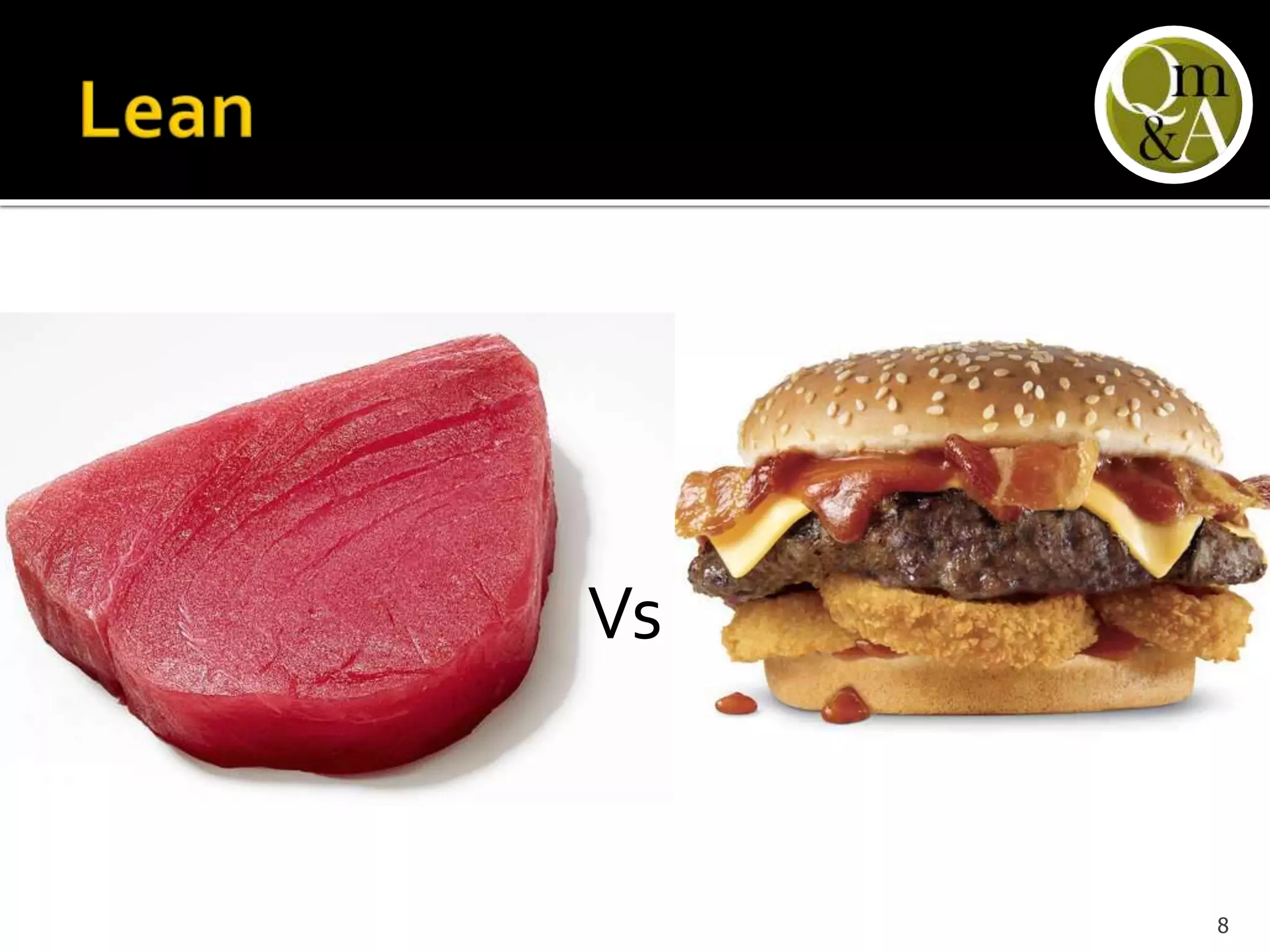
Vs
8
 One of the fittest athletes in the world
 His body fat is 3% less than supermodels
= 16
9
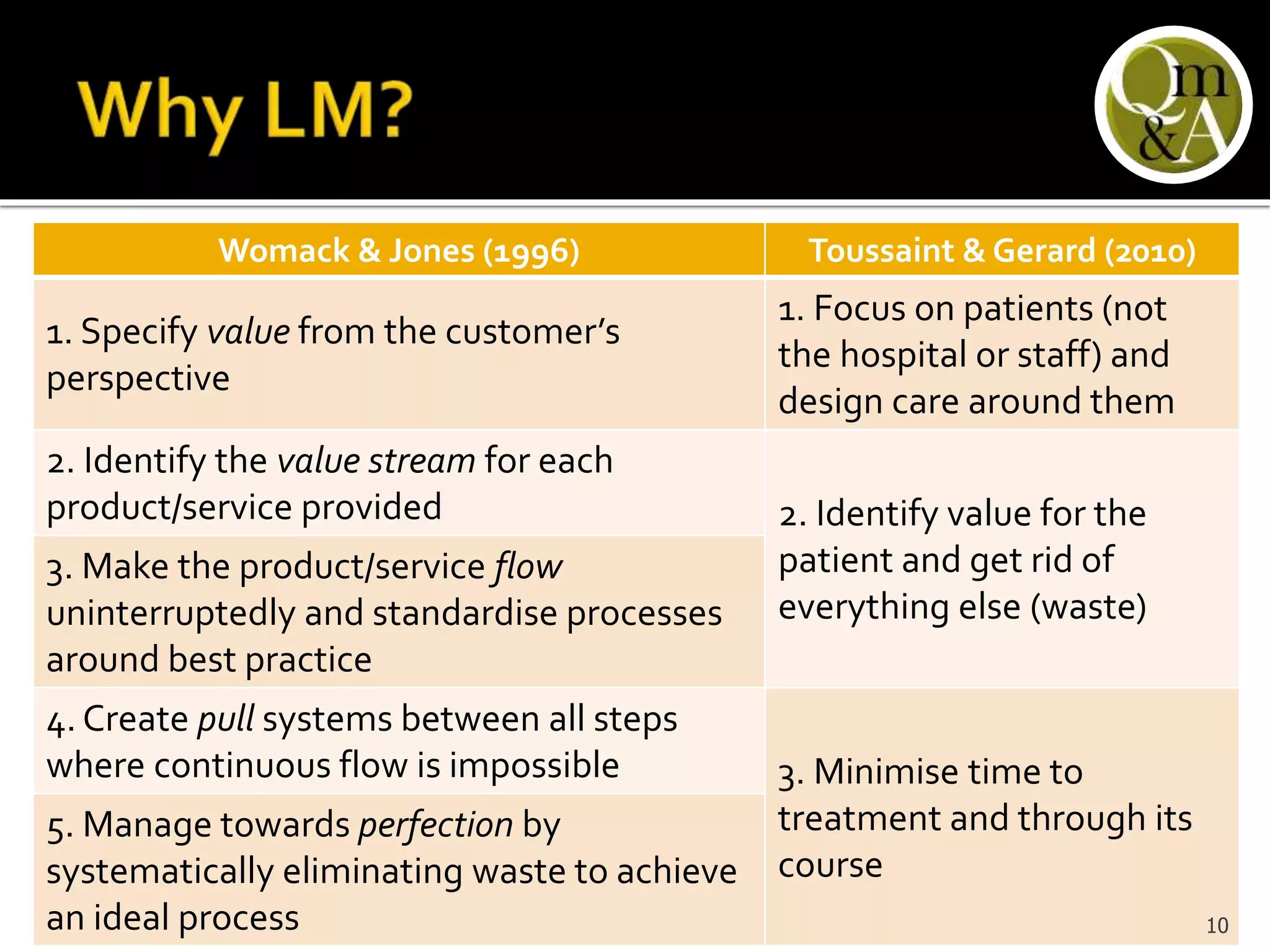
Womack & Jones (1996) Toussaint & Gerard (2010)
1. Specify value from the customer’s
perspective
1. Focus on patients (not
the hospital or staff) and
design care around them
2. Identify the value stream for each
product/service provided 2. Identify value for the
patient and get rid of
everything else (waste)
3. Make the product/service flow
uninterruptedly and standardise processes
around best practice
4. Create pull systems between all steps
where continuous flow is impossible 3. Minimise time to
treatment and through its
course
5. Manage towards perfection by
systematically eliminating waste to achieve
an ideal process 10
3
11
12
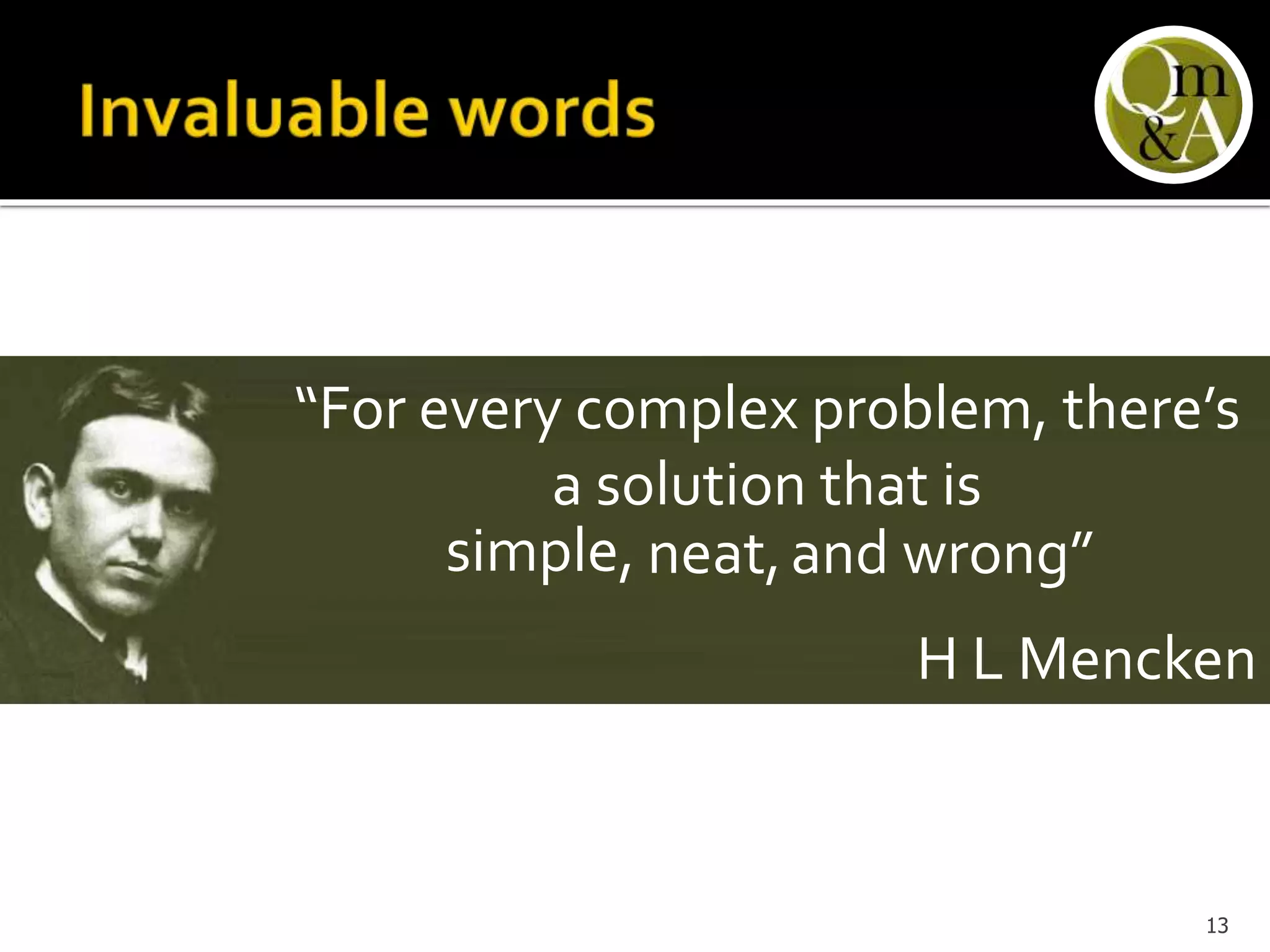
“For every complex problem, there’s
a solution that is
simple, neat,and wrong”
H L Mencken
13
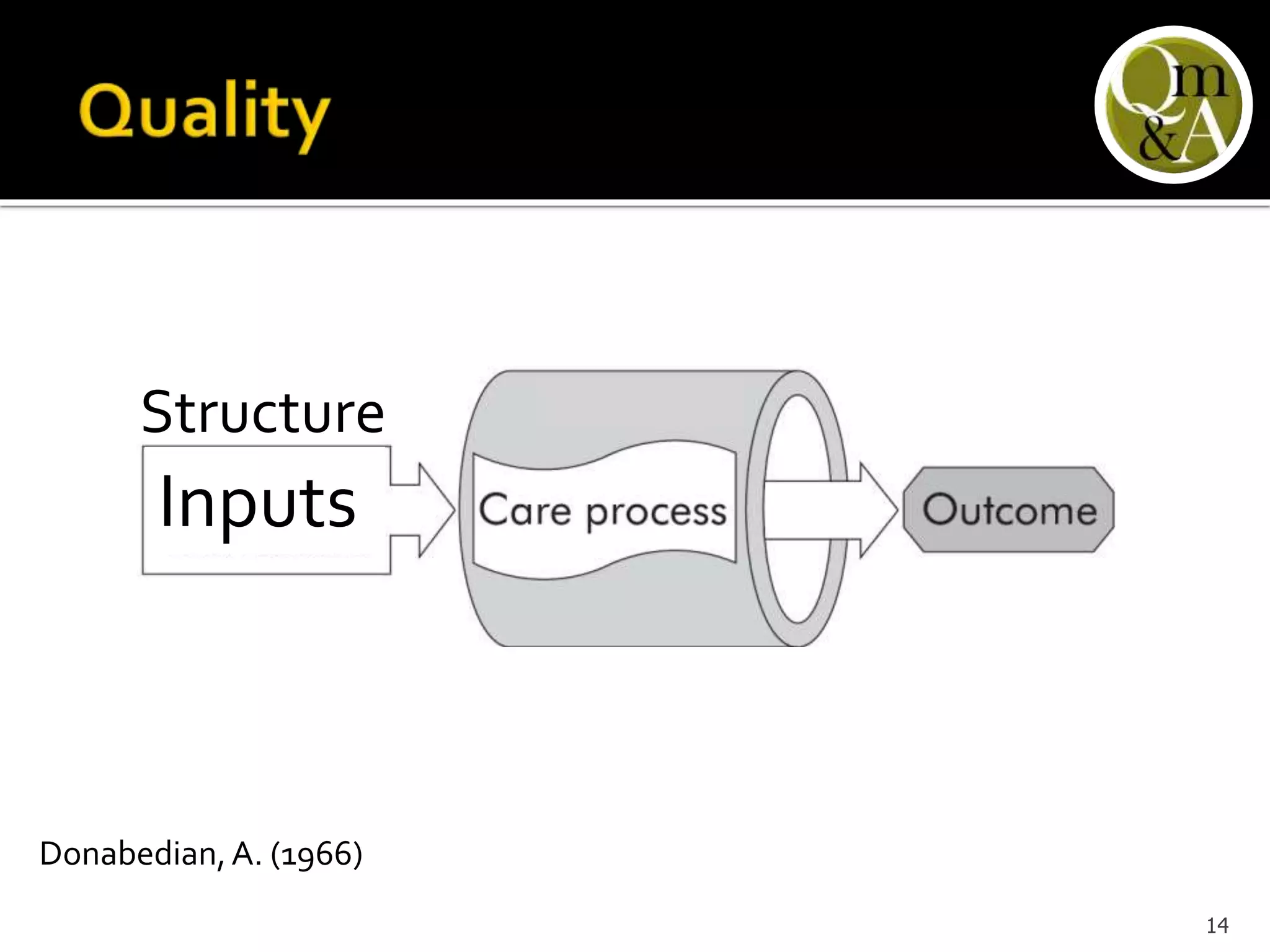
Donabedian,A. (1966)
Inputs
Structure
14
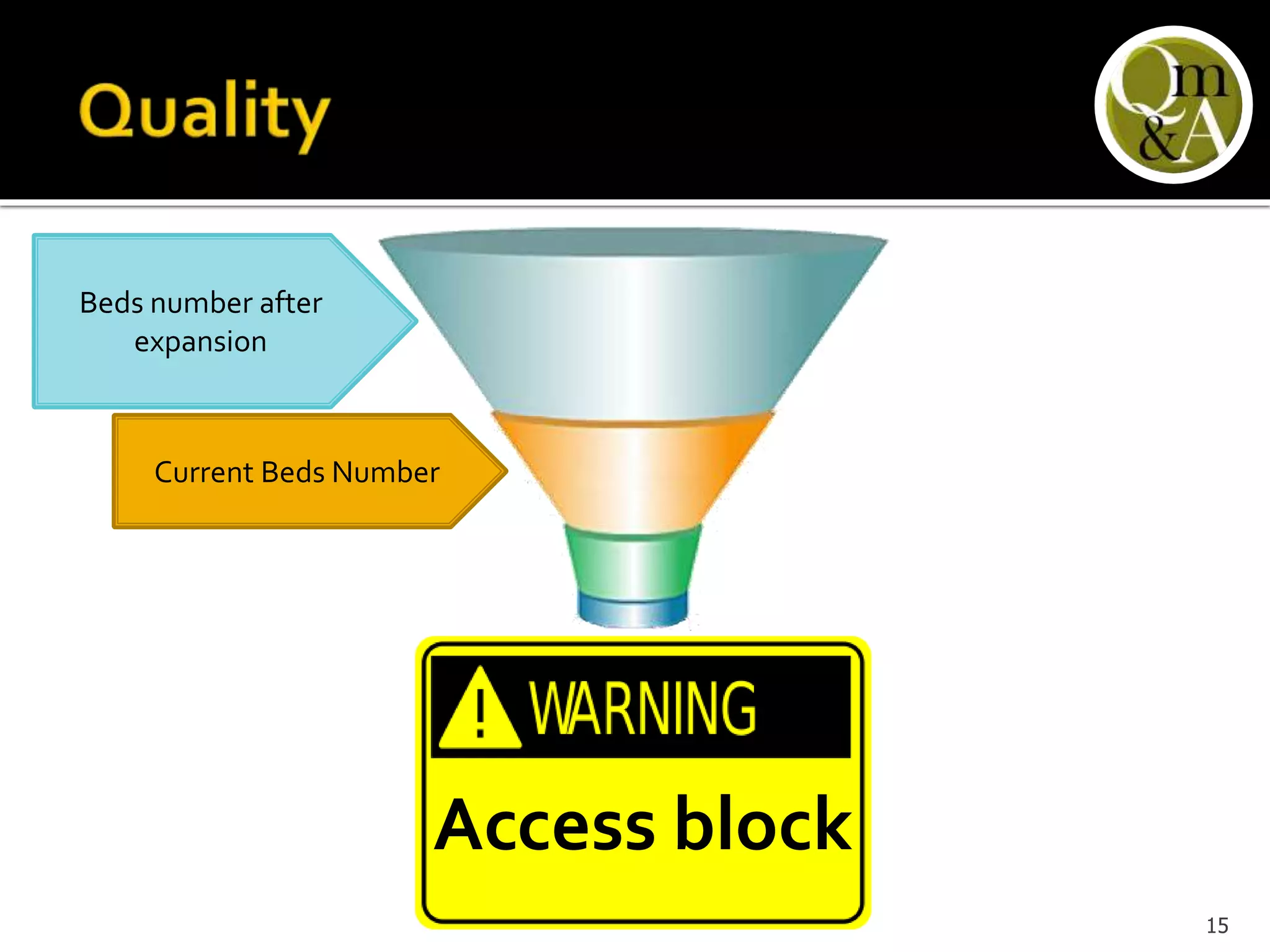
Current Beds Number
Beds number after
expansion
Access block
15
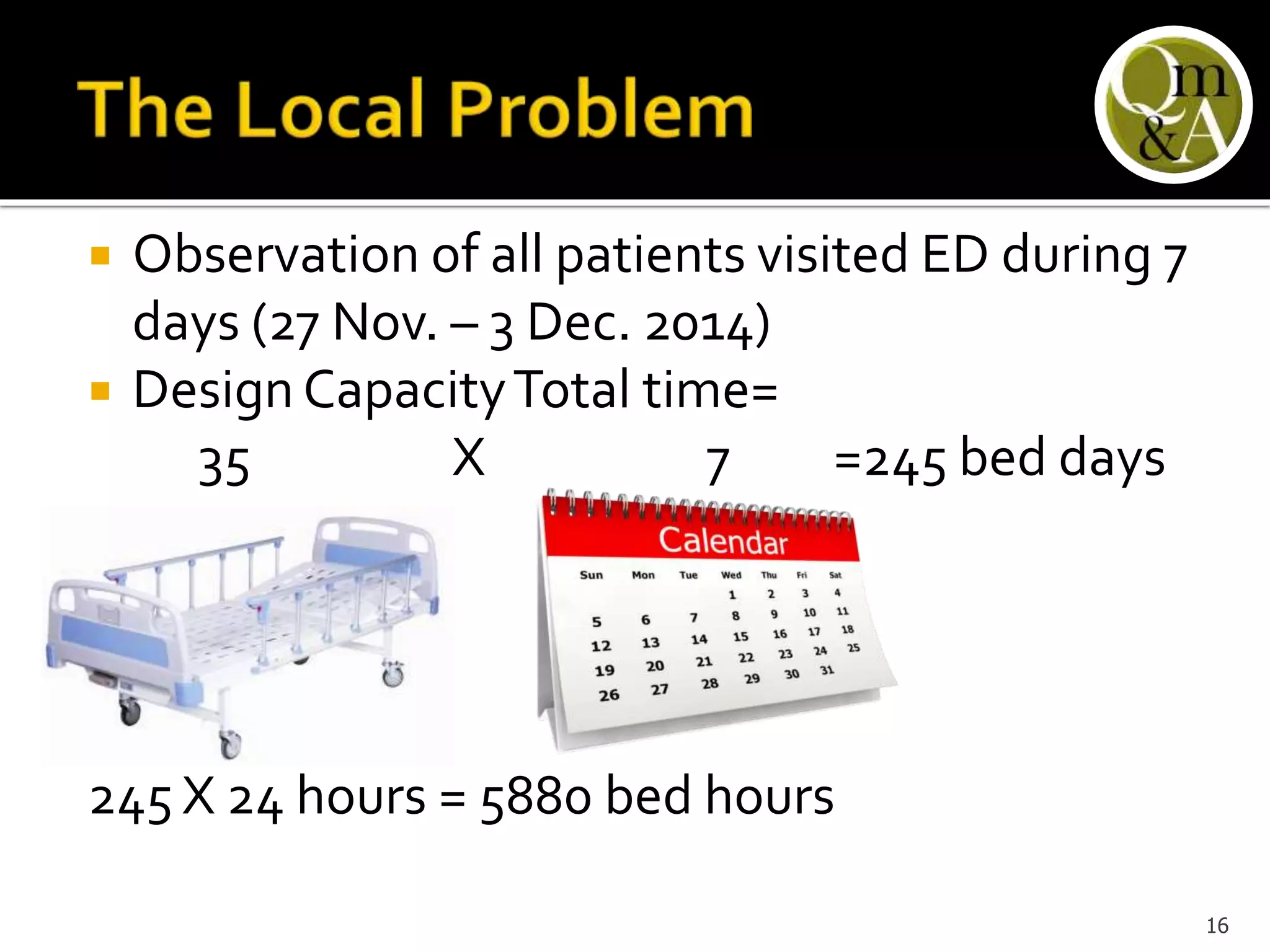
 Observation of all patients visited ED during 7
days (27 Nov. – 3 Dec. 2014)
 Design CapacityTotal time=
35 X 7 =245 bed days
245 X 24 hours = 5880 bed hours
16
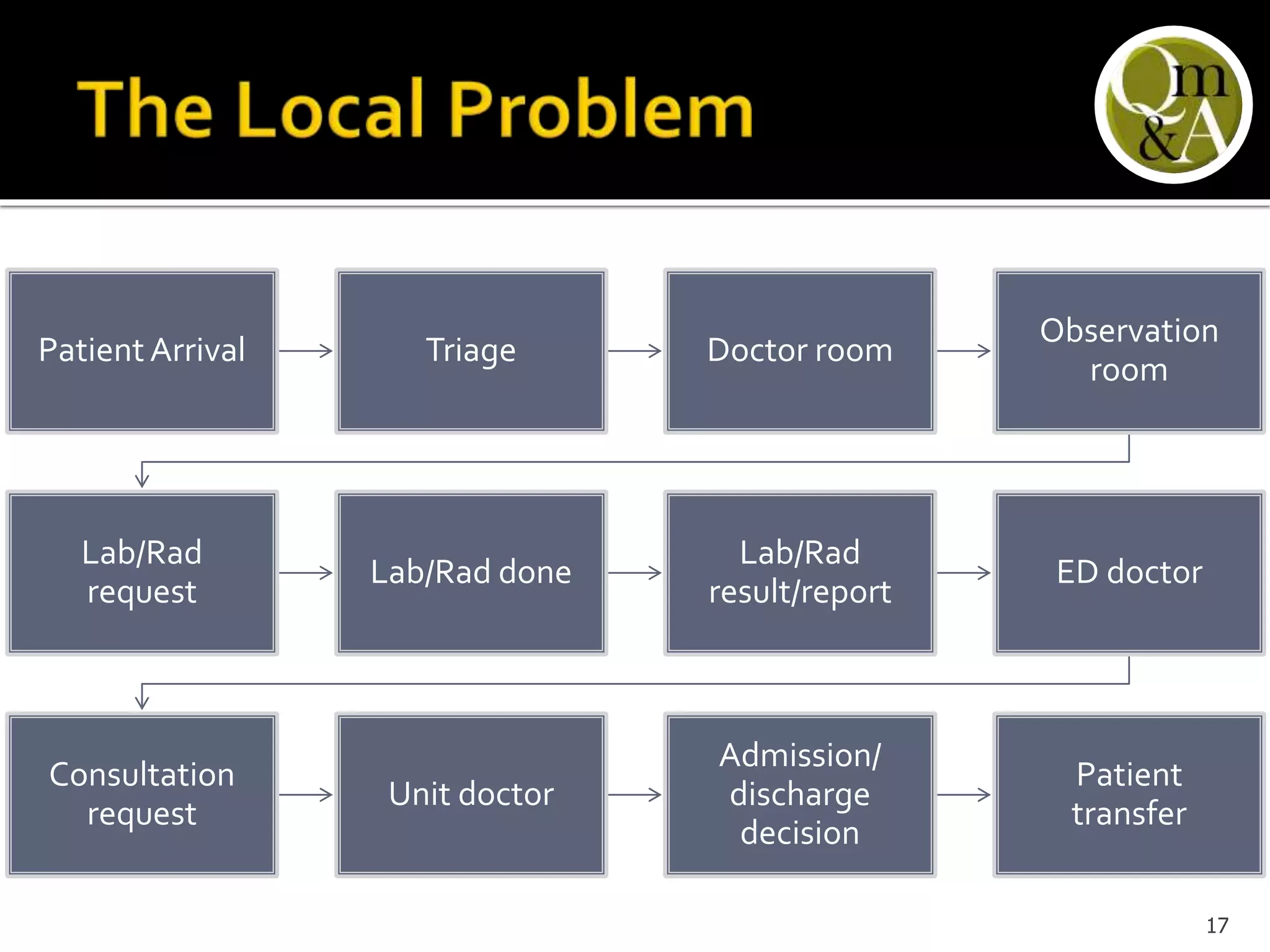
Patient Arrival Triage Doctor room
Observation
room
Lab/Rad
request
Lab/Rad done
Lab/Rad
result/report
ED doctor
Consultation
request
Unit doctor
Admission/
discharge
decision
Patient
transfer
17
Total visits to
ED in 7 days
6383
100%
Didn't go to
observation
4633
73%
Shouldn't go
to observation
316
18%
Stayed less
than 6 hrs
1224
70%
Stayed more
than 6 hrs
210
12%
Other
1750
27%
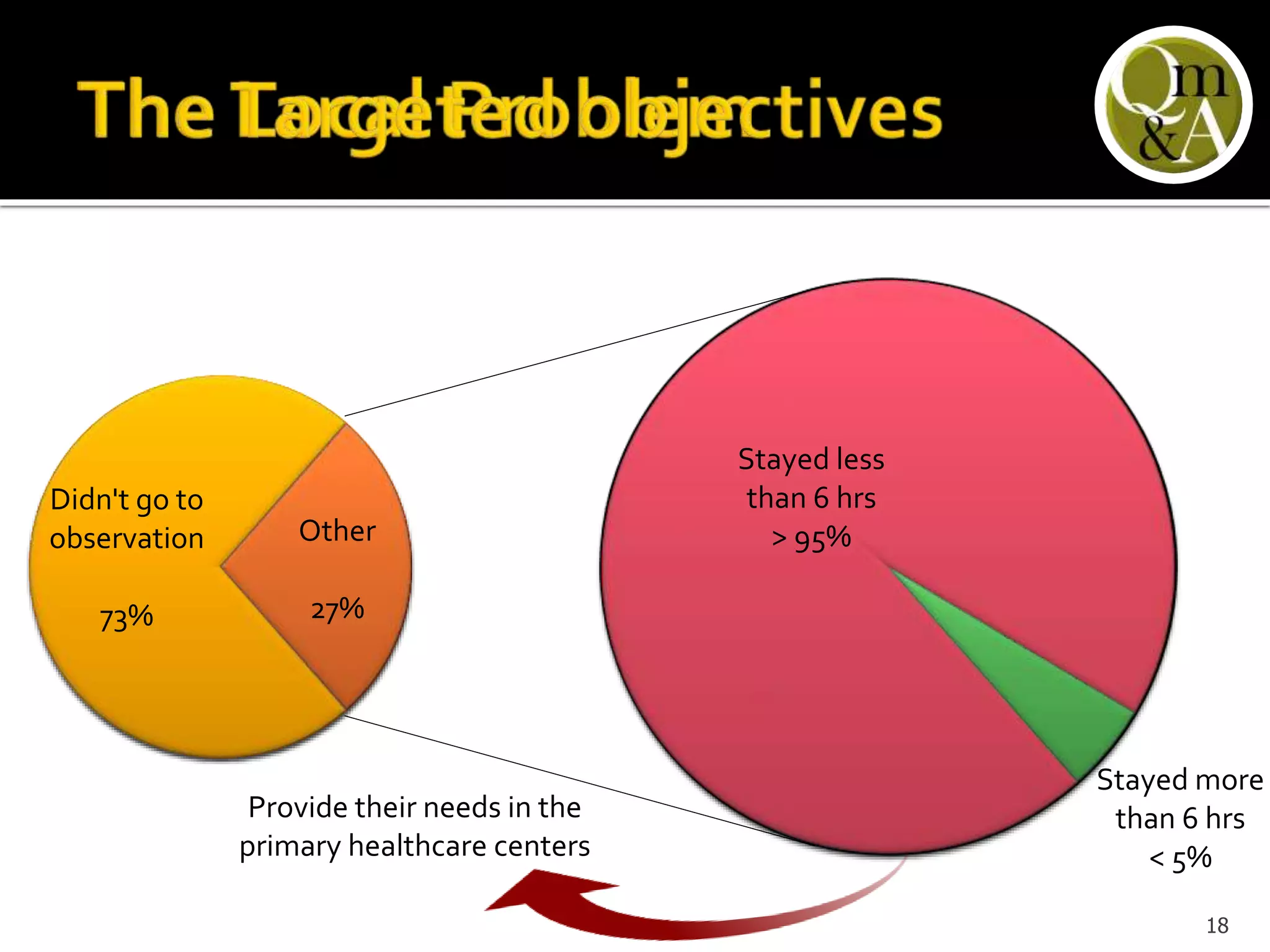
Didn't go to
observation
73%
Stayed less
than 6 hrs
> 95%
Stayed more
than 6 hrs
< 5%
Other
27%
Provide their needs in the
primary healthcare centers
18
0
50
100
150
200
250
300
350
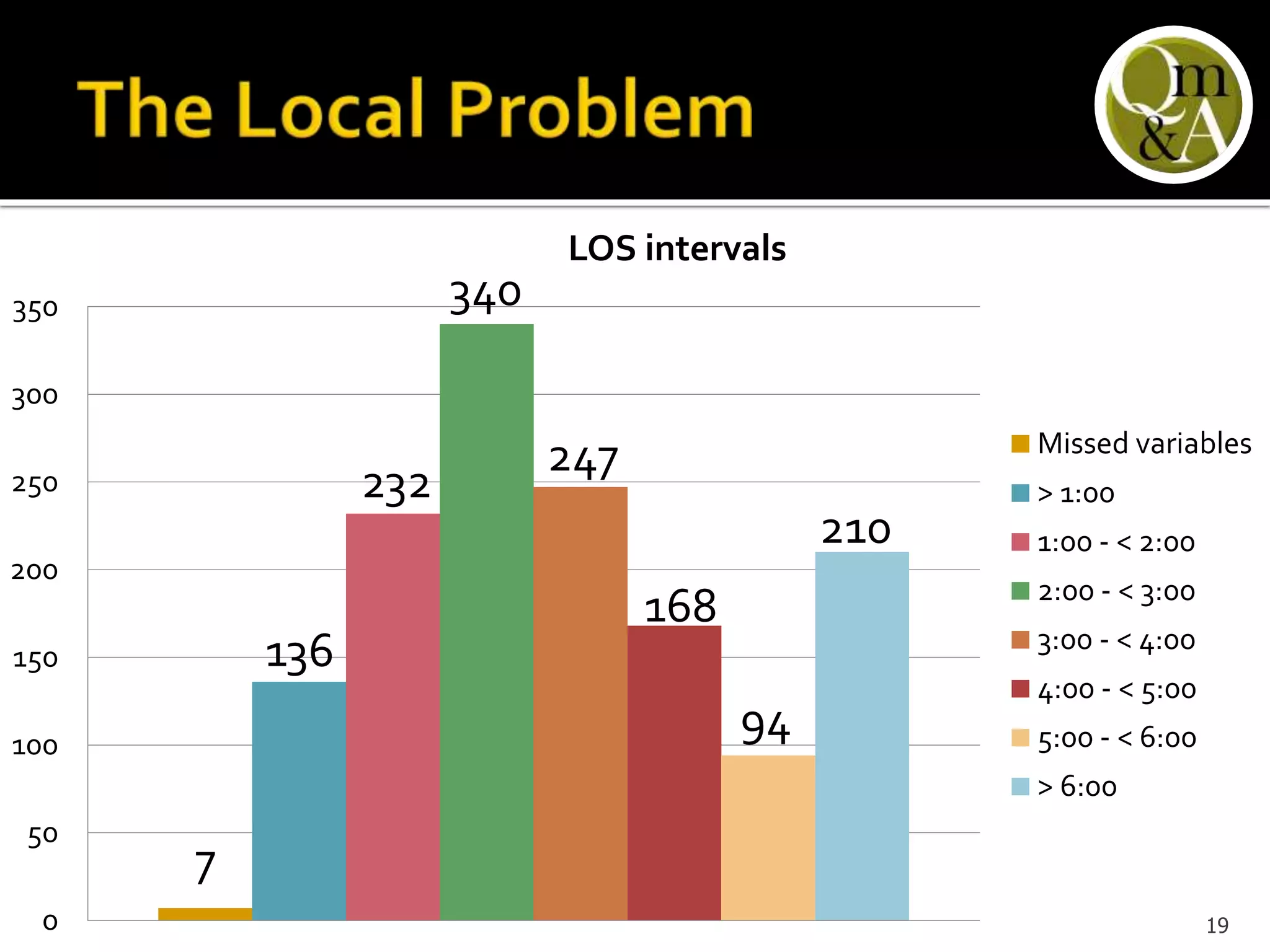
LOS intervals
Missed variables
> 1:00
1:00 - < 2:00
2:00 - < 3:00
3:00 - < 4:00
4:00 - < 5:00
5:00 - < 6:00
> 6:00
7
232
340
247
168
94
210
136
19
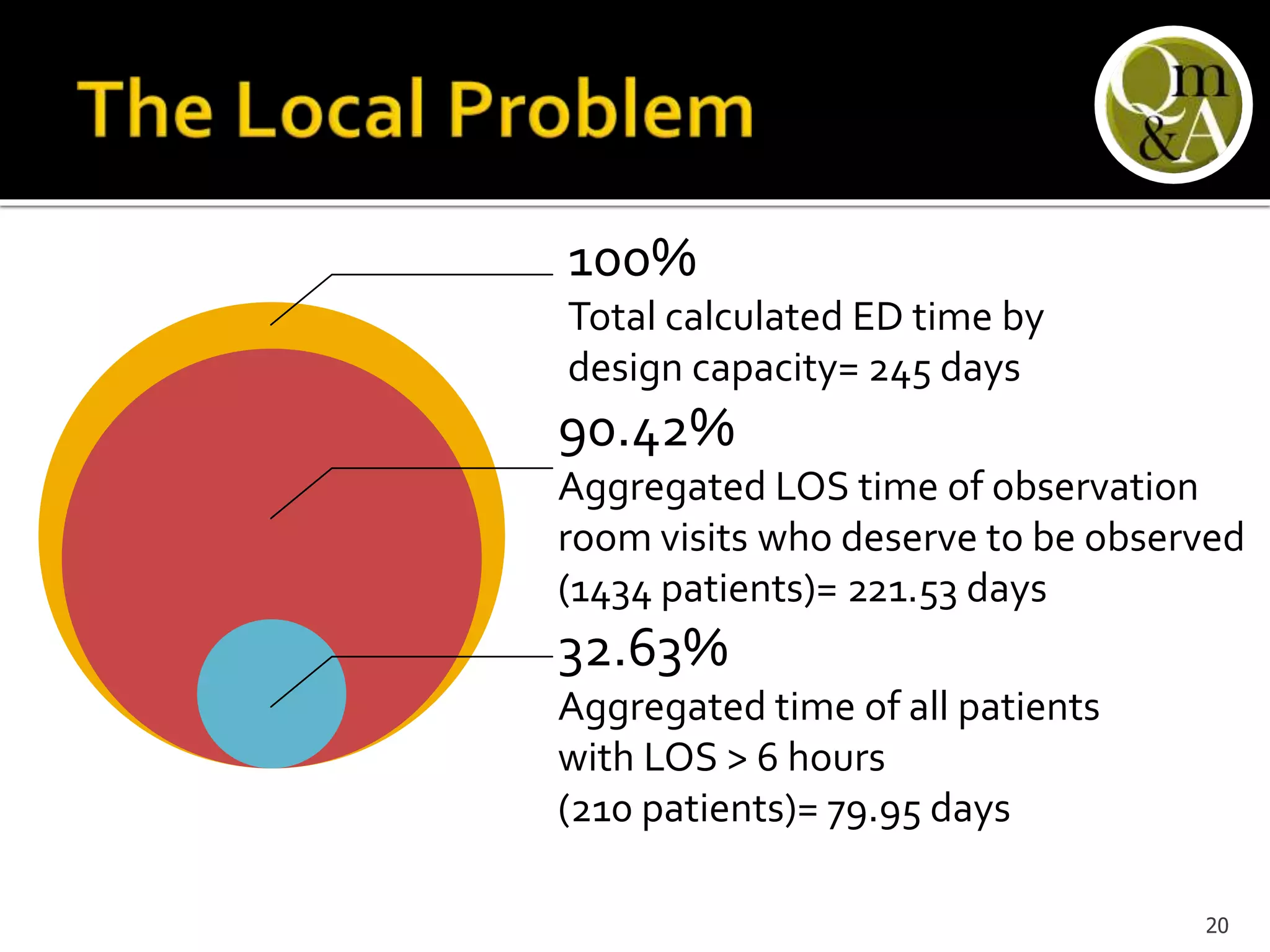
90.42%
Aggregated LOS time of observation
room visits who deserve to be observed
(1434 patients)= 221.53 days
100%
Total calculated ED time by
design capacity= 245 days
32.63%
Aggregated time of all patients
with LOS > 6 hours
(210 patients)= 79.95 days
20
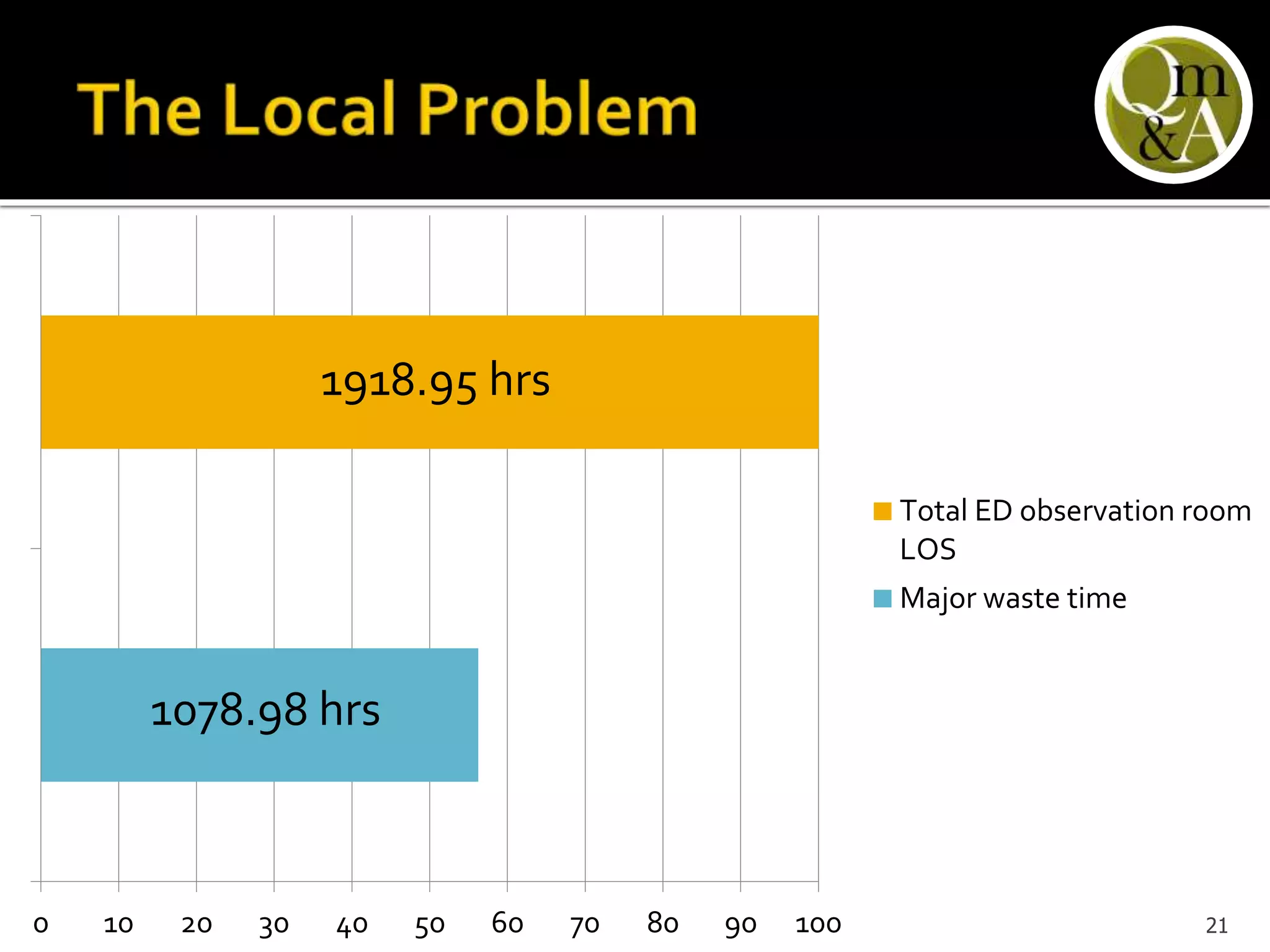
0 10 20 30 40 50 60 70 80 90 100
Total ED observation room
LOS
Major waste time
1078.98 hrs
1918.95 hrs
21
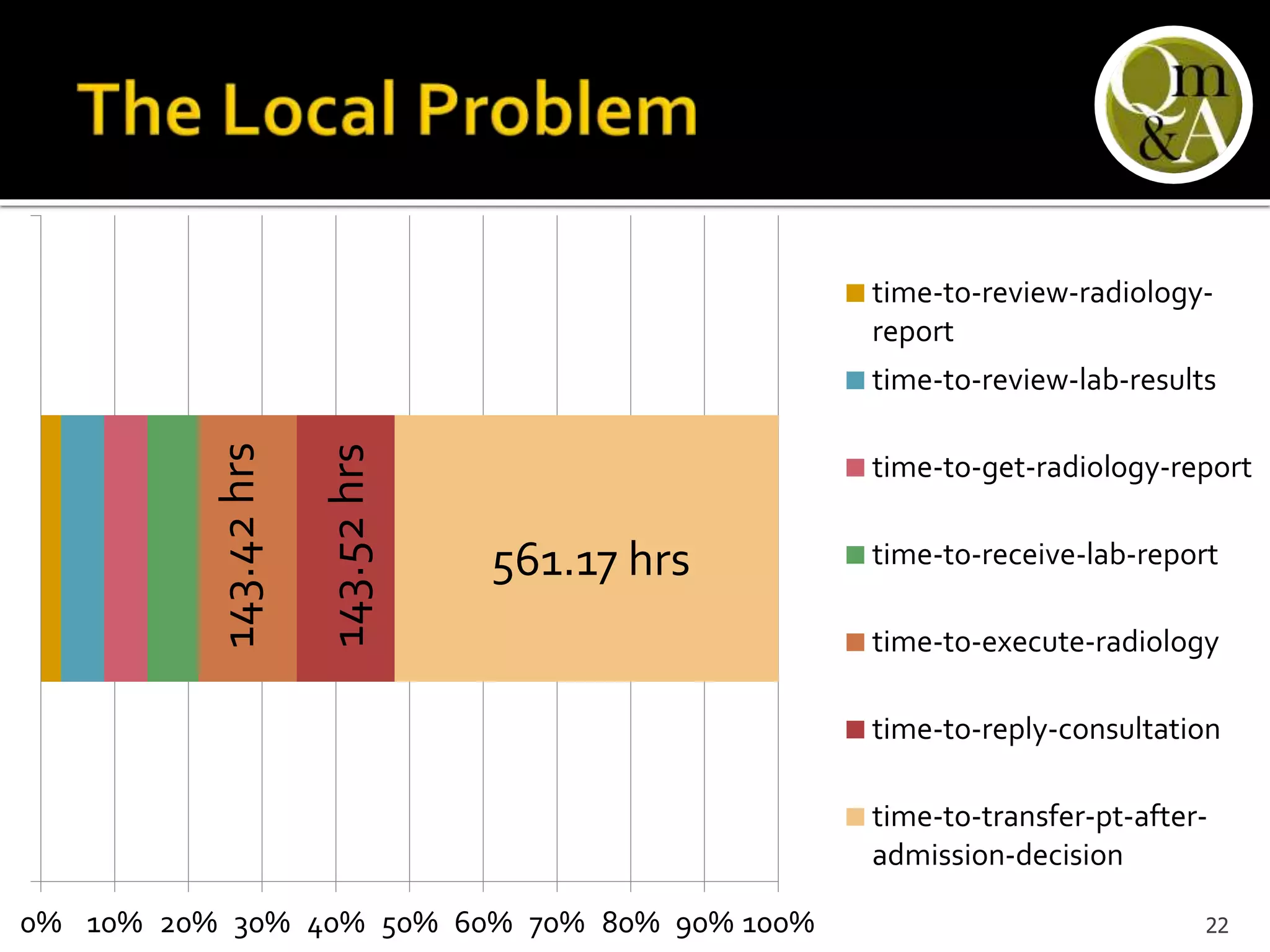
0% 10% 20% 30% 40% 50% 60% 70% 80% 90% 100%
time-to-review-radiology-
report
time-to-review-lab-results
time-to-get-radiology-report
time-to-receive-lab-report
time-to-execute-radiology
time-to-reply-consultation
time-to-transfer-pt-after-
admission-decision
561.17 hrs
143.42hrs
143.52hrs
22
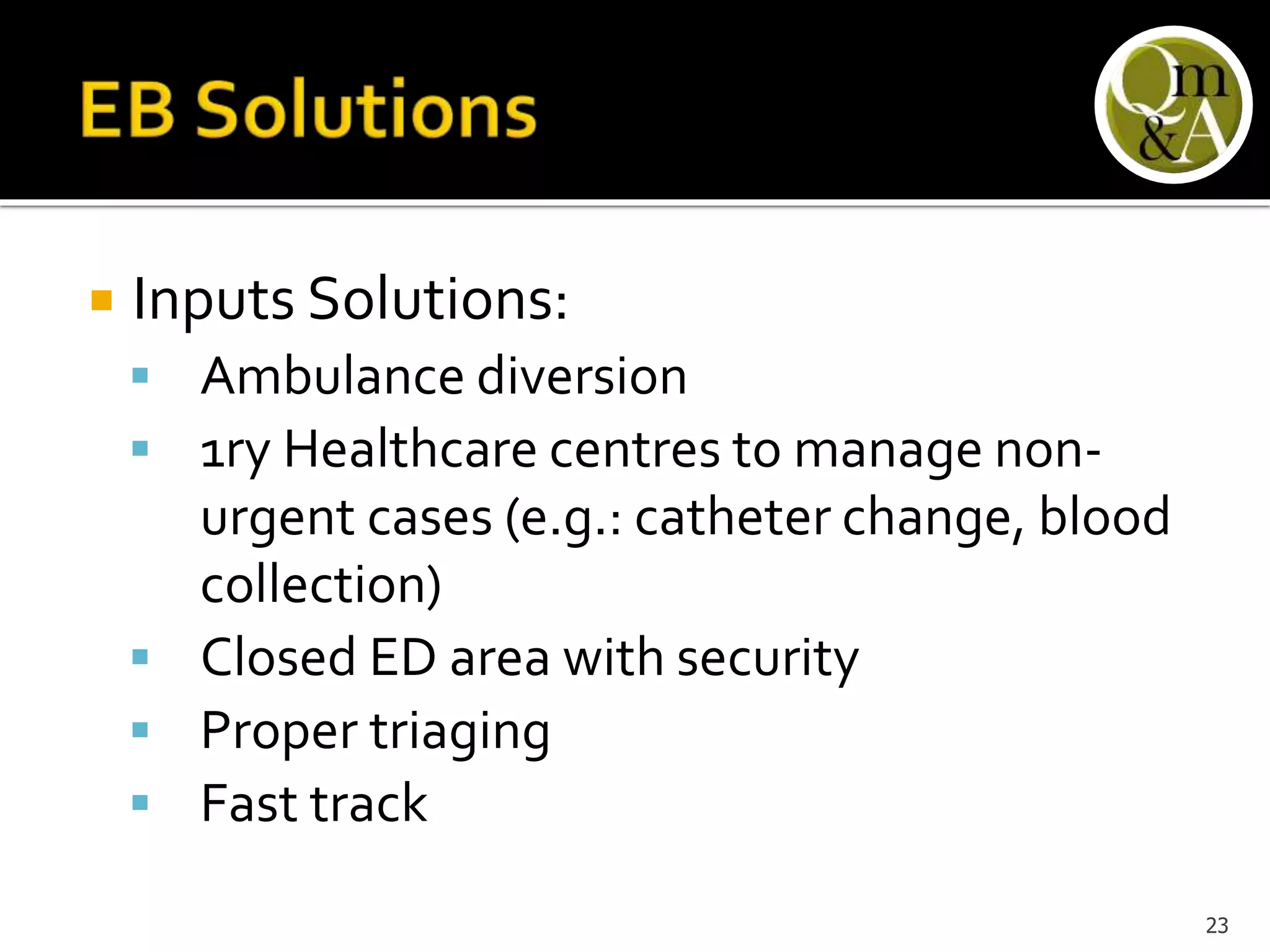
 Inputs Solutions:
 Ambulance diversion
 1ry Healthcare centres to manage non-
urgent cases (e.g.: catheter change, blood
collection)
 Closed ED area with security
 Proper triaging
 Fast track
23
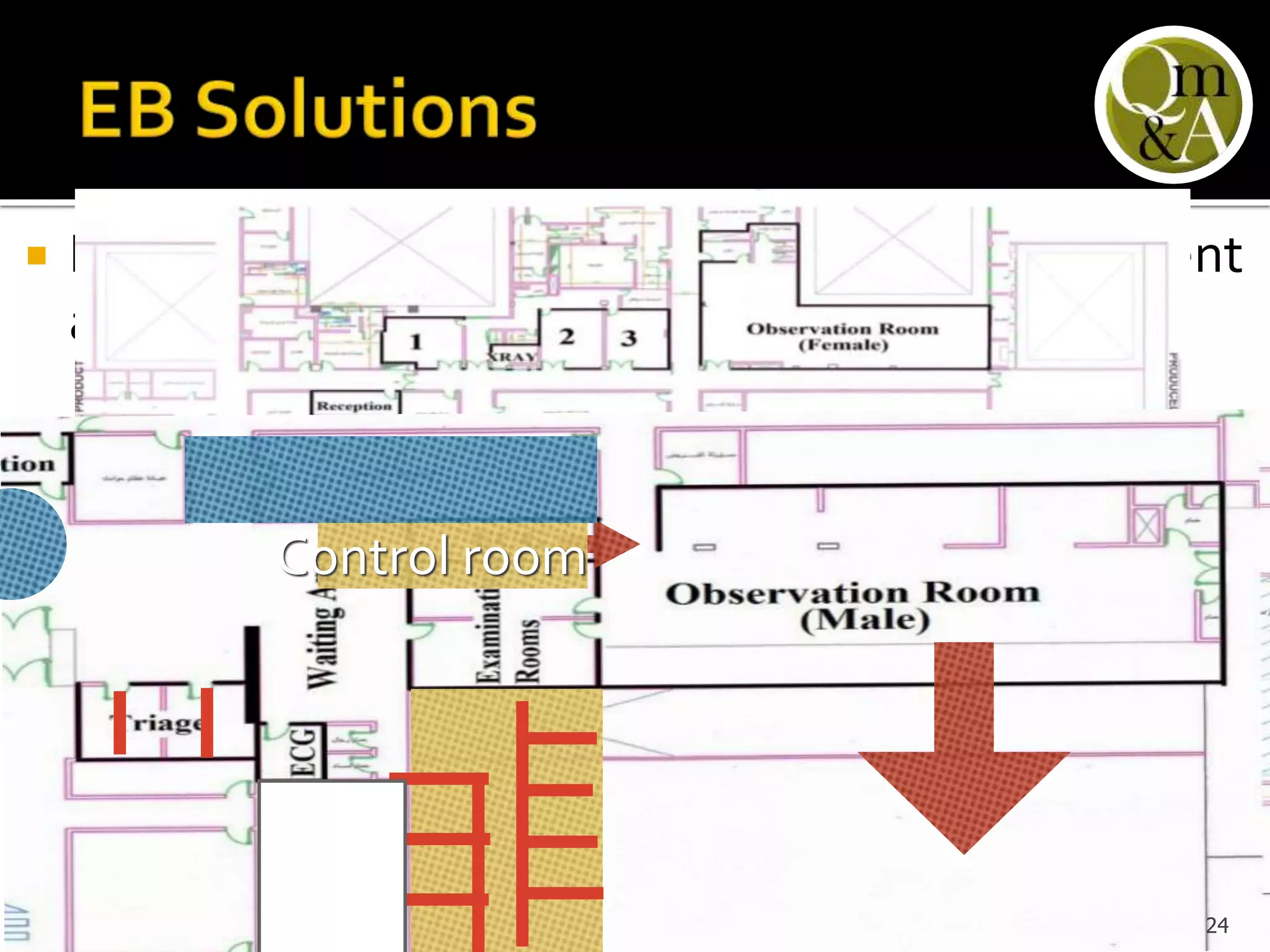
 Minimal structural requirement to make it efficient
and accommodate the numbers
Control room
24
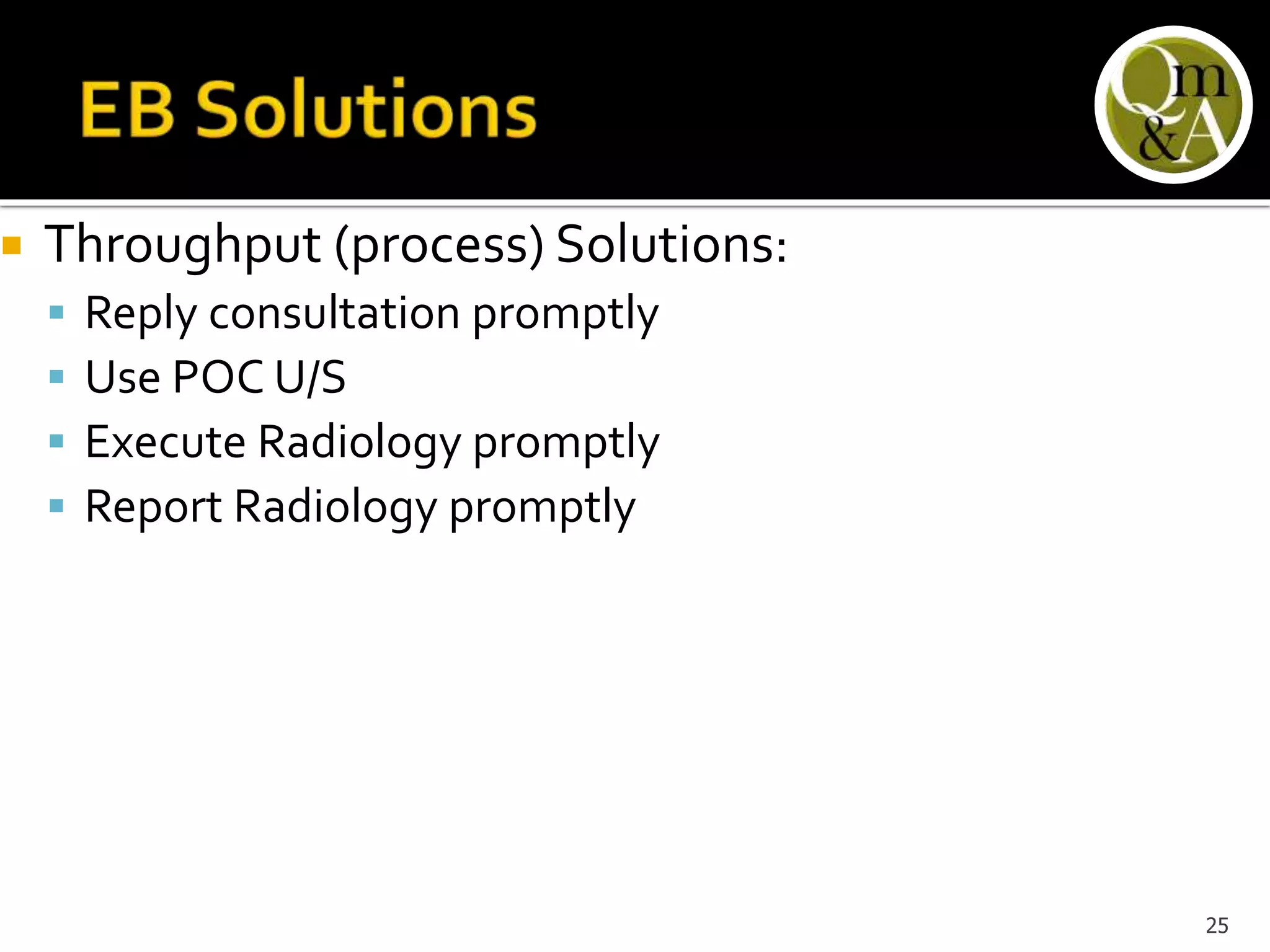
 Throughput (process) Solutions:
 Reply consultation promptly
 Use POC U/S
 Execute Radiology promptly
 Report Radiology promptly
25
 Output Solutions:
 Effective discharge service
 Bed crisis management protocols
 Bed manager
 Set time target to all staff:
 EDLOS < 6 hrs
 wait times < 30% of total EDLOS
 No patient boarded in ED > 45 mins
 Initiation of crisis protocols should be zero
26
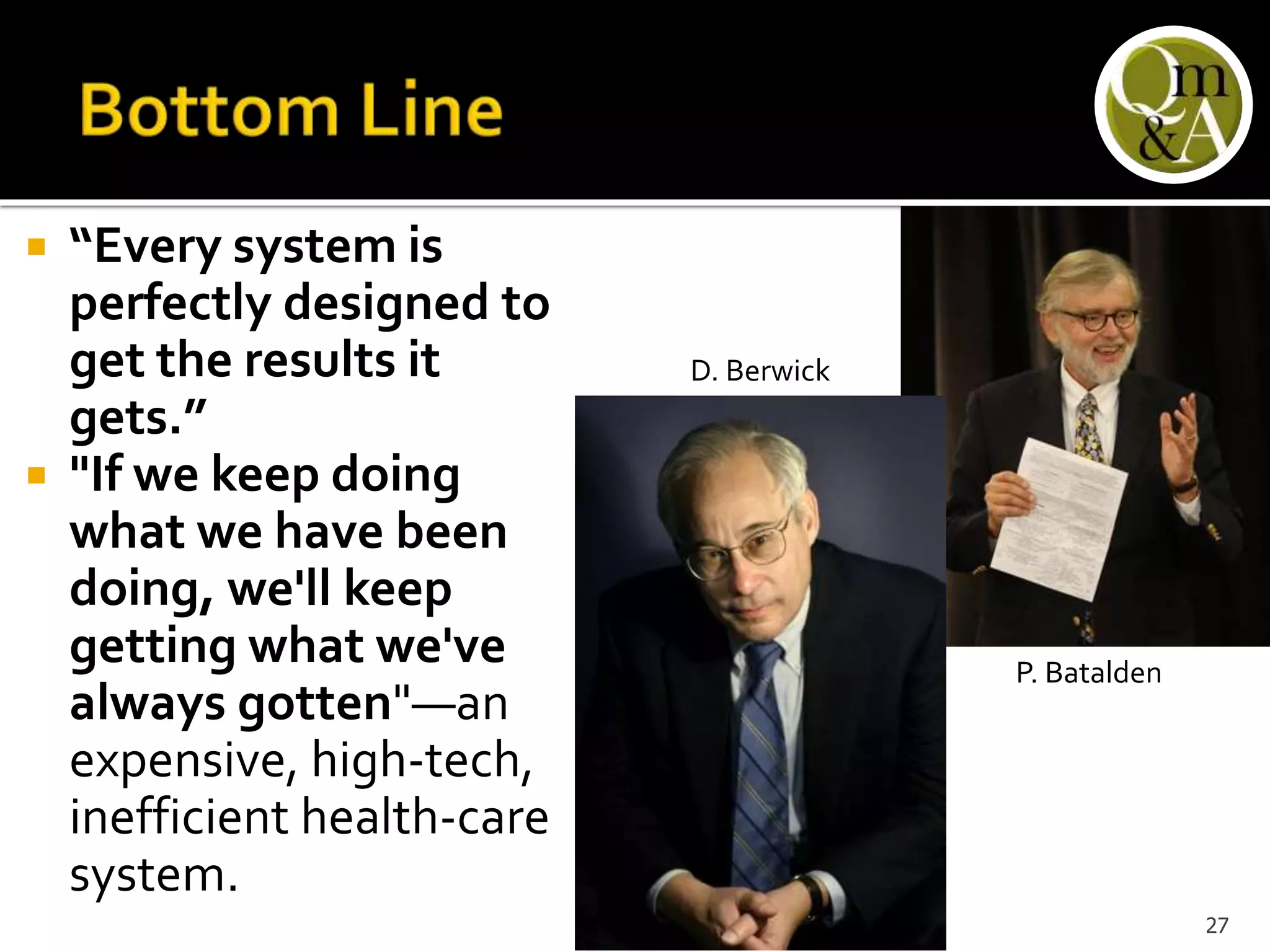
 “Every system is
perfectly designed to
get the results it
gets.”
 "If we keep doing
what we have been
doing, we'll keep
getting what we've
always gotten"—an
expensive, high-tech,
inefficient health-care
system.
P. Batalden
D. Berwick
27
 Berwick, D. M. (2005), My right knee, Annals of Medicine
 ACEM. (2013) Policy on StandardTerminology. Melbourne, Australia:
The Australasian College for Emergency Medicine
 Blum et al. (2006) Report From a Roundtable Discussion: Meeting the
Challenge of Emergency Department Overcrowding/ Boarding.
Washington, DC, USA: American College of Emergency Physicians
 Horwitz et al. (2010) US Emergency Department Performance on
WaitTime and Length ofVisit. Ann Emerg Med
 Radnor et al. (2012) Lean in healthcare:The unfilled promise? Soc Sci
Med
 Guttmann et al. (2011) Association between waiting times and short
term mortality and hospital admission after departure from
emergency department: population based cohort study from
Ontario, Canada. BMJ.
28

EDOC (2)

  • 1.
    Hossam Elamir,TQMD, MBBCh Quality& Accreditation Office, MKH
  • 2.
     Quality  Definitions The Global Situation  Causes  The Local Problem  EB Solutions 2
  • 3.
     Don’t killme (no needless deaths)  Do help me & don’t hurt me (no needless pain)  Don’t make me feel helpless  Don’t keep me waiting  Don’t waste resources - mine or anyone else’s Berwick, D. M. (2005) 3
  • 4.
     This situation continuesfor days at the moment.  According to one of ED senior physicians: “What is the meaning of quality!The patient died! We would save her live if she was transferred a little bit earlier to inpatient. 4
  • 5.
     EDOC: “institutionalresources available are insufficient to meet the basic service needs of emergency patients.”  Patient Boarding: “a known practice in which patients are held or "boarded" in emergency departments waiting for inpatient beds in the hospital.” Blum et al. (2006) 5
  • 6.
     Access block:A situation when“….. patients’ who were admitted or planned for admission but discharged from the emergency department (ED) without reaching an inpatient bed, transferred to another hospital for admission, or died in the ED ….total ED time exceeded 8 hours.” ACEM. (2013)  Prolonged EDLOS: was defined as 4 hours in the UK, 4-6 hours in Canada and 8 hours inAustralia. Horwitz et al. (2010) 6
  • 7.
     LM: “……amanagement practice based on the philosophy of continuously improving processes by either increasing customer value or reducing non- value adding activities (Muda), process variation (Mura), and poor work conditions (Muri).” (p.365) Radnor et al. (2012) 7
  • 8.
  • 9.
     One ofthe fittest athletes in the world  His body fat is 3% less than supermodels = 16 9
  • 10.
    Womack & Jones(1996) Toussaint & Gerard (2010) 1. Specify value from the customer’s perspective 1. Focus on patients (not the hospital or staff) and design care around them 2. Identify the value stream for each product/service provided 2. Identify value for the patient and get rid of everything else (waste) 3. Make the product/service flow uninterruptedly and standardise processes around best practice 4. Create pull systems between all steps where continuous flow is impossible 3. Minimise time to treatment and through its course 5. Manage towards perfection by systematically eliminating waste to achieve an ideal process 10
  • 11.
  • 12.
  • 13.
    “For every complexproblem, there’s a solution that is simple, neat,and wrong” H L Mencken 13
  • 14.
  • 15.
    Current Beds Number Bedsnumber after expansion Access block 15
  • 16.
     Observation ofall patients visited ED during 7 days (27 Nov. – 3 Dec. 2014)  Design CapacityTotal time= 35 X 7 =245 bed days 245 X 24 hours = 5880 bed hours 16
  • 17.
    Patient Arrival TriageDoctor room Observation room Lab/Rad request Lab/Rad done Lab/Rad result/report ED doctor Consultation request Unit doctor Admission/ discharge decision Patient transfer 17
  • 18.
    Total visits to EDin 7 days 6383 100% Didn't go to observation 4633 73% Shouldn't go to observation 316 18% Stayed less than 6 hrs 1224 70% Stayed more than 6 hrs 210 12% Other 1750 27% Didn't go to observation 73% Stayed less than 6 hrs > 95% Stayed more than 6 hrs < 5% Other 27% Provide their needs in the primary healthcare centers 18
  • 19.
    0 50 100 150 200 250 300 350 LOS intervals Missed variables >1:00 1:00 - < 2:00 2:00 - < 3:00 3:00 - < 4:00 4:00 - < 5:00 5:00 - < 6:00 > 6:00 7 232 340 247 168 94 210 136 19
  • 20.
    90.42% Aggregated LOS timeof observation room visits who deserve to be observed (1434 patients)= 221.53 days 100% Total calculated ED time by design capacity= 245 days 32.63% Aggregated time of all patients with LOS > 6 hours (210 patients)= 79.95 days 20
  • 21.
    0 10 2030 40 50 60 70 80 90 100 Total ED observation room LOS Major waste time 1078.98 hrs 1918.95 hrs 21
  • 22.
    0% 10% 20%30% 40% 50% 60% 70% 80% 90% 100% time-to-review-radiology- report time-to-review-lab-results time-to-get-radiology-report time-to-receive-lab-report time-to-execute-radiology time-to-reply-consultation time-to-transfer-pt-after- admission-decision 561.17 hrs 143.42hrs 143.52hrs 22
  • 23.
     Inputs Solutions: Ambulance diversion  1ry Healthcare centres to manage non- urgent cases (e.g.: catheter change, blood collection)  Closed ED area with security  Proper triaging  Fast track 23
  • 24.
     Minimal structuralrequirement to make it efficient and accommodate the numbers Control room 24
  • 25.
     Throughput (process)Solutions:  Reply consultation promptly  Use POC U/S  Execute Radiology promptly  Report Radiology promptly 25
  • 26.
     Output Solutions: Effective discharge service  Bed crisis management protocols  Bed manager  Set time target to all staff:  EDLOS < 6 hrs  wait times < 30% of total EDLOS  No patient boarded in ED > 45 mins  Initiation of crisis protocols should be zero 26
  • 27.
     “Every systemis perfectly designed to get the results it gets.”  "If we keep doing what we have been doing, we'll keep getting what we've always gotten"—an expensive, high-tech, inefficient health-care system. P. Batalden D. Berwick 27
  • 28.
     Berwick, D.M. (2005), My right knee, Annals of Medicine  ACEM. (2013) Policy on StandardTerminology. Melbourne, Australia: The Australasian College for Emergency Medicine  Blum et al. (2006) Report From a Roundtable Discussion: Meeting the Challenge of Emergency Department Overcrowding/ Boarding. Washington, DC, USA: American College of Emergency Physicians  Horwitz et al. (2010) US Emergency Department Performance on WaitTime and Length ofVisit. Ann Emerg Med  Radnor et al. (2012) Lean in healthcare:The unfilled promise? Soc Sci Med  Guttmann et al. (2011) Association between waiting times and short term mortality and hospital admission after departure from emergency department: population based cohort study from Ontario, Canada. BMJ. 28