Using events to influence


Voices learning event 15 November
Rashmi Mistry
AGENDA

• Intro
• Policy and research – SADC process
• Public campaigning and mobilisation – COP17
• Movement building – Rural Womens Assembly
• Oxfam’s approach
• Exercise
• Discussion
WHAT ARE EVENTS?

• Policy makers and decision makers meet to take
  decisions that could impact on the issues you
  care about, eg…

• Global and regional: G20, G8, COP, SADC,
  BRICS, African Union, World Economic Forum
  etc…

• National and local: Mangaung, provincial
  councils, business conferences, etc…
WHY DO OXFAM USE
INTERNATIONAL EVENTS
• Some of the reasons people are kept in poverty
  are structural, political decisions that happen at
  global levels

• Debt relief and aid – G8

• Trade – WTO, bilateral, regional

• HIV/AIDS – MDGs, UNGA, G8 etc

• Climate change – UNFCCC / COP, G20
INTERNATIONAL POLICIES CAN
LEAD TO CHANGE
• Oxfam theory of change identifies some
  international processes as having potential to
  create change at national level

• Used to put the spotlight and pressure on issues

• For citizens to hold decision makers to account
  where national processes fail

• But they only happen if there is national level
  action!
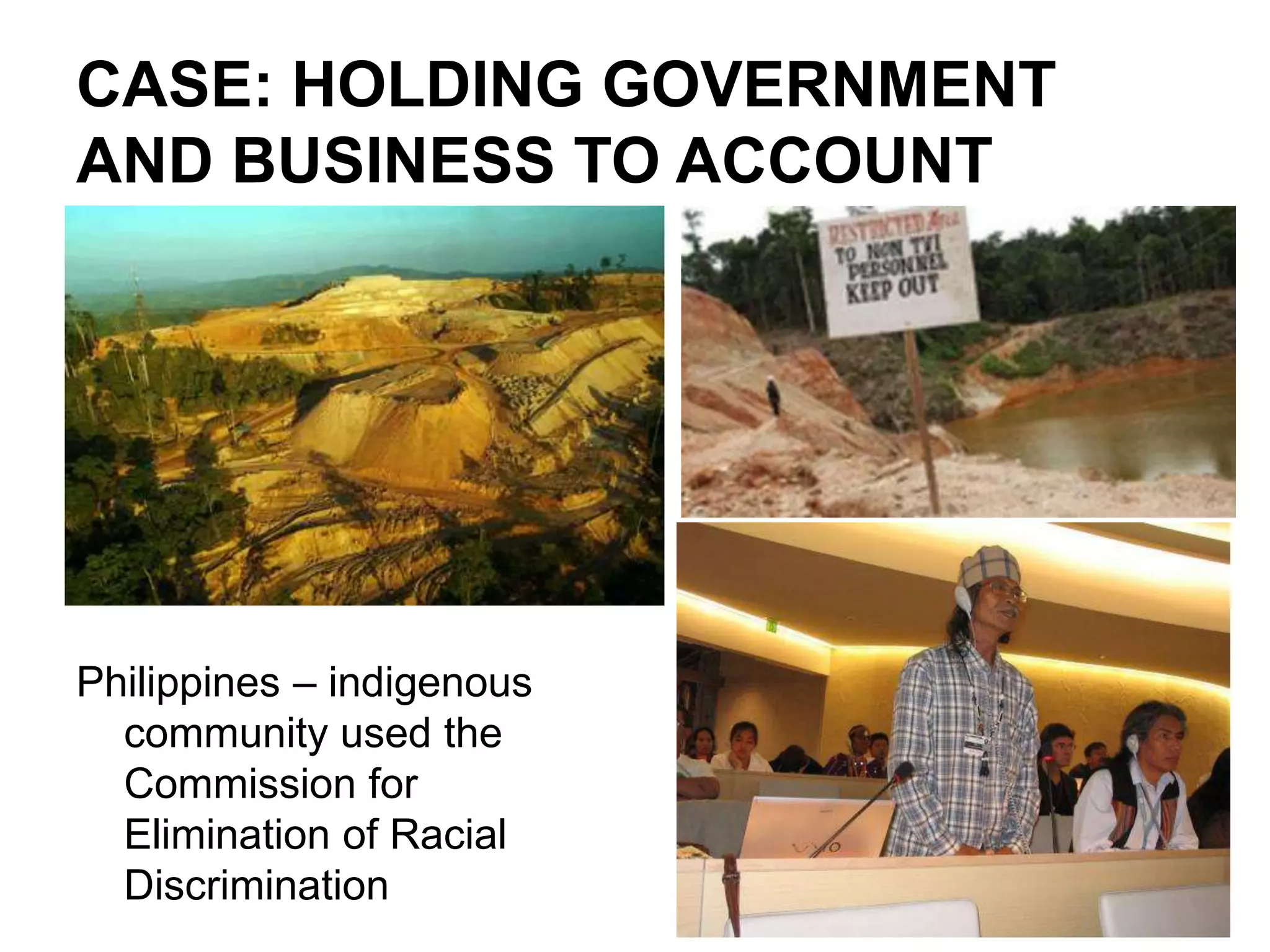
CASE: HOLDING GOVERNMENT
AND BUSINESS TO ACCOUNT


Philippines – indigenous
  community used the
  Commission for
  Elimination of Racial
  Discrimination
WHAT EVENTS CAN DO

• Keeping poverty on the political agenda – e.g.
  G8, G20, UNGA, WTO – aid, trade, debt

• Keeping poverty in the public eye
  • Added pressure on decision makers
  • Fundraising
  • Mobilisation

• Facilitate civsoc networking and movement
  building
SOME OXFAM ACHIEVEMENTS

• Instrumental in putting poverty on the G8
  agenda
• Alliance building – e.g. Rio
• G8 in Germany 2009 produced $750m extra aid
  money
• Finance on the EU agenda in climate
  negotiations
• G8 in Canada – recommitment to Global Fund
  for HIV, TB and Malaria
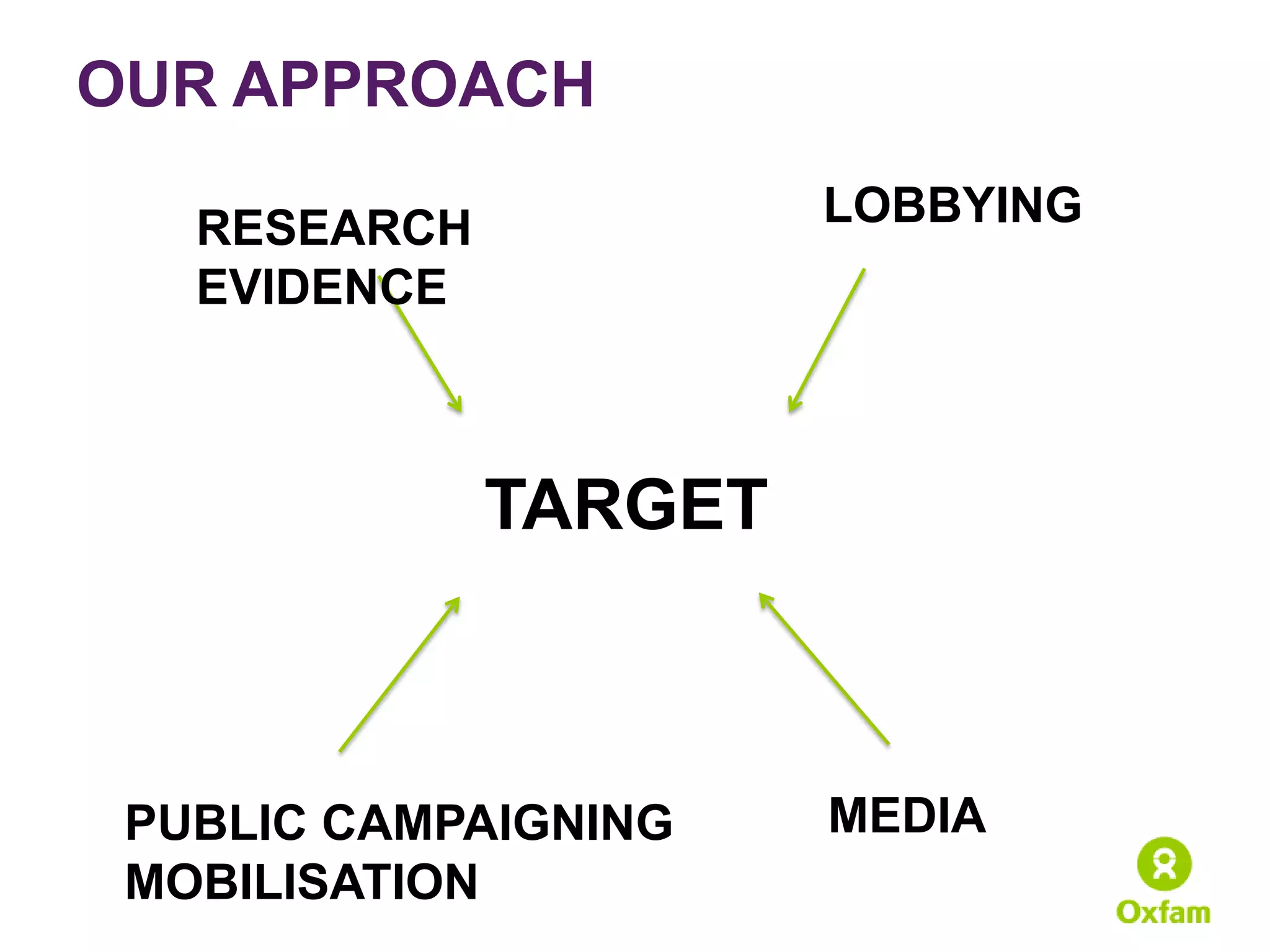
OUR APPROACH

   RESEARCH            LOBBYING
   EVIDENCE


              TARGET


 PUBLIC CAMPAIGNING    MEDIA
 MOBILISATION
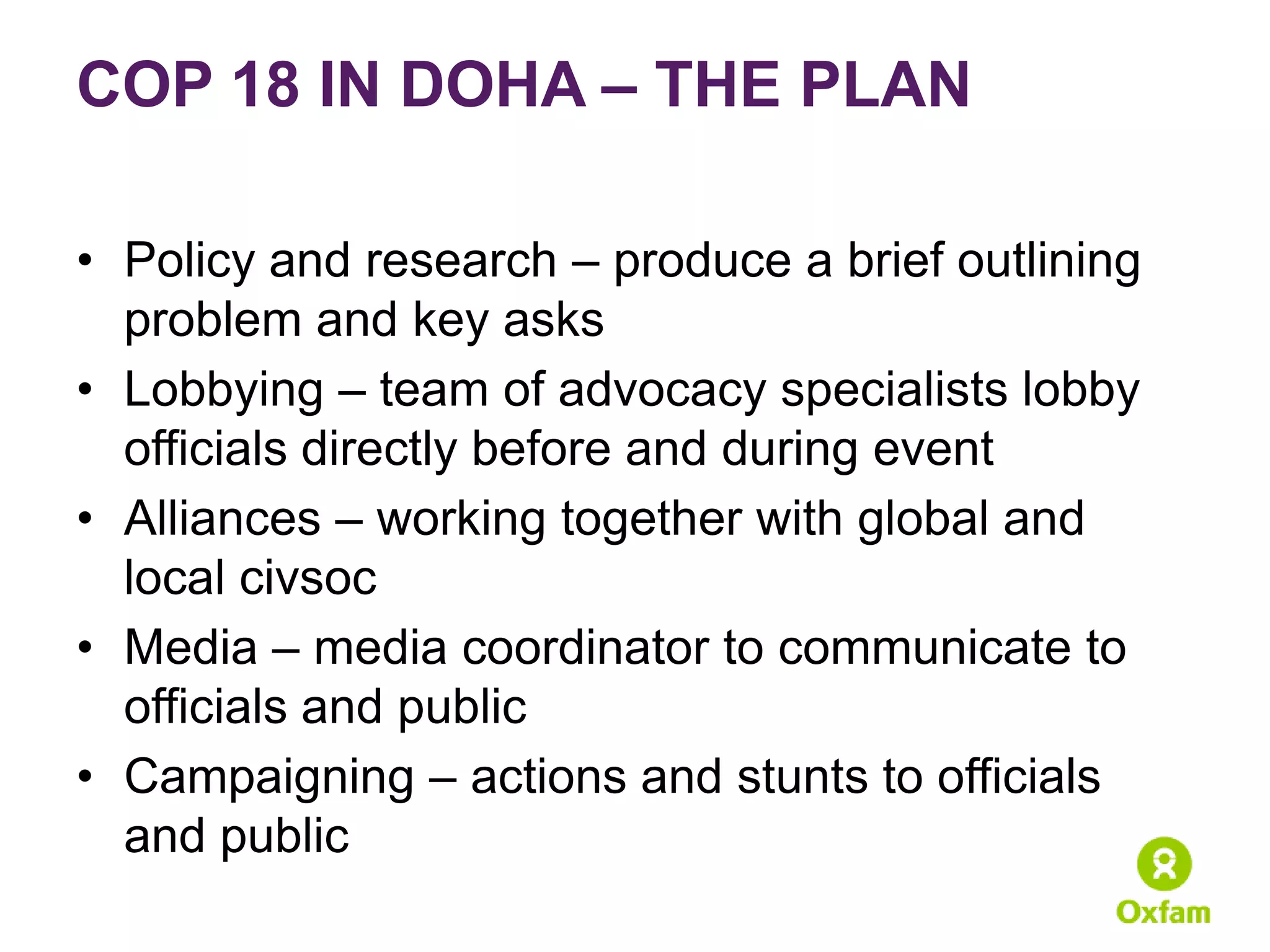
COP 18 IN DOHA – THE PLAN

• Policy and research – produce a brief outlining
  problem and key asks
• Lobbying – team of advocacy specialists lobby
  officials directly before and during event
• Alliances – working together with global and
  local civsoc
• Media – media coordinator to communicate to
  officials and public
• Campaigning – actions and stunts to officials
  and public
QUESTIONS?

             L
THE EXERCISE

• The BRICS – Brazil, Russia, India, China, South
  Africa are meeting in March in Durban

• Our objective:

• How would you approach this?
THANKS!
Rashmi Mistry
Oxfam, rmistry@oxfam.org.uk

Using Events to Influence Change

  • 1.
    Using events toinfluence Voices learning event 15 November Rashmi Mistry
  • 2.
    AGENDA • Intro • Policyand research – SADC process • Public campaigning and mobilisation – COP17 • Movement building – Rural Womens Assembly • Oxfam’s approach • Exercise • Discussion
  • 3.
    WHAT ARE EVENTS? •Policy makers and decision makers meet to take decisions that could impact on the issues you care about, eg… • Global and regional: G20, G8, COP, SADC, BRICS, African Union, World Economic Forum etc… • National and local: Mangaung, provincial councils, business conferences, etc…
  • 4.
    WHY DO OXFAMUSE INTERNATIONAL EVENTS • Some of the reasons people are kept in poverty are structural, political decisions that happen at global levels • Debt relief and aid – G8 • Trade – WTO, bilateral, regional • HIV/AIDS – MDGs, UNGA, G8 etc • Climate change – UNFCCC / COP, G20
  • 5.
    INTERNATIONAL POLICIES CAN LEADTO CHANGE • Oxfam theory of change identifies some international processes as having potential to create change at national level • Used to put the spotlight and pressure on issues • For citizens to hold decision makers to account where national processes fail • But they only happen if there is national level action!
  • 6.
    CASE: HOLDING GOVERNMENT ANDBUSINESS TO ACCOUNT Philippines – indigenous community used the Commission for Elimination of Racial Discrimination
  • 7.
    WHAT EVENTS CANDO • Keeping poverty on the political agenda – e.g. G8, G20, UNGA, WTO – aid, trade, debt • Keeping poverty in the public eye • Added pressure on decision makers • Fundraising • Mobilisation • Facilitate civsoc networking and movement building
  • 8.
    SOME OXFAM ACHIEVEMENTS •Instrumental in putting poverty on the G8 agenda • Alliance building – e.g. Rio • G8 in Germany 2009 produced $750m extra aid money • Finance on the EU agenda in climate negotiations • G8 in Canada – recommitment to Global Fund for HIV, TB and Malaria
  • 9.
    OUR APPROACH RESEARCH LOBBYING EVIDENCE TARGET PUBLIC CAMPAIGNING MEDIA MOBILISATION
  • 10.
    COP 18 INDOHA – THE PLAN • Policy and research – produce a brief outlining problem and key asks • Lobbying – team of advocacy specialists lobby officials directly before and during event • Alliances – working together with global and local civsoc • Media – media coordinator to communicate to officials and public • Campaigning – actions and stunts to officials and public
  • 11.
  • 12.
    THE EXERCISE • TheBRICS – Brazil, Russia, India, China, South Africa are meeting in March in Durban • Our objective: • How would you approach this?
  • 13.