Lighting design by: Phuong Pham
Written by: William Inge
Group # 58
Thea 1331 Collaboration Design Project
Visibility
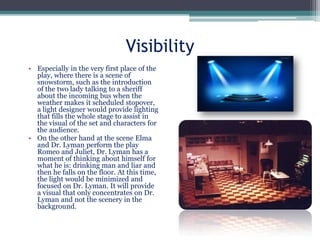
• Especially in the very first place of the
play, where there is a scene of
snowstorm, such as the introduction
of the two lady talking to a sheriff
about the incoming bus when the
weather makes it scheduled stopover,
a light designer would provide lighting
that fills the whole stage to assist in
the visual of the set and characters for
the audience.
• On the other hand at the scene Elma
and Dr. Lyman perform the play
Romeo and Juliet, Dr. Lyman has a
moment of thinking about himself for
what he is: drinking man and liar and
then he falls on the floor. At this time,
the light would be minimized and
focused on Dr. Lyman. It will provide
a visual that only concentrates on Dr.
Lyman and not the scenery in the
background.
Form
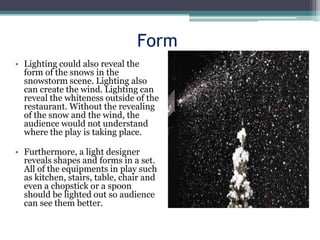
• Lighting could also reveal the
form of the snows in the
snowstorm scene. Lighting also
can create the wind. Lighting can
reveal the whiteness outside of the
restaurant. Without the revealing
of the snow and the wind, the
audience would not understand
where the play is taking place.
• Furthermore, a light designer
reveals shapes and forms in a set.
All of the equipments in play such
as kitchen, stairs, table, chair and
even a chopstick or a spoon
should be lighted out so audience
can see them better.
Shape
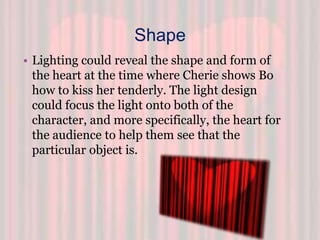
• Lighting could reveal the shape and form of
the heart at the time where Cherie shows Bo
how to kiss her tenderly. The light design
could focus the light onto both of the
character, and more specifically, the heart for
the audience to help them see that the
particular object is.
Focus onstage and create visual compositions.
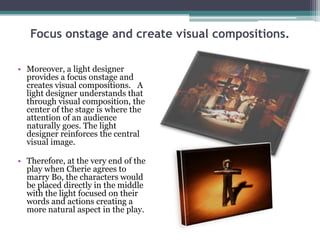
• Moreover, a light designer
provides a focus onstage and
creates visual compositions. A
light designer understands that
through visual composition, the
center of the stage is where the
attention of an audience
naturally goes. The light
designer reinforces the central
visual image.
• Therefore, at the very end of the
play when Cherie agrees to
marry Bo, the characters would
be placed directly in the middle
with the light focused on their
words and actions creating a
more natural aspect in the play.
Creating mood and Reinforcing style.
• When it comes to creating a particular mood, through levels of
illumination, patterns of lighting, and the color of the light, it can create
moods that are associated with peacefulness, anger, warmth, coolness,
etc.
• Therefore, a light designer may use a white colored light to reveal the
snowstorm at the very beginning scene. The white light will present the
coolness for the weather and the loneliness to the character because at
the beginning no one has fallen in love to each other, except Bo.
• Additionally, a warm and radiant light could be used when a certain
character falls in love with a different character. Each different colored
light illustrates to the audience what they should essentially feel.
• The warm, bright yellow light also can use in the play. For example, in
the morning after the storm, the sun rises, and the storm has passed,
these lights should be used in here to make an audience could feel the
peacefulness and warmness.
Time and Place
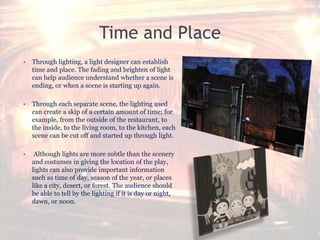
• Through lighting, a light designer can establish
time and place. The fading and brighten of light
can help audience understand whether a scene is
ending, or when a scene is starting up again.
• Through each separate scene, the lighting used
can create a skip of a certain amount of time; for
example, from the outside of the restaurant, to
the inside, to the living room, to the kitchen, each
scene can be cut off and started up through light.
•

Although lights are more subtle than the scenery
and costumes in giving the location of the play,
lights can also provide important information
such as time of day, season of the year, or places
like a city, desert, or forest. The audience should
be able to tell by the lighting if it is day or night,
dawn, or noon.
Rhythm of visual movement
• The lighting is important in
establishing the rhythm of a
production. It determines how
lights change from scene to
scene, during the play, and the
end of the play.
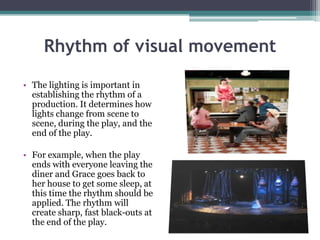
• For example, when the play
ends with everyone leaving the
diner and Grace goes back to
her house to get some sleep, at
this time the rhythm should be
applied. The rhythm will
create sharp, fast black-outs at
the end of the play.
Central Visual Image
• Lighting has to coordinate
with the rest of the design
elements to help facilitate the
message the director is trying
to convey.
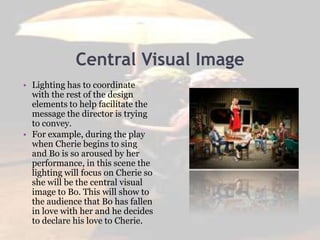
• For example, during the play
when Cherie begins to sing
and Bo is so aroused by her
performance, in this scene the
lighting will focus on Cherie so
she will be the central visual
image to Bo. This will show to
the audience that Bo has fallen
in love with her and he decides
to declare his love to Cherie.

Lighting design

  • 1.
    Lighting design by:Phuong Pham Written by: William Inge Group # 58 Thea 1331 Collaboration Design Project
  • 2.
    Visibility • Especially inthe very first place of the play, where there is a scene of snowstorm, such as the introduction of the two lady talking to a sheriff about the incoming bus when the weather makes it scheduled stopover, a light designer would provide lighting that fills the whole stage to assist in the visual of the set and characters for the audience. • On the other hand at the scene Elma and Dr. Lyman perform the play Romeo and Juliet, Dr. Lyman has a moment of thinking about himself for what he is: drinking man and liar and then he falls on the floor. At this time, the light would be minimized and focused on Dr. Lyman. It will provide a visual that only concentrates on Dr. Lyman and not the scenery in the background.
  • 3.
    Form • Lighting couldalso reveal the form of the snows in the snowstorm scene. Lighting also can create the wind. Lighting can reveal the whiteness outside of the restaurant. Without the revealing of the snow and the wind, the audience would not understand where the play is taking place. • Furthermore, a light designer reveals shapes and forms in a set. All of the equipments in play such as kitchen, stairs, table, chair and even a chopstick or a spoon should be lighted out so audience can see them better.
  • 4.
    Shape • Lighting couldreveal the shape and form of the heart at the time where Cherie shows Bo how to kiss her tenderly. The light design could focus the light onto both of the character, and more specifically, the heart for the audience to help them see that the particular object is.
  • 5.
    Focus onstage andcreate visual compositions. • Moreover, a light designer provides a focus onstage and creates visual compositions. A light designer understands that through visual composition, the center of the stage is where the attention of an audience naturally goes. The light designer reinforces the central visual image. • Therefore, at the very end of the play when Cherie agrees to marry Bo, the characters would be placed directly in the middle with the light focused on their words and actions creating a more natural aspect in the play.
  • 6.
    Creating mood andReinforcing style. • When it comes to creating a particular mood, through levels of illumination, patterns of lighting, and the color of the light, it can create moods that are associated with peacefulness, anger, warmth, coolness, etc. • Therefore, a light designer may use a white colored light to reveal the snowstorm at the very beginning scene. The white light will present the coolness for the weather and the loneliness to the character because at the beginning no one has fallen in love to each other, except Bo. • Additionally, a warm and radiant light could be used when a certain character falls in love with a different character. Each different colored light illustrates to the audience what they should essentially feel. • The warm, bright yellow light also can use in the play. For example, in the morning after the storm, the sun rises, and the storm has passed, these lights should be used in here to make an audience could feel the peacefulness and warmness.
  • 7.
    Time and Place •Through lighting, a light designer can establish time and place. The fading and brighten of light can help audience understand whether a scene is ending, or when a scene is starting up again. • Through each separate scene, the lighting used can create a skip of a certain amount of time; for example, from the outside of the restaurant, to the inside, to the living room, to the kitchen, each scene can be cut off and started up through light. • Although lights are more subtle than the scenery and costumes in giving the location of the play, lights can also provide important information such as time of day, season of the year, or places like a city, desert, or forest. The audience should be able to tell by the lighting if it is day or night, dawn, or noon.
  • 8.
    Rhythm of visualmovement • The lighting is important in establishing the rhythm of a production. It determines how lights change from scene to scene, during the play, and the end of the play. • For example, when the play ends with everyone leaving the diner and Grace goes back to her house to get some sleep, at this time the rhythm should be applied. The rhythm will create sharp, fast black-outs at the end of the play.
  • 9.
    Central Visual Image •Lighting has to coordinate with the rest of the design elements to help facilitate the message the director is trying to convey. • For example, during the play when Cherie begins to sing and Bo is so aroused by her performance, in this scene the lighting will focus on Cherie so she will be the central visual image to Bo. This will show to the audience that Bo has fallen in love with her and he decides to declare his love to Cherie.