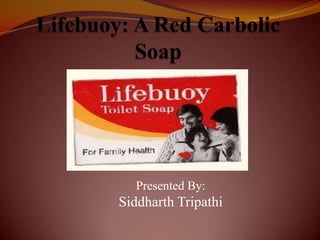
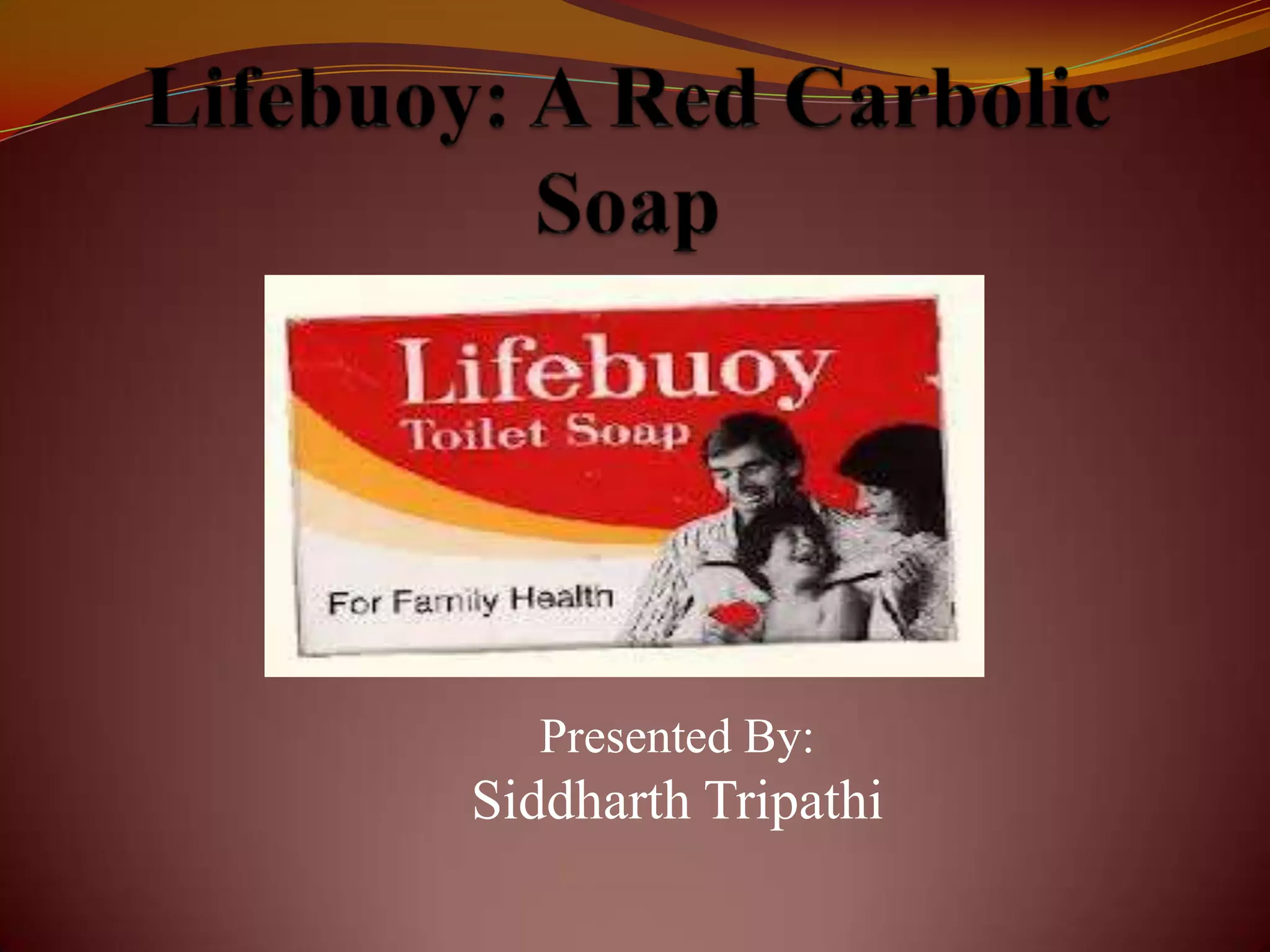
Presented By:
Siddharth Tripathi
INTRODUCTION
 Inception in India in 1895.
 Its promise of „health & hygiene‟ was platform of its
  business.
 Its jingle „tandurusti ki raksha karta hai Lifebuoy…‟ made
  it perceived as a red carbolic soap (germ protection).
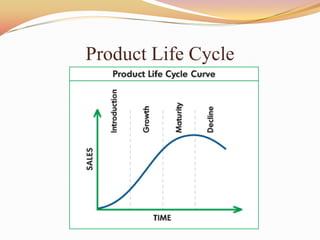
Product Life Cycle
Product Life cycle of Lifebuoy
 Introduction:
   Introduces in 1895, officially sold from 1935.
   It was a brick size carbolic soap.
   It was associated with health & well being.
   It was first targeted at men and masculine health.
 Growth
   Germ killer soap.
   Rural market.
   Strong promotion.
PLC Cont….
 Maturity
   Stagnant market share.
   Same brand image.
   Reached maturity on over hundred years of product
    existence.
   Market share in carbolic segment was 95%
 Decline
   The brand didn‟t declined (market share declined) as
    the brand rejuvenation process was performed.
Reasons for decline in market share
           of Lifebuoy
 Introduction of new soaps with fragrances.
 Positioning of sanitary soap.
 Introduction of new germ killing soaps.
 Why Lifebuoy?
 Women as decision maker.
 Size & smell.
Brand Life cycle
 Lifebuoy was associated with germ-killing.
 Positioned as macho soap.
 Now it has become a family soap.
 From sanitary to bathing soap.
 Competition with Dove, Detol etc.
Brand Rejuvenation
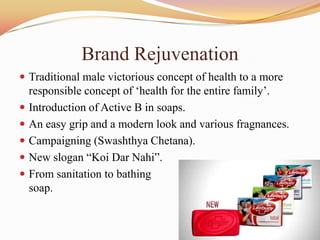
 Traditional male victorious concept of health to a more
    responsible concept of „health for the entire family‟.
   Introduction of Active B in soaps.
   An easy grip and a modern look and various fragnances.
   Campaigning (Swashthya Chetana).
   New slogan “Koi Dar Nahi”.
   From sanitation to bathing
    soap.
Bibliography
 http://businessstretegy.blogspot.in/2010/10/success-
  story.html
 http://articles.economictimes.indiatimes.com/2011-03-
  23/news/29178563_1_lifebuoy-global-brand-soap
 http://www.termpaperwarehouse.com/essay-
  on/Lifebuoy/109473
Thank You

Lifebuoy

  • 1.
  • 2.
    INTRODUCTION  Inception inIndia in 1895.  Its promise of „health & hygiene‟ was platform of its business.  Its jingle „tandurusti ki raksha karta hai Lifebuoy…‟ made it perceived as a red carbolic soap (germ protection).
  • 3.
  • 4.
    Product Life cycleof Lifebuoy  Introduction:  Introduces in 1895, officially sold from 1935.  It was a brick size carbolic soap.  It was associated with health & well being.  It was first targeted at men and masculine health.  Growth  Germ killer soap.  Rural market.  Strong promotion.
  • 5.
    PLC Cont….  Maturity  Stagnant market share.  Same brand image.  Reached maturity on over hundred years of product existence.  Market share in carbolic segment was 95%  Decline  The brand didn‟t declined (market share declined) as the brand rejuvenation process was performed.
  • 6.
    Reasons for declinein market share of Lifebuoy  Introduction of new soaps with fragrances.  Positioning of sanitary soap.  Introduction of new germ killing soaps.  Why Lifebuoy?  Women as decision maker.  Size & smell.
  • 7.
    Brand Life cycle Lifebuoy was associated with germ-killing.  Positioned as macho soap.  Now it has become a family soap.  From sanitary to bathing soap.  Competition with Dove, Detol etc.
  • 8.
    Brand Rejuvenation  Traditionalmale victorious concept of health to a more responsible concept of „health for the entire family‟.  Introduction of Active B in soaps.  An easy grip and a modern look and various fragnances.  Campaigning (Swashthya Chetana).  New slogan “Koi Dar Nahi”.  From sanitation to bathing soap.
  • 9.
    Bibliography  http://businessstretegy.blogspot.in/2010/10/success- story.html  http://articles.economictimes.indiatimes.com/2011-03- 23/news/29178563_1_lifebuoy-global-brand-soap  http://www.termpaperwarehouse.com/essay- on/Lifebuoy/109473
  • 10.