Leviticus
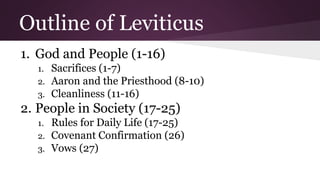
Outline of Leviticus
1. God and People (1-16)
1. Sacrifices (1-7)
2. Aaron and the Priesthood (8-10)
3. Cleanliness (11-16)
2. People in Society (17-25)
1. Rules for Daily Life (17-25)
2. Covenant Confirmation (26)
3. Vows (27)
Sacrifices
Lev 1-7
In this section of Leviticus, God lays out the plan and rules for sacrifices.
There are many kinds: burnt offerings, cereal offerings, peace offerings, sin or
purification offerings, and guilt offerings. Each of these different offerings has
function as part of the larger system. It would take some time to delve into the
details, but the sacrificial system was put in place to build the relationship of
the people with God. Through their sacrifice they recognized that God provided
for them, and they continued to trust that He would provide in the future.
Some of the sacrifices were also done to cover over the sin of the people. But
the sacrifices weren't all that was required. In the prophetic literature we read
how the prophets condemned the people for doing all the right sacrifices, but
without their heart being right with God.
Aaron and the Priesthood
Lev 8-10
This section details the beginning of the priestly order.
Aaron and his descendants would be priests in Israel. The
description of their ordination shows how important
cleanliness from sin and ritual purity was. There's also a
story about Aaron's sons who take advantage of their
position for their own gain, and God punishes them for it.
Cleanliness
Lev 11-16
The laws of purity may not be what you think. While it was part of their law
that they had to maintain, breaking a purity law was probably not a sin in the
way you might expect. It would have made a person "ritually unclean," but
some of the things that made a person unclean were normal human functions.
A person might also become unclean by accident. The cleanliness law were in
place for the protection of the community from disease as well as from pagan
influence from other nations. While they may not be moral laws like the ten
commandments, they were still important for the people to obey.
Rules for Daily Life
Lev 17-25
The rules of daily life are an assortment of ethical and
moral rules, mostly dealing with the social life of the
community. Many of these laws and restrictions were also
put into place to keep the community safe physically and
spiritually. What may seem odd to us in some rules may in
fact be related to a form of pagan worship in that time.
Covenant Confirmation
Lev 26
This is a fairly important chapter in that it
shows a certain covenantal format. It begins
with blessings that God will give the people,
and it ends with a rather long list of 'curses'
that He will inflict on the people if they do not
obey and continue living contrary to Lord.
Vows
Lev 27
The final chapter concludes with a few
other rules and regulations for vows. It does
seem like an odd way to end the book, but that
is the last chapter.
Theology of Leviticus
The theology of the book of Leviticus is sometimes difficult to realize because of the cultural difference between
us and them. In addition, we don't perform any of the sacrifices or covenantal rituals like the Israelites. My guess is,
many Christians don't even know why!
Unfortunately, we're not going to get into all that today. Perhaps when we come to Hebrews...! But there is still
much to gain from this book.
● First, it shows the importance of obedience to God. The law was made for the people to give them the best life as
God saw fit. It wasn't made to stop them experiencing life, but to keep them from the dangers and perils of a
fallen world.
● The second main aspect of Leviticus is Holiness. While not stated in the book directly, one of the reasons for
being a people set apart for God was so that God's message could go out to the nations. This has been God's plan
from the beginning with Abraham and the promise to bless all nations through him. Through holiness, the
people were supposed to be a witness to God and the blessing of a holy life dedicated to Him.
● Finally, the third aspect of the book is the covenantal relationship of the people to God. The people had to follow
this covenant in their relationship to God. While it might seem to be all about rules, the prophets make it clear
that the heart, that faith in God, was the most essential aspect of their religion. Similarly for us, faith is the main
component of our covenant with God in Christ. It is by faith that righteous walk with God.

An Overview of Leviticus

  • 1.
  • 2.
    Outline of Leviticus 1.God and People (1-16) 1. Sacrifices (1-7) 2. Aaron and the Priesthood (8-10) 3. Cleanliness (11-16) 2. People in Society (17-25) 1. Rules for Daily Life (17-25) 2. Covenant Confirmation (26) 3. Vows (27)
  • 3.
    Sacrifices Lev 1-7 In thissection of Leviticus, God lays out the plan and rules for sacrifices. There are many kinds: burnt offerings, cereal offerings, peace offerings, sin or purification offerings, and guilt offerings. Each of these different offerings has function as part of the larger system. It would take some time to delve into the details, but the sacrificial system was put in place to build the relationship of the people with God. Through their sacrifice they recognized that God provided for them, and they continued to trust that He would provide in the future. Some of the sacrifices were also done to cover over the sin of the people. But the sacrifices weren't all that was required. In the prophetic literature we read how the prophets condemned the people for doing all the right sacrifices, but without their heart being right with God.
  • 4.
    Aaron and thePriesthood Lev 8-10 This section details the beginning of the priestly order. Aaron and his descendants would be priests in Israel. The description of their ordination shows how important cleanliness from sin and ritual purity was. There's also a story about Aaron's sons who take advantage of their position for their own gain, and God punishes them for it.
  • 5.
    Cleanliness Lev 11-16 The lawsof purity may not be what you think. While it was part of their law that they had to maintain, breaking a purity law was probably not a sin in the way you might expect. It would have made a person "ritually unclean," but some of the things that made a person unclean were normal human functions. A person might also become unclean by accident. The cleanliness law were in place for the protection of the community from disease as well as from pagan influence from other nations. While they may not be moral laws like the ten commandments, they were still important for the people to obey.
  • 6.
    Rules for DailyLife Lev 17-25 The rules of daily life are an assortment of ethical and moral rules, mostly dealing with the social life of the community. Many of these laws and restrictions were also put into place to keep the community safe physically and spiritually. What may seem odd to us in some rules may in fact be related to a form of pagan worship in that time.
  • 7.
    Covenant Confirmation Lev 26 Thisis a fairly important chapter in that it shows a certain covenantal format. It begins with blessings that God will give the people, and it ends with a rather long list of 'curses' that He will inflict on the people if they do not obey and continue living contrary to Lord.
  • 8.
    Vows Lev 27 The finalchapter concludes with a few other rules and regulations for vows. It does seem like an odd way to end the book, but that is the last chapter.
  • 9.
    Theology of Leviticus Thetheology of the book of Leviticus is sometimes difficult to realize because of the cultural difference between us and them. In addition, we don't perform any of the sacrifices or covenantal rituals like the Israelites. My guess is, many Christians don't even know why! Unfortunately, we're not going to get into all that today. Perhaps when we come to Hebrews...! But there is still much to gain from this book. ● First, it shows the importance of obedience to God. The law was made for the people to give them the best life as God saw fit. It wasn't made to stop them experiencing life, but to keep them from the dangers and perils of a fallen world. ● The second main aspect of Leviticus is Holiness. While not stated in the book directly, one of the reasons for being a people set apart for God was so that God's message could go out to the nations. This has been God's plan from the beginning with Abraham and the promise to bless all nations through him. Through holiness, the people were supposed to be a witness to God and the blessing of a holy life dedicated to Him. ● Finally, the third aspect of the book is the covenantal relationship of the people to God. The people had to follow this covenant in their relationship to God. While it might seem to be all about rules, the prophets make it clear that the heart, that faith in God, was the most essential aspect of their religion. Similarly for us, faith is the main component of our covenant with God in Christ. It is by faith that righteous walk with God.