Numbers
Overview of Numbers
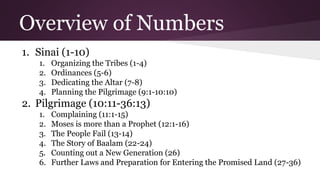
1. Sinai (1-10)
1. Organizing the Tribes (1-4)
2. Ordinances (5-6)
3. Dedicating the Altar (7-8)
4. Planning the Pilgrimage (9:1-10:10)
2. Pilgrimage (10:11-36:13)
1. Complaining (11:1-15)
2. Moses is more than a Prophet (12:1-16)
3. The People Fail (13-14)
4. The Story of Baalam (22-24)
5. Counting out a New Generation (26)
6. Further Laws and Preparation for Entering the Promised Land (27-36)
Organizing the Tribes
Num 1-4
One of the main concepts that has been noted in
Numbers is that the people now hear from God directly at
the tent of meeting, not from God on the mountain. And
with the completion of the tabernacle, God is essentially on
a journey with the people into the promised land.
Much of these first chapters is the organization of the
people and the camp for their travels.
Ordinances
Num 5-6
Many of these ordinances or laws related to
the covenant that they were receiving at Sinai
(remember that they haven't actually left yet).
Many of the laws related to the ceremonial or
ritual laws of Israel, but some aspects are moral
as well.
Dedicating the Altar
Num 7-8
A large part of preparing the Tabernacle
was cleansing the Levites. We see in these early
stories a theme of cleanliness and purity in
regards to anything that dealt with God. It was
to show that God is holy and that the people
should likewise be holy.
Planning the Pilgrimage
Num 9:1-10:10
Particularly important here is the cloud, the presence of
God descending on the completed tabernacle. The cloud
and the pillar of fire are symbols of his presence, and we see
these symbols appear in later stories as well. It doesn't
mean that whenever there's a cloud, God is in it, but it's
something to look out for in other places.
Moses is more than a Prophet
Num 12:1-16
This is an interesting story where Moses' sister
and brother challenge him. God immediately
intervenes and confirms Moses' place as
spokesman and leader.
The People Fail
Num 13-14
The people send spies into the promised land, but when
some of the spies comes back and frighten the people with
their report, the people they lose faith in God. As a result,
God comes close to wiping them out, but Moses intervenes.
God punishes the people who scared the community with
their reports, and he declares his judgment on the rest of
the people who were faithless as well. None of them would
see the promised land.
The Story of Baalam
Num 22-24
An interesting, if not odd little story, centers
on Balaam who is recruited by an enemy king
to curse Israel. But Balaam is not able to curse
Israel because the Lord will not allow it!
Instead he ends up blessing Israel.
Theology of Numbers
● Much of the theology of this book has to do with the covenant of the people and the new
guidelines they would have for life. However, it's interesting that the major failure of the people
was that they didn't trust God to give them victory over the Canaanites. While laws were
important, faith in God was their major undoing in this book. Some people lose sight of the
importance of faith amid so many rules, but following God has always been about faith.
● The purity laws speak of the holiness of God and show us, even Christians, about the holiness of
God. While Christ has given us much closer access to God, He has not become any less holy. This
shows us the power of Christ's sacrifice, that He was enough to bring us to God and to do away
with so many laws about ritual purity. The only problem with this kind of grace (and it’s really
our problem, not the problem of grace), is that it lets us lose sight of how "other" God is, how
holy and separate He is. Numbers can help us remember His holiness and his awesomeness.
● Finally, there is a major lesson on the faithfulness of God here. Since before the people were in
Egypt, God had promised Jacob that He would bring his descendants out of slavery in another
land and give them the land of Canaan. While it took a long time, God was faithful to his word,
and the book of Numbers shows the journey of the people up until they moved into the Promised
Land.

An Overview of Numbers

  • 1.
  • 2.
    Overview of Numbers 1.Sinai (1-10) 1. Organizing the Tribes (1-4) 2. Ordinances (5-6) 3. Dedicating the Altar (7-8) 4. Planning the Pilgrimage (9:1-10:10) 2. Pilgrimage (10:11-36:13) 1. Complaining (11:1-15) 2. Moses is more than a Prophet (12:1-16) 3. The People Fail (13-14) 4. The Story of Baalam (22-24) 5. Counting out a New Generation (26) 6. Further Laws and Preparation for Entering the Promised Land (27-36)
  • 3.
    Organizing the Tribes Num1-4 One of the main concepts that has been noted in Numbers is that the people now hear from God directly at the tent of meeting, not from God on the mountain. And with the completion of the tabernacle, God is essentially on a journey with the people into the promised land. Much of these first chapters is the organization of the people and the camp for their travels.
  • 4.
    Ordinances Num 5-6 Many ofthese ordinances or laws related to the covenant that they were receiving at Sinai (remember that they haven't actually left yet). Many of the laws related to the ceremonial or ritual laws of Israel, but some aspects are moral as well.
  • 5.
    Dedicating the Altar Num7-8 A large part of preparing the Tabernacle was cleansing the Levites. We see in these early stories a theme of cleanliness and purity in regards to anything that dealt with God. It was to show that God is holy and that the people should likewise be holy.
  • 6.
    Planning the Pilgrimage Num9:1-10:10 Particularly important here is the cloud, the presence of God descending on the completed tabernacle. The cloud and the pillar of fire are symbols of his presence, and we see these symbols appear in later stories as well. It doesn't mean that whenever there's a cloud, God is in it, but it's something to look out for in other places.
  • 7.
    Moses is morethan a Prophet Num 12:1-16 This is an interesting story where Moses' sister and brother challenge him. God immediately intervenes and confirms Moses' place as spokesman and leader.
  • 8.
    The People Fail Num13-14 The people send spies into the promised land, but when some of the spies comes back and frighten the people with their report, the people they lose faith in God. As a result, God comes close to wiping them out, but Moses intervenes. God punishes the people who scared the community with their reports, and he declares his judgment on the rest of the people who were faithless as well. None of them would see the promised land.
  • 9.
    The Story ofBaalam Num 22-24 An interesting, if not odd little story, centers on Balaam who is recruited by an enemy king to curse Israel. But Balaam is not able to curse Israel because the Lord will not allow it! Instead he ends up blessing Israel.
  • 10.
    Theology of Numbers ●Much of the theology of this book has to do with the covenant of the people and the new guidelines they would have for life. However, it's interesting that the major failure of the people was that they didn't trust God to give them victory over the Canaanites. While laws were important, faith in God was their major undoing in this book. Some people lose sight of the importance of faith amid so many rules, but following God has always been about faith. ● The purity laws speak of the holiness of God and show us, even Christians, about the holiness of God. While Christ has given us much closer access to God, He has not become any less holy. This shows us the power of Christ's sacrifice, that He was enough to bring us to God and to do away with so many laws about ritual purity. The only problem with this kind of grace (and it’s really our problem, not the problem of grace), is that it lets us lose sight of how "other" God is, how holy and separate He is. Numbers can help us remember His holiness and his awesomeness. ● Finally, there is a major lesson on the faithfulness of God here. Since before the people were in Egypt, God had promised Jacob that He would bring his descendants out of slavery in another land and give them the land of Canaan. While it took a long time, God was faithful to his word, and the book of Numbers shows the journey of the people up until they moved into the Promised Land.