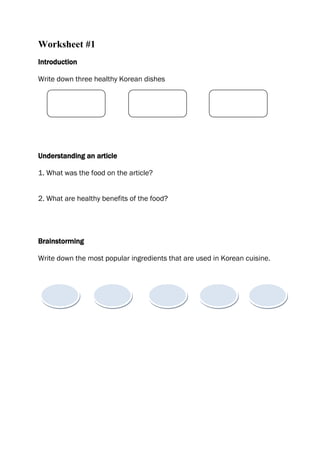
Worksheet #1
Introduction

Write down three healthy Korean dishes


Understanding an article

1. What was the food on the article?


2. What are healthy benefits of the food?


Brainstorming

Write down the most popular ingredients that are used in Korean cuisine.
Flashcard Set #2

 Capsaicin: Hot pepper                       Vitamin: Fruits (Kiwi, Tangerine,
                                             Strawberry…) Vegetables (Carrot,
 Benefit of Capsaicin: destroying            broccoli, onion…)
                                             Benefits of Vitamins
 cancer cells, pain killer, preventing
 diabetes                                    preventing and treating various diseases
                                             including heart problems, high
                                             cholesterol levels, eye disorders


 Protein: Meat, Milk, Cheese, Fish,          Calcium: cheese, milk, yogurt, cereals,
 beans. etc                                  anchovy
 Benefit of Protein: helping with tissue     Benefit of Calcium: Bone health,
 repair, providing energy, helping keep      keeping the weight off
 immune system

                                             Dietary Fiber: sea mustard, lavel, fruits,
                                             vegetables
 Minerals: Potato, Grain, Rice
                                             Benefit of Dietary Fiber: Good for
 Benefits of Minerals:                       digestion, reduce heart disease, improve
 water balance, bone health                  cholesterol level


 Carbohydrates: grains, potato

 Benefit of Carbohydrates mental
 energy, energy for the brain, blood cell,
 fight against cancer, heart disease and
 diabetes
Worksheet #2

Recipes
Kimchi Recipe (Group1)


   Directions

  1. Cut the cabbages in half lengthwise and trim the ends.
  2. Rinse and cut into pieces about 2 inch square. Place the cabbage into
     large resealable bags and sprinkle salt on the leaves so they are evenly
     coated. Use your hands to rub the salt in to the leaves.
  3. Seal the bags and leave at room temperature for 6 hours.
  4. Rinse the salt from the cabbage leaves and then drain and squeeze out
     any excess liquid. Place the cabbage in a large container with a tight
     fitting lid. Stir in the fish sauce, green onions, white onion, garlic, sugar
     and ginger. Sprinkle the Korean hot pepper powder over the mixture.
  5. Wear plastic gloves to protect your hands and rub the hot pepper
     powder into the cabbage leaves until evenly coated. Seal the container
     and set in a cool dry place.


  1. Read the recipe and circle all the ingredients


  2. List all the nutritional benefits of the food using the flash cards
  -
  -
  -
  -
BiBimbab recipe (Group2)


  Directions

  1. Put cooked rice in large slightly shallow bowl.

  2. Place bulgogi (with juices from cooked meat) and veggies on top of rice

  but place separately so you can see each ingredient beautifully placed on

  rice.

  3. Put egg on top. Sprinkle with sesame seeds and drizzle with sesame oil

  and soy sauce.

  4. When ready to eat, mix all ingredients together with some hot pepper

  paste, to taste. The bibimpapb should be moist and not dry. Add more
Samgyetang recipe (Group3)
  sesame oil and hot pepper paste, to taste.


   1. Read the recipe and circle all the ingredients


   2. List all the nutritional benefits of the food using the flash cards
   -
   -
   -
   -
Samgye Tang Recipe (Group3)


     Direction:

     1. Put rice in a bowl and rinse until water runs clear. Cover with water
          and soak for 1/2 hour. Drain.
     2. Clean poultry inside and out (use or discard gizzards and liver as you
          wish).
          Lightly salt (rub) both the inside and outside, and let stand for
          fifteen minutes.
     3. Wash ginseng root then trim the rootlets (do not discard, save for
          soup). Cut into bite size pieces.
     4. Slice onion, then cut slices in half
     5. Wash and thin slice the ginger.
     6. Put all stuffing ingredients into the cavity (Divide stuffing evenly if
          using 2 game hens), and close flaps over the cavity (sew with thread
          or use a skewer)..
     7.   Place poultry in a heavy pot and cover with water.


  1. Read the recipe and circle all the ingredients


  2. List all the nutritional benefits of the food using the flash cards
  -
  -
  -

Lesson2

  • 1.
    Worksheet #1 Introduction Write downthree healthy Korean dishes Understanding an article 1. What was the food on the article? 2. What are healthy benefits of the food? Brainstorming Write down the most popular ingredients that are used in Korean cuisine.
  • 2.
    Flashcard Set #2 Capsaicin: Hot pepper Vitamin: Fruits (Kiwi, Tangerine, Strawberry…) Vegetables (Carrot, Benefit of Capsaicin: destroying broccoli, onion…) Benefits of Vitamins cancer cells, pain killer, preventing diabetes preventing and treating various diseases including heart problems, high cholesterol levels, eye disorders Protein: Meat, Milk, Cheese, Fish, Calcium: cheese, milk, yogurt, cereals, beans. etc anchovy Benefit of Protein: helping with tissue Benefit of Calcium: Bone health, repair, providing energy, helping keep keeping the weight off immune system Dietary Fiber: sea mustard, lavel, fruits, vegetables Minerals: Potato, Grain, Rice Benefit of Dietary Fiber: Good for Benefits of Minerals: digestion, reduce heart disease, improve water balance, bone health cholesterol level Carbohydrates: grains, potato Benefit of Carbohydrates mental energy, energy for the brain, blood cell, fight against cancer, heart disease and diabetes
  • 3.
    Worksheet #2 Recipes Kimchi Recipe(Group1) Directions 1. Cut the cabbages in half lengthwise and trim the ends. 2. Rinse and cut into pieces about 2 inch square. Place the cabbage into large resealable bags and sprinkle salt on the leaves so they are evenly coated. Use your hands to rub the salt in to the leaves. 3. Seal the bags and leave at room temperature for 6 hours. 4. Rinse the salt from the cabbage leaves and then drain and squeeze out any excess liquid. Place the cabbage in a large container with a tight fitting lid. Stir in the fish sauce, green onions, white onion, garlic, sugar and ginger. Sprinkle the Korean hot pepper powder over the mixture. 5. Wear plastic gloves to protect your hands and rub the hot pepper powder into the cabbage leaves until evenly coated. Seal the container and set in a cool dry place. 1. Read the recipe and circle all the ingredients 2. List all the nutritional benefits of the food using the flash cards - - - -
  • 4.
    BiBimbab recipe (Group2) Directions 1. Put cooked rice in large slightly shallow bowl. 2. Place bulgogi (with juices from cooked meat) and veggies on top of rice but place separately so you can see each ingredient beautifully placed on rice. 3. Put egg on top. Sprinkle with sesame seeds and drizzle with sesame oil and soy sauce. 4. When ready to eat, mix all ingredients together with some hot pepper paste, to taste. The bibimpapb should be moist and not dry. Add more Samgyetang recipe (Group3) sesame oil and hot pepper paste, to taste. 1. Read the recipe and circle all the ingredients 2. List all the nutritional benefits of the food using the flash cards - - - -
  • 5.
    Samgye Tang Recipe(Group3) Direction: 1. Put rice in a bowl and rinse until water runs clear. Cover with water and soak for 1/2 hour. Drain. 2. Clean poultry inside and out (use or discard gizzards and liver as you wish). Lightly salt (rub) both the inside and outside, and let stand for fifteen minutes. 3. Wash ginseng root then trim the rootlets (do not discard, save for soup). Cut into bite size pieces. 4. Slice onion, then cut slices in half 5. Wash and thin slice the ginger. 6. Put all stuffing ingredients into the cavity (Divide stuffing evenly if using 2 game hens), and close flaps over the cavity (sew with thread or use a skewer).. 7. Place poultry in a heavy pot and cover with water. 1. Read the recipe and circle all the ingredients 2. List all the nutritional benefits of the food using the flash cards - - -