Define genetic engineering;
Identify the processes, uses,
benefits and risks involved.
OBJECTIVES OF THE LESSON
WHAT IS GENETIC ENGINEERING?
THE PROCESS BY WHICH PIECES OF DNA
ARE TRANSFERRED FROM ONE ORGANISM
TO ANOTHER
THE USE OF GENETIC KNOWLEDGE TO
ARTIFICIALLY MANIPULATE GENES.
ONE OF THE FIELDS OF BIOTECHNOLOGY
GENETIC ENGINEERING USES RECOMBINANT
DNA. WHAT IS RECOMBINANT DNA?
DNA made from two different organisms
Pieces of genes from an organism are inserted
into the genetic material of mother organism
to produce recombinant organism.
Human gene and bacterial plasmid
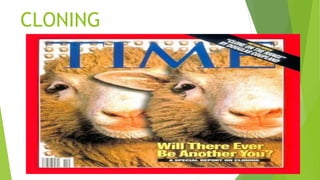
CLONING
CLONING (NUCLEUS
TRANSPLANTATION TECHNOLOGY)
The nucleus of a cell is grafted
into an enucleated egg cell of the
same species to create a genetic
copy of the donor individual.
DNA AMPLICATION TECHNOLOGY
(PCR)
Allows to produce millions of
replications of the chosen
fragments of a DNA molecule.
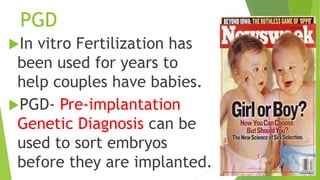
PGD
In vitro Fertilization has
been used for years to
help couples have babies.
PGD- Pre-implantation
Genetic Diagnosis can be
used to sort embryos
before they are implanted.
Restriction Enzymes
Are enzymes specialized in the
cutting of DNA fragments, which
each have an effect on specific
sites of the DNA molecule
DNA ligases
Are enzymes specialized in tying
the DNA chains that form the DNA
double helix.
PLASMIDS
Are circular DNA molecules
present in the genetic material
of some bacteria.
Stages involved:
Identification or required gene
Gene for human insulin
Cutting of the chromosomes using
special enzymes called restriction
endonucleases to release the gene
Uses of Genetic Engineering
To make insulin for use by diabetic persons
To make growth hormones to treat dwarfs
To prepare vaccines
To make plants resistant to disease
To make pigs, cows or fish grow faster
Higher production of milk by cows
To make pigs with less fat-leaner meat
What are GM’s?
are a result of technology that has altered the
DNA of living organisms (animals, plants or
bacteria)
Other terms that mean the same thing:
Gene splicing
Genetic Recombinant DNA (rDNA)
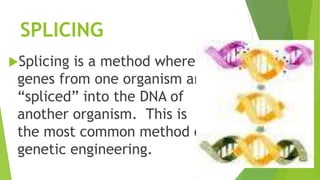
SPLICING
Splicing is a method where
genes from one organism are
“spliced” into the DNA of
another organism. This is
the most common method of
genetic engineering.
Benefits of Genetic Engineering
and Modifying
1. Higher yielding crops, more efficient use of
land
2. Can save money and promote higher profits
3. Longer shelf life, less waste
Example// Tomatoes from genetically
modified seeds stay fresh
longer.
4. Enhanced taste and quality
5. Reduced maturation time
6. Increased and improved nutrients and stress
tolerance
- A single gene genetically engineered into
cauliflower can increase
production of beta-carotene 100 times.
- A gene can be implanted into a soybean
upgrading the soy protein
to a quality equal to that of milk.
- Corn can be modified to contain its two
limiting amino acids,
lysine or tryptophan
7. Improved resistance to disease or illness
- Foods can be enhanced with phytochemicals that
help maintain
health and reduce the risks of chronic disease.
8. Improved crop resistance to disease, pests, weeds
and herbicides
9. New products and growing techniques
- “Individuals allergic to milk may be able to buy
milk that has been
treated with the lactase enzyme” (Whiney,
2002).
- Creating decaffeinated coffee beans are in a
process of research.
Risks associated with Genetic Modification
1. Safety
 Potential human health implications.
 Potential environmental impact.
 Out-crossing
 Inevitable out-crossing of transgenic plants with naturally occurring
ones.
 Creation of super-weeds
 Creation of biological weapons.
2. Access and Intellectual Property
 Domination of world food production by a few companies and developing
countries.
3. Ethics
“Playing God”
Tampering with nature by mixing genes among species.
4. Labeling
Not mandatory in some countries (e.g., Canada and the United
States).
Mixing GM crops with non-GM confounds labeling attempts.
5. Society
New advances may be skewed to the interests of rich countries.
Risks with GM continued:
Biodiversity
 Addition of Bt gene into plants including corn, potatoes
and cotton to increase resistance to plants
 Bt gene obtained from Bacillus thuringiensis (a soil
bacterium that produces a natural insecticide)
 Problem: plants producing Bt toxin are releasing toxin
in pollen
Draper, D. (2002). Our Environment: A Canadian Perspective 2nd Ed. Scarborough: Thompson Canada
Lmt.

lesson-10-Genetically-Modified-Organisms.ppt

  • 1.
    Define genetic engineering; Identifythe processes, uses, benefits and risks involved. OBJECTIVES OF THE LESSON
  • 3.
    WHAT IS GENETICENGINEERING? THE PROCESS BY WHICH PIECES OF DNA ARE TRANSFERRED FROM ONE ORGANISM TO ANOTHER THE USE OF GENETIC KNOWLEDGE TO ARTIFICIALLY MANIPULATE GENES. ONE OF THE FIELDS OF BIOTECHNOLOGY
  • 4.
    GENETIC ENGINEERING USESRECOMBINANT DNA. WHAT IS RECOMBINANT DNA? DNA made from two different organisms Pieces of genes from an organism are inserted into the genetic material of mother organism to produce recombinant organism. Human gene and bacterial plasmid
  • 5.
  • 6.
    CLONING (NUCLEUS TRANSPLANTATION TECHNOLOGY) Thenucleus of a cell is grafted into an enucleated egg cell of the same species to create a genetic copy of the donor individual.
  • 7.
    DNA AMPLICATION TECHNOLOGY (PCR) Allowsto produce millions of replications of the chosen fragments of a DNA molecule.
  • 8.
    PGD In vitro Fertilizationhas been used for years to help couples have babies. PGD- Pre-implantation Genetic Diagnosis can be used to sort embryos before they are implanted.
  • 9.
    Restriction Enzymes Are enzymesspecialized in the cutting of DNA fragments, which each have an effect on specific sites of the DNA molecule
  • 10.
    DNA ligases Are enzymesspecialized in tying the DNA chains that form the DNA double helix.
  • 11.
    PLASMIDS Are circular DNAmolecules present in the genetic material of some bacteria.
  • 12.
    Stages involved: Identification orrequired gene Gene for human insulin Cutting of the chromosomes using special enzymes called restriction endonucleases to release the gene
  • 13.
    Uses of GeneticEngineering To make insulin for use by diabetic persons To make growth hormones to treat dwarfs To prepare vaccines To make plants resistant to disease To make pigs, cows or fish grow faster Higher production of milk by cows To make pigs with less fat-leaner meat
  • 14.
    What are GM’s? area result of technology that has altered the DNA of living organisms (animals, plants or bacteria) Other terms that mean the same thing: Gene splicing Genetic Recombinant DNA (rDNA)
  • 18.
    SPLICING Splicing is amethod where genes from one organism are “spliced” into the DNA of another organism. This is the most common method of genetic engineering.
  • 31.
    Benefits of GeneticEngineering and Modifying 1. Higher yielding crops, more efficient use of land 2. Can save money and promote higher profits 3. Longer shelf life, less waste Example// Tomatoes from genetically modified seeds stay fresh longer. 4. Enhanced taste and quality 5. Reduced maturation time
  • 32.
    6. Increased andimproved nutrients and stress tolerance - A single gene genetically engineered into cauliflower can increase production of beta-carotene 100 times. - A gene can be implanted into a soybean upgrading the soy protein to a quality equal to that of milk. - Corn can be modified to contain its two limiting amino acids, lysine or tryptophan
  • 33.
    7. Improved resistanceto disease or illness - Foods can be enhanced with phytochemicals that help maintain health and reduce the risks of chronic disease. 8. Improved crop resistance to disease, pests, weeds and herbicides 9. New products and growing techniques - “Individuals allergic to milk may be able to buy milk that has been treated with the lactase enzyme” (Whiney, 2002). - Creating decaffeinated coffee beans are in a process of research.
  • 35.
    Risks associated withGenetic Modification 1. Safety  Potential human health implications.  Potential environmental impact.  Out-crossing  Inevitable out-crossing of transgenic plants with naturally occurring ones.  Creation of super-weeds  Creation of biological weapons. 2. Access and Intellectual Property  Domination of world food production by a few companies and developing countries.
  • 36.
    3. Ethics “Playing God” Tamperingwith nature by mixing genes among species. 4. Labeling Not mandatory in some countries (e.g., Canada and the United States). Mixing GM crops with non-GM confounds labeling attempts. 5. Society New advances may be skewed to the interests of rich countries.
  • 37.
    Risks with GMcontinued: Biodiversity  Addition of Bt gene into plants including corn, potatoes and cotton to increase resistance to plants  Bt gene obtained from Bacillus thuringiensis (a soil bacterium that produces a natural insecticide)  Problem: plants producing Bt toxin are releasing toxin in pollen Draper, D. (2002). Our Environment: A Canadian Perspective 2nd Ed. Scarborough: Thompson Canada Lmt.