SUBJECT AND
CONTENT
Lesson 4
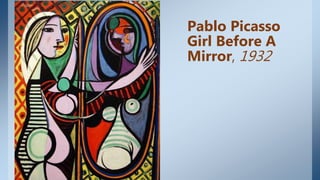
Pablo Picasso
Girl Before A
Mirror, 1932
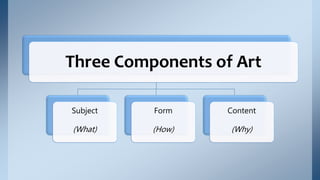
Three Components of Art
Subject
(What)
Form
(How)
Content
(Why)
It denotes the topic, focus or image of
the work of art. It can be a person, an
object, a theme or an idea.
Types of Arts
Representational Art or
Figurative Art
•These type of art have subjects
that refer to objects or events
occurring in the real world.
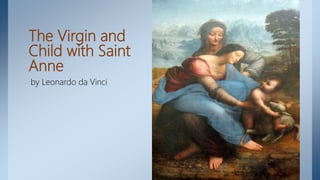
The Virgin and
Child with Saint
Anne
by Leonardo da Vinci
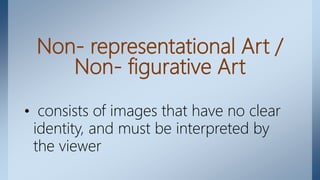
Non- representational Art /
Non- figurative Art
• consists of images that have no clear
identity, and must be interpreted by
the viewer
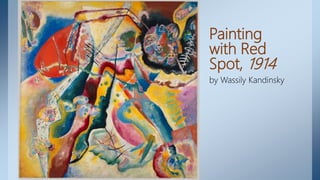
Painting
with Red
Spot, 1914
by Wassily Kandinsky
Abstract
Abstract art is in itself a departure from
reality, but the extent of that departure
determines whether it has reached the end
of the spectrum, which is non-
representationality- a complete severance
from the world.
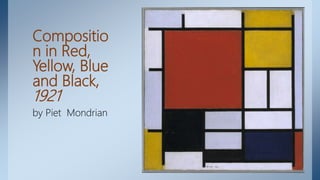
Compositio
n in Red,
Yellow, Blue
and Black,
1921
by Piet Mondrian
Russian artist Vasily
Kandinsky is the
proponent of non-
representational art
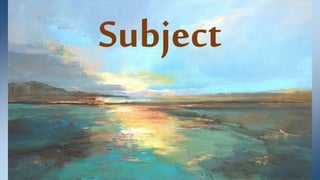
Subject
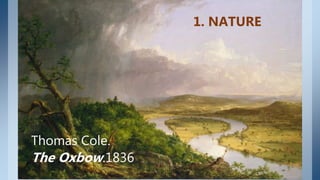
Thomas Cole.
The Oxbow.1836
1. NATURE
2. HISTORICAL EVENTS
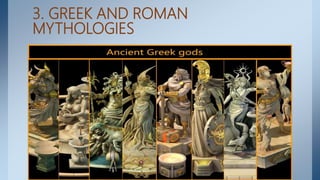
3. GREEK AND ROMAN
MYTHOLOGIES
4. THE
JUDEO/
CHRISTIAN
TRADITION
Greeks and Romans-
Polytheism
Judeo- Christian-
monotheism
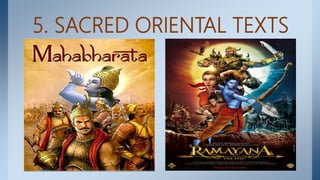
5. SACRED ORIENTAL TEXTS
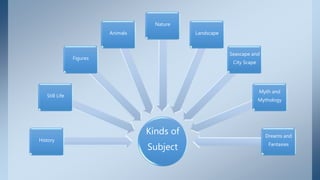
Kinds of
Subject
History
Still Life
Figures
Animals
Nature
Landscape
Seascape and
City Scape
Myth and
Mythology
Dreams and
Fantasies
• indicates the artist’s intention, or the meaning
behind the work. It can be the intellectual message
of an artwork, a statement, an expression, or mood
developed by the artist and interpreted by the
observer
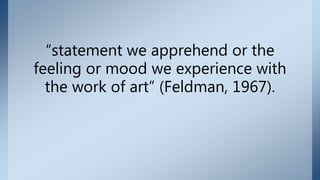
“statement we apprehend or the
feeling or mood we experience with
the work of art” (Feldman, 1967).
CONTENT
IN ART
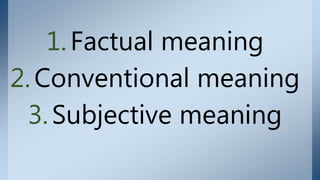
1.Factual meaning
2.Conventional meaning
3.Subjective meaning
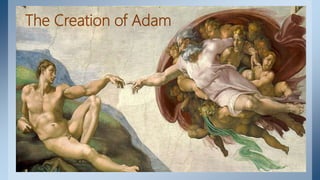
The Creation of Adam
1. Subject- Religion/ bible
2. Factual meaning- about creation
3. Conventional meaning- Man created
in the image of God
4. Subjective meaning-
Indeed, there are artworks that are difficult to
understand - no one, actually, can be expected
to understand without effort and study the
meanings of many works of art, especially those
works about religion and mythology. To fully
grasp the content of works of art, one must learn
as much as he or she can about the culture of
the people that produced them and maintain an
open mind in considering various options to
appreciate and interpret art.
Lesson 4 Subject and Content .pptx

Lesson 4 Subject and Content .pptx

Editor's Notes

  • #11 Spectrum Dabbled Hinge