Unit 6 Digital Signal
Processing
Lesson 16 Basic Concepts of DSP
25/1/31 2
Lesson 16 Basic Concepts of DSP
• Backgrounds
• Text tour
• Language in use
– Vocabulary
25/1/31 3
• Terminology
– sample and hold circuit
– zero order hold
– acquisition time
– quantization level (step)
Backgrounds
25/1/31 4
• Terminology
– dynamic range
– signal-to-noise ratio
– digitization
Backgrounds
25/1/31 5
• Terminology
– Nyquist theorem
– aliasing
– anti-aliasing filter
Backgrounds
Quantization level (step)
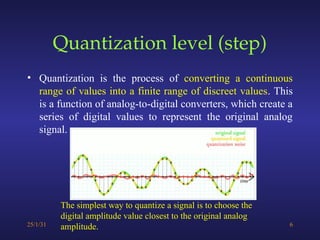
• Quantization is the process of converting a continuous
range of values into a finite range of discreet values. This
is a function of analog-to-digital converters, which create a
series of digital values to represent the original analog
signal.
25/1/31 6
The simplest way to quantize a signal is to choose the
digital amplitude value closest to the original analog
amplitude.
Sample and hold circuit
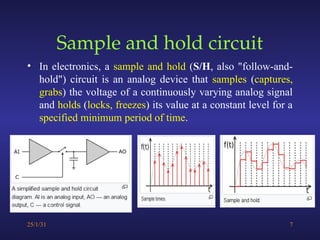
• In electronics, a sample and hold (S/H, also "follow-and-
hold") circuit is an analog device that samples (captures,
grabs) the voltage of a continuously varying analog signal
and holds (locks, freezes) its value at a constant level for a
specified minimum period of time.
25/1/31 7
Zero order hold
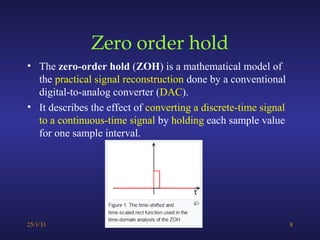
• The zero-order hold (ZOH) is a mathematical model of
the practical signal reconstruction done by a conventional
digital-to-analog converter (DAC).
• It describes the effect of converting a discrete-time signal
to a continuous-time signal by holding each sample value
for one sample interval.
25/1/31 8
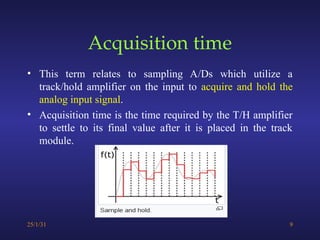
Acquisition time
• This term relates to sampling A/Ds which utilize a
track/hold amplifier on the input to acquire and hold the
analog input signal.
• Acquisition time is the time required by the T/H amplifier
to settle to its final value after it is placed in the track
module.
25/1/31 9
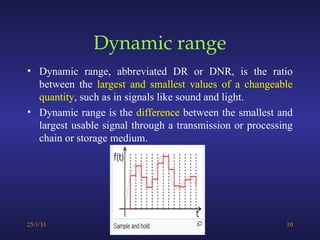
Dynamic range
• Dynamic range, abbreviated DR or DNR, is the ratio
between the largest and smallest values of a changeable
quantity, such as in signals like sound and light.
• Dynamic range is the difference between the smallest and
largest usable signal through a transmission or processing
chain or storage medium.
25/1/31 10
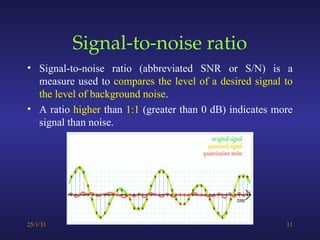
Signal-to-noise ratio
• Signal-to-noise ratio (abbreviated SNR or S/N) is a
measure used to compares the level of a desired signal to
the level of background noise.
• A ratio higher than 1:1 (greater than 0 dB) indicates more
signal than noise.
25/1/31 11
Digitization
• Digitization, less commonly digitalization, is the process
of converting information into a digital (i.e. computer-
readable) format, in which the information is organized
into bits.
25/1/31 12
Nyquist theorem
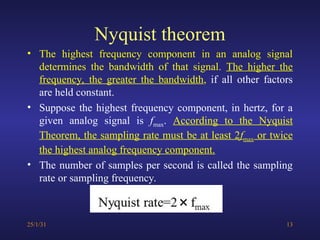
• The highest frequency component in an analog signal
determines the bandwidth of that signal. The higher the
frequency, the greater the bandwidth, if all other factors
are held constant.
• Suppose the highest frequency component, in hertz, for a
given analog signal is fmax. According to the Nyquist
Theorem, the sampling rate must be at least 2fmax or twice
the highest analog frequency component.
• The number of samples per second is called the sampling
rate or sampling frequency.
25/1/31 13
Aliasing
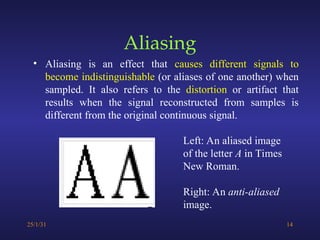
• Aliasing is an effect that causes different signals to
become indistinguishable (or aliases of one another) when
sampled. It also refers to the distortion or artifact that
results when the signal reconstructed from samples is
different from the original continuous signal.
25/1/31 14
Left: An aliased image
of the letter A in Times
New Roman.
Right: An anti-aliased
image.
Anti-aliasing filter
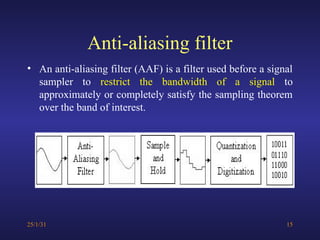
• An anti-aliasing filter (AAF) is a filter used before a signal
sampler to restrict the bandwidth of a signal to
approximately or completely satisfy the sampling theorem
over the band of interest.
25/1/31 15
25/1/31 16
Text tour
• Outline
– Introduction
– The Essentials of Analog-to-digital and Digital-to-
analog Conversion
– Technologies for digital signal processing
• The FPGA Alternative
• The ASIC Alternative
• The GPP Alternative
25/1/31 17
Introduction
• We don't speak in a digital signal. A digital signal is a
language of 1s and 0s that can be processed by
mathematics. We speak in real-world, analog signals.
Analog signals are real world signals that we experience
everyday - sound, light, temperature and pressure. A digital
signal is a numerical representation of the analog signal. It
may be easier and more cost effective to process these
signals in the digital world.
• In the real world, we can convert these signals into digital
signals through the analog-to-digital converter, process the
signals and if needed, bring the signals back out to the
analog world through the digital-to-analog converter.
25/1/31 18
The Essentials of A/D and D/A
Conversion(1) A/D Conversion
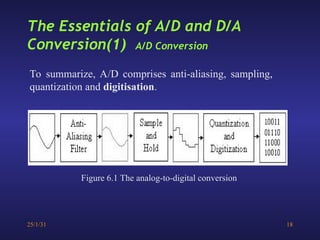
Figure 6.1 The analog-to-digital conversion
To summarize, A/D comprises anti-aliasing, sampling,
quantization and digitisation.
25/1/31 19
The Essentials of A/D and D/A
Conversion(2) D/A Conversion
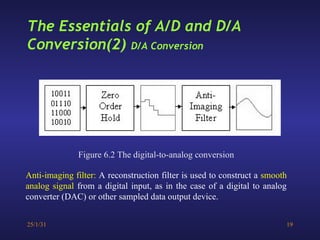
Figure 6.2 The digital-to-analog conversion
Anti-imaging filter: A reconstruction filter is used to construct a smooth
analog signal from a digital input, as in the case of a digital to analog
converter (DAC) or other sampled data output device.
25/1/31 20
• Advantages of designing with DSPs over other
microprocessors:
– Single-cycle multiply-accumulate operations (MAC)
– Real-time performance, simulation and emulation
– Flexibility
– Reliability
– Increased system performance
– Reduced system cost
Technologies for DSP
DSPs
25/1/31 21
• Have the capability of being reconfigurable within a
system
• Offer greater raw performance per specific operation
because of the resulting dedicated logic circuit.
Technologies for DSP
FPGAs
25/1/31 22
• Can be tailored to perform specific functions extremely
well
• Can be made quite power efficient.
• Cannot be iteratively changed or updated while in product
development.
Technologies for DSP
ASICs
25/1/31 23
• Best suited for performing a broad array of tasks.
• For applications in which the end product must process
answers in real time or must do so while powered by
consumer batteries, GPPs comparatively poor real time
performance and high power consumption all but rules
them out (not considerable).
Technologies for DSP
GPPs (General-Purpose Processors)
25/1/31 24
• Vocabulary
– Reciprocal precede deduce Iterative
impediment
Language in use
25/1/31 25
Vocabulary
25/1/31 26
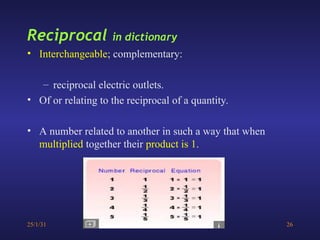
Reciprocal in dictionary
• Interchangeable; complementary:
– reciprocal electric outlets.
• Of or relating to the reciprocal of a quantity.
• A number related to another in such a way that when
multiplied together their product is 1.
25/1/31 27
Reciprocal in text
• The length of the sampling interval is the same as the
sampling period, and the reciprocal of the sampling
period is the sampling frequency fs.
25/1/31 28
Precede in dictionary
• To come, exist or occur before in time.
• To come before in order or rank; surpass or outrank.
• To be in a position in front of; go in advance of.
• To preface; introduce :
– He preceded his lecture with a humorous anecdote.
• To come or go before in time, order, rank, or position.
25/1/31 29
Precede in text
• To make sure aliasing will not occur, sampling is always
preceded by low pass filtering.
25/1/31 30
Deduce in dictionary
• To reach (a conclusion) by reasoning.
• To infer from a general principle; reason deductively.
• To trace the origin or derivation of.
25/1/31 31
Deduce in text
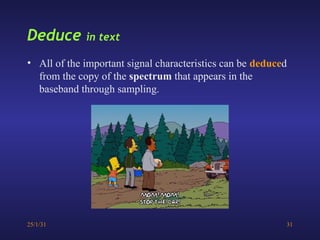
• All of the important signal characteristics can be deduced
from the copy of the spectrum that appears in the
baseband through sampling.
25/1/31 32
• Characterized by or involving repetition, recurrence,
reiteration, or repetitiousness.
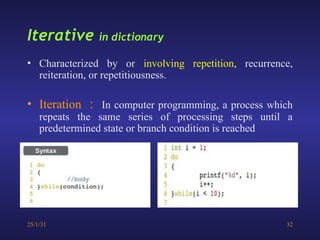
• Iteration : In computer programming, a process which
repeats the same series of processing steps until a
predetermined state or branch condition is reached
Iterative in dictionary
25/1/31 33
• However, since ASICS are not field-programmable, their
functionality cannot be iteratively changed or updated
while in product development.
Iterative in text
25/1/31 34
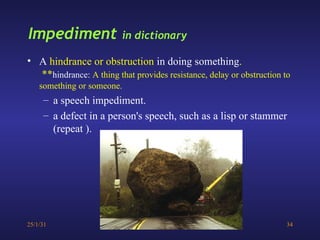
• A hindrance or obstruction in doing something.
**hindrance: A thing that provides resistance, delay or obstruction to
something or someone.
– a speech impediment.
– a defect in a person's speech, such as a lisp or stammer
(repeat ).
Impediment in dictionary
25/1/31 35
• As such, every new version of the product requires a
redesign and trips through the foundry, an expensive
proposition and an impediment to rapid time-to- market.
Impediment in text
Thank You
25/1/31 36

Lesson 16 Basic Concepts of DSP (Lecture 8).ppt

  • 1.
    Unit 6 DigitalSignal Processing Lesson 16 Basic Concepts of DSP
  • 2.
    25/1/31 2 Lesson 16Basic Concepts of DSP • Backgrounds • Text tour • Language in use – Vocabulary
  • 3.
    25/1/31 3 • Terminology –sample and hold circuit – zero order hold – acquisition time – quantization level (step) Backgrounds
  • 4.
    25/1/31 4 • Terminology –dynamic range – signal-to-noise ratio – digitization Backgrounds
  • 5.
    25/1/31 5 • Terminology –Nyquist theorem – aliasing – anti-aliasing filter Backgrounds
  • 6.
    Quantization level (step) •Quantization is the process of converting a continuous range of values into a finite range of discreet values. This is a function of analog-to-digital converters, which create a series of digital values to represent the original analog signal. 25/1/31 6 The simplest way to quantize a signal is to choose the digital amplitude value closest to the original analog amplitude.
  • 7.
    Sample and holdcircuit • In electronics, a sample and hold (S/H, also "follow-and- hold") circuit is an analog device that samples (captures, grabs) the voltage of a continuously varying analog signal and holds (locks, freezes) its value at a constant level for a specified minimum period of time. 25/1/31 7
  • 8.
    Zero order hold •The zero-order hold (ZOH) is a mathematical model of the practical signal reconstruction done by a conventional digital-to-analog converter (DAC). • It describes the effect of converting a discrete-time signal to a continuous-time signal by holding each sample value for one sample interval. 25/1/31 8
  • 9.
    Acquisition time • Thisterm relates to sampling A/Ds which utilize a track/hold amplifier on the input to acquire and hold the analog input signal. • Acquisition time is the time required by the T/H amplifier to settle to its final value after it is placed in the track module. 25/1/31 9
  • 10.
    Dynamic range • Dynamicrange, abbreviated DR or DNR, is the ratio between the largest and smallest values of a changeable quantity, such as in signals like sound and light. • Dynamic range is the difference between the smallest and largest usable signal through a transmission or processing chain or storage medium. 25/1/31 10
  • 11.
    Signal-to-noise ratio • Signal-to-noiseratio (abbreviated SNR or S/N) is a measure used to compares the level of a desired signal to the level of background noise. • A ratio higher than 1:1 (greater than 0 dB) indicates more signal than noise. 25/1/31 11
  • 12.
    Digitization • Digitization, lesscommonly digitalization, is the process of converting information into a digital (i.e. computer- readable) format, in which the information is organized into bits. 25/1/31 12
  • 13.
    Nyquist theorem • Thehighest frequency component in an analog signal determines the bandwidth of that signal. The higher the frequency, the greater the bandwidth, if all other factors are held constant. • Suppose the highest frequency component, in hertz, for a given analog signal is fmax. According to the Nyquist Theorem, the sampling rate must be at least 2fmax or twice the highest analog frequency component. • The number of samples per second is called the sampling rate or sampling frequency. 25/1/31 13
  • 14.
    Aliasing • Aliasing isan effect that causes different signals to become indistinguishable (or aliases of one another) when sampled. It also refers to the distortion or artifact that results when the signal reconstructed from samples is different from the original continuous signal. 25/1/31 14 Left: An aliased image of the letter A in Times New Roman. Right: An anti-aliased image.
  • 15.
    Anti-aliasing filter • Ananti-aliasing filter (AAF) is a filter used before a signal sampler to restrict the bandwidth of a signal to approximately or completely satisfy the sampling theorem over the band of interest. 25/1/31 15
  • 16.
    25/1/31 16 Text tour •Outline – Introduction – The Essentials of Analog-to-digital and Digital-to- analog Conversion – Technologies for digital signal processing • The FPGA Alternative • The ASIC Alternative • The GPP Alternative
  • 17.
    25/1/31 17 Introduction • Wedon't speak in a digital signal. A digital signal is a language of 1s and 0s that can be processed by mathematics. We speak in real-world, analog signals. Analog signals are real world signals that we experience everyday - sound, light, temperature and pressure. A digital signal is a numerical representation of the analog signal. It may be easier and more cost effective to process these signals in the digital world. • In the real world, we can convert these signals into digital signals through the analog-to-digital converter, process the signals and if needed, bring the signals back out to the analog world through the digital-to-analog converter.
  • 18.
    25/1/31 18 The Essentialsof A/D and D/A Conversion(1) A/D Conversion Figure 6.1 The analog-to-digital conversion To summarize, A/D comprises anti-aliasing, sampling, quantization and digitisation.
  • 19.
    25/1/31 19 The Essentialsof A/D and D/A Conversion(2) D/A Conversion Figure 6.2 The digital-to-analog conversion Anti-imaging filter: A reconstruction filter is used to construct a smooth analog signal from a digital input, as in the case of a digital to analog converter (DAC) or other sampled data output device.
  • 20.
    25/1/31 20 • Advantagesof designing with DSPs over other microprocessors: – Single-cycle multiply-accumulate operations (MAC) – Real-time performance, simulation and emulation – Flexibility – Reliability – Increased system performance – Reduced system cost Technologies for DSP DSPs
  • 21.
    25/1/31 21 • Havethe capability of being reconfigurable within a system • Offer greater raw performance per specific operation because of the resulting dedicated logic circuit. Technologies for DSP FPGAs
  • 22.
    25/1/31 22 • Canbe tailored to perform specific functions extremely well • Can be made quite power efficient. • Cannot be iteratively changed or updated while in product development. Technologies for DSP ASICs
  • 23.
    25/1/31 23 • Bestsuited for performing a broad array of tasks. • For applications in which the end product must process answers in real time or must do so while powered by consumer batteries, GPPs comparatively poor real time performance and high power consumption all but rules them out (not considerable). Technologies for DSP GPPs (General-Purpose Processors)
  • 24.
    25/1/31 24 • Vocabulary –Reciprocal precede deduce Iterative impediment Language in use
  • 25.
  • 26.
    25/1/31 26 Reciprocal indictionary • Interchangeable; complementary: – reciprocal electric outlets. • Of or relating to the reciprocal of a quantity. • A number related to another in such a way that when multiplied together their product is 1.
  • 27.
    25/1/31 27 Reciprocal intext • The length of the sampling interval is the same as the sampling period, and the reciprocal of the sampling period is the sampling frequency fs.
  • 28.
    25/1/31 28 Precede indictionary • To come, exist or occur before in time. • To come before in order or rank; surpass or outrank. • To be in a position in front of; go in advance of. • To preface; introduce : – He preceded his lecture with a humorous anecdote. • To come or go before in time, order, rank, or position.
  • 29.
    25/1/31 29 Precede intext • To make sure aliasing will not occur, sampling is always preceded by low pass filtering.
  • 30.
    25/1/31 30 Deduce indictionary • To reach (a conclusion) by reasoning. • To infer from a general principle; reason deductively. • To trace the origin or derivation of.
  • 31.
    25/1/31 31 Deduce intext • All of the important signal characteristics can be deduced from the copy of the spectrum that appears in the baseband through sampling.
  • 32.
    25/1/31 32 • Characterizedby or involving repetition, recurrence, reiteration, or repetitiousness. • Iteration : In computer programming, a process which repeats the same series of processing steps until a predetermined state or branch condition is reached Iterative in dictionary
  • 33.
    25/1/31 33 • However,since ASICS are not field-programmable, their functionality cannot be iteratively changed or updated while in product development. Iterative in text
  • 34.
    25/1/31 34 • Ahindrance or obstruction in doing something. **hindrance: A thing that provides resistance, delay or obstruction to something or someone. – a speech impediment. – a defect in a person's speech, such as a lisp or stammer (repeat ). Impediment in dictionary
  • 35.
    25/1/31 35 • Assuch, every new version of the product requires a redesign and trips through the foundry, an expensive proposition and an impediment to rapid time-to- market. Impediment in text
  • 36.