Lesson 1:
Understanding
Educational Technology:
It’s Nature and
Characteristics
Objectives:
a. to identify and explain the key concepts, nature,
and characteristics of educational technology;
b. to appreciate the role of educational technology in
enhancing the quality of teaching and learning;
c. to demonstrate the ability to apply educational
technology tools in designing effective learning
activities.
Technology
 the study or science of art and skill.
 use of scientific understanding to achieve
practical goals in human life
Concept of Educational Technology
 Includes other systems used in the
process of developing human capability.
 Not limited to software, and hardware, as
well as internet.
Concept of Educational Technology
Educational Technology
Began to develop after World War II
Began to focus on the development of
teaching and learning
Now, also incorporates different fields
such as cognitive psychology, etc…
Nature of Educational Technology
Design of instruction
Production of instructional products and
services
Management of instruction
Evaluation of instruction
Educational technology has under its
preview the following aspects:
Student learning through involvement with
challenging tasks.
Professionalization of teachers
Creation of a culture that supports learning
both in the classroom and beyond it.
Redefining the roles of teachers and learners.
Educational technology reforms education
by contributing to:
Scope of Educational Technology
Educational technology (ET) as the
theory and practice of educational
approaches to learning
ET as technological tools and media
that assist in the communication of
knowledge
Scope of Educational Technology
Educational technology itself as an
educational subject
Educational technology for learning
management systems (LMS)
Goals of Educational Technology
 an agent of change in the classroom
 designing, providing for, and
enabling appropriate teaching-
learning process
 developing a range of support
systems and training
 recognition of not only the immediate
needs of children but also their future
needs
Goals of Educational Technology
ET as media and audio-visual
communications
ET as Instructional Systems and
Instructional Design
Perspective of
Educational Technology
 ET as vocational training
 ET as computer systems
Perspective of
Educational Technology
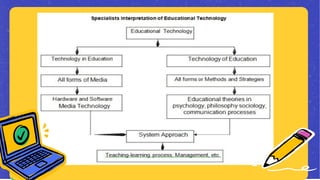
Two aspects of
Educational Technology
 Technology in Education
 Technology of Education
Technology in Education
 the “hardware” approach
 refers the use of machines
 encompasses the use of various
instructional materials
Audio Media – a teaching and learning
tools designed to engage the auditory
sense.
 Visual Media - refer to instructional
materials designed to engage the sense
of sight.
Various Instructional Materials
Audio-visual Media - instructional
materials that combine pictures and
sound to present information.
 Broadcast / Telecommunication Media
- channels for spreading information to
a wide audience over long distances
Various Instructional Materials
Projected Media - These
instructional tools are accessed by
projecting images onto a screen or
wall using a projector.
Various Instructional Material
 refers to applying theoretical
principles from other fields
 a systematic approach to address
educational challenges
Technology of Education
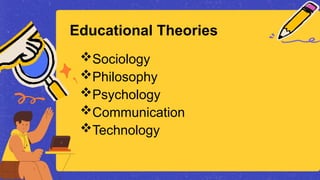
Educational Theories
Sociology
Philosophy
Psychology
Communication
Technology
https://www.google.com/url?sa=i&url=https%3A%2F%2Fwww.edu
care.bz%2Funit%2Fmeaning-and-interpretation-of-educational-tec
hnology%2F&psig=AOvVaw2TjhcJ39FNMOsa3l_IPBN1&ust=172
5563630222000&source=images&cd=vfe&opi=89978449&ved=0
CBQQjRxqFwoTCICjtcv_qYgDFQAAAAAdAAAAABAJ
Britannica, T. E. of E. (2024, June 25). Technology. Encyclopedia
Britannica. https://www.britannica.com/technology/technology.
Accessed September 5, 2024.
Centreelites (2024). Technology in Education. 5 Varieties of
Media.
https://www.centreforelites.com/en/technology-in-education-5-vari
eties-of-media/#google_vignette
References:
Kabaso, O. (2024). Scope and Significance of Educational Technology
and Its Application in the Classroom.
https://www.academia.edu/118224958/SCOPE_AND_SIGNIFICANCE_OF
_EDUCATIONAL_TECHNOLOGY_AND_ITS_APPLICATION_IN_THE_CL
ASSROOM
National Open University of Nigeria (2011). EDU 332_Introduction to
Educational Technology.
https://dl.icdst.org/pdfs/files/3da1fe1f9d0d6efa5bbb8cf68402e846.pdf
Orey, M. (2010). Emerging perspectives on learning, teaching, and
technology. Retrieved from http://epltt.coe.uga.edu
References:
Stevens, T. (2022). What are the Opportunities and Challenges of using
Technology in Early Years Education?
https://www.theseus.fi/bitstream/handle/10024/753256/Stevens_Thomas.p
df?sequence=2
Mratinkovic, A., Piestun, D., Fouda, H. M (2018). Illustrated Handbook of
Educational Technolog.
References:
Presented by:
Leolaine Beth M. Panganuran
Arnette Mae G. Cañete
Thank You!

Lesson-1-Presentation educational technology (1).pptx

  • 1.
  • 2.
    Objectives: a. to identifyand explain the key concepts, nature, and characteristics of educational technology; b. to appreciate the role of educational technology in enhancing the quality of teaching and learning; c. to demonstrate the ability to apply educational technology tools in designing effective learning activities.
  • 3.
    Technology  the studyor science of art and skill.  use of scientific understanding to achieve practical goals in human life Concept of Educational Technology
  • 4.
     Includes othersystems used in the process of developing human capability.  Not limited to software, and hardware, as well as internet. Concept of Educational Technology Educational Technology
  • 5.
    Began to developafter World War II Began to focus on the development of teaching and learning Now, also incorporates different fields such as cognitive psychology, etc… Nature of Educational Technology
  • 6.
    Design of instruction Productionof instructional products and services Management of instruction Evaluation of instruction Educational technology has under its preview the following aspects:
  • 7.
    Student learning throughinvolvement with challenging tasks. Professionalization of teachers Creation of a culture that supports learning both in the classroom and beyond it. Redefining the roles of teachers and learners. Educational technology reforms education by contributing to:
  • 8.
    Scope of EducationalTechnology Educational technology (ET) as the theory and practice of educational approaches to learning ET as technological tools and media that assist in the communication of knowledge
  • 9.
    Scope of EducationalTechnology Educational technology itself as an educational subject Educational technology for learning management systems (LMS)
  • 10.
    Goals of EducationalTechnology  an agent of change in the classroom  designing, providing for, and enabling appropriate teaching- learning process
  • 11.
     developing arange of support systems and training  recognition of not only the immediate needs of children but also their future needs Goals of Educational Technology
  • 12.
    ET as mediaand audio-visual communications ET as Instructional Systems and Instructional Design Perspective of Educational Technology
  • 13.
     ET asvocational training  ET as computer systems Perspective of Educational Technology
  • 14.
    Two aspects of EducationalTechnology  Technology in Education  Technology of Education
  • 15.
    Technology in Education the “hardware” approach  refers the use of machines  encompasses the use of various instructional materials
  • 16.
    Audio Media –a teaching and learning tools designed to engage the auditory sense.  Visual Media - refer to instructional materials designed to engage the sense of sight. Various Instructional Materials
  • 17.
    Audio-visual Media -instructional materials that combine pictures and sound to present information.  Broadcast / Telecommunication Media - channels for spreading information to a wide audience over long distances Various Instructional Materials
  • 18.
    Projected Media -These instructional tools are accessed by projecting images onto a screen or wall using a projector. Various Instructional Material
  • 19.
     refers toapplying theoretical principles from other fields  a systematic approach to address educational challenges Technology of Education
  • 20.
  • 22.
    https://www.google.com/url?sa=i&url=https%3A%2F%2Fwww.edu care.bz%2Funit%2Fmeaning-and-interpretation-of-educational-tec hnology%2F&psig=AOvVaw2TjhcJ39FNMOsa3l_IPBN1&ust=172 5563630222000&source=images&cd=vfe&opi=89978449&ved=0 CBQQjRxqFwoTCICjtcv_qYgDFQAAAAAdAAAAABAJ Britannica, T. E.of E. (2024, June 25). Technology. Encyclopedia Britannica. https://www.britannica.com/technology/technology. Accessed September 5, 2024. Centreelites (2024). Technology in Education. 5 Varieties of Media. https://www.centreforelites.com/en/technology-in-education-5-vari eties-of-media/#google_vignette References:
  • 23.
    Kabaso, O. (2024).Scope and Significance of Educational Technology and Its Application in the Classroom. https://www.academia.edu/118224958/SCOPE_AND_SIGNIFICANCE_OF _EDUCATIONAL_TECHNOLOGY_AND_ITS_APPLICATION_IN_THE_CL ASSROOM National Open University of Nigeria (2011). EDU 332_Introduction to Educational Technology. https://dl.icdst.org/pdfs/files/3da1fe1f9d0d6efa5bbb8cf68402e846.pdf Orey, M. (2010). Emerging perspectives on learning, teaching, and technology. Retrieved from http://epltt.coe.uga.edu References:
  • 24.
    Stevens, T. (2022).What are the Opportunities and Challenges of using Technology in Early Years Education? https://www.theseus.fi/bitstream/handle/10024/753256/Stevens_Thomas.p df?sequence=2 Mratinkovic, A., Piestun, D., Fouda, H. M (2018). Illustrated Handbook of Educational Technolog. References:
  • 25.
    Presented by: Leolaine BethM. Panganuran Arnette Mae G. Cañete Thank You!